

Benchmarking Multimodal Deep Fusion Strategies for Heterogeneous Neuroimaging and Cognitive Data Using a Controlled Sex Classification Task
Open accessThe DOI matches its Crossref record; 46 of the 48 references it cites were found in a registry or an index; 13 of the 23 sources its claims cite were checked for support.
Abstract
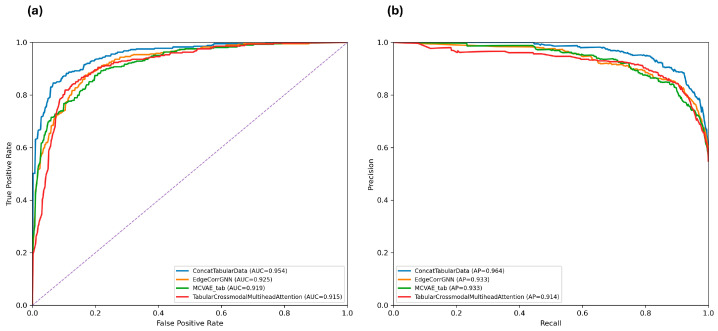
Background/Objectives: Multimodal data fusion is increasingly applied in neuroinformatics to integrate heterogeneous sources of information. However, the optimal strategies for combining modalities with markedly different dimensionality, scale, and noise characteristics remain unclear. To our knowledge, this is among the first systematic and controlled benchmarks explicitly disentangling the effects of fusion strategy and feature scaling within a unified deep learning framework. Methods: Using data from 747 healthy participants from the Human Connectome Project, we evaluated multiple fusion paradigms—including early fusion, attention-based fusion, subspace-based fusion, and graph-based fusion—within a unified and reproducible framework. Importantly, we assessed how different feature scaling techniques (Standard, Min–Max, and Robust scaling) interact with fusion strategies and influence model performance. Biological sex was used as a controlled benchmark task to focus on methodological insights rather than task-specific optimization. Results: Early feature-level fusion consistently achieved the highest classification performance across all evaluated configurations. In particular, direct concatenation of cognitive and neuroimaging features combined with Standard Scaling yielded the best results (AUC–ROC = 0.96 (0.95–0.96)), outperforming unimodal baselines as well as intermediate and late fusion strategies. Conclusions: This systematic benchmark demonstrates that multimodal deep learning performance in neuroscience is driven primarily by the interaction between fusion strategy and feature scaling rather than by architectural complexity alone. By explicitly disentangling the effects of fusion level and preprocessing within a unified framework, this study provides practical methodological guidance for the design, evaluation, and reproducible deployment of multimodal deep learning models in neuroscience.
Overview
CoChat Summary
TL;DR
This paper benchmarks unimodal and multimodal deep fusion strategies for combining cognitive and neuroimaging features, using biological sex as a controlled classification task in 747 HCP participants. It finds that early feature-level concatenation with Standard Scaling performs best (AUC–ROC = 0.96), outperforming more complex intermediate and late fusion approaches.
Key findings
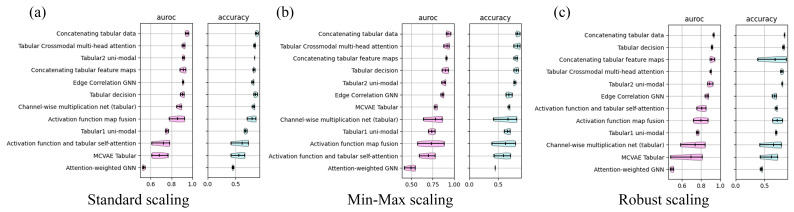
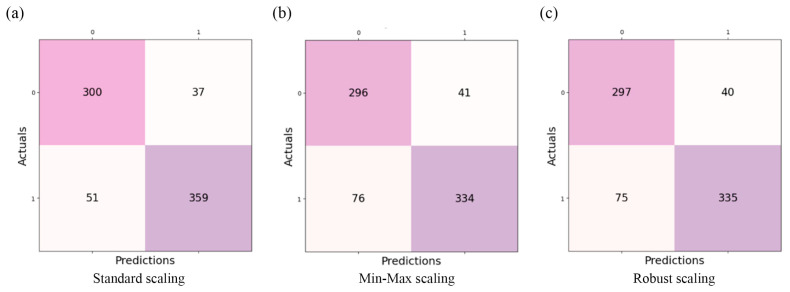
- Early feature-level fusion, especially direct concatenation of cognitive and neuroimaging features with Standard Scaling, achieved the highest performance: AUC–ROC = 0.96 (0.95–0.96), outperforming unimodal baselines and intermediate/late fusion strategies.
- Unimodal neuroimaging features were stronger than cognitive features: neuroimaging-only reached AUC–ROC = 0.93 (0.93–0.94) under Robust Scaling, while cognitive-only reached AUC–ROC = 0.78 (0.77–0.81) under Robust Scaling.
- Intermediate fusion was heterogeneous: Tabular Crossmodal Multi-Head Attention was stable across scaling (AUC–ROC = 0.92, 0.94, and 0.92 for Standard, Min–Max, and Robust), Edge Correlation GNN was strong under Standard Scaling (0.92 (0.90–0.94)) but declined under Min–Max/Robust, and Attention-Weighted GNN underperformed across pipelines (AUC–ROC ≈ 0.50). Late fusion (Tabular Decision) was stable but not superior (AUC–ROC 0.91–0.93).
- Standard Scaling was generally the most effective preprocessing strategy, particularly for early fusion and graph-based models; Robust Scaling benefited cognitive features and selected intermediate models but was suboptimal for high-performing early fusion.
Methods
- Data: WU-Minn HCP Young Adult dataset; after exclusions, final cohort of 747 healthy participants (410 females, 337 males), aged 22–36. Features were 36 cognitive/behavioral measures and 168 FreeSurfer brain morphology metrics, giving 204 features; the task was binary sex classification.
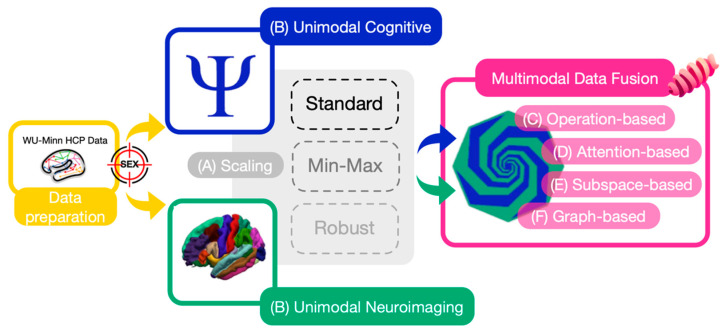
- Pipeline: three scaling methods (Standard, Min–Max, Robust) were compared across unimodal baselines and multimodal fusion paradigms, including early/operation-based fusion (concat tabular data, concat feature maps, channel-wise multi net), attention-based fusion, subspace-based fusion (MCVAE), graph-based fusion (Edge Correlation GNN, Attention-Weighted GNN), and late fusion (Tabular Decision), implemented in Fusilli with PyTorch/PyTorch Lightning.
- Evaluation: 3-fold cross-validation; primary metrics were AUC–ROC and accuracy, with balanced accuracy, F1-score, Cohen’s kappa, precision, recall, and average precision also reported; 95% CIs were computed via bootstrap resampling, and overfitting was monitored with learning curves and early stopping where supported.
Limitations
- The paper states the analysis was restricted to two modalities (cognitive measures and imaging-derived brain morphology) and a single healthy cohort with a narrow age range (22–36), limiting generalizability to clinical populations or broader lifespan contexts.
- The paper states that complete data availability and synchronized modalities may favor early joint feature learning; real-world missing, heterogeneous, or asynchronously acquired data may favor late fusion. The cohort was also restricted to participants who self-identified as White or Black, which may introduce selection bias and limit generalizability.
- The paper states that interpretability remains a critical requirement and was not the focus; future work should include explainable AI, additional modalities, disease-specific cohorts, larger multicenter datasets, and fully nested validation. The text also makes evident that the single-dataset, 3-fold cross-validation design may limit robustness, and no explicit feature selection or dimensionality reduction was applied by design.
Model-written summary. Check it against the paper before relying on it.
Integrity signals
Registry
Cites
Statistics
Figures
Verification
Claims the paper makes
9 Valid · 0 Not valid · 6 Not checked · 78 Own results and interpretations
The cited sources support only part of this claim — read each source’s verdict below.
In the paper
“Sex-related differences in brain structure and function have been consistently reported across large-scale neuroimaging studies, involving both global and regional measures such as total brain volume, cortical thickness, white matter microstructure, and functional connectivity [29,30,31,32].”
§ Benchmarking Multimodal Deep Fusion Strategies for Heterogeneous Neuroimaging and Cognitive Data Using a Controlled Sex Classification Task > 1. Introduction
What the sources say
- Partly supportedcites [29] Duerden E.G. Chakravarty M.M. Lerch J.P. Taylor M.J. Sex-Based Differences in Cortical and Subcortical Development in 436 Individuals Aged 4–54 Years Cereb. Cortex 2020 30 2854 2866 10.1093/cercor/bhz279 31814003 PMC7197069 sourceExperimental — accuracy not yet measured
The Introduction (page unavailable) reports sex-related differences in total cerebral volume and white-matter volume, and the Conclusions (page unavailable) report differences in regional cortical thickness and surface area. However, this structural MRI study does not report sex differences in white-matter microstructure or functional connectivity. Its Abstract also describes prior cortical-thickness findings as inconsistent, rather than consistently reported. (LLM, conf=0.89)
- Not checked — no full text of the sourcecites [30] Camastra C. Sarica A. Brain Morphometry Differences Across Sexes Revealed Through Explainable Artificial Intelligence: A Human Connectome Project Young Adult Study Machine Learning, Optimization, and Data Science Springer Berlin/Heidelberg, Germany 2025 246 260 978-3-031-82486-9 source
- Supportedcites [31] Ritchie S.J. Cox S.R. Shen X. Lombardo M.V. Reus L.M. Alloza C. Harris M.A. Alderson H.L. Hunter S. Neilson E. Sex Differences in the Adult Human Brain: Evidence from 5216 UK Biobank Participants Cereb. Cortex 2018 28 2959 2975 10.1093/cercor/bhy109 29771288 PMC6041980 source
The Discussion reports sex differences in total brain volume, cortical thickness, white matter microstructure, and functional connectivity in a UK Biobank sample of over 5,000 adults. The Introduction also discusses findings from earlier studies, supporting the sentence’s characterization of these differences as reported across studies. (LLM, conf=0.88)
- Not checked yetcites [32] Gur R.C. Turetsky B.I. Matsui M. Yan M. Bilker W. Hughett P. Gur R.E. Sex Differences in Brain Gray and White Matter in Healthy Young Adults: Correlations with Cognitive Performance J. Neurosci. 1999 19 4065 4072 10.1523/JNEUROSCI.19-10-04065.1999 10234034 PMC6782697 source
Checked before — its earlier verdict is held back until a new check runs.
boostedstates an association- Asserted: passes — The authors put it forward as true.
- Checkable: passes — It can be checked against evidence.
- Load-bearing: passes — The paper’s conclusions depend on it.
- Based: passes — The paper gives a reason why it holds.
- Partly supported
Every source the paper cites for this claim was checked and supports it.
In the paper
“These findings are consistent with recent theoretical work comparing early and late fusion strategies in binary multimodal classification problems [44].”
§ Benchmarking Multimodal Deep Fusion Strategies for Heterogeneous Neuroimaging and Cognitive Data Using a Controlled Sex Classification Task > 4. Discussion
What the sources say
- Supportedcites [44] Pereira L.M. Salazar A. Vergara L. A Comparative Analysis of Early and Late Fusion for the Multimodal Two-Class Problem IEEE Access 2023 11 84283 84300 10.1109/ACCESS.2023.3296098 source
The cited work is exactly what the sentence identifies: a 2023 theoretical (mathematical) comparison of early versus late fusion restricted to the two-class/binary multimodal case. The Introduction (p. 1) states the gap in first-principles/theoretical contributions and that this article addresses it with mathematical analysis, and Section II ('A General Comparison', p. 2) frames the comparison of early and late fusion in terms of classifier error probability for k = 1, 2, valid for any class-conditional distributions. No specific numeric or directional finding is attributed beyond the identification of the theoretical comparison, so nothing overreaches. (LLM, conf=0.90)
plain- Asserted: passes — The authors put it forward as true.
- Checkable: passes — It can be checked against evidence.
- Load-bearing: unclear — It is unclear whether the paper’s conclusions depend on it.
- Based: passes — The paper gives a reason why it holds.
- Supported
A result the paper reports from its own data — it cites no other source for it, so there is none to check. The quote shows it is in the paper.
In the paper
“Late fusion approaches, which combine modality-specific predictions at the decision level, demonstrated stable and competitive performance across all evaluated scaling strategies.”
§ Benchmarking Multimodal Deep Fusion Strategies for Heterogeneous Neuroimaging and Cognitive Data Using a Controlled Sex Classification Task > 3. Results > 3.4. Late Fusion Models
boosted- Asserted: passes — The authors put it forward as true.
- Checkable: passes — It can be checked against evidence.
- Load-bearing: passes — The paper’s conclusions depend on it.
- Based: passes — The paper gives a reason why it holds.
A result the paper reports from its own data — it cites no other source for it, so there is none to check. The quote shows it is in the paper.
In the paper
“Graph-based intermediate fusion models showed mixed behavior.”
§ Benchmarking Multimodal Deep Fusion Strategies for Heterogeneous Neuroimaging and Cognitive Data Using a Controlled Sex Classification Task > 3. Results > 3.3. Intermediate Fusion Models
plain- Asserted: passes — The authors put it forward as true.
- Checkable: passes — It can be checked against evidence.
- Load-bearing: unclear — It is unclear whether the paper’s conclusions depend on it.
- Based: passes — The paper gives a reason why it holds.
A result the paper reports from its own data — it cites no other source for it, so there is none to check. The quote shows it is in the paper.
In the paper
“Within this setting, early fusion strategies based on direct feature concatenation achieved equal or superior performance compared to more complex architectures.”
§ Benchmarking Multimodal Deep Fusion Strategies for Heterogeneous Neuroimaging and Cognitive Data Using a Controlled Sex Classification Task > 4. Discussion
plain- Asserted: passes — The authors put it forward as true.
- Checkable: passes — It can be checked against evidence.
- Load-bearing: passes — The paper’s conclusions depend on it.
- Based: passes — The paper gives a reason why it holds.
42 more claims
Create a free account to see all 93 claims and to verify the 3 references still open.
- Probably not a substantial claim. 17
- It may state two separate claims as one. 39
Self-check
Percentages, sums and reported differences re-computed from the paper’s own numbers.
Each contradiction between two passages listed here was confirmed by an independent check.
Rated minor: it would not touch a result — a value no result rests on, a p-value that stays on the same side of the significance level, or a conflict that is clerical, resolved elsewhere in the paper, or outside its own findings.
In the paper
§ Benchmarking Multimodal Deep Fusion Strategies for Heterogeneous Neuroimaging and Cognitive Data Using a Controlled Sex Classification Task > 2. Materials and Methods > 2.2. Data Fusion Workflow
“Inspired by the population-graph learning approach proposed by Bintsi et al. [27], this model employs a static graph representation.”
§ Benchmarking Multimodal Deep Fusion Strategies for Heterogeneous Neuroimaging and Cognitive Data Using a Controlled Sex Classification Task > References
“27. Calhoun V.D. Sui J. Multimodal Fusion of Brain Imaging Data: A Key to Finding the Missing Link(s) in Complex Mental Illness”
Rated minor: it would not touch a result — a value no result rests on, a p-value that stays on the same side of the significance level, or a conflict that is clerical, resolved elsewhere in the paper, or outside its own findings.
In the paper
§ Benchmarking Multimodal Deep Fusion Strategies for Heterogeneous Neuroimaging and Cognitive Data Using a Controlled Sex Classification Task > 1. Introduction
“a unified and reproducible pipeline implemented in the Fusilli Python library (version 3.9).”
§ Benchmarking Multimodal Deep Fusion Strategies for Heterogeneous Neuroimaging and Cognitive Data Using a Controlled Sex Classification Task > 2. Materials and Methods > 2.2. Data Fusion Workflow
“four deep learning-based fusion strategies implemented in the Fusilli v1.2.3 Python library [39].”
Rated minor: it would not touch a result — a value no result rests on, a p-value that stays on the same side of the significance level, or a conflict that is clerical, resolved elsewhere in the paper, or outside its own findings.
In the paper
§ Benchmarking Multimodal Deep Fusion Strategies for Heterogeneous Neuroimaging and Cognitive Data Using a Controlled Sex Classification Task > 2. Materials and Methods > 2.2. Data Fusion Workflow
“This model adopts the Multi-channel Variational Autoencoder (MCVAE) framework introduced by Antelmi et al. [26].”
§ Benchmarking Multimodal Deep Fusion Strategies for Heterogeneous Neuroimaging and Cognitive Data Using a Controlled Sex Classification Task > References
“26. Kipf T.N. Welling M. Semi-Supervised Classification with Graph Convolutional Networks”
Citations
Cites
Semi-supervised classification with graph convolutional networks
Kipf, T. N., & Welling, M. (2016) · arXiv · doi:10.48550/arxiv.1609.02907 · Cited by 24,853
Auto-Encoding Variational Bayes
Kingma, D. P., & Welling, M. (2013) · arXiv · doi:10.48550/arxiv.1312.6114 · Cited by 20,067
Multimodal Machine Learning: A Survey and Taxonomy
Baltrusaitis, T., Ahuja, C., & Morency, L.-P. (2019) · IEEE Transactions on Pattern Analysis and Machine Intelligence · doi:10.1109/tpami.2018.2798607 · Cited by 5,018
The Human Connectome Project: A data acquisition perspective
Van Essen, D. C., Ugurbil, K., Auerbach, E., Barch, D., Behrens, T. E. J., Bucholz, R., Chang, A., Chen, L., Corbetta, M., Curtiss, S. W., et al. (2012) · NeuroImage · doi:10.1016/j.neuroimage.2012.02.018 · Cited by 2,680
Multimodal Data Fusion: An Overview of Methods, Challenges, and Prospects
Lahat, D., Adali, T., & Jutten, C. (2015) · Proceedings of the IEEE · doi:10.1109/jproc.2015.2460697 · Cited by 1,296 · cited 1×
“These modalities provide complementary perspectives on brain structure and function but differ substantially in dimensionality, scale, noise characteristics, and statistical distribution [2,3].”
KNIME - the Konstanz information miner: version 2.0 and beyond
Berthold, M. R., Cebron, N., Dill, F., Gabriel, T. R., Kötter, T., Meinl, T., Ohl, P., Thiel, K., & Wiswedel, B. (2009) · ACM SIGKDD Explorations Newsletter · doi:10.1145/1656274.1656280 · Cited by 1,189
Deep multimodal learning: a survey on recent advances and trends
Ramachandram, D., & Taylor, G. W. (2017) · IEEE Signal Processing Magazine · doi:10.1109/msp.2017.2738401 · Cited by 1,139 · cited 2×
“…deep learning–based multimodal fusion have introduced increasingly expressive architectures—such as attention-based models, variational subspace learning, and graph neural networks (GNN)—that are specifically designed to address modality heterogeneity and complex cross-modal interactions [6,10,11].”
Hierarchical Feature Representation and Multimodal Fusion with Deep Learning for AD/MCI Diagnosis
Suk, H.-I., Lee, S.-W., & Shen, D. (2014) · NeuroImage · doi:10.1016/j.neuroimage.2014.06.077 · Cited by 968
Huang, S.-C., Pareek, A., Seyyedi, S., Banerjee, I., & Lungren, M. P. (2020) · npj Digital Medicine · doi:10.1038/s41746-020-00341-z · Cited by 934 · cited 3×
“Recent studies have proposed increasingly sophisticated fusion architectures, including attention-based models, variational autoencoders, and graph neural networks, often reporting improved predictive performance in complex biomedical and neuroimaging tasks [6,9,45–47].”
Gur, R. C., Turetsky, B. I., Matsui, M., Yan, M., Bilker, W., Hughett, P., & Gur, R. E. (1999) · The Journal of Neuroscience · doi:10.1523/jneurosci.19-10-04065.1999 · Cited by 909 · cited 1×
“Sex-related differences in brain structure and function have been consistently reported across large-scale neuroimaging studies, involving both global and regional measures such as total brain volume, cortical thickness, white matter microstructure, and functional connectivity [29–32].”
Sex Differences in the Adult Human Brain: Evidence from 5216 UK Biobank Participants
Ritchie, S. J., Cox, S. R., Shen, X., Lombardo, M. V., Reus, L. M., Alloza, C., Harris, M. A., Alderson, H. L., Hunter, S., Neilson, E., et al. (2018) · Cerebral Cortex · doi:10.1093/cercor/bhy109 · Cited by 855
Parisot, S., Ktena, S. I., Ferrante, E., Lee, M., Guerrero, R., Glocker, B., & Rueckert, D. (2018) · Medical Image Analysis · doi:10.1016/j.media.2018.06.001 · Cited by 794 · cited 1×
“Graph-based fusion models represent subjects as nodes in a graph, where edges encode similarity relationships derived from multimodal features [26,43].”
Multimodal deep learning for biomedical data fusion: a review
Stahlschmidt, S. R., Ulfenborg, B., & Synnergren, J. (2022) · Briefings in Bioinformatics · doi:10.1093/bib/bbab569 · Cited by 766
Multimodal Neuroimaging Feature Learning for Multiclass Diagnosis of Alzheimer's Disease
Liu, S., Liu, S., Cai, W., Che, H., Pujol, S., Kikinis, R., Feng, D., Fulham, M. J., & ADNI (2015) · IEEE Transactions on Biomedical Engineering · doi:10.1109/tbme.2014.2372011 · Cited by 637 · cited 1×
“In neurodegenerative disease research, for example, multimodal approaches have enabled the identification of composite biomarkers linking brain degeneration to molecular and genetic factors [18–23].”
A Review of Feature Reduction Techniques in Neuroimaging
Mwangi, B., Tian, T. S., & Soares, J. C. (2014) · Neuroinformatics · doi:10.1007/s12021-013-9204-3 · Cited by 559 · cited 1×
“Neuroimaging-derived features are typically high-dimensional and spatially correlated [4], whereas cognitive or clinical variables are low-dimensional, behaviorally defined, and often affected by skewed distributions, ceiling effects, or outliers [5].”
Zhao, F., Zhang, C., & Geng, B. (2024) · ACM Computing Surveys · doi:10.1145/3649447 · Cited by 480 · cited 1×
“…deep learning–based multimodal fusion have introduced increasingly expressive architectures—such as attention-based models, variational subspace learning, and graph neural networks (GNN)—that are specifically designed to address modality heterogeneity and complex cross-modal interactions [6,10,11].”
Calhoun, V. D., & Sui, J. (2016) · Biological Psychiatry: Cognitive Neuroscience and Neuroimaging · doi:10.1016/j.bpsc.2015.12.005 · Cited by 461
Multimodal Alignment and Fusion: A Survey
Li, S., & Tang, H. (2026) · International Journal of Computer Vision · doi:10.1007/s11263-025-02667-1 · Cited by 297
Li, Y., El Habib Daho, M., Conze, P.-H., Zeghlache, R., Le Boité, H., Tadayoni, R., Cochener, B., Lamard, M., & Quellec, G. (2024) · Computers in Biology and Medicine · doi:10.1016/j.compbiomed.2024.108635 · Cited by 274 · cited 1×
“The relevance of deep learning–based multimodal data fusion has been demonstrated across several areas of neuroscience and medicine [12].”
Sex Differences in Spatial Cognition: Advancing the Conversation
Levine, S. C., Foley, A., Lourenco, S., Ehrlich, S., & Ratliff, K. (2016) · WIREs Cognitive Science · doi:10.1002/wcs.1380 · Cited by 209
Effective Techniques for Multimodal Data Fusion: A Comparative Analysis
Pawłowski, M., Wróblewska, A., & Sysko-Romańczuk, S. (2023) · Sensors · doi:10.3390/s23052381 · Cited by 180
Efficient Large-Scale Multi-Modal Classification
Kiela, D., Grave, E., Joulin, A., & Mikolov, T. (2018) · Proceedings of the AAAI Conference on Artificial Intelligence · doi:10.1609/aaai.v32i1.11945 · Cited by 177 · cited 1×
“Consequently, it remains unclear whether increased architectural complexity consistently translates into improved performance [28] or whether simpler fusion strategies may be equally or more effective under specific data conditions.”
Multimodal Attention-Based Deep Learning for Alzheimer’s Disease Diagnosis
Golovanevsky, M., Eickhoff, C., & Singh, R. (2022) · Journal of the American Medical Informatics Association · doi:10.1093/jamia/ocac168 · Cited by 165 · cited 1×
“This model is inspired by the Multimodal Attention Deep Learning Framework (MADDi) framework proposed by Golovankesky et al. [21].”
Multimodal data integration for oncology in the era of deep neural networks: a review
Waqas, A., Tripathi, A., Ramachandran, R. P., Stewart, P. A., & Rasool, G. (2024) · Frontiers in Artificial Intelligence · doi:10.3389/frai.2024.1408843 · Cited by 165 · cited 1×
“In oncology and precision health, integrating heterogeneous data types has improved predictive modeling and facilitated biomarker discovery [13,14].”
A Comprehensive Survey on Deep Learning Multi-Modal Fusion: Methods, Technologies and Applications
Jiao, T., Guo, C., Feng, X., Chen, Y., & Song, J. (2024) · Computers, Materials & Continua · doi:10.32604/cmc.2024.053204 · Cited by 158 · cited 1×
“Recent studies have proposed increasingly sophisticated fusion architectures, including attention-based models, variational autoencoders, and graph neural networks, often reporting improved predictive performance in complex biomedical and neuroimaging tasks [6,9,45–47].”
Multimodal Deep Learning Approaches for Precision Oncology: A Comprehensive Review
Yang, H., Yang, M., Chen, J., Yao, G., Zou, Q., & Jia, L. (2024) · Briefings in Bioinformatics · doi:10.1093/bib/bbae699 · Cited by 115
Multi-Modal Neuroimaging Feature Fusion for Diagnosis of Alzheimer’s Disease
Zhang, T., & Shi, M. (2020) · Journal of Neuroscience Methods · doi:10.1016/j.jneumeth.2020.108795 · Cited by 91 · cited 1×
“Unimodal analyses further showed that imaging-derived brain morphology features provide a stronger and more stable discriminative signal than cognitive measures alone [51].”
Challenges in AI-driven Biomedical Multimodal Data Fusion and Analysis
Liu, J., Cen, X., Yi, C., Wang, F.-A., Ding, J., Cheng, J., Wu, Q., Gai, B., Zhou, Y., He, R., et al. (2025) · Genomics, Proteomics & Bioinformatics · doi:10.1093/gpbjnl/qzaf011 · Cited by 75 · cited 1×
“In contrast to prior work emphasizing architectural novelty or peak predictive accuracy [49,50], the present results demonstrate that early fusion strategies can outperform more expressive models when appropriately aligned with the statistical properties of the data.”
Why Women See Differently from the Way Men See? A Review of Sex Differences in Cognition and Sports
Li, R. (2014) · Journal of Sport and Health Science · doi:10.1016/j.jshs.2014.03.012 · Cited by 73
A Comparative Analysis of Early and Late Fusion for the Multimodal Two-Class Problem
Pereira, L. M., Salazar, A., & Vergara, L. (2023) · IEEE Access · doi:10.1109/access.2023.3296098 · Cited by 69 · cited 1×
“These findings are consistent with recent theoretical work comparing early and late fusion strategies in binary multimodal classification problems [44].”
Liu, J., Capurro, D., Nguyen, A., & Verspoor, K. (2023) · Journal of Biomedical Informatics · doi:10.1016/j.jbi.2023.104466 · Cited by 66
Rajendran, S., Pan, W., Sabuncu, M. R., Chen, Y., Zhou, J., & Wang, F. (2024) · Patterns · doi:10.1016/j.patter.2023.100913 · Cited by 47 · cited 1×
“These modalities provide complementary perspectives on brain structure and function but differ substantially in dimensionality, scale, noise characteristics, and statistical distribution [2,3].”
Sar, A., Puri, P. S., Naz, H. U., Aich, S., Choudhury, T., & Gabralla, L. A. (2025) · Scientific Reports · doi:10.1038/s41598-025-21407-6 · Cited by 47
A Review of Multimodal Fusion–Based Deep Learning for Alzheimer’s Disease
Zhang, R., Sheng, J., Zhang, Q., Wang, J., & Wang, B. (2025) · Neuroscience · doi:10.1016/j.neuroscience.2025.04.035 · Cited by 32
Chang, B., Geng, Z., Mei, J., Wang, Z., Chen, P., Jiang, Y., & Niu, C. (2024) · Neurotherapeutics · doi:10.1016/j.neurot.2024.e00471 · Cited by 30
Sex-Based Differences in Cortical and Subcortical Development in 436 Individuals Aged 4–54 Years
Duerden, E. G., Chakravarty, M. M., Lerch, J. P., & Taylor, M. J. (2020) · Cerebral Cortex · doi:10.1093/cercor/bhz279 · Cited by 28 · cited 1×
“Sex-related differences in brain structure and function have been consistently reported across large-scale neuroimaging studies, involving both global and regional measures such as total brain volume, cortical thickness, white matter microstructure, and functional connectivity [29–32].”
Cognition across the Lifespan: Investigating Age, Sex, and Other Sociodemographic Influences
Nichols, E. S., Wild, C. J., Owen, A. M., & Soddu, A. (2021) · Behavioral Sciences · doi:10.3390/bs11040051 · Cited by 25
Sex/Gender Differences in General Cognitive Abilities: An Investigation Using the Leiter-3
Giofrè, D., Toffalini, E., Esposito, L., & Cornoldi, C. (2024) · Cognitive Processing · doi:10.1007/s10339-024-01199-9 · Cited by 24
RACF: A Multimodal Deep Learning Framework for Parkinson’s Disease Diagnosis Using SNP and MRI Data
Cao, J., & Long, X. (2025) · Applied Sciences · doi:10.3390/app15084513 · Cited by 22
Donini, M., Monteiro, J. M., Pontil, M., Hahn, T., Fallgatter, A. J., Shawe-Taylor, J., & Mourão-Miranda, J. (2019) · NeuroImage · doi:10.1016/j.neuroimage.2019.01.053 · Cited by 19
Mathematical Modeling of Local Calcium Signaling in Neurons Using Artificial Neural Networks
Upadhyay, D., & Joshi, H. (2025) · Discrete and Continuous Dynamical Systems - S · doi:10.3934/dcdss.2025010 · Cited by 12 · cited 1×
“Similar challenges arise in neuroscience, where comprehensive characterization of brain organization and disease often requires combining neuroimaging with clinical, cognitive, genetic, or demographic variables [15–17].”
Deep-Learning Based Multi-Modal Models for Brain Age, Cognition and Amyloid Pathology Prediction
Wang, C., Zhang, W., Ni, M., Wang, Q., Liu, C., Dai, L., Zhang, M., Shen, Y., & Gao, F. (2025) · Alzheimer's Research & Therapy · doi:10.1186/s13195-025-01773-z · Cited by 11 · cited 1×
“Similar challenges arise in neuroscience, where comprehensive characterization of brain organization and disease often requires combining neuroimaging with clinical, cognitive, genetic, or demographic variables [15–17].”
Erukude, S. T., Veluru, S. R., & Marella, V. C. (2025) · International Journal of Computer Applications · doi:10.5120/ijca2025925264 · Cited by 10
The normal distribution is not normal in psychological data: Moving beyond parametric dogma
Ferr, H. (2025) · PLOS Mental Health · doi:10.1371/journal.pmen.0000403 · Cited by 7 · cited 1×
“Neuroimaging-derived features are typically high-dimensional and spatially correlated [4], whereas cognitive or clinical variables are low-dimensional, behaviorally defined, and often affected by skewed distributions, ceiling effects, or outliers [5].”
Camastra, C., Pelagi, A., Quattrone, A., & Sarica, A. (2025) · Lecture Notes in Computer Science · doi:10.1007/978-3-031-82487-6_17 · Cited by 1
Self-citationMultimodal Deep Learning Model for Prediction of Prognosis in Central Nervous System Inflammation
Choi, B. K., Choi, Y., Jang, S., Ha, W.-S., Cho, S., Chang, K., Sohn, B., Kim, K. M., & Park, Y. R. (2025) · Brain Communications · doi:10.1093/braincomms/fcaf179 · Cited by 1
Multimodal Transformer for Unaligned Multimodal Language Sequences
Tsai, Y.-H. H., Bai, S., Liang, P. P., et al. (2019) · arXiv · doi:10.48550/arxiv.1906.00295
Erukude, S. T., Veluru, S. R., & Marella, V. C. (2025) · doi:10.2139/ssrn.5403469
Research works printed but not linked: 3
- Ngiam J. Khosla A. Kim M. Nam J. Lee H. Ng A. Multimodal Deep Learning Springer Berlin/Heidelberg, Germany 2011 696
- Vaswani A. Shazeer N. Parmar N. Uszkoreit J. Jones L. Gomez A.N. Kaiser L. Polosukhin I. Attention Is All You Need Advances in Neural Information Processing Systems 30 (NIPS 2017) NeurIPS La Jolla, CA, USA 2017
- Antelmi L. Ayache N. Robert P. Lorenzi M. Sparse Multi-Channel Variational Autoencoder for the Joint Analysis of Heterogeneous Data Proceedings of the 36th International Conference on Machine Learning Long Beach, CA, USA 24 May 2019 302 311
Metadata
- Authors
- Camastra, C., Pelagi, A., Quattrone, A., & Sarica, A.
- Affiliations
- Centre for Addiction and Mental Health (CA)
- Magna Graecia University (IT)
- Corresponding author
- Sarica, Alessia
- Venue
- Brain Sciences
- Publisher
- MDPI AG
- Published
- 2026-04-10
- Volume
- 16
- Issue
- 4
- Pages
- 405
- ISSN
- 2076-3425 (ISSN-L)
- PMC
- PMC13114584
- OpenAlex
- W7153217618
- Cited by
- 1
- References
- 38
- Citations by year
- 2026: 1
- FWCI
- 4.11
- Type
- journal article
- Language
- en
- Open access
- gold
- doi.org
- Licence
- Locations
- Brain Sciences (publishedVersion, cc-by)
- PubMed (publishedVersion)
- PubMed Central (publishedVersion, cc-by)
- DOAJ (DOAJ: Directory of Open Access Journals) (submittedVersion, cc-by-sa)
- Funders
- National Institutes of Health (1U54‐MH‐091657)
- McDonnell Center for Systems Neuroscience (1U54MH091657)
- Topics
- Life Sciences › Neuroscience › Cognitive Neuroscience › Functional Brain Connectivity Studies
- Physical Sciences › Computer Science › Computer Vision and Pattern Recognition › Multimodal Machine Learning Applications
- Physical Sciences › Engineering › Media Technology › Advanced Image Fusion Techniques
- Keywords
- multimodal fusion, fusion strategies, feature scaling, sex classification, feature-level fusion, attention fusion, Human Connectome Project, benchmarking, reproducibility
About these checks
Registry, retraction, Cites and statistics results are computed, not judged, with one exception: a printed reference that no index lists is read once by a model before it counts as a citation error. Claims are extracted by a model and kept only when their quote appears verbatim in the text; each cited source is then checked, with a model’s help, for whether it says what the claim relies on. Those verdicts can be wrong — read the claim’s quote and the cited source before relying on one.
The claim verdicts this report counts are experimental: their accuracy is not yet measured.
A language model drew the claims from the paper on 2026-10-10, under version 3 of the claim definition (model deepseek-v4.1-flash, prompt extract-v3).
A second model labelled each claim on 2026-10-10 (model jev-1.13-20260917, definition revision gold-guideline-v0.2).
Cited sources are checked with a language model’s help (gpt-6-sol and qwen3.8-omni-flash).
Statistics and arithmetic are recomputed, not judged.
Confidence bands are shown only for fields calibrated on our annotated test set. None is calibrated yet, so no band is shown.
What counts as a claim ›How we measure confidence ›How we check this ›
Are you an author, or do you see a problem with this page? Request a review
Data sources
Bibliographic data: Semantic Scholar, OpenAlex, Crossref.
Contains information from the Semantic Scholar Academic Graph Datasets, made available under the ODC Attribution License (ODC-BY 1.0).
Semantic Scholar’s data is described in: Kinney, R., et al. (2023). The Semantic Scholar Open Data Platform. arXiv:2301.10140.
