

Hallucinogen persisting perception disorder: etiology, clinical features, and therapeutic perspectives.
Open accessThe DOI matches its Crossref record; 82 of the 84 references it cites were found in a registry or an index.
Abstract
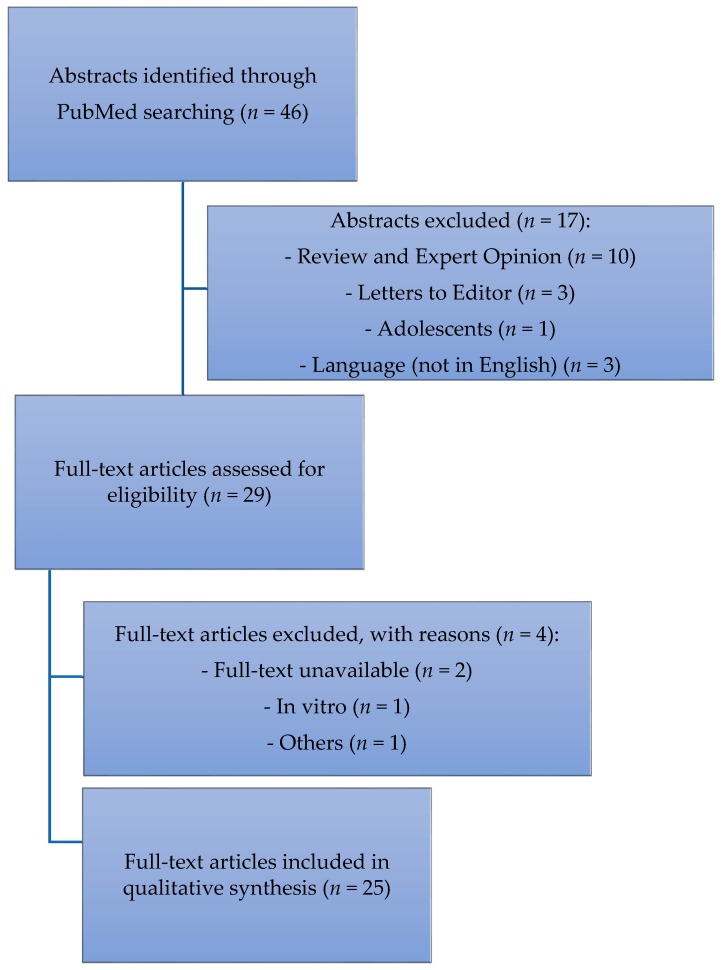
Hallucinogen Persisting Perception Disorder (HPPD) is a rare, and therefore, poorly understood condition linked to hallucinogenic drugs consumption. The prevalence of this disorder is low; the condition is more often diagnosed in individuals with a history of previous psychological issues or substance misuse, but it can arise in anyone, even after a single exposure to triggering drugs. The aims of the present study are to review all the original studies about HPPD in order to evaluate the following: (1) the possible suggested etiologies; (2) the possible hallucinogens involved in HPPD induction; (3) the clinical features of both HPPD I and II; (4) the possible psychiatric comorbidities; and (5) the available and potential therapeutic strategies. We searched PubMed to identify original studies about psychedelics and Hallucinogen Persisting Perception Disorder (HPPD). Our research yielded a total of 45 papers, which have been analyzed and tabled to provide readers with the most updated and comprehensive literature review about the clinical features and treatment options for HPPD.
Overview
The claims and statistics of this paper haven’t been checked yet.
Free: it reads the open-access text and checks the first 5 claims that cite a source we can check. Create a free account to check every claim.
Integrity signals
Registry
Cites
Statistics
Figures
Verification
Claims the paper makes
The claims and statistics of this paper haven’t been checked yet.
Free: it reads the open-access text and checks the first 5 claims that cite a source we can check. Create a free account to check every claim.
Claims other papers make about this one
Each is checked against this paper’s own text: does it say what the citing paper says it does?
The source backs part of the claim, not all of it — or backs it for a different population, condition or comparison.
In the citing paper
“Arguably, the most notorious cause of HPPD is lysergic acid diethylamide (LSD), although the condition can also arise from substances such as mescaline, psilocybin, ibogaine, ayahuasca, ketamine, 3,4-methylenedioxymethamphetamine (MDMA or ecstasy), cannabis, and even alcohol.3–5”
From Pharmacological Treatment of Hallucinogen Persisting Perception Disorder (HPPD): A Systematic Review (2025) · cites this paper as [3]
Experimental — accuracy not yet measuredThe source backs part of the claim, not all of it — or backs it for a different population, condition or comparison.
In the citing paper
“An earlier review by Martinotti and colleagues3 was also based on 16 articles. The authors mentioned efficacy for an even wider range of pharmacological agents and recommended combining several different medications to treat HPPD and any underlying or new comorbid disorders.”
From Pharmacological Treatment of Hallucinogen Persisting Perception Disorder (HPPD): A Systematic Review (2025) · cites this paper as [3]
Experimental — accuracy not yet measuredThe cited source says what the claim attributes to it.
In the citing paper
“Pharmacological interventions are all experimental and practice-based.”
From Pharmacological Treatment of Hallucinogen Persisting Perception Disorder (HPPD): A Systematic Review (2025) · cites this paper as [3]
The cited source says what the claim attributes to it.
In the citing paper
“Case reports and small-scale pharmacological studies show promising results with antipsychotics, antidepressants, antiepileptics, and benzodiazepines.”
From Pharmacological Treatment of Hallucinogen Persisting Perception Disorder (HPPD): A Systematic Review (2025) · cites this paper as [3]
The cited source says what the claim attributes to it.
In the citing paper
“The efficacy of these medications, however, remains unclear.3–5”
From Pharmacological Treatment of Hallucinogen Persisting Perception Disorder (HPPD): A Systematic Review (2025) · cites this paper as [3]
3 more claims about this paper
Create a free account to see every claim other papers make about this one.
Self-check
Percentages, sums and reported differences re-computed from the paper’s own numbers.
The self-check needs the paper’s full text.
Citations
Cites
Diagnostic and Statistical Manual of Mental Disorders
American Psychiatric Association (2013) · doi:10.1176/appi.books.9780890425596 · Cited by 116,369
Thalamic Relay Functions and Their Role in Corticocortical Communication
Guillery, R. W., & Sherman, S. M. (2002) · Neuron · doi:10.1016/s0896-6273(01)00582-7 · Cited by 636
Novel psychoactive substances of interest for psychiatry
Schifano, F., Orsolini, L., Duccio Papanti, G., & Corkery, J. M. (2015) · World Psychiatry · doi:10.1002/wps.20174 · Cited by 321
Amanita muscaria: chemistry, biology, toxicology, and ethnomycology
Michelot, D., & Melendez-Howell, L. M. (2003) · Mycological Research · doi:10.1017/s0953756203007305 · Cited by 260 · cited 1×
“) [22]; San Pedro cactus and Peyote (mescaline) [16,23]; ketamine [24]; dextromethorphan [25]; MDMA and MDA [26]; and cannabis and synthetic cannabinoids [27–33].”
BackgroundCinosi, E., Martinotti, G., Simonato, P., Singh, D., Demetrovics, Z., Roman-Urrestarazu, A., Bersani, F. S., Vicknasingam, B., Piazzon, G., Li, J.-H., et al. (2015) · BioMed Research International · doi:10.1155/2015/968786 · Cited by 234 · cited 1×
“This is consistent with the rapid and vast diffusion of these novel psychoactive compounds, nowadays easily available without specific cultural filters and references [91,92].”
BackgroundSelf-citationCaton, C. L. M., Drake, R. E., Hasin, D. S., Dominguez, B., Shrout, P. E., Samet, S., & Schanzer, W. B. (2005) · Archives of General Psychiatry · doi:10.1001/archpsyc.62.2.137 · Cited by 231 · cited 1×
“In fact, as in the vast majority of induced psychoses, visual hallucinations are notably more common than auditory [3].”
BackgroundHallucinogen persisting perception disorder: what do we know after 50 years?
Halpern, J. (2003) · Drug and Alcohol Dependence · doi:10.1016/s0376-8716(02)00306-x · Cited by 219 · cited 3×
“The main consideration that has to be done with respect to HPPD is its rare and unpredictable nature [16]: current prevalence estimates are unknown, but DSM-5 suggests 4.”
BackgroundClinical applications of hallucinogens: a review
Garcia-Romeu, A., Kersgaard, B., & Addy, P. H. (2016) · Experimental and Clinical Psychopharmacology · doi:10.1037/pha0000084 · Cited by 201 · cited 2×
“The effectiveness of Benzodiazepines may be related to their activity on the cortical serotonergic-inhibitory inter-neurons with GABAergic outputs [2,4].”
BackgroundThe Psychopharmacology of Hallucinogens
Abraham, H., Aldridge, A. M., & Gogia, P. (1996) · Neuropsychopharmacology · doi:10.1016/0893-133x(95)00136-2 · Cited by 173 · cited 2×
“In one study, haloperidol was noted to reduce hallucinations, but an exacerbation of flashbacks in the early phases of treatment was highlighted as well [1,69].”
BackgroundThe Relation Between Migraine, Typical Migraine Aura and “Visual Snow”
Schankin, C. J., Maniyar, F. H., Sprenger, T., Chou, D. E., Eller, M., & Goadsby, P. J. (2014) · Headache: The Journal of Head and Face Pain · doi:10.1111/head.12378 · Cited by 171 · cited 1×
“Recent research highlighted a brain dysfunction in patients with visual snow, located mainly in the right lingual gyrus [44], perhaps implying LSD involvement.”
Background
Research works printed but not linked: 8
- Hofmann A. LSD: My Problem Child McGraw-Hill New York, NY, USA 1980
- Lerner A.G. Flashbacks and Hppd (Hallucinogenic Persisting Perception Disorder): Clinical Aspects and Pharmacological Treatment Proceedings of the First World Congress of the World Association on Dual Disorders Madrid, Spain 23–26 March 2017
- Stahl S.M. Stahl’s Essential Psychopharmacology 1st ed. Cambridge University Press New York, NY, USA 1996
- Goodman C. Bor O. Lev-Ran S. Synthetic Cannabis Substances (SPS) Use and Hallucinogen Persisting Perception Disorder (HPPD): Two case reports Isr. J. Psychiatry Relat. Sci. 2014 51 277 280 25841224
- Kolb L. Burris B.C. Griffitshs S. Propanolol and Clonidine in the Treatment of Post Traumatic Disorders of War van der Kolk B.A. Post Traumatic Stress Disorder: Psychological and Biological Sequelae American Psychiatric Press Washington, DC, USA 1984
- Noushad F. Al Hillawi Q. Siram V. Arif M. 25 years of Hallucinogen Persisting Perception Disorder—A diagnostic challenge Br. J. Med. Pract. 2015 8 a805
- Aicardi J. Epilepsy: A Comprehensive Textbook 2nd ed. Wolters Kluwer Health/Lippincott Williams & Wilkins Philadelphia, PA, USA 2008
- Martinotti G. Ferro F. The exogenous model of induced psychotic experience in addiction Res. Adv. Psychiatry 2015 2 81 82
Cited by
A systematic study of microdosing psychedelics
Polito, V., & Stevenson, R. J. (2019) · PLoS ONE · doi:10.1371/journal.pone.0211023 · Cited by 235
Psychedelics in Psychiatry: Neuroplastic, Immunomodulatory, and Neurotransmitter Mechanisms
Inserra, A., De Gregorio, D., & Gobbi, G. (2021) · Pharmacological Reviews · doi:10.1124/pharmrev.120.000056 · Cited by 232
Microdosing psychedelics: personality, mental health, and creativity differences in microdosers
Anderson, T., Petranker, R., Rosenbaum, D., Weissman, C. R., Dinh-Williams, L.-A., Hui, K., Hapke, E., & Farb, N. A. S. (2019) · Psychopharmacology · doi:10.1007/s00213-018-5106-2 · Cited by 174
Case analysis of long-term negative psychological responses to psychedelics
Bremler, R., Katati, N., Shergill, P., Erritzøe, D., & Carhart-Harris, R. L. (2023) · Scientific Reports · doi:10.1038/s41598-023-41145-x · Cited by 137
“Given the historic spotlighting of enduring psychotic symptoms 52,53 and HPPD 54 after psychedelic-use, we felt particularly motivated to discover cases of these phenomena in the present study.”
BackgroundVisual snow syndrome: A clinical and phenotypical description of 1,100 cases
Puledda, F., Schankin, C. J., & Goadsby, P. J. (2020) · Neurology · doi:10.1212/wnl.0000000000008909 · Cited by 124
“Sudden onset of symptoms, n/N (%) 176/691 (26) 4/16 (25) 38/47 (81)”
Metadata
- Authors
- Martinotti, G., Santacroce, R., Pettorruso, M., Montemitro, C., Spano, M., Lorusso, M., Di Giannantonio, M., & Lerner, A.
- Affiliations
- University of Hertfordshire (GB)
- Università Cattolica del Sacro Cuore (IT)
- University of Chieti-Pescara (IT)
- Department of Neuroscience, Imaging and Clinical Sciences, University “G. d’Annunzio”, 66100 Chieti, Italy
- Tel Aviv University (IL)
- Corresponding author
- Santacroce, Rita
- Venue
- Brain Sciences
- Publisher
- MDPI AG
- Published
- 2018-03-16
- Volume
- 8
- Issue
- 3
- Pages
- 47
- ISSN
- 2076-3425 (ISSN-L)
- PMC
- PMC5870365
- OpenAlex
- W2790481213
- Cited by
- 171
- References
- 84
- Citations by year
- 2026: 10 · 2025: 18 · 2024: 24 · 2023: 22 · 2022: 24 · 2021: 26 · 2020: 33 · 2019: 8 · 2018: 6
- FWCI
- 3.07
- Type
- journal article
- Language
- en
- Open access
- gold
- doi.org
- Licence
- Locations
- Brain Sciences (publishedVersion, cc-by)
- Europe PMC (PubMed Central) (publishedVersion, cc-by)
- PubMed Central (publishedVersion, cc-by)
- PubMed (publishedVersion)
- DOAJ (DOAJ: Directory of Open Access Journals) (submittedVersion, cc-by-sa)
- Institutional Research Information System University of Ferrara (University of Ferrara) (submittedVersion)
- Topics
- Social Sciences › Psychology › Clinical Psychology › Psychedelics and Drug Studies
- Life Sciences › Neuroscience › Cognitive Neuroscience › Hallucinations in medical conditions
- Health Sciences › Medicine › Psychiatry and Mental health › Schizophrenia research and treatment
- Keywords
- hallucinogen persisting perception disorder, HPPD, hallucinogens, psychedelics, etiology, clinical features, psychiatric comorbidity, substance abuse, treatment options
About these checks
Registry, retraction, Cites and statistics results are computed, not judged, with one exception: a printed reference that no index lists is read once by a model before it counts as a citation error. Claims are extracted by a model and kept only when their quote appears verbatim in the text; each cited source is then checked, with a model’s help, for whether it says what the claim relies on. Those verdicts can be wrong — read the claim’s quote and the cited source before relying on one.
Statistics and arithmetic are recomputed, not judged.
Confidence bands are shown only for fields calibrated on our annotated test set. None is calibrated yet, so no band is shown.
What counts as a claim ›How we measure confidence ›How we check this ›
Are you an author, or do you see a problem with this page? Request a review
Data sources
Bibliographic data: Semantic Scholar, OpenAlex, Crossref.
Contains information from the Semantic Scholar Academic Graph Datasets, made available under the ODC Attribution License (ODC-BY 1.0).
Semantic Scholar’s data is described in: Kinney, R., et al. (2023). The Semantic Scholar Open Data Platform. arXiv:2301.10140.
