

Current Intervention Treatments for Food Addiction: A Systematic Review
Open accessThe DOI matches its Crossref record; 49 of the 50 references it cites were found in a registry or an index.
Abstract
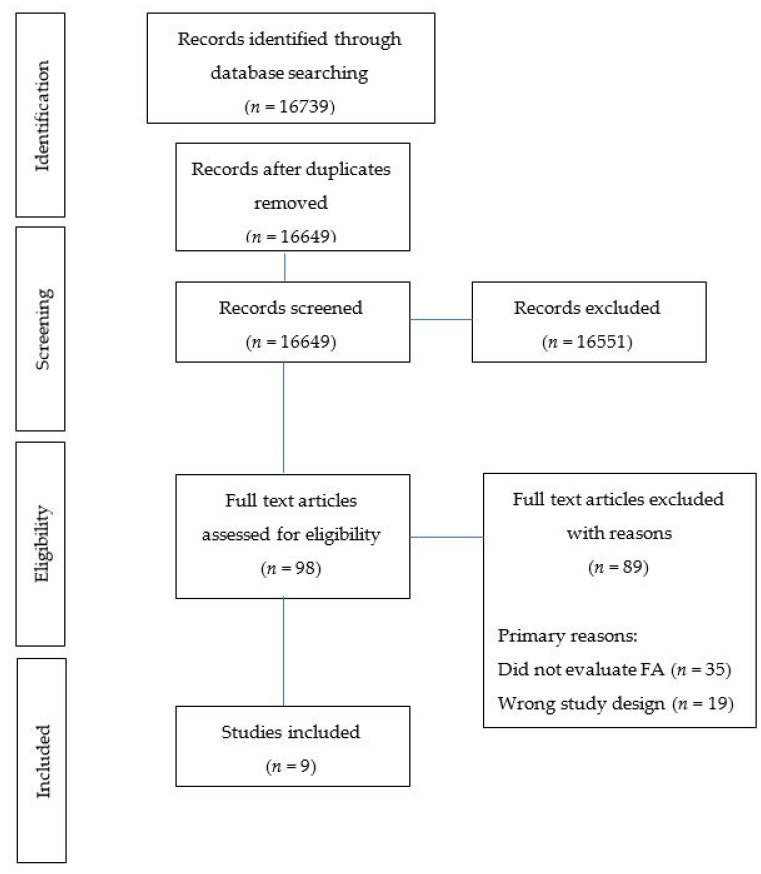
Research on the concept of food addiction (FA) has steadily grown and, based on a widely used self-report, FA is estimated to affect between 16–20% of the adult population. However, there are few interventions available for people with self-reported FA, and their efficacy is unclear. The primary aim of the review was to examine the efficacy of different interventions, including behavioural/lifestyle, medication and surgical approaches, for reducing symptoms and/or changing diagnosis of FA among adolescents and adults. A secondary aim was to examine the influence of sex as a moderator of intervention effects. A systematic search was performed from 2008–2020 to identify studies that used the YFAS to assess the effectiveness of interventions on FA. Nine studies were identified (n = 7 adults, n = 2 adolescents) including a total of 812 participants (range 22–256) with an average of 69% females per study. The types of interventions included medications (n = 3), lifestyle modification (n = 3), surgical (n = 2) and behavioural (n = 1), with FA being assessed as a secondary outcome in all studies. Five studies in adults reported a significant reduction in FA symptoms or diagnosis from pre to post-intervention, two when compared to a control group and three in the intervention group only. Efficacious interventions included: medication (combination of naltrexone and bupropion, as well as pexacerfont), bariatric surgery and lifestyle modification. No significant changes in FA were reported in adolescent studies. Given few studies were identified by the review, there is insufficient evidence to provide clear recommendations for practice; however, some interventions show potential for reducing self-reported FA outcomes in adults. Future research should explore the longer-term efficacy of interventions and the effectiveness of treatments with sufficient sample sizes.
Overview
The claims and statistics of this paper haven’t been checked yet.
Free: it reads the open-access text and checks the first 5 claims that cite a source we can check. Create a free account to check every claim.
Integrity signals
Registry
Cites
Statistics
Figures
Verification
Claims the paper makes
The claims and statistics of this paper haven’t been checked yet.
Free: it reads the open-access text and checks the first 5 claims that cite a source we can check. Create a free account to check every claim.
Claims other papers make about this one
Each is checked against this paper’s own text: does it say what the citing paper says it does?
The source backs part of the claim, not all of it — or backs it for a different population, condition or comparison.
In the citing paper
“In addition, naltrexone can be highly effective in reducing alcohol intake as well as combating non-suicidal self-injury and binge eating (200–210).”
From The integrated treatment of eating disorders, posttraumatic stress disorder, and psychiatric comorbidity: a commentary on the evolution of principles and guidelines (2023) · cites this paper as [205]
Experimental — accuracy not yet measured
Self-check
Percentages, sums and reported differences re-computed from the paper’s own numbers.
The self-check needs the paper’s full text.
Citations
Cites
Liberati, A., Altman, D. G., Tetzlaff, J., Mulrow, C., Gøtzsche, P. C., Ioannidis, J. P. A., Clarke, M., Devereaux, P. J., Kleijnen, J., & Moher, D. (2009) · PLoS Medicine · doi:10.1371/journal.pmed.1000100 · Cited by 28,164
Liberati, A., Altman, D. G., Tetzlaff, J., Mulrow, C., Gotzsche, P. C., Ioannidis, J. P. A., Clarke, M., Devereaux, P. J., Kleijnen, J., & Moher, D. (2009) · BMJ · doi:10.1136/bmj.b2700 · Cited by 17,648
Hoffmann, T. C., Glasziou, P. P., Boutron, I., Milne, R., Perera, R., Moher, D., Altman, D. G., Barbour, V., Macdonald, H., Johnston, M., et al. (2014) · BMJ · doi:10.1136/bmj.g1687 · Cited by 10,548 · cited 1×
“More specifically, FA studies that adopt a nutrition component in their intervention should be encouraged to provide a detailed nutrition description and use checklists such as TIDIER [40] to better ensure progress in the field.”
Preliminary validation of the Yale Food Addiction Scale
Gearhardt, A. N., Corbin, W. R., & Brownell, K. D. (2009) · Appetite · doi:10.1016/j.appet.2008.12.003 · Cited by 1,369 · cited 2×
“FA is often accompanied by symptoms characterised by a sense of loss of control, continued use regardless of adverse consequences and inability to reduce consumption despite the desire to do so [1,6].”
BackgroundMethodElfhag, K., & Rössner, S. (2005) · Obesity Reviews · doi:10.1111/j.1467-789x.2005.00170.x · Cited by 1,343 · cited 1×
“such as those focused on weight loss, whereby the short-term success of initial weight loss may reflect better compliance with the treatment from participants [46].”
BackgroundWilfley, D. E., Welch, R. R., Stein, R. I., Spurrell, E. B., Cohen, L. R., Saelens, B. E., Dounchis, J. Z., Frank, M. A., Wiseman, C. V., & Matt, G. E. (2002) · Archives of General Psychiatry · doi:10.1001/archpsyc.59.8.713 · Cited by 603 · cited 1×
“, >20 sessions over a longer follow up [41], intervention lengths of the studies in this review are relatively short.”
BackgroundThe Prevalence of Food Addiction as Assessed by the Yale Food Addiction Scale: A Systematic Review
Pursey, K., Stanwell, P., Gearhardt, A., Collins, C., & Burrows, T. (2014) · Nutrients · doi:10.3390/nu6104552 · Cited by 537 · cited 6×
“The search was conducted in the following databases and based on previous reviews of FA [4,5]: The Cochrane Library, CINAHL (Cumulative Index to Nursing and Allied Health), MEDLINE, EMBASE (Excerpta Medica Database), Scopus, Informit Health Collection, Proquest, Web of Science and PsycINFO.”
BackgroundMethodInfluentialInterrelationships among impulsive personality traits, food addiction, and Body Mass Index
Murphy, C. M., Stojek, M. K., & MacKillop, J. (2014) · Appetite · doi:10.1016/j.appet.2013.10.008 · Cited by 329 · cited 1×
“The lower date range for the search criteria was chosen to reflect the emergence and publication of the YFAS tool [29].”
MethodFood addiction and associations with mental health symptoms: A systematic review with meta-analysis
Burrows, T., Kay‐Lambkin, F., Pursey, K., Skinner, J., & Dayas, C. (2018) · Journal of Human Nutrition and Dietetics · doi:10.1111/jhn.12532 · Cited by 245 · cited 8×
“The search was conducted in the following databases and based on previous reviews of FA [4,5]: The Cochrane Library, CINAHL (Cumulative Index to Nursing and Allied Health), MEDLINE, EMBASE (Excerpta Medica Database), Scopus, Informit Health Collection, Proquest, Web of Science and PsycINFO.”
BackgroundMethodInfluentialSelf-citationBurmeister, J. M., Hinman, N., Koball, A., Hoffmann, D. A., & Carels, R. A. (2013) · Appetite · doi:10.1016/j.appet.2012.09.013 · Cited by 232 · cited 1×
“7–100%), when compared to similar FA weight loss studies where retention rates are usually higher with an average of 88% [43,44].”
Research works printed but not linked: 1
- Covidence Systematic Review Software. Veritas Health Innovation, Melbourne, Australia Available online: www.covidence.org (accessed on 26 May 2020)
Cited by
Praxedes, D. R. S., Júnior, A. E. D. S., Macêna, M. D. L., de Oliveira, A. D. S., Cardoso, K. S., Nunes, L. O., Monteiro, M. B. L., de Melo, I. S. V., Gearhardt, A. N., & Bueno, N. B. (2021) · European Eating Disorders Review · doi:10.1002/erv.2878 · Cited by 192
“…reviews are aimed at specific population groups (Skinner et al., 2021; Yekaninejad et al., 2021), specific clinical contexts (Burrows et al., 2018; Leary et al., 2021), with data from only one of the YFAS versions (Oliveira et al., 2021) or just intended to explore the construct of FA…”
BackgroundUltra-Processed Food Addiction: A Research Update
LaFata, E. M., Allison, K. C., Audrain-McGovern, J. E., & Forman, E. M. (2024) · Current Obesity Reports · doi:10.1007/s13679-024-00569-w · Cited by 114
“From the small number of studies included in Leary and colleagues’ review [71], it is apparent that more research is needed to explore how existing interventions for overweight and obesity may have secondary benefits for improving UPF addiction.”
BackgroundInfluentialBrewerton, T. D. (2023) · Frontiers in Psychiatry · doi:10.3389/fpsyt.2023.1149433 · Cited by 46
Wiss, D. A. (2022) · Current Addiction Reports · doi:10.1007/s40429-022-00411-0 · Cited by 43
Food Addiction: A Comprehensive Review
Florio, L., Lassi, D. L. S., Périco, C. D. A.-M., Vignoli, N. G., Torales, J. C., Ventriglio, A., & Castaldelli-Maia, J. M. (2022) · The Journal of Nervous and Mental Disease · doi:10.1097/nmd.0000000000001555 · Cited by 42
“High BMI, increased abdominal fat, BED, bulimia nervosa, depression, anxiety, posttraumatic stress disorder, and substance use are all risk factors for disordered eating behavior (Leary et al., 2021).”
BackgroundFood addiction among university students: The effect of mindful eating
Cebioğlu, İ. K., Bilgin, G. D., Kavsara, H. K., Koyuncu, A. G., Sarioğlu, A., Aydin, S., & TAN, M. K. (2022) · Appetite · doi:10.1016/j.appet.2022.106133 · Cited by 29
Food Addiction: a Deep Dive into ‘Loss of Control’ and ‘Craving’
Whatnall, M. C., Skinner, J. A., Leary, M., & Burrows, T. L. (2022) · Current Addiction Reports · doi:10.1007/s40429-022-00431-w · Cited by 27
Nicolau, J., Tamayo, M. I., Sanchís, P., Pujol, A., Pérez-Bec, G., Sfondrini, G., & Masmiquel, L. (2024) · Journal of Addictive Diseases · doi:10.1080/10550887.2024.2315365 · Cited by 14
“14 Besides, this type of medications is no longer available in Spain.”
Skinner, J. A., Whatnall, M. C., Leary, M., Collins, R. A., Pursey, K., Verdejo‐García, A., Hay, P., Baker, A., Hides, L. M., Paxton, S. J., et al. (2023) · BMJ Open · doi:10.1136/bmjopen-2022-064151 · Cited by 16
Skinner, J. A., Leary, M., Whatnall, M. C., Collins, R. A., Pursey, K., Verdejo‐García, A., Hay, P., Baker, A., Hides, L. M., Paxton, S. J., et al. (2024) · Appetite · doi:10.1016/j.appet.2024.107211 · Cited by 17
“…large amounts of highly processed foods (Pursey KM et al., 2021b), there are no published dietitian-led interventions incorporating multi-lifestyle components (e.g. diet, physical activity and sleep hygiene) for the dietary and behavioural management of addictive eating (Leary M et al., 2021).”
Halbeisen, G., Pahlenkemper, M., Sabel, L., Richardson, C., Agüera, Z., Fernández‐Aranda, F., & Paslakis, G. (2024) · Obesity Reviews · doi:10.1111/obr.13851 · Cited by 18
Koning, E., & Brietzke, E. M. (2024) · Trends in Psychiatry and Psychotherapy · doi:10.47626/2237-6089-2022-0597 · Cited by 22
“78 It consists of behaviors that closely exhibit those of SUDs, including excessive craving, enhanced food reward, and impulsive food consumption.”
Reche-García, C., Piernas, C., García-Vizcaíno, E. M., Lorente-Gallego, A. M., Piuvezam, G., Frutos, M. D., & Morante, J. J. H. (2024) · Obesity Surgery · doi:10.1007/s11695-024-07107-6 · Cited by 16
“Although these interventions have been partially reviewed in the past, no meta-analysis has been conducted to evaluate their efficacy in improving FA symptoms [15, 28].”
Dennis, K., Barrera, S., Bishop, N., Nguyen, C., & Brewerton, T. D. (2024) · Nutrients · doi:10.3390/nu16132019 · Cited by 15
“Despite these advances, FA/UPFA remains a relatively new and still controversial condition in clinical mental health care, and the most effective way to treat it, particularly from a nutritional perspective, represents a large gap in our evidence base [15,17,26–36].”
BackgroundInfluentialLeary, M., Pursey, K., Verdejo‐García, A., Skinner, J. A., Whatnall, M. C., Hay, P., Collins, C. E., Baker, A., & Burrows, T. L. (2022) · BMJ Open · doi:10.1136/bmjopen-2021-060196 · Cited by 14
Collins, R. A., Duncanson, K., Skinner, J. A., Hay, P., Paxton, S. J., & Burrows, T. L. (2023) · Behavioral Sciences · doi:10.3390/bs13100817 · Cited by 13
“Currently, there are minimal evidence-based behaviour management programs available for people with self-reported addictive eating, with majority of interventions being weight loss-focused and based around bariatric surgery, medications, and lifestyle interventions [7].”
BackgroundFood Addiction in Application to Obesity Management.
Almeida, R. D., Kamath, G., & Cabandugama, P. K. (2022) · PubMed Central · Cited by 20
Leary, M., Skinner, J. A., Pursey, K., Verdejo‐García, A., Collins, R. A., Collins, C. E., Hay, P., & Burrows, T. L. (2024) · Journal of Human Nutrition and Dietetics · doi:10.1111/jhn.13312 · Cited by 12
Exploring Food Addiction Across Several Behavioral Addictions: Analysis of Clinical Relevance
Gaspar‐Pérez, A., Granero, R., Fernández‐Aranda, F., Rosińska, M., Artero, C., Ruiz-Torras, S., Gearhardt, A. N., Demetrovics, Z., Guàrdia‐Olmos, J., & Jiménez‐Múrcia, S. (2025) · Nutrients · doi:10.3390/nu17071279 · Cited by 11
“For FA, systematic reviews have reported that interventions focused on lifestyle modification (diet and physical activity), pharmacological interventions (combination of naltrexone and bupropion, as well as pexacerfont), and bariatric surgery report a decrease in FA symptoms [88].”
Makin, L., Meyer, A., Chubinidze, D., Mondelli, V., & Tchanturia, K. (2025) · Eating and Weight Disorders - Studies on Anorexia Bulimia and Obesity · doi:10.1007/s40519-025-01804-6 · Cited by 17
Leary, M., Pursey, K., Verdejo‐García, A., Smout, S., MCBRIDE, N. T., Osman, B., Champion, K. E., Gardner, L. A., Jebeile, H., Kelly, E. V., et al. (2022) · Behavioral Sciences · doi:10.3390/bs12120488 · Cited by 12
“While both studies reported an overall reduction in FA diagnosis or symptom score, they were not, however, statistically significant [50].”
BackgroundResultInfluentialSkinner, J. A., Leary, M., Whatnall, M. C., Hay, P., Paxton, S. J., Collins, C. E., & Burrows, T. L. (2025) · Journal of Eating Disorders · doi:10.1186/s40337-025-01241-x · Cited by 9
“However, given there are only a small number of published intervention studies (see reviews [35, 36] and [37–41]), and the time taken for translation of research into healthcare practice, accessing treatment for addictive eating currently relies mostly on self-help options [42].”
Bennett, E., Lycett, D., Whelan, M., Bellamy, E. L., Banks, S., & Patel, R. (2025) · Frontiers in Psychiatry · doi:10.3389/fpsyt.2025.1620372 · Cited by 7
“OA is structured around a peer-led, 12-step, spirituality-based framework and operates without direct involvement from healthcare professionals such as dietitians and psychologists (28).”
Açık, M., & Ülger, T. G. (2025) · Journal of Eating Disorders · doi:10.1186/s40337-025-01428-2 · Cited by 8
“Increasing dietary adherence has been emphasized as having positive effects on mental well-being, highlighting the necessity of addressing both nutritional and mental health dimensions together in therapeutic approaches targeting food addiction [42].”
Legendre, M., & Bégin, C. (2023) · Eating Behaviors · doi:10.1016/j.eatbeh.2023.101720 · Cited by 6
Gökmen, B. D., & Yılmaz, G. (2021) · Psychiatry and Clinical Psychopharmacology · doi:10.5152/pcp.2021.21225 · Cited by 4
Prevalence and correlates of addictive eating behaviours in a large cohort of Australian adolescents
Smout, S., Gardner, L. A., Champion, K. E., Osman, B., Kihas, I., Thornton, L. K., Teesson, M., Newton, N. C., & Burrows, T. L. (2023) · Australian & New Zealand Journal of Psychiatry · doi:10.1177/00048674231165201 · Cited by 4
“, 2014), has demonstrated substantial clinical utility (Cassin and Sockalingam, 2021), has unique treatment requirements (Leary et al., 2021), and has been identified as a key barrier to the effectiveness of nutrition and weight loss interventions (Cassin and Sockalingam, 2021; Schiestl et al.”
BackgroundSkinner, J. A., Leary, M., Wynne, O., Hay, P., Collins, C. E., & Burrows, T. L. (2024) · Journal of Public Health · doi:10.1093/pubmed/fdae273 · Cited by 3
“6 This prompted the TRACE (Targeted Research on Addictive and Compulsive Eating) program, a dietitian-led telehealth intervention focused on reducing symptoms of addictive eating and improving mental health.”
Santiago, V. A., & Cassin, S. E. (2026) · Journal of Eating Disorders · doi:10.1186/s40337-025-01522-5 · Cited by 3
“Although various models have been proposed, there is a lack of clear recommendations or empirically supported interventions for food addiction [24, 25].”
Kosana, D., & Ayyalasomayajula, R. (2023) · Telangana Journal of Psychiatry · doi:10.4103/tjp.tjp_66_23 · Cited by 2
Santiago, V. A., Cassin, S. E., Sockalingam, S., & Carter, A. (2022) · Springer eBooks · doi:10.1007/978-3-030-92392-1_158 · Cited by 2
Leary, M., Skinner, J. A., Hutchesson, M., Teychenne, M. J., Whatnall, M. C., Hay, P., & Burrows, T. L. (2025) · Journal of Human Nutrition and Dietetics · doi:10.1111/jhn.70102 · Cited by 3
“To the authors' knowledge, there are no interventions targeting addictive eating in young adults [30 – 41].”
Evidence to action: a perspective on treatment approaches for food addiction
Skinner, J. A., Leary, M., Whatnall, M. C., & Burrows, T. L. (2025) · European Journal of Clinical Nutrition · doi:10.1038/s41430-025-01668-0 · Cited by 2
“The 2021 review by Leary et al. [11] included nine studies of varying treatment approaches for FA as measured by the YFAS, including medications, lifestyle modi fi cation, surgical and behavioural.”
When bariatric surgery reduces food addiction: a prospective study
Ban, X.-Y., Wang, C., Xu, T., Liu, L. L., Yin, C.-Y., Zhang, H., Zhang, H., Han, X.-D., Zheng, H., & Di, J. (2025) · Frontiers in Nutrition · doi:10.3389/fnut.2025.1535911 · Cited by 1
Brain imaging correlates of food addiction: A systematic review with methodological recommendations
Renaud, I., Thibault, R., & Val‐Laillet, D. (2026) · Progress in Neuro-Psychopharmacology and Biological Psychiatry · doi:10.1016/j.pnpbp.2026.111653 · Cited by 1
Kafalı, H. Y., KESKİN, N., Mengen, E., Aktener, A., Demirtaş, M. E., & Uçaktürk, S. A. (2022) · Kırıkkale Üniversitesi Tıp Fakültesi Dergisi · doi:10.24938/kutfd.1163152 · Cited by 1
Santiago, V. A., Cassin, S. E., Sockalingam, S., & Carter, A. (2022) · Springer eBooks · doi:10.1007/978-3-030-67928-6_158-1 · Cited by 1
Determination of Food Addiction and Mindful Eating in Overweight and Obese Adults
DÖLEK, C., & CEBİRBAY, M. A. (2022) · Acta Scientifci Nutritional Health · doi:10.31080/asnh.2022.06.1103
Hayek, S. E., Padilla, V. L., Eid, M., & Jovel, A. (2022) · Nutritional neurosciences · doi:10.1007/978-981-19-5021-6_12
Collins, R. A., Skinner, J. A., Leary, M., & Burrows, T. L. (2024) · Journal of Human Nutrition and Dietetics · doi:10.1111/jhn.13300 · Cited by 1
Alameen, A. A., AlSharari, S. D., Alshammari, M. A., Damaj, M. I., & Sari, Y. (2024) · Saudi Pharmaceutical Journal · doi:10.1016/j.jsps.2024.102138
“Meanwhile, food addiction is estimated to affect between 16 – 20 % of the adult population (Pursey et al., 2014; Burrows et al., 2018), and few interventions are available with unclear efficacy (Leary et al., 2021).”
Food Addiction and Obesity Treatment Outcomes
Paslakis, G., Halbeisen, G., Agüera, Z., Jiménez‐Múrcia, S., & Fernández‐Aranda, F. (2024) · Oxford University Press eBooks · doi:10.1093/oso/9780190671051.003.0044
The hidden epidemic: food addiction among medical and non-medical university students
Elghazally, N. M., & Abdeldaim, D. E. (2025) · Nutrire · doi:10.1186/s41110-025-00334-6
“The mechanism of FA remains controversial [6], with some neurobiological studies offering insights into potential underlying processes [7].”
Psilocybin shows promise for treating eating disorders, but more controlled research is needed
PhD, E. (2023) · The Conversation · doi:10.64628/aam.jwfsyj9g9
Zhang, P., Dan-chun, L. A. N., Ting-ting, G. U., Wu, J., Rui-rui, T. A. O., Tang, C., Li, Z., & Li-ming, L. U. (2025) · 世界针灸杂志:英文版 · doi:10.1016/j.wjam.2025.09.001
Prevalence of food addiction and sex-specific correlates in a large sample of Iranian adults
Sarvandani, M. N., Chen, Q., Asadi, M., Brunault, P., LaFata, E. M., & Burrows, T. L. (2025) · Scientific Reports · doi:10.1038/s41598-025-26203-w · Cited by 1
“The interventions targeting FA are still on its infancy and much endeavor is warranted 78–80 , however, the sex-specific associations identified in both the current study and previous ones cannot be neglected when developing interventions in the future.”
Unhealthy food bias in food addiction: behavioral evidence from a probabilistic image choice task
Solinas, M., Ingrand, S. S., Chauvet, C., Dugast, E., Besnier, M., Lafay‐Chebassier, C., Jaafari, N., & Chatard, A. (2026) · Journal of Eating Disorders · doi:10.1186/s40337-026-01590-1
“…although food addiction is not currently listed as a psychiatric disorder in the Diagnostic and Statistical Manual of Mental Disorders (DSM-5), many researchers and clinicians believe that this condition exists and plays a role in behavioral disorders related to excessive food consumption [5–8].”
Li, D., Shanazari, E., Galimov, A., Sinclair, D. L., Becerra, L. S., Meza, L., Gearhardt, A. N., & Sussman, S. Y. (2026) · Substance Use & Addiction Journal · doi:10.1177/29767342261443841
“19, 20 One of the earliest randomized-controlled trials (RCTs) on FA treatment was a psychotherapy tele-health intervention that included coping, skill-building, and goal-setting in Australian adults.”
Food Addiction: Neurobiological Foundations, Psychological Determinants and Clinical Outcomes
Uysal, F. (2026) · IntechOpen eBooks · doi:10.5772/intechopen.1017116
Metadata
- Authors
- Leary, M., Pursey, K. M., Verdejo-Garcia, A., & Burrows, T. L.
- Affiliations
- University of Newcastle Australia (AU)
- School of Psychological Sciences and Turner Institute for Brain and Mental Health, Monash University, Clayton, VIC 3800, Australia
- Corresponding author
- Burrows, Tracy L.
- Venue
- Behavioral Sciences
- Publisher
- MDPI AG
- Published
- 2021-05-23
- Volume
- 11
- Issue
- 6
- Pages
- 80
- ISSN
- 2076-328X (ISSN-L)
- PMC
- PMC8224570
- OpenAlex
- W3165345793
- Cited by
- 50
- References
- 50
- Citations by year
- 2026: 5 · 2025: 12 · 2024: 11 · 2023: 8 · 2022: 12 · 2021: 2
- FWCI
- 1.10
- Type
- journal article
- Language
- en
- Open access
- gold
- doi.org
- Licence
- Locations
- Behavioral Sciences (publishedVersion, cc-by)
- PubMed Central (publishedVersion, cc-by)
- PubMed (publishedVersion)
- DOAJ (DOAJ: Directory of Open Access Journals) (submittedVersion, cc-by-sa)
- Figshare (submittedVersion, cc-by)
- NOVA (University of Newcastle Australia) (submittedVersion, cc-by)
- Funders
- National Health and Medical Research Council (NHMRC) (G1801414)
- Topics
- Social Sciences › Psychology › Clinical Psychology › Eating Disorders and Behaviors
- Health Sciences › Nursing › Nutrition and Dietetics › Nutrition, Health and Food Behavior
- Health Sciences › Medicine › Epidemiology › Substance Abuse Treatment and Outcomes
- Keywords
- food addiction, therapeutic interventions, naltrexone, bupropion, bariatric surgery, lifestyle modification, behavioral interventions, adolescents, sex differences, intervention efficacy
About these checks
Registry, retraction, Cites and statistics results are computed, not judged, with one exception: a printed reference that no index lists is read once by a model before it counts as a citation error. Claims are extracted by a model and kept only when their quote appears verbatim in the text; each cited source is then checked, with a model’s help, for whether it says what the claim relies on. Those verdicts can be wrong — read the claim’s quote and the cited source before relying on one.
Statistics and arithmetic are recomputed, not judged.
Confidence bands are shown only for fields calibrated on our annotated test set. None is calibrated yet, so no band is shown.
What counts as a claim ›How we measure confidence ›How we check this ›
Are you an author, or do you see a problem with this page? Request a review
Data sources
Bibliographic data: Semantic Scholar, OpenAlex, Crossref.
Contains information from the Semantic Scholar Academic Graph Datasets, made available under the ODC Attribution License (ODC-BY 1.0).
Semantic Scholar’s data is described in: Kinney, R., et al. (2023). The Semantic Scholar Open Data Platform. arXiv:2301.10140.
