

The DOI matches its Crossref record; 133 of the 137 references it cites were found in a registry or an index.
Tumor Energy Metabolism and Potential of 3-Bromopyruvate as an Inhibitor of Aerobic Glycolysis: Implications in Tumor Treatment
Open accessAbstract
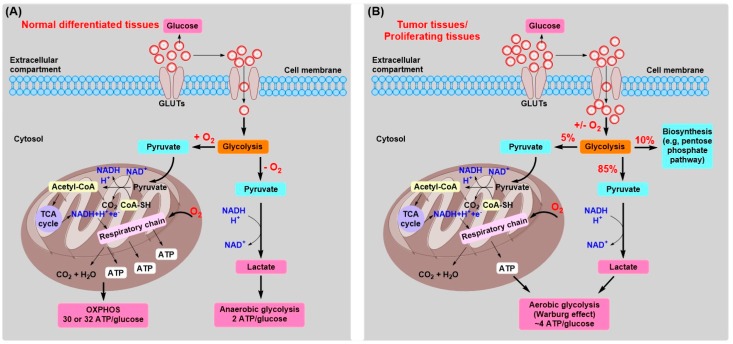
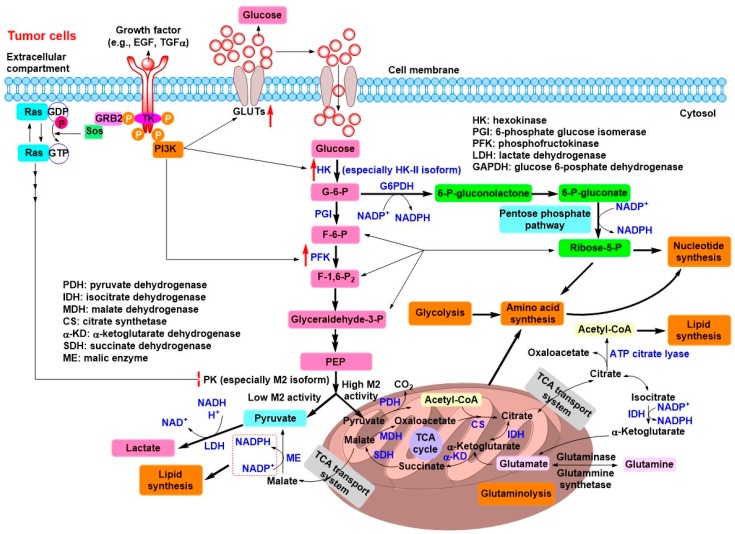
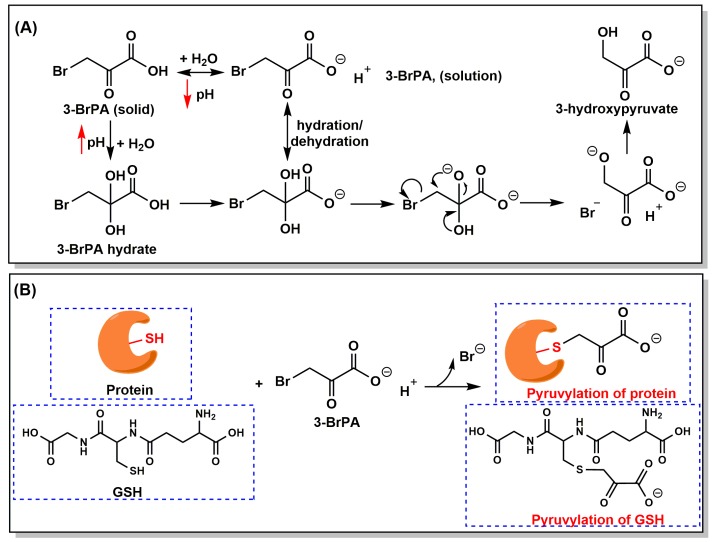
Tumor formation and growth depend on various biological metabolism processes that are distinctly different with normal tissues. Abnormal energy metabolism is one of the typical characteristics of tumors. It has been proven that most tumor cells highly rely on aerobic glycolysis to obtain energy rather than mitochondrial oxidative phosphorylation (OXPHOS) even in the presence of oxygen, a phenomenon called “Warburg effect”. Thus, inhibition of aerobic glycolysis becomes an attractive strategy to specifically kill tumor cells, while normal cells remain unaffected. In recent years, a small molecule alkylating agent, 3-bromopyruvate (3-BrPA), being an effective glycolytic inhibitor, has shown great potential as a promising antitumor drug. Not only it targets glycolysis process, but also inhibits mitochondrial OXPHOS in tumor cells. Excellent antitumor effects of 3-BrPA were observed in cultured cells and tumor-bearing animal models. In this review, we described the energy metabolic pathways of tumor cells, mechanism of action and cellular targets of 3-BrPA, antitumor effects, and the underlying mechanism of 3-BrPA alone or in combination with other antitumor drugs (e.g., cisplatin, doxorubicin, daunorubicin, 5-fluorouracil, etc.) in vitro and in vivo. In addition, few human case studies of 3-BrPA were also involved. Finally, the novel chemotherapeutic strategies of 3-BrPA, including wafer, liposomal nanoparticle, aerosol, and conjugate formulations, were also discussed for future clinical application.
Overview
The claims and statistics of this paper haven’t been checked yet.
Run the check — free, no account needed. It reads the open-access text and checks the sources it cites.
Integrity signals
Registry
Cites
Statistics
Figures
Verification
Claims the paper makes
The claims and statistics of this paper haven’t been checked yet.
Run the check — free, no account needed. It reads the open-access text and checks the sources it cites.
Claims other papers make about this one
Each is checked against this paper’s own text: does it say what the citing paper says it does?
In the citing paper
“2-DG, 3BP, and metformin sensitize cancer cells to different chemotherapeutic agents and irradiation [78,79].”
From 20-Hydroxyecdysone Confers Antioxidant and Antineoplastic Properties in Human Non-Small Cell Lung Cancer Cells (2023) · cites this paper as [79]
Self-check
Percentages, sums and reported differences re-computed from the paper’s own numbers.
The self-check needs the paper’s full text.
Citations
Cites
Bray, F., Ferlay, J., Soerjomataram, I., Siegel, R. L., Torre, L. A., & Jemal, A. (2018) · CA: A Cancer Journal for Clinicians · doi:10.3322/caac.21492 · Cited by 84,109
Hallmarks of Cancer: The Next Generation
Hanahan, D., & Weinberg, R. A. (2011) · Cell · doi:10.1016/j.cell.2011.02.013 · Cited by 66,590
Understanding the Warburg Effect: The Metabolic Requirements of Cell Proliferation
Vander Heiden, M. G., Cantley, L. C., & Thompson, C. B. (2009) · Science · doi:10.1126/science.1160809 · Cited by 16,197
Warburg, O. (1956) · Science · doi:10.1126/science.123.3191.309 · Cited by 13,425
The Warburg Effect: How Does it Benefit Cancer Cells?
Liberti, M. V., & Locasale, J. W. (2016) · Trends in Biochemical Sciences · doi:10.1016/j.tibs.2015.12.001 · Cited by 5,150
The metabolism of tumors in the body
Warburg, O., Wind, F., & Negelein, E. (1927) · Journal of General Physiology · doi:10.1085/jgp.8.6.519 · Cited by 4,416
The M2 splice isoform of pyruvate kinase is important for cancer metabolism and tumour growth
Christofk, H. R., Vander Heiden, M. G., Harris, M. H., Ramanathan, A., Gerszten, R. E., Wei, R., Fleming, M. D., Schreiber, S. L., & Cantley, L. C. (2008) · Nature · doi:10.1038/nature06734 · Cited by 2,820
Targeting lactate-fueled respiration selectively kills hypoxic tumor cells in mice
Sonveaux, P., Végran, F., Schroeder, T., Wergin, M., Verrax, J., Rabbani, Z. N., Saedeleer, C. J. D., Kennedy, K. M., Diepart, C., Jordan, B. F., et al. (2008) · Journal of Clinical Investigation · doi:10.1172/jci36843 · Cited by 1,635
Targeting cancer metabolism: a therapeutic window opens
Heiden, M. G. V. (2011) · Nature Reviews Drug Discovery · doi:10.1038/nrd3504 · Cited by 1,443
Energy metabolism in tumor cells
Moreno‐Sánchez, R., Rodríguez‐Enríquez, S., Marín‐Hernández, Á., & Saavedra, E. (2007) · FEBS Journal · doi:10.1111/j.1742-4658.2007.05686.x · Cited by 1,121
S-nitrosylated GAPDH initiates apoptotic cell death by nuclear translocation following Siah1 binding
Hara, M. R., Agrawal, N., Kim, S. F., Cascio, M. B., Fujimuro, M., Ozeki, Y., Takahashi, M., Cheah, J. H., Tankou, S. K., Hester, L. D., et al. (2005) · Nature Cell Biology · doi:10.1038/ncb1268 · Cited by 1,079
ABC transporters in cancer: more than just drug efflux pumps
Fletcher, J. I., Haber, M., Henderson, M. J., & Norris, M. D. (2010) · Nature reviews. Cancer · doi:10.1038/nrc2789 · Cited by 1,052
Pyruvate kinase M2 is a phosphotyrosine-binding protein
Christofk, H. R., Vander Heiden, M. G., Wu, N., Asara, J. M., & Cantley, L. C. (2008) · Nature · doi:10.1038/nature06667 · Cited by 995
Xu, R., Pelicano, H., Zhou, Y. N., Carew, J. S., Feng, L., Bhalla, K. N., Keating, M. J., & Huang, P. (2005) · Cancer Research · doi:10.1158/0008-5472.613.65.2 · Cited by 835
Mathupala, S. P., Ko, Y. H., & Pedersen, P. L. (2006) · Oncogene · doi:10.1038/sj.onc.1209603 · Cited by 782
The monocarboxylate transporter family—Role and regulation
Halestrap, A. P., & Wilson, M. C. (2011) · IUBMB Life · doi:10.1002/iub.572 · Cited by 747
Tumor Mitochondria and the Bioenergetics of Cancer Cells
Pedersen, P. L. (2015) · Progress in tumor research · doi:10.1159/000401202 · Cited by 711
The diverse functions of GAPDH: Views from different subcellular compartments
Tristan, C., Shahani, N., Sedlak, T. W., & Sawa, A. (2011) · Cellular Signalling · doi:10.1016/j.cellsig.2010.08.003 · Cited by 663
Mathupala, S. P., Ko, Y. H., & Pedersen, P. L. (2008) · Seminars in Cancer Biology · doi:10.1016/j.semcancer.2008.11.006 · Cited by 585
Intracellular ATP Levels Are a Pivotal Determinant of Chemoresistance in Colon Cancer Cells
Zhou, Y., Tozzi, F., Chen, J., Fan, F., Xia, L., Wang, J., Gao, G., Zhang, A., Xia, X., Brasher, H., et al. (2011) · Cancer Research · doi:10.1158/0008-5472.can-11-1674 · Cited by 374
Advanced cancers: eradication in all cases using 3-bromopyruvate therapy to deplete ATP
Ko, Y. H., Smith, B. L., Wang, Y., Pomper, M. G., Rini, D. A., Torbenson, M. S., Hullihen, J. M., & Pedersen, P. L. (2004) · Biochemical and Biophysical Research Communications · doi:10.1016/j.bbrc.2004.09.047 · Cited by 352
Ko, Y. H., Pedersen, P. L., & Geschwind, J. F. (2001) · Cancer Letters · doi:10.1016/s0304-3835(01)00667-x · Cited by 348
Human pyruvate kinase M2: A multifunctional protein
Gupta, V., & Bamezai, R. N. K. (2010) · Protein Science · doi:10.1002/pro.505 · Cited by 325
Bustamante, E., Morris, H. P., & Pedersen, P. L. (1981) · Journal of Biological Chemistry · doi:10.1016/s0021-9258(19)68900-3 · Cited by 319
PKM2 methylation by CARM1 activates aerobic glycolysis to promote tumorigenesis
Liu, F., Ma, F., Wang, Y., Hao, L., Zeng, H., Jia, C., Wang, Y., Liu, P., Ong, I. M., Li, B., et al. (2017) · Nature Cell Biology · doi:10.1038/ncb3630 · Cited by 306
Messner, K. R., & Imlay, J. A. (2002) · Journal of Biological Chemistry · doi:10.1074/jbc.m204958200 · Cited by 301 · cited 1×
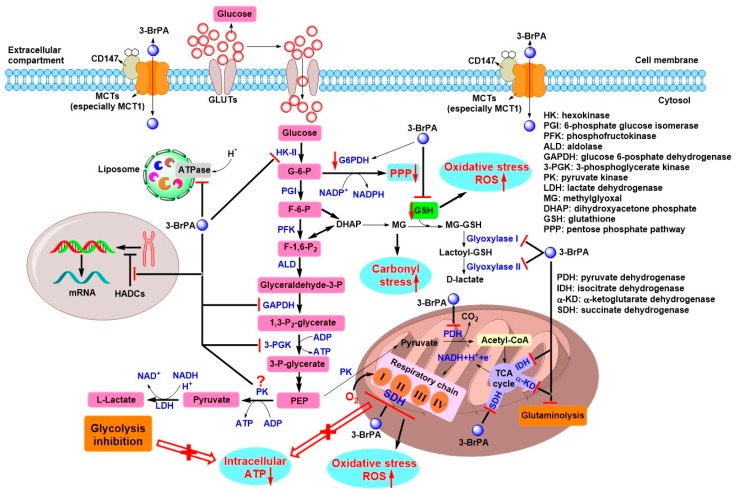
“In addition, ROS can be produced by the impairment of SDH/complex II (Figure 5) [91], and 3-BrPA could inhibit this respiratory enzyme.”
BackgroundLi, H., Myeroff, L. L., Smiraglia, D. J., Romero, M. F., Pretlow, T. P., Kasturi, L., Lutterbaugh, J., Rerko, R. M., Casey, G., Issa, J. J., et al. (2003) · Proceedings of the National Academy of Sciences · doi:10.1073/pnas.1430846100 · Cited by 295
Modulation of type M 2 pyruvate kinase activity by the human papillomavirus type 16 E7 oncoprotein
Zwerschke, W., Mazurek, S., Massimi, P., Banks, L., EIGENBRODT, E., & Jansen‐Dürr, P. (1999) · Proceedings of the National Academy of Sciences · doi:10.1073/pnas.96.4.1291 · Cited by 257
Geschwind, J. F., Ko, Y. H., Torbenson, M. S., Magee, C. A., & Pedersen, P. L. (2002) · PubMed · Cited by 254
Identification of small molecule inhibitors of pyruvate kinase M2
Heiden, M. G. V., Christofk, H. R., Schuman, E., Subtelny, A. O., Sharfi, H., Harlow, E. E., Xian, J., & Cantley, L. C. (2009) · Biochemical Pharmacology · doi:10.1016/j.bcp.2009.12.003 · Cited by 245
Sodium-coupled Monocarboxylate Transporters in Normal Tissues and in Cancer
Ganapathy, V., Thangaraju, M., Gopal, E., Martin, P. M., Itagaki, S., Miyauchi, S., & Prasad, P. D. (2008) · The AAPS Journal · doi:10.1208/s12248-008-9022-y · Cited by 244
MCT1-mediated transport of a toxic molecule is an effective strategy for targeting glycolytic tumors
Birsoy, K., Wang, T., Possemato, R., Yilmaz, Ö. H., Koch, C. E., Chen, W. W., Hutchins, A., Gültekin, Y., Peterson, T. R., Carette, J. E., et al. (2012) · Nature Genetics · doi:10.1038/ng.2471 · Cited by 232
Role of mitochondria-associated hexokinase II in cancer cell death induced by 3-bromopyruvate
Zhao, C., Zhang, H., Lu, W., & Huang, P. (2009) · Biochimica et Biophysica Acta (BBA) - Bioenergetics · doi:10.1016/j.bbabio.2009.03.003 · Cited by 230
Nakashima, R. A., Mangan, P. S., Colombini, M., & Pedersen, P. L. (1986) · Biochemistry · doi:10.1021/bi00353a010 · Cited by 222
GAPDH as a sensor of NO stress
Hara, M. R., Cascio, M. B., & Sawa, A. (2006) · Biochimica et Biophysica Acta (BBA) - Molecular Basis of Disease · doi:10.1016/j.bbadis.2006.01.012 · Cited by 221
Palmieri, D., Fitzgerald, D. P., Shreeve, S. M., Hua, E., Bronder, J. L., Weil, R. J., Davis, S. R., Stark, A. M., Merino, M. J., Kurek, R., et al. (2009) · Molecular Cancer Research · doi:10.1158/1541-7786.mcr-09-0234 · Cited by 215
Lis, P., Dyląg, M., Niedźwiecka, K., Ko, Y. H., Pedersen, P. L., Goffeau, A., & Ułaszewski, S. (2016) · Molecules · doi:10.3390/molecules21121730 · Cited by 205
Gwak, G., Yoon, J., Kim, K. M., Lee, H.-S., Chung, J. W., & Gores, G. J. (2004) · Journal of Hepatology · doi:10.1016/j.jhep.2004.11.020 · Cited by 187
Inhibition of energy-producing pathways of HepG2 cells by 3-bromopyruvate1
Silva, A. P. P. D., El‐Bacha, T., Kyaw, N., dos Santos, R. S., da‐Silva, W. S., Almeida, F. C. L., Poian, A. T. D., & Galina, A. (2008) · Biochemical Journal · doi:10.1042/bj20080805 · Cited by 174
Glycolytic enzyme inhibitors in cancer treatment
Scatena, R., Bottoni, P., Pontoglio, A., Mastrototaro, L., & Giardina, B. (2008) · Expert Opinion on Investigational Drugs · doi:10.1517/13543784.17.10.1533 · Cited by 167
Ko, Y. H., Verhoeven, H. A., Lee, M. J., Corbin, D., Vogl, T. J., & Pedersen, P. L. (2012) · Journal of Bioenergetics and Biomembranes · doi:10.1007/s10863-012-9417-4 · Cited by 161
3-bromopyruvate: Targets and outcomes
Shoshan, M. C. (2012) · Journal of Bioenergetics and Biomembranes · doi:10.1007/s10863-012-9419-2 · Cited by 144
Geschwind, J.-F. H., Georgiades, C. S., Ko, Y. H., & Pedersen, P. L. (2004) · Expert Review of Anticancer Therapy · doi:10.1586/14737140.4.3.449 · Cited by 141
Agarwala, S. S., Keilholz, U., Gilles, E. M., Bedikian, A. Y., Wu, J., Kay, R., Stein, C. A., Itri, L. M., Suciu, S., & Eggermont, A. M. M. (2009) · European Journal of Cancer · doi:10.1016/j.ejca.2009.04.016 · Cited by 138
Targeting aerobic glycolysis: 3-bromopyruvate as a promising anticancer drug
Cardaci, S., Desideri, E., & Ciriolo, M. R. (2012) · Journal of Bioenergetics and Biomembranes · doi:10.1007/s10863-012-9422-7 · Cited by 134
Novel insight into the role of GAPDH playing in tumor
Guo, C., Liu, S., & Sun, M. (2012) · Clinical & Translational Oncology · doi:10.1007/s12094-012-0924-x · Cited by 129
3‐Bromopyruvate as inhibitor of tumour cell energy metabolism and chemopotentiator of platinum drugs
Ihrlund, L. S., Hernlund, E., Khan, O. M., & Shoshan, M. C. (2008) · Molecular Oncology · doi:10.1016/j.molonc.2008.01.003 · Cited by 124
Ganapathy‐Kanniappan, S., Geschwind, J.-F. H., Kunjithapatham, R., Buijs, M., Vossen, J. A., Tchernyshyov, I., Cole, R. N., Syed, L. H., Rao, P. P., Ota, S., et al. (2009) · PubMed · Cited by 121
Apoptosis-inducing antitumor efficacy of hexokinase II inhibitor in hepatocellular carcinoma
Kim, W. K., Yoon, J., Jeong, J. M., Cheon, G. J., Lee, T. S., Yang, J. I., Park, S.-C., & Lee, H.-S. (2007) · Molecular Cancer Therapeutics · doi:10.1158/1535-7163.mct-07-0115 · Cited by 115
Nakashima, R. A., Paggi, M. G., Scott, L. J., & Pedersen, P. L. (1988) · PubMed · Cited by 114
Glycolysis Inhibition Inactivates ABC Transporters to Restore Drug Sensitivity in Malignant Cells
Nakano, A., Tsuji, D., Miki, H., Cui, Q., Sayed, S. M. E., Ikegame, A., Oda, A., Amou, H., Nakamura, S., Harada, T., et al. (2011) · PLoS ONE · doi:10.1371/journal.pone.0027222 · Cited by 112
Tang, Z., Yuan, S., Hu, Y., Zhang, H., Wu, W., Zeng, Z.-L., Yang, J., Yun, J., Xu, R., & Huang, P. (2012) · Journal of Bioenergetics and Biomembranes · doi:10.1007/s10863-012-9420-9 · Cited by 95
Cao, X., Bloomston, M., Zhang, T., Frankel, W. L., Jia, G., Wang, B., Hall, N. C., Koch, R. M., Cheng, H., Knopp, M. V., et al. (2008) · Clinical Cancer Research · doi:10.1158/1078-0432.ccr-07-1607 · Cited by 83
Alkylation of isocitrate lyase from Escherichia coli by 3-bromopyruvate
Ko, Y. H., & McFadden, B. A. (1990) · Archives of Biochemistry and Biophysics · doi:10.1016/0003-9861(90)90273-2 · Cited by 81
Presek, P., Reinacher, M., & EIGENBRODT, E. (1988) · FEBS Letters · doi:10.1016/0014-5793(88)81014-7 · Cited by 78
Sayed, S. M. E., Mohamed, W. G., Seddik, M.-A. H., Ahmed, A.-S. A., Mahmoud, A. G., Amer, W. H., Nabo, M. M. H., Hamed, A., Ahmed, N. S., & Abd-Allah, A. A.-R. (2014) · 癌症:英文版 · doi:10.5732/cjc.013.10111 · Cited by 77
Azevedo‐Silva, J., Queirós, O., Baltazar, F., Ułaszewski, S., Goffeau, A., Ko, Y. H., Pedersen, P. L., Preto, A., & Casal, M. (2016) · Journal of Bioenergetics and Biomembranes · doi:10.1007/s10863-016-9670-z · Cited by 74
How do mutated oncogenes and tumor suppressor genes cause cancer?
Grandér, D. (1998) · Medical Oncology · doi:10.1007/bf02787340 · Cited by 73
Thangaraju, M., Karunakaran, S. K., Itagaki, S., Gopal, E., Elangovan, S., Prasad, P. D., & Ganapathy, V. (2009) · Cancer · doi:10.1002/cncr.24532 · Cited by 70
Systemic Delivery of Microencapsulated 3-Bromopyruvate for the Therapy of Pancreatic Cancer
Chapiro, J., Sur, S., Savic, L. J., Ganapathy‐Kanniappan, S., Reyes, J., Durán, R., Chettiar, S. T., Moats, C. R., Lin, M., Luo, W., et al. (2014) · Clinical Cancer Research · doi:10.1158/1078-0432.ccr-14-1271 · Cited by 63
Local delivery of cancer-cell glycolytic inhibitors in high-grade glioma
Wicks, R. T., Azadi, J. R., Mangraviti, A., Zhang, I., Hwang, L. S., Joshi, A. D., Bow, H. C., Hütt-Cabezas, M., Martin, K. L., Rudek, M. A., et al. (2014) · Neuro-Oncology · doi:10.1093/neuonc/nou143 · Cited by 60
Targets of 3-Bromopyruvate, A New, Energy Depleting, Anticancer Agent
Dell’Antone, P. (2009) · Medicinal Chemistry · doi:10.2174/157340609790170551 · Cited by 59
Zhang, Y., Wei, J., Xu, J., Leong, W. S., Liu, G., Ji, T., Cheng, Z., Wang, J., Lang, J., Zhao, Y., et al. (2017) · ACS Applied Materials & Interfaces · doi:10.1021/acsami.7b16685 · Cited by 59
Wang, D., Moothart, D. R., Lowy, D. R., & Qian, X. (2013) · PLoS ONE · doi:10.1371/journal.pone.0061262 · Cited by 57
Barnard, J. P., Reynafarje, B., & Pedersen, P. L. (1993) · Journal of Biological Chemistry · doi:10.1016/s0021-9258(18)53743-1 · Cited by 54
3-Bromopyruvate induces necrotic cell death in sensitive melanoma cell lines
Qin, J.-Z., Xin, H., & Nickoloff, B. J. (2010) · Biochemical and Biophysical Research Communications · doi:10.1016/j.bbrc.2010.04.126 · Cited by 52
Kwiatkowska, E., Wojtala, M., Gajewska, A., Soszyński, M., Bartosz, G., & Sadowska‐Bartosz, I. (2015) · Journal of Bioenergetics and Biomembranes · doi:10.1007/s10863-015-9637-5 · Cited by 52
Advances in Mycobacterial Isocitrate Lyase Targeting and Inhibitors
Krátký, M., & Vinšová, J. (2012) · Current Medicinal Chemistry · doi:10.2174/092986712804485782 · Cited by 49
Vali, M., Liapi, E. A., Kowalski, J., Hong, K. K., Khwaja, A. A., Torbenson, M. S., Georgiades, C. S., & Geschwind, J.-F. H. (2007) · Journal of Vascular and Interventional Radiology · doi:10.1016/j.jvir.2006.10.019 · Cited by 48
Ganapathy‐Kanniappan, S., Kunjithapatham, R., Torbenson, M. S., Rao, P. P., Carson, K. A., Buijs, M., Vali, M., & Geschwind, J.-F. H. (2012) · Radiology · doi:10.1148/radiol.11111569 · Cited by 47
The Specific Role of O 6 -Methylguanine-DNA Methyltransferase Inhibitors in Cancer Chemotherapy
Sun, G., Zhao, L., Zhong, R., & Peng, Y. (2018) · Future Medicinal Chemistry · doi:10.4155/fmc-2018-0069 · Cited by 47
Self-citationAdvances in Mycobacterial Isocitrate Lyase Targeting and Inhibitors
Krátký, M., & Vinšová, J. (2012) · Current Medicinal Chemistry · doi:10.2174/0929867311209066126 · Cited by 45
Ehrke, E., Arend, C., & Dringen, R. (2014) · Journal of Neuroscience Research · doi:10.1002/jnr.23474 · Cited by 44
Lowe, P. N., & Perham, R. N. (1984) · Biochemistry · doi:10.1021/bi00296a015 · Cited by 43
Valenti, D., Vacca, R. A., & Lidia de, B. A. R. I. (2015) · Journal of Bioenergetics and Biomembranes · doi:10.1007/s10863-015-9631-y · Cited by 42
Targeting glycolysis by 3-bromopyruvate improves tamoxifen cytotoxicity of breast cancer cell lines
Attia, Y. M., El-Abhar, H. S., Marzabani, M. M. A., & Shouman, S. A. (2015) · BMC Cancer · doi:10.1186/s12885-015-1850-4 · Cited by 41
Levy, A. G., Zage, P. E., Akers, L. J., Ghisoli, M. L., Chen, Z., Fang, W., Kannan, S., Graham, T. C., Zeng, L., Franklin, A. R. K., et al. (2010) · Investigational New Drugs · doi:10.1007/s10637-010-9551-y · Cited by 40
Chang, J. M., Chung, J. W., Jae, H. J., Eh, H., Son, K. R., Lee, K. C., & Park, J. H. (2006) · Academic Radiology · doi:10.1016/j.acra.2006.09.059 · Cited by 39
The inactivation of succinate dehydrogenase by bromopyruvate
Sanborn, B. M., Felberg, N. T., & Hollocher, T. C. (1971) · Biochimica et Biophysica Acta (BBA) - Enzymology · doi:10.1016/0005-2744(71)90055-6 · Cited by 39
Aerosolized 3-Bromopyruvate Inhibits Lung Tumorigenesis without Causing Liver Toxicity
Zhang, Q., Pan, J., North, P. E., Yang, S., Lubet, R. A., Wang, Y., & You, M. (2012) · Cancer Prevention Research · doi:10.1158/1940-6207.capr-11-0338 · Cited by 38
Calviño, E., Estañ, M. C., Sànchez‐Martìn, C., Brea, R., de Blas, E., Boyano-Adánez, M. D. C., Rial, E., & Aller, P. (2013) · Journal of Pharmacology and Experimental Therapeutics · doi:10.1124/jpet.113.206714 · Cited by 37
Antitumor and chemosensitizing action of 3-bromopyruvate: Implication of deregulated metabolism
Yadav, S., Pandey, S. K., Kumar, A., Kujur, P. K., Singh, R. P., & Singh, S. M. (2017) · Chemico-Biological Interactions · doi:10.1016/j.cbi.2017.04.015 · Cited by 37
Wu, L., Xu, J., Yuan, W., Wu, B., Wang, H., Liu, G., Wang, X., Du, J., & Cai, S. (2014) · PLoS ONE · doi:10.1371/journal.pone.0112132 · Cited by 35
Amiji, M. M., Gandham, S. K., Talekar, M., & Singh, A. (2015) · International Journal of Nanomedicine · doi:10.2147/ijn.s82818 · Cited by 34
Glycolysis inhibition and its effect in doxorubicin resistance in neuroblastoma
Bean, J. F., Qiu, Y.-Y., Yu, S., Clark, S. H., Chu, F., & Madonna, M. B. (2014) · Journal of Pediatric Surgery · doi:10.1016/j.jpedsurg.2014.01.037 · Cited by 34
Bromopyruvate inactivation of glutamate apodecarboxylase. Kinetics and specificity.
Fonda, M. L. (1976) · Journal of Biological Chemistry · doi:10.1016/s0021-9258(17)33949-2 · Cited by 33
Sayed, S. M. E., Baghdadi, H., Zolaly, M. A., Almaramhy, H. H., Ayat, M., & Donki, J. G. (2017) · Medical Hypotheses · doi:10.1016/j.mehy.2017.01.014 · Cited by 33
Sayed, S. M. E. (2018) · International Journal of Nanomedicine · doi:10.2147/ijn.s170564 · Cited by 33
Separate and concurrent use of 2-deoxy-D-glucose and 3-bromopyruvate in pancreatic cancer cells
Xiao, H., LI, S., Zhang, D., Liu, T., Yu, M., & Wang, F. (2012) · Oncology Reports · doi:10.3892/or.2012.2085 · Cited by 31
3-Bromopyruvic Acid Inhibits Tricarboxylic Acid Cycle and Glutaminolysis in HepG2 Cells.
Messeder, D. J., & Moreira-Pacheco, F. (2016) · PubMed · Cited by 31
Niedźwiecka, K., Dyląg, M., Augustyniak, D., Majkowska-Skrobek, G., Cal, M., Ko, Y. H., Pedersen, P. L., Goffeau, A., & Ułaszewski, S. (2016) · Oncotarget · doi:10.18632/oncotarget.11592 · Cited by 31
3-Bromopyruvate: A novel antifungal agent against the human pathogen Cryptococcus neoformans
Dyląg, M., Lis, P., Niedźwiecka, K., Ko, Y. H., Pedersen, P. L., Goffeau, A., & Ułaszewski, S. (2013) · Biochemical and Biophysical Research Communications · doi:10.1016/j.bbrc.2013.02.125 · Cited by 29
Chong, D., Ma, L., Liu, F., Zhang, Z., Zhao, S., Huo, Q., Zhang, P., Zheng, H., & Liu, H. (2017) · Anti-Cancer Drugs · doi:10.1097/cad.0000000000000517 · Cited by 29
Inactivation of H+-vacuolar ATPase by the energy blocker 3-bromopyruvate, a new antitumour agent
Dell’Antone, P. (2006) · Life Sciences · doi:10.1016/j.lfs.2006.06.043 · Cited by 28
Anticancer agent 3-bromopyruvic acid forms a conjugate with glutathione
Sadowska‐Bartosz, I., Szewczyk, R., Jaremko, Ł., Jaremko, M., & Bartosz, G. (2015) · Pharmacological Reports · doi:10.1016/j.pharep.2015.11.007 · Cited by 28
The Potential of Combi-Molecules with DNA-Damaging Function as Anticancer Agents
Sun, G., Fan, T., Zhao, L., Zhou, Y., & Zhong, R. (2017) · Future Medicinal Chemistry · doi:10.4155/fmc-2016-0229 · Cited by 28
Self-citationLee, M., Jo, A., Lee, S., Kim, J. B., Chang, Y., Nam, J. Y., Cho, H., Cho, Y. Y., Cho, E. J., Lee, J., et al. (2017) · PLoS ONE · doi:10.1371/journal.pone.0174271 · Cited by 28
Ramos, D., Pellín-Carcelén, A., Agustí, J., Murgui, A., Jordá, E., Pellı́n, A., & Monteagudo, C. C. (2015) · PubMed · Cited by 27
The antitumor agent 3-bromopyruvate has a short half-life at physiological conditions
Glick, M., Biddle, P. H., Jantzi, J., Weaver, S., & Schirch, D. M. (2014) · Biochemical and Biophysical Research Communications · doi:10.1016/j.bbrc.2014.08.066 · Cited by 26
Chen, Y., Wei, L., Zhang, X., Liu, X., Chen, Y., Zhang, S., Zhou, L., Li, Q., Pan, Q., Zhao, S., et al. (2018) · Oncology Reports · doi:10.3892/or.2018.6644 · Cited by 26
The Induction and Repair of DNA Interstrand Crosslinks and Implications in Cancer Chemotherapy
Guohui, S., Lijiao, Z., & Ru-gang, Z. (2015) · Anti-Cancer Agents in Medicinal Chemistry · doi:10.2174/1871520615666150824160421 · Cited by 25
Effects of Bromopyruvate on the Control and Catalytic Properties of Glutamate Dehydrogenase
Baker, J. P., & Rabin, B. R. (1969) · European Journal of Biochemistry · doi:10.1111/j.1432-1033.1969.tb00753.x · Cited by 25
Liu, J. Y., Kenney, T., Butterworth, L., Kashishian, A., Meadows, S. A., Peng, Y., Li, L., Keegan, K. S., Quéva, C., & Tannheimer, S. L. (2015) · Cancer Research · doi:10.1158/1538-7445.am2015-2673 · Cited by 24
Self-citationSun, G., Zhao, L., Fan, T., Li, S., & Zhong, R. (2014) · Chemical Research in Toxicology · doi:10.1021/tx500143b · Cited by 24
Self-citationChiasserini, D., Davidescu, M., Orvietani, P. L., Susta, F., Macchioni, L., Petricciuolo, M., Castigli, E., Roberti, R., Binaglia, L., & Corazzi, L. (2016) · Journal of Proteomics · doi:10.1016/j.jprot.2016.11.013 · Cited by 24
Enhanced Antitumor Activity of 3-Bromopyruvate in Combination with Rapamycin In Vivo and In Vitro
Zhang, Q., Pan, J., Lubet, R. A., Komas, S. M., Kalyanaraman, B., Wang, Y., & You, M. (2015) · Cancer Prevention Research · doi:10.1158/1940-6207.capr-14-0142 · Cited by 23
Kunjithapatham, R., Geschwind, J.-F. H., Rao, P. P., Boronina, T. N., Cole, R. N., & Ganapathy‐Kanniappan, S. (2013) · BMC Research Notes · doi:10.1186/1756-0500-6-277 · Cited by 22
Silencing hexokinase II gene sensitizes human colon cancer cells to 5-fluorouracil.
Peng, Q., Zhou, J., Zhou, Q. G., Pan, F., Zhong, D., & Liang, H. (2009) · PubMed · Cited by 22
Involvement of α-Cysteine-62 and β-Tryptophan-135 in Human Pyruvate Dehydrogenase Catalysis
Korotchkina, L. G., Ali, M. S., & Patel, M. S. (1999) · Archives of Biochemistry and Biophysics · doi:10.1006/abbi.1999.1364 · Cited by 20
3-Bromopyruvate as an Alternative Option for the Treatment of Protothecosis
Jagielski, T., Niedźwiecka, K., Roeske, K., & Dyląg, M. (2018) · Frontiers in Pharmacology · doi:10.3389/fphar.2018.00375 · Cited by 20
de Lima, L. P. O., Seabra, S. H., Carneiro, H., & Barbosa, H. S. (2015) · Antimicrobial Agents and Chemotherapy · doi:10.1128/aac.00337-15 · Cited by 18
Liu, Z., Sun, Y., Hong, H., Zhao, S., Zou, X., Ma, R., Jiang, C., Wang, Z. P., Li, H., & Liu, H. (2015) · Europe PMC (PubMed Central) · Cited by 18
Experimental results using 3-bromopyruvate in mesothelioma: in vitro and in vivo studies
Icard, P., Zhang, X., Lemoisson, E., Louis, M.-H., Allouche, S., Lincet, H., & Poulain, L. (2012) · Journal of Bioenergetics and Biomembranes · doi:10.1007/s10863-012-9415-6 · Cited by 17
Meloche, H. P., Monti, C. T., & Hogue‐Angeletti, R. (1978) · Biochemical and Biophysical Research Communications · doi:10.1016/0006-291x(78)90746-5 · Cited by 16
Chen, T. C., Yu, J., Nouri-Nigjeh, E., Wang, W., Myint, P. T., Zandi, E., Hofman, F. M., & Schönthal, A. H. (2017) · Cancer Letters · doi:10.1016/j.canlet.2017.04.015 · Cited by 16
Yadav, S., Pandey, S. K., Goel, Y., Kujur, P. K., Maurya, B. N., Verma, A. K., Kumar, A., Singh, R. P., & Singh, S. M. (2018) · Biomedicine & Pharmacotherapy · doi:10.1016/j.biopha.2018.01.149 · Cited by 16
Takahashi, Y., Suzuki, S., Matsutani, N., & Kawamura, M. (2019) · Thoracic Cancer · doi:10.1111/1759-7714.12978 · Cited by 16
Buijs, M., Wijlemans, J. W., Kwak, B. K., Ota, S., & Geschwind, J.-F. H. (2013) · Journal of Vascular and Interventional Radiology · doi:10.1016/j.jvir.2013.01.013 · Cited by 15
Candidate cancer drug suspected after death of three patients at an alternative medicine clinic
Feldwisch‐Drentrup, H. (2016) · Science · doi:10.1126/science.aah7192 · Cited by 15
Yadav, S., Kujur, P. K., Pandey, S. K., Goel, Y., Maurya, B. N., Verma, A. K., Kumar, A., Singh, R. P., & Singh, S. M. (2017) · Toxicology and Applied Pharmacology · doi:10.1016/j.taap.2017.12.004 · Cited by 15
Affinity labels for the anion-binding site in ovotransferrin
Bailey, C. T., Patch, M. G., & Carrano, C. J. (1988) · Biochemistry · doi:10.1021/bi00417a012 · Cited by 14
Valproate sensitizes human glioblastoma cells to 3-bromopyruvate-induced cytotoxicity
Ishiguro, Y., Kobayashi, M., Ideno, M., Narumi, K., Furugen, A., & Iseki, K. (2018) · International Journal of Pharmaceutics · doi:10.1016/j.ijpharm.2018.08.039 · Cited by 14
Modification of yeast pyruvate kinase by an active site-directed reagent, bromopyruvate.
Yun, S.-I., & Suelter, C. H. (1979) · Journal of Biological Chemistry · doi:10.1016/s0021-9258(17)37727-x · Cited by 13
Ding, J., Chen, Y.-L., Zhou, S., & Zhao, K. (2018) · Journal of International Medical Research · doi:10.1177/0300060518804375 · Cited by 13
Oxidative Phosphorylation and Cancer: The Ongoing Warburg Hypothesis
Ristow, M., & Cuezva, J. M. (2008) · Humana Press eBooks · doi:10.1007/978-1-59745-435-3_1 · Cited by 11
ABCB1-overexpressing MDCK-II cells are hypersensitive to 3-bromopyruvic acid
Sadowska‐Bartosz, I., Grębowski, J., Kępka, E., Studzian, M., Bartosz, G., & Pułaski, Ł. (2016) · Life Sciences · doi:10.1016/j.lfs.2016.08.012 · Cited by 11
The carbonyl reactivity of 3-bromopyruvate and related compounds
Fischer, G. S., Sieber, M., & Schellenberger, A. (1982) · Bioorganic Chemistry · doi:10.1016/0045-2068(82)90039-6 · Cited by 10
Modification of Human Erythrocyte Pyruvate Kinase by an Active Site-directed Reagent: Bromopyruvate
Açan, N. L., & Özer, N. (2001) · Journal of enzyme inhibition · doi:10.1080/14756360109162395 · Cited by 10
Erratum to: Experimental results using 3-bromopyruvate in mesothelioma: in vitro and in vivo studies
Icard, P., Zhang, X.-D., Lemoisson, E., Louis, M.-H., Allouche, S., Lincet, H., & Poulain, L. (2012) · Journal of Bioenergetics and Biomembranes · doi:10.1007/s10863-012-9484-6 · Cited by 9
Lopes, G. D. L., Jr., Dicksey, J. S., Peters, W. P., Palalay, M. P., & Chang, A. Y. (2011) · Cancer Chemotherapy and Pharmacology · doi:10.1007/s00280-011-1588-x · Cited by 7
[Laboratory markers of melanoma progression].
Bánfalvi, T., Edesné, M. B., Gergye, M., Udvarhelyi, N., Orosz, Z., Gilde, K., Kremmer, T., Ottó, S., & Tı́már, J. (2003) · PubMed · Cited by 5
Kapp, N., Stander, X. X., & Stander, B. A. (2018) · Anti-Cancer Drugs · doi:10.1097/cad.0000000000000613 · Cited by 5
The cytotoxicity of 3-bromopyruvate in breast cancer cells depends on extracellular pH
Silva, J. S. A. L., Queirós, O., Ribeiro, A., Baltazar, F., Young, K. H., Pedersen, P. L., Preto, A., & Casal, M. (2014) · Portuguese National Funding Agency for Science, Research and Technology (RCAAP Project by FCT) · doi:10.1042/bj20140921
Cited by
Sorted by citations
Abdel-Wahab, A. F., Mahmoud, W., & Al-Harizy, R. M. (2019) · Pharmacological Research · doi:10.1016/j.phrs.2019.104511 · Cited by 598
Stromal cells in the tumor microenvironment: accomplices of tumor progression?
Zhao, Y. F., Shen, M., Wu, L., Yang, H., Yao, Y., Yang, Q., Du, J., Liu, L., Li, Y., & Bai, Y. (2023) · Cell Death and Disease · doi:10.1038/s41419-023-06110-6 · Cited by 487
A proteogenomic portrait of lung squamous cell carcinoma
Satpathy, S., Krug, K., Beltran, P. M. J., Savage, S. R., Petralia, F., Kumar‐Sinha, C., Dou, Y., Reva, B. A., Kane, M. H., Avanessian, S. C., et al. (2021) · Cell · doi:10.1016/j.cell.2021.07.016 · Cited by 390
Modulating Glycolysis to Improve Cancer Therapy
Chelakkot, C., Chelakkot, V. S., Shin, Y. K., & Song, K. (2023) · International Journal of Molecular Sciences · doi:10.3390/ijms24032606 · Cited by 387
Targeting Metabolic Plasticity and Flexibility Dynamics for Cancer Therapy
Fendt, S., Frezza, C., & Erez, A. (2020) · Cancer Discovery · doi:10.1158/2159-8290.cd-20-0844 · Cited by 327
Metadata
- Authors
- Fan, T., Sun, G., Sun, X., Zhao, L., Zhong, R., & Peng, Y.
- Affiliations
- Beijing University of Technology (CN)
- Corresponding author
- Sun, Guohui
- Venue
- Cancers
- Publisher
- MDPI AG
- Published
- 2019-03-06
- Volume
- 11
- Issue
- 3
- Pages
- 317
- ISSN
- 2072-6694 (ISSN-L)
- PMC
- PMC6468516
- OpenAlex
- W2920277785
- Cited by
- 171
- References
- 137
- Citations by year
- 2026: 12 · 2025: 17 · 2024: 17 · 2023: 32 · 2022: 29 · 2021: 32 · 2020: 22 · 2019: 10
- FWCI
- 2.23
- Type
- journal article
- Language
- en
- Open access
- gold
- doi.org
- Licence
- Locations
- Cancers (publishedVersion, cc-by)
- PubMed Central (publishedVersion, cc-by)
- PubMed (publishedVersion)
- DOAJ (DOAJ: Directory of Open Access Journals) (submittedVersion, cc-by-sa)
- Funders
- Beijing Natural Science Foundation (7184192, 7162015)
- Natural Science Foundation of China (21778011)
- China Postdoctoral Science Foundation funded project (No. 2017M620567)
- Beijing Postdoctoral Research Foundation (No. 2018-ZZ-022)
- Chaoyang District Postdoctoral Research Foundation (No. 2018ZZ-01-25)
- the Great Wall scholars program of Beijing Municipal Education Commission (No. CIT&TCD20180308)
- Education Commission Science and Technology Project of Beijing Municipality (No. PXM2015_014204_500175)
- Topics
- Life Sciences › Biochemistry, Genetics and Molecular Biology › Cancer Research › Cancer, Hypoxia, and Metabolism
- Life Sciences › Biochemistry, Genetics and Molecular Biology › Molecular Biology › Metabolism, Diabetes, and Cancer
- Life Sciences › Biochemistry, Genetics and Molecular Biology › Molecular Biology › Cancer and biochemical research
- Keywords
- 3-bromopyruvate, aerobic glycolysis, Warburg effect, tumor energy metabolism, mitochondrial oxidative phosphorylation, glycolysis inhibitors, anticancer agents, combination chemotherapy, drug formulation, liposomal nanoparticles, aerosol drug delivery, alkylating agents
About these checks
Registry, retraction, Cites and statistics results are computed, not judged, with one exception: a printed reference that no index lists is read once by a model before it counts as a citation error. Claims are extracted by a model and kept only when their quote appears verbatim in the text; each cited source is then checked, with a model’s help, for whether it says what the claim relies on. Those verdicts can be wrong — read the claim’s quote and the cited source before relying on one.
Statistics and arithmetic are recomputed, not judged.
Confidence bands are shown only for fields calibrated on our annotated test set. None is calibrated yet, so no band is shown.
What counts as a claim ›How we measure confidence ›How we check this ›
Are you an author, or do you see a problem with this page? Request a review
