

The DOI matches its Crossref record; 133 of the 137 references it cites were found in a registry or an index.
Tumor Energy Metabolism and Potential of 3-Bromopyruvate as an Inhibitor of Aerobic Glycolysis: Implications in Tumor Treatment
Open accessAbstract
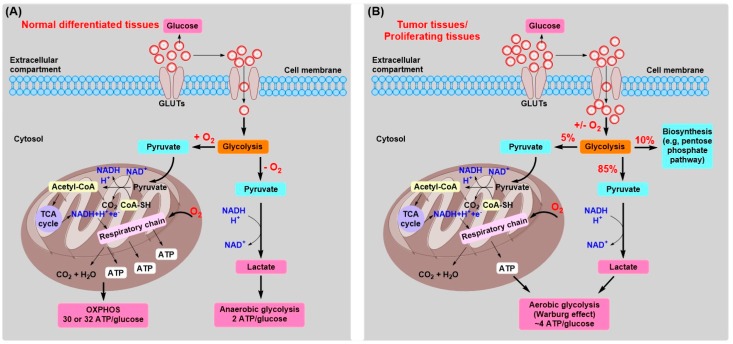
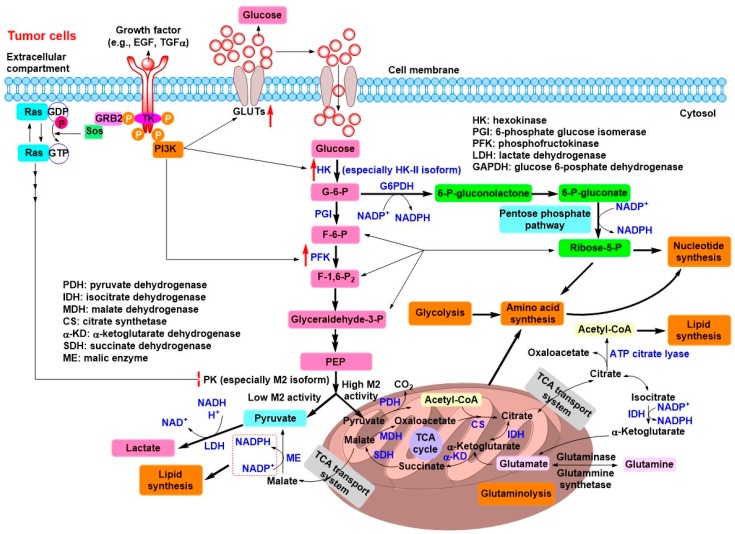
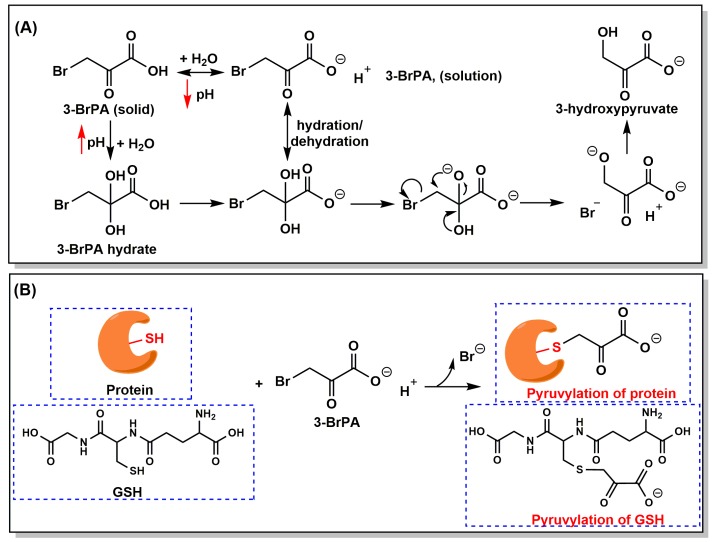
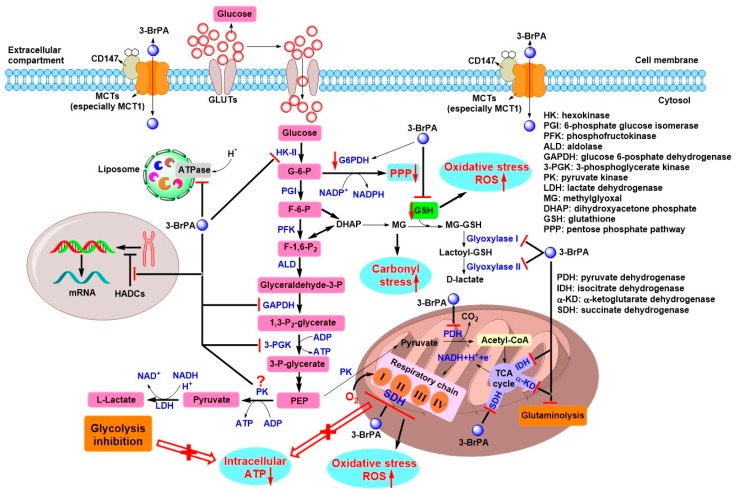
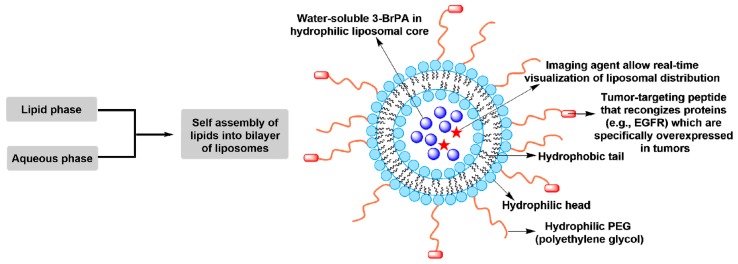
Tumor formation and growth depend on various biological metabolism processes that are distinctly different with normal tissues. Abnormal energy metabolism is one of the typical characteristics of tumors. It has been proven that most tumor cells highly rely on aerobic glycolysis to obtain energy rather than mitochondrial oxidative phosphorylation (OXPHOS) even in the presence of oxygen, a phenomenon called “Warburg effect”. Thus, inhibition of aerobic glycolysis becomes an attractive strategy to specifically kill tumor cells, while normal cells remain unaffected. In recent years, a small molecule alkylating agent, 3-bromopyruvate (3-BrPA), being an effective glycolytic inhibitor, has shown great potential as a promising antitumor drug. Not only it targets glycolysis process, but also inhibits mitochondrial OXPHOS in tumor cells. Excellent antitumor effects of 3-BrPA were observed in cultured cells and tumor-bearing animal models. In this review, we described the energy metabolic pathways of tumor cells, mechanism of action and cellular targets of 3-BrPA, antitumor effects, and the underlying mechanism of 3-BrPA alone or in combination with other antitumor drugs (e.g., cisplatin, doxorubicin, daunorubicin, 5-fluorouracil, etc.) in vitro and in vivo. In addition, few human case studies of 3-BrPA were also involved. Finally, the novel chemotherapeutic strategies of 3-BrPA, including wafer, liposomal nanoparticle, aerosol, and conjugate formulations, were also discussed for future clinical application.
Overview
The claims and statistics of this paper haven’t been checked yet.
Run the check — free, no account needed. It reads the open-access text and checks the sources it cites.
Integrity signals
Registry
Cites
Statistics
Figures
Verification
Claims the paper makes
The claims and statistics of this paper haven’t been checked yet.
Run the check — free, no account needed. It reads the open-access text and checks the sources it cites.
Claims other papers make about this one
Each is checked against this paper’s own text: does it say what the citing paper says it does?
In the citing paper
“2-DG, 3BP, and metformin sensitize cancer cells to different chemotherapeutic agents and irradiation [78,79].”
From 20-Hydroxyecdysone Confers Antioxidant and Antineoplastic Properties in Human Non-Small Cell Lung Cancer Cells (2023) · cites this paper as [79]
Self-check
Percentages, sums and reported differences re-computed from the paper’s own numbers.
The self-check needs the paper’s full text.
Citations
Cites
Bray, F., Ferlay, J., Soerjomataram, I., Siegel, R. L., Torre, L. A., & Jemal, A. (2018) · CA: A Cancer Journal for Clinicians · doi:10.3322/caac.21492 · Cited by 84,109
Hallmarks of Cancer: The Next Generation
Hanahan, D., & Weinberg, R. A. (2011) · Cell · doi:10.1016/j.cell.2011.02.013 · Cited by 66,590
Understanding the Warburg Effect: The Metabolic Requirements of Cell Proliferation
Vander Heiden, M. G., Cantley, L. C., & Thompson, C. B. (2009) · Science · doi:10.1126/science.1160809 · Cited by 16,197
Warburg, O. (1956) · Science · doi:10.1126/science.123.3191.309 · Cited by 13,425
The Warburg Effect: How Does it Benefit Cancer Cells?
Liberti, M. V., & Locasale, J. W. (2016) · Trends in Biochemical Sciences · doi:10.1016/j.tibs.2015.12.001 · Cited by 5,150
The metabolism of tumors in the body
Warburg, O., Wind, F., & Negelein, E. (1927) · Journal of General Physiology · doi:10.1085/jgp.8.6.519 · Cited by 4,416
The M2 splice isoform of pyruvate kinase is important for cancer metabolism and tumour growth
Christofk, H. R., Vander Heiden, M. G., Harris, M. H., Ramanathan, A., Gerszten, R. E., Wei, R., Fleming, M. D., Schreiber, S. L., & Cantley, L. C. (2008) · Nature · doi:10.1038/nature06734 · Cited by 2,820
Targeting lactate-fueled respiration selectively kills hypoxic tumor cells in mice
Sonveaux, P., Végran, F., Schroeder, T., Wergin, M., Verrax, J., Rabbani, Z. N., Saedeleer, C. J. D., Kennedy, K. M., Diepart, C., Jordan, B. F., et al. (2008) · Journal of Clinical Investigation · doi:10.1172/jci36843 · Cited by 1,635
Targeting cancer metabolism: a therapeutic window opens
Heiden, M. G. V. (2011) · Nature Reviews Drug Discovery · doi:10.1038/nrd3504 · Cited by 1,443
Energy metabolism in tumor cells
Moreno‐Sánchez, R., Rodríguez‐Enríquez, S., Marín‐Hernández, Á., & Saavedra, E. (2007) · FEBS Journal · doi:10.1111/j.1742-4658.2007.05686.x · Cited by 1,121
Cited by
Sorted by citations
Abdel-Wahab, A. F., Mahmoud, W., & Al-Harizy, R. M. (2019) · Pharmacological Research · doi:10.1016/j.phrs.2019.104511 · Cited by 598
Stromal cells in the tumor microenvironment: accomplices of tumor progression?
Zhao, Y. F., Shen, M., Wu, L., Yang, H., Yao, Y., Yang, Q., Du, J., Liu, L., Li, Y., & Bai, Y. (2023) · Cell Death and Disease · doi:10.1038/s41419-023-06110-6 · Cited by 487
A proteogenomic portrait of lung squamous cell carcinoma
Satpathy, S., Krug, K., Beltran, P. M. J., Savage, S. R., Petralia, F., Kumar‐Sinha, C., Dou, Y., Reva, B. A., Kane, M. H., Avanessian, S. C., et al. (2021) · Cell · doi:10.1016/j.cell.2021.07.016 · Cited by 390
Modulating Glycolysis to Improve Cancer Therapy
Chelakkot, C., Chelakkot, V. S., Shin, Y. K., & Song, K. (2023) · International Journal of Molecular Sciences · doi:10.3390/ijms24032606 · Cited by 387
Targeting Metabolic Plasticity and Flexibility Dynamics for Cancer Therapy
Fendt, S., Frezza, C., & Erez, A. (2020) · Cancer Discovery · doi:10.1158/2159-8290.cd-20-0844 · Cited by 327
Metadata
- Authors
- Fan, T., Sun, G., Sun, X., Zhao, L., Zhong, R., & Peng, Y.
- Affiliations
- Beijing University of Technology (CN)
- Corresponding author
- Sun, Guohui
- Venue
- Cancers
- Publisher
- MDPI AG
- Published
- 2019-03-06
- Volume
- 11
- Issue
- 3
- Pages
- 317
- ISSN
- 2072-6694 (ISSN-L)
- PMC
- PMC6468516
- OpenAlex
- W2920277785
- Cited by
- 171
- References
- 137
- Citations by year
- 2026: 12 · 2025: 17 · 2024: 17 · 2023: 32 · 2022: 29 · 2021: 32 · 2020: 22 · 2019: 10
- FWCI
- 2.23
- Type
- journal article
- Language
- en
- Open access
- gold
- doi.org
- Licence
- Locations
- Cancers (publishedVersion, cc-by)
- PubMed Central (publishedVersion, cc-by)
- PubMed (publishedVersion)
- DOAJ (DOAJ: Directory of Open Access Journals) (submittedVersion, cc-by-sa)
- Funders
- Beijing Natural Science Foundation (7184192, 7162015)
- Natural Science Foundation of China (21778011)
- China Postdoctoral Science Foundation funded project (No. 2017M620567)
- Beijing Postdoctoral Research Foundation (No. 2018-ZZ-022)
- Chaoyang District Postdoctoral Research Foundation (No. 2018ZZ-01-25)
- the Great Wall scholars program of Beijing Municipal Education Commission (No. CIT&TCD20180308)
- Education Commission Science and Technology Project of Beijing Municipality (No. PXM2015_014204_500175)
- Topics
- Life Sciences › Biochemistry, Genetics and Molecular Biology › Cancer Research › Cancer, Hypoxia, and Metabolism
- Life Sciences › Biochemistry, Genetics and Molecular Biology › Molecular Biology › Metabolism, Diabetes, and Cancer
- Life Sciences › Biochemistry, Genetics and Molecular Biology › Molecular Biology › Cancer and biochemical research
- Keywords
- 3-bromopyruvate, aerobic glycolysis, Warburg effect, tumor energy metabolism, mitochondrial oxidative phosphorylation, glycolysis inhibitors, anticancer agents, combination chemotherapy, drug formulation, liposomal nanoparticles, aerosol drug delivery, alkylating agents
About these checks
Registry, retraction, Cites and statistics results are computed, not judged, with one exception: a printed reference that no index lists is read once by a model before it counts as a citation error. Claims are extracted by a model and kept only when their quote appears verbatim in the text; each cited source is then checked, with a model’s help, for whether it says what the claim relies on. Those verdicts can be wrong — read the claim’s quote and the cited source before relying on one.
Statistics and arithmetic are recomputed, not judged.
Confidence bands are shown only for fields calibrated on our annotated test set. None is calibrated yet, so no band is shown.
What counts as a claim ›How we measure confidence ›How we check this ›
Are you an author, or do you see a problem with this page? Request a review
