

Fibroblasts as Modulators of Local and Systemic Cancer Metabolism
Open accessThe DOI matches its Crossref record; 113 of the 115 references it cites were found in a registry or an index.
Abstract
Fibroblast activation is an accompanying feature of solid tumor progression, resembling a conserved host response to tissue damage. Cancer-associated fibroblasts (CAFs) comprise a heterogeneous and plastic population with increasingly appreciated roles in tumor growth, metastatic capacity, and response to therapy. Classical features of fibroblasts in a wound-healing response, including profound extracellular matrix production and cytokine release, are recapitulated in cancer. Emerging evidence suggests that fibroblastic cells in the microenvironments of solid tumors also critically modulate cellular metabolism in the neoplastic compartment through mechanisms including paracrine transfer of metabolites or non-cell-autonomous regulation of metabolic signaling pathways. These metabolic functions may represent common mechanisms by which fibroblasts stimulate growth of the regenerating epithelium during a wound-healing reaction, or may reflect unique co-evolution of cancer cells and surrounding stroma within the tumor microenvironment. Here we review the recent literature supporting an important role for CAFs in regulation of cancer cell metabolism, and relevant pathways that may serve as targets for therapeutic intervention.
Overview
The claims and statistics of this paper haven’t been checked yet.
Free: it reads the open-access text and checks the first 5 claims that cite a source we can check. Create a free account to check every claim.
Integrity signals
Registry
Cites
Statistics
Figures
Verification
Claims the paper makes
The claims and statistics of this paper haven’t been checked yet.
Free: it reads the open-access text and checks the first 5 claims that cite a source we can check. Create a free account to check every claim.
Claims other papers make about this one
Each is checked against this paper’s own text: does it say what the citing paper says it does?
The cited source says what the claim attributes to it.
In the citing paper
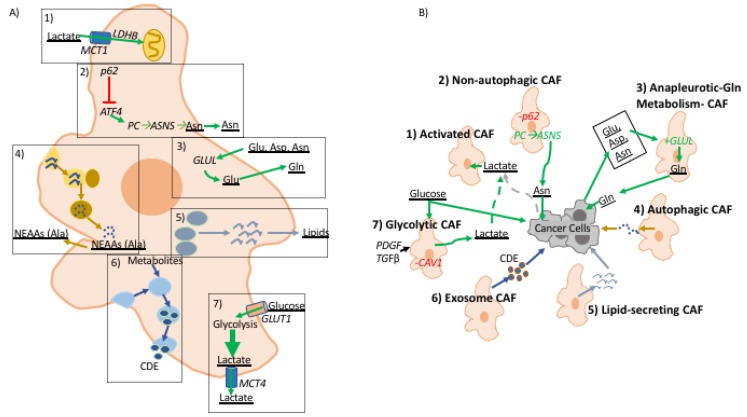
“Autophagy in stromal fibroblasts can generate alanine, which is subsequently used by pancreatic ductal adenocarcinoma (PDAC) cells to fuel the tricarboxylic acid (TCA) cycle126,130,131.”
From A framework for advancing our understanding of cancer-associated fibroblasts (2020) · cites this paper as [126]
Self-check
Percentages, sums and reported differences re-computed from the paper’s own numbers.
The self-check needs the paper’s full text.
Citations
Cites
1 retracted
Kaur, A., Webster, M. R., Marchbank, K., Behera, R., Ndoye, A., Kugel, C. H., Dang, V. M., Appleton, J., O’Connell, M. P., Cheng, P., et al. (2016) · Nature · doi:10.1038/nature17392 · Cited by 398 · cited 1×
“The effect of age on the TME is so significant that genetically identical cells can have varying metastasis levels and therapy response based on whether they are in an aged TME or young TME, suggesting that the aged TME is capable of profoundly influencing cancer cell behavior [30].”
BackgroundRetractedHallmarks of Cancer: The Next Generation
Hanahan, D., & Weinberg, R. A. (2011) · Cell · doi:10.1016/j.cell.2011.02.013 · Cited by 66,590 · cited 1×
“Cancer-associated fibroblasts (CAFs) derived from activated resident fibroblast pools or from mesenchymal progenitors recruited to the tumor microenvironment [2–4] have displayed diverse pro-tumorigenic functions that cooperate with cell-autonomous mechanisms to promote the hallmarks of cancer [5].”
BackgroundUnderstanding the Warburg Effect: The Metabolic Requirements of Cell Proliferation
Vander Heiden, M. G., Cantley, L. C., & Thompson, C. B. (2009) · Science · doi:10.1126/science.1160809 · Cited by 16,197
Definition and classification of cancer cachexia: an international consensus
Fearon, K., Strasser, F., Anker, S. D., Bosaeus, I., Bruera, E., Fainsinger, R. L., Jatoi, A., Loprinzi, C., MacDonald, N., Mantovani, G., et al. (2011) · The Lancet Oncology · doi:10.1016/s1470-2045(10)70218-7 · Cited by 5,767 · cited 1×
“Abnormal whole-body metabolic responses to cancer include cancer cachexia, a potentially lethal wasting syndrome driven by negative energy balance and associated with loss of adipose and muscle tissue [62].”
BackgroundAccessories to the Crime: Functions of Cells Recruited to the Tumor Microenvironment
Hanahan, D., & Coussens, L. M. (2012) · Cancer Cell · doi:10.1016/j.ccr.2012.02.022 · Cited by 4,632
Kalluri, R., & Zeisberg, M. (2006) · Nature Reviews Cancer · doi:10.1038/nrc1877 · Cited by 4,538 · cited 1×
“CAFs are typically abundant in solid tumors [9], and are the principal producers of extracellular matrix (ECM) components and remodeling enzymes [10].”
BackgroundThe biology and function of fibroblasts in cancer
Kalluri, R. (2016) · Nature Reviews Cancer · doi:10.1038/nrc.2016.73 · Cited by 4,366 · cited 3×
“The increasingly appreciated role of activated fibroblasts in cancer progression and response to therapy [1] has prompted investigation of growth-permissive fibroblast functions in cancer.”
BackgroundÖzdemir, B. C., Pentcheva-Hoang, T., Carstens, J. L., Zheng, X., Wu, C.-C., Simpson, T. R., Laklai, H., Sugimoto, H., Kahlert, C., Novitskiy, S. V., et al. (2014) · Cancer Cell · doi:10.1016/j.ccr.2014.04.005 · Cited by 2,681 · cited 1×
“To probe the roles of the abundant CAF population in these tumors, the authors used genetic or pharmacologic approaches to ablate CAFs during pancreatic tumorigenesis, either ablating Shh-dependent CAFs [87,89] or αSMA-positive CAFs [88].”
BackgroundDistinct populations of inflammatory fibroblasts and myofibroblasts in pancreatic cancer
Öhlund, D., Handly-Santana, A., Biffi, G., Elyada, E., Almeida, A. S., Ponz-Sarvise, M., Corbo, V., Oni, T. E., Hearn, S. A., Lee, E. J., et al. (2017) · Journal of Experimental Medicine · doi:10.1084/jem.20162024 · Cited by 2,590
Hypoxia-inducible factors and the response to hypoxic stress
Majmundar, A. J., Wong, W. J., & Simon, M. C. (2010) · Molecular Cell · doi:10.1016/j.molcel.2010.09.022 · Cited by 2,380 · cited 1×
“The hypoxia response is a universally conserved response to insufficient oxygen availability wherein the hypoxia-inducible factor (HIF) complex is stabilized and transported to hypoxia response element (HRE) promoter sequences to engage in transcription of over 100 genes, many of which are directly involved in increas…”
Background
Cited by
A framework for advancing our understanding of cancer-associated fibroblasts
Sahai, E., Astsaturov, I., Cukierman, E., DeNardo, D. G., Egeblad, M., Evans, R. M., Fearon, D., Greten, F. R., Hingorani, S. R., Hunter, T., et al. (2020) · Nature Reviews Cancer · doi:10.1038/s41568-019-0238-1 · Cited by 3,863
Self-citationTumor microenvironment complexity and therapeutic implications at a glance
Baghban, R., Roshangar, L., Jahanban-Esfahlan, R., Seidi, K., Ebrahimi-Kalan, A., Jaymand, M., Kolahian, S., Javaheri, T., & Zare, P. (2020) · Cell Communication and Signaling · doi:10.1186/s12964-020-0530-4 · Cited by 1,784
“Since antitumor immunity suppression is progressively tied to key metabolic pathways' activities and intratumoral metabolite levels in immune cells [227] , the way by which CAF secretome could affect metabolism and immune cells function in the TME requires further investigation [228] .”
BackgroundThe cancer-immunity cycle: Indication, genotype, and immunotype
Mellman, I., Chen, D. S., Powles, T., & Turley, S. J. (2023) · Immunity · doi:10.1016/j.immuni.2023.09.011 · Cited by 953
Fibroblasts in cancer: Unity in heterogeneity
Chhabra, Y., & Weeraratna, A. T. (2023) · Cell · doi:10.1016/j.cell.2023.03.016 · Cited by 474
Metabolic reprogramming of cancer-associated fibroblasts and its effect on cancer cell reprogramming
Li, Z., Sun, C., & Qin, Z. (2021) · Theranostics · doi:10.7150/thno.62378 · Cited by 390
Cancer associated-fibroblast-derived exosomes in cancer progression
Li, C., Teixeira, A. F., Zhu, H.-J., & ten Dijke, P. (2021) · Molecular Cancer · doi:10.1186/s12943-021-01463-y · Cited by 336
“Besides, the metabolites and amino acids secreted by CAFs is another way that mediate the communication between stromal fibroblasts, tumor cells and other cell types in TME [86, 103, 104].”
BackgroundBecker, L. M., O’Connell, J. T., Vo, A. P., Cain, M. P., Tampe, D., Bizarro, L., Sugimoto, H., McGow, A. K., Asara, J. M., Lovisa, S., et al. (2020) · Cell Reports · doi:10.1016/j.celrep.2020.107701 · Cited by 291
“…as metabolic support cells for proliferating cancer cells (Chaudhri et al., 2013; Fiaschi et al., 2012; Guido et al., 2012; Lisanti et al., 2013; Liu et al., 2015; Martinez-Outschoorn et al., 2014; Mitchell and Engelbrecht, 2017; Romero et al., 2015; Sanford-Crane et al., 2019; Zhang et al., 2015).”
BackgroundThe adoption of a smart destination model by tourism companies: An ecosystem approach
Collado-Agudo, J., Herrero-Crespo, Á., & San Martín-Gutiérrez, H. (2023) · Journal of Destination Marketing & Management · doi:10.1016/j.jdmm.2023.100783 · Cited by 241
Gene Therapy in Cancer Treatment: Why Go Nano?
Roma-Rodrigues, C., Rivas-García, L., Baptista, P. V., & Fernandes, A. R. (2020) · Pharmaceutics · doi:10.3390/pharmaceutics12030233 · Cited by 220
“Regarding tumor progression, CAFs stimulate the growth of tumor cells, induce an immunosuppressive TME and stimulate an increased desmoplasia of the ECM [139,140].”
BackgroundInfluentialVerginadis, I. I., Avgousti, H., Monslow, J., Skoufos, G., Chinga, F., Kim, K., Leli, N. M., Karagounis, I. V., Bell, B. I., Velalopoulou, A., et al. (2022) · Nature Cell Biology · doi:10.1038/s41556-022-00918-8 · Cited by 181
KRAS Controls Pancreatic Cancer Cell Lipid Metabolism and Invasive Potential through the Lipase HSL
Rozeveld, C. N., Johnson, K. M., Zhang, L., & Razidlo, G. L. (2020) · Cancer Research · doi:10.1158/0008-5472.can-20-1255 · Cited by 165
“Other cell types, such as adipocytes, cancerassociated fibroblasts, and activated stellate cells, may be in close proximity to tumor cells and facilitate tumor progression through elevated lipid availability (55, 56).”
BackgroundCancer-associated fibroblasts: The chief architect in the tumor microenvironment
Sarkar, M., Nguyen, T., Gundre, E., Ogunlusi, O., El-Sobky, M. H., Giri, B., & Sarkar, T. R. (2023) · Frontiers in Cell and Developmental Biology · doi:10.3389/fcell.2023.1089068 · Cited by 166
“Autophagy-derived alanine from CAFs is, reportedly, taken up by the PDAC cells to aid the TCA cycle, where the initial starting molecule is derived from pyruvate (Sousa et al., 2016; Auciello et al., 2019; Sanford-Crane et al., 2019).”
BackgroundHou, L., Chen, D., Wang, R., Wang, R., Zhang, H., Zhang, Z., Nie, Z., & Lu, S. (2021) · Angewandte Chemie International Edition · doi:10.1002/anie.202014397 · Cited by 142
Jena, B. C., Sarkar, S., Rout, L., & Mandal, M. (2021) · Cancer Letters · doi:10.1016/j.canlet.2021.08.002 · Cited by 152
Zhu, Y., Li, X., Wang, L., Hong, X., & Yang, J. (2022) · Frontiers in Endocrinology · doi:10.3389/fendo.2022.988295 · Cited by 126
Cross-Talk Between the Tumor Microenvironment, Extracellular Matrix, and Cell Metabolism in Cancer
Nazemi, M., & Rainero, E. (2020) · Frontiers in Oncology · doi:10.3389/fonc.2020.00239 · Cited by 118
Metabolic requirement for GOT2 in pancreatic cancer depends on environmental context
Kerk, S. A., Lin, L., Myers, A. L., Sutton, D. J., Andren, A., Sajjakulnukit, P., Zhang, L., Zhang, Y., Jiménez, J. A., Nelson, B. S., et al. (2022) · eLife · doi:10.7554/elife.73245 · Cited by 108
Freeman, P., & Mielgo, A. (2020) · Cancers · doi:10.3390/cancers12092687 · Cited by 102
“A more comprehensive overview of CAF metabolic reprogramming in cancer can be found in several recent review articles [65,66].”
BackgroundNanotheranostics Targeting the Tumor Microenvironment
Roma‐Rodrigues, C., Pombo, I., Raposo, L. R., Pedrosa, P., Fernandes, A. R., & Baptista, P. V. (2019) · Frontiers in Bioengineering and Biotechnology · doi:10.3389/fbioe.2019.00197 · Cited by 85
“Moreover, the inflammation and consequent secretion of TGF-β at the TME, induce the differentiation of fibroblasts into cancer associated fibroblasts (CAFs) (reviewed in Liu T. et al., 2019; Sanford-Crane et al., 2019; Yoshida et al., 2019).”
BackgroundRevisiting the role of cancer-associated fibroblasts in tumor microenvironment
Lan, X., Li, W., Zhao, K., Wang, J., Li, S., & Hai, Z. (2025) · Frontiers in Immunology · doi:10.3389/fimmu.2025.1582532 · Cited by 84
“Lastly, the metabolic exchange between cancer cells and CAFs provides another layer of interaction, where autophagy in stromal fi broblasts produces alanine used by pancreatic ductal adenocarcinoma cells to energize the tricarboxylic acid cycle (123 – 125).”
TGF-β in Cancer: Metabolic Driver of the Tolerogenic Crosstalk in the Tumor Microenvironment
Angioni, R., Sánchez‐Rodríguez, R., Viola, A., & Molon, B. (2021) · Cancers · doi:10.3390/cancers13030401 · Cited by 81
“Beside the TGF-β-dependent metabolic alteration of fibroblasts, responsible for CAF generation, TGF-β also triggers critical CAF metabolic functions in cancer [32].”
BackgroundAronovich, A., Moyal, L., Gorovitz, B., Amitay‐Laish, I., Naveh, H. P., Forer, Y., Maron, L., Knaneh, J., Ad‐El, D., Yaacobi, D. S., et al. (2020) · Journal of Investigative Dermatology · doi:10.1016/j.jid.2020.06.034 · Cited by 74
Cancer-Associated Fibroblasts in the Breast Tumor Microenvironment
Giorello, M. B., Borzone, F. R., Labovsky, V., Piccioni, F., & Chasseing, N. A. (2021) · Journal of Mammary Gland Biology and Neoplasia · doi:10.1007/s10911-020-09475-y · Cited by 60
Cancer associated fibroblast: Mediators of tumorigenesis
Alexander, J. I., & Cukierman, E. (2020) · Matrix Biology · doi:10.1016/j.matbio.2020.05.004 · Cited by 58
“, promoting tumor cell growth under nutritional stress) [93, 164] as well as cells that regulate angiogenesis through secretion of vascular endothelial growth factor [165].”
BackgroundTumor Cells and Cancer-Associated Fibroblasts: An Updated Metabolic Perspective
Gentric, G., & Mechta‐Grigoriou, F. (2021) · Cancers · doi:10.3390/cancers13030399 · Cited by 60
Extracellular citrate and metabolic adaptations of cancer cells
Parkinson, E. K., Adamski, J., Zahn, G., Gaumann, A. K. A., Flores‐Borja, F., Ziegler, C. M., & Mycielska, M. E. (2021) · Cancer and Metastasis Reviews · doi:10.1007/s10555-021-10007-1 · Cited by 53
Sapudom, J., Müller, C. D., Nguyen, K.-T., Martin, S., Anderegg, U., & Pompe, W. (2020) · Gels · doi:10.3390/gels6040033 · Cited by 50
Kesh, K., Garrido, V. T., Dosch, A. R., Durden, B. C., Gupta, V. K., Sharma, N., Lyle, M. P. A., Nagathihalli, N. S., Merchant, N. B., Saluja, A. K., et al. (2020) · Cell Death and Disease · doi:10.1038/s41419-020-03168-4 · Cited by 51
Extracellular Citrate Fuels Cancer Cell Metabolism and Growth
Haferkamp, S., Drexler, K., Federlin, M., Schlitt, H. J., Berneburg, M., Adamski, J., Gaumann, A. K. A., Geissler, E. K., Ganapathy, V., Parkinson, E. K., et al. (2020) · Frontiers in Cell and Developmental Biology · doi:10.3389/fcell.2020.602476 · Cited by 47
“a variety of observed relationships between CAFs and various types of cancer (Martinez-Outschoorn et al., 2014; Valencia et al., 2014; Bertero et al., 2019; Sanford-Crane et al., 2019; Sahai et al., 2020).”
BackgroundMapping the Metabolic Networks of Tumor Cells and Cancer-Associated Fibroblasts
Karta, J., Bossicard, Y., Kotzamanis, K., Dolznig, H., & Letellier, E. (2021) · Cells · doi:10.3390/cells10020304 · Cited by 44
“Gln acts as an important precursor for the synthesis of proteins, nucleotides, fatty acids and other critical molecules [60,61].”
BackgroundSung, J., & Cheong, J. (2022) · Cells · doi:10.3390/cells11050768 · Cited by 51
“As modulators of cancer metabolism in the TIME, CAFs affect the proliferation and growth of tumors [121,125].”
BackgroundNaito, Y., Yoshioka, Y., & Ochiya, T. (2022) · Cancer Cell International · doi:10.1186/s12935-022-02784-8 · Cited by 44
Kalaei, Z., Manafi‐Farid, R., Rashidi, B., Kiani, F. K., Zarei, A., Fathi, M., & Jadidi‐Niaragh, F. (2023) · Cell Communication and Signaling · doi:10.1186/s12964-023-01151-y · Cited by 39
“CAFs are recognized as microenvironmental cells that provide metabolic support to cancer cells [25, 26].”
BackgroundCell Intrinsic and Systemic Metabolism in Tumor Immunity and Immunotherapy
Coleman, M. F., Cozzo, A. J., Pfeil, A. J., Etigunta, S. K., & Hursting, S. D. (2020) · Cancers · doi:10.3390/cancers12040852 · Cited by 39
CD36 and CD97 in Pancreatic Cancer versus Other Malignancies
Tănase, C., Gheorghișan-Gălățeanu, A.-A., Popescu, I. D., Mihai, S., Codrici, E., Albulescu, R., & Hinescu, M. E. (2020) · International Journal of Molecular Sciences · doi:10.3390/ijms21165656 · Cited by 33
Xiao, L., Hu, Q., Peng, Y., Zheng, K., Zhang, T., Yang, L., Wang, Z., Tang, W., Yu, J., Xiao, Q., et al. (2021) · BMC Cancer · doi:10.1186/s12885-021-09049-z · Cited by 33
“In recent years, it has been recognized that the progression of cancer cells is associated with altered energy metabolism in the TME, and as cancer progresses, the metabolic state of CAFs also coevolves—transitioning from a low to high metabolic state [25].”
BackgroundTargeting Cellular Components of the Tumor Microenvironment in Solid Malignancies
Belli, C., Antonarelli, G., Repetto, M., Bielo, L. B., Crimini, E., & Curigliano, G. (2022) · Cancers · doi:10.3390/cancers14174278 · Cited by 33
“Moreover, cancer growth is also assisted by the buildup of complex metabolic interactions between cancer cells and CAFs [99]: for example, in pancreatic cancer autophagy of CAFs has been observed to provide tricarboxylic acid cycle metabolites to assist tumor cells growth [100].”
BackgroundWang, X. T., Qu, Y., Ji, J., Liu, H., Luo, H., Li, J., & Han, X. (2024) · International Immunopharmacology · doi:10.1016/j.intimp.2024.113470 · Cited by 38
Immuno-Metabolism: The Role of Cancer Niche in Immune Checkpoint Inhibitor Resistance
Weng, C.-Y., Kao, C.-X., Chang, T., & Huang, Y. (2021) · International Journal of Molecular Sciences · doi:10.3390/ijms22031258 · Cited by 34
“Alterations towards both degradation and stiffness of ECM can promote tumor growth and progression [70].”
BackgroundInfluentialSMARCD3 is a potential prognostic marker and therapeutic target in CAFs
Ming, J., Wang, H., Chen, H., & Han, Y. P. (2020) · Aging · doi:10.18632/aging.104102 · Cited by 25
“For instance, CAFs could release exosomes, VEGF (vascular endothelial growth factor), HGF (hepatocyte growth factor) and GAS6 (growth arrest-specific gene 6) to promote cancer proliferation and invasion, and affect the function of epithelial cell and macrophages [16]; regulate cancer metastasis, therapeutic responses…”
BackgroundChallenges and Opportunities Modeling the Dynamic Tumor Matrisome
Peyton, S. R., Platt, M. O., & Cukierman, E. (2023) · BME Frontiers · doi:10.34133/bmef.0006 · Cited by 25
“As other examples, ECM proteins like fibronectin, collagen, and others, as well as their protease-generated fragments, can support the survival of incoming disseminated tumor cells [67,68].”
BackgroundCAFs vs. TECs: when blood feuds fuel cancer progression, dissemination and therapeutic resistance
Coursier, D., & Calvo, F. (2024) · Cellular Oncology · doi:10.1007/s13402-024-00931-z · Cited by 25
Jun, an Oncological Foe or Friend?
Jafri, Z., Li, Y., Zhang, J., O’Meara, C. H., & Khachigian, L. M. (2025) · International Journal of Molecular Sciences · doi:10.3390/ijms26020555 · Cited by 25
Modeling the tumor immune microenvironment for drug discovery using 3D culture
Lee, J. Y., & Chaudhuri, O. (2021) · APL Bioengineering · doi:10.1063/5.0030693 · Cited by 24
Hu, C., Zhao, Y., Wang, X., & Zhu, T. (2021) · Frontiers in Cell and Developmental Biology · doi:10.3389/fcell.2021.651620 · Cited by 21
“CD147 A. Upregulating MMPs, TGF-β B. Upregulating proliferation and invasive potential by promoting VEGF and bFGF expression Pro Kato et al., 2011; Sato et al., 2013 MXRA5 A. Reducing the expression of gene encoding fibronectin and type IV collagen B.”
BackgroundHou, L., Chen, D., Wang, R., Wang, R., Zhang, H., Zhang, Z., Nie, Z., & Lu, S. (2021) · Angewandte Chemie · doi:10.1002/ange.202014397 · Cited by 21
The Role of Stroma in Cancer Metabolism
Kimmelman, A. C., & Sherman, M. H. (2023) · Cold Spring Harbor Perspectives in Medicine · doi:10.1101/cshperspect.a041540 · Cited by 20
Self-citationDadgar, H., Norouzbeigi, N., Jafari, E., Albalooshi, B., Al‐Ibraheem, A., Haidar, M., Omar, Y., Esmail, A. A. H., Marafi, F., Usmani, S., et al. (2024) · Clinical and Translational Imaging · doi:10.1007/s40336-023-00609-w · Cited by 18
“CAFs serve as micro-environmental cells that offer metabolic support to cancer cells [18, 19].”
Current Pathology Model of Pancreatic Cancer
Szymoński, K., Milian-Ciesielska, K., Lipiec, E. W., & Adamek, D. (2022) · Cancers · doi:10.3390/cancers14092321 · Cited by 16
Emerging Therapeutic RNAs for the Targeting of Cancer Associated Fibroblasts
Santana-Viera, L., Ibba, M. L., Rotoli, D., Catuogno, S., & Esposito, C. L. (2020) · Cancers · doi:10.3390/cancers12061365 · Cited by 15
“The exchange of metabolites between cancer cells and the surrounding CAFs is an additional way of communication that can induce specific programs of cancer cell differentiation or metabolic switches further influencing tumor progression [32].”
BackgroundAl-Raimi, H. A. I., Kong, J., Ran, Y., Zhu, L., Li, J., Liu, X., Yang, X., Qi, D., & Liu, T. (2022) · Archives of Medical Research · doi:10.1016/j.arcmed.2022.12.005 · Cited by 13
Metabolic Reprogramming and Vulnerabilities in Cancer
Lyssiotis, C. A., & Nagrath, D. (2019) · Cancers · doi:10.3390/cancers12010090 · Cited by 13
Harrer, D. C., Lüke, F., Pukrop, T., Ghibelli, L., Reichle, A., & Heudobler, D. (2023) · Cancers · doi:10.3390/cancers16010180 · Cited by 14
Cancer Metabolism under Limiting Oxygen Conditions
Kim, L. C., Lesner, N. P., & Simon, M. C. (2023) · Cold Spring Harbor Perspectives in Medicine · doi:10.1101/cshperspect.a041542 · Cited by 13
Fibroblasts: invigorated targets in pre-metastatic niche formation
Han, H., Qian, C., Song, M., Zhong, C., Zhao, Y., & Lu, Y. (2024) · International Journal of Biological Sciences · doi:10.7150/ijbs.87680 · Cited by 11
“Fibroblasts are a type of cells observed in the connective tissue that are involved in a panel of critical biological processes such as wound healing and tissue repair[17, 18].”
BackgroundDual inhibition of HERs and PD-1 counteract resistance in KRASG12C-mutant head and neck cancer
Novoplansky, O., Jagadeeshan, S., Prasad, M., Yegodayev, K. M., Marripati, D., Shareb, R. A., Greenshpan, Y., Mathukkada, S., Lulu, T. B., Bhattacharya, B., et al. (2024) · Journal of Experimental & Clinical Cancer Research · doi:10.1186/s13046-024-03227-0 · Cited by 8
“Furthermore, recent research suggests that these fibroblast cells also have a significant impact on tumor metabolism [96] and may be responsible for the transition from a "hot" to a "cold" tumor immune phenotype [97] with the transition constituting a major challenge in cancer immunotherapy.”
The Role of Lactate Metabolism in Tumors: From Metabolic Byproduct to Signaling Molecule
Tian, Z., Zhang, K., Sheng, S., Kan, C., Han, F., & Sun, X. (2025) · American Journal of Clinical Oncology · doi:10.1097/coc.0000000000001276 · Cited by 10
Improving therapeutic resistance: beginning with targeting the tumor microenvironment
Guan, X., Guan, X., & Jiao, Z. (2021) · Journal of Chemotherapy · doi:10.1080/1120009x.2021.2011661 · Cited by 6
“CAFs produce wound-healing mediators, and in addition to their long-term role in the repair process, they regulate the metabolic function of adjacent cancer cells [12].”
BackgroundSynergistic Effects of Non-Ionizing Radiation in the Targeted Modification of Living Tissues
Klabukov, I., Eygel, D., Isaeva, E., Kisel, A. A., Isaev, E. I., Potievskiy, M. B., Atiakshin, D., Shestakova, V. A., Baranovskii, D., Akhmedov, B. G., et al. (2025) · International Journal of Molecular Sciences · doi:10.3390/ijms262311415 · Cited by 3
“For example, cancer-associated fibroblasts (CAFs) regulate cancer cell metabolism through paracrine transfer of metabolites and non-autonomous cell–cell signaling pathways [58].”
The Role of Intra-Tumor Hypoxia in Cancer Cells Immune Escape Mechanism
Farhangnia, P., Delbandi, A., Aghamohamadi, N., Safdarian, A. R., & Akbarpour, M. (2022) · Springer eBooks · doi:10.1007/978-3-030-80962-1_61-1 · Cited by 4
Gabbiani, G., Coen, M., & Zampieri, F. (2021) · Elsevier eBooks · doi:10.1016/b978-0-323-90546-6.00007-1 · Cited by 2
Strategies to overcome barriers for cancer (nano)medicines
Priwitaningrum, D. L. (2023) · doi:10.3990/1.9789036556163 · Cited by 2
Li, M., Pang, K., Qiao, L., Guan, Z.-Q., Gong, C., Li, S., Tang, Z., Zhang, Y.-L., & Ding, J. (2025) · Journal of Asian Natural Products Research · doi:10.1080/10286020.2025.2462610 · Cited by 1
The Role of Intra-tumor Hypoxia in Cancer Cells Immune Escape Mechanism
Farhangnia, P., Delbandi, A., Aghamohamadi, N., Safdarian, A. R., & Akbarpour, M. (2025) · Springer eBooks · doi:10.1007/978-3-032-00759-9_61 · Cited by 1
A Presynaptic Protein Is a Net Gain for Pancreatic Tumor Progression
Sherman, M. H. (2021) · Cancer Discovery · doi:10.1158/2159-8290.cd-20-1645 · Cited by 1
Self-citationPatient‐derived pancreatic tumour organoid implantation establishes novel pre‐cachexia mouse models
Aberle, M. R., Vaes, R. D. W., van de Worp, W. R. P. H., Dubois, L. J., Lieuwes, N. G., Biemans, R., LANGEN, R. C. J., van Schooten, F., van Dam, R. M., Damink, S. W. M. O., et al. (2022) · JCSM Rapid Communications · doi:10.1002/rco2.71 · Cited by 2
“Cells in the stroma surrounding the tumour, such as cancer associated fibroblasts, are known to secrete pro-inflammatory cytokines that may promote pancreatic cancer-induced cachexia.(11,42) Furthermore,”
BackgroundTumor cell metabolism and autophagy as therapeutic targets
Poojary, S. S., & Singh, M. K. (2022) · Elsevier eBooks · doi:10.1016/b978-0-323-99879-6.00003-1 · Cited by 2
水害時における病院の危機管理--〔平成11年〕10・28岩手県豪雨軽米町水害を経験して (第39回 全国自治体病院学会(於:札幌)管理分科会の記録)
佐藤, 元., 小笠原, 雄., & 横島, 孝. (2001) · 事務管理の研究
Timpson, P. (2020) · Faculty Opinions – Post-Publication Peer Review of the Biomedical Literature · doi:10.3410/f.737260944.793580089
Nicolas, A. M. (2022) · Publication Server of Goethe University Frankfurt am Main (Goethe University Frankfurt) · doi:10.21248/gups.68107
Metabolic Networks in Pancreatic Cancer
Kerk, S. A. (2023) · Deep Blue (University of Michigan) · doi:10.7302/8535
Xiao, L., Hu, Q., Peng, Y., Zheng, K., Zhang, T., Yang, L., Wang, Z., Tang, W., Yu, J., Xiao, Q., et al. (2021) · Figshare · doi:10.6084/m9.figshare.17204701
Xiao, L., Hu, Q., Peng, Y., Zheng, K., Zhang, T., Yang, L., Wang, Z., Tang, W., Yu, J., Xiao, Q., et al. (2021) · Figshare · doi:10.6084/m9.figshare.17204698
Luz, A. F. M. D. (2022) · Portuguese National Funding Agency for Science, Research and Technology (RCAAP Project by FCT)
Farah, H. (2023) · University of Birmingham Institutional Research Archive (University of Birmingham)
Mutational Testing in Advanced Thyroid Cancer and Its Implications on Targeted Treatments
O’Meara, C. H., & Shonka, D. C. (2026) · Springer eBooks · doi:10.1007/978-3-032-13130-0_23
“FAPI-PET: a new chapter in oncologic molecular imaging”
Khalid, M., Mirza, W., & Bibi, Z. (2025) · Annals of Medicine and Surgery · doi:10.1097/ms9.0000000000004643
“Metabolic maintenance to tumor cells is mainly provided by CAF, recognized as microenvironmental cells [ 6 , 7 ] .”
Metabolic Mayhem in the Tumor Microenvironment: Can Mesenchymal Stromal Cells Restore Order?
Abou‐Shanab, A. M., Khairy, A., Hany, F., & El‐Badri, N. (2026) · Stem cell biology and regenerative medicine · doi:10.1007/978-3-032-12705-1_8
Vera, P. L. (2026) · Institutional Repository of the University of Granada (University of Granada)
Lien, M., Chang, Y.-H., Tsai, H., Hsu, C., Liu, C.-L., Guo, J., Ho, T.-Y., Lin, L.-W., Fong, Y., & Tang, C. (2026) · International Journal of Molecular Sciences · doi:10.3390/ijms27209193
“A number of intricate processes contribute to tumor metastasis, such as tumor cells entering the bloodstream from the original location, clustering in the bloodstream to evade immune destruction and flow shear forces, and then spreading and colonizing in distant sites [5,6].”
Metadata
- Authors
- Sanford-Crane, H., Abrego, J., & Sherman, M. H.
- Affiliations
- Oregon Health & Science University (US)
- Corresponding author
- Sherman, Mara H.
- Venue
- Cancers
- Publisher
- MDPI AG
- Published
- 2019-05-03
- Volume
- 11
- Issue
- 5
- Pages
- 619
- ISSN
- 2072-6694 (ISSN-L)
- PMC
- PMC6562905
- OpenAlex
- W2943306398
- Cited by
- 77
- References
- 115
- Citations by year
- 2026: 3 · 2025: 8 · 2024: 5 · 2023: 9 · 2022: 12 · 2021: 17 · 2020: 20 · 2019: 2
- FWCI
- 1.22
- Type
- journal article
- Language
- en
- Open access
- gold
- dx.doi.org
- Licence
- Locations
- Cancers (publishedVersion, cc-by)
- Europe PMC (PubMed Central) (publishedVersion, cc-by)
- PubMed Central (publishedVersion, cc-by)
- PubMed (publishedVersion)
- DOAJ (DOAJ: Directory of Open Access Journals) (submittedVersion)
- Funders
- National Cancer Institute (CA188259, CA229580)
- American Cancer Society (132898-RSG-18-142-01-CSM)
- V Foundation for Cancer Research (V Scholar Award)
- DOD Peer Reviewed Cancer Research Program (W81XWH-18-1-0437)
- Hirshberg Foundation for Pancreatic Cancer Research (Seed Grant)
- Medical Research Foundation (New Investigator Grant)
- Oregon Health and Science University (Brenden-Colson Center Pilot Award, Cancer Early Detection Advanced Research Pilot Award, Fellowship for Diversity in Research)
- Topics
- Life Sciences › Biochemistry, Genetics and Molecular Biology › Cancer Research › Cancer, Hypoxia, and Metabolism
- Health Sciences › Medicine › Oncology › Cancer Cells and Metastasis
- Life Sciences › Immunology and Microbiology › Immunology › Immune cells in cancer
- Keywords
- cancer-associated fibroblasts, tumor microenvironment, cancer metabolism, fibroblast activation, extracellular matrix, wound healing, non-cell-autonomous signaling, tumor stroma, metastasis, therapeutic target
About these checks
Registry, retraction, Cites and statistics results are computed, not judged, with one exception: a printed reference that no index lists is read once by a model before it counts as a citation error. Claims are extracted by a model and kept only when their quote appears verbatim in the text; each cited source is then checked, with a model’s help, for whether it says what the claim relies on. Those verdicts can be wrong — read the claim’s quote and the cited source before relying on one.
Statistics and arithmetic are recomputed, not judged.
Confidence bands are shown only for fields calibrated on our annotated test set. None is calibrated yet, so no band is shown.
What counts as a claim ›How we measure confidence ›How we check this ›
Are you an author, or do you see a problem with this page? Request a review
Data sources
Bibliographic data: Semantic Scholar, OpenAlex, Crossref.
Contains information from the Semantic Scholar Academic Graph Datasets, made available under the ODC Attribution License (ODC-BY 1.0).
Semantic Scholar’s data is described in: Kinney, R., et al. (2023). The Semantic Scholar Open Data Platform. arXiv:2301.10140.
