

The DOI matches its Crossref record; 160 of the 175 references it cites were found in a registry or an index.
p21 in Cancer Research
Open accessAbstract
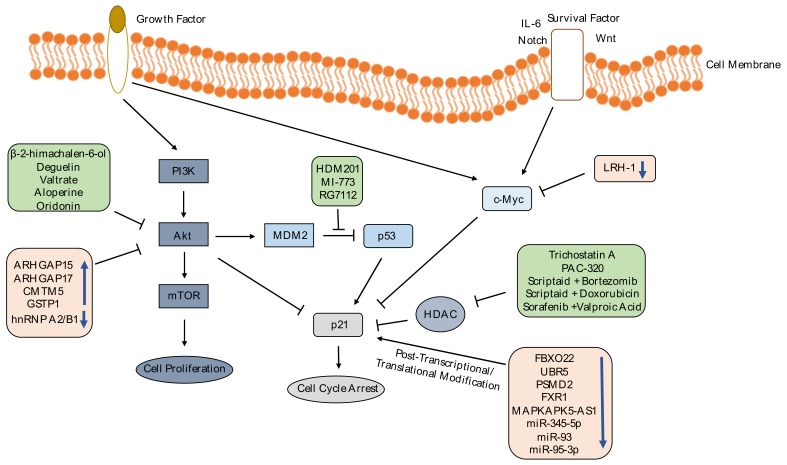
p21 functions as a cell cycle inhibitor and anti-proliferative effector in normal cells, and is dysregulated in some cancers. Earlier observations on p21 knockout models emphasized the role of this protein in cell cycle arrest under the p53 transcription factor activity. Although tumor-suppressor function of p21 is the most studied aspect of this protein in cancer, the role of p21 in phenotypic plasticity and its oncogenic/anti-apoptotic function, depending on p21 subcellular localization and p53 status, have been under scrutiny recently. Basic science and translational studies use precision gene editing to manipulate p21 itself, and proteins that interact with it; these studies have led to regulatory/functional/drug sensitivity discoveries as well as therapeutic approaches in cancer field. In this review, we will focus on targeting p21 in cancer research and its potential in providing novel therapies.
Overview
The claims and statistics of this paper haven’t been checked yet.
Run the check — free, no account needed. It reads the open-access text and checks the sources it cites.
Integrity signals
Registry
Cites
Statistics
Figures
Verification
Claims the paper makes
The claims and statistics of this paper haven’t been checked yet.
Run the check — free, no account needed. It reads the open-access text and checks the sources it cites.
Claims other papers make about this one
Each is checked against this paper’s own text: does it say what the citing paper says it does?
The source backs part of the claim, not all of it — or backs it for a different population, condition or comparison.
In the citing paper
“Of note, 38-50% of human cancers carry inactivating alterations in TP53 (ref. 132 ) , 48-80% in CDKN2A 133 and 14% in CIP1 (ref. 134 ) , while 15-20% and up to 8% harbour oncogenic mutations in RAS and BRAF , respectively 135,136 .”
From Senescence and cancer — role and therapeutic opportunities (2022) · cites this paper as [134]
Experimental — accuracy not yet measured
Self-check
Percentages, sums and reported differences re-computed from the paper’s own numbers.
The self-check needs the paper’s full text.
Citations
Cites
1 retracted
MicroRNA-93 promotes cell proliferation by directly targeting P21 in osteosarcoma cells
He, Y., & Yu, B. (2017) · Experimental and Therapeutic Medicine · doi:10.3892/etm.2017.4204 · Cited by 29
RetractedGenome engineering using the CRISPR-Cas9 system
Ran, F. A., Hsu, P. D., Wright, J., Agarwala, V., Scott, D. A., & Zhang, F. (2013) · Nature Protocols · doi:10.1038/nprot.2013.143 · Cited by 11,133
Comprehensive molecular characterization of human colon and rectal cancer
The Cancer Genome Atlas Network (2012) · Nature · doi:10.1038/nature11252 · Cited by 8,499
WAF1, a potential mediator of p53 tumor suppression
El-Deiry, W. S., Tokino, T., Velculescu, V. E., Levy, D. B., Parsons, R., Trent, J. M., Lin, D., Mercer, W. E., Kinzler, K. W., & Vogelstein, B. (1993) · Cell · doi:10.1016/0092-8674(93)90500-p · Cited by 8,321
The p21 Cdk-interacting protein Cip1 is a potent inhibitor of G1 cyclin-dependent kinases.
Wade Harper, J. (1993) · Cell · doi:10.1016/0092-8674(93)90499-g · Cited by 5,651
Massagué, J. (2008) · Cell · doi:10.1016/j.cell.2008.07.001 · Cited by 3,907
The emerging role of lncRNAs in cancer
Huarte, M. (2015) · Nature Medicine · doi:10.1038/nm.3981 · Cited by 2,712
p21 in cancer: Intricate networks and multiple activities
Abbas, T., & Dutta, A. (2009) · Nature Reviews Cancer · doi:10.1038/nrc2657 · Cited by 2,712
Cepharanthine potently enhances the sensitivity of anticancer agents in K562 cells
Ikeda, R., Che, X., Yamaguchi, T., Ushiyama, M., Zheng, C., Okumura, H., Takeda, Y., Shibayama, Y., Nakamura, K. T., Jeung, H., et al. (2005) · Cancer Science · doi:10.1111/j.1349-7006.2005.00057.x · Cited by 2,268
A Large Intergenic Noncoding RNA Induced by p53 Mediates Global Gene Repression in the p53 Response
Huarte, M., Guttman, M., Feldser, D., Garber, M., Koziol, M. J., Kenzelmann-Broz, D., Khalil, A. M., Zuk, O., Amit, I., Rabani, M., et al. (2010) · Cell · doi:10.1016/j.cell.2010.06.040 · Cited by 2,053
Cited by
Sorted by citations
Matthews, H. K., Bertoli, C., & de Bruin, R. A. M. (2022) · Nature Reviews Molecular Cell Biology · doi:10.1038/s41580-021-00404-3 · Cited by 1,506
Senescence and cancer — role and therapeutic opportunities
Schmitt, C. A., Wang, B., & Demaria, M. (2022) · Nature Reviews Clinical Oncology · doi:10.1038/s41571-022-00668-4 · Cited by 794
Signaling Pathways in Cancer: Therapeutic Targets, Combinatorial Treatments, and New Developments
Yip, H. Y. K., & Papa, A. (2021) · Cells · doi:10.3390/cells10030659 · Cited by 341
P16INK4A—More Than a Senescence Marker
Safwan‐Zaiter, H., Wagner, N., & Wagner, K. (2022) · Life · doi:10.3390/life12091332 · Cited by 204
TGF-β signaling: critical nexus of fibrogenesis and cancer
Giarratana, A. O., Prendergast, C. M., Salvatore, M. M., & Capaccione, K. M. (2024) · Journal of Translational Medicine · doi:10.1186/s12967-024-05411-4 · Cited by 180
The Senescence Markers p16INK4A, p14ARF/p19ARF, and p21 in Organ Development and Homeostasis
Wagner, K., & Wagner, N. (2022) · Cells · doi:10.3390/cells11121966 · Cited by 161
Qu, M., Zhang, G., Qu, H., Vu, A., Wu, R. P., Tsukamoto, H., Jia, Z., Huang, W., Lenz, H., Rich, J. N., et al. (2023) · Proceedings of the National Academy of Sciences · doi:10.1073/pnas.2214829120 · Cited by 146
The role of key gut microbial metabolites in the development and treatment of cancer
Jaye, K. M., Li, C. G., Chang, D., & Bhuyan, D. J. (2022) · Gut Microbes · doi:10.1080/19490976.2022.2038865 · Cited by 129
Eliaa, S. G., Al-Karmalawy, A. A., Saleh, R. M., & Elshal, M. F. (2020) · ACS Pharmacology & Translational Science · doi:10.1021/acsptsci.0c00144 · Cited by 119
Overcoming anti-cancer drug resistance via restoration of tumor suppressor gene function
Gao, L., Wu, Z., Assaraf, Y. G., Chen, Z., & Wang, L. (2021) · Drug Resistance Updates · doi:10.1016/j.drup.2021.100770 · Cited by 119
Emerging role of aging in the progression of NAFLD to HCC
He, Y., Su, Y., Duan, C., Wang, S., He, W. G., Zhang, Y., An, X., & He, M. (2022) · Ageing Research Reviews · doi:10.1016/j.arr.2022.101833 · Cited by 100
Zhang, L., Li, C., & Su, X. (2020) · Journal of Experimental & Clinical Cancer Research · doi:10.1186/s13046-020-01784-8 · Cited by 90
Understanding Failure and Improving Treatment Using HDAC Inhibitors for Prostate Cancer
Rana, Z., Diermeier, S. D., Hanif, M., & Rosengren, R. J. (2020) · Biomedicines · doi:10.3390/biomedicines8020022 · Cited by 84
The multifaceted mechanisms of Paeoniflorin in the treatment of tumors: State-of-the-Art.
Wang, X.-Z., Xia, L., Zhang, X.-Y., Chen, Q., Li, X., Mou, Y., Wang, T., & Zhang, Y.-N. (2022) · Biomedicine & pharmacotherapy = Biomedecine & pharmacotherapie · doi:10.1016/j.biopha.2022.112800 · Cited by 76
Farzaneh, Z., Vosough, M., Agarwal, T., & Farzaneh, M. (2021) · Cancer Cell International · doi:10.1186/s12935-021-01924-w · Cited by 81
Kwak, A., Lee, M.-J., Lee, M.-H., Yoon, G., Cho, S., Chae, J., & Shim, J. (2021) · Phytomedicine · doi:10.1016/j.phymed.2021.153564 · Cited by 70
Ye, X., Huang, X., Fu, X., Zhang, X., Lin, R., Zhang, W., Zhang, J., & Lü, Y. (2023) · Journal of Hematology & Oncology · doi:10.1186/s13045-023-01442-4 · Cited by 69
CDK regulators—Cell cycle progression or apoptosis—Scenarios in normal cells and cancerous cells
Nilmani, D'costa, M., Bothe, A., Das, S., Kumar, S. U., Ramanathan, G., & Doss, C. G. P. (2023) · Advances in protein chemistry and structural biology · doi:10.1016/bs.apcsb.2022.11.008 · Cited by 62
Mao, L., Xin, F., Ren, J., Xu, S., Huang, H., Zha, X., Wen, X., Gu, G., Yang, G., Cheng, Y., et al. (2022) · Theranostics · doi:10.7150/thno.70762 · Cited by 59
The emerging roles of TRIM21 in coordinating cancer metabolism, immunity and cancer treatment
Chen, X., Cao, M., Wang, P., Chu, S., Li, M., Hou, P., Zheng, J., Li, Z., & Bai, J. (2022) · Frontiers in Immunology · doi:10.3389/fimmu.2022.968755 · Cited by 52
Marine peptides in breast cancer: Therapeutic and mechanistic understanding
Ahmed, S., Mirzaei, H., Aschner, M., Khan, A., Al‐Harrasi, A., & Khan, H. Z. (2021) · Biomedicine & Pharmacotherapy · doi:10.1016/j.biopha.2021.112038 · Cited by 53
Lai, L., Shin, G. Y., & Qiu, H. (2020) · International Journal of Molecular Sciences · doi:10.3390/ijms21228504 · Cited by 53
Long, Y., Wang, Z., Fan, J., Yuan, L., Tong, C., Zhao, Y., & Liu, B. (2021) · Journal of Materials Chemistry B · doi:10.1039/d1tb00029b · Cited by 51
Wang, T.-H., Chen, C.-C., Leu, Y.-L., Lee, Y.-S., Lian, J.-H., Hsieh, H.-L., & Chen, C.-Y. (2021) · Journal of the Formosan Medical Association · doi:10.1016/j.jfma.2020.12.009 · Cited by 49
Ling, Z., Guan, H., You, Z., Wang, C., Hu, L., Zhang, L., Wang, Y., Chen, S., Xu, B., & Chen, M. (2018) · OncoTargets and Therapy · doi:10.2147/ott.s165262 · Cited by 48
Su, F., Duan, J., Zhu, J., Fu, H., Zheng, X., & Ge, C. (2021) · International Journal of Oncology · doi:10.3892/ijo.2021.5259 · Cited by 48
MDA-9/Syntenin/SDCBP: new insights into a unique multifunctional scaffold protein
Pradhan, A. K., Maji, S., Das, S. K., Emdad, L., Sarkar, D., & Fisher, P. B. (2020) · Cancer and Metastasis Reviews · doi:10.1007/s10555-020-09886-7 · Cited by 44
LMNB2 promotes the progression of colorectal cancer by silencing p21 expression
Dong, C., Jiang, T., Yin, H., Hu, S., Zhang, Y., Geng, H., Shi, P.-C., Xu, Y., Gao, H., Liu, L., et al. (2021) · Cell Death and Disease · doi:10.1038/s41419-021-03602-1 · Cited by 45
Zhang, G., Zhao, X., & Liu, W. (2022) · Cancer Biology & Therapy · doi:10.1080/15384047.2022.2054244 · Cited by 44
Out of the cycle: Impact of cell cycle aberrations on cancer metabolism and metastasis
Cheung, A. H. K., Hui, C. H., Wong, K. Y., Liu, X., Chen, B., Kang, W., & To, K. F. (2022) · International Journal of Cancer · doi:10.1002/ijc.34288 · Cited by 47
Aging, ROS, and cellular senescence: a trilogy in the progression of liver fibrosis
Almalki, W. H., & Almujri, S. S. (2024) · Biogerontology · doi:10.1007/s10522-024-10153-3 · Cited by 45
TTK inhibitor promotes radiosensitivity of liver cancer cells through p21
Zhang, H., Yao, W., Zhang, M., Lu, Y., Tang, J., Jiang, M., Mou, X., You, G., & Liang, X. (2021) · Biochemical and Biophysical Research Communications · doi:10.1016/j.bbrc.2021.01.089 · Cited by 41
Eliaa, S. G., Al-Karmalawy, A. A., Nasr, M., & Elshal, M. F. (2021) · Journal of Biochemical and Molecular Toxicology · doi:10.1002/jbt.22938 · Cited by 41
Huang, Y., Liu, C., Zeng, W.-C., Xu, G. G., Wu, J., Li, Z., Huang, X., Lin, R., & Shi, X. (2020) · Bioscience Reports · doi:10.1042/bsr20192727 · Cited by 39
Amani, J., Gorjizadeh, N., Younesi, S., Najafi, M., Ashrafi, A. M., Irian, S., Gorjizadeh, N., & Azizian, K. (2021) · DNA repair · doi:10.1016/j.dnarep.2021.103103 · Cited by 42
Immunohistochemical Profile of Parathyroid Tumours: A Comprehensive Review
Uljanovs, R., Sinkarevs, S., Štrumfs, B., Vīduša, L., Merkurjeva, K., & Štrumfa, I. (2022) · International Journal of Molecular Sciences · doi:10.3390/ijms23136981 · Cited by 38
To target cellular senescence in diabetic kidney disease: the known and the unknown
Wei, Y., Mou, S., Yang, Q., Liu, F., Cooper, M. E., & Chai, Z. (2024) · Clinical Science · doi:10.1042/cs20240717 · Cited by 41
Ahmad, A., Tiwari, R. K., Almeleebia, T. M., Fayi, M. S. A., Alshahrani, M. Y., Ahmad, I. S., Abohassan, M., Saeed, M., & Ansari, I. A. (2021) · Saudi Journal of Biological Sciences · doi:10.1016/j.sjbs.2021.06.085 · Cited by 37
Rezaei, S., Nikpanjeh, N., Rezaee, A., Gholami, S., Hashemipour, R., Biavarz, N., Yousefi, F., Tashakori, A., Salmani, F., Rajabi, R., et al. (2023) · European Journal of Pharmacology · doi:10.1016/j.ejphar.2023.175909 · Cited by 38
Smad4 and p53 synergize in suppressing autochthonous intestinal cancer
Park, J. W., Seo, M., Cho, K. S., Kook, M., Jeong, J. M., Roh, S., Cho, S. Y., Cheon, J. H., & Kim, H. K. (2022) · Cancer Medicine · doi:10.1002/cam4.4533 · Cited by 33
Nuclear receptor tyrosine kinase transport and functions in cancer
Chen, M., Hsu, J. L., & Hung, M. (2020) · Advances in cancer research · doi:10.1016/bs.acr.2020.04.010 · Cited by 33
Dolatabadi, N. F., Dehghani, A., Shahand, E., Yazdanshenas, M., Tabatabaeian, H., Zamani, A., Azadeh, M., & Ghaedi, K. (2020) · Human Cell · doi:10.1007/s13577-020-00422-x · Cited by 31
The Intricate Interplay between Cell Cycle Regulators and Autophagy in Cancer
Ziegler, D. V., Huber, K., & Fajas, L. (2021) · Cancers · doi:10.3390/cancers14010153 · Cited by 34
Ghanem, A., Al-Karmalawy, A. A., Maksoud, A. I. A. E., Hanafy, S. M., Emara, H. A., Saleh, R. M., & Elshal, M. F. (2022) · Informatics in Medicine Unlocked · doi:10.1016/j.imu.2022.100869 · Cited by 34
Salem, M. M., Gerges, M. N., & Noser, A. A. (2022) · Scientific Reports · doi:10.1038/s41598-022-26571-7 · Cited by 33
p21 limits S phase DNA damage caused by the Wee1 inhibitor MK1775
Hauge, S., Macurek, L., & Syljuåsen, R. G. (2019) · Cell Cycle · doi:10.1080/15384101.2019.1593649 · Cited by 30
Yuan, J., Li, X., Zhang, G., Cheng, W., Wang, W., Lei, Y., Ma, Q., & Song, G. (2021) · Molecular Carcinogenesis · doi:10.1002/mc.23290 · Cited by 29
Moghadam, S. K., Bakhshinejad, B., Khalafizadeh, A., Hussen, B. M., & Babashah, S. (2021) · Journal of Cellular and Molecular Medicine · doi:10.1111/jcmm.17126 · Cited by 31
Thangavelu, L. P., Altamimi, A. S., Ghaboura, N., Babu, M. A., Roopashree, R., Sharma, P., Pal, P., Choudhary, C., Prasad, G. V. S., Sinha, A., et al. (2024) · Pathology - Research and Practice · doi:10.1016/j.prp.2024.155652 · Cited by 30
Vazhappilly, C. G., Hodeify, R. F., Siddiqui, S. S., Laham, A. J., Menon, V., El‐Awady, R., Matar, R., Merheb, M. M., Marton, J., Zouabi, H. A., et al. (2020) · Phytotherapy Research · doi:10.1002/ptr.6970 · Cited by 28
Bostan, M., Petrică-Matei, G. G., Radu, N., Hainăroșie, R., Stefanescu, C. D., Diaconu, C. C., & Roman, V. (2020) · Nutrients · doi:10.3390/nu12092596 · Cited by 28
Li, T., Yu, Y., Shi, H., Cao, Y., Liu, X., Hao, Z., Ren, Y., Qin, G. W., Huang, Y., & Wang, B. (2020) · Frontiers in Oncology · doi:10.3389/fonc.2020.589112 · Cited by 27
Activation of DNA damage response signaling in mammalian cells by ionizing radiation
Ghosh, S., & Ghosh, A. (2021) · Free Radical Research · doi:10.1080/10715762.2021.1876853 · Cited by 28
Troschel, F. M., Palenta, H., Borrmann, K., Heshe, K., Hua, S. H., Yip, G. W., Kiesel, L., Eich, H. T., Götte, M., & Greve, B. (2021) · Journal of Cancer Research and Clinical Oncology · doi:10.1007/s00432-021-03743-y · Cited by 27
Nikhitha, J. N., Swathy, K. S., & Chandran, R. P. (2021) · Journal of Genetic Engineering and Biotechnology · doi:10.1186/s43141-021-00215-1 · Cited by 27
Pecoraro, A., Virgilio, A., Esposito, V., Galeone, A., Russo, G., & Russo, A. (2020) · Biomolecules · doi:10.3390/biom10040583 · Cited by 26
SH3GL3 functions as a potent tumor suppressor in lung cancer in a SH3 domain dependent manner
Lin, Z., Liu, Z., Tan, X., & Li, C. (2020) · Biochemical and Biophysical Research Communications · doi:10.1016/j.bbrc.2020.10.107 · Cited by 24
Safwan‐Zaiter, H., Wagner, N., Michiels, J., & Wagner, K. (2022) · Cells · doi:10.3390/cells11030541 · Cited by 28
Critical roles of microRNA-141-3p and CHD8 in hypoxia/reoxygenation-induced cardiomyocyte apoptosis
Yao, B.-F., Wan, X., Zheng, X., Zhong, T., Hu, J., Zhou, Y., Qin, A., Ma, Y., & Yin, D. (2020) · Cell & Bioscience · doi:10.1186/s13578-020-00384-5 · Cited by 26
Wu, H.-Y., Yang, M.-C., Ding, L.-Y., Chen, C. S., & Chu, P. (2019) · Cancer Letters · doi:10.1016/j.canlet.2019.04.026 · Cited by 25
Do Bacteria Provide an Alternative to Cancer Treatment and What Role Does Lactic Acid Bacteria Play?
Dicks, L. M. T., & Vermeulen, W. (2022) · Microorganisms · doi:10.3390/microorganisms10091733 · Cited by 25
Shahbazi, S., Zargar, M., Zolfaghari, M. R., & Amoozegar, M. A. (2023) · Cell Biochemistry and Function · doi:10.1002/cbf.3786 · Cited by 26
Zhou, J., Wang, T., Qiu, T., Chen, Z., Ma, X., Zhang, L., & Zou, J. (2020) · BMC Cancer · doi:10.1186/s12885-020-6713-y · Cited by 23
Tian, Y., Wang, L., Chen, X., Zhao, Y., Yang, A., Huang, H., Ouyang, L., Pang, D.-R., Xie, J., Liu, D., et al. (2023) · Biochemical Pharmacology · doi:10.1016/j.bcp.2023.115518 · Cited by 23
Sarkar, N., & Kumar, A. (2024) · Experimental Cell Research · doi:10.1016/j.yexcr.2024.114372 · Cited by 25
Yakubu, O. F., Metibemu, D. S., Adelani, I. B., Adesina, G. O., Edokwe, C. B., Oseha, O. E., & Adebayo, A. H. (2020) · Biomedicine & Pharmacotherapy · doi:10.1016/j.biopha.2020.110786 · Cited by 22
Li, X., Yuan, C., Yang, B., Pang, H., Li, W., Li, M., Tang, Y., Ma, D., Xie, J., Wang, J., et al. (2023) · BMC Cancer · doi:10.1186/s12885-023-10841-2 · Cited by 21
Wang, G., Li, J., Yao, Y., Liu, Y., Xia, P., Zhang, H., Yin, M., Qin, Z., Ma, W., & Yuan, Y. (2021) · Cell Death Discovery · doi:10.1038/s41420-021-00740-5 · Cited by 22
Geng, S., Peng, W., Wang, X., Hu, X., Liang, H., Hou, J., Wang, F., Zhao, G., Lü, M., & Cui, H. (2022) · Cell Death and Disease · doi:10.1038/s41419-022-04965-9 · Cited by 21
Jiang, R., & Lönnerdal, B. L. (2022) · Nutrients · doi:10.3390/nu14224901 · Cited by 21
Rahmani, F., Zandigohar, M., Safavi, P., Behzadi, M., Ghorbani, Z., Payazdan, M., Ferns, G. A., Hassanian, S. M., & Avan, A. (2023) · Current Pharmaceutical Design · doi:10.2174/1381612829666230306123455 · Cited by 21
Therapeutic strategies targeting cellular senescence for cancer and other diseases
Wang, X., Fukumoto, T., & Noma, K.-I. (2024) · The Journal of Biochemistry · doi:10.1093/jb/mvae015 · Cited by 23
Sun, Q., Novak, D., Hüser, L., Poelchen, J., Wu, H., Granados, K., Federico, A., Liu, K., Steinfass, T., Vierthaler, M., et al. (2021) · International Journal of Cancer · doi:10.1002/ijc.33591 · Cited by 20
GATA6 Exerts Potent Lung Cancer Suppressive Function by Inducing Cell Senescence
Chen, W., Chen, Z., Zhang, M., Tian, Y., Liu, L., Lan, R., Zeng, G., Fu, X., Ru, G., Liu, W., et al. (2020) · Frontiers in Oncology · doi:10.3389/fonc.2020.00824 · Cited by 22
Chatterjee, B., Ghosh, K. K., Swain, A., Nalla, K., Ravula, H., Pan, A., & Kanade, S. R. (2021) · Phytomedicine · doi:10.1016/j.phymed.2021.153885 · Cited by 20
Bazanov, D. R., Pervushin, N. V., Savin, E. V., Tsymliakov, M. D., Maksutova, A. I., Savitskaya, V. Y., Sosonyuk, S. E., Gracheva, Y. A., Seliverstov, M. Y., Lozinskaya, N. A., et al. (2022) · Pharmaceuticals · doi:10.3390/ph15040444 · Cited by 21
Simultaneous suppression of PKM2 and PHGDH elicits synergistic anti-cancer effect in NSCLC
Wang, K., Lu, H., Wang, X., Liu, Q., Hu, J., Liu, Y., Jin, M., & Kong, D. (2023) · Frontiers in Pharmacology · doi:10.3389/fphar.2023.1200538 · Cited by 20
Visuddho, V., Halim, P., Helen, H., Muhar, A. M., Iqhrammullah, M., Mayulu, N., Surya, R., Tjandrawinata, R. R., Ribeiro, R. I. M. D. A., Tallei, T. E., et al. (2024) · Marine Drugs · doi:10.3390/md22080338 · Cited by 20
Glucosinolate-Degradation Products as Co-Adjuvant Therapy on Prostate Cancer in Vitro
Núñez-Iglesias, M. J., Novío, S., Garcı́a, C., Pérez-Muñuzuri, M. E., Soengas, P., Cartea, M. E., Velasco, P., & Freire‐Garabal, M. (2019) · International Journal of Molecular Sciences · doi:10.3390/ijms20204977 · Cited by 21
Kaehler, M., Dworschak, M., Rodin, J. P., Ruemenapp, J., Vater, I., Penas, E. M. M., Liu, C., Cascorbi, I., & Nagel, I. (2021) · Experimental Hematology · doi:10.1016/j.exphem.2021.05.006 · Cited by 21
Chae, J., Choi, Y., Hong, J., Kim, N., Kim, J., Lee, H., & Choi, J. H. (2024) · ACS Applied Bio Materials · doi:10.1021/acsabm.3c01145 · Cited by 22
Kong, D., Hou, Y., Li, W., Ma, X., & Jiang, J. (2021) · Molecular Oncology · doi:10.1002/1878-0261.12940 · Cited by 19
Wang, J., & Wang, C. (2021) · Food and Chemical Toxicology · doi:10.1016/j.fct.2021.112096 · Cited by 19
Liu, Y., Chen, H., Li, X., Zhang, F., Kong, L., Wang, X., Bai, J., & Wu, X. (2021) · Frontiers in Oncology · doi:10.3389/fonc.2021.607021 · Cited by 19
Oncogenic activity and cellular functionality of melanoma associated antigen A3
Schäfer, P., Paraschiakos, T., & Windhorst, S. (2021) · Biochemical Pharmacology · doi:10.1016/j.bcp.2021.114700 · Cited by 20
Function and regulation of the Spt-Ada-Gcn5-Acetyltransferase (SAGA) deubiquitinase module
Cornelio-Parra, D. V., Goswami, R., Costanzo, K. M., Morales‐Sosa, P., & Mohan, R. D. (2020) · Biochimica et Biophysica Acta (BBA) - Gene Regulatory Mechanisms · doi:10.1016/j.bbagrm.2020.194630 · Cited by 20
Bazanov, D. R., Pervushin, N. V., Savin, E. V., Tsymliakov, M. D., Maksutova, A. I., Sosonyuk, S. E., Kopeina, G. S., & Lozinskaya, N. A. (2021) · Medicinal Chemistry Research · doi:10.1007/s00044-021-02802-w · Cited by 18
Addiction of Merkel cell carcinoma to MUC1-C identifies a potential new target for treatment
Morimoto, Y., Fushimi, A., Yamashita, N., Hagiwara, M., Bhattacharya, A., Cheng, J., Frost, T. C., Ahmad, R., Daimon, T., Huang, L. H., et al. (2022) · Oncogene · doi:10.1038/s41388-022-02361-3 · Cited by 18
Tumors driven by RAS signaling harbor a natural vulnerability to oncolytic virus M1
Cai, J., Lin, K., Cai, W., Lin, Y., Liu, X., Guo, L., Zhang, J., Xu, W., Lin, Z., Wong, C.-W., et al. (2020) · Molecular Oncology · doi:10.1002/1878-0261.12820 · Cited by 17
Martín, M. J., Azcona, P. L., Lassalle, V., & Gentili, C. (2020) · European Journal of Pharmaceutical Sciences · doi:10.1016/j.ejps.2020.105681 · Cited by 17
Aleshin, V. A., Zhou, X., Krishnan, S., Karlsson, A., & Bunik, V. I. (2021) · Frontiers in Genetics · doi:10.3389/fgene.2021.658446 · Cited by 17
Ghosh, K. K., Chatterjee, B., Nalla, K., Behera, B., Mukherjee, A. K., & Kanade, S. R. (2022) · Chemosphere · doi:10.1016/j.chemosphere.2022.133569 · Cited by 17
Lin, Y., Zhang, F., Zhang, L., Chen, L., & Zheng, S. (2022) · Stem Cell Research & Therapy · doi:10.1186/s13287-022-02795-2 · Cited by 17
Poly(rC)-binding proteins as pleiotropic regulators in hematopoiesis and hematological malignancy
Zhao, H., Wei, Z., Shen, G., Chen, Y., Hao, X., Li, S., & Wang, R. (2022) · Frontiers in Oncology · doi:10.3389/fonc.2022.1045797 · Cited by 17
Traditional herbs: mechanisms to combat cellular senescence
Wang, L., Wang, J., Yang, Z., Wang, Y., Zhao, T., Luo, W., Liang, T., & Zheng, Y. (2023) · Aging · doi:10.18632/aging.205269 · Cited by 18
Ibrahim, K. A., Abdelgaid, H. A., El-Desouky, M. A., Fahmi, A. A., & Abdel‐Daim, M. M. (2021) · Environmental Toxicology · doi:10.1002/tox.23097 · Cited by 17
Gupta, S., Silveira, D. A., Mombach, J. C. M., & Hashimoto, R. F. (2025) · Proteomes · doi:10.3390/proteomes13010006 · Cited by 16
Shi, S., Li, C., Zhang, Y., Deng, C., Tan, M., Pan, G., Du, J., Ji, Y., Li, Q., Liang, H., et al. (2021) · PubMed Central · Cited by 16
Song, D., Xu, B., Shi, D.-M., Li, S., & Cai, Y. (2020) · Open Medicine · doi:10.1515/med-2020-0101 · Cited by 16
Key genes and drug delivery systems to improve the efficiency of chemotherapy
Torres‐Martínez, Z., Delgado, Y., Ferrer‐Acosta, Y., Suárez-Arroyo, I. J., Joaquín-Ovalle, F. M., Delinois, L. J., & Griebenow, K. H. (2020) · Cancer Drug Resistance · doi:10.20517/cdr.2020.64 · Cited by 16
Metadata
- Authors
- Shamloo, B., & Usluer, S.
- Affiliations
- University of Utah (US)
- Medical University of Graz (AT)
- Corresponding author
- Shamloo, Bahar
- Venue
- Cancers
- Publisher
- MDPI AG
- Published
- 2019-08-14
- Volume
- 11
- Issue
- 8
- Pages
- 1178
- ISSN
- 2072-6694 (ISSN-L)
- PMC
- PMC6721478
- OpenAlex
- W2968190332
- Cited by
- 336
- References
- 175
- Citations by year
- 2026: 18 · 2025: 47 · 2024: 63 · 2023: 65 · 2022: 52 · 2021: 56 · 2020: 31 · 2019: 3
- FWCI
- 3.41
- Type
- journal article
- Language
- en
- Open access
- gold
- doi.org
- Licence
- Locations
- Cancers (publishedVersion, cc-by)
- PubMed Central (publishedVersion, cc-by)
- PubMed (publishedVersion)
- DOAJ (DOAJ: Directory of Open Access Journals) (submittedVersion, cc-by-sa)
- Topics
- Health Sciences › Medicine › Oncology › Cancer-related Molecular Pathways
- Life Sciences › Biochemistry, Genetics and Molecular Biology › Molecular Biology › PI3K/AKT/mTOR signaling in cancer
- Life Sciences › Biochemistry, Genetics and Molecular Biology › Molecular Biology › Ubiquitin and proteasome pathways
- Keywords
- p21, cell cycle inhibitors, p53, tumor suppression, phenotypic plasticity, oncogenic function, anti-apoptotic effects, subcellular localization, genome editing, cancer therapy, drug sensitivity
About these checks
Registry, retraction, Cites and statistics results are computed, not judged, with one exception: a printed reference that no index lists is read once by a model before it counts as a citation error. Claims are extracted by a model and kept only when their quote appears verbatim in the text; each cited source is then checked, with a model’s help, for whether it says what the claim relies on. Those verdicts can be wrong — read the claim’s quote and the cited source before relying on one.
Statistics and arithmetic are recomputed, not judged.
Confidence bands are shown only for fields calibrated on our annotated test set. None is calibrated yet, so no band is shown.
What counts as a claim ›How we measure confidence ›How we check this ›
Are you an author, or do you see a problem with this page? Request a review
