

The DOI matches its Crossref record; 160 of the 175 references it cites were found in a registry or an index.
p21 in Cancer Research
Open accessAbstract
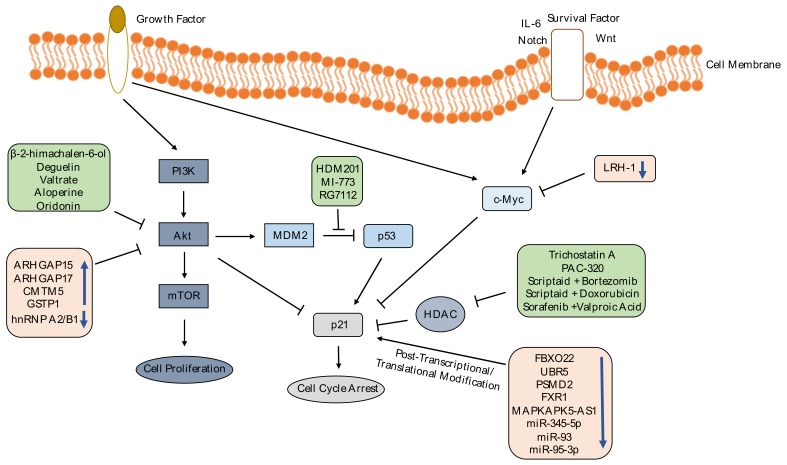
p21 functions as a cell cycle inhibitor and anti-proliferative effector in normal cells, and is dysregulated in some cancers. Earlier observations on p21 knockout models emphasized the role of this protein in cell cycle arrest under the p53 transcription factor activity. Although tumor-suppressor function of p21 is the most studied aspect of this protein in cancer, the role of p21 in phenotypic plasticity and its oncogenic/anti-apoptotic function, depending on p21 subcellular localization and p53 status, have been under scrutiny recently. Basic science and translational studies use precision gene editing to manipulate p21 itself, and proteins that interact with it; these studies have led to regulatory/functional/drug sensitivity discoveries as well as therapeutic approaches in cancer field. In this review, we will focus on targeting p21 in cancer research and its potential in providing novel therapies.
Overview
The claims and statistics of this paper haven’t been checked yet.
Run the check — free, no account needed. It reads the open-access text and checks the sources it cites.
Integrity signals
Registry
Cites
Statistics
Figures
Verification
Claims the paper makes
The claims and statistics of this paper haven’t been checked yet.
Run the check — free, no account needed. It reads the open-access text and checks the sources it cites.
Claims other papers make about this one
Each is checked against this paper’s own text: does it say what the citing paper says it does?
The source backs part of the claim, not all of it — or backs it for a different population, condition or comparison.
In the citing paper
“Of note, 38-50% of human cancers carry inactivating alterations in TP53 (ref. 132 ) , 48-80% in CDKN2A 133 and 14% in CIP1 (ref. 134 ) , while 15-20% and up to 8% harbour oncogenic mutations in RAS and BRAF , respectively 135,136 .”
From Senescence and cancer — role and therapeutic opportunities (2022) · cites this paper as [134]
Experimental — accuracy not yet measured
Self-check
Percentages, sums and reported differences re-computed from the paper’s own numbers.
The self-check needs the paper’s full text.
Citations
Cites
1 retracted
MicroRNA-93 promotes cell proliferation by directly targeting P21 in osteosarcoma cells
He, Y., & Yu, B. (2017) · Experimental and Therapeutic Medicine · doi:10.3892/etm.2017.4204 · Cited by 29
RetractedGenome engineering using the CRISPR-Cas9 system
Ran, F. A., Hsu, P. D., Wright, J., Agarwala, V., Scott, D. A., & Zhang, F. (2013) · Nature Protocols · doi:10.1038/nprot.2013.143 · Cited by 11,133
Comprehensive molecular characterization of human colon and rectal cancer
The Cancer Genome Atlas Network (2012) · Nature · doi:10.1038/nature11252 · Cited by 8,499
WAF1, a potential mediator of p53 tumor suppression
El-Deiry, W. S., Tokino, T., Velculescu, V. E., Levy, D. B., Parsons, R., Trent, J. M., Lin, D., Mercer, W. E., Kinzler, K. W., & Vogelstein, B. (1993) · Cell · doi:10.1016/0092-8674(93)90500-p · Cited by 8,321
The p21 Cdk-interacting protein Cip1 is a potent inhibitor of G1 cyclin-dependent kinases.
Wade Harper, J. (1993) · Cell · doi:10.1016/0092-8674(93)90499-g · Cited by 5,651
Massagué, J. (2008) · Cell · doi:10.1016/j.cell.2008.07.001 · Cited by 3,907
The emerging role of lncRNAs in cancer
Huarte, M. (2015) · Nature Medicine · doi:10.1038/nm.3981 · Cited by 2,712
p21 in cancer: Intricate networks and multiple activities
Abbas, T., & Dutta, A. (2009) · Nature Reviews Cancer · doi:10.1038/nrc2657 · Cited by 2,712
Cepharanthine potently enhances the sensitivity of anticancer agents in K562 cells
Ikeda, R., Che, X., Yamaguchi, T., Ushiyama, M., Zheng, C., Okumura, H., Takeda, Y., Shibayama, Y., Nakamura, K. T., Jeung, H., et al. (2005) · Cancer Science · doi:10.1111/j.1349-7006.2005.00057.x · Cited by 2,268
A Large Intergenic Noncoding RNA Induced by p53 Mediates Global Gene Repression in the p53 Response
Huarte, M., Guttman, M., Feldser, D., Garber, M., Koziol, M. J., Kenzelmann-Broz, D., Khalil, A. M., Zuk, O., Amit, I., Rabani, M., et al. (2010) · Cell · doi:10.1016/j.cell.2010.06.040 · Cited by 2,053
Altering the Genome by Homologous Recombination
Capecchi, M. R. (1989) · Science · doi:10.1126/science.2660260 · Cited by 2,037
Hybrid restriction enzymes: zinc finger fusions to Fok I cleavage domain.
Kim, Y. G., Cha, J., & Chandrasegaran, S. (1996) · Proceedings of the National Academy of Sciences · doi:10.1073/pnas.93.3.1156 · Cited by 1,889
Targeting DNA Double-Strand Breaks with TAL Effector Nucleases
Christian, M., Cermak, T., Doyle, E. L., Schmidt, C., Zhang, F., Hummel, A., Bogdanove, A. J., & Voytas, D. F. (2010) · Genetics · doi:10.1534/genetics.110.120717 · Cited by 1,869
Hematopoietic Stem Cell Quiescence Maintained by p21 cip1/waf1
Cheng, T., Rodrigues, N., Shen, H., Yang, Y.-G., Dombkowski, D., Sykes, M., & Scadden, D. T. (2000) · Science · doi:10.1126/science.287.5459.1804 · Cited by 1,339
Zhou, B. P., Liao, Y., Xia, W., Spohn, B., Lee, M., & Hung, M. (2001) · Nature Cell Biology · doi:10.1038/35060032 · Cited by 1,148
p53-dependent and independent expression of p21 during cell growth, differentiation, and DNA damage.Preprint
Macleod, K. F., Sherry, N., Hannon, G. J., Beach, D., Tokino, T., Kinzler, K. W., Vogelstein, B., & Jacks, T. (1995) · Genes & Development · doi:10.1101/gad.9.8.935 · Cited by 1,126
The role of the cyclin-dependent kinase inhibitor p21 in apoptosis.
Gartel, A. L., & Tyner, A. L. (2002) · PubMed · Cited by 918
Induction of WAF1/CIP1 by a p53-independent pathway.
Michieli, P., Chedid, M., Lin, D. P., Pierce, J. H., Mercer, W. E., & Givol, D. (1994) · PubMed · Cited by 768
Palmer, A. C., & Sorger, P. K. (2017) · Cell · doi:10.1016/j.cell.2017.11.009 · Cited by 642
Towards a complete map of the human long non-coding RNA transcriptome
Uszczyńska-Ratajczak, B., Lagarde, J., Frankish, A., Guigó, R., & Johnson, R. (2018) · Nature Reviews Genetics · doi:10.1038/s41576-018-0017-y · Cited by 637
Wang, T., Yu, H., Hughes, N. W., Liu, B., Kendirli, A., Klein, K., Chen, W. W., Lander, E. S., & Sabatini, D. M. (2017) · Cell · doi:10.1016/j.cell.2017.01.013 · Cited by 632
Fire, A. Z. (1999) · Trends in Genetics · doi:10.1016/s0168-9525(99)01818-1 · Cited by 627
Viral Vectors for Gene Therapy
Robbins, P. D., & Ghivizzani, S. C. (1998) · Pharmacology & Therapeutics · doi:10.1016/s0163-7258(98)00020-5 · Cited by 529
Reciprocal Regulation of HIF-1α and LincRNA-p21 Modulates the Warburg Effect
Yang, F., Zhang, H., Mei, Y., & Wu, M. (2013) · Molecular Cell · doi:10.1016/j.molcel.2013.11.004 · Cited by 514
p21: a two-faced genome guardian.
Georgakilas, A. G., Martin, O. A., & Bonner, W. M. (2017) · Trends in Molecular Medicine · doi:10.1016/j.molmed.2017.02.001 · Cited by 489
Wu, G., Cai, J., Han, Y., Chen, J., Huang, Z., Chen, C., Cai, Y., Huang, H., Yang, Y., Liu, Y., et al. (2014) · Circulation · doi:10.1161/circulationaha.114.011675 · Cited by 486
Zeller, K. I., Jegga, A. G., Aronow, B. J., O’Donnell, K. A., & Dang, C. V. (2003) · Genome biology · doi:10.1186/gb-2003-4-10-r69 · Cited by 483
Examination of the expanding pathways for the regulation of p21 expression and activity
Jung, Y.-S., Qian, Y., & Chen, X. (2010) · Cellular Signalling · doi:10.1016/j.cellsig.2010.01.013 · Cited by 428
Tumor susceptibility of p21(Waf1/Cip1)-deficient mice.
Martín‐Caballero, J., Flores, J. M., Garcı́a, P., & Serrano, M. (2001) · PubMed · Cited by 352
mdm-2 Inhibits the G1 Arrest and Apoptosis Functions of the p53 Tumor Suppressor Protein
Chen, J., Wu, X., Lin, J., & Levine, A. J. (1996) · Molecular and Cellular Biology · doi:10.1128/mcb.16.5.2445 · Cited by 348
The p53-p21-DREAM-CDE/CHR pathway regulates G 2 /M cell cycle genes
Fischer, M., Quaas, M., Steiner, L., & Engeland, K. (2015) · Nucleic Acids Research · doi:10.1093/nar/gkv927 · Cited by 339
Synthetic lethality: General principles, utility and detection using genetic screens in human cells
Nijman, S. M. B. (2010) · FEBS Letters · doi:10.1016/j.febslet.2010.11.024 · Cited by 334
SOX2 promotes dedifferentiation and imparts stem cell-like features to pancreatic cancer cells
Herreros‐Villanueva, M., Js, Z., König, A. O., Abel, E. V., Smyrk, T. C., Bamlet, W. R., de Narvajas, A. A.-M., Gomez, T. S., Simeone, D. M., Bujanda, L., et al. (2013) · Oncogenesis · doi:10.1038/oncsis.2013.23 · Cited by 331
Wu, S., Cetinkaya, C., Muñoz-Alonso, M. J., von der Lehr, N., Bahram, F., Beuger, V., Eilers, M., León, J., & Larsson, L. (2003) · Oncogene · doi:10.1038/sj.onc.1206145 · Cited by 322
Cell-cycle restriction limits DNA damage and maintains self-renewal of leukaemia stem cells
Viale, A., Franco, F., Orleth, A., Cambiaghi, V., Giuliani, V., Bossi, D., Ronchini, C., Ronzoni, S., Muradore, I., Monestiroli, S., et al. (2008) · Nature · doi:10.1038/nature07618 · Cited by 314
Galanos, P., Vougas, K., Walter, D., Polyzos, A., Maya-Mendoza, A., Haagensen, E. J., Kokkalis, A., Roumelioti, F.-M., Gagos, S., Tzetis, M., et al. (2016) · Nature Cell Biology · doi:10.1038/ncb3378 · Cited by 308
p21Waf1/Cip1 protects against p53-mediated apoptosis of human melanoma cells
Gorospe, M., Cirielli, C., Wang, X., Seth, P. K., Capogrossi, M. C., & Holbrook, N. J. (1997) · Oncogene · doi:10.1038/sj.onc.1200897 · Cited by 294
Viral vectors for gene therapy
Robbins, P. D., Tahara, H., & Ghivizzani, S. C. (1998) · Trends in biotechnology · doi:10.1016/s0167-7799(97)01137-2 · Cited by 292
Qiu, L., Li, X., Tang, H., Jiang, B., Dou, Y., Gorospe, M., & Wang, W. (2017) · Journal of Cellular Biochemistry · doi:10.1002/jcb.25957 · Cited by 284
Zhang, W., Grasso, L., McClain, C. D., Gambel, A. M., Cha, Y., Travali, S., Deisseroth, A., & Mercer, W. E. (1995) · PubMed · Cited by 253
P21 activated kinase signaling in cancer
Rane, C. K., & Minden, A. (2018) · Seminars in Cancer Biology · doi:10.1016/j.semcancer.2018.01.006 · Cited by 247
Hofmann, C., Shepelev, M. V., & Chernoff, J. (2004) · Journal of Cell Science · doi:10.1242/jcs.01392 · Cited by 240
Potential Role of WAF1/Cip1/p21 as a Mediator of TGF-β Cytoinhibitory Effect
Li, C., Suardet, L., & Little, J. B. (1995) · Journal of Biological Chemistry · doi:10.1074/jbc.270.10.4971 · Cited by 239
Rane, C. K., & Minden, A. (2014) · Small GTPases · doi:10.4161/sgtp.28003 · Cited by 232
Cytoplasmic p21 expression levels determine cisplatin resistance in human testicular cancer
Koster, R., di Pietro, A., Timmer‐Bosscha, H., Gibcus, J. H., van den Berg, A., Suurmeijer, A. J. H., Bischoff, R., Gietema, J. A., & de Jong, S. (2010) · Journal of Clinical Investigation · doi:10.1172/jci41939 · Cited by 227
Zhang, J., Sun, Q., Zhang, Z., Ge, S., Han, Z.-G., & Chen, W.-T. (2012) · Oncogene · doi:10.1038/onc.2012.28 · Cited by 226
Ye, D. Z., & Field, J. M. (2012) · Cellular Logistics · doi:10.4161/cl.21882 · Cited by 220
In vivo gene therapy with p53 or p21 adenovirus for prostate cancer.
Ja, E., Hall, S. J., Sehgal, I., Wang, J., Timme, T. L., Yang, G., Connell‐Crowley, L., Elledge, S. J., Ww, Z., & Harper, J. W. (1995) · PubMed · Cited by 219
Long noncoding RNA PANDA and scaffold-attachment-factor SAFA control senescence entry and exit
Pavan Kumar, P., Desetty, R. D., Pineau, P., Marchio, A., Moon, A., Dejean, A., & Bischof, O. (2014) · Nature Communications · doi:10.1038/ncomms6323 · Cited by 205
Bao, X., Wu, H., Zhu, X., Guo, X., Hutchins, A. P., Luo, Z., Song, H., Chen, Y., Lai, K., Yin, M., et al. (2014) · Cell Research · doi:10.1038/cr.2014.165 · Cited by 189
Gawriluk, T. R., Simkin, J., Thompson, K. L., Biswas, S. K., Clare-Salzler, Z., Kimani, J. M., Kiama, S. G., Smith, J. J., Ezenwa, V. O., & Seifert, A. W. (2016) · Nature Communications · doi:10.1038/ncomms11164 · Cited by 167
Xia, W., Chen, J., Zhou, X. C., Sun, P.-R., Lee, D., Liao, Y., Zhou, B. P., & Hung, M. (2004) · Clinical Cancer Research · doi:10.1158/1078-0432.ccr-03-0527 · Cited by 167
Deng, T., Yan, G., Song, X., Xie, L. Y., Zhou, Y., Li, J., Hu, X., Li, Z., Hu, J., Zhang, Y., et al. (2018) · Proceedings of the National Academy of Sciences · doi:10.1073/pnas.1714938115 · Cited by 162
Yang, W., Mathew, J., Velcich, A., Edelmann, W., Kucherlapati, R., Lipkin, M., Yang, K., & Augenlicht, L. H. (2001) · PubMed · Cited by 145
Histology, M. I. P. A. (1996) · Lung Cancer · doi:10.1016/s0169-5002(97)89503-7 · Cited by 124
Baharuddin, P., Satar, N. A., Fakiruddin, K. S., Zakaria, N., Lim, M. N., Yusoff, N. M., Zakaria, Z., & Yahaya, B. H. (2015) · Oncology Reports · doi:10.3892/or.2015.4371 · Cited by 123
Zhao, Z.-S., & Manser, E. (2012) · Cellular Logistics · doi:10.4161/cl.21912 · Cited by 119
Sohn, D., Eßmann, F., Schulze‐Osthoff, K., & Jänicke, R. U. (2006) · Cancer Research · doi:10.1158/0008-5472.can-06-1569 · Cited by 119
Li, Y., Huang, J., Zeng, B., Yang, D., Sun, J., Yin, X., Lu, M., Qiu, Z., Peng, W., Xiang, T., et al. (2018) · Cancer Letters · doi:10.1016/j.canlet.2018.05.018 · Cited by 119
Zhang, L., Chen, J., Deng, N., Liu, Q., Wang, C., Zhang, Z., Chu, L., Yu, C., Liang, H., Zhang, B., et al. (2019) · Journal of Experimental & Clinical Cancer Research · doi:10.1186/s13046-019-1058-6 · Cited by 112
Two variants of the CIP1/WAF1 gene occur together and are associated with human cancer
Mousses, S., Özçelik, H., D.Lee, P., Malkin, D. M., Bull, S. B., & Andrulis, I. L. (1995) · Human Molecular Genetics · doi:10.1093/hmg/4.6.1089 · Cited by 109
PAK4: a pluripotent kinase that regulates prostate cancer cell adhesion
Wells, C. M., Whale, A. D., Parsons, M., Masters, J. R., & Jones, G. E. (2010) · Journal of Cell Science · doi:10.1242/jcs.055707 · Cited by 107
Tsao, Y., Huang, S.-J., Chang, J.-L., Hsieh, J., Pong, R.-C., & Chen, S. (1999) · Journal of Virology · doi:10.1128/jvi.73.6.4983-4990.1999 · Cited by 103
Stewart, Z. A., Mays, D. J., & Pietenpol, J. A. (1999) · PubMed · Cited by 101
p53-dependent gene repression through p21 is mediated by recruitment of E2F4 repression complexes
Benson, E. K., Mungamuri, S. K., Attie, O., Kracikova, M., Sachidanandam, R., Manfredi, J. J., & Aaronson, S. A. (2013) · Oncogene · doi:10.1038/onc.2013.378 · Cited by 100
Chang, Y., Zhou, P.-J., Wei, L., Li, W., Ji, Z., Fang, Y., & Gao, W. (2015) · Oncotarget · doi:10.18632/oncotarget.4447 · Cited by 98
Buitrago‐Molina, L. E., Marhenke, S., Longerich, T., Sharma, A. D., Boukouris, A. E., Geffers, R., Guigas, B., Manns, M. P., & Vogel, A. (2013) · Hepatology · doi:10.1002/hep.26412 · Cited by 92
Loss of p21WAF1/CIP1 accelerates Ras oncogenesis in a transgenic/knockout mammary cancer model
Adnane, J., Jackson, R. J., Nicosia, S. V., Cantor, A. B., Pledger, W. J., & Sebti, S. M. (2000) · Oncogene · doi:10.1038/sj.onc.1203956 · Cited by 91
LincRNa-p21: function and mechanism in cancer
Chen, S., Liang, H., Yang, H., Zhou, K., Xu, L., Liu, J., Lai, B., Li, S., Luo, H., Peng, J., et al. (2017) · Medical Oncology · doi:10.1007/s12032-017-0959-5 · Cited by 91
Jiang, J., Pi, J., Jin, H., & Cai, J. (2018) · Journal of Cellular Biochemistry · doi:10.1002/jcb.27654 · Cited by 91
Tumor suppressor functions for the Cdk inhibitor p21 in the mouse colon
Poole, A. J., Heap, D., Carroll, R. E., & Tyner, A. L. (2004) · Oncogene · doi:10.1038/sj.onc.1207994 · Cited by 90
PAKs in Human Cancer Progression
Kumar, R., & Li, D.-Q. (2016) · Advances in cancer research · doi:10.1016/bs.acr.2016.01.002 · Cited by 90
Yang, W., Yu, H., Shen, Y., Liu, Y., Yang, Z., & Sun, T. (2016) · Oncotarget · doi:10.18632/oncotarget.9214 · Cited by 87
Jeay, S., Ferretti, S., Holzer, P., Fuchs, J., Chapeau, E. A., Wartmann, M., Sterker, D., Romanet, V., Murakami, M., Kerr, G., et al. (2018) · Cancer Research · doi:10.1158/0008-5472.can-18-0338 · Cited by 87
Tumor suppression by p53: making cells senescent.
Qian, Y., & Chen, X. (2010) · PubMed · doi:10.14670/hh-25.515 · Cited by 85
Majumder, M., House, R. P., Palanisamy, N., Qie, S., Day, T. A., Neskey, D. M., Diehl, J. A., & Palanisamy, V. (2016) · PLoS Genetics · doi:10.1371/journal.pgen.1006306 · Cited by 82
Oridonin inhibits oral cancer growth and PI3K/Akt signaling pathway
Yang, J., Ren, X., Zhang, L., Li, Y., Cheng, B., & Xia, J. (2018) · Biomedicine & Pharmacotherapy · doi:10.1016/j.biopha.2018.02.011 · Cited by 82
Dual Role of p21 in the Progression of Cancer and Its Treatment
Parveen, A., Akash, M. S. H., Rehman, K., & Whang, W. K. (2016) · Critical Reviews in Eukaryotic Gene Expression · doi:10.1615/critreveukaryotgeneexpr.v26.i1.60 · Cited by 81
Elbendary, A., Cirisano, F. D., Evans, A. C., Davis, P. L., Iglehart, J. D., Marks, J. R., & Berchuck, A. (1996) · PubMed · Cited by 81
WAF1/Cip1 gene polymorphism and expression in carcinomas of the breast, ovary, and endometrium.
Lukas, J. L., Groshen, S. G., Saffari, B., Niu, N., Reles, A., Wen, W., Felix, J. C., Jones, L. A., Hall, F. L., & Press, M. F. (1997) · Europe PMC (PubMed Central) · Cited by 80
Tyagi, N., Marimuthu, S., Bhardwaj, A., Deshmukh, S. K., Srivastava, S. K., Singh, A. P., McClellan, S. B., Carter, J. E., & Singh, S. (2015) · Cancer Letters · doi:10.1016/j.canlet.2015.10.028 · Cited by 80
Gartenhaus, R. B., Wang, P., & Hoffmann, P. (1996) · Proceedings of the National Academy of Sciences · doi:10.1073/pnas.93.1.265 · Cited by 78
Wang, J., Lei, Z., Guo, Y., Wang, T., Qin, Z., Xiao, H., Fan, L., Chen, D., Bian, X., Liu, J., et al. (2015) · Oncotarget · doi:10.18632/oncotarget.5635 · Cited by 78
Jackson, R. J., Adnane, J., Coppola, D., Cantor, A. B., Sebti, S. M., & Pledger, W. J. (2002) · Oncogene · doi:10.1038/sj.onc.1205946 · Cited by 77
Origanti, S., Cai, S.-R., Munir, A. Z., White, L. S., & Piwnica-Worms, H. (2013) · Oncogene · doi:10.1038/onc.2012.84 · Cited by 74
Wendt, J., Radetzki, S., von Haefen, C., Hemmati, P., Güner, D., Schulze‐Osthoff, K., Dörken, B., & Daniel, P. T. (2005) · Oncogene · doi:10.1038/sj.onc.1209031 · Cited by 71
Hussain, T., Saha, D., Purohit, G., Kar, A., Mukherjee, A. K., Sharma, S., Sengupta, S., Dhapola, P., Maji, B., Sreekanth, V., et al. (2017) · Scientific Reports · doi:10.1038/s41598-017-11177-1 · Cited by 70
Okuma, A., Hanyu, A., Watanabe, S., & Hara, E. (2017) · Nature Communications · doi:10.1038/s41467-017-02281-x · Cited by 69
Yamasaki, Y., Tazawa, H., Hashimoto, Y., Kojima, T., Kuroda, S., Yano, S., Yoshida, R., Uno, F., Mizuguchi, H., Ohtsuru, A., et al. (2012) · European Journal of Cancer · doi:10.1016/j.ejca.2011.12.020 · Cited by 67
The Dual Role Played by p21 May Influence the Apoptotic or Anti-Apoptotic Fate in Cancer
Piccolo, M. T., & Crispi, S. (2012) · Journal of cancer research updates · doi:10.6000/1929-2279.2012.01.02.5 · Cited by 65
Rbm24, an RNA-binding Protein and a Target of p53, Regulates p21 Expression via mRNA Stability
Jiang, Y., Zhang, M., Qian, Y., Xu, E., Zhang, J., & Chen, X. (2013) · Journal of Biological Chemistry · doi:10.1074/jbc.m113.524413 · Cited by 65
LincRNA-p21: Implications in Human Diseases
Tang, S.-S., Zheng, B., & Xiong, X. (2015) · International Journal of Molecular Sciences · doi:10.3390/ijms160818732 · Cited by 65
Ex vivo targeting of p21Cip1/Waf1 permits relative expansion of human hematopoietic stem cells
Stier, S., Cheng, T., Forkert, R., Lutz, C., Dombkowski, D., Zhang, J. L., & Scadden, D. T. (2003) · Blood · doi:10.1182/blood-2002-10-3053 · Cited by 65
Milewski, D., Pradhan, A., Wang, X., Cai, Y., Le, T., Turpin, B. K., Kalinichenko, V. V., & Kalin, T. V. (2016) · Oncogene · doi:10.1038/onc.2016.254 · Cited by 64
Idogawa, M., Sasaki, Y., Suzuki, H., Mita, H., Imai, K., Shinomura, Y., & Tokino, T. (2009) · Clinical Cancer Research · doi:10.1158/1078-0432.ccr-08-2396 · Cited by 62
Differential effects of p21(WAF1/CIP1) deficiency on MMTV-ras and MMTV-myc mammary tumor properties.
Bearss, D. J., Lee, R. J., Troyer, D. A., Pestell, R. G., & Windle, J. J. (2002) · PubMed · Cited by 62
Shi, X., Ran, L., Liu, Y., Zhong, S., Zhou, P., Liao, M., & Fang, W. (2018) · Oncology Reports · doi:10.3892/or.2018.6195 · Cited by 61
PAK1 is a therapeutic target in acute myeloid leukemia and myelodysplastic syndrome
Pandolfi, A., Stanley, R. F., Yu, Y., Bartholdy, B., Pendurti, G., Gritsman, K., Boultwood, J., Chernoff, J., Verma, A., & Steidl, U. G. (2015) · Blood · doi:10.1182/blood-2014-12-618801 · Cited by 60
Bechara, E., Davidovic, L., Melko, M., Bensaid, M., Tremblay, S., Grosgeorge, J., Khandjian, E. W., Lalli, E., & Bardoni, B. (2006) · Nucleic Acids Research · doi:10.1093/nar/gkl1021 · Cited by 59
P21-Activated Kinase 4 Overexpression in Metastatic Gastric Cancer Patients
Ahn, H. K., Jang, J., Lee, J., Park, H., Park, J. O., Park, Y. S., Lim, H. Y., Kim, K., & Kang, W. K. (2011) · Translational Oncology · doi:10.1593/tlo.11145 · Cited by 58
Kelly, M. L., & Chernoff, J. (2012) · Cellular Logistics · doi:10.4161/cl.21381 · Cited by 57
Long Non-Coding RNAs and p53 Regulation
Baldassarre, A., & Masotti, A. (2012) · International Journal of Molecular Sciences · doi:10.3390/ijms131216708 · Cited by 57
Marhenke, S., Buitrago‐Molina, L. E., Endig, J., Orlik, J., Schweitzer, N., Klett, S., Longerich, T., Geffers, R., Sánchez, A., Dorrell, C., et al. (2013) · Gut · doi:10.1136/gutjnl-2013-304829 · Cited by 57
Nakakido, M., Deng, Z., Suzuki, T., Dohmae, N., Nakamura, Y., & Hamamoto, R. (2015) · Oncotarget · doi:10.18632/oncotarget.5143 · Cited by 57
Ji, H., Hui, B., Wang, J., Zhu, Y., Tang, L., Peng, P., Wang, T., Wang, L., Xu, S., Li, J., et al. (2018) · Cancer Science · doi:10.1111/cas.13838 · Cited by 57
King, M. L., & Murphy, L. L. (2009) · Phytomedicine · doi:10.1016/j.phymed.2009.06.008 · Cited by 54
Lehman, S. L., Cerniglia, G. J., Johannes, G. J., Ye, J., Ryeom, S. W., & Koumenis, C. (2015) · PLoS Genetics · doi:10.1371/journal.pgen.1005212 · Cited by 50
Kang, M. R., Park, K. H., Yang, J.-O., Lee, C. W., Oh, S. J., Yun, J., Lee, M. Y., Han, S., & Kang, J. S. (2016) · PLoS ONE · doi:10.1371/journal.pone.0160961 · Cited by 48
Ling, Z., Guan, H., You, Z., Wang, C., Hu, L., Zhang, L., Wang, Y., Chen, S., Xu, B., & Chen, M. (2018) · OncoTargets and Therapy · doi:10.2147/ott.s165262 · Cited by 48
Lu, S., Ren, C., Liu, Y., & Epner, D. E. (2006) · International Journal of Oncology · doi:10.3892/ijo.28.1.245 · Cited by 47
Lee, M.-S., Seo, J., Choi, D. Y., Lee, E.-W., Ko, A., Ha, N., Yoon, J., Lee, H. W., Kim, K. P., & Song, J. (2012) · Cell Death and Differentiation · doi:10.1038/cdd.2012.159 · Cited by 47
Evodiamine selectively targets cancer stem-like cells through the p53-p21-Rb pathway
Han, S., Woo, J. K., Jung, Y., Jeong, D., Kang, M., Yoo, Y., Lee, H., Oh, S. H., Ryu, J., & Kim, W. (2015) · Biochemical and Biophysical Research Communications · doi:10.1016/j.bbrc.2015.12.066 · Cited by 47
Combined loss of p21waf1/cip1 and p27kip1 enhances tumorigenesis in mice
García-Fernández, R. A., Garcı́a, P., Sánchez, M. A. M., Gil‐Gómez, G., Sánchez, B., Rollán, E., Martín‐Caballero, J., & Flores, J. M. (2011) · Laboratory Investigation · doi:10.1038/labinvest.2011.133 · Cited by 46
Ye, J., Yao, Y., Song, Q., Li, S., Hu, Z., Yu, Y., Hu, C., Da, X., Li, H., Chen, Q., et al. (2016) · Scientific Reports · doi:10.1038/srep34034 · Cited by 45
Functional roles and potential clinical application of miRNA‐345‐5p in prostate cancer
Tınay, İ., Tan, M., Gui, B., Werner, L. L., Kibel, A. S., & Li, J. (2018) · The Prostate · doi:10.1002/pros.23650 · Cited by 45
Hsiao, M., Tse, V., Carmel, J. B., Costanzi, E., Strauss, B. E., Haas, M., & Silverberg, G. D. (1997) · Biochemical and Biophysical Research Communications · doi:10.1006/bbrc.1997.6450 · Cited by 43
Romanov, V. S., & Rudolph, K. L. (2016) · Nature Cell Biology · doi:10.1038/ncb3382 · Cited by 41
Yeganeh, M., Gui, Y., Kandhi, R., Bobbala, D., Tobelaim, W.-S., Saucier, C., Yoshimura, A., Ferbeyre, G., Ramanathan, S., & Ilangumaran, S. (2016) · Oncogene · doi:10.1038/onc.2015.485 · Cited by 40
Huang, Y., Wang, W., Chen, Y., Huang, Y., Zhang, J., He, S., Tan, Y., Qiang, F., Li, A., Røe, O. D., et al. (2013) · Journal of Gastroenterology · doi:10.1007/s00535-013-0900-4 · Cited by 40
Shi, Y., Zou, M., Farid, N., & Al‐Sedairy, S. T. (1996) · British Journal of Cancer · doi:10.1038/bjc.1996.546 · Cited by 39
Wang, Y. D., Honores, E. E., Wu, B., Johnson, S., Powell, D. W., Miranda, M., McGinnis, J. P., Discafani, C. M., Rabindran, S. K., Cheng, W. H. Y., et al. (2008) · Bioorganic & Medicinal Chemistry · doi:10.1016/j.bmc.2008.12.046 · Cited by 38
Pan, S., Deng, Y., Fu, J. F., Zhang, Y., Zhang, Z., Ru, X., & Qin, X. (2018) · Cell Death and Disease · doi:10.1038/s41419-018-0707-6 · Cited by 38
Valente, L. J., Grabow, S., Vandenberg, C. J., Strasser, A., & Janic, A. (2015) · Oncogene · doi:10.1038/onc.2015.457 · Cited by 37
WAF1/CIP1 protein expression in human breast tumors
Diab, S., Yu, Y.-Y., Hilsenbeck, S. G., Allred, D. C., & Elledge, R. M. (1997) · Breast Cancer Research and Treatment · doi:10.1023/a:1005752829260 · Cited by 36
Guo, Q., Xiong, Y., Song, Y., Hua, K., & Gao, S. (2019) · Gene · doi:10.1016/j.gene.2019.01.004 · Cited by 36
Combined CDKN1A/TP53 mutation in bladder cancer is a therapeutic target
Liu, Y., & Kwiatkowski, D. J. (2015) · Molecular Cancer Therapeutics · doi:10.1158/1535-7163.mct-14-0622-t · Cited by 35
Xiao, L., Wang, Y., Liang, W., Liu, L., Pan, N., Deng, H., Li, L., Zou, C., Chan, F. L., & Zhou, Y. (2018) · Cancer Management and Research · doi:10.2147/cmar.s162887 · Cited by 35
p21 Ablation in Liver Enhances DNA Damage, Cholestasis, and Carcinogenesis
Ehedego, H., Boekschoten, M. V., Hu, W., Doler, C., Haybaeck, J., Gaβler, N., Müller, M. M., Liedtke, C., & Trautwein, C. (2015) · Cancer Research · doi:10.1158/0008-5472.can-14-1356 · Cited by 34
Xu, G., & Dang, C. (2017) · Cancer Cell International · doi:10.1186/s12935-017-0485-8 · Cited by 34
WAF1/Cip1 gene polymorphism and expression in carcinomas of the breast, ovary and endometrium
Lukáš, J., Niu, N., Saffarinazari, B., Felix, J. F., Jones, L. A., Hall, F. L., & Press, M. F. (1996) · eScholarship (California Digital Library) · Cited by 33
Tian, S., Wang, Z., Wu, Z., Wei, Y., Yang, B., & Lou, S. (2019) · Natural Product Research · doi:10.1080/14786419.2018.1548454 · Cited by 33
Ibnat, N., Kamaruzman, N. I., Ashaie, M., & Chowdhury, E. H. (2019) · Gene · doi:10.1016/j.gene.2019.02.082 · Cited by 33
Huynh, N. T., Shulkes, A., Baldwin, G. S., & He, H. Z. (2016) · Cancer Biology & Therapy · doi:10.1080/15384047.2016.1195045 · Cited by 32
PAK4 regulates stemness and progression in endocrine resistant ER-positive metastatic breast cancer
Santiago-Gómez, A., Kedward, T., Simões, B. M., Dragoni, I., NicAmhlaoibh, R., Trivier, E., Sabin, V., Gee, J. M. W., Sims, A. H., Howell, S. J., et al. (2019) · Cancer Letters · doi:10.1016/j.canlet.2019.05.014 · Cited by 32
The DEAD-box RNA helicase DDX41 is a novel repressor of p21WAF1/CIP1 mRNA translation
Peters, D., Radine, C., Reese, A., Budach, W., Sohn, D., & Jänicke, R. U. (2017) · Journal of Biological Chemistry · doi:10.1074/jbc.m116.772327 · Cited by 30
Liu, L., Chen, X., Hu, C., Zhang, D., Shao, Z., Jin, Q., Yang, J., Xie, H., Liu, B., Hu, M., et al. (2018) · Scientific Reports · doi:10.1038/s41598-018-26783-w · Cited by 30
p21 limits S phase DNA damage caused by the Wee1 inhibitor MK1775
Hauge, S., Macurek, L., & Syljuåsen, R. G. (2019) · Cell Cycle · doi:10.1080/15384101.2019.1593649 · Cited by 30
Liu, X., Tan, N., Liao, H., Pan, G., Xu, Q. R., Zhu, R., Zou, L., He, S., & Zhu, H. (2017) · Oncotarget · doi:10.18632/oncotarget.23420 · Cited by 28
Herůdková, J., Paruch, K., Khirsariya, P., Souček, K., Krkoška, M., Blanářová, O. V., Sova, P., Kozubı́k, A., & Vaculová, A. H. (2017) · Neoplasia · doi:10.1016/j.neo.2017.08.002 · Cited by 28
HDAC inhibitor PAC-320 induces G2/M cell cycle arrest and apoptosis in human prostate cancer
Dong, Z., Yang, Y., Liu, S., Lü, J., Huang, B., & Zhang, Y. (2017) · Oncotarget · doi:10.18632/oncotarget.23070 · Cited by 28
Andrews, A., Warner, K. A., Rodriguez-Ramirez, C., Pearson, A. T., Nör, F., Zhang, Z., Kerk, S. A., Kulkarni, A., Helman, J. I., Brenner, J. C., et al. (2018) · Clinical Cancer Research · doi:10.1158/1078-0432.ccr-17-2730 · Cited by 26
Galectin-3 regulates p21 stability in human prostate cancer cells
Wang, Y., Balan, V., Kho, D., Hogan, V. A., Nangia‐Makker, P., & Raz, A. (2012) · Oncogene · doi:10.1038/onc.2012.528 · Cited by 26
Deguelin exerts anticancer activity of human gastric cancer MGC-803 and MKN-45 cells in vitro
Kang, W., Xiao, Z., Wang, P., & Guo, S. (2018) · International Journal of Molecular Medicine · doi:10.3892/ijmm.2018.3532 · Cited by 26
Wu, H.-Y., Yang, M.-C., Ding, L.-Y., Chen, C. S., & Chu, P. (2019) · Cancer Letters · doi:10.1016/j.canlet.2019.04.026 · Cited by 25
Tiffon, C. (2018) · Pancreas · doi:10.1097/mpa.0000000000000982 · Cited by 24
Givol, I., Givol, D., Rulong, S., Resau, J., Tsarfaty, I., & Sh, H. (1995) · PubMed · Cited by 24
Zhu, W., Liang, Q., Xu, Y., Yu, Y., Shen, X., & Sun, G. (2017) · PubMed Central · Cited by 24
Kim, S., & Singh, S. V. (2019) · Cancer Prevention Research · doi:10.1158/1940-6207.capr-18-0393 · Cited by 24
UBR5 promotes cell proliferation and inhibits apoptosis in colon cancer by destablizing P21
Ji, S. Q., Zhang, Y. X., & Yang, B. H. (2017) · Die Pharmazie · doi:10.31083/ph.2017.7433 · Cited by 23
In Vitro Characterization of a Potent p53-MDM2 Inhibitor, RG7112 in Neuroblastoma Cancer Cell Lines
Al‐Ghabkari, A., & Narendran, A. (2019) · Cancer Biotherapy and Radiopharmaceuticals · doi:10.1089/cbr.2018.2732 · Cited by 22
The chemotherapeutic effect of β-2-himachalen-6-ol in chemically induced skin tumorigenesis
Daaboul, H. E., Dagher, C., Taleb, R. I., Bodman-Smith, K. B., Shebaby, W. N., El‐Sibai, M., Mroueh, M. A., & Daher, C. F. (2018) · Biomedicine & Pharmacotherapy · doi:10.1016/j.biopha.2018.04.027 · Cited by 21
Jiang, D., Wang, X., Liu, X., & Li, F. (2013) · Breast Cancer · doi:10.1007/s12282-012-0438-y · Cited by 18
Ferrándiz, N., Martı́n-Pérez, J., Blanco, R. E., Dönertas, D., Weber, A., Eilers, M., Dotto, G. P., Delgado, M. D., & León, J. (2009) · DNA repair · doi:10.1016/j.dnarep.2008.12.001 · Cited by 17
Jain, A., Raina, K., & Agarwal, R. (2013) · Cell Cycle · doi:10.4161/cc.24741 · Cited by 17
WAF1/CIP1 structural abnormalities do not contribute to cell cycle deregulation in ovarian cancer
Wan, M., Cofer, K. F., & Dubeau, L. (1996) · British Journal of Cancer · doi:10.1038/bjc.1996.265 · Cited by 17
p21CIP1 Promotes Mammary Cancer–Initiating Cells via Activation of Wnt/TCF1/CyclinD1 Signaling
Benard, O., Qian, X., Liang, H., Ren, Z., Suyama, K., Norton, L., & Hazan, R. B. (2019) · Molecular Cancer Research · doi:10.1158/1541-7786.mcr-18-1044 · Cited by 17
Janyst, K., Janyst, M., Kłopotowska, M., & Lasek, W. (2018) · Oncology Reports · doi:10.3892/or.2018.6248 · Cited by 13
Elliott, M. J., Stilwell, A., Dong, Y., Yang, H. L., Wong, S. L., Wrightson, W. R., Martin, R. C. G., & McMasters, K. M. (2002) · Cancer Gene Therapy · doi:10.1038/sj.cgt.7700458 · Cited by 12
P21Waf1/Cip1 and p27Kip1 are correlated with the development and invasion of prolactinoma
Dong, W., Li, J., Liu, Q., Liu, C., Li, C., Song, G., Zhu, H., Gao, H., & Zhang, Y. (2017) · Journal of Neuro-Oncology · doi:10.1007/s11060-017-2683-6 · Cited by 9
Winchester, E. G. (2002) · Encyclopedia of Life Sciences · doi:10.1038/npg.els.0003571 · Cited by 1
Cited by
Sorted by citations
Matthews, H. K., Bertoli, C., & de Bruin, R. A. M. (2022) · Nature Reviews Molecular Cell Biology · doi:10.1038/s41580-021-00404-3 · Cited by 1,506
Senescence and cancer — role and therapeutic opportunities
Schmitt, C. A., Wang, B., & Demaria, M. (2022) · Nature Reviews Clinical Oncology · doi:10.1038/s41571-022-00668-4 · Cited by 794
Signaling Pathways in Cancer: Therapeutic Targets, Combinatorial Treatments, and New Developments
Yip, H. Y. K., & Papa, A. (2021) · Cells · doi:10.3390/cells10030659 · Cited by 341
P16INK4A—More Than a Senescence Marker
Safwan‐Zaiter, H., Wagner, N., & Wagner, K. (2022) · Life · doi:10.3390/life12091332 · Cited by 204
TGF-β signaling: critical nexus of fibrogenesis and cancer
Giarratana, A. O., Prendergast, C. M., Salvatore, M. M., & Capaccione, K. M. (2024) · Journal of Translational Medicine · doi:10.1186/s12967-024-05411-4 · Cited by 180
Metadata
- Authors
- Shamloo, B., & Usluer, S.
- Affiliations
- University of Utah (US)
- Medical University of Graz (AT)
- Corresponding author
- Shamloo, Bahar
- Venue
- Cancers
- Publisher
- MDPI AG
- Published
- 2019-08-14
- Volume
- 11
- Issue
- 8
- Pages
- 1178
- ISSN
- 2072-6694 (ISSN-L)
- PMC
- PMC6721478
- OpenAlex
- W2968190332
- Cited by
- 336
- References
- 175
- Citations by year
- 2026: 18 · 2025: 47 · 2024: 63 · 2023: 65 · 2022: 52 · 2021: 56 · 2020: 31 · 2019: 3
- FWCI
- 3.41
- Type
- journal article
- Language
- en
- Open access
- gold
- doi.org
- Licence
- Locations
- Cancers (publishedVersion, cc-by)
- PubMed Central (publishedVersion, cc-by)
- PubMed (publishedVersion)
- DOAJ (DOAJ: Directory of Open Access Journals) (submittedVersion, cc-by-sa)
- Topics
- Health Sciences › Medicine › Oncology › Cancer-related Molecular Pathways
- Life Sciences › Biochemistry, Genetics and Molecular Biology › Molecular Biology › PI3K/AKT/mTOR signaling in cancer
- Life Sciences › Biochemistry, Genetics and Molecular Biology › Molecular Biology › Ubiquitin and proteasome pathways
- Keywords
- p21, cell cycle inhibitors, p53, tumor suppression, phenotypic plasticity, oncogenic function, anti-apoptotic effects, subcellular localization, genome editing, cancer therapy, drug sensitivity
About these checks
Registry, retraction, Cites and statistics results are computed, not judged, with one exception: a printed reference that no index lists is read once by a model before it counts as a citation error. Claims are extracted by a model and kept only when their quote appears verbatim in the text; each cited source is then checked, with a model’s help, for whether it says what the claim relies on. Those verdicts can be wrong — read the claim’s quote and the cited source before relying on one.
Statistics and arithmetic are recomputed, not judged.
Confidence bands are shown only for fields calibrated on our annotated test set. None is calibrated yet, so no band is shown.
What counts as a claim ›How we measure confidence ›How we check this ›
Are you an author, or do you see a problem with this page? Request a review
