

Cytoskeletal Dynamics in Epithelial-Mesenchymal Transition: Insights into Therapeutic Targets for Cancer Metastasis
Open accessThe DOI matches its Crossref record; 241 of the 245 references it cites were found in a registry or an index.
Abstract
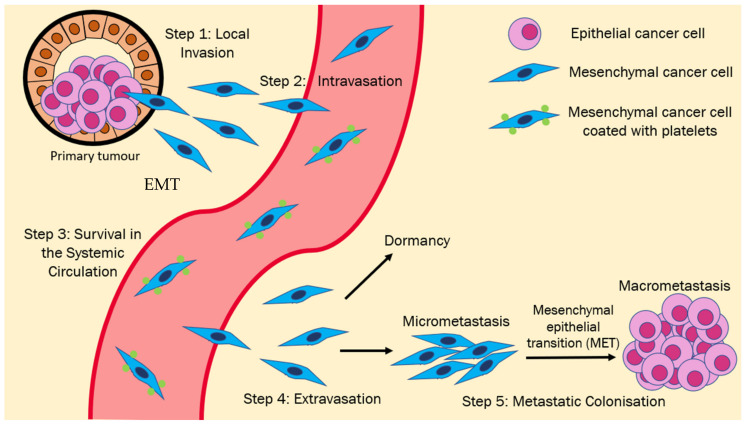
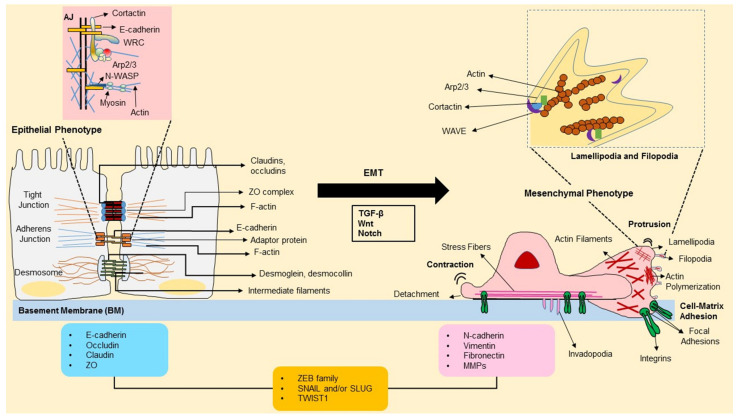
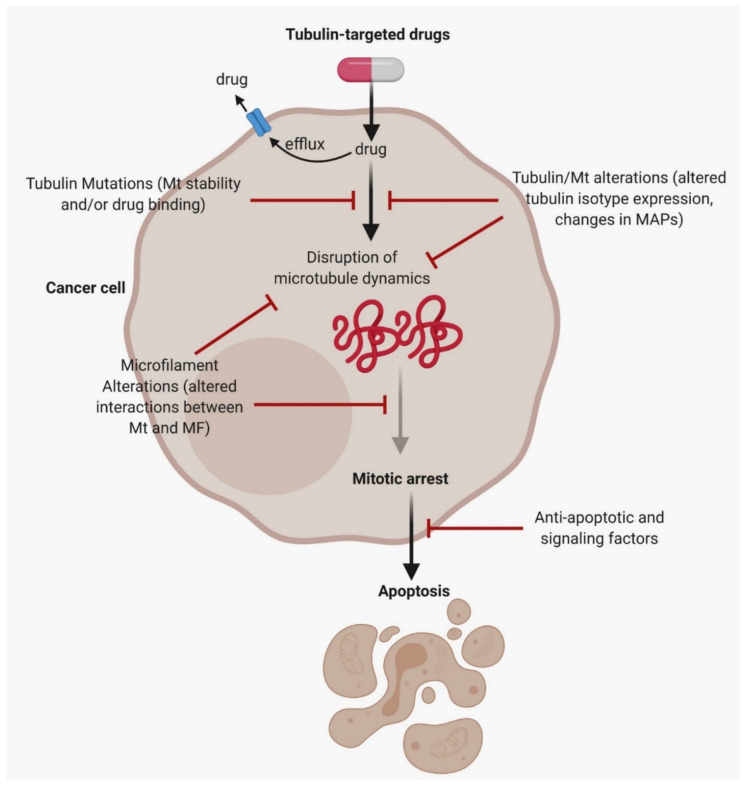
In cancer cells, a vital cellular process during metastasis is the transformation of epithelial cells towards motile mesenchymal cells called the epithelial to mesenchymal transition (EMT). The cytoskeleton is an active network of three intracellular filaments: actin cytoskeleton, microtubules, and intermediate filaments. These filaments play a central role in the structural design and cell behavior and are necessary for EMT. During EMT, epithelial cells undergo a cellular transformation as manifested by cell elongation, migration, and invasion, coordinated by actin cytoskeleton reorganization. The actin cytoskeleton is an extremely dynamic structure, controlled by a balance of assembly and disassembly of actin filaments. Actin-binding proteins regulate the process of actin polymerization and depolymerization. Microtubule reorganization also plays an important role in cell migration and polarization. Intermediate filaments are rearranged, switching to a vimentin-rich network, and this protein is used as a marker for a mesenchymal cell. Hence, targeting EMT by regulating the activities of their key components may be a potential solution to metastasis. This review summarizes the research done on the physiological functions of the cytoskeleton, its role in the EMT process, and its effect on multidrug-resistant (MDR) cancer cells-highlight some future perspectives in cancer therapy by targeting cytoskeleton.
Overview
The claims and statistics of this paper haven’t been checked yet.
Free: it reads the open-access text and checks the first 5 claims that cite a source we can check. Create a free account to check every claim.
Integrity signals
Registry
Cites
Statistics
Figures
Verification
Claims the paper makes
The claims and statistics of this paper haven’t been checked yet.
Free: it reads the open-access text and checks the first 5 claims that cite a source we can check. Create a free account to check every claim.
Claims other papers make about this one
Each is checked against this paper’s own text: does it say what the citing paper says it does?
The source backs part of the claim, not all of it — or backs it for a different population, condition or comparison.
In the citing paper
“A critical step in the progression of ovarian cancer metastasis is the epithelial-to-mesenchymal transition (EMT), which is characterized by the loss of E-cadherin, cytoskeletal remodeling and changes in proliferation, motility and apoptosis (Ahmed et al., 2007; Moreno-Bueno et al., 2009; Datta et al., 2021).”
From Microphysiological systems as models for immunologically ‘cold’ tumors (2024) · cites this paper as Datta et al., 2021
Experimental — accuracy not yet measured
Self-check
Percentages, sums and reported differences re-computed from the paper’s own numbers.
The self-check needs the paper’s full text.
Citations
Cites
1 retracted
Lahat, G., Zhu, Q.-S., Huang, K.-L., Wang, S., Bolshakov, S., Liu, J., Torres, K., Langley, R. R., Lazar, A. J., Hung, M. C., et al. (2010) · PLoS ONE · doi:10.1371/journal.pone.0010105 · Cited by 213
RetractedThe basics of epithelial-mesenchymal transition
Kalluri, R., & Weinberg, R. A. (2009) · Journal of Clinical Investigation · doi:10.1172/jci39104 · Cited by 10,196
Molecular mechanisms of epithelial–mesenchymal transition
Lamouille, S., Xu, J., & Derynck, R. (2014) · Nature Reviews Molecular Cell Biology · doi:10.1038/nrm3758 · Cited by 8,091 · cited 19×
“Epithelial cells are held together by tight junctions (TJs), adherens junctions (AJs), and desmosomes and are also connected to the extracellular matrix (ECM) through integrins [9].”
BackgroundInfluentialMicrotubules as a target for anticancer drugs
Jordan, M. A., & Wilson, L. (2004) · Nature Reviews Cancer · doi:10.1038/nrc1317 · Cited by 4,000 · cited 1×
“When cells are exiting mitosis, the reverse process, where mitotic spindles resolve and MT network reforms, would result in two functional daughter cells [49,51].”
BackgroundNew insights into the mechanisms of epithelial–mesenchymal transition and implications for cancer
Dongre, A., & Weinberg, R. A. (2019) · Nature Reviews Molecular Cell Biology · doi:10.1038/s41580-018-0080-4 · Cited by 3,876 · cited 2×
“On the other hand, N-cadherin, fibronectin, vitronectin, and MMPs are transcriptionally upregulated by these three transcription factors, contributing to the mesenchymal phenotypes of the cells [4,10,13,14].”
BackgroundThe Versatile Role of microRNA-30a in Human Cancer
Wang, C., Yang, X., Chen, Y., & Chen, L. (2017) · Cellular Physiology and Biochemistry · doi:10.1159/000471111 · Cited by 3,409
CNS stem cells express a new class of intermediate filament protein
Lendahl, U., Zimmerman, L. B., & McKay, R. D. G. (1990) · Cell · doi:10.1016/0092-8674(90)90662-x · Cited by 3,151
Epithelial-mesenchymal transition and its implications for fibrosis
Kalluri, R., & Neilson, E. G. (2003) · Journal of Clinical Investigation · doi:10.1172/jci200320530 · Cited by 2,649
Guidelines and definitions for research on epithelial-mesenchymal transition
Yang, J., Antin, P., Berx, G., Blanpain, C., Brabletz, T., Bronner, M., Campbell, K., Cano, A., Casanova, J., Christofori, G., et al. (2020) · Nature Reviews Molecular Cell Biology · doi:10.1038/s41580-020-0237-9 · Cited by 2,226 · cited 1×
“EMT is a reversible process—EMT followed by a MET is crucial for cancer metastasis [15].”
BackgroundMolecular Regulation of Hepatic Fibrosis, an Integrated Cellular Response to Tissue Injury
Friedman, S. L. (2000) · Journal of Biological Chemistry · doi:10.1074/jbc.275.4.2247 · Cited by 2,080
Cited by
Emerging role of exosomes in cancer progression and tumor microenvironment remodeling
Paskeh, M. D. A., Entezari, M., Mirzaei, S., Zabolian, A., Saleki, H., Naghdi, M. J., Sabet, S., Khoshbakht, M. A., Hashemi, M., Hushmandi, K., et al. (2022) · Journal of Hematology & Oncology · doi:10.1186/s13045-022-01305-4 · Cited by 563
Self-citationSTAT3-EMT axis in tumors: Modulation of cancer metastasis, stemness and therapy response
Sadrkhanloo, M., Entezari, M., Orouei, S., Ghollasi, M., fathi, N., Rezaei, S., Hejazi, E. S., Kakavand, A., Saebfar, H., Hashemi, M., et al. (2022) · Pharmacological Research · doi:10.1016/j.phrs.2022.106311 · Cited by 185
Paskeh, M. D. A., Ghadyani, F., Hashemi, M., Abbaspour, A., Zabolian, A., Javanshir, S., Razzazan, M., Mirzaei, S., Entezari, M., Goharrizi, M. A. S. B., et al. (2022) · Pharmacological Research · doi:10.1016/j.phrs.2022.106553 · Cited by 177
Self-citationHashemi, M., Arani, H. Z., Orouei, S., Fallah, S., Ghorbani, A., Khaledabadi, M., Kakavand, A., Tavakolpournegari, A., Saebfar, H., Heidari, H., et al. (2022) · Biomedicine & Pharmacotherapy · doi:10.1016/j.biopha.2022.113774 · Cited by 166
PI3K/AKT Signaling Tips the Balance of Cytoskeletal Forces for Cancer Progression
Deng, S., Leong, H. C., Datta, A., Gopal, V., Kumar, A. P., & Yap, C. T. (2022) · Cancers · doi:10.3390/cancers14071652 · Cited by 135
“During the EMT process, the cytoskeleton is restructured under a coordinated regulation of ABPs, MTBPs, and regulators of IFs, to weaken cell-cell attachment and strengthen cell-matrix adhesions that transform cancer cells from the stationary epithelial type into migratory mesenchymal type [47,48].”
BackgroundSelf-citationOulis, C. J., Vadiakas, G., Ekonomides, J., & Dratsa, J. (1994) · PubMed · Cited by 137
Mechanical signatures in cancer metastasis
Agrawal, A., Javanmardi, Y., Watson, S. A., Serwinski, B., Djordjevic, B., Li, W., Aref, A. R., Jenkins, R. W., & Moeendarbary, E. (2025) · npj Biological Physics and Mechanics. · doi:10.1038/s44341-024-00007-x · Cited by 106
“Many cancer cells undergo a hallmark epithelial-to-mesenchymaltransition(EMT),whichinvolvesachangefromakeratin-toavimentin-basedcytoskeleton 34 .”
Tuli, H. S., Kaur, J., Vashishth, K., Sak, K., Sharma, U., Choudhary, R., Behl, T., Singh, T., Sharma, S., Saini, A. K., et al. (2022) · Archives of Toxicology · doi:10.1007/s00204-022-03421-z · Cited by 98
Self-citationRana, J. N., Gul, K., & Mumtaz, S. (2025) · International Journal of Molecular Sciences · doi:10.3390/ijms26157381 · Cited by 91
Rho-kinase as a target for cancer therapy and its immunotherapeutic potential
Kim, S., Kim, S. A., Han, J., & Kim, I.-S. (2021) · International Journal of Molecular Sciences · doi:10.3390/ijms222312916 · Cited by 88
“Several studies have confirmed that inhibition of ROCK can prevent or reverse these changes in EMT markers [64,83,84].”
BackgroundTransforming growth factor-beta (TGF-β) in prostate cancer: A dual function mediator?
Mirzaei, S., Paskeh, M. D. A., Saghari, Y., Zarrabi, A., Hamblin, M. R., Entezari, M., Hashemi, M., Aref, A. R., Hushmandi, K., Kumar, A. P., et al. (2022) · International Journal of Biological Macromolecules · doi:10.1016/j.ijbiomac.2022.02.094 · Cited by 85
Self-citationBłaszczak, E., Miziak, P. A., Odrzywolski, A., Baran, M. T., Gumbarewicz, E., & Stepulak, A. (2025) · Cancers · doi:10.3390/cancers17020228 · Cited by 84
“Moreover, it aids in the reorganization of actin filaments, further enhancing the motility of cancer cells [112–114].”
Morphological and cytoskeleton changes in cells after EMT
Nurmagambetova, A., Mustyatsa, V. V., Saidova, A. A., & Vorobjev, I. A. (2023) · Scientific Reports · doi:10.1038/s41598-023-48279-y · Cited by 73
“The localization of FAs more centrally after EMT may be associated with increased cell migration since as cells move FAs are apparently translocated towards the cell center 57 .”
BackgroundEmerging role of microtubule-associated proteins on cancer metastasis
Wattanathamsan, O., & Pongrakhananon, V. (2022) · Frontiers in Pharmacology · doi:10.3389/fphar.2022.935493 · Cited by 74
Nutraceutical Concepts and Dextrin-Based Delivery Systems
Hoti, G., Matencio, A., Pedrazzo, A. R., Cecone, C., Appleton, S. L., Monfared, Y. K., Caldera, F., & Trotta, F. (2022) · International Journal of Molecular Sciences · doi:10.3390/ijms23084102 · Cited by 72
TRPV Protein Family—From Mechanosensing to Cancer Invasion
Kärki, T., & Tojkander, S. (2021) · Biomolecules · doi:10.3390/biom11071019 · Cited by 62
RETRACTED: Gene regulation by antisense transcription: A focus on neurological and cancer diseases
Najafi, S., Tan, S. C., Raee, P., Rahmati, Y., Asemani, Y., Lee, E. H. C., Hushmandi, K., Zarrabi, A., Aref, A. R., Ashrafizadeh, M., et al. (2021) · Biomedicine & Pharmacotherapy · doi:10.1016/j.biopha.2021.112265 · Cited by 57
Self-citationRetractedGreaves, D., & Calle, Y. (2022) · Cells · doi:10.3390/cells11040649 · Cited by 60
Kurma, K., & Alix‐Panabières, C. (2023) · Frontiers in Cell and Developmental Biology · doi:10.3389/fcell.2023.1188499 · Cited by 58
“For instance, hypoxia-induced signaling can promote EMT that results in a range of cytoskeletal alterations, including the production of chemotherapy-resistant tubulin isoforms and the intermediate filament vimentin (Huang et al., 2019; Datta et al., 2021).”
BackgroundPaskeh, M. D. A., Mirzaei, S., Orouei, S., Zabolian, A., Saleki, H., Azami, N., Hushmandi, K., Baradaran, B., Hashmi, M., Aref, A. R., et al. (2021) · International Journal of Biological Macromolecules · doi:10.1016/j.ijbiomac.2021.09.089 · Cited by 56
Mirzaei, S., Paskeh, M. D. A., Hashemi, F., Zabolian, A., Hashemi, M., Entezari, M., Tabari, T., Ashrafizadeh, M., Raee, P., Aghamiri, S., et al. (2021) · Life Sciences · doi:10.1016/j.lfs.2021.119948 · Cited by 54
Self-citationNon-coding RNAs and macrophage interaction in tumor progression
Entezari, M., Sadrkhanloo, M., Rashidi, M., Asnaf, S. E., Taheriazam, A., Hashemi, M., Ashrafizadeh, M., Zarrabi, A., Rabiee, N., Hushmandi, K., et al. (2022) · Critical Reviews in Oncology/Hematology · doi:10.1016/j.critrevonc.2022.103680 · Cited by 52
Self-citationMorgan, D., Berggren, K. L., Spiess, C., Smith, H. M., Tejwani, A., Weir, S. J., Lominska, C. E., Thomas, S. M., & Gan, G. N. (2021) · Molecular Carcinogenesis · doi:10.1002/mc.23348 · Cited by 44
“The filaments' basic structure are coiled‐coils of two different proteins formed from different types of keratins and other proteins that combine to produce six different types of filaments (Types I–VI).(191,192) The filaments assemble into lateral tetramers with N and C termini that are non‐helical, have vimentin cap…”
BackgroundAlzamami, A., Radwan, E. M., Abo-Elabass, E., Behery, M. E., Alshwyeh, H. A., Al-Olayan, E. M., Altamimi, A. S. A., Attallah, N. G. M., Altwaijry, N., Jaremko, M., et al. (2023) · BMC Chemistry · doi:10.1186/s13065-023-01063-5 · Cited by 42
“Microtubules are widely recognized as a significant target for anti-cancer therapy due to their pivotal involvement in cellular division and the preservation of cellular morphology [76].”
BackgroundlncRNA-mediated ceRNA network in bladder cancer
Li, K., Yao, T., & Wang, Z. (2022) · Non-coding RNA Research · doi:10.1016/j.ncrna.2022.12.002 · Cited by 42
Role of c-Myc in lung cancer: Progress, challenges, and prospects
Wallbillich, N. J., & Lu, H. (2023) · Chinese Medical Journal - Pulmonary and Critical Care Medicine · doi:10.1016/j.pccm.2023.07.001 · Cited by 41
Chen, Z., Kang, F., Xie, C., Liao, C., Li, G., Wu, Y., Lin, H., Zhu, S., Hu, J., Lin, C., et al. (2023) · Advanced Science · doi:10.1002/advs.202303814 · Cited by 41
Role of the cytoskeleton in cellular reprogramming: effects of biophysical and biochemical factors
Momotyuk, E., Ebrahim, N., Shakirova, K. S., & Dashinimaev, E. B. (2025) · Frontiers in Molecular Biosciences · doi:10.3389/fmolb.2025.1538806 · Cited by 38
Yang, M. H., Jung, S. H., Um, J., Kumar, A. P., Sethi, G., & Ahn, K. S. (2022) · Life Sciences · doi:10.1016/j.lfs.2022.120395 · Cited by 32
Self-citationJin, B., Kong, W., Zhao, X., Chen, S., Sun, Q., Feng, J., Song, D., & Han, D. C. (2021) · Tissue and Cell · doi:10.1016/j.tice.2021.101681 · Cited by 28
Impact of Molecular Profiling on Therapy Management in Breast Cancer
Ultimescu, F., Hudiță, A., Popa, D. E., Olincă, M., Muresean, H. A., Ceaușu, M. C., Stanciu, D. I., Ginghină, O., & Gălățeanu, B. (2024) · Journal of Clinical Medicine · doi:10.3390/jcm13174995 · Cited by 26
“The study included a total of 1250 patients with BC who were ER-positive and HER2-negative, relapsed after neoadjuvant chemotherapy (NACT), and were randomly assigned to receive either palbociclib or a placebo.”
BackgroundYu, T., Zhang, T., Su, F., Li, Y., Li, S., Hou, X., & Wang, R. (2021) · Oxidative Medicine and Cellular Longevity · doi:10.1155/2021/2805576 · Cited by 24
How cytoskeletal proteins regulate mitochondrial energetics in cell physiology and diseases
Solomon, T., Rajendran, M., Rostovtseva, T. K., & Hool, L. C. (2022) · Philosophical Transactions of the Royal Society B Biological Sciences · doi:10.1098/rstb.2021.0324 · Cited by 24
Chen, X., Xu, C. W., Zhao, P., Zhang, Y. X., Guo, J., Hu, X., Gao, H., Zhang, C., Qu, X., & Zhang, J. (2023) · Chemical Engineering Journal · doi:10.1016/j.cej.2023.142478 · Cited by 24
Cai, X.-X., Zhang, Z.-Z., Yang, X., Shen, W.-R., Yuan, L.-W., Ding, X., Yu, Y., & Cai, W.-Y. (2025) · Frontiers in Oncology · doi:10.3389/fonc.2025.1579423 · Cited by 22
“During EMT, cells undergo a transition from an epithelial to a mesenchymal-like phenotype, increasing motility and invasiveness (37).”
Loss of p53 epigenetically modulates epithelial to mesenchymal transition in colorectal cancer
Sharma, S., Rani, H., Mahesh, Y., Jolly, M. K., Dixit, J., & Mahadevan, V. (2024) · Translational Oncology · doi:10.1016/j.tranon.2023.101848 · Cited by 23
“These EMT-TFs promotes metastasis by suppressing the expression of key epithelial genes such as CDH1 which encodes the adherens junction protein E-cadherin and by enhancing the expression of key mesenchymal genes N-cadherin and Vimentin [7 – 9].”
BackgroundDalpati, N., Rai, S. K., Sharma, P., & Sarangi, P. P. (2024) · Matrix Biology · doi:10.1016/j.matbio.2024.12.003 · Cited by 21
Cytoskeletal association of ATP citrate lyase controls the mechanodynamics of macropinocytosis
Puccini, J., Jia, W., Tong, L., & Bar‐Sagi, D. (2023) · Proceedings of the National Academy of Sciences · doi:10.1073/pnas.2213272120 · Cited by 20
“…of playing a role in submembranous F-actin assembly, a process required for the formation of membrane ruffles that are known to generate the driving force for cell movement (49), ACLY likely serves as an essential component of the regulatory network that controls cancer cell migration and invasion.”
Sinha, S., Callow, B. W., Farfel, A. P., Roy, S., Chen, S., Masotti, M., Rajendran, S., Buschhaus, J. M., Espinoza, C. R., Luker, K. E., et al. (2024) · Journal of Clinical Investigation · doi:10.1172/jci170953 · Cited by 19
Jung, Y. Y., Chinnathambi, A., Alahmadi, T. A., Alharbi, S. A., Kumar, A. P., Sethi, G., & Ahn, K. S. (2022) · Journal of Cellular Biochemistry · doi:10.1002/jcb.30279 · Cited by 18
“When EMT process is activated, the epithelial cells undergo transition into mesenchymal state, so that the levels of epithelial markers are decreased but that of the mesenchymal markers are increased.(61,62) However, in our study, we found that FCN can suppress the EMT process through downregulating the expression of…”
BackgroundSelf-citationYang, M. H., Ha, I. J., Ahn, J., Kim, C., Lee, M., & Ahn, K. S. (2023) · Cellular Signalling · doi:10.1016/j.cellsig.2023.110610 · Cited by 17
Su, B. (2025) · American Journal of Cancer Research · doi:10.62347/nvvf8441 · Cited by 18
Non-coding RNAs in EMT regulation: Association with tumor progression and therapy response
Sadrkhanloo, M., Entezari, M., Rashidi, M., Hashemi, M., Raesi, R., Saghari, S., Daneshi, S., Salimimoghadam, S., Hushmandi, K., Mirzaei, S., et al. (2022) · European Journal of Pharmacology · doi:10.1016/j.ejphar.2022.175212 · Cited by 16
Role of Cyclins and Cytoskeletal Proteins in Endometriosis: Insights into Pathophysiology
Szymański, M., Bonowicz, K., Antosik, P., Jerka, D., Głowacka, M., Soroka, M., Steinbrink, K., Kleszczyński, K., & Gagat, M. (2024) · Cancers · doi:10.3390/cancers16040836 · Cited by 15
“Eukaryotes have the most complex cytoskeletons, consisting of three cytoskeletal polymers—actin filaments, intermediate filaments, and microtubules—acted upon by three families of motor proteins: myosin, kinesin, and dynein [113,114].”
BackgroundOral Microbiota-Driven Cell Migration in Carcinogenesis and Metastasis
Bai, H., Yang, J., Meng, S., & Liu, C. (2022) · Frontiers in Cellular and Infection Microbiology · doi:10.3389/fcimb.2022.864479 · Cited by 18
Microphysiological systems as models for immunologically ‘cold’ tumors
Gaebler, D., Hachey, S. J., & Hughes, C. C. W. (2024) · Frontiers in Cell and Developmental Biology · doi:10.3389/fcell.2024.1389012 · Cited by 14
“…step in the progression of ovarian cancer metastasis is the epithelial-to-mesenchymal transition (EMT), which is characterized by the loss of E-cadherin, cytoskeletal remodeling and changes in proliferation, motility and apoptosis (Ahmed et al., 2007; Moreno-Bueno et al., 2009; Datta et al., 2021).”
BackgroundOncological transformation in vitro of hepatic progenitor cell lines isolated from adult mice
Olivera-Salazar, R., García‐Arranz, M., Sánchez, A., López, S. O., Vega-Clemente, L., Serrano, L. J., Herrera, B. M., & García‐Olmo, D. (2022) · Scientific Reports · doi:10.1038/s41598-022-06427-w · Cited by 14
Mobbs, C. L., Darling, N. J., & Przyborski, S. A. (2024) · Frontiers in Immunology · doi:10.3389/fimmu.2024.1357690 · Cited by 14
“Loss of villin has been implicated in increased EMT as well as reversible inhibition of brush border assembly and could therefore be implicated in the ultrastructural aberrations observed in in fl amed IBD mucosal constructs (58, 59).”
BackgroundSaliba, J., Manseur, C., Groult, H., Akil, H., Tannoury, M. Y., Troutaud, D., Maugard, T., Feuillard, J., Fruitier‐Arnaudin, I., & Jayat‐Vignoles, C. (2023) · Marine Drugs · doi:10.3390/md21020132 · Cited by 14
MACC1-induced migration in tumors: Current state and perspective
Hohmann, T., Hohmann, U., & Dehghani, F. (2023) · Frontiers in Oncology · doi:10.3389/fonc.2023.1165676 · Cited by 13
Parekh, M., Miall, A., Chou, A., Buhl, L., Deshpande, N. R., Price, M. O., Price, F. W., & Jurkunas, U. V. (2024) · Cells · doi:10.3390/cells13141218 · Cited by 13
“Since the Rac1 signaling pathway has also been implicated in inducing the EMT phenotype, elevated levels in response to ripasudil indicate the activation of the mesenchymal state, necessary for the reorganization of the cytoskeleton during the migration [52,54].”
BackgroundChand, S., Mehta, V., Sharma, R. K., Anvikar, A. R., & Chander, H. (2022) · Frontiers in Oncology · doi:10.3389/fonc.2022.1058931 · Cited by 14
Martin, L. A., Touffait-Calvez, V., Everaert, M., Jia, R., Sifré, E., Seeneevassen, L., Varon, C., Dubus, P. R., & Ménard, A. (2024) · The Journal of Infectious Diseases · doi:10.1093/infdis/jiae105 · Cited by 12
HOXA10-TWIST2 antagonism drives partial epithelial-to-mesenchymal transition for embryo implantation
Ashary, N., Suresh, S., Bhide, A., Shyamal, S., Pranya, N., Patil, S., Mishra, A., Anuradha, A., Hansda, S. R., Harshavardhan, B. V., et al. (2025) · Cell Death Discovery · doi:10.1038/s41420-025-02799-w · Cited by 12
Na, S., Cui, H., Guo, Z., Xiang, L., Sakran, K. A., Guo, X., Li, X., Xie, L., Zhu, Y., Qi, H. Y., et al. (2022) · Frontiers in Oncology · doi:10.3389/fonc.2022.1052375 · Cited by 11
“Cytoskeleton and actin dynamics of tumor cells play a critical role in this process of invasion and metastasis (37, 38).”
BackgroundGarcía-Reyes, B., Kuzmanov, I., Schneider, R., Schneiker, B., Efferz, P., Kalff, J. C., & Wehner, S. (2023) · Journal of Cancer Research and Clinical Oncology · doi:10.1007/s00432-023-05133-y · Cited by 11
“For example, cytoskeletal changes occurring during EMT are incompatible with cell division (Datta et al. 2021).”
BackgroundWang, L., Miao, C., Liang, F., Shang, Y., Sun, Y., Zhang, J., Shen, J., Yin, M., & Yuan, J. (2023) · Applied Materials Today · doi:10.1016/j.apmt.2023.101976 · Cited by 12
Deng, R., Tian, R., Li, X., Xu, Y., Li, Y., Wang, X., Li, H., Wang, L., Xu, B., Yang, D., et al. (2024) · iScience · doi:10.1016/j.isci.2024.109533 · Cited by 11
Expression ofADAM12in Gastric Cancer and its Relation to Tumor Cell Behavior and Prognosis
Chung, M.-W., Park, Y., PARK, S.-Y., & Joo, Y. (2022) · In Vivo · doi:10.21873/invivo.12945 · Cited by 11
Drug target therapy and emerging clinical relevance of exosomes in meningeal tumors
Sharma, S., Rana, R., Prakash, P., & Ganguly, N. K. (2023) · Molecular and Cellular Biochemistry · doi:10.1007/s11010-023-04715-1 · Cited by 10
Wang, S., Bai, Y., Ma, J., Qiao, L., & Zhang, M. (2024) · Frontiers in Pharmacology · doi:10.3389/fphar.2024.1442227 · Cited by 10
Proteomic Profiling of Chemotherapy Responses in FOLFOX-Resistant Colorectal Cancer Cells
Tam, S. Y., Khan, M. Z. I., Chen, J., Yip, J. H.-Y., Yan, H.-Y., Tam, T.-Y., & Law, H. (2023) · International Journal of Molecular Sciences · doi:10.3390/ijms24129899 · Cited by 11
“The actin cytoskeleton has been long regarded for having important roles in epithelialmesenchymal transition (EMT) and cancer metastases [22].”
BackgroundPark, Y., Cho, S. B., Park, S.-Y., Oh, H., Myung, E., Im, C.-M., Son, S., Kim, S., Cho, S.-Y., Chung, M.-W., et al. (2022) · Anticancer Research · doi:10.21873/anticanres.16058 · Cited by 10
Editorial: Epithelial-mesenchymal transition (EMT) as a therapeutic target in cancer, Volume II
Zhong, W., & Sun, T. (2023) · Frontiers in Oncology · doi:10.3389/fonc.2023.1218855 · Cited by 11
Ahmed, S., Κhan, P., Irfan, I., Anwar, S., Shamsi, A., Arora, B., Alam, M., Hassan, M. I., & Abid, M. (2023) · Journal of Molecular Structure · doi:10.1016/j.molstruc.2023.136303 · Cited by 9
Zhou, J., Luo, J., Gan, R.-Z., Zhi, L., Zhou, H., Lv, M.-X., Huang, Y., & Liang, G. (2024) · Recent Patents on Anti-Cancer Drug Discovery · doi:10.2174/0115748928283132240103073039 · Cited by 9
CRMP2 as a Candidate Target to Interfere with Lung Cancer Cell Migration
Morales, X., Peláez, R., Garasa, S., Ortíz-de-Solórzano, C., & Rouzaut, A. (2021) · Biomolecules · doi:10.3390/biom11101533 · Cited by 9
“These drugs can arrest aberrant cell division [7] and metastasis [8].”
BackgroundZheng, B., Sun, X., Zhang, L., Qu, G., Ren, C., Yan, P., Zhou, C., & Yue, B. (2024) · Brazilian Journal of Medical and Biological Research · doi:10.1590/1414-431x2023e13152 · Cited by 9
“The cytoskeletal structure also plays a key role in cancer cell motility and invasiveness, which are sophisticated processes that involve cytoskeletal rearrangement, lamellipodia formation, and membrane ruf fl ing (30).”
BackgroundInnovations in Drug Delivery Strategies for Breast Cancer
Sharma, M., Kotipalli, R. S. S., Kumar, N. S., Kumar, A., Rawat, M., Dhiman, C., & Kumar, M. (2024) · IntechOpen eBooks · doi:10.5772/intechopen.1007334 · Cited by 12
Self-citationChen, T., Cheng, K.-C., Yang, P.-S., Shrestha, L. K., Ariga, K., & Hsu, S. (2024) · Science and Technology of Advanced Materials · doi:10.1080/14686996.2024.2315014 · Cited by 8
“Simultaneously, the dynamic regulation of the intracellular cytoskeleton stands out as a key determinant in the growth and morphology of ECs [50].”
BackgroundActin Cytoskeleton Dynamics and Type I IFN-Mediated Immune Response: A Dangerous Liaison in Cancer?
Trono, P., Tocci, A., Musella, M., Sistigu, A., & Nisticò, P. (2021) · Biology · doi:10.3390/biology10090913 · Cited by 8
“Epithelial cells undergo a cellular transformation and acquire motility and invasive ability, via invadopodia, lamellipodia, and filopodia, whose function strictly depends on the rearrangements of actin filaments [5].”
BackgroundRegulation of actin cytoskeleton via photolithographic micropatterning
Xing, F., Zhang, H., Li, M., Dong, H., Ma, X., Deng, S., Hu, F., Lee, I., Pan, L., & Xu, J. (2022) · Journal of Innovative Optical Health Sciences · doi:10.1142/s1793545822440059 · Cited by 8
Self-citationRomera, L. F., Schuh, L., Leal, C., Chang, L. F. D. A., dos Santos, B. M., da Rocha, P. H. A. D. J., Radicchi, M. A., Gris, E. F., Falcao, L., Báo, S. N., et al. (2025) · International Journal of Molecular Sciences · doi:10.3390/ijms26178373 · Cited by 7
“These effects may include increased integrin lateral mobility, FAK activation, and downstream engagement of ERK and STAT3 signaling—pathways intimately linked to L132 survival and ECM maintenance [122–124].”
An Updated Review on Molecular Biomarkers in Diagnosis and Therapy of Colorectal Cancer
Ravichandran, S. N., Kumar, M. M., Das, A., Banerjee, A., Prasad, S. V., Sun-Zhang, A., Zhang, H., Anbalagan, M., Sun, X., & Pathak, S. (2023) · Current Cancer Drug Targets · doi:10.2174/0115680096270555231113074003 · Cited by 7
Salloom, R. J., Ahmad, I. M., & Abdalla, M. Y. (2024) · Frontiers in Oncology · doi:10.3389/fonc.2024.1431362 · Cited by 7
Mannan, A., Mohan, M., & Singh, T. G. (2025) · Critical Reviews in Oncology/Hematology · doi:10.1016/j.critrevonc.2025.104707 · Cited by 7
Venditti, M., Arcaniolo, D., SIO, M. D., & Minucci, S. (2021) · International Journal of Molecular Sciences · doi:10.3390/ijms22158094 · Cited by 8
“Thus, the cytoskeleton, as well as the countless associated proteins, plays a pivotal role in this dynamic process [20].”
BackgroundWang, H., Zhu, H., Hu, Z., Heng, N., Gong, J., Wang, Y., Zou, H., & Zhao, S. (2022) · International Journal of Molecular Sciences · doi:10.3390/ijms232012060 · Cited by 7
“Actin is the key structural protein that forms the cytoskeleton of cells and plays a major role in functions including division, migration, and vesicular transport, participating in the coalescence and contraction of the cellular microfilament skeleton, and providing the impetus for cell migration [30].”
BackgroundGarcia, A. R., Vaz, A. R., Malhó, R., Botelho, H. M., Figueira, I., & Brito, M. A. (2025) · Acta Neuropathologica Communications · doi:10.1186/s40478-025-01985-2 · Cited by 6
“Tumor cells, including BCCs, seem to elongate [10, 31] and form invadopodia, enhancing their invasive potential [13].”
Microproteins unveiling new dimensions in cancer
Senthilathiban, D. P., Biswas, I., Anitha, T. S., & Agieshkumar, B. (2024) · Functional & Integrative Genomics · doi:10.1007/s10142-024-01426-8 · Cited by 7
Favero, G. D., Bergen, J., Palm, L., Fellinger, C., Matlaeva, M., Szabadi, A., Fernandes, A. S., Saraiva, N., Schröder, C., & Marko, D. (2024) · Chemical Research in Toxicology · doi:10.1021/acs.chemrestox.4c00061 · Cited by 7
Oliveira‐Silva, J. M., Oliveira, L. S., Chiminazo, C. B., Fonseca, R., de Souza, C. V. E., Aissa, A. F., Lima, G. D. D. A., Ionta, M., & Castro‐Gamero, A. M. (2025) · Cancer Chemotherapy and Pharmacology · doi:10.1007/s00280-024-04731-y · Cited by 6
Antoun, N. B., Mahmood, H.-T.-N. A., Walker, A. J., Modjtahedi, H., Grose, R. P., & Chioni, A. (2025) · International Journal of Molecular Sciences · doi:10.3390/ijms26051799 · Cited by 7
“Rather than a whole shift to a mesenchymal state, these adaptations could result from modifications in cell–matrix and cell–cell adhesion characteristics [78–80].”
Sun, G., Liu, F., Lesany, M., & Nemati, S. (2024) · Pathology - Research and Practice · doi:10.1016/j.prp.2024.155314 · Cited by 7
Ghoytasi, I., Bavi, O., Mofrad, M. R. K., & Naghdabadi, R. (2024) · Computers in Biology and Medicine · doi:10.1016/j.compbiomed.2024.108744 · Cited by 6
Prognostic value and anti-tumor immunity role of TMED9 in pan-cancer: a bioinformatics study
Wang, H., Wang, Y., Tan, P., Liu, Y., Zhou, S., & Ma, W. (2024) · Translational Cancer Research · doi:10.21037/tcr-24-258 · Cited by 7
“EMT can enhance cancer cell invasion and metastasis by boosting cell motility, extracellular matrix degradation, and immune escape (28,29).”
Research progress of mitochondria and cytoskeleton crosstalk in tumour development
Ji, Y., Lin, Y., He, J. H., Xie, Y., An, W., Luo, X., Qiao, X., & Li, Z. (2024) · Biochimica et Biophysica Acta (BBA) - Reviews on Cancer · doi:10.1016/j.bbcan.2024.189254 · Cited by 6
5,8-Dimethyl-9H-carbazole Derivatives Blocking hTopo I Activity and Actin Dynamics
Ceramella, J., Iacopetta, D., Caruso, A., Mariconda, A., Petrou, A., Geronikaki, A. A., Rosano, C., Saturnino, C., Catalano, A. A., Longo, P., et al. (2023) · Pharmaceuticals · doi:10.3390/ph16030353 · Cited by 6
“Particularly, the actin and many regulatory proteins are modified to allow the abnormal growth of cancer cells and the development of migratory properties [52,53].”
BackgroundSun, L., Qiu, Y., Ching, W., Zhao, P., & Zou, Q. (2023) · PLoS Computational Biology · doi:10.1371/journal.pcbi.1010939 · Cited by 7
“For example, [43] mentioned that intermediate filaments plays a vital role in EM transition.”
BackgroundArrè, V., Scavo, M. P., Donghia, R., Dituri, F., Mandorino, C., Cassotta, M., Ancona, A., Balestra, F., Vincenti, L., Aquilino, F., et al. (2025) · International Journal of Molecular Sciences · doi:10.3390/ijms26167743 · Cited by 5
“…[50], Alpha Smooth Muscle Actin [51], Type 1 Collagen [52], Connective Tissue Growth Factor [53], Fibronectin [54], and Filamentous Actin [55] in the presence or absence of iPolyP and TRPM8 inhibitor in a CRC cell line and CRC cell line-derived spheroids, as well as in CRC-patient…”
Maspin/SerpinB5 is a cytoskeleton-binding protein that regulates epithelial cell shape
da Silva, L. E., Paim, L. M. G., Lyalina, T., Menezes, A. P. D. J., da Cunha, J. P. C., Bechstedt, S., & Cella, N. (2025) · Communications Biology · doi:10.1038/s42003-025-08688-3 · Cited by 5
“Although cytoskeleton remodeling is often regarded as a consequence rather than causative of EMT activation 75,76 , cumulative data suggest that modulation of cytoskeleton-binding proteins may trigger EMT-related phenotypes 76 – 78 .”
Xie, H., Liao, S., Liang, L., & Liao, G. (2025) · Translational Cancer Research · doi:10.21037/tcr-2025-999 · Cited by 6
Belli, V., Napolitano, S., Falco, V. D., Suarato, G., Perrone, A., Guerrera, L. P., Martini, G., Corte, C. M. D., Martinelli, E., Morgillo, F., et al. (2023) · Translational Medicine Communications · doi:10.1186/s41231-022-00133-5 · Cited by 5
Pan-cancer chemoresistance-associated genes, affected pathways and potential therapeutic targets
Nath, S. D., Shoily, S. S., Fatema, K., Khan, A., Mostafa, M., & Sajib, A. A. (2023) · Human Gene · doi:10.1016/j.humgen.2023.201151 · Cited by 6
Zhang, Z., Xie, W., Gong, B., Liang, X., Yu, H., Yu, Y., Dong, Z., & Shao, F. (2023) · Discover Oncology · doi:10.1007/s12672-023-00832-x · Cited by 5
“In addition, cancer cells undergoing EMT require rearrangements of actin filaments, such as the formation of stress fibers and pseudopodia [9–11].”
BackgroundEffects of NaV1.5 and Rac1 on the Epithelial-Mesenchymal Transition in Breast Cancer
Zha, Z., Ge, F., Li, N., Zhang, S., Wang, C., Gong, F., Miao, J., & Chen, W. (2024) · Cell Biochemistry and Biophysics · doi:10.1007/s12013-024-01625-x · Cited by 5
“…cytoskeleton, including transformation from the main cytokeratin into the intermediate silk network rich in vimentin, microtubule deproteinization that promotes the formation of microantennae, and the increases in the expression of proteolytic enzymes and extracellular matrix components [30, 31].”
Lin, X., Zheng, J., Li, Y., Liu, L., Liu, Q., Lin, J., & Sun, Y. (2025) · PLoS ONE · doi:10.1371/journal.pone.0323002 · Cited by 6
“This inhibitory effect may be associated with MACC1’s well-documented role in facilitating migration and metastasis through modulation of epithelial-mesenchymal transition (EMT) and cytoskeletal dynamics [45].”
Yotova, I., Proestling, K., Pauler, F. M., Rainer, L., Kaup, L., Heine, J., Sandrieser, L., Wenzl, R. J., & Hudson, Q. J. (2025) · Reproductive BioMedicine Online · doi:10.1016/j.rbmo.2025.104942 · Cited by 4
Yoon, B., Suresh, R. N., Mohan, C. D., Harsha, K. B., Shivakumara, C. S., Chinnathambi, A., Alharbi, S. A., Sethi, G., Rangappa, K. S., & Ahn, K. S. (2025) · Archives of Biochemistry and Biophysics · doi:10.1016/j.abb.2025.110476 · Cited by 5
Self-citationKatari, V., Dalal, K. K., Kondapalli, N. B., Paruchuri, S. M., Nadiminty, N., & Thodeti, C. K. (2025) · Journal of Pharmacology and Experimental Therapeutics · doi:10.1016/j.jpet.2025.103665 · Cited by 4
Metadata
- Authors
- Datta, A., Deng, S., Gopal, V., Yap, K. C.-H., Halim, C. E., Lye, M. L., Ong, M. S., Tan, T. Z., Sethi, G., Hooi, S. C., Kumar, A. P., & Yap, C. T.
- Affiliations
- National University of Singapore (SG)
- Corresponding author
- Kumar, Alan Prem
- Yap, Celestial T.
- ORCID
- Venue
- Cancers
- Publisher
- MDPI AG
- Published
- 2021-04-14
- Volume
- 13
- Issue
- 8
- Pages
- 1882
- ISSN
- 2072-6694 (ISSN-L)
- PMC
- PMC8070945
- OpenAlex
- W3156599094
- Cited by
- 184
- References
- 245
- Citations by year
- 2026: 29 · 2025: 45 · 2024: 34 · 2023: 33 · 2022: 30 · 2021: 12
- FWCI
- 3.30
- Type
- journal article
- Language
- en
- Open access
- gold
- doi.org
- Licence
- Locations
- Cancers (publishedVersion, cc-by)
- PubMed Central (publishedVersion, cc-by)
- PubMed (publishedVersion)
- National University of Singapore (submittedVersion)
- DOAJ (DOAJ: Directory of Open Access Journals) (submittedVersion, cc-by-sa)
- Funders
- National Medical Research Council (r-185-000-353-213)
- Ministry of Education - Singapore (MOE-T2EP30120-0016)
- Topics
- Health Sciences › Medicine › Oncology › Cancer Cells and Metastasis
- Life Sciences › Biochemistry, Genetics and Molecular Biology › Cell Biology › Cellular Mechanics and Interactions
- Life Sciences › Biochemistry, Genetics and Molecular Biology › Molecular Biology › TGF-β signaling in diseases
- Keywords
- epithelial-mesenchymal transition, cytoskeleton, actin cytoskeleton, microtubules, intermediate filaments, vimentin, metastasis, cell migration, cell invasion, actin-binding proteins, multidrug resistance, therapeutic target
About these checks
Registry, retraction, Cites and statistics results are computed, not judged, with one exception: a printed reference that no index lists is read once by a model before it counts as a citation error. Claims are extracted by a model and kept only when their quote appears verbatim in the text; each cited source is then checked, with a model’s help, for whether it says what the claim relies on. Those verdicts can be wrong — read the claim’s quote and the cited source before relying on one.
Statistics and arithmetic are recomputed, not judged.
Confidence bands are shown only for fields calibrated on our annotated test set. None is calibrated yet, so no band is shown.
What counts as a claim ›How we measure confidence ›How we check this ›
Are you an author, or do you see a problem with this page? Request a review
Data sources
Bibliographic data: Semantic Scholar, OpenAlex, Crossref.
Contains information from the Semantic Scholar Academic Graph Datasets, made available under the ODC Attribution License (ODC-BY 1.0).
Semantic Scholar’s data is described in: Kinney, R., et al. (2023). The Semantic Scholar Open Data Platform. arXiv:2301.10140.
