

Regulation and Function of Matrix Metalloproteinase-13 in Cancer Progression and Metastasis
Open accessThe DOI matches its Crossref record; 171 of the 180 references it cites were found in a registry or an index.
Abstract
Matrix metalloproteinase-13 (MMP-13) is a member of the Matrix metalloproteinases (MMPs) family of endopeptidases. MMP-13 is produced in low amounts and is well-regulated during normal physiological conditions. Its expression and secretion are, however, increased in various cancers, where it plays multiple roles in tumour progression and metastasis. As an interstitial collagenase, MMP-13 can proteolytically cleave not only collagens I, II and III, but also a range of extracellular matrix proteins (ECMs). Its action causes ECM remodelling and often leads to the release of various sequestered growth and angiogenetic factors that promote tumour cell growth, invasion and angiogenesis. This review summarizes our current understanding of the regulation of MMP-13 expression and secretion and discusses the actions of MMP-13 in cancer progression and metastasis.
Overview
The claims and statistics of this paper haven’t been checked yet.
Free: it reads the open-access text and checks the first 5 claims that cite a source we can check. Create a free account to check every claim.
Integrity signals
Registry
Cites
Statistics
Figures
Verification
Claims the paper makes
The claims and statistics of this paper haven’t been checked yet.
Free: it reads the open-access text and checks the first 5 claims that cite a source we can check. Create a free account to check every claim.
Claims other papers make about this one
Each is checked against this paper’s own text: does it say what the citing paper says it does?
The check wasn’t confident either way, so it gives no verdict — never disputed.
In the citing paper
“Developed through AI to be a highly potent and highly selective therapeutic target, INS018_055 is a small molecule TNIK inhibitor that has shown anti-fibrotic activity through reduced potency of TGF-β epithelial-to-mesenchymal transition and fibroblast-to-myofibroblast transition in in vitro and in vivo models of pulmonary fibrosis [138].”
From Emerging pharmacological options in the treatment of idiopathic pulmonary fibrosis (IPF) (2024) · cites this paper as [138]
Experimental — accuracy not yet measured
Self-check
Percentages, sums and reported differences re-computed from the paper’s own numbers.
The self-check needs the paper’s full text.
Citations
Cites
Molecular Mechanisms of Stress-Responsive Changes in Collagen and Elastin Networks in Skin
Aziz, J., Shezali, H., Radzi, Z., Yahya, N. A., Abu Kassim, N. H., Czernuszka, J., & Rahman, M. T. (2016) · Skin Pharmacology and Physiology · doi:10.1159/000447017 · Cited by 7,323
New functions for the matrix metalloproteinases in cancer progression
Egeblad, M., & Werb, Z. (2002) · Nature Reviews Cancer · doi:10.1038/nrc745 · Cited by 6,108 · cited 1×
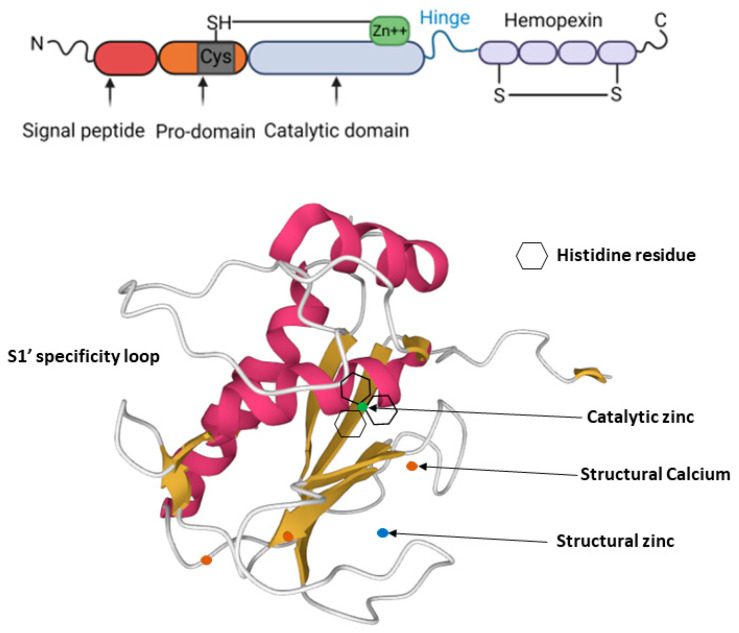
“With the exception of MMP-23, whose cysteine residue is located in a different amino acid sequence [6], the MMP amino-terminal pro-peptide domain contains a consensus sequence PRCXXPD (also known as cysteine switch).”
BackgroundChronic inflammation in the etiology of disease across the life span
Furman, D., Campisi, J., Verdin, E., Carrera-Bastos, P., Targ, S., Franceschi, C., Ferrucci, L., Gilroy, D. W., Fasano, A., Miller, G. W., et al. (2019) · Nature Medicine · doi:10.1038/s41591-019-0675-0 · Cited by 4,915
VEGFR1-positive haematopoietic bone marrow progenitors initiate the pre-metastatic niche
Kaplan, R. N., Riba, R. D., Zacharoulis, S., Bramley, A. H., Vincent, L., Costa, C., MacDonald, D. D., Jin, D. K., Shido, K., Kerns, S. A., et al. (2005) · Nature · doi:10.1038/nature04186 · Cited by 3,288
The extracellular matrix: A dynamic niche in cancer progression
Lu, P., Weaver, V. M., & Werb, Z. (2012) · Journal of Cell Biology · doi:10.1083/jcb.201102147 · Cited by 3,024
Matrix Metalloproteinase Inhibitors and Cancer—Trials and Tribulations
Coussens, L. M., Fingleton, B., & Matrisian, L. M. (2002) · Science · doi:10.1126/science.1067100 · Cited by 2,761 · cited 1×
“Matrix metalloproteinases (MMPs) are a family of 28 (so far) zinc-dependent endopeptidases [1].”
BackgroundPancreatic cancer exosomes initiate pre-metastatic niche formation in the liver
Costa-Silva, B., Aiello, N. M., Ocean, A. J., Singh, S., Zhang, H., Thakur, B. K., Becker, A., Hoshino, A., Mark, M. T., Molina, H., et al. (2015) · Nature Cell Biology · doi:10.1038/ncb3169 · Cited by 2,692
Matrix metalloproteinases and the regulation of tissue remodelling
Page-McCaw, A., Ewald, A. J., & Werb, Z. (2007) · Nature Reviews Molecular Cell Biology · doi:10.1038/nrm2125 · Cited by 2,630
Extracellular Matrix Degradation and Remodeling in Development and Disease
Lu, P., Takai, K., Weaver, V. M., & Werb, Z. (2011) · Cold Spring Harbor Perspectives in Biology · doi:10.1101/cshperspect.a005058 · Cited by 2,265
Matrix metalloproteinases and tumor metastasis
Deryugina, E. I., & Quigley, J. P. (2006) · Cancer and Metastasis Reviews · doi:10.1007/s10555-006-7886-9 · Cited by 1,960
Cited by
VISTA and its ligands: the next generation of promising therapeutic targets in immunotherapy
Shekari, N., Shanehbandi, D., Kazemi, T., Zarredar, H., Baradaran, B., & Jalali, S. A. (2023) · Cancer Cell International · doi:10.1186/s12935-023-03116-0 · Cited by 66
The Role of Genetics and Epigenetic Regulation in the Pathogenesis of Osteoarthritis
Kiełbowski, K., Herian, M., Bakinowska, E., Banach, B., Sroczyński, T., & Pawlik, A. (2023) · International Journal of Molecular Sciences · doi:10.3390/ijms241411655 · Cited by 49
Effect of matrix metalloproteinases on the healing of diabetic foot ulcer: A systematic review
Zhang, W., Tang, W. H., Hu, S., Fu, X., Wu, H., Shen, W., & Chen, H. (2022) · Journal of Tissue Viability · doi:10.1016/j.jtv.2022.12.001 · Cited by 42
Monea, M. D., & Pop, A. M. (2022) · Current Issues in Molecular Biology · doi:10.3390/cimb44120430 · Cited by 39
“It also enhances the metastatic potential of head and neck cancer by increasing angiogenesis [76].”
BackgroundYang, H., Lin, P.-Y., Vadivalagan, C., Lin, Y., Lin, K., & Hseu, Y. (2023) · Archives of Toxicology · doi:10.1007/s00204-023-03456-w · Cited by 41
Poudel, B. H., & Kõks, S. (2024) · Experimental Biology and Medicine · doi:10.3389/ebm.2024.10161 · Cited by 27
Exploring the therapeutic and anti-tumor properties of morusin: a review of recent advances
Hafeez, A., Khan, Z., Armaghan, M., Khan, K., Gürer, E. S., Razis, A. F. A., Modu, B., Almarhoon, Z. M., Setzer, W. N., & Sharifi‐Rad, J. (2023) · Frontiers in Molecular Biosciences · doi:10.3389/fmolb.2023.1168298 · Cited by 29
“At the angiogenic switch, the first step of tumor vascularization, MMP-2 and MMP-9 have been shown to be crucial (Li et al., 2022).”
BackgroundBhuia, M. S., Chowdhury, R., Sonia, F. A., Biswas, S., Ferdous, J., El‐Nashar, H. A. S., El‐Shazly, M., & Islam, M. T. (2024) · Chemistry & Biodiversity · doi:10.1002/cbdv.202301492 · Cited by 27
A guide to the types, structures, and multifaceted functions of matrix metalloproteinases in cancer
Piperigkou, Z., Mangani, S., Kremmydas, S., Koletsis, N. E., & Karamanos, N. K. (2025) · FEBS Journal · doi:10.1111/febs.70296 · Cited by 27
Li, S., Pritchard, D. M., & Yu, L. (2023) · Cell Death and Disease · doi:10.1038/s41419-023-05789-x · Cited by 20
Self-citationEmerging pharmacological options in the treatment of idiopathic pulmonary fibrosis (IPF)
Aribindi, K., Liu, G. Y., & Albertson, T. E. (2024) · Expert Review of Clinical Pharmacology · doi:10.1080/17512433.2024.2396121 · Cited by 17
Asghariazar, V., Amini, M. A., Pirdel, Z., Fekri, R., Asadi, A., Nejati‐Koshki, K., Baradaran, B., & Panahi, Y. (2023) · Medical Oncology · doi:10.1007/s12032-023-02150-2 · Cited by 19
“Most cancer tissues express high levels of MMP-13, according to previous studies [55].”
Zhang, X., Deng, Q., Wan, X., Zhao, J., Zheng, X. M., Wang, H., Wang, H., & Yang, W. (2023) · Aging · doi:10.18632/aging.204599 · Cited by 16
Wu, Y., Chen, Z., Chen, X., Hu, Y., & Ma, Y. (2025) · Redox Report · doi:10.1080/13510002.2025.2564593 · Cited by 14
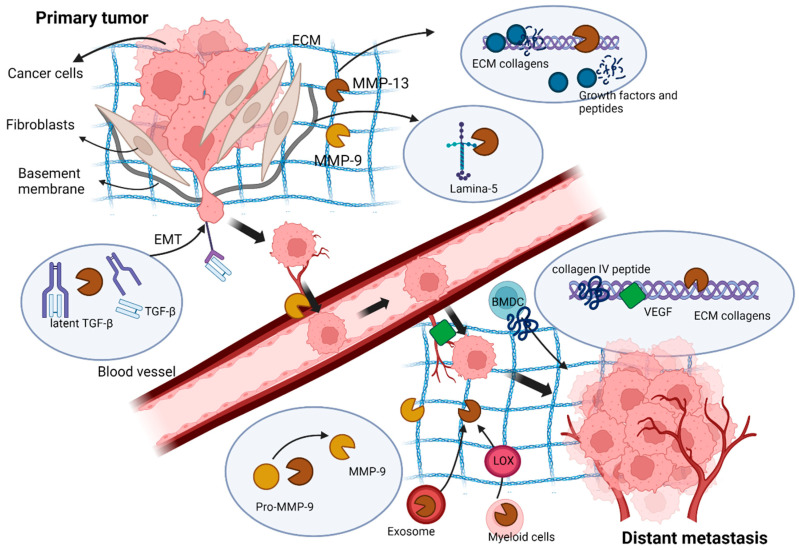
“MMP-13 preferentially degrades type II collagen, while MT1-MMP activates MMP-2, collectively contributing to basement membrane degradation in a synergistic manner [167].”
Figy, C., Guo, A., Fernando, V., Furuta, S., Al‐Mulla, F., & Yeung, K. C. (2023) · Cancers · doi:10.3390/cancers15030958 · Cited by 15
“It is a multi-step process that involves the dissolution of the basement membrane and ECM around existing blood vessels, followed by the proliferation and re-positioning of endothelial cells, and finally the transformation into capillary tubes [50].”
BackgroundCicero, A. L., Campora, S., Buglio, G. L., Cinà, P., Pinto, M. L., Scilabra, S. D., & Ghersi, G. (2025) · FEBS Journal · doi:10.1111/febs.70069 · Cited by 14
Sun, X., & Hu, X. (2025) · International Journal of Molecular Sciences · doi:10.3390/ijms26073083 · Cited by 15
“An important factor that regulates the above physical properties is MMPs, which are a group of calcium-dependent, zinc-containing endopeptidases that can be found in the ECM [63–65].”
InfluentialPhilippon, M. J., Labib, R., Ley, M. B. R. G., Kaplan, L. D., Mendez, A. J., Best, T. M., & Kouroupis, D. (2025) · Cells · doi:10.3390/cells14100706 · Cited by 12
“MMP13 and ADAMTS5 genes, both of which are involved in cartilage degradation under inflammatory conditions, along with anti-catabolic regulators such as TIMP1, suggest a potential compensatory response to matrix turnover [74,75]. between treatment groups.”
Zhang, Q., Teow, J. Y., Kerishnan, J. P., Halim, A. A. A., & Chen, Y. (2023) · Biomedicines · doi:10.3390/biomedicines11051458 · Cited by 8
“The overexpression and secretion of sCLU are directly proportional to MMP-13 production, which leads to cancer cell metastasis [30,31].”
BackgroundPredictive biomarkers of pancreatic cancer metastasis: A comprehensive review
Chen, M., Liu, H., Xiao, Y., Liang, R., Xu, H., Hong, B., & Qian, Y. (2025) · Clinica Chimica Acta · doi:10.1016/j.cca.2025.120176 · Cited by 8
Chidambaram, D., Subashini, V., Nanthanalaxmi, M., Saranya, I., & Selvamurugan, N. (2025) · World Journal of Clinical Oncology · doi:10.5306/wjco.v16.i6.105996 · Cited by 10
Paramakrishnan, N., Chavan, L., Lim, K. G., Paramaswaran, Y., & Muthuraman, A. (2023) · Pharmaceuticals · doi:10.3390/ph16020157 · Cited by 8
“Moreover, MMP-13 also plays a key role in the degradation of extracellular matrix proteins such as fibrillar collagen, fibronectin, total nucleated cells (TNC), and aggrecan core protein (ACAN) [25].”
BackgroundElkarim, A. S. A., Mohamed, S. H., Ali, N. A., Elsayed, G. H., Aly, M. S., Elgamal, A. M., El-Sayed, W. M., & El-Newary, S. A. (2024) · International Journal of Molecular Sciences · doi:10.3390/ijms252313024 · Cited by 7
Elmasry, H., Khadrawy, S. M., Kamel, M. M., Ibrahim, M. H., Abuelsaad, A. S. A., & Zanaty, M. I. (2023) · Pathology - Research and Practice · doi:10.1016/j.prp.2023.155045 · Cited by 7
Yang, M., Nakamura, M., Kageyama, Y., Igari, Y., & Sasano, Y. (2023) · Gerontology · doi:10.1159/000533921 · Cited by 8
“MMP-13 is a collagenase that can degrade a wide range of ECM proteins, including type I collagen, type II collagen, and aggrecan [16, 27, 28].”
BackgroundVISTA in hematological malignancies: a review of the literature
Duan, Y., Ren, X., Guo, X., Xie, J., Liu, Z., & Li, L. (2024) · Frontiers in Immunology · doi:10.3389/fimmu.2024.1466839 · Cited by 6
“MMP-13 is overexpressed in various tumors, including multiple myeloma, breast, lung, gastric and colorectal cancers and is associated with poor prognosis, lymph node metastasis and shorter overall survival in cancer patients (33).”
Konstantaraki, M., Thrapsanioti, L.-N., Berdiaki, A., Spyridaki, I., & Nikitovic, D. (2026) · FEBS Journal · doi:10.1111/febs.70437 · Cited by 6
Diener, C., Thüre, K., Engel, A., Hart, M., Keller, A., Meese, E. U., & Fischer, U. (2024) · European Journal of Cell Biology · doi:10.1016/j.ejcb.2024.151458 · Cited by 6
Hamm, P., Meinel, L., & Drießen, M. D. (2024) · ACS Biomaterials Science & Engineering · doi:10.1021/acsbiomaterials.4c00407 · Cited by 6
Gamal, H. E., Ismail, K. A., Omar, A.-M. M. E., Teleb, M., Abu-Serie, M. M., Huang, S., Abdelsattar, A. S., Zamponi, G. W., & Fahmy, H. T. Y. (2024) · Journal of Enzyme Inhibition and Medicinal Chemistry · doi:10.1080/14756366.2024.2388209 · Cited by 7
Jin, S., Wang, J., & Wang, K. (2025) · Current Molecular Medicine · doi:10.2174/0115665240309837241204184939 · Cited by 6
“There has been an increase in research over the past decade that not only explains how MMP family members contribute to tumorigenesis and proliferation, but also how they might be targeted for the treatment of various cancers [12, 37-42].”
Mucignat, G., Montanucci, L., Elgendy, R., Giantin, M., Laganga, P., Pauletto, M., Mutinelli, F., Vascellari, M., Leone, V. F., Dacasto, M., et al. (2024) · Genes · doi:10.3390/genes15081065 · Cited by 6
“…in melanoma cell lines this gene enhances invasiveness and proliferation, surprisingly limiting vasculogenic mimicry through the degradation of vascular endothelial cadherin (VE-cadherin or cadherin-5), probably leading to the release of β -catenin in the cytoplasm and nucleus [113–115].”
BackgroundAlternative Splicing: A Critical Regulator in Human Bone Biology and Tumor Progression
Cao, L., Hu, Y., Jia, K., Ruiz-Cardozo, M. A., Chen, E., Yang, J., Shao, Z., Tine, B. A. V., & Wu, W. (2025) · Research · doi:10.34133/research.0977 · Cited by 5
“It generates 4 AS variants: collagenase 3 (COL3)-APS, COL3-DEL, COL3-9B-2, and COL3-ATS [ 218 , 219 ].”
Rejeb, M., Lahmar, A., Bayrem-Ghedira, M., Selmi, A., Kosksi, T., Debbabi, N., & Ghédira, L. C. (2025) · Tissue and Cell · doi:10.1016/j.tice.2025.102762 · Cited by 5
Han, C., Feng, Z., Wang, Y., Hu, M., Xu, S., Jiang, F., Han, Y., Liu, Z., & Li, Y. (2024) · Heliyon · doi:10.1016/j.heliyon.2024.e36445 · Cited by 5
“MMP13 can reduce all extracellular matrix and basement membrane components except collagen, and promote tumor invasion and metastasis [44].”
BackgroundLin, K.-C., Chang, T., Sun, Y.-S., Lin, Y.-R., Tang, C., & Liu, J.-F. (2026) · International Journal of Biological Sciences · doi:10.7150/ijbs.115990 · Cited by 4
“In cancer progression, both tumor cells and surrounding stromal cells cooperate to produce MMPs, particularly MMP-1, MMP-9, and MMP-13, whose elevated levels often correlate with advanced tumor stage and poor prognosis in oral and other cancers [28-30].”
Wang, J., Yeung, O. W. H., Qiu, W., Pang, L., Liu, J., Yang, X., Zeng, S., Ding, T., Wang, Z., Hu, Z., et al. (2026) · Cell Death and Disease · doi:10.1038/s41419-026-08508-4 · Cited by 4
“MMP12 is a metalloproteinase that promotes metastasis through extracellular matrix degradation and liberation of pro-angiogenic factors [56, 57].”
Wiśniowski, T., Bryda, J., Domosud, J., & Wątroba, S. (2024) · Annals of Agricultural and Environmental Medicine · doi:10.26444/aaem/192555 · Cited by 4
“MMP-9 expression is reduced by interleukin-4 (IL-4), interleukin-10 (IL-10), interferon-β (IFN-β), glucocorticoids (GCs) and retinoids [49, 50, 51, 52].”
BackgroundMyD88 Signaling Accompanied by Microbiota Changes Supports Urinary Bladder Carcinogenesis
Knezović, D., Roje, B. M., Vilović, K., Franković, L., Korać-Prlić, J., & Terzić, J. (2024) · International Journal of Molecular Sciences · doi:10.3390/ijms25137176 · Cited by 4
“The matrix metalloproteinase 13 ( Mmp13 )gene, responsible for the breakage of the extracellular matrix and tumor cell invasion [26], is also three times downregulated in the Myd88 KO tumor group compared to WT (Supplementary Table S2).”
BackgroundResultMMP13 Expression and Activity Suggest Its Role in Bone Resorption in Ameloblastomas
Valeriano, A. T., Camara, L. S., Bernardes, V. F., Pais, F. S.-M., Araújo, F. M. G., Salim, A. C. M., Fernandes, G. D. R., Stussi, F., Gomes, C. C., Santos, P. P. D. A., et al. (2024) · Journal of Oral Pathology and Medicine · doi:10.1111/jop.13577 · Cited by 4
Bocaneti, F. D., Altamura, G., Corteggio, A., Tanase, O. I., Dascălu, M. A., Pașca, S. A., HRIȚCU, O.-M., Mares, M., & Borzacchiello, G. (2023) · Frontiers in Veterinary Science · doi:10.3389/fvets.2022.1072672 · Cited by 4
Harnessing the metastatic potential of human osteosarcoma cells by natural coumarin galbanic acid
Ahmadi, A., Hosseini, F., Sarvi, Z. N., Iranshahi, M., & Rassouli, F. B. (2025) · Naunyn-Schmiedeberg s Archives of Pharmacology · doi:10.1007/s00210-025-04128-5 · Cited by 3
“Similarly, MMP-9 (gelatinase B) degrades various collagen types and is linked to tumor invasion and angiogenesis (Li et al. 2022; Quintero-Fabián et al. 2019; He et al. 2023).”
Exploring the Genetic Role of Matrix Metalloproteinase-13 Variants in Pterygium Risk
CHEN, H.-C., Hsia, N., Hu, P., Hsia, T., WANG, Y.-C., SHIH, H.-Y., CHANG, W.-S., BAU, D.-T., & Tsai, C.-W. (2025) · In Vivo · doi:10.21873/invivo.14116 · Cited by 3
“This enzyme possesses broad substrate speci f icity, capable of degrading not only f ibrillar collagens but also a range of non ‑ collagenous ECM components, including f ibronectin and laminin (29).”
Orencio, S. S. M., Villaflores, O. B., Saputra, F., Audira, G., Hsiao, C., & Vasquez, R. D. (2026) · Food and Chemical Toxicology · doi:10.1016/j.fct.2026.115967 · Cited by 3
Inhibiting MMP13 Attenuates Deep Vein Thrombosis in a Mouse Model by Reducing the Expression of Pdpn
Luo, J., Zhou, J. R., Luo, J.-Z., Wang, H.-L., Zhao, X., & Zhou, R.-D. (2024) · Current Medical Science · doi:10.1007/s11596-024-2862-6 · Cited by 3
“MMP13 promotes cancer spread and infiltration, enabling penetration into blood vessels for distant metastasis and contributing to the onset of DVT [26] .”
Xiao, J., Liang, J., Zhou, T., Zhou, M., Zhang, D., Feng, H., Tang, C., Zhou, Q., Yang, W., Tan, X., et al. (2024) · Scientific Reports · doi:10.1038/s41598-024-82319-5 · Cited by 3
Transcriptomic profile induced by calcitriol in CaSki human cervical cancer cell line
Avila, E., Hernández-Monterde, L. D., Cedro‐Tanda, A., Lizardi-Aguilera, T. M., Barrera, D., Villegas-Rodriguez, F. V., García‐Quiroz, J., Díaz, L., & Larrea, F. (2025) · PLoS ONE · doi:10.1371/journal.pone.0319812 · Cited by 3
“Similar to MMP7, MMP13 is a key enzyme in cancer progression, promoting tumor cell migration, metastasis, and angiogenesis by degrading the extracellular matrix and activating epithelial-mesenchymal transition (EMT), thereby enhancing tumor invasiveness [59].”
Chen, J., Hu, Q., Zhang, C., Zhao, A., Guan, B., Wang, Y., Zhang, M., Li, X., Chen, B., Zeng, L., et al. (2025) · BMC Cancer · doi:10.1186/s12885-025-13608-z · Cited by 4
Karinen, S., Forero-Rodríguez, J., JÄRVINEN, A., Eklund, K. K., Barreto, G., & Salem, A. (2025) · Cancer Genomics & Proteomics · doi:10.21873/cgp.20519 · Cited by 2
“Over ‑ expression of these two MMPs has been proposed as a predictor for lymph node metastasis and poor prognostic outcomes in patients with head and neck cancers including OSCC (25, 26).”
Pharmacological effect of quinazoline-2,4(1H,3H)-dione derivatives: a review
Manoharan, S., & Perumal, E. (2025) · Molecular Diversity · doi:10.1007/s11030-025-11416-y · Cited by 2
NGUYEN, S. V., Shamoun, L., Landerholm, K., Wågsäter, D., & Dimberg, J. (2024) · In Vivo · doi:10.21873/invivo.13628 · Cited by 2
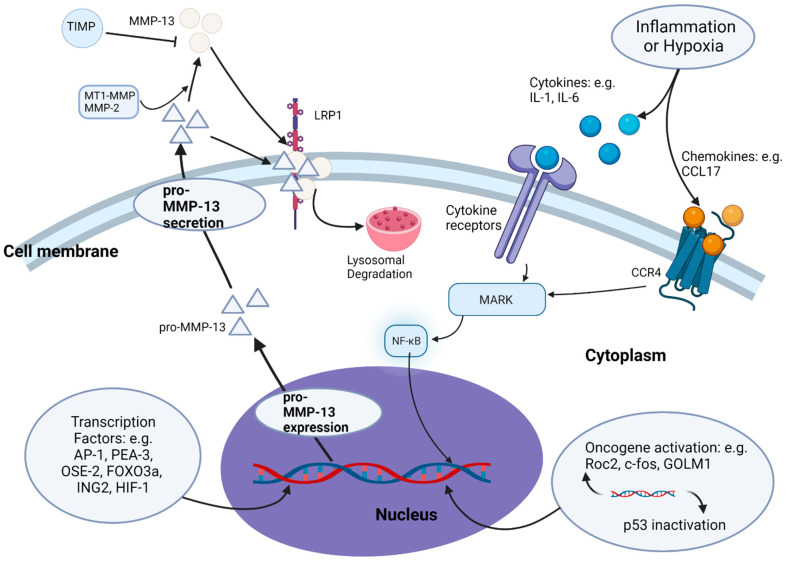
“The promoter of MMP13 contains several binding sites for transcription factors e.g., activating protein-1 ( AP1 ), inhibitor of growth family member 2 ( ING2 ) and polyomavirus enhancer activator 3 (PEA3) (10).”
BackgroundInfluentialMorcos, C. A., Haiba, N. S., Bassily, R. W., Abu-Serie, M. M., El-Yazbi, A. F., Soliman, O., Khattab, S. N., & Teleb, M. (2024) · Journal of Enzyme Inhibition and Medicinal Chemistry · doi:10.1080/14756366.2024.2423174 · Cited by 3
Rehman, G., Sher, A., Rauf, A., Shah, Z. A., Alsanie, W. F., Alamri, A. S., Alhomrani, M., & Ribaudo, G. (2025) · Fitoterapia · doi:10.1016/j.fitote.2025.106497 · Cited by 2
Yokoo, T., Kamimura, K., Nozawa, R., Sugita, M., Shibata, O., Kobayashi, Y., Abé, H., Miura, H., Ohtsuka, M., & Terai, S. (2023) · Advances in Cell and Gene Therapy · doi:10.1155/2023/8842424 · Cited by 1
“MMP13, also known as collagenase 3, is a secreted protein [9] that is reported to be produced by hepatic stellate cells during the recovery phase of fibrosis [10] and by the Kupffer cells [11].”
BackgroundLoss of Arhgap39 facilitates cell migration and invasion in murine hepatocellular cancer cells
Lin, H.-W., Lee, P. Y., Chang, Y.-S., & Chang, M.-S. (2024) · Oncology Research Featuring Preclinical and Clinical Cancer Therapeutics · doi:10.32604/or.2024.053791 · Cited by 1
“MMP13, one of the intestinal collagenases involved in cancer cell invasion [28], has been demonstrated to participate in the migration and metastasis of HCC via TGF-beta pathway [29,30].”
BackgroundXiao, H., You, M., Xie, L., Zhang, Y., Zhang, Z., Zhu, Z., & Zhang, Q. (2025) · Translational Cancer Research · doi:10.21037/tcr-2025-428 · Cited by 1
“MMP13, a member of the matrix metalloproteinase family, is critical for remodeling ECM and facilitating the emergence, growth, invasion, and metastasis of malignant tumors (13) .”
Mubarak, R., Anik, F. I., Rodriguez, J. T., Sakib, N., & Rahman, M. A. (2026) · JMIR Bioinformatics and Biotechnology · doi:10.2196/70553 · Cited by 1
“Genes such as HMGA2 and MMP13 are currently in the literature to identify a high likelihood of therapy success [55,56].”
Uppalapati, C. K., Jeffery, M. A., Pascual, A. S., Hull, E. E., & Leyva, K. J. (2025) · International Journal of Molecular Sciences · doi:10.3390/ijms262211192 · Cited by 1
“These initial findings appear to contradict what has been previously reported in the literature on MMP13 [25,43,48–51], warranting further study into the role of MMP13 in the context of zebrafish keratocyte CCM.”
InfluentialByun, K. T., Kim, B., Lee, I., Cho, J., Hwang, Y., Cheon, S. Y., Kang, H. C., Kim, C. G., Byun, J. W., Paeng, J. C., et al. (2025) · Advanced Healthcare Materials · doi:10.1002/adhm.202502786 · Cited by 1
“In particular, we selected cathepsin B [32], MMP-11 [33], and MMP-13 [34], which have been reported to be particularly abundant in the extracellular matrix of cancer cells, as candidates for CLS construction.”
Metalloproteinases in the crosshairs: protease inhibitors and their role in cancer suppression
Bakar‐Ates, F. (2025) · Elsevier eBooks · doi:10.1016/b978-0-443-26635-5.00054-7 · Cited by 1
Soulat, A., Mohsenpour, T., & Roshangar, L. (2026) · Biochemistry and Biophysics Reports · doi:10.1016/j.bbrep.2026.102527 · Cited by 1
“MMP-13 intensifies collagen turn-over and promotes structural permissiveness for invasion [30].”
Cruz-Romero, S. D., Baldión, A. M., Tawil, J. A. H., Escallón, A., Rodriguez-Urrego, P. A., & Baldión, P. A. (2026) · Journal of Applied Oral Science · doi:10.1590/1678-7765-2025-0555 · Cited by 1
Mancuso, F., Lilli, C., Bellucci, C., Ceccarelli, V., Stabile, A. M., Gambelunghe, C., Pugliese, L., Cecchetti, M., Luca, G., & Baroni, T. (2026) · Sci · doi:10.3390/sci8030055 · Cited by 1
Brinders, K. A., Fisher, D. W., Willemse, C., & Makhathini, K. B. (2026) · Journal of Molecular Neuroscience · doi:10.1007/s12031-026-02537-6 · Cited by 1
“CTC adhesion to the luminal wall of the endothelium results in paracrine factors, which contain inflammatory cytokines and proteins such as matrix metal - loproteinases (MMPs), which facilitate metastasis (Li et al. 2022).”
Furesi, G., Zeng, C., Eul, E. M., Zarrer, J., Novack, D. V., Ye, J., Morikis, V. A., Malachowski, T., Khantakova, D., Antonova, A. U., et al. (2026) · Nature Communications · doi:10.1038/s41467-026-73980-7 · Cited by 1
“In breast cancer, MMP13 has been linked to aggressive disease by promoting collagen degradation, the release of matrix-sequestered bioactive factors, and the modulation of tumor cell behavior 52,53 .”
Xiao, N., Yan, H., Xi, Y., Xu, Y., Zhang, J., Li, Z., & Xie, Z. (2026) · Cells · doi:10.3390/cells15121122 · Cited by 1
“MMP-13 specifically cleaves a range of extracellular matrix (ECM) proteins, leading to ECM remodeling [77].”
Liu, X., Yuan, X., Ge, L., Sun, H., Zhong, L., Qin, A., Guan, Y., Sun, T., Zhou, D., Yang, S. Y., et al. (2026) · Cellular and Molecular Gastroenterology and Hepatology · doi:10.1016/j.jcmgh.2026.101842 · Cited by 1
“31 Within the context of CRC, MMP13 is expressed in the cytoplasm of cell lines.”
FEATURES OF COLLAGENASE GENE EXPRESSION IN BREAST CANCER TISSUE:AN OPEN DATABASES ANALYSIS
Lukianova, N. Y., Mushii, O., Zadvornyi, T., Borikun, T., Pavlova, A., Kunska, L. M., & Chekhun, V. F. (2024) · Oncology · doi:10.15407/oncology.2024.01.022 · Cited by 1
The role of circulating neutrophils in the progression of kidney cancer
Myagdieva, I. R., Абакумова, Т. В., Dolgova, D. R., Gorshkov, O., & Генинг, Т. П. (2024) · Advances in molecular oncology · doi:10.17650/2313-805x-2024-11-1-99-104
You, G.-R., Chang, D. Y., Huang, H.-H., Chen, Y.-J., Chang, J. T., & Cheng, A. (2025) · Cancers · doi:10.3390/cancers17091430
Therapeutic effect of naringenin on ethanol-induced liver fibrosis in rats
Jayaraman, J., Namsivayam, N., Manivannan, K., & Sundaresan, U. (2025) · European Journal of Clinical and Experimental Medicine · doi:10.15584/ejcem.2025.3.14
Widyananda, M. H., Muflikhah, L., Ulfa, S. M., & Widodo, N. (2025) · Natural Product Research · doi:10.1080/14786419.2025.2559753
Furesi, G., Zeng, C., Eul, E. M., Novack, D. V., Ye, J., Morikis, V. A., Malachowski, T., Khantakova, D., Antonova, A. U., Colonna, M., et al. (2025) · bioRxiv (Cold Spring Harbor Laboratory) · doi:10.1101/2025.09.18.677154
Dai, Z., Su, J., Shan, X., Kang, Y., Feng, Q., You, Z., Cai, Z., & Xie, S. (2025) · Research Square · doi:10.21203/rs.3.rs-8260887/v1
Characterization of CEACAM6 molecular function and mechanism in gallbladder carcinoma
Sugiyanto, R. N. (2024) · heiDOK (Heidelberg University) · doi:10.11588/heidok.00034593
Peng, H., Chen, Z., Zhang, Q., Zhang, Y., Yang, P., Gong, J., & Zhao, A. (2026) · Molecular Medicine Reports · doi:10.3892/mmr.2026.13799
Ma, B., Hu, J., Ren, D., & Ding, X. (2026) · Discover Oncology · doi:10.1007/s12672-026-04520-4
“As a collagenase that degrades extra-cellular matrix (ECM), MMP13 facilitates invasion and metastasis [29, 30].”
Senescence-associated LncRNAs TRMP and TRMP-S promote gastric cancer by activating IGFL4
Zhang, M., Mi, Y., Li, F., Tao, Y. C., Tian, S., Khan, M. R., Xiufeng, C., Zheng, P., & Bukhari, I. (2026) · Scientific Reports · doi:10.1038/s41598-026-37106-9
Oishi, Y., Kawaai, K., Tamura, R., Kuroda, Y., Noji, S., Toda, M., & Matsuo, K. (2026) · Cancer Medicine · doi:10.1002/cam4.71662
“MMP13 has also been shown to promote tumor progression in a variety of human malignancies [23], however, information on MMP13 expression in chordomas is lacking.”
Qu, J., Wang, Z., Yin, H., & Lan, J. Q. (2026) · Letters in Drug Design & Discovery · doi:10.1016/j.lddd.2026.100373
Ru, K., Zhu, L., Song, H., Wang, W., Ge, C., Luo, J., & Li, C. (2026) · Aquaculture Reports · doi:10.1016/j.aqrep.2026.103564
Transcriptome analysis of bovine ocular squamous cell carcinoma (BOSCC) in Hereford cattle
Balemian, N., Pedrana, G., Fernández-Calero, T., Irabuena, O., & Armstrong, E. M. (2026) · Veterinary oncology. · doi:10.1186/s44356-026-00058-3
Asnawi, A., Febrina, E., Jungjunan, R. A., Ulfah, R., Pratiwi, H., Adnyana, I. K., & Aligita, W. (2026) · Tropical Journal of Natural Product Research · doi:10.26538/tjnpr/v10i4.67
Huang, Z., Guo, H., Lin, X., Lan, J., Zhao, W., & Chen, M. (2026) · International Immunopharmacology · doi:10.1016/j.intimp.2026.116802 · Cited by 1
Mushii, O., Burda, T. S., Shevchuk, A. O., Kokoilo, M. V., Levenets, A. Y., & Zadvornyi, T. (2026) · Oncology · doi:10.15407/oncology.2026.02.097
“…considered the collagenase with the highest proteolytic activity, particularly towards type II collagen; however, this MMP also effectively cleaves type I and III collagens, as well as type IV, IX, X and XIV collagens, gelatin, fibronectin, aggrecan, osteonectin, tenascin and plasminogen [17, 19].”
Peng, B., Yang, J., Lin, R., Han, Y., Wang, H., Zhou, R., Yan, T., Liu, S., Jiang, H., Li, Y., et al. (2026) · Journal of Nanobiotechnology · doi:10.1186/s12951-026-04609-6
LCAL4–FUS cooperation switches on MMP13 and drives osteolytic bone metastasis in breast cancer
Li, Q., Fan, M., Sun, X., Yang, X., Zhang, Y., Zheng, Z., Zhang, X., Zhang, X., Zhu, Q., Xiong, Z., et al. (2026) · Oncogene · doi:10.1038/s41388-026-03848-z
Polyphenols and matrix metalloproteinase in wound healing
Raza, A., & Hussain, N. (2026) · Elsevier eBooks · doi:10.1016/b978-0-443-45193-5.00016-8
Blocking PD-L2 prevents senescent cell accumulation and age-related dysfunction
Chaib, S., Prata, L. G. P. L., Suda, M., Sola, A., Mitchell, T. J., Anastasiadis, Z. P., Kunz, H., Nie, J., Victorelli, S. G., Flores, R. L., et al. (2026) · Cell Metabolism · doi:10.1016/j.cmet.2026.08.014
Bao, Y., Li, S., Wang, Y., Wang, Z., & Yang, X. (2026) · ACS Nanoscience Au · doi:10.1021/acsnanoscienceau.6c00092
Self-citationMariya, D., Varghese, D., Varughese, T., Cherian, T., Sarath, C. R., & Varghese, L. (2026) · Journal of Applied Pharmaceutical Science · doi:10.1177/22313354261486524
“MMP-13 (collagenase-3), which is frequently overexpressed in several cancers and in tumor-associated stromal cells, 5 shares the conserved modular organization typical of the MMP family but exhibits distinct structural features within its S1′ subsite and neighboring loops.”
Tipping the Balance: Context and Cell-Specific Regulation of MMPs and TIMPs in Liver Fibrosis
Harris, S., Tyagi, P., & Huebert, R. C. (2026) · Biomolecules · doi:10.3390/biom16101513
Metadata
- Authors
- Li, S., Pritchard, D. M., & Yu, L.-G.
- Affiliations
- University of Liverpool (GB)
- Corresponding author
- Yu, Lu-Gang
- Venue
- Cancers
- Publisher
- MDPI AG
- Published
- 2022-07-03
- Volume
- 14
- Issue
- 13
- Pages
- 3263
- ISSN
- 2072-6694 (ISSN-L)
- PMC
- PMC9265061
- OpenAlex
- W4283799682
- Cited by
- 82
- References
- 180
- Citations by year
- 2026: 25 · 2025: 21 · 2024: 19 · 2023: 15 · 2022: 2
- FWCI
- 1.72
- Type
- journal article
- Language
- en
- Open access
- gold
- doi.org
- Licence
- Locations
- Cancers (publishedVersion, cc-by)
- PubMed Central (publishedVersion, cc-by)
- PubMed (publishedVersion)
- DOAJ (DOAJ: Directory of Open Access Journals) (submittedVersion, cc-by-sa)
- Topics
- Life Sciences › Biochemistry, Genetics and Molecular Biology › Cancer Research › Protease and Inhibitor Mechanisms
- Life Sciences › Biochemistry, Genetics and Molecular Biology › Molecular Biology › TGF-β signaling in diseases
- Life Sciences › Biochemistry, Genetics and Molecular Biology › Biochemistry › Bone and Dental Protein Studies
- Keywords
- matrix metalloproteinase-13, tumor progression, metastasis, extracellular matrix remodeling, collagen degradation, angiogenesis, tumor invasion
About these checks
Registry, retraction, Cites and statistics results are computed, not judged, with one exception: a printed reference that no index lists is read once by a model before it counts as a citation error. Claims are extracted by a model and kept only when their quote appears verbatim in the text; each cited source is then checked, with a model’s help, for whether it says what the claim relies on. Those verdicts can be wrong — read the claim’s quote and the cited source before relying on one.
Statistics and arithmetic are recomputed, not judged.
Confidence bands are shown only for fields calibrated on our annotated test set. None is calibrated yet, so no band is shown.
What counts as a claim ›How we measure confidence ›How we check this ›
Are you an author, or do you see a problem with this page? Request a review
Data sources
Bibliographic data: Semantic Scholar, OpenAlex, Crossref.
Contains information from the Semantic Scholar Academic Graph Datasets, made available under the ODC Attribution License (ODC-BY 1.0).
Semantic Scholar’s data is described in: Kinney, R., et al. (2023). The Semantic Scholar Open Data Platform. arXiv:2301.10140.
