

A Clinical Outcome of the Anti-PD-1 Therapy of Melanoma in Polish Patients Is Mediated by Population-Specific Gut Microbiome Composition
Open accessPublished version of a preprint
The DOI matches its Crossref record; 122 of the 122 references it cites were found in a registry or an index; 18 of the 36 sources its claims cite were checked for support.
Abstract
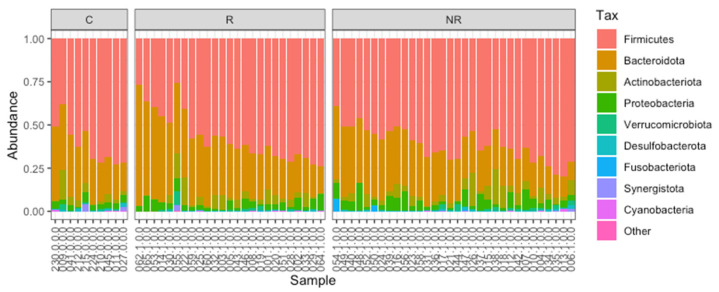
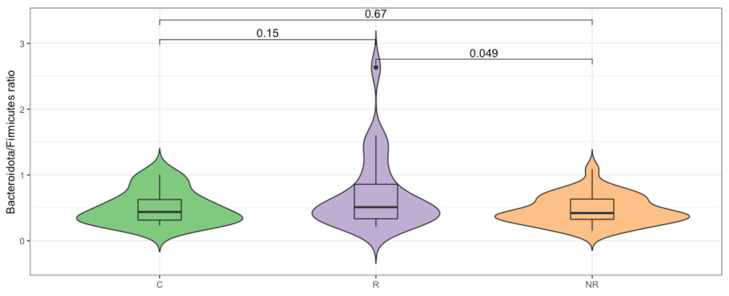
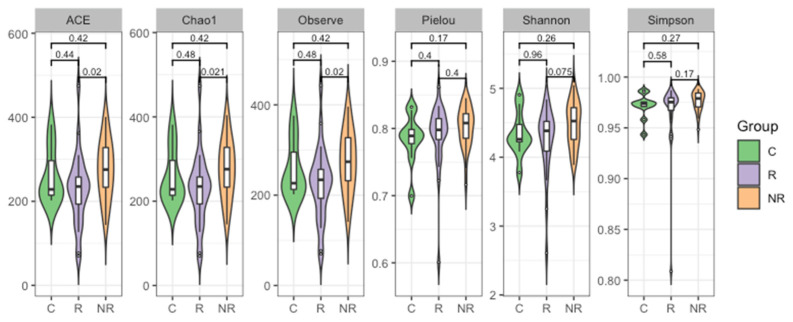
The gut microbiota is considered a key player modulating the efficacy of immune checkpoint inhibitor therapy. The study investigated the association between the response to anti-PD-1 therapy and the baseline gut microbiome in a Polish cohort of melanoma patients, alongside selected agents modifying the microbiome. Sixty-four melanoma patients enrolled for the anti-PD-1 therapy, and ten healthy subjects were recruited. The response to the treatment was assessed according to the response evaluation criteria in solid tumors, and patients were classified as responders or non-responders. The association between selected extrinsic factors and response was investigated using questionnaire-based analysis and the metataxonomics of the microbiota. In the responders, the Bacteroidota to Firmicutes ratio was higher, and the richness was decreased. The abundance of Prevotella copri and Bacteroides uniformis was related to the response, whereas the non-responders’ gut microbiota was enriched with Faecalibacterium prausnitzii and Desulfovibrio intestinalis and some unclassified Firmicutes. Dietary patterns, including plant, dairy, and fat consumption as well as gastrointestinal tract functioning were significantly associated with the therapeutic effects of the therapy. The specific gut microbiota along with diet were found to be associated with the response to the therapy in the population of melanoma patients.
Overview
CoChat Summary
TL;DR
In a Polish cohort of 64 melanoma patients and 10 healthy controls, baseline gut microbiome composition was associated with anti-PD-1 response: responders had a higher Bacteroidota/Firmicutes ratio, lower richness, and enrichment of *Prevotella copri* and *Bacteroides uniformis*, while non-responders were enriched with *Faecalibacterium prausnitzii* and *Desulfovibrio intestinalis*. Diet and gastrointestinal factors, including high plant consumption, low dairy consumption, and daily defecation, were also associated with therapeutic response.
Key findings
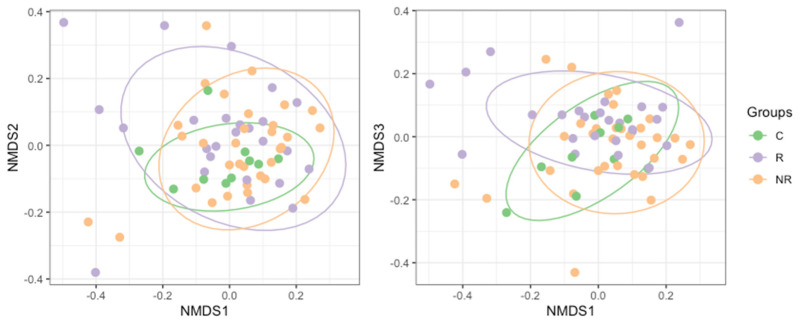
- Among 25 responders, 32 non-responders, and 10 controls, the median Bacteroidota to Firmicutes ratio was higher in responders (0.51) than controls (0.44) and non-responders (0.42), with a significant R–NR difference (p < 0.05). Responders also had significantly lower microbial richness than non-responders (p < 0.05), and baseline beta diversity differed between R and NR (R² = 0.0357, p = 0.0033).
- Response was associated with enrichment of ASVs belonging to *Prevotella copri* and *Bacteroides uniformis*; non-responders were enriched with *Faecalibacterium prausnitzii*, *Desulfovibrio intestinalis*, and unclassified Firmicutes (orders Izemoplasmatales and Clostridia UCG-014, family Oscillospiraceae).
- Questionnaire analysis found high plant consumption associated with a 2.9-fold increase in probability of response, and low dairy consumption (≤1 portion/day) with a 2.0-fold increase. Mixed dietary fat consumption was declared by 36.0% of responders vs 6.9% of non-responders; daily defecation by 62.5% of responders vs 43.3% of non-responders, while defecating every second day was reported by 4.2% of responders vs 40.0% of non-responders.
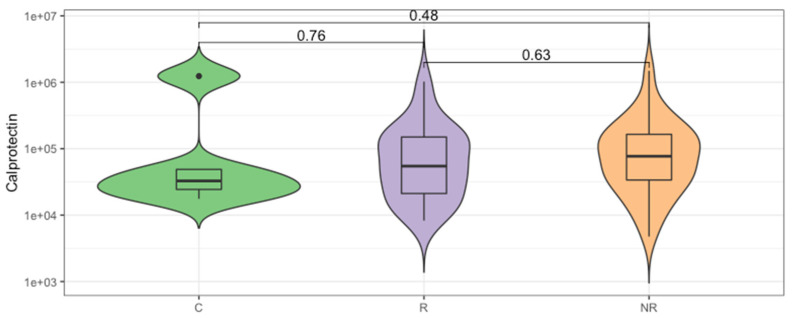
- Median stool calprotectin was 32.75, 54.69, and 76.99 µg/mL for controls, responders, and non-responders, respectively, but differences were not statistically significant (p > 0.05). Elevated serum LDH (>250 U/L) occurred in 21% of responders and 42% of non-responders, and median LDH was significantly higher in non-responders (p < 0.05).
Methods
- Prospective cohort recruited at Poznan University of Medical Sciences from June 2018 to December 2021: 64 patients with unresectable stage III or IV cutaneous melanoma starting anti-PD-1 therapy (nivolumab or pembrolizumab), plus 10 healthy relatives as controls. Response was assessed by RECIST v1.1: responders = CR/PR, non-responders = SD/PD; clinical benefit = CR/PR/SD, no benefit = PD.
- Baseline questionnaires (39 closed questions) covered socio-demographic, anthropometric, clinical, lifestyle, and dietary variables; stool samples were collected before treatment. Fecal calprotectin was measured by ELISA; microbiota was analyzed by 16S rRNA V3–V4 sequencing on Illumina MiSeq PE300, with selected samples also subjected to shotgun metagenomics on Illumina NovaSeq 6000 PE150 (n = 16).
- Analyses included Kruskal–Wallis and Fisher’s exact tests, relative risk for questionnaire variables, DADA2/SILVA taxonomy, alpha/beta diversity in R, PERMANOVA, and limma for differential taxa; metagenomic assembly and binning reconstructed metagenome-assembled genomes.
Limitations
- The paper states that the control group was small and significantly younger than patients, and that patients and controls differed significantly in birthplace, plant portion consumption, and defecation frequency; these factors were considered in microbiota analysis.
- The paper states that dietary fat findings could not identify which specific fat type or products were associated with improved outcomes, and that further studies with larger sample sizes and more specified extrinsic factors are needed.
- Evident from the text: this is a single-country cohort with a modest sample size, shotgun metagenomics was performed on only 16 selected samples, and the reported associations are baseline/cross-sectional and do not establish causality.
Model-written summary. Check it against the paper before relying on it.
Integrity signals
Registry
Cites
Statistics
Figures
Verification
Claims the paper makes
13 Valid · 0 Not valid · 13 Not checked · 48 Own results and interpretations
Every source the paper cites for this claim was checked and supports it.
In the paper
“The gut microbiota is considered a key player modulating the efficacy of immune checkpoint inhibitor therapy.”
- Also stated in: § 1. Introduction · boosted
“Numerous studies have consistently demonstrated the association of the gut microbiota composition with the response and survival benefits from ICI therapy, mostly manifested as progression-free survival (PFS) or overall survival (OS); however, there were contradictions in the specific taxa identified as positively or negatively associated with the clinical outcomes between various cohorts [6].”
§ A Clinical Outcome of the Anti-PD-1 Therapy of Melanoma in Polish Patients Is Mediated by Population-Specific Gut Microbiome Composition > Abstract
What the sources say
- Supportedcites [6] Liu X. Chen Y. Zhang S. Dong L. Gut microbiota-mediated immunomodulation in tumor J. Exp. Clin. Cancer Res. 2021 40 221 10.1186/s13046-021-01983-x 34217349 PMC8254267 source
The ‘Targeting microbiome in ICIs’ section says preclinical models suggested that gut microbiota was required for ICI efficacy. It also reports differences in gut microbiomes between patients who responded to anti-PD-1 treatment and those who did not, supporting the claim that microbiota modulates treatment efficacy. (LLM, conf=0.94)
boostedstates an association- Asserted: passes — The authors put it forward as true.
- Checkable: passes — It can be checked against evidence.
- Load-bearing: passes — The paper’s conclusions depend on it.
- Based: passes — The paper gives a reason why it holds.
- Also stated in: § 1. Introduction · boosted
The cited sources support only part of this claim — read each source’s verdict below.
In the paper
“The enrichment in Bacteroidota can lead to a reduction in intestinal inflammation [18,19,20].”
§ A Clinical Outcome of the Anti-PD-1 Therapy of Melanoma in Polish Patients Is Mediated by Population-Specific Gut Microbiome Composition > 3. Results > 3.3. Baseline Gut Microbiota of Responders Was Enriched with Prevotella copri and Bacteroides Uniformis
What the sources say
- Not checked yetcites [18] Mazmanian S.K. Round J.L. Kasper D.L. A Microbial Symbiosis Factor Prevents Intestinal Inflammatory Disease Nature 2008 453 620 625 10.1038/nature07008 18509436 source
- Partly supportedcites [19] Delday M. Mulder I. Logan E.T. Grant G. Bacteroides Thetaiotaomicron Ameliorates Colon Inflammation in Preclinical Models of Crohn’s Disease Inflamm. Bowel Dis. 2019 25 85 96 10.1093/ibd/izy281 30215718 PMC6290787 sourceExperimental — accuracy not yet measured
The Discussion (page not available in our copy) reports that treatment with B. thetaiotaomicron reduced colitis pathology and inflammatory mediators in preclinical models. That supports the possibility that a member of Bacteroidota can reduce intestinal inflammation, but the paper does not show that enrichment of the phylum as a whole has this effect. (LLM, conf=0.88)
- Partly supportedcites [20] Nomura K. Ishikawa D. Okahara K. Ito S. Haga K. Takahashi M. Arakawa A. Shibuya T. Osada T. Kuwahara-Arai K. Clinical Medicine Bacteroidetes Species Are Correlated with Disease Activity in Ulcerative Colitis J. Clin. Med. 2021 10 1749 10.3390/jcm10081749 33920646 PMC8073534 sourceExperimental — accuracy not yet measured
The Discussion says that abundant key Bacteroidetes species may have therapeutic potential and reports that Bacteroides thetaiotaomicron suppresses inflammation in preclinical IBD models. But this study found correlations with ulcerative-colitis activity; it did not show that enrichment of Bacteroidota broadly causes a reduction in intestinal inflammation. (LLM, conf=0.85)
plainstates a cause- Asserted: passes — The authors put it forward as true.
- Checkable: passes — It can be checked against evidence.
- Load-bearing: passes — The paper’s conclusions depend on it.
- Based: passes — The paper gives a reason why it holds.
A result the paper reports from its own data — it cites no other source for it, so there is none to check. The quote shows it is in the paper.
In the paper
“The abundance of Prevotella copri and Bacteroides uniformis was related to the response”
- Also stated in: § 3.3. Baseline Gut Microbiota of Responders Was Enriched with Prevotella copri and Bacteroides Uniformis · boosted
“The analysis revealed a strong association between the response and enrichment in the ASVs belonging to Prevotella copri and Bacteroides uniformis.”
- Also stated in: § 4. Discussion · plain
“Furthermore, the abundance of Prevotella copri and Bacteroides uniformis was related to the response to anti-PD-1 therapy in our cohort of melanoma patients (Table 3).”
§ A Clinical Outcome of the Anti-PD-1 Therapy of Melanoma in Polish Patients Is Mediated by Population-Specific Gut Microbiome Composition > Abstract
boostedstates an association- Asserted: passes — The authors put it forward as true.
- Checkable: passes — It can be checked against evidence.
- Load-bearing: passes — The paper’s conclusions depend on it.
- Based: passes — The paper gives a reason why it holds.
- Rests on an assumption not shown here.
- Also stated in: § 3.3. Baseline Gut Microbiota of Responders Was Enriched with Prevotella copri and Bacteroides Uniformis · boosted
A result the paper reports from its own data — it cites no other source for it, so there is none to check. The quote shows it is in the paper.
In the paper
“Although no statistically significant differences (p > 0.05) in the normal and elevated serum LDH level distribution between the responders and non-responders were found to be qualified according to Deckers et al. [16], the median value of the marker was significantly higher (p < 0.05) in the non-responders compared to the responders.”
§ A Clinical Outcome of the Anti-PD-1 Therapy of Melanoma in Polish Patients Is Mediated by Population-Specific Gut Microbiome Composition > 3. Results > 3.1. Characteristics of the Study Cohort
plainstates an associationn = 64 ·- Asserted: passes — The authors put it forward as true.
- Checkable: passes — It can be checked against evidence.
- Load-bearing: unclear — It is unclear whether the paper’s conclusions depend on it.
- Based: passes — The paper gives a reason why it holds.
A result the paper reports from its own data — it cites no other source for it, so there is none to check. The quote shows it is in the paper.
In the paper
“whereas the non-responders’ gut microbiota was enriched with Faecalibacterium prausnitzii and Desulfovibrio intestinalis and some unclassified Firmicutes.”
- Also stated in: § 3.3. Baseline Gut Microbiota of Responders Was Enriched with Prevotella copri and Bacteroides Uniformis · plain
“However, ASVs that were unidentified to species level, belonging to orders Izemoplasmatales and Clostridia UCG-014, to family Oscillospiraceae, and to species Faecalibacterium prausnitzii and Desulfovibrio intestinalis, were significantly enriched in the non-responders (Table 3).”
- Also stated in: § 4. Discussion · plain
“Furthermore, the abundance of F. prausnitzii, D. intestinalis and some unclassified Firmicutes were associated with disease stabilization or progression in our study (Table 3).”
§ A Clinical Outcome of the Anti-PD-1 Therapy of Melanoma in Polish Patients Is Mediated by Population-Specific Gut Microbiome Composition > Abstract
plainstates an association- Asserted: passes — The authors put it forward as true.
- Checkable: passes — It can be checked against evidence.
- Load-bearing: passes — The paper’s conclusions depend on it.
- Based: passes — The paper gives a reason why it holds.
- Rests on an assumption not shown here.
- Also stated in: § 3.3. Baseline Gut Microbiota of Responders Was Enriched with Prevotella copri and Bacteroides Uniformis · plain
26 more claims
Create a free account to see all 74 claims and to verify the 18 references still open.
- Probably not a substantial claim. 34
- It may state two separate claims as one. 16
Claims other papers make about this one
Each is checked against this paper’s own text: does it say what the citing paper says it does?
The cited source says what the claim attributes to it.
In the citing paper
“In previous baseline studies, P. copri has been associated with ICB response26,27.”
From Longitudinal gut microbiome changes in immune checkpoint blockade-treated advanced melanoma (2024) · cites this paper as [26]
In the citing paper
“Indeed, diet has been shown to have a profound impact on immunotherapy responses; consumption of plant-based foods has been positively correlated with better response to anti-PD-1 therapy in a cohort of Polish melanoma patients, while consumption of dairy products had the opposite effect (Pietrzak et al., 2022).”
From Microbiota-centered interventions to boost immune checkpoint blockade therapies (2025) · cites this paper as Pietrzak et al., 2022
Self-check
Percentages, sums and reported differences re-computed from the paper’s own numbers.
Each contradiction between two passages listed here was confirmed by an independent check.
Rated minor: it would not touch a result — a value no result rests on, a p-value that stays on the same side of the significance level, or a conflict that is clerical, resolved elsewhere in the paper, or outside its own findings.
In the paper
§ A Clinical Outcome of the Anti-PD-1 Therapy of Melanoma in Polish Patients Is Mediated by Population-Specific Gut Microbiome Composition > 4. Discussion
“Moreover, several significant differences in terms of birthplace, plant portion consumption, and defecation frequency were found between the patients and controls (Table 2).”
§ A Clinical Outcome of the Anti-PD-1 Therapy of Melanoma in Polish Patients Is Mediated by Population-Specific Gut Microbiome Composition > 3. Results > 3.2. Baseline Gut Microbiota- and Immune Response-Modifying Agents Significance in the Response to Anti-PD-1 Therapy in the Cohort of Melanoma Patients
“Moreover, a borderline significance was found, in terms of the birthplace, between the controls and patients (p = 0.058).”
Citations
Cites
limma powers differential expression analyses for RNA-sequencing and microarray studies
Ritchie, M. E., Phipson, B., Wu, D., Hu, Y., Law, C. W., Shi, W., & Smyth, G. K. (2015) · Nucleic Acids Research · doi:10.1093/nar/gkv007 · Cited by 40,458 · cited 2×
“By applying a two-group comparison at the community level with a linear model [22] (limma package [23]), we were able to identify the most ignificantly different taxa between the .”
MethodParks, D. H., Imelfort, M., Skennerton, C. T., Hugenholtz, P., & Tyson, G. W. (2015) · Genome Research · doi:10.1101/gr.186072.114 · Cited by 12,496 · cited 1×
“18 [31] and were filtered for >90% completeness and <5% contamination.”
BackgroundThe RAST Server: Rapid Annotations using Subsystems Technology
Aziz, R. K., Bartels, D., Best, A. A., DeJongh, M., Disz, T., Edwards, R. A., Formsma, K., Gerdes, S., Glass, E. M., Kubal, M., et al. (2008) · BMC Genomics · doi:10.1186/1471-2164-9-75 · Cited by 11,729 · cited 1×
“073 [32] and classified with GTDB-Tk v1.”
Diet rapidly and reproducibly alters the human gut microbiome
David, L. A., Maurice, C. F., Carmody, R. N., Gootenberg, D. B., Button, J. E., Wolfe, B. E., Ling, A. V., Devlin, A. S., Varma, Y., Fischbach, M. A., et al. (2014) · Nature · doi:10.1038/nature12820 · Cited by 10,100
Li, D., Liu, C.-M., Luo, R., Sadakane, K., & Lam, T.-W. (2015) · Bioinformatics · doi:10.1093/bioinformatics/btv033 · Cited by 9,893 · cited 2×
“9 [26], which resulted in an average of 29.”
BackgroundKlindworth, A., Pruesse, E., Schweer, T., Peplies, J., Quast, C., Horn, M., & Glöckner, F. O. (2013) · Nucleic Acids Research · doi:10.1093/nar/gks808 · Cited by 8,850 · cited 1×
“For 16S-targeted metagenome sequencing, the V3-V4 hypervariable regions of the 16S rRNA gene were amplified using 341F (5′-TCG TCG GCA GCG TCA GAT GTG TAT AAG AGA CAG CCT ACG GGN GGC WGC AG-3′) and 785R (5′-GTC TCG TGG GCT CGG AGA TGT GTA TAA GAG ACA GGA CTA CHV GGG TAT CTA ATC C-3′) primers [12] and KAPA HiFi HotStar…”
MethodGTDB-Tk: a toolkit to classify genomes with the Genome Taxonomy Database
Chaumeil, P.-A., Mussig, A. J., Hugenholtz, P., & Parks, D. H. (2020) · Bioinformatics · doi:10.1093/bioinformatics/btz848 · Cited by 5,259 · cited 1×
“0 [33] to obtain reconstructed metagenomeassembled genomes (MAGs).”
BackgroundLongstreth, G. F., Thompson, W. G., Chey, W. D., Houghton, L. A., Mearin, F., & Spiller, R. C. (2006) · Gastroenterology · doi:10.1053/j.gastro.2005.11.061 · Cited by 4,856
Gut microbiome modulates response to anti-PD-1 immunotherapy in melanoma patients
Gopalakrishnan, V., Spencer, C. N., Nezi, L., Reuben, A., Andrews, M. C., Karpinets, T. V., Prieto, P. A., Vicente, D., Hoffman, K., Wei, S. C., et al. (2018) · Science · doi:10.1126/science.aan4236 · Cited by 4,812 · cited 2×
“ICI therapy in various cohorts of melanoma patients [37,42,44,55,60].”
BackgroundmetaSPAdes: a new versatile metagenomic assembler
Nurk, S., Meleshko, D., Korobeynikov, A., & Pevzner, P. A. (2017) · Genome Research · doi:10.1101/gr.213959.116 · Cited by 4,496
Research works printed but not linked: 2
- Szmulski Ł. Obwieszczenie Nr 65 Ministra Zdrowia z Dnia 30 Sierpnia 2019 r. w Sprawie Wykazu Refundowanych Leków, Środków Spożywczych Specjalnego Przeznaczenia Żywieniowego Oraz Wyrobów Medycznych Off. J. Minist. Health-Pol. 2019 65 906 913
- Dziedzic M. Matuszyk D. Prażmowska B. Poród domowy w opinii położnych Probl. Pielęgniarstwa 2011 19 153 161
Cited by
Longitudinal gut microbiome changes in immune checkpoint blockade-treated advanced melanoma
Björk, J. R., Bolte, L. A., Maltez Thomas, A., Lee, K. A., Rossi, N., Wind, T. T., Smit, L. M., Armanini, F., Asnicar, F., Blanco-Miguez, A., et al. (2024) · Nature Medicine · doi:10.1038/s41591-024-02803-3 · Cited by 156
Microbiome bacterial influencers of host immunity and response to immunotherapy
Yousefi, Y., Baines, K. J., & Vareki, S. M. (2024) · Cell Reports Medicine · doi:10.1016/j.xcrm.2024.101487 · Cited by 71
“98 The variation in findings among studies about key species implicated in immunotherapy response may be attributed to limited sample size, methods used for microbiota analysis, and variances in the populations studied.”
BackgroundLiu, X., Lu, B., Tang, H. T., Jia, X., Zhou, Q., Zeng, Y., Gao, X., Chen, M., Xu, Y., Wang, M., et al. (2024) · EBioMedicine · doi:10.1016/j.ebiom.2024.105427 · Cited by 58
Zhu, C., Wang, Y., Zhu, R., Wang, S., Xue, J., Zhang, D., Lan, Z., Zhang, C., Liang, Y., Zhang, N., et al. (2024) · Biomarker Research · doi:10.1186/s40364-024-00607-8 · Cited by 49
Gamrath, L., Pedersen, T. B., Møller, M. V., Volmer, L. M., Holst-Christensen, L., Vestermark, L. W., & Donskov, F. (2025) · Current Oncology Reports · doi:10.1007/s11912-024-01622-6 · Cited by 30
Somodi, C., Dóra, D., Horváth, M., Szegvári, G., & Lohinai, Z. (2025) · Journal of Translational Medicine · doi:10.1186/s12967-025-06586-0 · Cited by 40
“While Simpson et al. [21] cited the Australian Dietary Guidelines, which suggest 30 g of fiber per day for males and 25 g per day for women, Pietrzak et al. [36] defined high fiber consumption as 20 g or more per day.”
InfluentialRole of gut microbiota in regulating immune checkpoint inhibitor therapy for glioblastoma
Zhang, H., Hong, Y., Wu, T., Ben, E., Li, S., Hu, L., & Xie, T. (2024) · Frontiers in Immunology · doi:10.3389/fimmu.2024.1401967 · Cited by 33
Liu, L., Liang, L., Luo, Y., Han, J., Lu, D., Cai, R., Sethi, G., & Mai, S. (2024) · Research · doi:10.34133/research.0529 · Cited by 22
Microbiota-centered interventions to boost immune checkpoint blockade therapies
Almonte, A. A., Thomas, S., & Zitvogel, L. (2025) · Journal of Experimental Medicine · doi:10.1084/jem.20250378 · Cited by 19
Circadian lifestyle determinants of immune checkpoint inhibitor efficacy
Hughes, B. R., Shanaz, S., Ismail-Sutton, S., Wreglesworth, N. I., Subbe, C. P., & Innominato, P. F. (2023) · Frontiers in Oncology · doi:10.3389/fonc.2023.1284089 · Cited by 15
Nutrition and Diet Patterns as Key Modulators of Metabolic Reprogramming in Melanoma Immunotherapy
Grafanaki, K., Maniatis, A., Anastogianni, A., Bania, A., Pasmatzi, E., & Stathopoulos, C. (2025) · Journal of Clinical Medicine · doi:10.3390/jcm14124193 · Cited by 14
“Interestingly, a plant-based diet exhibited a favorable response to anti-PD-1, whereas a diet comprising dairy products had an unfavorable effect [141].”
Lou, J., Xiang, Z., Zhu, X., Fan, Y., Li, J., Jin, G., Cui, S., Huang, N., & Le, X. (2024) · Medicine · doi:10.1097/md.0000000000040432 · Cited by 15
“[55] Therefore, our research provides genomic evidence for the changes of microbiota in the occurrence and development of melanoma to regulate the body’s immune response and response to immunotherapy, and further demonstrates the potential of these microbiota as blocking reaction markers of immune…”
BackgroundLife Factors and Melanoma: From the Macroscopic State to the Molecular Mechanism
Wang, H., Zhang, H., Zhou, Y., Li, C., & Guo, W. (2025) · Advanced Science · doi:10.1002/advs.202501388 · Cited by 10
Immunotherapy of Human Melanoma: Past, Present, Future
Mortezaee, K., & Majidpoor, J. (2024) · Current Medicinal Chemistry · doi:10.2174/0109298673283943240227104122 · Cited by 6
Evaluation of skin cancer prevention properties of probiotics
Torabi, S., Nahidi, Y., Ghasemi, S. Z., Reihani, A., Samadi, A., Ramezanghorbani, N., Nazari, E., & Davoudi, S. (2025) · Genes & Nutrition · doi:10.1186/s12263-025-00770-z · Cited by 10
“One study reported that melanoma patients using probiotics had a 70% lower likelihood of responding to anti-PD-1 check-point inhibitors [178].”
Wang, W. “., Pang, W., Yan, S., Zheng, X., Han, Q., Yao, Y., Jin, L., & Zhang, C. (2023) · Frontiers in Pharmacology · doi:10.3389/fphar.2023.1165584 · Cited by 9
“Desulfovibri enriched in non-responders on anti-programmed cell death protein-1 (anti-PD-1) therapy for melanoma (Pietrzak et al., 2022).”
BackgroundChakrawarti, A., Cromarty, R. T., Basting, C. M., Anderson, J. L., Schroeder, T. A., Escandón-Vargas, K., Shields‐Cutler, R. R., Langat, R., Swanson, E., Soon‐Shiong, P., et al. (2025) · bioRxiv (Cold Spring Harbor Laboratory) · doi:10.1101/2025.10.01.679827 · Cited by 3
“…and transplant, where multiple studies have shown that higher baseline microbiome diversity correlated with positive responses to treatment [19-21,37 ,40-42 Interestingly, many of the same taxa and pathways that shifted longitudinally after N-803 treatment also correlated with post-treatment…”
Dietary Fiber and Melanoma: Exploring Microbiome-Driven Immune Modulation
Turner, L. M., Sisk, C. K., & Yusuf, N. (2026) · Cancers · doi:10.3390/cancers18020203 · Cited by 6
“However, these findings have not been consistent across populations, as other cohorts have reported decreased alpha diversity in responders compared to non-responders ( p 0.05), or found no significant differences in alpha diversity between response groups [17–19].”
InfluentialMicrobiome in Neuroblastoma: A Virgin Island in the World of Onco-Microbiome
Giri, A. K., Subramanian, P., Periyasamy, L., Aravindan, S., & Aravindan, N. (2025) · Cells · doi:10.3390/cells14151218 · Cited by 3
“Melanoma patients with poor responses to immunotherapy are enriched with Prevotella spp. and Ruminococcus spp., which foster immune suppression by growing regulatory T cells and raising anti-inflammatory cytokines [122].”
Mattavelli, E., PRAT, V. D., Corallo, S., Tartara, A., Figini, S., Simeis, F. D., Marino, S., Uggè, A., Caccialanza, R., Pedrazzoli, P., et al. (2026) · Immunotherapy · doi:10.1080/1750743x.2026.2648431 · Cited by 8
El-Derby, A. M., Schaaf, C. R., Shelkey, E., Cook, K. L., Votanopoulos, K. I., & Söker, S. (2024) · Frontiers in Microbiomes · doi:10.3389/frmbi.2024.1411322 · Cited by 2
“…Bifidobacterium pseudocatenulatum, Prevotella spp., Ruminococcaceae spp., and Bacteroides while non-responders had increased abundance of Proteobacteria and Firmicutes species (Zheng et al., 2019; Peng et al., 2020) (Baruch et al., 2021; Lee et al., 2022; Pietrzak et al., 2022; Wu et al., 2022).”
Wei, F., Nakahara, Y., Isobe, J., Igarashi, Y., Saito, H., Murakami, S., Kondo, T., Himuro, H., Kouro, T., Matsui, T., et al. (2026) · Frontiers in Immunology · doi:10.3389/fimmu.2026.1832317 · Cited by 3
Drymel, B., Tomela, K., Galus, Ł., Olejnik‐Schmidt, A., Mackiewicz, J., Kaczmarek, M., Mackiewicz, A. A., & SCHMIDT, M. T. (2025) · International Journal of Molecular Sciences · doi:10.3390/ijms26168063 · Cited by 3
“The detailed procedure of library preparation and marker gene sequencing was described in our previous paper [3].”
InfluentialSelf-citationGut Microbiome Strategies for Enhancing ICI Delivery Across the BBB in Glioblastoma
Barati, S., Ghoflchi, S., Nakhaei, A., Yazdi, M., Hosseinzadeh, P., Hosseini, H., & Jalili‐Nik, M. (2026) · BioFactors · doi:10.1002/biof.70077 · Cited by 1
Olea, X. D., Beede, K. A., Pereira, G. V., Scott, D. A., Petucci, C. J., Martens, E. C., Rodionov, D., Shah, A. S., Martinez, M. P., Kim, H., et al. (2026) · Cell Reports Medicine · doi:10.1016/j.xcrm.2026.102921 · Cited by 1
“52,53 Along these lines, metataxonomic microbiome analyses of responders to PD1 therapy also pointed to a positive correlation between treatment responsiveness and B. uniformis abundance.”
Strokach, A. A., Zakharevich, N. V., Агинова, В. В., Grigoryevskaya, Z., Petukhova, Bagirova, N. S., Romanov, M. V., Dyachkova, M. S., Morozov, M. D., Veselovsky, V. A., et al. (2026) · Gut Microbes · doi:10.1080/19490976.2026.2681788 · Cited by 1
“61, 62 Although P. copri is some-times found in R patients, 63 it may also be associated with therapy failure.”
Joo, M.-K., Tak, J., Ha, S., Yoon, K., Namgoong, J., & Kim, H. O. (2026) · Frontiers in Microbiology · doi:10.3389/fmicb.2026.1835588
Armah, J., Alzahid, S., Pei, Q., Cousin, L., Fanfan, D., Heldermon, C. D., & Lyon, D. (2026) · Oncoscience · doi:10.18632/oncoscience.651
“These changes may also improve response to chemotherapy because a prospective study by Pietrzak et al. [76] found that responders who had a higher intake of plant-based foods exhibited higher levels of other saccharolytic and SCFA producers such as Prevotella and Bacteroides .”
Joglekar, K. G. (2026) · Cureus · doi:10.7759/cureus.113248
“Across studies, responders to anti-PD-1 therapy consistently showed more favorable microbiome and metabolome profiles, while dysbiosis and pathogenic enrichment were associated with reduced survival [4,9,17].”
InfluentialSu, X., Xiang, Y., Zhao, H., Li, O., Zhang, L., & Guo, B. (2026) · Frontiers in Microbiology · doi:10.3389/fmicb.2026.1839030 · Cited by 1
“This raises concerns that current findings may merely reflect localized effects driven by specific genetic backgrounds and medical practices (Pietrzak et al., 2022).”
Metadata
- Authors
- Pietrzak, B., Tomela, K., Olejnik-Schmidt, A., Galus, Ł., Mackiewicz, J., Kaczmarek, M., Mackiewicz, A., & Schmidt, M.
- Affiliations
- Poznań University of Life Sciences (PL)
- Poznan University of Medical Sciences (PL)
- Department of Biotechnology and Food Microbiology, Poznan University of Life Sciences, 60-627 Poznan, Poland
- Corresponding author
- Pietrzak, Bernadeta
- Schmidt, Marcin
- ORCID
- Venue
- Cancers
- Publisher
- MDPI AG
- Published
- 2022-10-31
- Volume
- 14
- Issue
- 21
- Pages
- 5369
- ISSN
- 2072-6694 (ISSN-L)
- PMC
- PMC9653730
- OpenAlex
- W4308126031
- Cited by
- 36
- References
- 83
- Citations by year
- 2026: 12 · 2025: 10 · 2024: 11 · 2023: 2 · 2022: 1
- FWCI
- 1.96
- Type
- journal article
- Language
- en
- Open access
- gold
- doi.org
- Licence
- Locations
- Cancers (publishedVersion, cc-by)
- Preprints.org (acceptedVersion, cc-by)
- PubMed Central (publishedVersion, cc-by)
- PubMed (publishedVersion)
- DOAJ (DOAJ: Directory of Open Access Journals) (submittedVersion)
- Funders
- National Science Centre, Poland (2017/25/B/NZ5/01949)
- Topics
- Life Sciences › Biochemistry, Genetics and Molecular Biology › Molecular Biology › Gut microbiota and health
- Health Sciences › Medicine › Oncology › Cancer Immunotherapy and Biomarkers
- Health Sciences › Medicine › Oncology › Cutaneous Melanoma Detection and Management
- Keywords
- melanoma, anti-PD-1 therapy, immune checkpoint inhibitors, gut microbiota, treatment response, Prevotella copri, Bacteroides uniformis, Faecalibacterium prausnitzii, dietary habits, gastrointestinal function, Polish patients
About these checks
Registry, retraction, Cites and statistics results are computed, not judged, with one exception: a printed reference that no index lists is read once by a model before it counts as a citation error. Claims are extracted by a model and kept only when their quote appears verbatim in the text; each cited source is then checked, with a model’s help, for whether it says what the claim relies on. Those verdicts can be wrong — read the claim’s quote and the cited source before relying on one.
The claim verdicts this report counts are experimental: their accuracy is not yet measured.
A language model drew the claims from the paper on 2026-10-06, under version 3 of the claim definition (model deepseek-v4.1-flash, prompt extract-v3).
A second model labelled each claim on 2026-10-06 (model jev-1.13-20260917, definition revision gold-guideline-v0.2).
Cited sources are checked with a language model’s help (gpt-6-sol).
Statistics and arithmetic are recomputed, not judged.
Confidence bands are shown only for fields calibrated on our annotated test set. None is calibrated yet, so no band is shown.
What counts as a claim ›How we measure confidence ›How we check this ›
Are you an author, or do you see a problem with this page? Request a review
Data sources
Bibliographic data: Semantic Scholar, OpenAlex, Crossref.
Contains information from the Semantic Scholar Academic Graph Datasets, made available under the ODC Attribution License (ODC-BY 1.0).
Semantic Scholar’s data is described in: Kinney, R., et al. (2023). The Semantic Scholar Open Data Platform. arXiv:2301.10140.
