

Functionalized Hybrid Iron Oxide–Gold Nanoparticles Targeting Membrane Hsp70 Radiosensitize Triple-Negative Breast Cancer Cells by ROS-Mediated Apoptosis
Open accessThe DOI matches its Crossref record; 74 of the 76 references it cites were found in a registry or an index.
Abstract
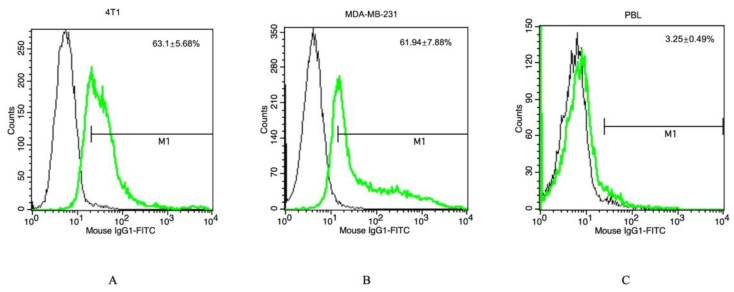
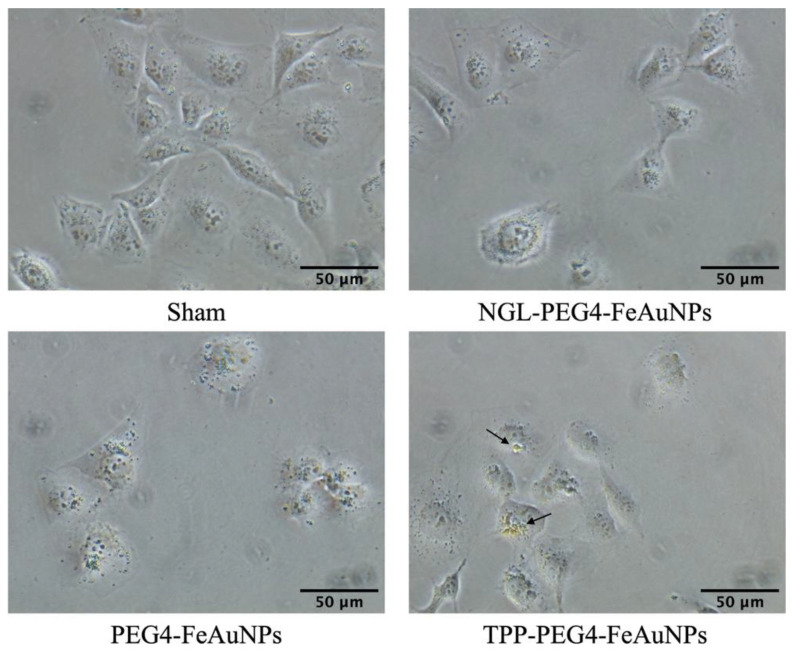
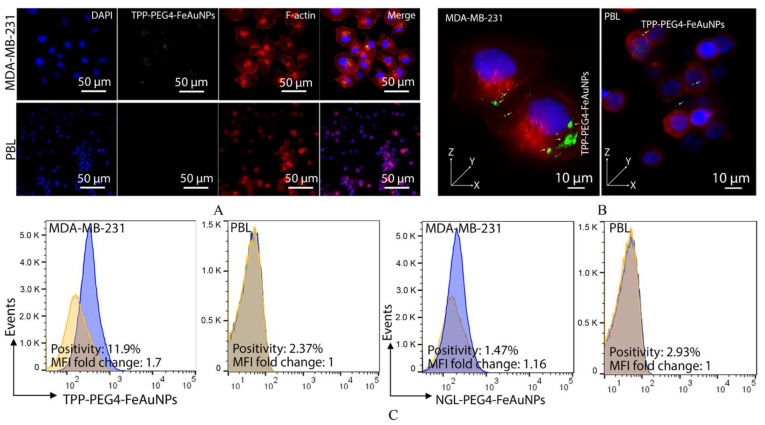
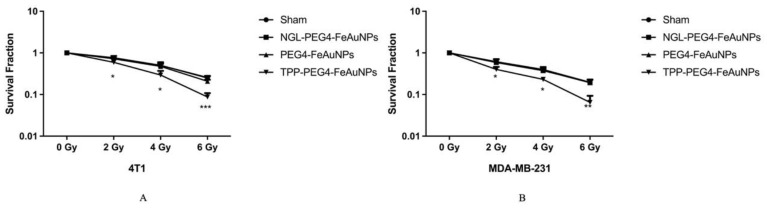
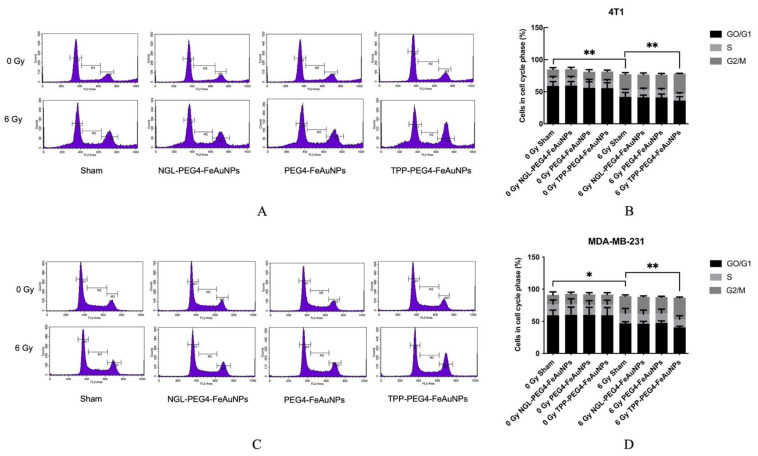
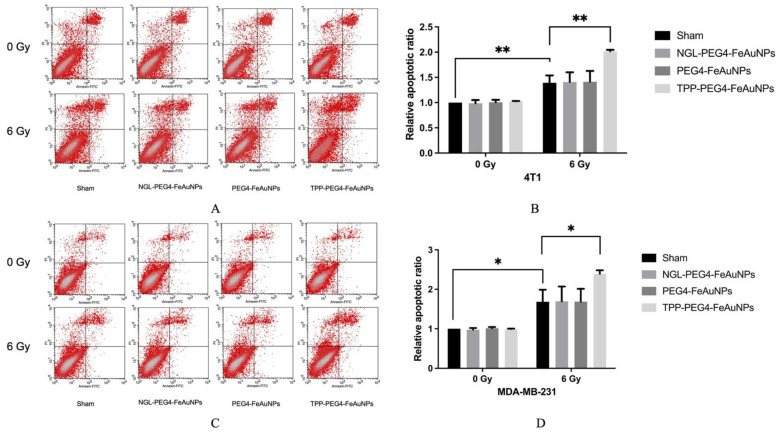
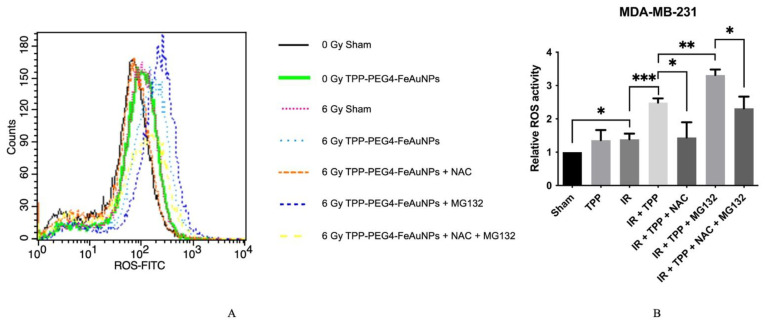
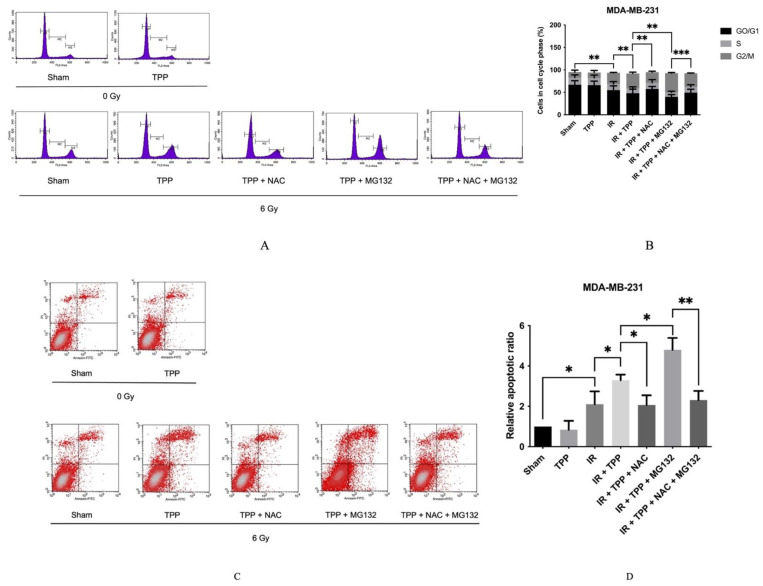
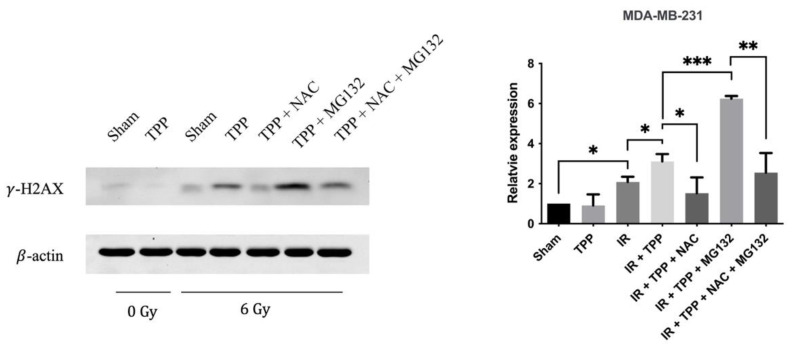
Triple-negative breast cancer (TNBC) a highly aggressive tumor entity with an unfavorable prognosis, is treated by multimodal therapies, including ionizing radiation (IR). Radiation-resistant tumor cells, as well as induced normal tissue toxicity, contribute to the poor clinical outcome of the disease. In this study, we investigated the potential of novel hybrid iron oxide (Fe3O4)-gold (Au) nanoparticles (FeAuNPs) functionalized with the heat shock protein 70 (Hsp70) tumor-penetrating peptide (TPP) and coupled via a PEG4 linker (TPP-PEG4-FeAuNPs) to improve tumor targeting and uptake of NPs and to break radioresistance in TNBC cell lines 4T1 and MDA-MB-231. Hsp70 is overexpressed in the cytosol and abundantly presented on the cell membrane (mHsp70) of highly aggressive tumor cells, including TNBCs, but not on corresponding normal cells, thus providing a tumor-specific target. The Fe3O4 core of the NPs can serve as a contrast agent enabling magnetic resonance imaging (MRI) of the tumor, and the nanogold shell radiosensitizes tumor cells by the release of secondary electrons (Auger electrons) upon X-ray irradiation. We demonstrated that the accumulation of TPP-PEG4-FeAuNPs into mHsp70-positive TNBC cells was superior to that of non-conjugated FeAuNPs and FeAuNPs functionalized with a non-specific, scrambled peptide (NGL). After a 24 h co-incubation period of 4T1 and MDA-MB-231 cells with TPP-PEG4-FeAuNPs, but not with control hybrid NPs, ionizing irradiation (IR) causes a cell cycle arrest at G2/M and induces DNA double-strand breaks, thus triggering apoptotic cell death. Since the radiosensitizing effect was completely abolished in the presence of the ROS inhibitor N-acetyl-L-cysteine (NAC), we assume that the TPP-PEG4-FeAuNP-induced apoptosis is mediated via an increased production of ROS.
Overview
The claims and statistics of this paper haven’t been checked yet.
Free: it reads the open-access text and checks the first 5 claims that cite a source we can check. Create a free account to check every claim.
Integrity signals
Registry
Cites
Statistics
Figures
Verification
Claims the paper makes
The claims and statistics of this paper haven’t been checked yet.
Free: it reads the open-access text and checks the first 5 claims that cite a source we can check. Create a free account to check every claim.
Claims other papers make about this one
Each is checked against this paper’s own text: does it say what the citing paper says it does?
The cited source says what the claim attributes to it.
In the citing paper
“Hybrid and integrated nanoplatforms were widely reported, integrating multiple components within a single system. These platforms included metal–organic frameworks, organosilica nanoparticles, and composite structures combining metallic cores with catalytic, magnetic, or imaging elements [17,37,38,39,40,41].”
From Nanoparticle-Mediated Radiosensitization in Breast Cancer: A Systematic Review of Preclinical Evidence and Translational Challenges (2026) · cites this paper as [38]
Self-check
Percentages, sums and reported differences re-computed from the paper’s own numbers.
The self-check needs the paper’s full text.
Citations
Cites
Sung, H., Ferlay, J., Siegel, R. L., Laversanne, M., Soerjomataram, I., Jemal, A., & Bray, F. (2021) · CA: A Cancer Journal for Clinicians · doi:10.3322/caac.21660 · Cited by 108,699
Triple-negative breast cancer molecular subtyping and treatment progress
Yin, L., Duan, J.-J., Bian, X.-W., & Yu, S.-C. (2020) · Breast Cancer Research · doi:10.1186/s13058-020-01296-5 · Cited by 2,452 · cited 1×
“The lack of targetable receptors makes TNBC insensitive to molecular and endocrine therapies [6].”
BackgroundSacituzumab Govitecan in Metastatic Triple-Negative Breast Cancer
Bardia, A., Hurvitz, S. A., Tolaney, S. M., Loirat, D., Punie, K., Oliveira, M., Brufsky, A., Sardesai, S. D., Kalinsky, K., Zelnak, A. B., et al. (2021) · New England Journal of Medicine · doi:10.1056/nejmoa2028485 · Cited by 1,711
The use of gold nanoparticles to enhance radiotherapy in mice
Hainfeld, J. F., Slatkin, D. N., & Smilowitz, H. M. (2004) · Physics in Medicine and Biology · doi:10.1088/0031-9155/49/18/n03 · Cited by 1,638 · cited 3×
“clearance capacity via the kidneys [49].”
BackgroundMitochondrial electron transport chain, ROS generation and uncoupling (Review)
Zhao, R., Jiang, S., Zhang, L., & Yu, Z. (2019) · International Journal of Molecular Medicine · doi:10.3892/ijmm.2019.4188 · Cited by 1,386 · cited 1×
“Endogenous ROS are continuously generated along the mitochondria electron transport chain [65].”
BackgroundSetsukinai, K.-I., Urano, Y., Kakinuma, K., Majima, H. J., & Nagano, T. (2003) · Journal of Biological Chemistry · doi:10.1074/jbc.m209264200 · Cited by 1,301 · cited 1×
“DCFDA/H2DCFDA does not detect specific types of ROS, but is a general indicator of ROS such as superoxide, hydrogen peroxide, and others [73].”
BackgroundLin, N. U., Claus, E., Sohl, J., Razzak, A. R., Arnaout, A., & Winer, E. P. (2008) · Cancer · doi:10.1002/cncr.23930 · Cited by 727
Role of cell cycle on the cellular uptake and dilution of nanoparticles in a cell population
Kim, J. A., Åberg, C., Salvati, A., & Dawson, K. A. (2012) · Nature Nanotechnology · doi:10.1038/nnano.2011.191 · Cited by 655 · cited 1×
“The G2/M arrest increased the efficiency of internalization of NPs [61] and nuclear uptake [62].”
BackgroundAuger electrons for cancer therapy – a review
Ku, A., Facca, V. J., Cai, Z., & Reilly, R. M. (2019) · EJNMMI Radiopharmacy and Chemistry · doi:10.1186/s41181-019-0075-2 · Cited by 643 · cited 1×
“The low energy of Auger electrons induces a high linear energy transfer (LET) over short distances (nm range) and thereby causes DNA double-strand breaks followed by lethal damage to tumor cells [18].”
BackgroundLi, X., Yang, J., Peng, L., Sahin, A. A., Huo, L., Ward, K. C., O’Regan, R., Torres, M. A., & Meisel, J. L. (2017) · Breast Cancer Research and Treatment · doi:10.1007/s10549-016-4059-6 · Cited by 540 · cited 1×
“Compared to other breast cancer types in the same T/N/M stage, the overall survival in patients with TNBC is significantly lower [3].”
BackgroundMulthoff, G., Botzler, C., Wiesnet, M., Müller, E., Meier, T., Wilmanns, W., & Issels, R. D. (1995) · International Journal of Cancer · doi:10.1002/ijc.2910610222 · Cited by 432 · cited 2×
“Previously, our lab demonstrated that the PET tracer TPP-PEG24-DFO [89Zr], which is based on the Hsp70targeting TPP peptide, binds with a high specificity and selectivity to mHsp70-positive tumor cells [13].”
BackgroundSelf-citationGold nanoparticles enhance the radiation therapy of a murine squamous cell carcinoma
Hainfeld, J. F., Dilmanian, F. A., Zhong, Z., Slatkin, D. N., Kalef-Ezra, J. A., & Smilowitz, H. M. (2010) · Physics in Medicine and Biology · doi:10.1088/0031-9155/55/11/004 · Cited by 370 · cited 2×
“squamous cell carcinoma [48] and mammary carcinoma [49] in mice and showed a high”
BackgroundROS inhibitor N-acetyl-L-cysteine antagonizes the activity of proteasome inhibitors
Halasi, M., Wang, M., Chavan, T. S., Gaponenko, V., Hay, N., & Gartel, A. L. (2013) · Biochemical Journal · doi:10.1042/bj20130282 · Cited by 366 · cited 1×
“Direct binding of MG132 to NAC can reverse the anti-ROS activity of NAC [39].”
BackgroundRadiobiologic principles in radionuclide therapy.
Kassis, A. I., & Adelstein, S. J. (2005) · PubMed · Cited by 353
Evan, G. I., Brown, L., Whyte, M., & Harrington, E. (1995) · Current Opinion in Cell Biology · doi:10.1016/0955-0674(95)80066-2 · Cited by 336 · cited 1×
“The G2/M cell cycle arrest is related to cell apoptosis [63].”
BackgroundUltrasmall gold nanoparticles in cancer diagnosis and therapy
Fan, M., Han, Y., Gao, S., Yan, H., Cao, L., Li, Z., Liang, X.-J., & Zhang, J. (2020) · Theranostics · doi:10.7150/thno.42471 · Cited by 277 · cited 1×
“A previous study indicated that small-sized NPs more effectively penetrate the nucleus [55].”
BackgroundNanoparticle radio-enhancement: principles, progress and application to cancer treatment
Kuncic, Z., & Lacombe, S. (2018) · Physics in Medicine & Biology · doi:10.1088/1361-6560/aa99ce · Cited by 236
Deng, J., Xu, S., Hu, W., Xun, X., Zheng, L., & Su, M. (2018) · Biomaterials · doi:10.1016/j.biomaterials.2017.10.048 · Cited by 234 · cited 1×
“To reduce radiation-induced normal tissue toxicity, especially in the lung and in the heart [41,42], ionizing irradiation has been combined with high Z metal-based nanoparticle therapies [43].”
BackgroundBareche, Y., Buisseret, L., Gruosso, T., Girard, E., Venet, D., Dupont, F., Desmedt, C., Larsimont, D., Park, M., Rothé, F., et al. (2020) · JNCI: Journal of the National Cancer Institute · doi:10.1093/jnci/djz208 · Cited by 215 · cited 1×
“Triplenegative breast cancer (TNBC) a special subtype compromising 10–20% of all breast cancers which does not express estrogen receptors (ER), progesterone receptors (PR), or human epidermal growth factor receptor 2 (HER2) [2].”
BackgroundTargeting membrane heat-shock protein 70 (Hsp70) on tumors by cmHsp70.1 antibody
Stangl, S., Gehrmann, M., Riegger, J., Kuhs, K., Riederer, I., Sievert, W., Hube, K., Mocikat, R., Dressel, R., Kremmer, E., et al. (2011) · Proceedings of the National Academy of Sciences · doi:10.1073/pnas.1016065108 · Cited by 202 · cited 3×
“The fast turn-over rate of mHsp70 [15] promoted the specific uptake of FeAuNPs by TNBC cells.”
BackgroundSelf-citationHolo-lactoferrin: the link between ferroptosis and radiotherapy in triple-negative breast cancer
Zhang, Z., Lu, M., Chen, C., Tong, X., Li, Y., Yang, K., Lv, H., Xu, J., & Qin, L. (2021) · Theranostics · doi:10.7150/thno.52028 · Cited by 191 · cited 1×
“Irradiation can induce ROS production in multiple cancer cell types [68,69].”
BackgroundPark (2009) · Oncology Reports · doi:10.3892/or_00000427 · Cited by 175 · cited 1×
“In our study, we used both NAC, an important antioxidant [71], and MG132, a proteasome inhibitor, to support the degradation of contents involved in the antioxidant defense system [72] and to explore radiation-induced oxidative stress in TNBC cells.”
MethodBhagat, S., Srikanth Vallabani, N. V., Shutthanandan, V., Bowden, M., Karakoti, A. S., & Singh, S. (2018) · Journal of Colloid and Interface Science · doi:10.1016/j.jcis.2017.11.064 · Cited by 163
Wang, F., Wang, L., Qu, C., Chen, L., Geng, Y., Cheng, C., Yu, S., Wang, D., Yang, L., Meng, Z., et al. (2021) · BMC Cancer · doi:10.1186/s12885-021-08158-z · Cited by 153 · cited 1×
“They involved in many important signaling pathways, including cell cycle arrest and apoptosis [66,67].”
BackgroundSelf-citationRadiotherapy in triple-negative breast cancer: Current situation and upcoming strategies
He, M. Y., Rancoule, C., Rehailia-Blanchard, A., Espenel, S., Trone, J.-C., Bernichon, E., Guillaume, E., Vallard, A., & Magné, N. (2018) · Critical Reviews in Oncology/Hematology · doi:10.1016/j.critrevonc.2018.09.004 · Cited by 151 · cited 2×
“However, side effects caused by radiation-induced off-target toxicity reduce its clinical efficacy [7].”
BackgroundWeng, Y., Wang, H., Li, L., Feng, Y., Xu, S., & Wang, Z. (2020) · Redox Biology · doi:10.1016/j.redox.2020.101849 · Cited by 123 · cited 1×
“This may alter the type and amount of highly reactive molecules, including ROS [17,27], involved in many important signaling pathways [28,29] which support the induction of DNA double-strand breaks [30].”
BackgroundYuan, L.-Q., Wang, C., Lu, D.-F., Zhao, X.-D., Tan, L.-H., & Chen, X. (2020) · Aging · doi:10.18632/aging.102836 · Cited by 118 · cited 1×
“This may alter the type and amount of highly reactive molecules, including ROS [17,27], involved in many important signaling pathways [28,29] which support the induction of DNA double-strand breaks [30].”
BackgroundMagnetite-Gold nanohybrids as ideal all-in-one platforms for theranostics
Efremova, M. V., Naumenko, V., Spasova, M., Garanina, A. S., Abakumov, M. A., Blokhina, A. D., Melnikov, P., Prelovskaya, A. O., Heidelmann, M., Li, Z., et al. (2018) · Scientific Reports · doi:10.1038/s41598-018-29618-w · Cited by 116 · cited 1×
“Fe3O4-Au hybrid nanoparticles are presently the best-studied, since the Fe3O4 core plays a key role as an MRI contrast-enhancing agent and the gold shell can exert radiosensitizing activities via secondary Auger electrons [50].”
BackgroundVilchis-Juárez, A., Ferro‐Flores, G., Santos‐Cuevas, C., Morales-Ávila, E., Ocampo‐García, B., Díaz, L., Luna‐Gutiérrez, M., Jiménez‐Mancilla, N., Pedraza-López, M., & Gómez‐Oliván, L. M. (2013) · Journal of Biomedical Nanotechnology · doi:10.1166/jbn.2014.1721 · Cited by 103
Chen, R., Sun, Y., Huo, B., Mao, Z., Wang, X., Li, S., Lu, R., Li, S., Liang, J. L., & Gao, Z. (2021) · Analytica Chimica Acta · doi:10.1016/j.aca.2021.338888 · Cited by 88
Qin, X., Yang, C., Xu, H., Zhang, R., Zhang, D., Tu, J., Guo, Y., Niu, B., Kong, L., & Zhang, Z. (2021) · Small · doi:10.1002/smll.202103984 · Cited by 85 · cited 2×
“Qin, biogenetic gold nanoparticles (Au@MC38) resulted in ROS generation and DNA damage after irradiation [33].”
BackgroundROS-induced cell cycle arrest as a mechanism of resistance in polyaneuploid cancer cells (PACCs)
Kuczler, M. D., Olseen, A. M., Pienta, K. J., & Amend, S. R. (2021) · Progress in Biophysics and Molecular Biology · doi:10.1016/j.pbiomolbio.2021.05.002 · Cited by 83 · cited 1×
“They involved in many important signaling pathways, including cell cycle arrest and apoptosis [66,67].”
BackgroundPolyethylene Glycol Modification: Relevance of Improved Methodology to Tumour Targeting
Francis, G. E., Delgado, C., Fisher, D., Malik, F., & Agrawal, A. K. (1996) · Journal of Drug Targeting · doi:10.3109/10611869608996824 · Cited by 81 · cited 1×
“The PEG chain can avoid self-aggregation of the peptide TPP [35,54].”
BackgroundStangl, S., Tontcheva, N., Sievert, W., Shevtsov, M. A., Niu, M., Schmid, T. E., Pigorsch, S. U., Combs, S. E., Haller, B., Balermpas, P., et al. (2017) · International Journal of Cancer · doi:10.1002/ijc.31213 · Cited by 69 · cited 1×
“A high level of Hsp70 expression in the cytosol and on the plasma membrane positively correlates with the aggressiveness of a tumor [13,14].”
BackgroundSelf-citationGehrmann, M., Specht, H. M., Bayer, C., Brandstetter, M., Chizzali, B., Duma, M. N., Breuninger, S., Hube, K., Lehnerer, S., Van, V. D. P., et al. (2014) · Radiation Oncology · doi:10.1186/1748-717x-9-131 · Cited by 68 · cited 1×
“Interestingly, following therapeutic interventions such as radiochemotherapy, the mHsp70 expression is further up-regulated on many different tumor cell types, but not on normal tissues [16].”
BackgroundSelf-citationOei, A. L., Korangath, P. C., Mulka, K. R., Helenius, M., Coulter, J. B., Stewart, J., Velarde, E., Crezee, J., Simons, B. W., Stalpers, L. J. A., et al. (2019) · International Journal of Hyperthermia · doi:10.1080/02656736.2019.1685686 · Cited by 61
Ngwa, W., Makrigiorgos, G. M., & Berbeco, R. I. (2011) · Medical Physics · doi:10.1118/1.3671905 · Cited by 59 · cited 1×
“In vivo, the Fe3O4 core of the NPs serves as a contrast agent, improving magnetic resonance imaging (MRI) of the tumor [25], and the Au shell has the capacity to radiosensitize tumor cells via the release of secondary Auger electrons upon X-ray irradiation [26].”
BackgroundNK Cells Armed with Chimeric Antigen Receptors (CAR): Roadblocks to Successful Development
Dezfouli, A. B., Yazdi, M., Pockley, A. G., Khosravi, M., Kobold, S., Wagner, E., & Multhoff, G. (2021) · Cells · doi:10.3390/cells10123390 · Cited by 58
Self-citationIn vivo imaging of CT26 mouse tumours by using cmHsp70.1 monoclonal antibody
Stangl, S., Gehrmann, M., Dressel, R., Alves, F., Dullin, C., Themelis, G., Ntziachristos, V., Staeblein, E., Walch, A. K., Winkelmann, I., et al. (2010) · Journal of Cellular and Molecular Medicine · doi:10.1111/j.1582-4934.2010.01067.x · Cited by 58 · cited 1×
“1 antibody [56] and TPP [34], into the cytoplasm of mHsp70-positive tumor cells.”
BackgroundSelf-citationWeidle, U. H., Maisel, D., Klostermann, S., Schiller, C., & Weiss, E. H. (2011) · PubMed · Cited by 52
Stangl, S., Tei, L., Rose, F. D., Reder, S., Martinelli, J., Sievert, W., Shevtsov, M. A., Öllinger, R., Rad, R., Schwaiger, M., et al. (2018) · Cancer Research · doi:10.1158/0008-5472.can-18-0707 · Cited by 51 · cited 4×
“Because the sequence mimics properties of the Hsp70 oligomerization domain, TPP shows a strong self-aggregation capacity [34].”
BackgroundSelf-citationSears, J. J., Swanner, J. L., Fahrenholtz, C. D., Snyder, C. M., Rohde, M. M., Levi‐Polyachenko, N. H., & Singh, R. N. (2021) · International Journal of Nanomedicine · doi:10.2147/ijn.s296513 · Cited by 47
Kang, N., Xu, D., Han, Y., Lv, X., Chen, Z., Zhou, T., Ren, L., & Zhou, X. (2019) · Materials Science and Engineering C · doi:10.1016/j.msec.2019.01.013 · Cited by 44 · cited 1×
“In vivo, the Fe3O4 core of the NPs serves as a contrast agent, improving magnetic resonance imaging (MRI) of the tumor [25], and the Au shell has the capacity to radiosensitize tumor cells via the release of secondary Auger electrons upon X-ray irradiation [26].”
BackgroundGold Nanoparticle Mediated Multi-Modal CT Imaging of Hsp70 Membrane-Positive Tumors
Kimm, M. A., Shevtsov, M. A., Werner, C., Sievert, W., Wu, Z., Schoppe, O., Menze, B. H., Rummeny, E. J., Proksa, R., Bystrova, O. A., et al. (2020) · Cancers · doi:10.3390/cancers12051331 · Cited by 44 · cited 3×
“1 antibody functionalized AuNPs significantly enriched inside tumor cells both in vitro and in vivo [12].”
BackgroundSelf-citationMasoudi-Khoram, N., Abdolmaleki, P., Hosseinkhan, N., Nikoofar, A., Mowla, S. J., Monfared, H., & Baldassarre, G. (2020) · Scientific Reports · doi:10.1038/s41598-020-65680-z · Cited by 44
Li, L., Sun, W. Y., Zhang, Z., & Huang, Y. (2016) · Journal of Controlled Release · doi:10.1016/j.jconrel.2016.04.021 · Cited by 40 · cited 1×
“The G2/M arrest increased the efficiency of internalization of NPs [61] and nuclear uptake [62].”
BackgroundLi, Q., & Zhao, Z. (2019) · BMC Pharmacology and Toxicology · doi:10.1186/s40360-019-0323-9 · Cited by 38 · cited 1×
“In our study, we used both NAC, an important antioxidant [71], and MG132, a proteasome inhibitor, to support the degradation of contents involved in the antioxidant defense system [72] and to explore radiation-induced oxidative stress in TNBC cells.”
MethodLiu, J., Liu, Q., Han, J., Feng, J., Guo, T., Li, Z., Min, F., Jin, R., & Peng, X. (2021) · Toxins · doi:10.3390/toxins13090595 · Cited by 37
Designing PEGylated therapeutic molecules: advantages in ADMET properties
Hamidi, M., Rafiei, P., & Azadi, A. (2008) · Expert Opinion on Drug Discovery · doi:10.1517/17460441.3.11.1293 · Cited by 36 · cited 2×
“To avoid self-aggregation of the peptide TPP and to improve its stability, a 4-mer PEG chain was implemented into the targeting formulation [35].”
BackgroundMethodIodine nanoparticle radiotherapy of human breast cancer growing in the brains of athymic mice
Hainfeld, J. F., Ridwan, S. M., Stanishevskiy, F. Y., & Smilowitz, H. M. (2020) · Scientific Reports · doi:10.1038/s41598-020-72268-0 · Cited by 36
ROS Reduction Does Not Decrease the Anticancer Efficacy of X-Ray in Two Breast Cancer Cell Lines
Wang, H., & Zhang, X. (2019) · Oxidative Medicine and Cellular Longevity · doi:10.1155/2019/3782074 · Cited by 36 · cited 1×
“Wang, NAC was shown to block ROS in MDA-MB-231 cells, but did not decrease the anticancer efficacy of X-ray irradiation [74].”
BackgroundLu, Y., Huang, J., Li, F., Wang, Y., Ding, M., Zhang, J., Yin, H. X., Zhang, R., & Ren, X. (2021) · Magnetic Resonance Materials in Physics Biology and Medicine · doi:10.1007/s10334-021-00916-1 · Cited by 33 · cited 2×
“cells [51], peptide [52] and antibody [53] functionalized nanoparticles showed a high af-”
BackgroundDNA Strand Break Properties of Protoporphyrin IX by X-ray Irradiation against Melanoma
Hasegawa, T., Takahashi, J., Nagasawa, S., Doi, M., Moriyama, A., & Iwahashi, H. (2020) · International Journal of Molecular Sciences · doi:10.3390/ijms21072302 · Cited by 32 · cited 1×
“Irradiation can induce ROS production in multiple cancer cell types [68,69].”
BackgroundGlutamine synthetase facilitates cancer cells to recover from irradiation-induced G2/M arrest
Peng, Y., Fu, S., Hu, W., Qiu, Y., Zhang, L., Tan, R., & Sun, L. (2019) · Cancer Biology & Therapy · doi:10.1080/15384047.2019.1665394 · Cited by 32 · cited 1×
“The G2/M checkpoint is crucial for eukaryotic cells to prevent cell mitosis in cells with damaged DNA [59].”
BackgroundNuclear-targeted gold nanoparticles enhance cancer cell radiosensitization
Özçelik, S., & Pratx, G. (2020) · Nanotechnology · doi:10.1088/1361-6528/aba02b · Cited by 28 · cited 1×
“AuNPs in close proximity to the nuclei of tumor cells significantly enhance their radiosensitivity [57].”
BackgroundCAR T Cells Targeting Membrane-Bound Hsp70 on Tumor Cells Mimic Hsp70-Primed NK Cells
Dezfouli, A. B., Yazdi, M., Benmebarek, M.-R., Schwab, M., Michaelides, S., Micciché, A., Geerts, D., Stangl, S., Klapproth, S., Wagner, E., et al. (2022) · Frontiers in Immunology · doi:10.3389/fimmu.2022.883694 · Cited by 28
Self-citationMitochondria-targeted antioxidant protects against irradiation-induced salivary gland hypofunction
Liu, X., Subedi, K. P., Zheng, C., & Ambudkar, I. S. (2021) · Scientific Reports · doi:10.1038/s41598-021-86927-3 · Cited by 27
Wen, K., Han, S., & Vyas, Y. M. (2019) · Journal of Allergy and Clinical Immunology · doi:10.1016/j.jaci.2019.09.026 · Cited by 25 · cited 1×
“It is well known that ionizing irradiation causes DNA double-strand breaks [40].”
BackgroundXu, Y., Ji, Y., Li, X., Ding, J., Chen, L., Huang, Y., & Wei, W. (2021) · International Journal of Biological Sciences · doi:10.7150/ijbs.55689 · Cited by 24 · cited 1×
“Previous studies have shown that IR alone induces ROS production, leading to oxidative stress and DNA damage [31,32].”
BackgroundROS-induced dramatic lipid changes in Arabidopsis
Jin, T., Wang, X., Deng, Z., Liu, X., & Liang, D. (2021) · Redox Report · doi:10.1080/13510002.2021.2002001 · Cited by 24 · cited 1×
“This may alter the type and amount of highly reactive molecules, including ROS [17,27], involved in many important signaling pathways [28,29] which support the induction of DNA double-strand breaks [30].”
BackgroundFacile Preparation of Gold-Decorated Fe3O4 Nanoparticles for CT and MR Dual-Modal Imaging
Cai, J., Miao, Y., Li, L., & Fan, H. M. (2018) · International Journal of Molecular Sciences · doi:10.3390/ijms19124049 · Cited by 24
Bhattarai, S., Mackeyev, Y., Venkatesulu, B. P., Krishnan, S., & Singh, P. K. (2021) · Nanoscale · doi:10.1039/d1nr05385j · Cited by 22
Profiling DNA Damage Induced by the Irradiation of DNA with Gold Nanoparticles
Huwaidi, A., Kumari, B., Robert, G., Guérin, B., Sanche, L., & Wagner, J. R. (2021) · The Journal of Physical Chemistry Letters · doi:10.1021/acs.jpclett.1c02598 · Cited by 22 · cited 2×
“It is well established that AuNPs can exert radiosensitizing activities on tumor cells via secondary Auger electrons [17].”
BackgroundHan, Y. H., Yang, Y. M., Kim, S. Z., & Park, W. H. (2010) · PubMed · Cited by 22
HSP-Target of Therapeutic Agents in Sepsis Treatment
Vulczak, A., Catalão, C. H. R., de Freitas, L. A. P., & Rocha, M. J. A. (2019) · International Journal of Molecular Sciences · doi:10.3390/ijms20174255 · Cited by 20 · cited 1×
“These include Hsp40, Hsp60, Hsp70, Hsp90 and Hsp110 [11], and the synthesis of other proteins in general is down-regulated.”
BackgroundMicrodosimetry of X-ray-irradiated gold nanoparticles
Garnica‐Garza, H. M. (2012) · Radiation Protection Dosimetry · doi:10.1093/rpd/ncs278 · Cited by 19
Marteinsdóttir, M., Wang, C., McNamara, A. L., Depauw, N., Shin, J., & Paganetti, H. (2020) · Physics in Medicine and Biology · doi:10.1088/1361-6560/abd230 · Cited by 19 · cited 2×
“To reduce radiation-induced normal tissue toxicity, especially in the lung and in the heart [41,42], ionizing irradiation has been combined with high Z metal-based nanoparti-”
BackgroundDurand, M., Lelièvre, E., Chateau, A., Berquand, A., Laurent, G., Carl, P., Roux, S., Chazée, L., Bazzi, R., Eghiaian, F., et al. (2021) · Nanoscale · doi:10.1039/d0nr08936b · Cited by 17
Predictive Factors Increasing the Risk of Radiation Toxicity in Patients with Early Breast Cancer
Abdeltawab, A. A., Ali, S. A. E.-F., Mostafa, H., & Hassan, M. (2021) · Asian Pacific Journal of Cancer Prevention · doi:10.31557/apjcp.2021.22.1.145 · Cited by 16 · cited 2×
“To reduce radiation-induced normal tissue toxicity, especially in the lung and in the heart [41,42], ionizing irradiation has been combined with high Z metal-based nanoparti-”
BackgroundYalçın, Y., Tekin, İ. Ö., & Aydın, R. S. T. (2022) · Biochemical and Biophysical Research Communications · doi:10.1016/j.bbrc.2022.05.030 · Cited by 14 · cited 2×
“High ROS levels are closely related to irradiation-induced DNA double-strand breaks [32].”
BackgroundEnhancement of Radiotherapy with Human Mesenchymal Stem Cells Containing Gold Nanoparticles
Pullambhatla, M., Rowe, S. P., Lisok, A., Wang, Y., Todd, G. P., Danilkovitch, A., & Pomper, M. G. (2020) · Tomography · doi:10.18383/j.tom.2020.00026 · Cited by 10 · cited 2×
“cells [51], peptide [52] and antibody [53] functionalized nanoparticles showed a high af-”
BackgroundDrug-free macromolecular therapeutics exhibit amplified apoptosis in G2/M phase arrested cells
Li, L., Yang, J., Wang, J., & Kopec̆ek, J. (2018) · Journal of drug targeting · doi:10.1080/1061186x.2018.1521414 · Cited by 9 · cited 1×
“In G2/M phase, the anti-apoptotic Bcl-2 protein is phosphorylated [64].”
BackgroundGold-Silver and Gold-Palladium Alloy Nanoparticles as Mass-Probes for Immunosensing
Akasaka, M., Nishi, T., & Niidome, Y. (2021) · Analytical Sciences · doi:10.2116/analsci.21n001 · Cited by 6
The Effect of PEI-Mediated E1A on the Radiosensitivity of Hepatic Carcinoma Cells
Xu, D., Yao, J., Zhang, Y., Xiao, N., Peng, P., Li, Z., Pan, Z., & Yao, Z. (2020) · Asian Pacific Journal of Cancer Prevention · doi:10.31557/apjcp.2020.21.4.911 · Cited by 4 · cited 1×
“It is well accepted that irradiation can cause a cell cycle arrest at the G2/M checkpoint [36].”
Background
Cited by
A Review of in vivo Toxicity of Quantum Dots in Animal Models
Lin, X., & Chen, T. (2023) · International Journal of Nanomedicine · doi:10.2147/ijn.s434842 · Cited by 127
“232 Pasquali et al showed that QDs enter the cell by regulating several key nuclear genes, such as TOM5 and FSKI, resulting in an increase in the level of intracellular ROS, a decrease in the ratio of reduced vs oxidized glutathione (GSH/GSSG), a decrease in oxygen consumption, an impact on the…”
BackgroundLapusan, R., Borlan, R., & Focşan, M. (2024) · Nanoscale Advances · doi:10.1039/d3na01064c · Cited by 137
Shestovskaya, M. V., Luss, A. L., Si, B., Makarov, V. V., & Keskinov, A. A. (2023) · Pharmaceutics · doi:10.3390/pharmaceutics15102406 · Cited by 60
Mal, S., Chakraborty, S., Mahapatra, M., Pakeeraiah, K., Das, S., Paidesetty, S. K., & Roy, P. (2024) · Nanoscale Advances · doi:10.1039/d3na00988b · Cited by 57
Hu, B., Liu, G., Zhao, K., & Zhang, G. (2024) · Frontiers in Oncology · doi:10.3389/fonc.2024.1388999 · Cited by 43
Metadata
- Authors
- Wu, Z., Stangl, S., Hernandez-Schnelzer, A., Wang, F., Hasanzadeh Kafshgari, M., Bashiri Dezfouli, A., & Multhoff, G.
- Affiliations
- TUM Klinikum (DE)
- Central Institute for Translational Cancer Research (TranslaTUM), Radiation Immuno Oncology Group, Klinikum Rechts der Isar der Technischen Universität München, 81675 Munich, Germany
- Heinz-Nixdorf-Chair of Biomedical Electronics, TranslaTUM, Klinikum Rechts der Isar, Technische Universität München, 81675 Munich, Germany
- Corresponding author
- Multhoff, Gabriele
- Venue
- Cancers
- Publisher
- MDPI AG
- Published
- 2023-02-11
- Volume
- 15
- Issue
- 4
- Pages
- 1167
- ISSN
- 2072-6694 (ISSN-L)
- PMC
- PMC9954378
- OpenAlex
- W4320494162
- Cited by
- 24
- References
- 76
- Citations by year
- 2026: 4 · 2025: 8 · 2024: 6 · 2023: 6
- FWCI
- 4.42
- Type
- journal article
- Language
- en
- Open access
- gold
- doi.org
- Licence
- Locations
- Cancers (publishedVersion, cc-by)
- PubMed Central (publishedVersion, cc-by)
- PubMed (publishedVersion)
- mediaTUM – the media and publications repository of the Technical University Munich (Technical University Munich) (submittedVersion, other-oa)
- mediaTUM (Technical University of Munich) (submittedVersion)
- Funders
- China Scholarship Council (201908320415, KU3500/2-1, INST411/37-1FU66, STA1520/1-1, 02NUK064A)
- DFG (201908320415, KU3500/2-1, INST411/37-1FU66, STA1520/1-1, 02NUK064A)
- BMBF (201908320415, KU3500/2-1, INST411/37-1FU66, STA1520/1-1, 02NUK064A)
- Topics
- Physical Sciences › Physics and Astronomy › Radiation › Radiation Therapy and Dosimetry
- Physical Sciences › Engineering › Biomedical Engineering › Nanoplatforms for cancer theranostics
- Physical Sciences › Materials Science › Biomaterials › Nanoparticle-Based Drug Delivery
- Keywords
- triple-negative breast cancer, HSP70, tumor-penetrating peptide, radiosensitization, radioresistance (biology), reactive oxygen species, apoptosis, Auger electrons, MRI contrast agents, PEGylation, 4T1 cells, MDA-MB-231 cells, DNA double-strand breaks, G2/M cell cycle arrest, N-acetylcysteine
About these checks
Registry, retraction, Cites and statistics results are computed, not judged, with one exception: a printed reference that no index lists is read once by a model before it counts as a citation error. Claims are extracted by a model and kept only when their quote appears verbatim in the text; each cited source is then checked, with a model’s help, for whether it says what the claim relies on. Those verdicts can be wrong — read the claim’s quote and the cited source before relying on one.
Statistics and arithmetic are recomputed, not judged.
Confidence bands are shown only for fields calibrated on our annotated test set. None is calibrated yet, so no band is shown.
What counts as a claim ›How we measure confidence ›How we check this ›
Are you an author, or do you see a problem with this page? Request a review
Data sources
Bibliographic data: Semantic Scholar, OpenAlex, Crossref.
Contains information from the Semantic Scholar Academic Graph Datasets, made available under the ODC Attribution License (ODC-BY 1.0).
Semantic Scholar’s data is described in: Kinney, R., et al. (2023). The Semantic Scholar Open Data Platform. arXiv:2301.10140.
