

Functionalized Hybrid Iron Oxide–Gold Nanoparticles Targeting Membrane Hsp70 Radiosensitize Triple-Negative Breast Cancer Cells by ROS-Mediated Apoptosis
Open accessThe DOI matches its Crossref record; 74 of the 76 references it cites were found in a registry or an index.
Abstract
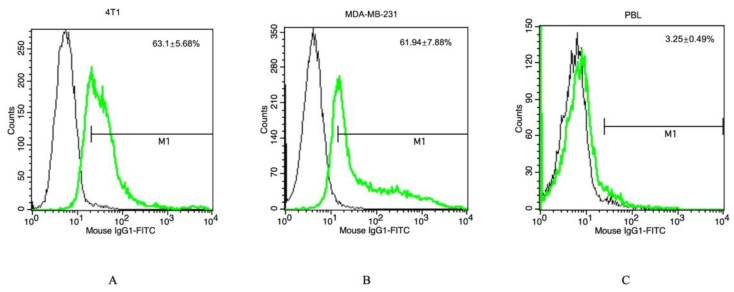
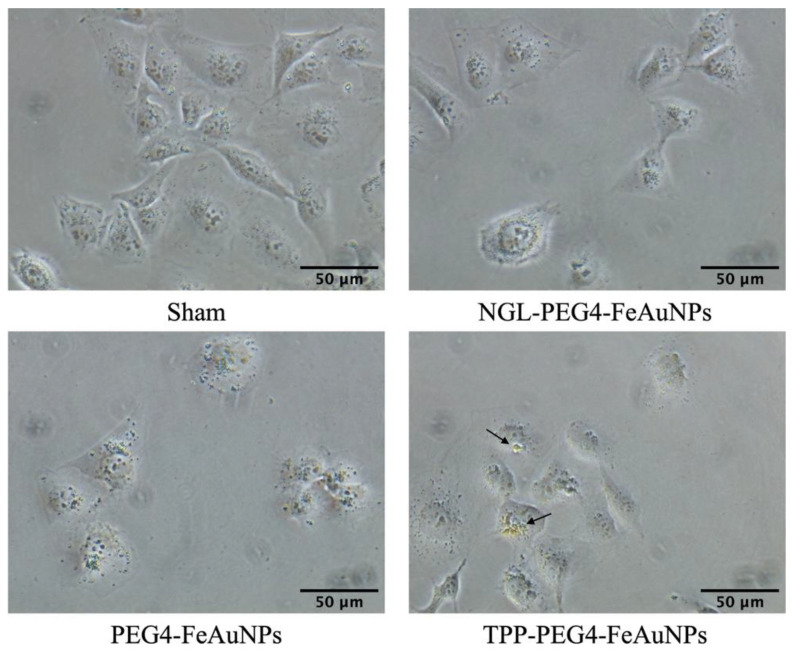
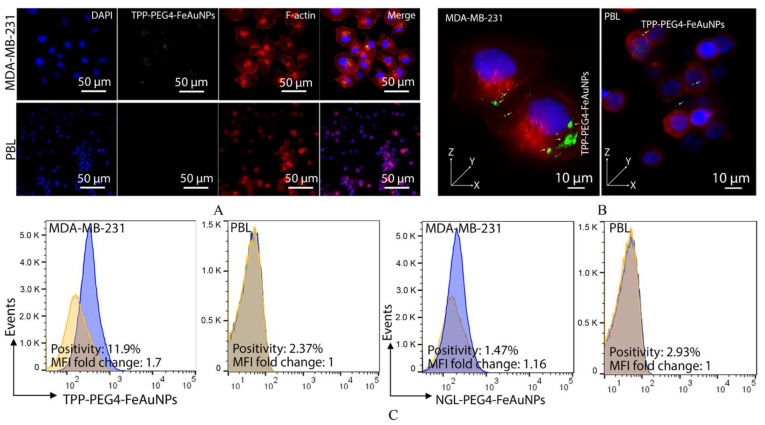
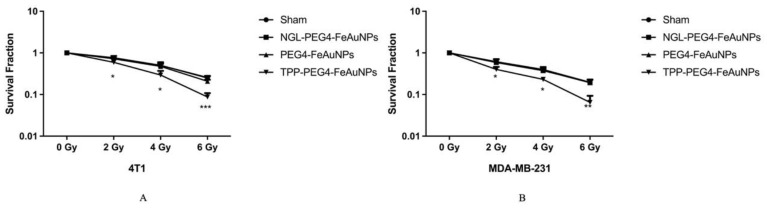
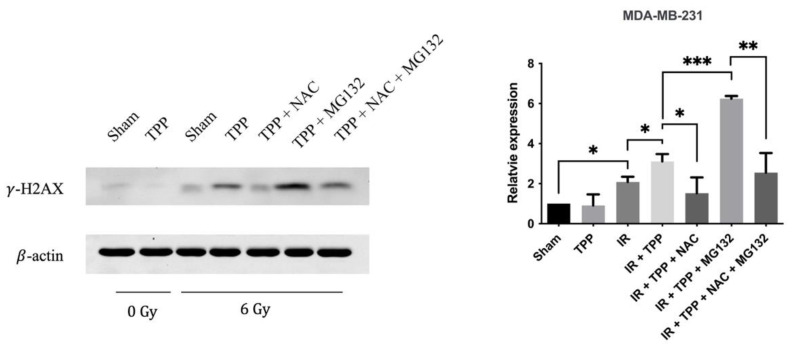
Triple-negative breast cancer (TNBC) a highly aggressive tumor entity with an unfavorable prognosis, is treated by multimodal therapies, including ionizing radiation (IR). Radiation-resistant tumor cells, as well as induced normal tissue toxicity, contribute to the poor clinical outcome of the disease. In this study, we investigated the potential of novel hybrid iron oxide (Fe3O4)-gold (Au) nanoparticles (FeAuNPs) functionalized with the heat shock protein 70 (Hsp70) tumor-penetrating peptide (TPP) and coupled via a PEG4 linker (TPP-PEG4-FeAuNPs) to improve tumor targeting and uptake of NPs and to break radioresistance in TNBC cell lines 4T1 and MDA-MB-231. Hsp70 is overexpressed in the cytosol and abundantly presented on the cell membrane (mHsp70) of highly aggressive tumor cells, including TNBCs, but not on corresponding normal cells, thus providing a tumor-specific target. The Fe3O4 core of the NPs can serve as a contrast agent enabling magnetic resonance imaging (MRI) of the tumor, and the nanogold shell radiosensitizes tumor cells by the release of secondary electrons (Auger electrons) upon X-ray irradiation. We demonstrated that the accumulation of TPP-PEG4-FeAuNPs into mHsp70-positive TNBC cells was superior to that of non-conjugated FeAuNPs and FeAuNPs functionalized with a non-specific, scrambled peptide (NGL). After a 24 h co-incubation period of 4T1 and MDA-MB-231 cells with TPP-PEG4-FeAuNPs, but not with control hybrid NPs, ionizing irradiation (IR) causes a cell cycle arrest at G2/M and induces DNA double-strand breaks, thus triggering apoptotic cell death. Since the radiosensitizing effect was completely abolished in the presence of the ROS inhibitor N-acetyl-L-cysteine (NAC), we assume that the TPP-PEG4-FeAuNP-induced apoptosis is mediated via an increased production of ROS.
Overview
The claims and statistics of this paper haven’t been checked yet.
Free: it reads the open-access text and checks the first 5 claims that cite a source we can check. Create a free account to check every claim.
Integrity signals
Registry
Cites
Statistics
Figures
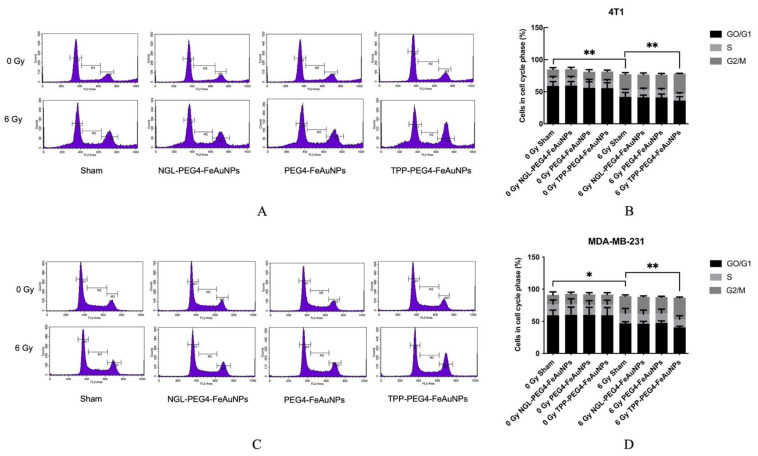
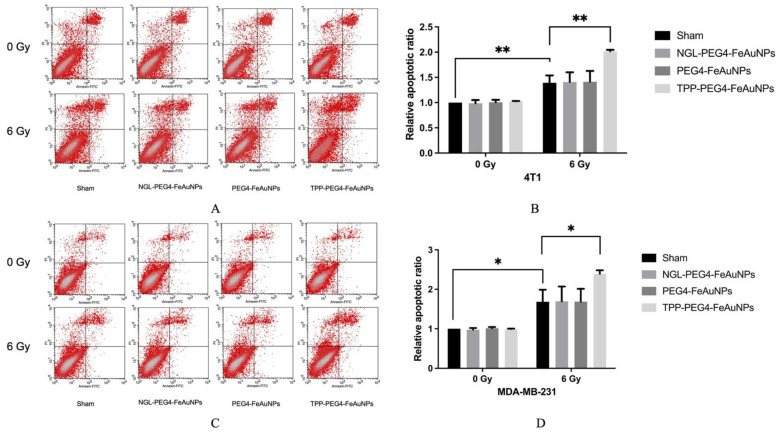
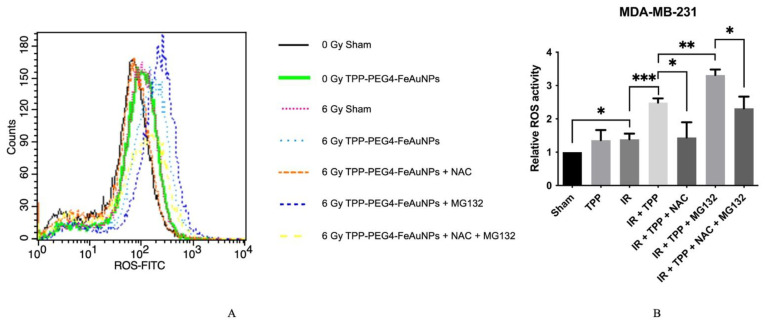
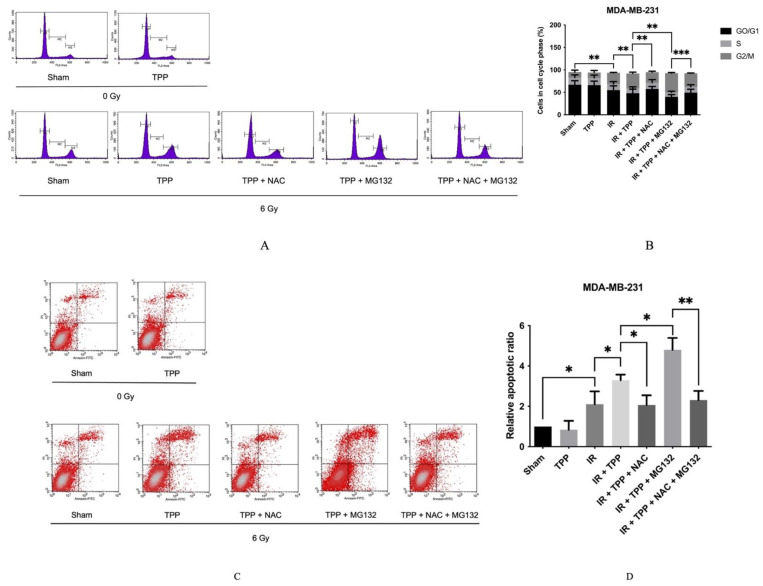
Verification
Claims the paper makes
The claims and statistics of this paper haven’t been checked yet.
Free: it reads the open-access text and checks the first 5 claims that cite a source we can check. Create a free account to check every claim.
Claims other papers make about this one
Each is checked against this paper’s own text: does it say what the citing paper says it does?
The cited source says what the claim attributes to it.
In the citing paper
“Hybrid and integrated nanoplatforms were widely reported, integrating multiple components within a single system. These platforms included metal–organic frameworks, organosilica nanoparticles, and composite structures combining metallic cores with catalytic, magnetic, or imaging elements [17,37,38,39,40,41].”
From Nanoparticle-Mediated Radiosensitization in Breast Cancer: A Systematic Review of Preclinical Evidence and Translational Challenges (2026) · cites this paper as [38]
Self-check
Percentages, sums and reported differences re-computed from the paper’s own numbers.
The self-check needs the paper’s full text.
Citations
Cites
Sung, H., Ferlay, J., Siegel, R. L., Laversanne, M., Soerjomataram, I., Jemal, A., & Bray, F. (2021) · CA: A Cancer Journal for Clinicians · doi:10.3322/caac.21660 · Cited by 108,699
Triple-negative breast cancer molecular subtyping and treatment progress
Yin, L., Duan, J.-J., Bian, X.-W., & Yu, S.-C. (2020) · Breast Cancer Research · doi:10.1186/s13058-020-01296-5 · Cited by 2,452 · cited 1×
“The lack of targetable receptors makes TNBC insensitive to molecular and endocrine therapies [6].”
BackgroundSacituzumab Govitecan in Metastatic Triple-Negative Breast Cancer
Bardia, A., Hurvitz, S. A., Tolaney, S. M., Loirat, D., Punie, K., Oliveira, M., Brufsky, A., Sardesai, S. D., Kalinsky, K., Zelnak, A. B., et al. (2021) · New England Journal of Medicine · doi:10.1056/nejmoa2028485 · Cited by 1,711
The use of gold nanoparticles to enhance radiotherapy in mice
Hainfeld, J. F., Slatkin, D. N., & Smilowitz, H. M. (2004) · Physics in Medicine and Biology · doi:10.1088/0031-9155/49/18/n03 · Cited by 1,638 · cited 3×
“clearance capacity via the kidneys [49].”
BackgroundMitochondrial electron transport chain, ROS generation and uncoupling (Review)
Zhao, R., Jiang, S., Zhang, L., & Yu, Z. (2019) · International Journal of Molecular Medicine · doi:10.3892/ijmm.2019.4188 · Cited by 1,386 · cited 1×
“Endogenous ROS are continuously generated along the mitochondria electron transport chain [65].”
BackgroundSetsukinai, K.-I., Urano, Y., Kakinuma, K., Majima, H. J., & Nagano, T. (2003) · Journal of Biological Chemistry · doi:10.1074/jbc.m209264200 · Cited by 1,301 · cited 1×
“DCFDA/H2DCFDA does not detect specific types of ROS, but is a general indicator of ROS such as superoxide, hydrogen peroxide, and others [73].”
BackgroundLin, N. U., Claus, E., Sohl, J., Razzak, A. R., Arnaout, A., & Winer, E. P. (2008) · Cancer · doi:10.1002/cncr.23930 · Cited by 727
Role of cell cycle on the cellular uptake and dilution of nanoparticles in a cell population
Kim, J. A., Åberg, C., Salvati, A., & Dawson, K. A. (2012) · Nature Nanotechnology · doi:10.1038/nnano.2011.191 · Cited by 655 · cited 1×
“The G2/M arrest increased the efficiency of internalization of NPs [61] and nuclear uptake [62].”
BackgroundAuger electrons for cancer therapy – a review
Ku, A., Facca, V. J., Cai, Z., & Reilly, R. M. (2019) · EJNMMI Radiopharmacy and Chemistry · doi:10.1186/s41181-019-0075-2 · Cited by 643 · cited 1×
“The low energy of Auger electrons induces a high linear energy transfer (LET) over short distances (nm range) and thereby causes DNA double-strand breaks followed by lethal damage to tumor cells [18].”
BackgroundLi, X., Yang, J., Peng, L., Sahin, A. A., Huo, L., Ward, K. C., O’Regan, R., Torres, M. A., & Meisel, J. L. (2017) · Breast Cancer Research and Treatment · doi:10.1007/s10549-016-4059-6 · Cited by 540 · cited 1×
“Compared to other breast cancer types in the same T/N/M stage, the overall survival in patients with TNBC is significantly lower [3].”
Background
Cited by
A Review of in vivo Toxicity of Quantum Dots in Animal Models
Lin, X., & Chen, T. (2023) · International Journal of Nanomedicine · doi:10.2147/ijn.s434842 · Cited by 127
“232 Pasquali et al showed that QDs enter the cell by regulating several key nuclear genes, such as TOM5 and FSKI, resulting in an increase in the level of intracellular ROS, a decrease in the ratio of reduced vs oxidized glutathione (GSH/GSSG), a decrease in oxygen consumption, an impact on the…”
BackgroundLapusan, R., Borlan, R., & Focşan, M. (2024) · Nanoscale Advances · doi:10.1039/d3na01064c · Cited by 137
Shestovskaya, M. V., Luss, A. L., Si, B., Makarov, V. V., & Keskinov, A. A. (2023) · Pharmaceutics · doi:10.3390/pharmaceutics15102406 · Cited by 60
Mal, S., Chakraborty, S., Mahapatra, M., Pakeeraiah, K., Das, S., Paidesetty, S. K., & Roy, P. (2024) · Nanoscale Advances · doi:10.1039/d3na00988b · Cited by 57
Hu, B., Liu, G., Zhao, K., & Zhang, G. (2024) · Frontiers in Oncology · doi:10.3389/fonc.2024.1388999 · Cited by 43
Metadata
- Authors
- Wu, Z., Stangl, S., Hernandez-Schnelzer, A., Wang, F., Hasanzadeh Kafshgari, M., Bashiri Dezfouli, A., & Multhoff, G.
- Affiliations
- TUM Klinikum (DE)
- Central Institute for Translational Cancer Research (TranslaTUM), Radiation Immuno Oncology Group, Klinikum Rechts der Isar der Technischen Universität München, 81675 Munich, Germany
- Heinz-Nixdorf-Chair of Biomedical Electronics, TranslaTUM, Klinikum Rechts der Isar, Technische Universität München, 81675 Munich, Germany
- Corresponding author
- Multhoff, Gabriele
- Venue
- Cancers
- Publisher
- MDPI AG
- Published
- 2023-02-11
- Volume
- 15
- Issue
- 4
- Pages
- 1167
- ISSN
- 2072-6694 (ISSN-L)
- PMC
- PMC9954378
- OpenAlex
- W4320494162
- Cited by
- 24
- References
- 76
- Citations by year
- 2026: 4 · 2025: 8 · 2024: 6 · 2023: 6
- FWCI
- 4.42
- Type
- journal article
- Language
- en
- Open access
- gold
- doi.org
- Licence
- Locations
- Cancers (publishedVersion, cc-by)
- PubMed Central (publishedVersion, cc-by)
- PubMed (publishedVersion)
- mediaTUM – the media and publications repository of the Technical University Munich (Technical University Munich) (submittedVersion, other-oa)
- mediaTUM (Technical University of Munich) (submittedVersion)
- Funders
- China Scholarship Council (201908320415, KU3500/2-1, INST411/37-1FU66, STA1520/1-1, 02NUK064A)
- DFG (201908320415, KU3500/2-1, INST411/37-1FU66, STA1520/1-1, 02NUK064A)
- BMBF (201908320415, KU3500/2-1, INST411/37-1FU66, STA1520/1-1, 02NUK064A)
- Topics
- Physical Sciences › Physics and Astronomy › Radiation › Radiation Therapy and Dosimetry
- Physical Sciences › Engineering › Biomedical Engineering › Nanoplatforms for cancer theranostics
- Physical Sciences › Materials Science › Biomaterials › Nanoparticle-Based Drug Delivery
- Keywords
- triple-negative breast cancer, HSP70, tumor-penetrating peptide, radiosensitization, radioresistance (biology), reactive oxygen species, apoptosis, Auger electrons, MRI contrast agents, PEGylation, 4T1 cells, MDA-MB-231 cells, DNA double-strand breaks, G2/M cell cycle arrest, N-acetylcysteine
About these checks
Registry, retraction, Cites and statistics results are computed, not judged, with one exception: a printed reference that no index lists is read once by a model before it counts as a citation error. Claims are extracted by a model and kept only when their quote appears verbatim in the text; each cited source is then checked, with a model’s help, for whether it says what the claim relies on. Those verdicts can be wrong — read the claim’s quote and the cited source before relying on one.
Statistics and arithmetic are recomputed, not judged.
Confidence bands are shown only for fields calibrated on our annotated test set. None is calibrated yet, so no band is shown.
What counts as a claim ›How we measure confidence ›How we check this ›
Are you an author, or do you see a problem with this page? Request a review
Data sources
Bibliographic data: Semantic Scholar, OpenAlex, Crossref.
Contains information from the Semantic Scholar Academic Graph Datasets, made available under the ODC Attribution License (ODC-BY 1.0).
Semantic Scholar’s data is described in: Kinney, R., et al. (2023). The Semantic Scholar Open Data Platform. arXiv:2301.10140.
