

Enhancing Triage Efficiency and Accuracy in Emergency Rooms for Patients with Metastatic Prostate Cancer: A Retrospective Analysis of Artificial Intelligence-Assisted Triage Using ChatGPT 4.0
Open accessThe DOI matches its Crossref record; 29 of the 29 references it cites were found in a registry or an index.
Abstract
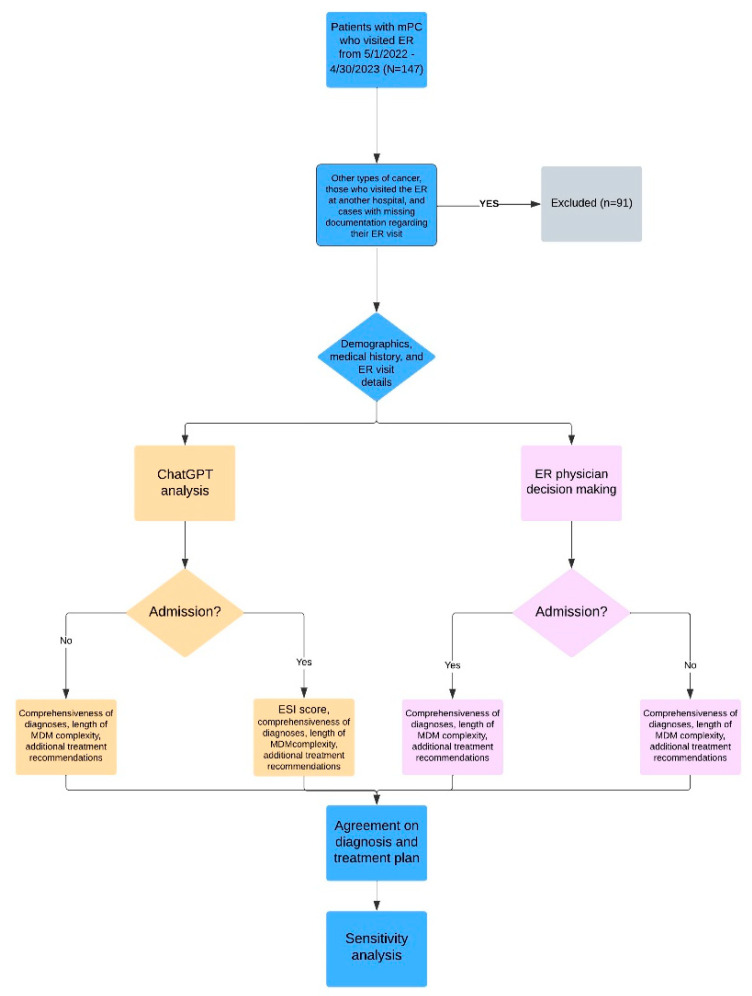
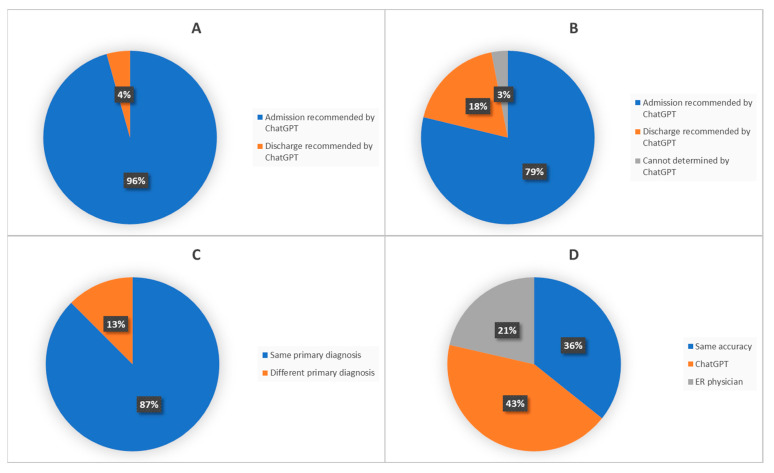
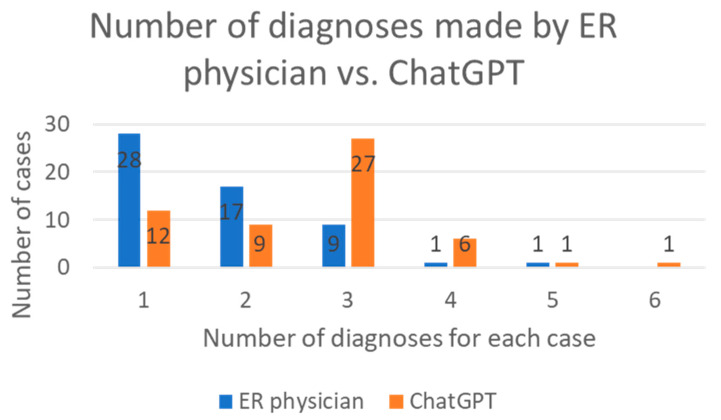
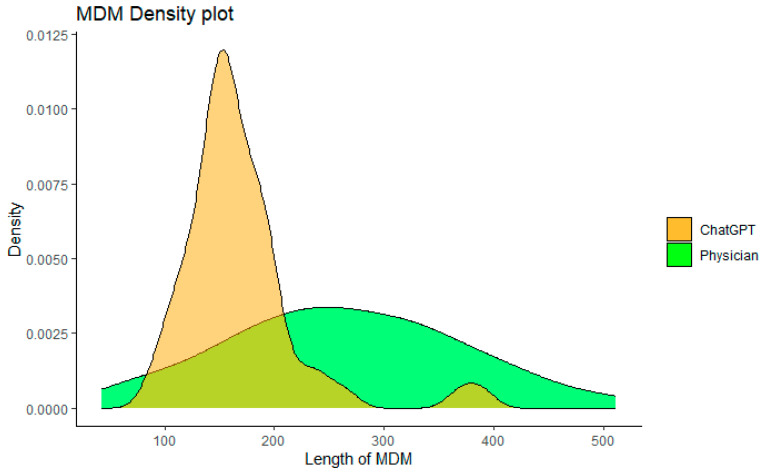
Background: Accurate and efficient triage is crucial for prioritizing care and managing resources in emergency rooms. This study investigates the effectiveness of ChatGPT, an advanced artificial intelligence system, in assisting health providers with decision-making for patients presenting with metastatic prostate cancer, focusing on the potential to improve both patient outcomes and resource allocation. Methods: Clinical data from patients with metastatic prostate cancer who presented to the emergency room between 1 May 2022 and 30 April 2023 were retrospectively collected. The primary outcome was the sensitivity and specificity of ChatGPT in determining whether a patient required admission or discharge. The secondary outcomes included the agreement between ChatGPT and emergency medicine physicians, the comprehensiveness of diagnoses, the accuracy of treatment plans proposed by both parties, and the length of medical decision making. Results: Of the 147 patients screened, 56 met the inclusion criteria. ChatGPT had a sensitivity of 95.7% in determining admission and a specificity of 18.2% in discharging patients. In 87.5% of cases, ChatGPT made the same primary diagnoses as physicians, with more accurate terminology use (42.9% vs. 21.4%, p = 0.02) and more comprehensive diagnostic lists (median number of diagnoses: 3 vs. 2, p < 0.001). Emergency Severity Index scores calculated by ChatGPT were not associated with admission (p = 0.12), hospital stay length (p = 0.91) or ICU admission (p = 0.54). Despite shorter mean word count (169 ± 66 vs. 272 ± 105, p < 0.001), ChatGPT was more likely to give additional treatment recommendations than physicians (94.3% vs. 73.5%, p < 0.001). Conclusions: Our hypothesis-generating data demonstrated that ChatGPT is associated with a high sensitivity in determining the admission of patients with metastatic prostate cancer in the emergency room. It also provides accurate and comprehensive diagnoses. These findings suggest that ChatGPT has the potential to assist health providers in improving patient triage in emergency settings, and may enhance both efficiency and quality of care provided by the physicians.
Overview
The claims and statistics of this paper haven’t been checked yet.
Free: it reads the open-access text and checks the first 5 claims that cite a source we can check. Create a free account to check every claim.
Integrity signals
Registry
Cites
Statistics
Figures
Verification
Claims the paper makes
The claims and statistics of this paper haven’t been checked yet.
Free: it reads the open-access text and checks the first 5 claims that cite a source we can check. Create a free account to check every claim.
Claims other papers make about this one
Each is checked against this paper’s own text: does it say what the citing paper says it does?
The source backs part of the claim, not all of it — or backs it for a different population, condition or comparison.
In the citing paper
“ChatGPT can significantly impact the diagnosis of diseases by improving accuracy, speed and efficiency of decision-making procedures [4].”
From Is there any room for ChatGPT AI bot in speech-language pathology? (2025) · cites this paper as [4]
Experimental — accuracy not yet measured
Self-check
Percentages, sums and reported differences re-computed from the paper’s own numbers.
The self-check needs the paper’s full text.
Citations
Cites
Siegel, R. L., Miller, K. D., Wagle, N. S., & Jemal, A. (2023) · CA: A Cancer Journal for Clinicians · doi:10.3322/caac.21763 · Cited by 16,303
Dermatologist-level classification of skin cancer with deep neural networks
Esteva, A., Kuprel, B., Novoa, R. A., Ko, J., Swetter, S. M., Blau, H. M., & Thrun, S. (2017) · Nature · doi:10.1038/nature21056 · Cited by 14,362 · cited 1×
“markable performance in medical image analysis, including the detection and classification of cancerous lesions [16].”
BackgroundHigh-performance medicine: the convergence of human and artificial intelligence
Topol, E. J. (2019) · Nature Medicine · doi:10.1038/s41591-018-0300-7 · Cited by 10,450
Rajkomar, A., Dean, J., & Kohane, I. (2019) · New England Journal of Medicine · doi:10.1056/nejmra1814259 · Cited by 4,579 · cited 1×
“NLP techniques enable the extraction of meaningful information from clinical text, such as electronic health records and medical literature, to support decision-making [17].”
BackgroundPredicting the future - big data, machine learning, and clinical medicine
Obermeyer, Z., & Emanuel, E. J. (2016) · New England Journal of Medicine · doi:10.1056/nejmp1606181 · Cited by 3,652 · cited 1×
“AI algorithms can analyze vast amounts of data rapidly and accurately, providing valuable assistance to healthcare professionals in making critical decisions [6].”
BackgroundSallam, M. (2023) · Healthcare · doi:10.3390/healthcare11060887 · Cited by 3,126 · cited 1×
“Hallucinations pose significant problems, including erosion of user trust, ethical issues, potential negative impact on decision-making, and possible legal implications [26].”
BackgroundBenefits, Limits, and Risks of GPT-4 as an AI Chatbot for Medicine
Lee, P., Bubeck, S., & Petro, J. (2023) · New England Journal of Medicine · doi:10.1056/nejmsr2214184 · Cited by 1,738
Artificial hallucinations in ChatGPT: implications in scientific writing
Alkaissi, H., & McFarlane, S. I. (2023) · Cureus · doi:10.7759/cureus.35179 · Cited by 1,540 · cited 1×
“Hallucination in AI, specifically in models like ChatGPT, refers to the generation of outputs that seem plausible but are factually incorrect or unrelated to the input context [25].”
BackgroundPrivacy in the age of medical big data
Price, W. N., & Cohen, I. G. (2019) · Nature Medicine · doi:10.1038/s41591-018-0272-7 · Cited by 1,522 · cited 2×
“First, it is crucial to continue developing and validating accurate AI models that are specifically designed for medical purposes, ensuring their effectiveness, reliability, and compliance with regulatory guidelines such as HIPAA [30].”
BackgroundArtificial Intelligence and Machine Learning in Clinical Medicine, 2023
Haug, C. J., & Drazen, J. M. (2023) · New England Journal of Medicine · doi:10.1056/nejmra2302038 · Cited by 1,215
Cited by
Large Language Models for Chatbot Health Advice Studies: A Systematic Review
Huo, B., Boyle, A., Marfo, N., Tangamornsuksan, W., Steen, J. P., McKechnie, T., Lee, Y., Mayol, J., Antoniou, S. A., Thirunavukarasu, A. J., et al. (2025) · JAMA Network Open · doi:10.1001/jamanetworkopen.2024.57879 · Cited by 283
Takita, H., Kabata, D., Walston, S. L., Tatekawa, H., Saito, K., Tsujimoto, Y., Miki, Y., & Ueda, D. (2025) · npj Digital Medicine · doi:10.1038/s41746-025-01543-z · Cited by 203
The Role of Large Language Models in Transforming Emergency Medicine: Scoping Review
Preiksaitis, C., Ashenburg, N., Bunney, G., Chu, A., Kabeer, R., Riley, F., Ribeira, R., & Rose, C. (2024) · JMIR Medical Informatics · doi:10.2196/53787 · Cited by 134
“Several studies centered on predicting outcomes such as presentation to the ED, hospitalization, intensive care unit admission, or in-hospital cardiac arrest [25,33,35,57].”
BackgroundKhan, N., Khan, Z., Koubaa, A., Khan, M. K., & Salleh, R. B. (2024) · Connection Science · doi:10.1080/09540091.2024.2353630 · Cited by 97
Clinical and Surgical Applications of Large Language Models: A Systematic Review
Pressman, S. M., Borna, S., Gomez-Cabello, C. A., Haider, S. A., Haider, C. R., & Forte, A. J. (2024) · Journal of Clinical Medicine · doi:10.3390/jcm13113041 · Cited by 107
“Therefore, efforts to develop HIPAA-compliant LLMs should be prioritized [32].”
BackgroundInfluentialPaslı, S., Şahin, A. S., Beşer, M. F., Topçuoğlu, H., Yadigaroğlu, M., & İmamoğlu, M. (2024) · The American Journal of Emergency Medicine · doi:10.1016/j.ajem.2024.01.037 · Cited by 96
Large language model use in clinical oncology
Carl, N., Schramm, F., Haggenmüller, S., Kather, J. N., Hetz, M. J., Wies, C., Michel, M. S., Wessels, F., & Brinker, T. J. (2024) · npj Precision Oncology · doi:10.1038/s41698-024-00733-4 · Cited by 80
“…explored the prompting of medical questions and analysing the output of the LLMs ( medical knowledge , 32/34) 14 – 45 , while a (14/34) 16,18,19,22,28,29,31,32,34,36,37,39,45,46 as well as treatment recommendations (30/34) 14 Testing the encoded medical knowledge of LLMs This section…”
BackgroundThe Potential Applications and Challenges of ChatGPT in the Medical Field
Mu, Y., & He, D. (2024) · International Journal of General Medicine · doi:10.2147/ijgm.s456659 · Cited by 78
“16 The analysis revealed that ChatGPT had a sensitivity of 95.7% in identifying patients suitable for admission and a specificity of 18.2% in identifying patients who could be safely discharged.”
BackgroundInfluentialGlicksberg, B. S., Timsina, P., Patel, D., Sawant, A., Vaid, A., Raut, G., Charney, A. W., Apakama, D., Carr, B. G., Freeman, R., et al. (2024) · Journal of the American Medical Informatics Association · doi:10.1093/jamia/ocae103 · Cited by 82
Large language model integrations in cancer decision-making: a systematic review and meta-analysis
Hao, Y., Qiu, Z., Holmes, J., Löckenhoff, C. E., Liu, W., Ghassemi, M., & Kalantari, S. (2025) · npj Digital Medicine · doi:10.1038/s41746-025-01824-7 · Cited by 67
Schmidl, B., Hütten, T., Pigorsch, S., Stögbauer, F., Hoch, C. C., Hussain, T., Wollenberg, B., & Wirth, M. (2024) · European Archives of Oto-Rhino-Laryngology · doi:10.1007/s00405-024-08828-1 · Cited by 61
“Still, several limitations including a lack of solid oncological training and validation, and a lack of tailoring the treat - ment to the patient’s specific needs [ 1 , 7 , 8 ] remain.”
BackgroundDu, X., Zhou, Z., Wang, Y., Chuang, Y.-W., Li, Y., Yang, R. C., Zhang, W., Wang, X., Chen, X., Guan, H., et al. (2026) · Journal of the American Medical Informatics Association · doi:10.1093/jamia/ocaf233 · Cited by 73
Mumtaz, U., Ahmed, A., & Mumtaz, S. (2024) · Artificial Intelligence in Health · doi:10.36922/aih.2558 · Cited by 60
“…and Liagn (2022) explored the use of GPT-3-generated text embeddings to predict dementia, utilizing data from the ADReSSo Challenge (Alzheimer’s Dementia Recognition through Spontaneous Speech only challenge [22] ), which focuses on identifying cognitive impairment through spontaneous speech [21] .”
BackgroundMethodInfluentialWang, Z., Zhang, Z., Traverso, A., Dekker, A., Qian, L., & Sun, P. (2024) · Quantitative Imaging in Medicine and Surgery · doi:10.21037/qims-23-1180 · Cited by 46
Kaboudi, N., Firouzbakht, S., Eftekhar, M. S., Fayazbakhsh, F., Joharivarnoosfaderani, N., Ghaderi, S., Dehdashti, M., Kia, Y. M., Afshari, M., Gharamaleki, M. V., et al. (2024) · medRxiv · doi:10.22037/aaem.v12i1.2384 · Cited by 61
“…(17, 18), one study examined cases needing neurosurgical attention (19), one study evaluated pre-hospital basic life support and pediatric advanced life support cases (20), two studies dealt with ophthalmic conditions (21, 22), and one study focused on metastatic prostate cancer patients (23).”
BackgroundMethodInfluentialFrosolini, A., Catarzi, L., Benedetti, S., Latini, L., Chisci, G., Franz, L., Gennaro, P., & Gabriele, G. (2024) · Diagnostics · doi:10.3390/diagnostics14080839 · Cited by 41
“Previous research has delved into the application of LLMs within Emergency Triage, with a particular emphasis on aspects such as triage scores, hospitalization rates, and estimations of critical illness [11,14–16].”
MethodKunze, K. N., Varady, N. H., Mazzucco, M. R., Lu, A. Z., Chahla, J. A., Martin, R. K., Ranawat, A. S., Pearle, A. D., & Williams, R. J. (2024) · Arthroscopy The Journal of Arthroscopic and Related Surgery · doi:10.1016/j.arthro.2024.06.021 · Cited by 42
Artificial intelligence across the cancer care continuum
Riaz, I. B., Khan, M. A., & Osterman, T. J. (2025) · Cancer · doi:10.1002/cncr.70050 · Cited by 40
Evaluating the Reliability of ChatGPT for Health-Related Questions: A Systematic Review
Beheshti, M., Toubal, I. E., Alaboud, K., Almalaysha, M., Ogundele, O. B., Turabieh, H., Abdalnabi, N., Boren, S. A., Scott, G. J., & Dahu, B. M. (2025) · Informatics · doi:10.3390/informatics12010009 · Cited by 47
Performance of large language models (LLMs) in providing prostate cancer information
Alasker, A., Alsalamah, S., Alshathri, N. N., Almansour, N., Alsalamah, F., Alghafees, M. A., Alkhamees, M. A., & Alsaikhan, B. H. (2024) · BMC Urology · doi:10.1186/s12894-024-01570-0 · Cited by 45
“[16] Last, similar to the previous domain, the screening and prevention domain also demonstrated ChatGPT-4 pre-eminence with no significant overall differences among the three LLMs.”
ResultScott, I. A., & Zuccon, G. (2024) · Internal Medicine Journal · doi:10.1111/imj.16393 · Cited by 39
Lim, B., Seth, I., Cuomo, R., Kenney, P. S., Ross, R. J., Sofiadellis, F., Pentangelo, P., Ceccaroni, A., Alfano, C., & Rozen, W. M. (2024) · Aesthetic Plastic Surgery · doi:10.1007/s00266-024-04157-0 · Cited by 38
Levin, C., Kagan, T., Rosen, S., & Saban, M. (2024) · International Journal of Nursing Studies · doi:10.1016/j.ijnurstu.2024.104771 · Cited by 34
Application of ChatGPT-Based Digital Human in Animation Creation
Lan, C., Wang, Y., Wang, C., Song, S., & Gong, Z. (2023) · Future Internet · doi:10.3390/fi15090300 · Cited by 35
“The application domains of ChatGPT are extensive and span across fields such as medical health [7,8], mathematical analysis [9], automotive industries [10], and education [11–13].”
BackgroundCao, J. J., Kwon, D. H., Ghaziani, T. T., Kwo, P., Tse, G., Kesselman, A., Kamaya, A., & Tse, J. R. (2024) · Abdominal Radiology · doi:10.1007/s00261-024-04501-7 · Cited by 28
“Clinicians could use ChatGPT to assess research quality and conduct literature review [11], generate case reports [12], and assist in diagnosis and triage [13].”
Moglia, A., Georgiou, K. E., Cerveri, P., Mainardi, L. T., Satava, R. M., & Cuschieri, A. (2024) · Artificial Intelligence Review · doi:10.1007/s10462-024-10849-5 · Cited by 31
Prediction of outcomes after cardiac arrest by a generative artificial intelligence model
Amacher, S. A., Arpagaus, A., Sahmer, C., Becker, C., Groß, S., Urben, T., Tisljar, K., Sutter, R., Marsch, S. C. U., & Hunziker, S. (2024) · Resuscitation Plus · doi:10.1016/j.resplu.2024.100587 · Cited by 27
Paslı, S., Yadigaroğlu, M., Kırımlı, E. N., Beşer, M. F., Unutmaz, İ., Ayhan, A. Ö., Karakurt, B., Şahin, A. S., Hiçyilmaz, H. İ., & İmamoğlu, M. (2025) · The American Journal of Emergency Medicine · doi:10.1016/j.ajem.2025.04.040 · Cited by 25
Park, C., An, M. H., Hwang, G., Park, R. W., & An, J. (2025) · JMIR Medical Informatics · doi:10.2196/68409 · Cited by 26
Abualruz, H., Yasin, I., Sabra, M. A. A., Abunab, H. Y., Azayzeh, R., Zubidi, Y., Emad, S., & Alriyati, B. (2025) · Applied Nursing Research · doi:10.1016/j.apnr.2025.152024 · Cited by 22
Park, Y.-E., & Chae, H. (2023) · Journal of Gastrointestinal Cancer · doi:10.1007/s12029-023-00967-8 · Cited by 21
“…healthcare providers with decision-making in the emergency room, focusing on patient with metastatic prostate cancer and concluded that ChatGPT has the potential to assist healthcare providers in enhancing patient triage and improving the efficiency and quality of care in emergency room [25].”
BackgroundVarady, N. H., Lu, A. Z., Mazzucco, M. R., Dines, J. S., Altchek, D. W., Williams, R. J., & Kunze, K. N. (2024) · Orthopaedic Journal of Sports Medicine · doi:10.1177/23259671241257516 · Cited by 20
“8,28 However, there is a paucity of data on musculoskeletal conditions to date, which represents a substantial proportion of the health care burden nationally and globally.”
BackgroundMa, M. D., Ye, C., Yan, Y., Wang, X., Ping, P., Chang, T. S., & Wang, W. (2024) · arXiv (Cornell University) · doi:10.48550/arxiv.2406.09923 · Cited by 25
Alsharawneh, A., Elshatarat, R. A., Alsulami, G. S., Alrabab’a, M. H., Al-Za'areer, M. S., Alhumaidi, B. N., Almagharbeh, W. T., niarat, T. F. A., Al‐Sayaghi, K. M., & Saleh, Z. T. (2025) · BMC Emergency Medicine · doi:10.1186/s12873-025-01191-2 · Cited by 18
Fatai, A., Sattayarom, C., Laochai, W., & Faksook, E. (2025) · International Emergency Nursing · doi:10.1016/j.ienj.2025.101680 · Cited by 17
Wang, X., & Liu, X.-Q. (2023) · World Journal of Clinical Cases · doi:10.12998/wjcc.v11.i32.7935 · Cited by 12
Is there any room for ChatGPT AI bot in speech-language pathology?
Birol, N. Y., Çiftci, H. B., Yılmaz, A., Çağlayan, A., & Alkan, F. (2025) · European Archives of Oto-Rhino-Laryngology · doi:10.1007/s00405-025-09295-y · Cited by 12
The applicability of artificial intelligence in managing emergency patients: An umbrella review.
Almagharbeh, W., Alharrasi, M., Rony, M. K. K., Kabir, S., Alrazeeni, D., & Akter, F. (2025) · International Emergency Nursing · doi:10.1016/j.ienj.2025.101710 · Cited by 10
Large language models for improving cancer diagnosis and management in primary health care settings
Andrew, A., & Tizzard, E. (2024) · Journal of Medicine Surgery and Public Health · doi:10.1016/j.glmedi.2024.100157 · Cited by 13
Generative artificial intelligence in oncology
Ganjavi, C., Melamed, S., Biedermann, B. M., Eppler, M., Rodler, S., Layne, E., Cei, F., Gill, I. S., & Cacciamani, G. E. (2025) · Current Opinion in Urology · doi:10.1097/mou.0000000000001272 · Cited by 12
Alsumait, A., Deshmukh, S., Wang, C., & Leffler, C. T. (2025) · Journal of Clinical Medicine · doi:10.3390/jcm14072395 · Cited by 9
“Recent studies have shown promising preliminary results for the use of GPT-4 in the triage and diagnosis of patients with metastatic prostate cancer presenting in the emergency room [9].”
Development and evaluation of large-language models (LLMs) for oncology: A scoping review
Mehan, N., Desinghe, T. D., & Saha, A. (2025) · PLOS Digital Health · doi:10.1371/journal.pdig.0000980 · Cited by 9
Alotaibi, S. S., Rehman, A., & Hasnain, M. (2023) · Frontiers in Public Health · doi:10.3389/fpubh.2023.1338215 · Cited by 8
ChatGPT utilization within the building blocks of the healthcare services: A mixed-methods study
Shojaei, P., Khosravi, M., Jafari, Y., Mahmoudi, A. H., & Hassanipourmahani, H. (2024) · Digital Health · doi:10.1177/20552076241297059 · Cited by 9
Artificial Intelligence: Fundamentals and Breakthrough Applications in Epilepsy
Kerr, W. T., Acosta, S., Kwan, P., Worrell, G. A., & Mikati, M. A. (2024) · Epiliepsy currents/Epilepsy currents · doi:10.1177/15357597241238526 · Cited by 6
“1,2 These and other AI approaches such as large language models, similarity graphs, and knowledge graphs can also aid in knowledge organization, integration, and hypothesis generation, as well as enhancing medical education and writing.”
Li, P. Y., Gershon, A. S., & Kouri, A. (2025) · CHEST Journal · doi:10.1016/j.chest.2025.11.034 · Cited by 7
Sanduleanu, S., Ersahin, K., Bremm, J., Talibova, N., Damer, T., Erdogan, M., Kottlors, J., Goertz, L., Bruns, C. J., Maintz, D. C., et al. (2024) · AI · doi:10.3390/ai5040096 · Cited by 6
“In the emergency department, another study [28] conducted an analysis to evaluate the effectiveness of ChatGPT in assisting healthcare providers with triage decisions for patients with metastatic prostate cancer in the emergency room.”
Swinburne, N., Jackson, C. B., Pagano, A., Stember, J. N., Schefflein, J., Marinelli, B. S., Panyam, P. K., Autz, A., Chopra, M. S., Holodny, A. I., et al. (2024) · Journal of Imaging Informatics in Medicine · doi:10.1007/s10278-024-01304-6 · Cited by 7
“…artificial intelligence (AI) models, such as large language models (LLMs) like OpenAI’s Generative Pre-trained Transformer (GPT), achieve exceptional performance across a wide array of applications [1], including improving patient care [2] and performing healthcare big data analysis [3].”
Comparison of triage performance among DRP tool, ChatGPT, and outpatient rehabilitation doctors
Zou, Y., Ye, R., Gao, Y., Zhou, J., Li, Y., Chen, W., Zha, F., & Wang, Y. (2025) · Scientific Reports · doi:10.1038/s41598-025-99216-0 · Cited by 5
“Considering the limitations of data latency and potential inaccuracy, ChatGPT is currently not capable of independently performing triage or making other medical decisions 44,45 .”
Effectiveness of ChatGPT 4.0 in Telemedicine-Based Management of Metastatic Prostate Carcinoma
Dal, E., Srivastava, A., Chigarira, B., Chehade, C. H., Thomas, V. M., Fortuna, G. G., Garg, D., Ji, R., Gebrael, G., Agarwal, N., et al. (2024) · Diagnostics · doi:10.3390/diagnostics14171899 · Cited by 5
“…considerable interest in assessing the performance of ChatGPT in managing complex medical conditions, including metastatic prostate carcinoma (mPC) [15], selected for its chronic nature and slow disease progression, and the need for nuanced, long-term care strategies, making it an ideal case for…”
BackgroundSelf-citationAn Evaluation on the Potential of Large Language Models for Use in Trauma Triage
Le, K., Chen, J., Mai, D., & Le, K. D. R. (2024) · Emergency Care and Medicine · doi:10.3390/ecm1040035 · Cited by 6
Areas of research focus and trends in the research on the application of AIGC in healthcare
Wang, C., Zhu, Y., Zhang, X., Chen, X., Li, Y., Tan, Y., & Qi, H. (2025) · Journal of Health Population and Nutrition · doi:10.1186/s41043-025-00947-7 · Cited by 6
“Research literature suggests that AIGC can provide accurate, comprehensive, and relevant diagnoses based on patient symptoms, medical history, and test results [77, 78], in line with the literature and current medical knowledge [79].”
Paediatric rare diseases: Can large language models assist off‐label prescribing?
Flamigni, A., Zamagni, G., Paternuosto, G., & Arbo, A. (2025) · British Journal of Clinical Pharmacology · doi:10.1002/bcp.70168 · Cited by 4
“27,33,34 Only references from fully accessible texts were considered, and duplicate references retrieved by the same LLM in the same search mode, even if obtained from different websites, were counted only once.”
Influentialdos Santos, M. L., & Victória, V. N. G. (2023) · Revista Brasileira de Medicina do Trabalho · doi:10.47626/1679-4435-2023-1241 · Cited by 6
Atalan, A., Keskin, A., & Özer, S. (2024) · International Journal of Healthcare Management · doi:10.1080/20479700.2024.2444102 · Cited by 4
“ChatGPT can be essential in providing healthcare professionals with better diagnoses and treatment recommendations [97].”
Evaluating the Application of ChatGPT in Outpatient Triage Guidance: A Comparative Study
Liu, D., Han, Y., Wang, X., Tan, X., Liu, D., Qian, G., Li, K., Pu, D., & Yin, R. (2025) · Springer series in design and innovation · doi:10.1007/978-981-95-0211-0_36 · Cited by 4
Wang, M., Shen, Y., Zhao, B., Zhou, X., Sun, L., & Liu, X. (2025) · Health Information Science and Systems · doi:10.1007/s13755-025-00379-x · Cited by 3
“Beyond diagnostics, LLMs augment physician knowledge by summarizing literature [36] and providing specialized information to non-experts [32, 33, 37], thereby streamlining initial evaluations [37, 38] and patient triage [39, 40].”
The Future of Triage: The Analysis of Traditional Methods Compared to ChatGPT
Mayerhoffer, H. (2024) · Croatian Nursing Journal · doi:10.24141/2/8/1/3 · Cited by 3
Halvorson, R. T., Keeley, T., Niknam, K. R., Zack, T. I., Majumdar, S., Feeley, B. T., Zhang, A. L., & Lansdown, D. A. (2026) · Arthroscopy The Journal of Arthroscopic and Related Surgery · doi:10.1002/arj.70016 · Cited by 3
Nadarajasundaram, A., & Harrow, S. (2025) · Cureus · doi:10.7759/cureus.78144 · Cited by 3
“These concerns align with broader literature warning about algorithmic biases and the potential for missed diagnoses in less-represented populations [16].”
Yıldırım, C., Aykut, A., Günsoy, E., & Öncül, M. V. (2025) · Scandinavian Journal of Trauma Resuscitation and Emergency Medicine · doi:10.1186/s13049-025-01475-3 · Cited by 4
Schmidl, B., Hütten, T., Pigorsch, S. U., Stögbauer, F., Hoch, C. C., Hussain, T., Wollenberg, B., & Wirth, M. (2024) · International Journal of Surgery · doi:10.1097/js9.0000000000002139 · Cited by 4
Jafari, M., Raee-Ezzabadi, A., Karimi, N. M., Neshati, A., Modjallal, F., & Zeinali, F. (2025) · Journal of Surgery and Trauma · doi:10.61882/jsurgtrauma.13.4.130 · Cited by 4
Small, W. R., Crowley, R. J., Pariente, C. S., Zhang, J., Eaton, K. P., Jiang, L. Y., Oermann, E. K., & Aphinyanaphongs, Y. (2026) · npj Health Systems · doi:10.1038/s44401-025-00059-8 · Cited by 2
Isemann, C. R., Burresi, S., Innocenti, S., & Righi, L. (2026) · International Emergency Nursing · doi:10.1016/j.ienj.2026.101868 · Cited by 2
Tıpta Dil Tabanlı Yapay Zeka Kullanımı
Kunt, M. M. (2023) · Anatolian Journal of Emergency Medicine · doi:10.54996/anatolianjem.1358128 · Cited by 3
Using AI to Improve Emergency Care: A Detailed Study of Benefits, Challenges and What's Next
Sen, A. A. A., Alshehri, A. M. M., Tayan, O., Alkhodre, A. B., Bahbouh, N. M., & Alfarag, F. (2025) · International Conference on Computing for Sustainable Global Development · doi:10.23919/indiacom66777.2025.11115299 · Cited by 4
“A summary of the key findings can be listed as follows: 1) Triage and Efficiency AI-driven systems [60][61] reduced patient waiting times and improved triage accuracy, particularly in complex cases (e.g., metastatic cancers).”
Emerging Trends in ChatGPT Research: A Quantitative Literature Review and Clustering Analysis
Indrihapsari, Y., Cahyadi, Y., & Chung, M.-Y. (2025) · Journal of Advanced Research Design · doi:10.37934/ard.142.1.5177 · Cited by 2
2025: A GPT Odyssey. Deconstructing Intelligence by Gradual Dissolution of a Transformer
Santis, E. D., Martino, A., Bruno, E., & Rizzi, A. (2025) · International Joint Conference on Neural Networks (IJCNN) · doi:10.1109/ijcnn64981.2025.11227797 · Cited by 2
“…today we are getting used to the ability of GPT-4 (in all its versions) to perform complex tasks, it is interesting also to try to understand the capabilities and limitations of a model that essentially behaves statistically in text generation and is not exempt from bias and hallucinations [14].”
Elkefi, S., Scheinmann, R., Hao, D., Bhar, S., Tounsi, A., & Feiner, S. (2026) · BMC Artificial Intelligence · doi:10.1186/s44398-026-00024-x · Cited by 2
ChatGPT’s competence in addressing urolithiasis: myth or reality?
Ray, P. P. (2023) · International Urology and Nephrology · doi:10.1007/s11255-023-03802-y · Cited by 1
Lin, Y., Wang, Y., Deng, Y., Xu, D., & Wang, M. (2024) · doi:10.2196/preprints.60412 · Cited by 1
ChatGPT takes the FCPS exam in Internal MedicinePreprint
Qazi, H., Ali, S. A., Irfan, M., & Siddiqui, M. A. R. (2024) · medRxiv · doi:10.1101/2024.06.11.24308808 · Cited by 1
Loss of consciousness detection model for smart triage
Alharthi, R. M., Qadrouh, M., & Alhalabi, W. (2024) · Journal of Infrastructure Policy and Development · doi:10.24294/jipd.v8i8.2687
“…patients, EDs have become overcrowded, operating beyond their capacity, leading to a deterioration in the quality of care, extended waiting periods, delayed diagnosis and treatment, deterioration of some patient conditions, increased costs, and patient dissatisfaction (Gebrael et al., 2023).”
BackgroundAl, H. A. Z. T., Akman, C., YILDIRIM, S., Daş, M., Bardakçı, O., Akdur, G., & Akdur, O. (2025) · doi:10.2196/preprints.82363
The Utility of ChatGPT in Subspecialty Consultation for Patients with Metastatic Cancers (Preprint)Preprint
Srivastava, A., Ji, R., Murdock, E. G., Gebrael, G., Özay, Z. İ., Lin, E., Hooper, G., Hardy, T., Ostrowski, M., Chehade, C. H., et al. (2025) · doi:10.2196/preprints.86201
Self-citationAcil Serviste Yapay Zeka Destekli Triyaj
Güler, E. E. (2025) · Akademisyen Kitabevi eBooks · doi:10.37609/akya.63.c670
Large language models in emergency medicine: a bibliometric study
Oğuzlar, F. Ç. (2026) · Journal of Health Sciences and Medicine · doi:10.32322/jhsm.1849694
Upreti, K., George, J., & Alapatt, B. P. (2026) · Elsevier eBooks · doi:10.1016/b978-0-443-44958-1.00011-2
Devising Healthcare Recommender System Using Mimic-Clinical-Database
Saini, A., Bindal, A. K., & Kumar, L. (2026) · Lecture notes in networks and systems · doi:10.1007/978-3-032-18846-5_40
Fong, S., Carollo, A., Maso, M. D., Martinotti, G., Luciani, D., Khan, Y. S., Pellegrini, L., Corazza, O., & Esposito, G. (2026) · Human Behavior and Emerging Technologies · doi:10.1155/hbe2/4674484
de Araújo, E. G. O., Carvalho, L. I. D. M., de Souza, B. E. S., de Santana, I. H. G., Martins, H. D. D., Santos, H. B. D. P., Mélo, C. B., dos Reis, L. A., Dias, L. M. R. P., Batista, A. U. D., et al. (2026) · Diagnostic Pathology · doi:10.1186/s13000-026-01751-5
“In medicine, version 4.0 of the ChatGPT™ has already been tested in the screening rooms of an emergency department for prostate cancer, showing promising performance in accurately categorizing patients on the basis of the severity of their condition [16].”
InfluentialCan we rely on generative AI for emergency patient triage classification?
Nwandikom, U., & Namin, A. S. (2026) · Computers in Human Behavior Artificial Humans · doi:10.1016/j.chbah.2026.100301
SCRIPT: Stratified clinical risk prediction from pathology reports using large language models
Loeffler, C. M. L., Reitsam, N. G., Wolf, F., Stueker, E. H., Muti, H. S., Wiest, I. C., & Kather, J. N. (2026) · Journal of Pathology Informatics · doi:10.1016/j.jpi.2026.100673 · Cited by 1
Sharma, A., Porwal, O., & Shankar, U. (2026) · Elsevier eBooks · doi:10.1016/b978-0-443-45282-6.00009-4
Nazarudeen, J., & Pamba, R. V. (2026) · Communications in computer and information science · doi:10.1007/978-3-032-19321-6_5
Metadata
- Authors
- Gebrael, G., Sahu, K. K., Chigarira, B., Tripathi, N., Mathew Thomas, V., Sayegh, N., Maughan, B. L., Agarwal, N., Swami, U., & Li, H.
- Affiliations
- University of Utah (US)
- Department of Oncology, Huntsman Cancer Institute, University of Utah, Salt Lake City, UT 84112, USA
- University of Kansas (US)
- Corresponding author
- Li, Haoran
- ORCID
- Venue
- Cancers
- Publisher
- MDPI AG
- Published
- 2023-07-22
- Volume
- 15
- Issue
- 14
- Pages
- 3717
- ISSN
- 2072-6694 (ISSN-L)
- PMC
- PMC10378202
- OpenAlex
- W4385212751
- Cited by
- 85
- References
- 28
- Citations by year
- 2026: 13 · 2025: 28 · 2024: 37 · 2023: 7
- FWCI
- 3.39
- Type
- journal article
- Language
- en
- Open access
- gold
- doi.org
- Licence
- Locations
- Cancers (publishedVersion, cc-by)
- PubMed Central (publishedVersion, cc-by)
- PubMed (publishedVersion)
- Funders
- National Institutes of Health (UM1TR004409)
- National Center for Advancing Translational Sciences
- Topics
- Health Sciences › Medicine › Health Informatics › Artificial Intelligence in Healthcare and Education
- Health Sciences › Medicine › Emergency Medicine › Emergency and Acute Care Studies
- Health Sciences › Health Professions › Health Information Management › Artificial Intelligence in Healthcare
- Keywords
- ChatGPT, artificial intelligence, emergency department triage, metastatic prostate cancer, emergency department, hospital admission decisions, Emergency Severity Index, diagnostic accuracy, treatment guidelines, large language models
About these checks
Registry, retraction, Cites and statistics results are computed, not judged, with one exception: a printed reference that no index lists is read once by a model before it counts as a citation error. Claims are extracted by a model and kept only when their quote appears verbatim in the text; each cited source is then checked, with a model’s help, for whether it says what the claim relies on. Those verdicts can be wrong — read the claim’s quote and the cited source before relying on one.
Statistics and arithmetic are recomputed, not judged.
Confidence bands are shown only for fields calibrated on our annotated test set. None is calibrated yet, so no band is shown.
What counts as a claim ›How we measure confidence ›How we check this ›
Are you an author, or do you see a problem with this page? Request a review
Data sources
Bibliographic data: Semantic Scholar, OpenAlex, Crossref.
Contains information from the Semantic Scholar Academic Graph Datasets, made available under the ODC Attribution License (ODC-BY 1.0).
Semantic Scholar’s data is described in: Kinney, R., et al. (2023). The Semantic Scholar Open Data Platform. arXiv:2301.10140.
