

Harnessing Ferroptosis to Overcome Drug Resistance in Colorectal Cancer: Promising Therapeutic Approaches
Open accessThe DOI matches its Crossref record; 137 of the 137 references it cites were found in a registry or an index.
Abstract
Drug resistance remains a significant challenge in the treatment of colorectal cancer (CRC). In recent years, the emerging field of ferroptosis, a unique form of regulated cell death characterized by iron-dependent lipid peroxidation, has offered new insights and potential therapeutic strategies for overcoming drug resistance in CRC. This review examines the role of ferroptosis in CRC and its impact on drug resistance. It highlights the distinctive features and advantages of ferroptosis compared to other cell death pathways, such as apoptosis and necrosis. Furthermore, the review discusses current research advances in the field, including novel treatment approaches that target ferroptosis. These approaches involve the use of ferroptosis inducers, interventions in iron metabolism and lipid peroxidation, and combination therapies to enhance the efficacy of ferroptosis. The review also explores the potential of immunotherapy in modulating ferroptosis as a therapeutic strategy. Additionally, it evaluates the strengths and limitations of targeting ferroptosis, such as its selectivity, low side effects, and potential to overcome resistance, as well as challenges related to treatment specificity and drug development. Looking to the future, this review discusses the prospects of ferroptosis-based therapies in CRC, emphasizing the importance of further research to elucidate the interaction between ferroptosis and drug resistance. It proposes future directions for more effective treatment strategies, including the development of new therapeutic approaches, combination therapies, and integration with emerging fields such as precision medicine. In conclusion, harnessing ferroptosis represents a promising avenue for overcoming drug resistance in CRC. Continued research efforts in this field are crucial for optimizing therapeutic outcomes and providing hope for CRC patients.
Overview
The claims and statistics of this paper haven’t been checked yet.
Free: it reads the open-access text and checks the first 5 claims that cite a source we can check. Create a free account to check every claim.
Integrity signals
Registry
Cites
Statistics
Figures
Verification
Claims the paper makes
The claims and statistics of this paper haven’t been checked yet.
Free: it reads the open-access text and checks the first 5 claims that cite a source we can check. Create a free account to check every claim.
Claims other papers make about this one
Each is checked against this paper’s own text: does it say what the citing paper says it does?
The source backs part of the claim, not all of it — or backs it for a different population, condition or comparison.
In the citing paper
“In addition, changes in drug metabolism contribute to resistance, with CRC cells increasing the inactivation or degradation of drugs through upregulated expression of enzymes like glutathione S-transferases (GSTs), uridine 5′-diphospho-glucuronosyltransferases (UGTs), and cytochrome P450 (CYP) enzymes [46,47].”
From Mechanisms and Strategies to Overcome Drug Resistance in Colorectal Cancer (2025) · cites this paper as [46]
Experimental — accuracy not yet measuredThe cited source says what the claim attributes to it.
In the citing paper
“Other ferroptosis-based strategies could involve interventions in iron metabolism and lipid peroxidation [46].”
From Mechanisms and Strategies to Overcome Drug Resistance in Colorectal Cancer (2025) · cites this paper as [46]
Self-check
Percentages, sums and reported differences re-computed from the paper’s own numbers.
The self-check needs the paper’s full text.
Citations
Cites
2 retracted
RETRACTED ARTICLE: MiR-19a suppresses ferroptosis of colorectal cancer cells by targeting IREB2
Fan, H., Ai, R., Mu, S., Niu, X., Guo, Z., & Liu, L. (2022) · Bioengineered · doi:10.1080/21655979.2022.2054194 · Cited by 62 · cited 1×
“Furthermore, miRNAs and circular RNAs (circRNAs) play pivotal roles in CRC by influencing the development of the disease through the regulation of ferroptosis-related pathways [90–92].”
BackgroundRetractedChen, Z., Zhu, Y., Dong, Y., Zhang, P., Han, X., Jin, J., & Ma, X. (2017) · Clinical Science · doi:10.1042/cs20171069 · Cited by 58
RetractedFerroptosis: An Iron-Dependent Form of Nonapoptotic Cell Death
Dixon, S. J., Lemberg, K. M., Lamprecht, M. R., Skouta, R., Zaitsev, E. M., Gleason, C. E., Patel, D. N., Bauer, A. J., Cantley, A. M., Yang, W. S., et al. (2012) · Cell · doi:10.1016/j.cell.2012.03.042 · Cited by 18,691 · cited 2×
“…), leading to the production peroxidation, a hallmark of ferroptosis, by attacking Their findings demonstrated that the direct or indirect inhibition of GPX4 through glutathione (GSH) depletion is essential for triggering ferroptosis [56]. polyunsaturated fatty acids (PUFAs) in cell membranes [62].”
BackgroundMicroenvironmental regulation of tumor progression and metastasis
Quail, D. F., & Joyce, J. A. (2013) · Nature Medicine · doi:10.1038/nm.3394 · Cited by 7,994
Regulation of Ferroptotic Cancer Cell Death by GPX4
Yang, W. S., SriRamaratnam, R., Welsch, M. E., Shimada, K., Skouta, R., Viswanathan, V. S., Cheah, J. H., Clemons, P. A., Shamji, A. F., Clish, C. B., et al. (2014) · Cell · doi:10.1016/j.cell.2013.12.010 · Cited by 7,713
Ferroptosis: A Regulated Cell Death Nexus Linking Metabolism, Redox Biology, and Disease
Stockwell, B. R., Friedmann Angeli, J. P., Bayir, H., Bush, A. I., Conrad, M., Dixon, S. J., Fulda, S., Gascón, S., Hatzios, S. K., Kagan, V. E., et al. (2017) · Cell · doi:10.1016/j.cell.2017.09.021 · Cited by 7,695 · cited 1×
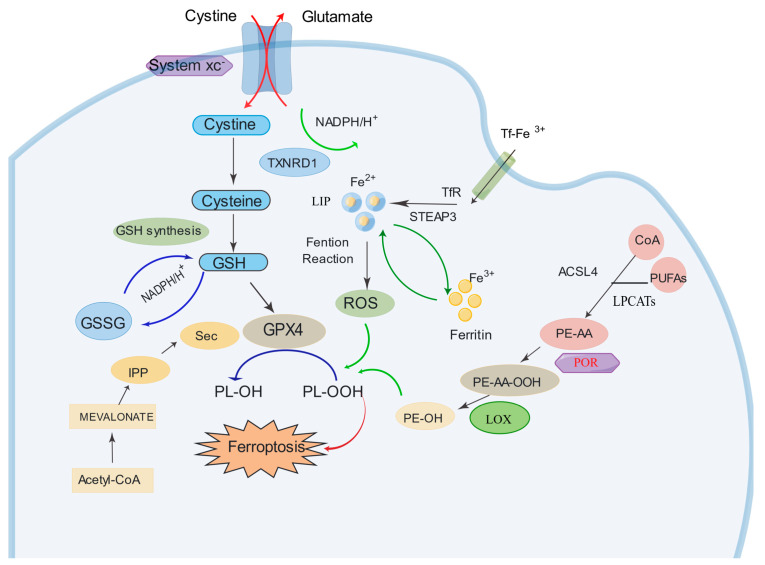
“The LIP is a critical reservoir of Fe 2+ that fuels the Fenton reaction and subsequently drives lipid peroxidation, a key event in ferroptosis [67].”
BackgroundFerroptosis: mechanisms, biology and role in disease
Jiang, X., Stockwell, B. R., & Conrad, M. (2021) · Nature Reviews Molecular Cell Biology · doi:10.1038/s41580-020-00324-8 · Cited by 7,505 · cited 1×
“Ferroptosis differs from conventional treatments by inducing cancer cell death through lipid peroxidation and oxidative stress accumulation [12].”
BackgroundACSL4 dictates ferroptosis sensitivity by shaping cellular lipid composition
Doll, S., Proneth, B., Tyurina, Y. Y., Panzilius, E., Kobayashi, S., Ingold, I., Irmler, M., Beckers, J., Aichler, M., Walch, A., et al. (2017) · Nature Chemical Biology · doi:10.1038/nchembio.2239 · Cited by 4,293 · cited 3×
“In nonenzymatic lipid peroxidation, the conversion of polyunsaturated fatty acids (PUFAs) into acyl-CoA is facilitated by acyl-CoA synthetase long-chain family member 4 (ACSL4), which ligates PUFAs with coenzyme A (CoA) [59].”
BackgroundThe CoQ oxidoreductase FSP1 acts parallel to GPX4 to inhibit ferroptosis
Bersuker, K., Hendricks, J. M., Li, Z., Magtanong, L., Ford, B., Tang, P. H., Roberts, M. A., Tong, B., Maimone, T. J., Zoncu, R., et al. (2019) · Nature · doi:10.1038/s41586-019-1705-2 · Cited by 3,703 · cited 1×
“Additionally, selenium (Sec) functions as a cofactor for GPX4, a key protein in the ferroptosis pathway [61].”
BackgroundESMO consensus guidelines for the management of patients with metastatic colorectal cancer
Van Cutsem, E., Cervantes, A., Adam, R., Sobrero, A., Van Krieken, J. H., Aderka, D., Aranda Aguilar, E., Bardelli, A., Benson, A., Bodoky, G., et al. (2016) · Annals of Oncology · doi:10.1093/annonc/mdw235 · Cited by 3,421
Cited by
Lipid metabolism in ferroptosis: mechanistic insights and therapeutic potential
Sun, D., Wang, L., Wu, Y., Yu, Y., Yao, Y., Yang, H., & Hao, C. (2025) · Frontiers in Immunology · doi:10.3389/fimmu.2025.1545339 · Cited by 110
Mechanisms and Strategies to Overcome Drug Resistance in Colorectal Cancer
Haynes, J., & Manogaran, P. (2025) · International Journal of Molecular Sciences · doi:10.3390/ijms26051988 · Cited by 82
“…in drug metabolism contribute to resistance, with CRC cells increasing the inactivation or degradation of drugs through upregulated expression of enzymes like glutathione S-transferases (GSTs), uridine 5 ′ -diphospho-glucuronosyltransferases (UGTs), and cytochrome P450 (CYP) enzymes [46,47].”
Non-coding RNA: A key regulator in the Glutathione-GPX4 pathway of ferroptosis
Hussain, M. S., Gupta, G., Shahwan, M. J., Bansal, P., Kaur, H., Deorari, M., Pant, K., Ali, H., Singh, S. K., Allam, V. S. R. R., et al. (2024) · Non-coding RNA Research · doi:10.1016/j.ncrna.2024.05.007 · Cited by 51
“The targeting of ferroptosis holds significant promise in the context of CRC therapy, where DR poses a substantial challenge [145].”
BackgroundFerroptosis and immunosenescence in colorectal cancer
Wang, Y., Cao, X., Yang, C., Fan, J., Zhang, X., Wu, X., Guo, W., Sun, S., Liu, M., Zhang, L., et al. (2024) · Seminars in Cancer Biology · doi:10.1016/j.semcancer.2024.10.003 · Cited by 52
Cell death signaling and immune regulation: new perspectives on targeted therapy for sepsis
Wu, H., Cui, J., Huang, J., Feng, Y., Zhao, J., Zhu, Y., Deng, X., Li, X., Zhang, W., & Wang, C. (2025) · Cellular & Molecular Biology Letters · doi:10.1186/s11658-025-00784-w · Cited by 34
The role of ferroptosis in colorectal cancer and its potential synergy with immunotherapy
Xia, W., Lv, Y., Zou, Y., Kang, Z., Li, Z., Tian, J., Zhou, H., Su, W., & Zhong, J. (2025) · Frontiers in Immunology · doi:10.3389/fimmu.2024.1526749 · Cited by 33
Targeting ferroptosis regulators by natural products in colorectal cancer
Zhang, Y., & Xie, J. (2024) · Frontiers in Pharmacology · doi:10.3389/fphar.2024.1374722 · Cited by 32
“Many articles have highlighted the signi fi cance of targeting ferroptosis for the treatment of colorectal cancer (Zhang et al., 2023a; Liang H. et al., 2023; Cheng et al., 2023; Liu et al., 2024).”
BackgroundThe Puzzle of Aspirin and Iron Deficiency: The Vital Missing Link of the Iron-Chelating Metabolites
Kontoghiorghes, G. J. (2024) · International Journal of Molecular Sciences · doi:10.3390/ijms25105150 · Cited by 22
NRF2 as a ferroptosis gatekeeper in colorectal cancer: implications for therapy
El‐Sehrawy, A. A. M. A., Al-dulaimi, A. A., Alkhathami, A. G., RenukaJyothi, S., Panigrahi, R., Pargaien, A. V., Singh, U., Husseini, A., & Alnajar, M. J. (2025) · Naunyn-Schmiedeberg s Archives of Pharmacology · doi:10.1007/s00210-025-04324-3 · Cited by 19
Elmetwalli, A. (2025) · Drug Resistance Updates · doi:10.1016/j.drup.2025.101326 · Cited by 21
Huang, Q., Ma, C., Wei, P., Wang, Q., Ren, H., & Li, X. (2026) · Journal of Materials Chemistry B · doi:10.1039/d5tb02738a · Cited by 17
Ferroptosis and gastric cancer: from molecular mechanisms to clinical implications
Zhao, H., Ao, L., Sorina, Wei, Y., Yin, H. Z., Zhang, N., Lee, X. Q., Du, F., & Zhou, G. (2025) · Frontiers in Immunology · doi:10.3389/fimmu.2025.1581928 · Cited by 22
Li, Y., & Cheng, X. (2024) · International Journal of Molecular Sciences · doi:10.3390/ijms25179141 · Cited by 15
“…new prognostic tools for the treatment of CRC, holding signi fi cant implications for personalized medicine and Emerging treatment strategies incorporating the concept of ferroptosis into CRC immunotherapy offer new avenues for improving treatment efficacy and overcoming drug resistance [92].”
BackgroundSelf-citationGenipin’s potential as an anti-cancer agent: from phytochemical origins to clinical prospects
Lapava, N., Dama, A., Gorica, E., Darya, K., Peña‐Corona, S. I., Cortés, H., Santini, A., Büsselberg, D., Leyva‐Gómez, G., & Sharifi‐Rad, J. (2024) · Medical Oncology · doi:10.1007/s12032-024-02429-y · Cited by 14
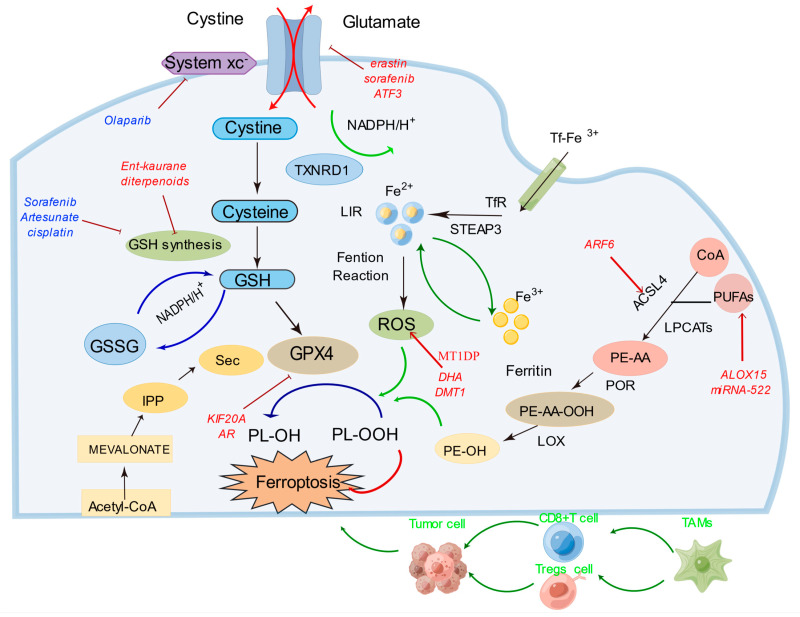
“This finding indicates that genipin could impede the formation of resistance mechanisms by activating a cell death pathway to which cancer cells have not yet developed immunity [108–110].”
Kontoghiorghes, G. J. (2024) · Antioxidants · doi:10.3390/antiox14010029 · Cited by 13
“…administration of aspirin in in fl amma-tory and other similar conditions [252]. activity and its antioxidant potential or that of the ACMs has not yet been fully clarified, despite that some studies have previously suggested there may be a link between these two processes [189,191,192,199,295–297].”
Broadening horizons: research on ferroptosis in lung cancer and its potential therapeutic targets
Gao, G., & Zhang, X. (2025) · Frontiers in Immunology · doi:10.3389/fimmu.2025.1542844 · Cited by 12
Theivendren, P., Pavadai, P., Kunjiappan, S., Ravi, K., Kiruthiga, N., Chidamabaram, K., Alagarsamy, S., & Reddy, N. B. (2025) · Nanotechnology · doi:10.1088/1361-6528/add6ae · Cited by 11
“Healthcare professionals classify these subtypes based on their status regarding the ER, PR, and HER2 receptors [9].”
Cai, Y., Zhao, F., & Cheng, X. (2025) · Biomolecules · doi:10.3390/biom15111546 · Cited by 12
“Ferroptosis in colorectal cancer (CRC) is governed by an interplay between intrinsic metabolic features of tumor cells and extrinsic signals from the tumor microenvironment (TME) [21].”
Self-citationTatode, A., Chaudhary, A. A., Qutub, M., Trivedi, R., Umekar, M., Ali, M. A. M., & Premchandani, T. (2025) · Oncology Reviews · doi:10.3389/or.2025.1671235 · Cited by 10
Wang, M., Zhang, R., He, S., Wen, F., Yu, X., Xu, X., Li, Y., & Wu, S. (2025) · Scientific Reports · doi:10.1038/s41598-025-14086-w · Cited by 11
“Emerging evidence highlights ferroptosis as a potential mechanism to reverse resistance 27 .”
Exploring the landscape of drug resistance in gastrointestinal cancer immunotherapy: A review
Yao, N., Li, W., Duan, N., Xu, G., Yu, G., & Qu, J. (2024) · Medicine · doi:10.1097/md.0000000000036957 · Cited by 9
“[57] The future of this field holds promise, but also presents challenges that need to be addressed.”
BackgroundRiaz, T., Saleem, M. A., Khan, M. U. M., Rashid, M. A. R., & Zubaır, M. (2025) · Biomedicines · doi:10.3390/biomedicines13082037 · Cited by 7
“Moreover, the clinical implications extend to the potential use of biomarkers of iron metabolism such as transferrin saturation and mean corpuscular hemoglobin concentration as indicators of ferroptosis susceptibility [23,29].”
HDAC3 Regulates Ferroptosis via Nrf2–GPX4 Signaling in Colorectal Cancer Cells
Jin, W., Wang, J.-A., Feng, Y.-F., Chen, B., & Hu, Z. (2025) · Doklady Biochemistry and Biophysics · doi:10.1134/s1607672925600496 · Cited by 5
“Ferroptosis is an iron-dependent form of regulated necrosis, characterized by the accumulation of lipid peroxides, and has emerged as a promising therapeutic vulnerability across various malignancies, including CRC [3].”
Jing, F.-J., Shi, Y., Jiang, D., Li, X., Sun, J., & Guo, Q. (2024) · ImmunoTargets and Therapy · doi:10.2147/itt.s463556 · Cited by 5
Molecular Mechanisms of Ferroptosis Induced by Eleutherococcus senticosus in Glioblastoma
Song, X., Li, Y., Li, Y., Li, J., Li, D., Kou, X., Liu, Y., & Xing, Z. (2025) · Phytochemical Analysis · doi:10.1002/pca.70013 · Cited by 4
“GSH metabolic reprogramming can overcome the resistance of tumor cells to ferroptosis and improve chemotherapy efficacy [27].”
Alzahrani, R. F., Almuqati, M. S., AlAli, S. A., Alamer, K. A., Syed, R., Alqahtani, M. S., Bakheit, A. H. H., Asiri, H. H., & Harisa, G. I. (2025) · Molecular Biology Reports · doi:10.1007/s11033-025-11011-2 · Cited by 5
Ferroptosis-centered strategies: redefining therapeutic resistance & adaptation in modern oncology
Madappan, D., Krishnegowda, M. B., Naik, P., Raju, D. B., Hadapada, L., Sriramareddy, Y., Patil, C., & Prakash Goudanavar, S. O. P. (2026) · APOPTOSIS · doi:10.1007/s10495-026-02279-1 · Cited by 5
HSF4 alleviates ferroptosis in colorectal cancer through transcriptional regulation of MBOAT1/2
Yue, K., Wu, H., Li, K., Yang, S., Bai, X., Zhang, W., & Zhang, Y. (2026) · Functional & Integrative Genomics · doi:10.1007/s10142-026-01822-2 · Cited by 3
“At the same time, the damage-associated molecular patterns caused by ferroptosis effectively activates multiple immune cells, transforming cold tumors into hot tumors, thereby increasing tumor immunogenicity (Cheng et al. 2023; Ren et al. 2023).”
Emerging treatment approaches for colorectal cancer treatment resistance
Mabonga, L., Fourie, R. L., Kappo, A. P., Lyantagaye, S., & Dlamini, Z. (2024) · Elsevier eBooks · doi:10.1016/b978-0-443-33475-7.00001-9 · Cited by 1
Yan, X., Niu, Y., Wang, Y., Wei, S., Han, L., Guo, Z., Zhao, L., & Gao, F. (2025) · Open Medicine · doi:10.1515/med-2024-1100 · Cited by 1
“Cheng et al. [8] have demonstrated the advantages of targeting ferroptosis to overcome drug resistance in colorectal cancer, while Zhang et al. [9] have outlined the potential of ferroptosis as a new method to reverse cancer drug resistance.”
The intersection of ferroptosis and non-coding RNAs: a novel approach to lung cancer
Ding, J. (2025) · Irish Journal of Medical Science (1971 -) · doi:10.1007/s11845-025-04099-9 · Cited by 1
The Interaction Between Iron and Selenium Affects Ferroptosis in Colorectal Cancer
陶福林, He, M., & Dai, Y. (2026) · International Journal of Molecular Sciences · doi:10.3390/ijms27093963 · Cited by 1
“In addition, a self-amplifying ferroptosis nanocomplex (Cu2O@Au) induces immunogenic cell death, promotes dendritic-cell maturation and T-cell infiltration, and enhances the efficacy of anti-programmed death ligand 1 therapy in CRC animal models [120].”
Chen, S., Xu, M., Su, W., Wang, K., Zhang, S., Zhang, X., & Zhang, L. (2026) · World Journal of Surgical Oncology · doi:10.1186/s12957-026-04385-5 · Cited by 1
“This understanding is crucial for comprehensively elucidating the pathological mechanisms of CRC, developing novel therapeutic strategies, such as the combination of immunotherapy with ferroptosis inducers, and discovering new prognostic biomarkers [16].”
Yadav, V., Dighe, S., Dhake, P., & Jain, S. (2026) · AAPS PharmSciTech · doi:10.1208/s12249-026-03461-z · Cited by 1
“Typically, ferroptosis involves an iron-catalysed decomposition of hydrogen peroxide via the Fenton reaction, which generates oxidative hydroxyl radicals that damage the tumour cell [4].”
Advances in Molecular Mechanisms of Gastrointestinal Tumors
Tanabe, S. (2024) · Cancers · doi:10.3390/cancers16081603 · Cited by 1
“Chronic inflammation and the gut microbiota, in relation to immune response, have been closely investigated in gastrointestinal tumors [8,9].”
BackgroundOvercoming chemotherapy resistance in colorectal cancer
Demetriou, D., Molefi, T., Chatziioannou, A. A., & Dlamini, Z. (2024) · Elsevier eBooks · doi:10.1016/b978-0-443-33475-7.00012-3
Gökalp, F. (2025) · International Journal of Chemistry and Technology · doi:10.32571/ijct.1534877
Kiran, N. S., Sagar, Y. N., Badrakiya, K., Chatterjee, A., Alsaidan, O. A., Bhattacharya, S., & Prajapati, B. G. (2025) · Journal of Drug Delivery Science and Technology · doi:10.1016/j.jddst.2025.107523
The role of an epigenetic regulator HP1γ(CBX3) in colon homeostasis and colorectal cancer
Xiang, Y. (2024) · theses.fr (ABES) · doi:10.70675/accc51f3zcd13z4786zab0ezec1760b1d643
Shi, J., & Zhou, G. (2026) · Advanced Therapeutics · doi:10.1002/adtp.202500529
Li, C., Jin, Q., Sun, Y., & Zhang, Q. (2026) · Discovery Medicine · doi:10.24976/discov.med.202638208.110
Kao, T., Lam, S.-H., Chen, S., Tsai, S.-C., Lee, C., Hsu, H., Huang, Y.-C., Chen, Y., Chen, C., & Chen, P. (2026) · Journal of Ethnopharmacology · doi:10.1016/j.jep.2026.122154
Fetuin-A as an Emerging Biomarker in Colorectal Cancer: Molecular Mechanisms and Clinical Relevance
Muner, Q. A. E.-R., & Hamad, A. H. (2026) · Journal of Clinical Practice and Medical Research · doi:10.59324/jcpmr.2026.2(4).03
Huang, C.-J., & Choo, K. (2026) · Biochemical and Biophysical Research Communications · doi:10.1016/j.bbrc.2026.154512
Bruceine D induces ferroptosis in colorectal cancer by inhibiting STAT3 activity
Huang, S., Wang, Z., Li, D., Sun, X., Xue, E., Tan, S., Gao, H., Xie, X., Zhang, H., & Chen, W. (2026) · Current Molecular Pharmacology · doi:10.1016/j.cmp.2026.09.007
Wu, T., Hao, M., 罗秋晔, Liu, S., Zhang, Y., Zhang, Y., Yang, X., & Han, J. (2026) · Molecular Biomedicine · doi:10.1186/s43556-026-00575-5
“Increasing evidence indicates that ferroptosis contributes to CRC progression and treatment response, and modulation of ferroptosis has emerged as an important direction in CRC research [17, 18].”
Metadata
- Authors
- Cheng, X., Zhao, F., Ke, B., Chen, D., & Liu, F.
- Affiliations
- First Affiliated Hospital Zhejiang University (CN)
- Corresponding author
- Cheng, Xiaofei
- Liu, Fanlong
- Venue
- Cancers
- Publisher
- MDPI AG
- Published
- 2023-10-30
- Volume
- 15
- Issue
- 21
- Pages
- 5209
- ISSN
- 2072-6694 (ISSN-L)
- PMC
- PMC10649072
- OpenAlex
- W4388017931
- Cited by
- 44
- References
- 137
- Citations by year
- 2026: 12 · 2025: 20 · 2024: 12
- FWCI
- 2.04
- Type
- journal article
- Language
- en
- Open access
- gold
- doi.org
- Licence
- Locations
- Cancers (publishedVersion, cc-by)
- PubMed Central (publishedVersion, cc-by)
- PubMed (publishedVersion)
- Topics
- Life Sciences › Biochemistry, Genetics and Molecular Biology › Cancer Research › Ferroptosis and cancer prognosis
- Life Sciences › Biochemistry, Genetics and Molecular Biology › Molecular Biology › Cell death mechanisms and regulation
- Health Sciences › Medicine › Hematology › Iron Metabolism and Disorders
- Keywords
- ferroptosis, colorectal cancer, drug resistance, iron metabolism, lipid peroxidation, ferroptosis inducers, combination therapy, immunotherapy, targeted therapy, precision medicine
About these checks
Registry, retraction, Cites and statistics results are computed, not judged, with one exception: a printed reference that no index lists is read once by a model before it counts as a citation error. Claims are extracted by a model and kept only when their quote appears verbatim in the text; each cited source is then checked, with a model’s help, for whether it says what the claim relies on. Those verdicts can be wrong — read the claim’s quote and the cited source before relying on one.
Statistics and arithmetic are recomputed, not judged.
Confidence bands are shown only for fields calibrated on our annotated test set. None is calibrated yet, so no band is shown.
What counts as a claim ›How we measure confidence ›How we check this ›
Are you an author, or do you see a problem with this page? Request a review
Data sources
Bibliographic data: Semantic Scholar, OpenAlex, Crossref.
Contains information from the Semantic Scholar Academic Graph Datasets, made available under the ODC Attribution License (ODC-BY 1.0).
Semantic Scholar’s data is described in: Kinney, R., et al. (2023). The Semantic Scholar Open Data Platform. arXiv:2301.10140.
