

Graphene Oxide Synthesis, Properties and Characterization Techniques: A Comprehensive Review
Open accessThe DOI matches its Crossref record; 98 of the 99 references it cites were found in a registry or an index.
Abstract
The unique properties of graphene oxide (GO) have attracted the attention of the research community and cost-effective routes for its production are studied. The type and percentage of the oxygen groups that decorate a GO sheet are dependent on the synthesis path, and this path specifies the carbon content of the sheet. The chemical reduction of GO results in reduced graphene oxide (rGO) while the removal of the oxygen groups is also achievable with thermal processes (tpGO). This review article introduces the reader to the carbon allotropes, provides information about graphene which is the backbone of GO and focuses on GO synthesis and properties. The last part covers some characterization techniques of GO (XRD, FTIR, AFM, SEM-EDS, N2 porosimetry and UV-Vis) with a view to the fundamental principles of each technique. Some critical aspects arise for GO synthesized and characterized from our group.
Overview
The claims and statistics of this paper haven’t been checked yet.
Free: it reads the open-access text and checks the first 5 claims that cite a source we can check. Create a free account to check every claim.
Integrity signals
Registry
Cites
Statistics
Figures



Verification
Claims the paper makes
The claims and statistics of this paper haven’t been checked yet.
Free: it reads the open-access text and checks the first 5 claims that cite a source we can check. Create a free account to check every claim.
Claims other papers make about this one
Each is checked against this paper’s own text: does it say what the citing paper says it does?
The cited source doesn’t support the claim as written.
In the citing paper
“As can be observed, the thermal reduction of functional oxygen groups only started at calcination temperatures up to 600 °C [49].”
From Influence of boron doping level and calcination temperature on hydrogen evolution reaction in acid medium of metal-free graphene aerogels (2023) · cites this paper as [49]
Checked by a reasoning model — may be wrong.
Experimental — accuracy not yet measured
Self-check
Percentages, sums and reported differences re-computed from the paper’s own numbers.
The self-check needs the paper’s full text.
Citations
Cites
Electric Field Effect in Atomically Thin Carbon Films
Novoselov, K. S., Geim, A. K., Morozov, S. V., Jiang, D., Zhang, Y., Dubonos, S. V., Grigorieva, I. V., & Firsov, A. A. (2004) · Science · doi:10.1126/science.1102896 · Cited by 66,834 · cited 1×
“In the beginning, Peierls and Landau stated that 1D or 2D crystalline materials cannot sustain their structure when the temperature rise [24,25]; hereafter, in 1947, Wallace first wrote about the structure and the unusual semi-metallic character of graphene [26], but it was Geim and Novoselov in 2004 who isolated and…”
BackgroundPreparation of Graphitic Oxide
Hummers, W. S., & Offeman, R. E. (1958) · Journal of the American Chemical Society · doi:10.1021/ja01539a017 · Cited by 29,920 · cited 1×
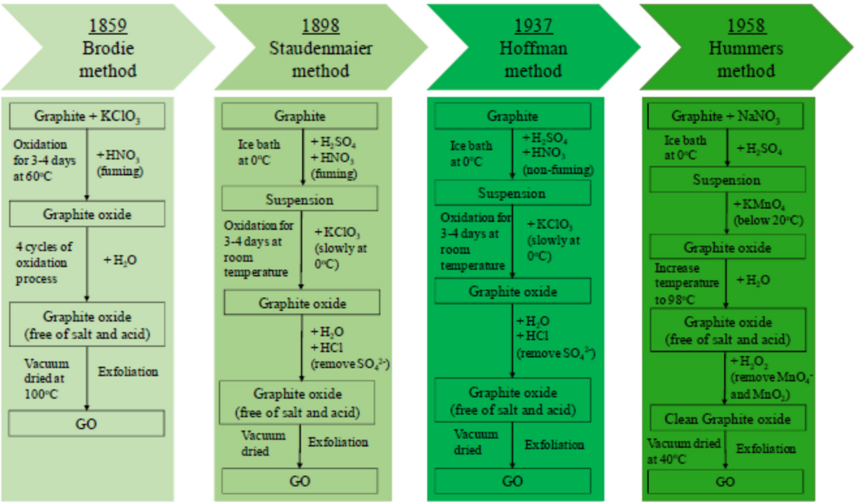
“Staudenmaier presented a less tricky and dangerous methodology for GO formation in 1898 [48], but it was Hummers and Offeman in 1958 who synthesized GO in such a way that adopted by the community and is widely used nowadays (Figure 4) [49].”
Improved Synthesis of Graphene Oxide
Marcano, D. C., Kosynkin, D. V., Berlin, J. M., Sinitskii, A., Sun, Z., Slesarev, A., Alemany, L. B., Lu, W., & Tour, J. M. (2010) · ACS Nano · doi:10.1021/nn1006368 · Cited by 11,989 · cited 4×
“requires H2SO4, KMnO4, H2O and H2O2 for for ation, here sulfuric acid is the concentrated acidic ediu that intercalates the graphite and expands it up to 300 times, and potassium permanganate, which is stronger than potassium chlorate, is the oxidant (as Mn2O7 and/or MnO3) [54].”
BackgroundInfluentialRoll-to-roll production of 30-inch graphene films for transparent electrodes
Bae, S., Kim, H., Lee, Y., Xu, X., Park, J.-S., Zheng, Y., Balakrishnan, J., Lei, T., Ri Kim, H., Song, Y. I., et al. (2010) · Nature Nanotechnology · doi:10.1038/nnano.2010.132 · Cited by 8,136 · cited 3×
“have attempted the production of a 30 ́ ́graphene film and nowadays large single-layered graphenes are synthesized to pioneer laboratories [43].”
BackgroundInfluentialThe reduction of graphene oxide
Pei, S., & Cheng, H.-M. (2012) · Carbon · doi:10.1016/j.carbon.2011.11.010 · Cited by 5,164 · cited 1×
“Reduction is the GO reaction that has the most obvious signs as the solution color turns from yellowish to black due to the restoration of the sp2 network [61].”
BackgroundWallace, P. R. (1947) · Physical Review · doi:10.1103/physrev.71.622 · Cited by 5,055 · cited 2×
“In the beginning, Peierls and Landau stated that 1D or 2D crystalline materials cannot sustain their structure when the temperature rise [24,25]; hereafter, in 1947, Wallace first wrote about the structure and the unusual semi-metallic character of graphene [26], but it was Geim and Novoselov in 2004 who isolated and…”
BackgroundUnimpeded Permeation of Water Through Helium-Leak–Tight Graphene-Based Membranes
Nair, R. R., Wu, H. A., Jayaram, P. N., Grigorieva, I. V., & Geim, A. K. (2012) · Science · doi:10.1126/science.1211694 · Cited by 3,073 · cited 1×
“An anhydrous GO membrane with thickness ~500 nm that was synthesized by Geim’s group in 2012 showed fast permeation of water molecules but complete impermeability to other liquids and gases [69].”
MethodMechanical properties of graphene and graphene-based nanocomposites
Papageorgiou, D. G., Kinloch, I. A., & Young, R. J. (2017) · Progress in Materials Science · doi:10.1016/j.pmatsci.2017.07.004 · Cited by 2,579 · cited 7×
“Unavoidably, all solid/powder GO samples contain more or less intercalated water [35,55,56] The exact chemical structure of GO cannot be specified due to the irregular density of the defects and the oxygen groups.”
BackgroundInfluentialAn improved Hummers method for eco-friendly synthesis of graphene oxide
Chen, J., Yao, B., Li, C., & Shi, G. (2013) · Carbon · doi:10.1016/j.carbon.2013.07.055 · Cited by 2,342 · cited 3×
“The two characteristic absorptions in GO occur at ~230 nm and ~300 nm, where the former results from the π→π* transitions in the aromatic C=C bonds and the latter, which is less energetic, from the n→π* transitions in the C=O bonds [56].”
BackgroundVerfahren zur Darstellung der Graphitsäure
Staudenmaier, L. (1898) · Berichte der deutschen chemischen Gesellschaft · doi:10.1002/cber.18980310237 · Cited by 2,032
XIII. On the atomic weight of graphite
Brodie, B. C. (1859) · Philosophical Transactions of the Royal Society of London · doi:10.1098/rstl.1859.0013 · Cited by 1,868
Facile and safe graphene preparation on solution based platform
Johra, F. T., Lee, J.-W., & Jung, W.-G. (2014) · Journal of Industrial and Engineering Chemistry · doi:10.1016/j.jiec.2013.11.022 · Cited by 1,319
Ihsanullah, Abbas, A., Al-Amer, A. M., Laoui, T., Al-Marri, M. J., Nasser, M. S., Khraisheh, M., & Atieh, M. A. (2016) · Separation and Purification Technology · doi:10.1016/j.seppur.2015.11.039 · Cited by 1,259 · cited 2×
“Broadly speaking, the agglomerated CNTs induce more toxicity than the well dispersed [13].”
BackgroundMohan, V. B., Lau, K.-T., Hui, D., & Bhattacharyya, D. (2018) · Composites Part B: Engineering · doi:10.1016/j.compositesb.2018.01.013 · Cited by 1,061
Mechanism of Graphene Oxide Formation
Dimiev, A. M., & Tour, J. M. (2014) · ACS Nano · doi:10.1021/nn500606a · Cited by 945 · cited 1×
“Secondary and back-scattered electron detectors deliver images of the specimen while the X-ray spectrometer provides information about the chemical composition [92,93].”
BackgroundA review on heavy metal ions adsorption from water by graphene oxide and its composites
Peng, W., Li, H., Liu, Y., & Song, S. (2017) · Journal of Molecular Liquids · doi:10.1016/j.molliq.2017.01.064 · Cited by 821 · cited 1×
“Synthesis of rGO from pristine graphite [84].”
A decade of graphene research: production, applications and outlook
Randviir, E. P., Brownson, D. A. C., & Banks, C. E. (2014) · Materials Today · doi:10.1016/j.mattod.2014.06.001 · Cited by 690 · cited 1×
“Horizon 2020 is a European Union programme funded with 1000 million € aiming to take graphene and other layered materials from the fundamental science to industrial and societal application [28,29].”
BackgroundShen, Y., Fang, Q., & Chen, B. (2015) · Environmental Science & Technology · doi:10.1021/es504421y · Cited by 576
Chen, J., Li, Y., Huang, L., Li, C., & Shi, G. (2015) · Carbon · doi:10.1016/j.carbon.2014.10.033 · Cited by 557
Land, T. A., Michely, T., Behm, R. J., Hemminger, J. C., & Comsa, G. (1992) · Surface Science · doi:10.1016/0039-6028(92)90183-7 · Cited by 545 · cited 1×
“Although the synthesis of graphite through heterogeneous catalysis onto transition metals was already known [38,39], the first graphene synthesis by CVD was performed by Somani who used camphor and nickel substrate in 2006 [40].”
BackgroundWet Chemical Synthesis of Graphene
Eigler, S., Enzelberger‐Heim, M., Grimm, S., Hofmann, P., Kroener, W., Geworski, A., Dotzer, C., Röckert, M., Xiao, J., Papp, C., et al. (2013) · Advanced Materials · doi:10.1002/adma.201300155 · Cited by 537 · cited 3×
“GO is considered as a non-stoichiometric metastable carbon compound with more than 2–3% defects that liberates CO2 at temperatures as low as 45 ◦C [59].”
BackgroundInfluentialReview on graphene and its derivatives: Synthesis methods and potential industrial implementation
Lee, X. J., Hiew, B. Y. Z., Lai, K. C., Lee, L. Y., Gan, S., Thangalazhy-Gopakumar, S., & Rigby, S. (2019) · Journal of the Taiwan Institute of Chemical Engineers · doi:10.1016/j.jtice.2018.10.028 · Cited by 506 · cited 6×
“Moreover, variations in ox da ion d gree might presen to the flakes of the same batch and the size of the sp2 domains increases with time [34,55].”
BackgroundInfluentialPlaner nano-graphenes from camphor by CVD
Somani, P. R., Somani, S. P., & Umeno, M. (2006) · Chemical Physics Letters · doi:10.1016/j.cplett.2006.06.081 · Cited by 504
Synthesis and characterization of sulfophenyl-functionalized reduced graphene oxide sheets
Ossonon, B. D., & Bélanger, D. (2017) · RSC Advances · doi:10.1039/c6ra28311j · Cited by 496 · cited 3×
“Adsorbents with different physicochemical properties require different methods for the data evaluation [90,92].”
BackgroundMethodDimiev, A., Kosynkin, D. V., Alemany, L. B., Chaguine, P., & Tour, J. M. (2012) · Journal of the American Chemical Society · doi:10.1021/ja211531y · Cited by 467 · cited 3×
“5 (often described as Lewis acid), but, when the flakes are separated from the solution, the pH turns neutral [45].”
BackgroundInfluentialChemical Vapour Deposition of Graphene—Synthesis, Characterisation, and Applications: A Review
Saeed, M., Alshammari, Y., Majeed, S. A., & Al-Nasrallah, E. (2020) · Molecules · doi:10.3390/molecules25173856 · Cited by 459 · cited 1×
“Moreover, the mechanical properties such as Young’s modulus and hardness can be measured by nano-indentation [44].”
BackgroundSupercapacitor performances of thermally reduced graphene oxide
Zhao, B., Liu, P., Jiang, Y., Pan, D., Tao, H., Song, J., Fang, T., & Xu, W. (2012) · Journal of Power Sources · doi:10.1016/j.jpowsour.2011.09.074 · Cited by 441 · cited 2×
“The typical specific surface area (SSA) of graphite is ~6 m2/g, graphene has ~2600 m2/g and GO ~50 m2/g [34,37,62,87].”
BackgroundLim, J. Y., Mubarak, N. M., Abdullah, E. C., Nizamuddin, S., Khalid, M., & Inamuddin (2018) · Journal of Industrial and Engineering Chemistry · doi:10.1016/j.jiec.2018.05.028 · Cited by 397
Chemically Active Reduced Graphene Oxide with Tunable C/O Ratios
Compton, O. C., Jain, B., Dikin, D. A., Abouimrane, A., Amine, K., & Nguyen, S. T. (2011) · ACS Nano · doi:10.1021/nn1030725 · Cited by 384
Untersuchungen am Graphitoxid. VI. Betrachtungen zur Struktur des Graphitoxids
Scholz, W., & Boehm, H. P. (1969) · Zeitschrift für anorganische und allgemeine Chemie · doi:10.1002/zaac.19693690322 · Cited by 381
Fullerene: biomedical engineers get to revisit an old friend
Goodarzi, S., Da Ros, T., Conde, J., Sefat, F., & Mozafari, M. (2017) · Materials Today · doi:10.1016/j.mattod.2017.03.017 · Cited by 368 · cited 3×
“In addition, the external surface of the carbon cage can be functionalized through the C\C double bond cleavage [4,7] allowing fullerenes to cross the cell membrane and bind with mitochondria [8].”
BackgroundMethodGupta, V. K., Moradi, O., Tyagi, I., Agarwal, S., Sadegh, H., Shahryari-Ghoshekandi, R., Makhlouf, A. S. H., Goodarzi, M., & Garshasbi, A. (2016) · Critical Reviews in Environmental Science and Technology · doi:10.1080/10643389.2015.1061874 · Cited by 335 · cited 1×
“CNTs possess unique structural, optoelectronic, mechanical and physicochemical properties, with a specific surface area up to 3000 m2/g [14].”
BackgroundPhotoreduction of Graphene Oxides: Methods, Properties, and Applications
Zhang, Y., Guo, L., Xia, H., Chen, Q., Feng, J., & Sun, H. (2014) · Advanced Optical Materials · doi:10.1002/adom.201300317 · Cited by 307 · cited 1×
“The most conductive rGO has been prepared through photoreduction, while, among the chemical reduction methods, rGO prepared with HI/AcOH exhibits the best electrical properties [79,80].”
MethodReduced graphene oxide film with record-high conductivity and mobility
Wang, Y., Chen, Y., Lacey, S. D., Xu, L., Xie, H., Li, T., Danner, V. A., & Hu, L. (2018) · Materials Today · doi:10.1016/j.mattod.2017.10.008 · Cited by 297
Botas, C., Álvarez, P., Blanco, C., Santamaría, R., Granda, M., Gutiérrez, M. D., Rodríguez-Reinoso, F., & Menéndez, R. (2013) · Carbon · doi:10.1016/j.carbon.2012.09.059 · Cited by 289
Mykhailiv, O., Zubyk, H., & Plonska-Brzezinska, M. E. (2017) · Inorganica Chimica Acta · doi:10.1016/j.ica.2017.07.021 · Cited by 242 · cited 1×
“Interestingly, during the thermal annealing of NDs, the CNOs are firstly transformed into spherical and then into polyhedral onions [12].”
BackgroundZhang, Q., Wu, Z., Li, N., Pu, Y., Wang, B., Zhang, T., & Tao, J. (2017) · Materials Science and Engineering: C · doi:10.1016/j.msec.2017.03.196 · Cited by 239 · cited 2×
“Carbon (12 6 C), one of the most abundant elements in nature, participates in many fundamental systems and processes, such as DNA formation and photosynthesis [1].”
Background13C and 1H MAS NMR studies of graphite oxide and its chemically modified derivatives
LERF, A. (1997) · Solid State Ionics · doi:10.1016/s0167-2738(97)00319-6 · Cited by 238 · cited 2×
“Various models have been proposed since 1930 (Thiele) [57] and several authors have classified GO to amorphous materials, but the model proposed by Lerf-Klinowski (1998) is widely acceptable (Figure 5) [58].”
BackgroundGraphene Oxide: Fundamentals and Applications
(2016) · Wiley eBooks · doi:10.1002/9781119069447 · Cited by 232
Kostarelos, K., & Novoselov, K. S. (2014) · Nature Nanotechnology · doi:10.1038/nnano.2014.224 · Cited by 185 · cited 2×
“Graphene is highly tunable offering immense design capabilities [2].”
BackgroundThermal Management Material: Graphite
Inagaki, M., Kaburagi, Y., & Hishiyama, Y. (2014) · Advanced Engineering Materials · doi:10.1002/adem.201300418 · Cited by 173 · cited 1×
“5 (2014): 494–506] and corrosion resistance [22].”
X‐ray Diffraction Techniques for Soil Mineral Identification
Harris, W., & Norman White, G. (2008) · SSSA Book Series · doi:10.2136/sssabookser5.5.c4 · Cited by 171 · cited 1×
“X-rays are highly energetic ionizing radiation produced by the scattered electrons that are impinged on the matter, and their diffraction is a tool for investigating the atomic structure of the specimen [85].”
BackgroundHiew, B. Y. Z., Lee, L. Y., Lee, X. J., Thangalazhy-Gopakumar, S., Gan, S., Lim, S. S., Pan, G.-T., Yang, T. C.-K., Chiu, W. S., & Khiew, P. S. (2018) · Process Safety and Environmental Protection · doi:10.1016/j.psep.2018.02.010 · Cited by 169
Towards low temperature thermal exfoliation of graphite oxide for graphene production
Zhang, C., Lv, W., Xie, X., Tang, D., Liu, C., & Yang, Q.-H. (2013) · Carbon · doi:10.1016/j.carbon.2013.05.033 · Cited by 164
Zur Kenntnis des Graphitischen Kohlenstoffs und der Graphitsäure
Kohlschütter, V., & Haenni, P. (1919) · Zeitschrift für anorganische und allgemeine Chemie · doi:10.1002/zaac.19191050109 · Cited by 147 · cited 1×
“The chemical reduction of GO is not a recent trend as the first attempt was made by Kohlschütter and Haenni in 1919 [75], and the popular hydrogen sulphide-reduced GO by Hofmann and Frenzel was published in 1934 [76].”
BackgroundBalch, A. L., & Winkler, K. (2016) · Chemical Reviews · doi:10.1021/acs.chemrev.5b00553 · Cited by 147 · cited 1×
“In addition, the external surface of the carbon cage can be functionalized through the C\C double bond cleavage [4,7] allowing fullerenes to cross the cell membrane and bind with mitochondria [8].”
BackgroundThe Renaissance of fullerenes with perovskite solar cells
Gatti, T., Menna, E., Meneghetti, M., Maggini, M., Petrozza, A., & Lamberti, F. (2017) · Nano Energy · doi:10.1016/j.nanoen.2017.09.016 · Cited by 139 · cited 1×
“Other research fields include hydrogen storage, catalysis, optoelectronics, electrodes, photosensitizers and organic solar cells; however, their production is still quite expensive [10].”
BackgroundEffect of Oxygen Content on Structures of Graphite Oxides
Wang, H., & Hu, Y. H. (2011) · Industrial & Engineering Chemistry Research · doi:10.1021/ie102572q · Cited by 135 · cited 2×
“The typical specific surface area (SSA) of graphite is ~6 m2/g, graphene has ~2600 m2/g and GO ~50 m2/g [34,37,62,87].”
BackgroundMethodPyrolytic Formation of Highly Crystalline Graphite Films
Karu, A. E., & Beer, M. (1966) · Journal of Applied Physics · doi:10.1063/1.1708759 · Cited by 134 · cited 1×
“Although the synthesis of graphite through heterogeneous catalysis onto transition metals was already known [38,39], the first graphene synthesis by CVD was performed by Somani who used camphor and nickel substrate in 2006 [40].”
BackgroundApplications and toxicity of graphene family nanomaterials and their composites
Singh, Z. (2016) · Nanotechnology Science and Applications · doi:10.2147/nsa.s101818 · Cited by 131 · cited 1×
“Graphene presents sp2 hybridization in plane, where the s, px and py orbits are combined forming three σ orbits; and the interaction of these σ orbits between neighboring carbons result in covalent σ bonds which are responsible for the supreme mechanical properties [36].”
BackgroundReversible fusion and fission of graphene oxide–based fibers
Chang, D., Liu, J., Fang, B., Xu, Z. Y., Li, Z., Liu, Y., Brassart, L., Guo, F., Gao, W., & Gao, C. (2021) · Science · doi:10.1126/science.abb6640 · Cited by 121
Shen, B., Lu, D., Zhai, W., & Zheng, W. (2012) · Journal of Materials Chemistry C · doi:10.1039/c2tc00044j · Cited by 118 · cited 1×
“The typical graphite flakes have shiny squamous structure while GO presents wrinkles due to the oxidation process [87,90,94].”
BackgroundGurzęda, B., Buchwald, T., Nocuń, M., Bąkowicz, A., & Krawczyk, P. (2017) · RSC Advances · doi:10.1039/c7ra01678f · Cited by 115 · cited 2×
“The typical graphite flakes have shiny squamous structure while GO presents wrinkles due to the oxidation process [87,90,94].”
BackgroundMethodCrystallinity and Hydrophility of Chitin and Chitosan
Ioelovich, M. (2014) · Research and reviews : journal of chemistry · Cited by 110
Biodegradable biopolymer–graphene nanocomposites
Rouf, T. B., & Kokini, J. L. (2016) · Journal of Materials Science · doi:10.1007/s10853-016-0238-4 · Cited by 104 · cited 1×
“The proposed structural models of GO [60].”
Graphite oxide and its membrane properties
Boehm, H. P., Clauss, A., & Hofmann, U. (1961) · Journal de Chimie Physique · doi:10.1051/jcp/1961580141 · Cited by 99 · cited 1×
“in 1961 [68], and a nanometer-thick film was synthesized by Japanese scientists 30 years later.”
BackgroundApplications of diamond crystal ATR FTIR spectroscopy to the characterization of ambers
Guiliano, M., Asia, L., Onoratini, G., & Mille, G. (2006) · Spectrochimica Acta Part A Molecular and Biomolecular Spectroscopy · doi:10.1016/j.saa.2006.10.033 · Cited by 99
Quelques propriétés typiques des corps solides
Peierls, R. F. (1935) · French digital mathematics library (Numdam) · Cited by 95
Die Reduktion von Graphitoxyd mit Schwefelwasserstoff
Hofmann, U., & Frenzel, A. (1934) · Colloid & Polymer Science · doi:10.1007/bf01451376 · Cited by 94
Gudarzi, M. M., Moghadam, M. H. M., & Sharif, F. (2013) · Carbon · doi:10.1016/j.carbon.2013.07.093 · Cited by 89
Synthesis of Three-Dimensional Graphene-Based Hybrid Materials for Water Purification: A Review
Wang, Y., Guo, L., Qi, P., Liu, X., & Wei, G. (2019) · Nanomaterials · doi:10.3390/nano9081123 · Cited by 89 · cited 2×
“Synthesis of GO mbranes is a recent trend that applies to gas-selective permeability and to water purification [64,67].”
BackgroundZhang, H., Chen, N., Sun, C., & Luo, X. (2020) · International Journal of Energy Research · doi:10.1002/er.5179 · Cited by 88 · cited 1×
“Especially, for energy storage applications (such as batteries), graphite electrodes are widely adopted, due to the fact that the higher graphitization degree leads to lower charge transfer resistance than conventional carbon materials [20,21].”
BackgroundRecent advances in nanocarrier-loaded gels: Which drug delivery technologies against which diseases?
Pitorre, M., Gondé, H., Haury, C., Messous, M., Poilane, J., Boudaud, D., Kanber, E., Ndombina, G. A. R., Benoît, J., & Bastiat, G. (2017) · Journal of Controlled Release · doi:10.1016/j.jconrel.2017.09.031 · Cited by 87 · cited 1×
“In the same way, fullerenes have been used for dermatological applications as antioxidant agents to treat acne and hydrate the skin [9].”
BackgroundGraphene to Advanced MoS2: A Review of Structure, Synthesis, and Optoelectronic Device Application
Nawz, T. H., Safdar, A., Hussain, M., Lee, D. S., & Siyar, M. (2020) · Crystals · doi:10.3390/cryst10100902 · Cited by 87 · cited 2×
“The solid-phase transfer involves polymers with low surface tension, such as PDMS and PVA, and graphene detachment and deposition through roll-to-roll (RTR) techniques [42].”
BackgroundRemoval of cadmium ion from wastewater by carbon-based nanosorbents: a review
Kumar, R., Chawla, J., & Kaur, I. (2014) · Journal of Water and Health · doi:10.2166/wh.2014.024 · Cited by 80 · cited 1×
“Surface modification of CNTs allows stabile dispersions in polar solvents avoiding the aggregation [17].”
Chen, H., Du, W., Liu, J., Qu, L., & Li, C. (2018) · Chemical Science · doi:10.1039/c8sc03695k · Cited by 77 · cited 1×
“becomes measurable and the identification of a composite’s different phases is achievable [34,88].”
BackgroundHighly conductive free-standing reduced graphene oxide thin films for fast photoelectric devices
Yang, H., Cao, Y., He, J., Zhang, Y., Jin, B., Sun, J., Wang, Y., & Zhao, Z. (2017) · Carbon · doi:10.1016/j.carbon.2017.01.047 · Cited by 76
Graphene-based materials for the electrochemical determination of hazardous ions
Molina, J., Cases, F., & Moretto, L. M. (2016) · Analytica Chimica Acta · doi:10.1016/j.aca.2016.10.019 · Cited by 75 · cited 2×
“Horizon 2020 is a European Union programme funded with 1000 million € aiming to take graphene and other layered materials from the fundamental science to industrial and societal application [28,29].”
BackgroundPHYSICAL DISPERSION OF NANOCARBONS IN COMPOSITES–A REVIEW
Alsharef, J. M. A., Taha, M. R., & Khan, T. A. (2017) · Jurnal Teknologi · doi:10.11113/jt.v79.7646 · Cited by 74
Yun, S., Kang, S., Park, S., & Park, H. S. (2014) · Nanoscale · doi:10.1039/c4nr00713a · Cited by 72 · cited 2×
“In addition, when the porosity increases to the scale of macro-porosity, the surface area diminishes [55,83].”
BackgroundApplication of graphene for decontamination of water; Implications for sorptive removal
Nupearachchi, C. N., Mahatantila, K., & Vithanage, M. S. (2017) · Groundwater for Sustainable Development · doi:10.1016/j.gsd.2017.06.006 · Cited by 70 · cited 1×
“Graphene synthesis is a demanding process, especially when a large area is desirable, involving either bottom-up (from atoms to nano) or top-down (from bulk to nano) methodologies [8,19].”
BackgroundElectrical Measurement Techniques in Atomic Force Microscopy
Avila, A. G., & Bhushan, B. (2010) · Critical reviews in solid state and materials sciences/CRC critical reviews in solid state and materials sciences · doi:10.1080/10408430903362230 · Cited by 69
Edelmann, A., Diewok, J., Baena, J. R., & Lendl, B. (2003) · Analytical and Bioanalytical Chemistry · doi:10.1007/s00216-003-1879-0 · Cited by 68 · cited 1×
“Similarly, ZnSe is used as support element to diamond crystals to reduce the cost [101].”
MethodFulleretic Materials: Buckyball- and Buckybowl-Based Crystalline Frameworks
Rice, A. M., Dolgopolova, E. A., & Shustova, N. B. (2017) · Chemistry of Materials · doi:10.1021/acs.chemmater.7b02245 · Cited by 63 · cited 1×
“Development of solar cells and photocatalysts with corannulene-based materials are studied due to the efficient energy transfer of these building blocks [11].”
BackgroundSynthesis of graphene from solid carbon sources: A focused review
Hussain, A., Mehdi, S. M., Abbas, N., Hussain, M., & Naqvi, R. A. (2020) · Materials Chemistry and Physics · doi:10.1016/j.matchemphys.2020.122924 · Cited by 59 · cited 3×
“CVD is a poly-parametric process involving the carbon source, the type of the substrate, the auxiliary gases and the dynamic temperature-pressure relationships [31].”
BackgroundGraphene and carbon nanotube nanocomposite for gene transfection
de Hollanda, L. M., Lobo, A. O., Lancellotti, M., Berni, E., Corat, E. J., & Zanin, H. (2014) · Materials Science and Engineering C · doi:10.1016/j.msec.2014.03.002 · Cited by 56 · cited 1×
“CNTs are selective sorbents, and have been used as fillers in polymers and structural materials such as cements (where the MWCNTs are more beneficial than SWCNTs), in hydrogen storage, as sensors and bio-sensors, and in drug delivery having the ability to carry or encapsulate the drug [15,16].”
BackgroundLow-cost route for top-down synthesis of over- and low-oxidized graphene oxide
Trikkaliotis, D. G., Mitrοpoulos, A. C., & Kyzas, G. Z. (2020) · Colloids and Surfaces A Physicochemical and Engineering Aspects · doi:10.1016/j.colsurfa.2020.124928 · Cited by 56 · cited 3×
“The typical specific surface area (SSA) of graphite is ~6 m2/g, graphene has ~2600 m2/g and GO ~50 m2/g [34,37,62,87].”
BackgroundSelf-citationSurface functionalization of germanium ATR devices for use in FTIR-biosensors
Devouge, S., de Conti, J. B., Goldsztein, A., Gosselin, E., Brans, A., Voué, M., Coninck, J. D., Homblé, F., Goormaghtigh, E., & Marchand‐Brynaert, J. (2008) · Journal of Colloid and Interface Science · doi:10.1016/j.jcis.2008.12.045 · Cited by 54
Farinas, K. C., Doh, L. M., Venkatraman, S. S., & Potts, R. O. (1994) · Macromolecules · doi:10.1021/ma00096a055 · Cited by 54 · cited 1×
“The reflected beam conveys information characteristic of the absorbing molecules [97].”
BackgroundNon-activated high surface area expanded graphite oxide for supercapacitors
Vermisoglou, E. C., Giannakopoulou, T., Romanos, G. E., Boukos, N. K., Giannouri, M., Lei, C., Lekakou, C., & Trapalis, C. (2015) · Applied Surface Science · doi:10.1016/j.apsusc.2015.08.123 · Cited by 50 · cited 1×
“Such type of rGO is ideal in electrode-form for supercapacitors and batteries due to the increased porosity, which allows easy cross-plane diffusion of ions and the large surface area [62,77,78].”
BackgroundWang, H., Kakade, B. A., Tamaki, T., & Yamaguchi, T. (2014) · Journal of Power Sources · doi:10.1016/j.jpowsour.2014.03.014 · Cited by 50 · cited 1×
“CNTs are selective sorbents, and have been used as fillers in polymers and structural materials such as cements (where the MWCNTs are more beneficial than SWCNTs), in hydrogen storage, as sensors and bio-sensors, and in drug delivery having the ability to carry or encapsulate the drug [15,16].”
BackgroundZhang, H., Tan, Y., Luo, X., Sun, C., & Chen, N. (2019) · ChemElectroChem · doi:10.1002/celc.201900518 · Cited by 50 · cited 1×
“Especially, for energy storage applications (such as batteries), graphite electrodes are widely adopted, due to the fact that the higher graphitization degree leads to lower charge transfer resistance than conventional carbon materials [20,21].”
BackgroundDurable and Flexible Bio-assembled RGO-BC/BC Bilayer Electrodes for Pressure Sensing
Guan, F., Han, Z., Jin, M., Wu, Z., Chen, Y., Chen, S., & Wang, H. (2021) · Advanced Fiber Materials · doi:10.1007/s42765-021-00066-y · Cited by 49 · cited 1×
“Such type of rGO is ideal in electrode-form for supercapacitors and batteries due to the increased porosity, which allows easy cross-plane diffusion of ions and the large surface area [62,77,78].”
BackgroundNanoparticle-assisted chemical speciation of trace elements
Bendicho, C., Bendicho, C., & Lavilla, I. (2016) · TrAC Trends in Analytical Chemistry · doi:10.1016/j.trac.2015.12.015 · Cited by 39 · cited 2×
“Nowadays, CNTs are synthesized by laser ablation, arc discharge and chemical vapor deposition [5].”
BackgroundDesign and Biological Evaluation of Delivery Systems Containing Bisphosphonates
Aderibigbe, B., Aderibigbe, I., & Popoola, P. (2016) · Pharmaceutics · doi:10.3390/pharmaceutics9010002 · Cited by 39 · cited 6×
“1%), large surface area (~2630 m2/g), superb mechanical properties (E ≈ 1 TPa) including flexibility up to 30%, high electrical conductivity (~20,000 S/cm), high stability in air atmosphere up to 400 ◦C, and acts as a gas barrier [8,28,30,31].”
BackgroundInfluentialValipour, A., Hamnabard, N., & Ahn, Y. (2015) · RSC Advances · doi:10.1039/c5ra14806e · Cited by 34 · cited 1×
“The most conductive rGO has been prepared through photoreduction, while, among the chemical reduction methods, rGO prepared with HI/AcOH exhibits the best electrical properties [79,80].”
MethodThiele, H. (1930) · Zeitschrift für anorganische und allgemeine Chemie · doi:10.1002/zaac.19301900114 · Cited by 32 · cited 2×
“Various models have been proposed since 1930 (Thiele) [57] and several authors have classified GO to amorphous materials, but the model proposed by Lerf-Klinowski (1998) is widely acceptable (Figure 5) [58].”
BackgroundMatuyama, E. (1954) · The Journal of Physical Chemistry · doi:10.1021/j150513a006 · Cited by 30 · cited 1×
“The first thermogravimetric analysis (TGA) was performed by Matuyama in 1954 [52].”
MethodAdvanced low-swelling chitosan/graphite oxide-based biosorbents
Kyzas, G. Z., Bikiaris, D. Ν., & Deliyanni, E. A. (2014) · Materials Letters · doi:10.1016/j.matlet.2014.04.129 · Cited by 28
Self-citationCurrent status of oxide clusterfullerenes
Abella, L., Wang, Y., Rodríguez‐Fortea, A., Chen, N., & Poblet, J. M. (2017) · Inorganica Chimica Acta · doi:10.1016/j.ica.2017.05.040 · Cited by 27 · cited 1×
“Endohedral fullerenes encapsulate different species inside the hollow cage relatively easy being applicable to theranostic and drug carrier systems [6].”
Backgroundde Oliveira, E. H. C., Fraga, D. M. D. S. M., da Silva, M. P., Fraga, T. J. M., Carvalho, M. N., Freire, E. M. P. D. L., Ghislandi, M. G., & Sobrinho, M. A. D. M. (2019) · Journal of environmental chemical engineering · doi:10.1016/j.jece.2019.103001 · Cited by 23 · cited 2×
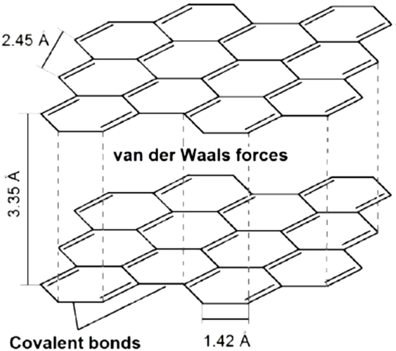
“r aals interactions bet een graphite layers [23].”
BackgroundLi, P., Cheng, C., Shen, K., Zhang, T., Wang, X., & Hsiao, B. S. (2019) · Advanced Fiber Materials · doi:10.1007/s42765-019-00005-y · Cited by 21 · cited 2×
“Synthesis of GO mbranes is a recent trend that applies to gas-selective permeability and to water purification [64,67].”
BackgroundIvanov, D. A., Dubreuil, N., Raussens, V., Ruysschaert, J., & Goormaghtigh, E. (2004) · Biophysical Journal · doi:10.1529/biophysj.104.041863 · Cited by 19
General Preparation and Shaping of Multifunctional Nanowire Aerogels for Pressure/Gas/Photo-Sensing
Liu, X., Chen, G., Bao, J., & Xu, X. (2021) · Advanced Fiber Materials · doi:10.1007/s42765-021-00076-w · Cited by 17
Nanocrystalline diamond sensor targeted for selective CRP detection: an ATR-FTIR spectroscopy study
Andersson, P. O., Viberg, P., Forsberg, P. S. H., Nikolajeff, F. K., Österlund, L., & Karlsson, M. (2016) · Analytical and Bioanalytical Chemistry · doi:10.1007/s00216-016-9485-0 · Cited by 13 · cited 1×
“However, all measurements start with recording the background spectra which results from the cleaned crystal surface [95].”
BackgroundFale, P. L. V., & Chan, K. L. A. (2016) · Vibrational Spectroscopy · doi:10.1016/j.vibspec.2016.07.012 · Cited by 12
Spin-polarized charge transfer induced by transition metal adsorption on graphene
del Castillo, E., Cargnoni, F., Soave, R., & Trioni, M. I. (2016) · Physica Scripta · doi:10.1088/0031-8949/91/5/053007 · Cited by 9
Nobel Chemistry Prize Goes to Curl, Kroto and Smalley for Discovering Fullerenes
Schwarzschild, B. M. (1996) · Physics Today · doi:10.1063/1.881572 · Cited by 5 · cited 1×
“For this discovery, they awarded the Nobel Prize in Chemistry in 1996, while a few years earlier, in 1991, fullerene was the Molecule of the Year [3].”
Method
Research works printed but not linked: 5
- Landau, 1937, Zur theorie der phase numwandlungen II, Phys. Z. Sowjetunion, 11, 26
- Schafhaeutl, 1840, On the combination of carbon with silicon and iron, and other metals, forming the different species of cast iron, steel, and malleable iron, Philos. Mag., 16, 570
- Charpy, 1909, Sur la formation de l’oxyde graphitique et la d’efnition du graphite, C. R. Hebd. Seances Acad. Sci., 148, 920
- Boehm, H.P., Clauss, A., Fischer, G., and Hofmann, U. (1962). Proceedings of the Fifth Conference on Carbon, Pergamon Press.
- Sotomayor, 2018, Characterization of micro/mesoporous materials by physisorption: Concepts and case studies, Acc. Mater. Surf. Res., 3, 34
Cited by
Tamang, S., Rai, S., Bhujel, R., Bhattacharyya, N. K., Swain, B. P., & Biswas, J. (2023) · Journal of Alloys and Compounds · doi:10.1016/j.jallcom.2023.169588 · Cited by 345
Lin, H., Buerki‐Thurnherr, T., Kaur, J., Wick, P., Pelin, M., Tubaro, A., Carniel, F. C., Tretiach, M., Emmanuel Flahaut, B., Iglesias, D., et al. (2024) · ACS Nano · doi:10.1021/acsnano.3c09699 · Cited by 146
Recent advances in energy storage with graphene oxide for supercapacitor technology
Mousavi, S. M., Hashemi, S. A., Kalashgrani, M. Y., Gholami, A., Binazadeh, M., Chiang, W., & Rahman, M. M. (2023) · Sustainable Energy & Fuels · doi:10.1039/d3se00867c · Cited by 90
Mechanism of polymer composite-based nanomaterial for biomedical applications
Solangi, N. H., Karri, R. R., Mubarak, N. M., & Mazari, S. A. (2023) · Advanced Industrial and Engineering Polymer Research · doi:10.1016/j.aiepr.2023.09.002 · Cited by 80
Unlocking the potential of 2D nanomaterials for sustainable intelligent packaging
Jafarzadeh, S., Nooshkam, M., Qazanfarzadeh, Z., Oladzadabbasabadi, N., Strachowski, P., Rabiee, N., Shirvanimoghaddam, K., Abdollahi, M., & Naebe, M. (2024) · Chemical Engineering Journal · doi:10.1016/j.cej.2024.151711 · Cited by 75
Metadata
- Authors
- Trikkaliotis, D. G., Christoforidis, A. K., Mitropoulos, A. C., & Kyzas, G. Z.
- Affiliations
- International Hellenic University (GR)
- Department of Chemistry, International Hellenic University, GR-65404 Kavala, Greece
- Corresponding author
- Kyzas, George Z.
- ORCID
- Kyzas, George Z.
- Venue
- ChemEngineering
- Publisher
- MDPI AG
- Published
- 2021-09-17
- Volume
- 5
- Issue
- 3
- Pages
- 64
- ISSN
- 2305-7084 (ISSN-L)
- OpenAlex
- W3199973348
- Cited by
- 135
- References
- 99
- Citations by year
- 2026: 41 · 2025: 39 · 2024: 22 · 2023: 28 · 2022: 5
- FWCI
- 4.18
- Type
- journal article
- Language
- en
- Open access
- gold
- doi.org
- Licence
- Locations
- ChemEngineering (publishedVersion, cc-by)
- DOAJ (DOAJ: Directory of Open Access Journals) (submittedVersion, cc-by-sa)
- Topics
- Physical Sciences › Materials Science › Materials Chemistry › Graphene research and applications
- Physical Sciences › Engineering › Biomedical Engineering › Graphene and Nanomaterials Applications
- Physical Sciences › Materials Science › Materials Chemistry › Graphite, nuclear technology, radiation studies
- Keywords
- graphene oxide, graphene oxide synthesis, reduced graphene oxide, thermal exfoliation, oxygen-containing functional groups, carbon allotropes, graphene, characterization techniques, X-ray diffraction, FTIR spectroscopy, atomic force microscopy, SEM-EDS, UV-Vis spectroscopy
About these checks
Registry, retraction, Cites and statistics results are computed, not judged, with one exception: a printed reference that no index lists is read once by a model before it counts as a citation error. Claims are extracted by a model and kept only when their quote appears verbatim in the text; each cited source is then checked, with a model’s help, for whether it says what the claim relies on. Those verdicts can be wrong — read the claim’s quote and the cited source before relying on one.
Statistics and arithmetic are recomputed, not judged.
Confidence bands are shown only for fields calibrated on our annotated test set. None is calibrated yet, so no band is shown.
What counts as a claim ›How we measure confidence ›How we check this ›
Are you an author, or do you see a problem with this page? Request a review
Data sources
Bibliographic data: Semantic Scholar, OpenAlex, Crossref.
Contains information from the Semantic Scholar Academic Graph Datasets, made available under the ODC Attribution License (ODC-BY 1.0).
Semantic Scholar’s data is described in: Kinney, R., et al. (2023). The Semantic Scholar Open Data Platform. arXiv:2301.10140.
