

The DOI matches its Crossref record; 1 of the 1 references it cites were found in a registry or an index.
Selected Technical Aspects of Molecular Allergy Diagnostics
Abstract
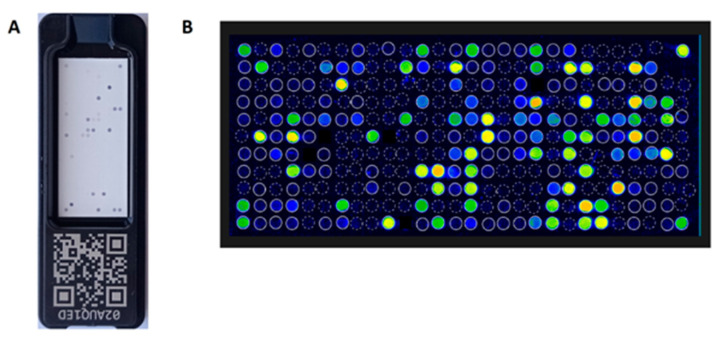
Diagnosis of allergic diseases is a complex, multi-stage process. It often requires the use of various diagnostic tools. The in vitro diagnostics (IVD), which includes various laboratory tests, is one of the stages of this process. Standard laboratory tests include the measurement of the serum concentration of specific immunoglobulin E (sIgE) for selected allergens, full allergen extracts and/or single allergen components (molecules). The measurement of IgE sIgE to the allergen components is called molecular allergy diagnosis. During the standard laboratory diagnostic process, various models of immunochemical tests are used, which enable the measurement of sIgE for single allergens (one-parameter tests, singleplex) or IgE specific for many different allergens (multi-parameter tests, multiplex) in one test. Currently, there are many different test kits available, validated for IVD, which differ in the method type and allergen profile. The aim of the manuscript is to present various technical aspects related to modern allergy diagnostics, especially in the area of molecular allergy diagnostics.
Overview
The claims and statistics of this paper haven’t been checked yet.
Run the check — free, no account needed. It reads the open-access text and checks the sources it cites.
Integrity signals
Registry
Cites
Statistics
Figures
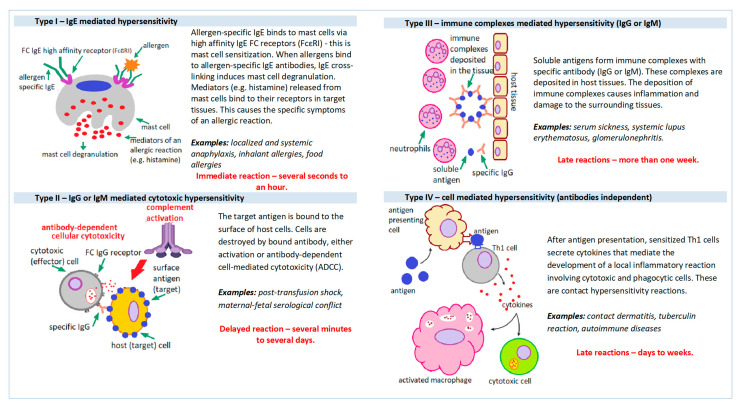
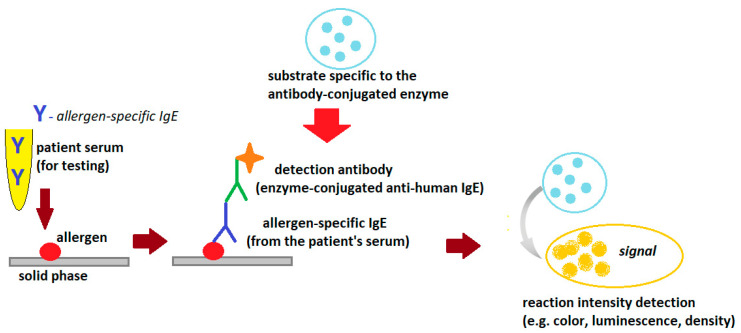
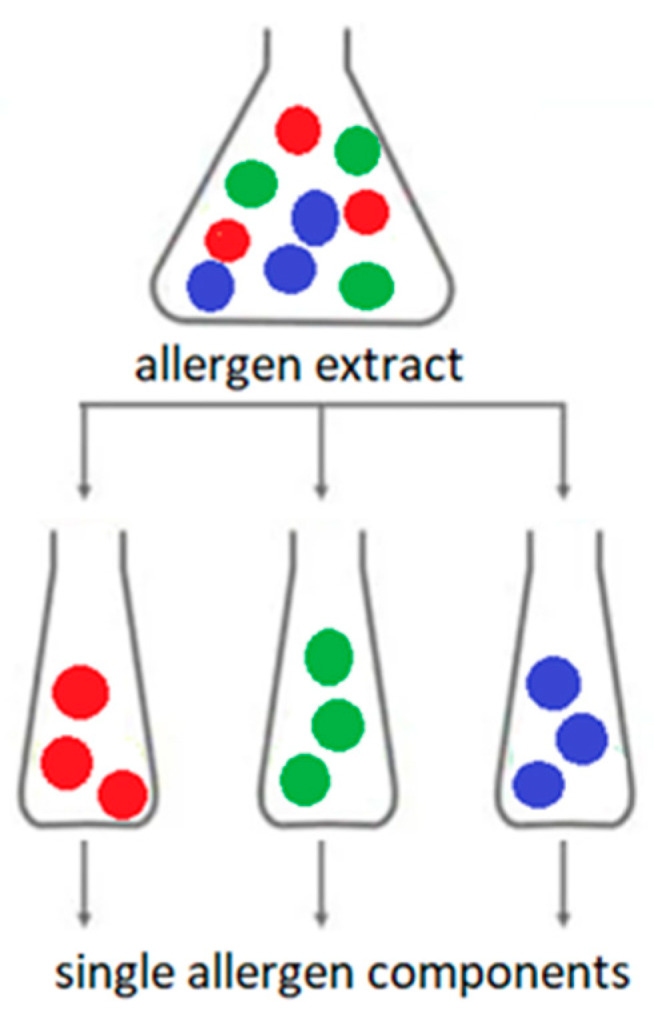
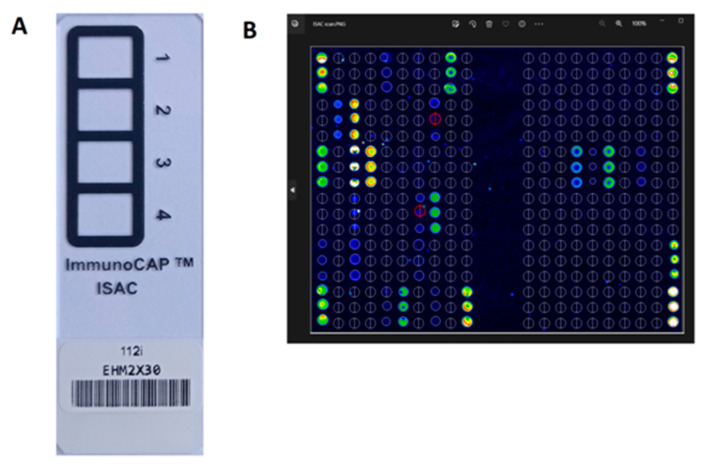
Verification
Claims the paper makes
The claims and statistics of this paper haven’t been checked yet.
Run the check — free, no account needed. It reads the open-access text and checks the sources it cites.
Claims other papers make about this one
Each is checked against this paper’s own text: does it say what the citing paper says it does?
In the citing paper
“However, ISAC results are semi-quantitative, meaning they are less precise than ImmunoCAP's fully quantitative measurements [202].”
From Pollen–Food Allergy Syndrome: Allergens, Clinical Insights, Diagnostic and Therapeutic Challenges (2024) · cites this paper as [202]
In the citing paper
“Multiplex assay testing IgE to > 100 allergenic components on a microarray chip.”
From Pollen–Food Allergy Syndrome: Allergens, Clinical Insights, Diagnostic and Therapeutic Challenges (2024) · cites this paper as [202]
In the citing paper
“Multiplex assay testing IgE to > 300 whole allergens and molecular components on an allergen array.”
From Pollen–Food Allergy Syndrome: Allergens, Clinical Insights, Diagnostic and Therapeutic Challenges (2024) · cites this paper as [202]
In the citing paper
“Singleplex assay that measures IgE to one allergen or component per test.”
From Pollen–Food Allergy Syndrome: Allergens, Clinical Insights, Diagnostic and Therapeutic Challenges (2024) · cites this paper as [202]
Self-check
Percentages, sums and reported differences re-computed from the paper’s own numbers.
The self-check needs the paper’s full text.
Citations
Cites
Westwood, M., Ramaekers, B., Lang, S., Armstrong, N., Noake, C., de Kock, S., Joore, M., Severens, J., & Kleijnen, J. (2016) · Health Technology Assessment · doi:10.3310/hta20670 · Cited by 49
Research works printed but not linked: 42
- Tanno, 2016, Dissemination of definitions and concepts of allergic and hypersensitivity conditions, World Allergy Organ J., 9, 24, 10.1186/s40413-016-0115-2 · DOI
- Dispenza, 2019, Classification of hypersensitivity reactions, Allergy Asthma Proc., 40, 470, 10.2500/aap.2019.40.4274 · DOI
- Muraro, 2014, EAACI Food Allergy and Anaphylaxis Guidelines Group. EAACI food allergy and anaphylaxis guidelines: Diagnosis and management of food allergy, Allergy, 69, 1008, 10.1111/all.12429 · DOI · Paper page
- Ansotegui, 2020, IgE allergy diagnostics and other relevant tests in allergy, a World Allergy Organization position paper, World Allergy Organ J., 13, 100080, 10.1016/j.waojou.2019.100080 · DOI · Paper page
- Jakob, 2015, Molecular allergy diagnostics using IgE singleplex determinations: Methodological and practical considerations for use in clinical routine: Part 18 of the Series Molecular Allergology, Allergo J. Int., 24, 185, 10.1007/s40629-015-0087-8 · DOI
- Jakob, 2015, Molecular allergy diagnostics using multiplex assays: Methodological and practical considerations for use in research and clinical routine: Part 21 of the Series Molecular Allergology, Allergo J. Int., 24, 320, 10.1007/s40629-015-0087-8 · DOI
- Wauthier, L., Cabo, J., Eucher, C., Rosseels, C., Elsen, M., and Favresse, J. (2023). Biotin interference in immunoassays: Water under the bridge?. Clin. Chem. Lab. Med., advance online publication. · DOI
- Liu, D., Gebreab, Y.B., Hu, J., Zhou, L., Zhang, N., Tong, H., Chen, B., and Wang, X. (2022). Development and Evaluation of an Anti-Biotin Interference Method in Biotin-Streptavidin Immunoassays. Diagnostics, 12. · DOI
- Yunginger, 2000, Quantitative IgE antibody assays in allergic diseases, J. Allergy Clin. Immunol., 105, 1077, 10.1067/mai.2000.107041 · DOI
- Hamilton, 2015, Analytical performance characteristics, quality assurance and clinical utility of immunological assays for human immunoglobulin E (IgE) antibodies of defined allergen specificities, J. Allergy Clin. Immunol., 135, AB8, 10.1016/j.jaci.2014.12.961 · DOI
- Schmidta, 2002, Expression systems for production of recombinant allergens, Int. Arch. Allergy Immunol., 128, 264, 10.1159/000063865 · DOI
- Tscheppe, 2017, Recombinant Allergens in Structural Biology, Diagnosis, and Immunotherapy, Int. Arch. Allergy Immunol., 172, 187, 10.1159/000464104 · DOI
- Curin, 2017, Single recombinant and purified major allergens and peptides: How they are made and how they change allergy diagnosis and treatment, Ann. Allergy Asthma. Immunol., 119, 201, 10.1016/j.anai.2016.11.022 · DOI
- Jutel, 2012, Recombinant allergens: The present and the future, Hum. Vaccin. Immunother., 8, 1534, 10.4161/hv.22064 · DOI
- Kleine-Tebb, J., and Jakob, T. (2017). Molecular Allergy Diagnostics Innovation for a Better Patient Management, Springer International Publishing. · DOI
- Siekierzynska, A., Piasecka-Kwiatkowska, D., Litwinczuk, W., Burzynska, M., Myszka, A., Karpinski, P., Zygala, E., Piorecki, N., Springer, E., and Sozanski, T. (2021). Molecular and Immunological Identification of Low Allergenic Fruits among Old and New Apple Varieties. Int. J. Mol. Sci., 22. · DOI
- Ferrari, E., Breda, D., Spisni, A., and Burastero, S.E. (2023). Component-Resolved Diagnosis Based on a Recombinant Variant of Mus m 1 Lipocalin Allergen. Int. J. Mol. Sci., 24. · DOI
- Luengo, 2022, Molecular Allergy Diagnosis in Clinical Practice: Frequently Asked Questions, J. Investig. Allergol. Clin. Immunol., 32, 1, 10.18176/jiaci.0769 · DOI · Paper page
- Barber, 2021, Molecular allergology and its impact in specific allergy diagnosis and therapy, Allergy, 76, 3642, 10.1111/all.14969 · DOI · Paper page
- Ansotegui, 2020, A WAO–ARIA–GA2LEN consensus document on molecular-based allergy diagnosis (PAMD@): Update 2020, World Allergy Organ J., 13, 100091, 10.1016/j.waojou.2019.100091 · DOI · Paper page
- Neagu, 2019, Protein microarray technology: Assisting personalized medicine in oncology (Review), World Acad. Sci. J., 1, 113
- Melioli, 2014, Allergenius, an expert system for the interpretation of allergen microarray results, World Allergy Organ J., 7, 15, 10.1186/1939-4551-7-15 · DOI
- Bojcukova, 2019, Comparison of two multiplex arrays in the diagnostics of allergy, Clin. Transl. Allergy, 9, 31, 10.1186/s13601-019-0270-y · DOI
- Platteel, 2022, A comprehensive comparison between ISAC and ALEX2 multiplex test systems, Clin. Chem. Lab. Med., 60, 1046, 10.1515/cclm-2022-0191 · DOI
- Alessandri, 2017, Diagnosing allergic sensitizations in the third millennium: Why clinicians should know allergen molecule structures, Clin. Transl. Allergy, 7, 21, 10.1186/s13601-017-0158-7 · DOI
- Martins, 2014, Biological applications of nanobiotechnology, J. Nanosci. Nanotechnol., 14, 1007, 10.1166/jnn.2014.8748 · DOI
- Salata, 2004, Applications of nanoparticles in biology and medicine, J. Nanotechnol., 2, 3
- Reagen, S., and Zhao, J.X. (2022). Analysis of Nanomaterials on Biological and Environmental Systems and New Analytical Methods for Improved Detection. Int. J. Mol. Sci., 23. · DOI
- Popescu, 2018, Precision medicine allergy immunoassay methods for assessing immunoglobulin E sensitization to aeroallergen molecules, World J. Methodol., 8, 17, 10.5662/wjm.v8.i3.17 · DOI · Paper page
- Heffler, 2018, Extended IgE profile based on an allergen macroarray: A novel tool for precision medicine in allergy diagnosis, World Allergy Organ J., 11, 7, 10.1186/s40413-018-0186-3 · DOI
- Kochuyt, 2005, Prevalence and clinical relevance of specific immunoglobulin E to pollen caused by sting-induced specific immunoglobulin E to cross-reacting carbohydrate determinants in Hymenoptera venoms, Clin. Exp. Allergy, 35, 441, 10.1111/j.1365-2222.2005.02217.x · DOI
- Mari, 2002, IgE to cross-reactive carbohydrate determinants: Analysis of the distribution and appraisal of the in vivo and in vitro reactivity, Int. Arch. Allergy Immunol., 129, 286, 10.1159/000067591 · DOI
- Altmann, 2016, Coping with cross-reactive carbohydrate determinants in allergy diagnosis, Allergo J. Int., 25, 98, 10.1007/s40629-016-0115-3 · DOI · Paper page
- Chen, 2022, Cross-Reacting Carbohydrate Determinants Inhibitor Can Improve the Diagnostic Accuracy in Pollen and Food Allergy, J. Asthma Allergy, 15, 713, 10.2147/JAA.S363206 · DOI · Paper page
- Sinson, E., Ocampo, C., Liao, C., Nguyen, S., Dinh, L., Rodems, K., Whitters, E., and Hamilton, R.G. (2020). Cross-reactive carbohydrate determinant interference in cellulose-based IgE allergy tests utilizing recombinant allergen components. PLoS ONE, 15. · DOI
- Luo, 2021, CCD Inhibition Test Can Improve the Accuracy of the Detection of Pollen and Seed Food Allergen-Specific IgE in Southern China, J. Asthma Allergy, 14, 439, 10.2147/JAA.S302920 · DOI
- Holzweber, 2013, Inhibition of IgE binding to cross-reactive carbohydrate determinants enhances diagnostic selectivity, Allergy, 68, 1269, 10.1111/all.12229 · DOI
- Villalta, 2018, Recommendations for the use of molecular diagnostics in the diagnosis of allergic diseases, Eur. Ann. Allergy Clin. Immunol., 50, 51, 10.23822/EurAnnACI.1764-1489.32 · DOI
- Peveri, 2019, Molecular diagnostics improves diagnosis and treatment of respiratory allergy and food allergy with economic optimization and cost saving, Allergol. Immunopathol., 47, 64, 10.1016/j.aller.2018.05.008 · DOI
- Diem, 2022, Real-life evaluation of molecular multiplex IgE test methods in the diagnosis of pollen associated food allergy, Allergy, 77, 3028, 10.1111/all.15329 · DOI
- Santos, 2022, Bringing the Next Generation of Food Allergy Diagnostics into the Clinic, J. Allergy Clin. Immunol. Pract., 10, 1, 10.1016/j.jaip.2021.09.009 · DOI · Paper page
- Suprun, 2019, Novel Bead-Based Epitope Assay is a sensitive and reliable tool for profiling epitope-specific antibody repertoire in food allergy, Sci. Rep., 9, 18425, 10.1038/s41598-019-54868-7 · DOI · Paper page
Cited by
Sorted by citations
Pollen–Food Allergy Syndrome: Allergens, Clinical Insights, Diagnostic and Therapeutic Challenges
Haidar, L., Bănărescu, C. F., Uța, C., Moldovan, S. I., Zimbru, E.-L., Zimbru, R.-I., Ciurariu, E., Georgescu, M., & Panaitescu, C. (2024) · Applied Sciences · doi:10.3390/app15010066 · Cited by 21
Metadata
- Authors
- Lis, K., & Bartuzi, Z.
- Affiliations
- Department of Allergology, Clinical Immunology and Internal Medicine, Ludwik Rydygier Collegium Medicum in Bydgoszcz, Nicolaus Copernicus University in Toruń, 85-168 Bydgoszcz, Poland
- Venue
- Current Issues in Molecular Biology
- Publisher
- MDPI AG
- Published
- 2023-06-29
- Volume
- 45
- Issue
- 7
- Pages
- 5481-5493
- ISSN
- 1467-3045
- PMC
- PMC10378047
- Cited by
- 24
- References
- 1
- Language
- en
About these checks
Registry, retraction, Cites and statistics results are computed, not judged, with one exception: a printed reference that no index lists is read once by a model before it counts as a citation error. Claims are extracted by a model and kept only when their quote appears verbatim in the text; each cited source is then checked, with a model’s help, for whether it says what the claim relies on. Those verdicts can be wrong — read the claim’s quote and the cited source before relying on one.
Statistics and arithmetic are recomputed, not judged.
Confidence bands are shown only for fields calibrated on our annotated test set. None is calibrated yet, so no band is shown.
What counts as a claim ›How we measure confidence ›How we check this ›
Are you an author, or do you see a problem with this page? Request a review
