

Experimental Analysis of Hyperparameters for Deep Learning-Based Churn Prediction in the Banking Sector
Open accessThe DOI matches its Crossref record; 43 of the 43 references it cites were found in a registry or an index.
Abstract
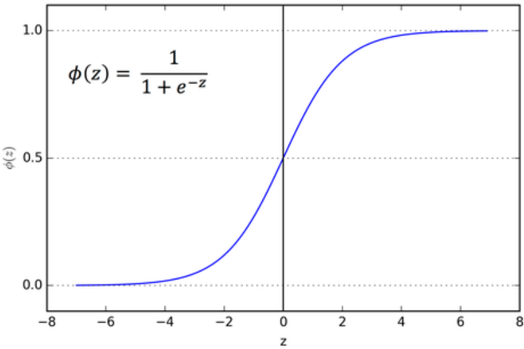
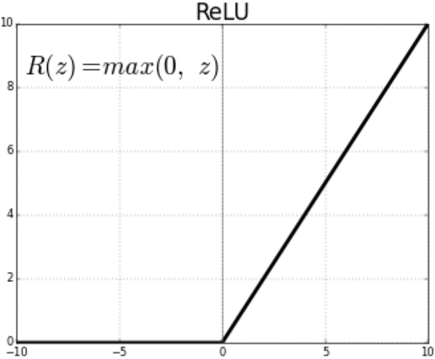
Until recently, traditional machine learning techniques (TMLTs) such as multilayer perceptrons (MLPs) and support vector machines (SVMs) have been used successfully for churn prediction, but with significant efforts expended on the configuration of the training parameters. The selection of the right training parameters for supervised learning is almost always experimentally determined in an ad hoc manner. Deep neural networks (DNNs) have shown significant predictive strength over TMLTs when used for churn predictions. However, the more complex architecture of DNNs and their capacity to process huge amounts of non-linear input data demand more time and effort to configure the training hyperparameters for DNNs during churn modeling. This makes the process more challenging for inexperienced machine learning practitioners and researchers. So far, limited research has been done to establish the effects of different hyperparameters on the performance of DNNs during churn prediction. There is a lack of empirically derived heuristic knowledge to guide the selection of hyperparameters when DNNs are used for churn modeling. This paper presents an experimental analysis of the effects of different hyperparameters when DNNs are used for churn prediction in the banking sector. The results from three experiments revealed that the deep neural network (DNN) model performed better than the MLP when a rectifier function was used for activation in the hidden layers and a sigmoid function was used in the output layer. The performance of the DNN was better when the batch size was smaller than the size of the test set data, while the RemsProp training algorithm had better accuracy when compared with the stochastic gradient descent (SGD), Adam, AdaGrad, Adadelta, and AdaMax algorithms. The study provides heuristic knowledge that could guide researchers and practitioners in machine learning-based churn prediction from the tabular data for customer relationship management in the banking sector when DNNs are used.
Overview
The claims and statistics of this paper haven’t been checked yet.
Free: it reads the open-access text and checks the first 5 claims that cite a source we can check. Create a free account to check every claim.
Integrity signals
Registry
Cites
Statistics
Figures
Verification
Claims the paper makes
The claims and statistics of this paper haven’t been checked yet.
Free: it reads the open-access text and checks the first 5 claims that cite a source we can check. Create a free account to check every claim.
Claims other papers make about this one
Each is checked against this paper’s own text: does it say what the citing paper says it does?
The cited source says what the claim attributes to it.
In the citing paper
“Moreover, the RemsProp training approach outperformed”
From Improved Churn Causal Analysis Through Restrained High-Dimensional Feature Space Effects in Financial Institutions (2022) · cites this paper as [1]
Self-check
Percentages, sums and reported differences re-computed from the paper’s own numbers.
The self-check needs the paper’s full text.
Citations
Cites
ADADELTA: An Adaptive Learning Rate Method
Zeiler, M. D. (2012) · arXiv · doi:10.48550/arxiv.1212.5701 · Cited by 5,322
Searching for activation functions
Ramachandran, P., Zoph, B., & Le, Q. V. (2017) · arXiv · doi:10.48550/arxiv.1710.05941 · Cited by 2,335 · cited 3×
“This was because, according to [50], the closer the batch size to the test set number (close to 2000), the faster the performance tends to drop because of the limited time to process each row individually.”
BackgroundInfluentialLeCun, Y. A., Bottou, L., Orr, G. B., & Müller, K.-R. (2012) · Lecture Notes in Computer Science · doi:10.1007/978-3-642-35289-8_3 · Cited by 1,264
A Survey of Deep Learning: Platforms, Applications and Emerging Research Trends
Hatcher, W. G., & Yu, W. (2018) · IEEE Access · doi:10.1109/access.2018.2830661 · Cited by 654 · cited 1×
“Deep Learning Methods for Churn Management in the Banking Sector Deep learning, because of its good features and representation of input data, has exploded in the public consciousness, mainly for predictive and analytical tools in different application domains, including churn prediction, pattern recognition, targeted…”
BackgroundDe Caigny, A., Coussement, K., & De Bock, K. W. (2018) · European Journal of Operational Research · doi:10.1016/j.ejor.2018.02.009 · Cited by 524
A comparison of machine learning techniques for customer churn prediction
Vafeiadis, T., Diamantaras, K. I., Sarigiannidis, G., & Chatzisavvas, K. C. (2015) · Simulation Modelling Practice and Theory · doi:10.1016/j.simpat.2015.03.003 · Cited by 471
Customer churn prediction in telecom using machine learning in big data platform
Ahmad, A. K., Jafar, A., & Aljoumaa, K. (2019) · Journal of Big Data · doi:10.1186/s40537-019-0191-6 · Cited by 421
Machine Learning at Central BanksPreprint
Chakraborty, C., & Joseph, A. C. (2017) · SSRN Electronic Journal · doi:10.2139/ssrn.3031796 · Cited by 233
Churn prediction using comprehensible support vector machine: An analytical CRM application
Farquad, M. A. H., Ravi, V., & Raju, S. B. (2014) · Applied Soft Computing · doi:10.1016/j.asoc.2014.01.031 · Cited by 175
Machine-Learning Techniques for Customer Retention: A Comparative Study
F., S. (2018) · International Journal of Advanced Computer Science and Applications · doi:10.14569/ijacsa.2018.090238 · Cited by 173
Khodabandehlou, S., & Rahman, M. Z. (2017) · Journal of Systems and Information Technology · doi:10.1108/jsit-10-2016-0061 · Cited by 154
Developing a prediction model for customer churn from electronic banking services using data mining
Keramati, A., Ghaneei, H., & Mirmohammadi, S. M. (2016) · Financial Innovation · doi:10.1186/s40854-016-0029-6 · Cited by 150
Kim, A., Yang, Y., Lessmann, S., Ma, T., Sung, M., & JOHNSON, J. E. V. (2019) · European Journal of Operational Research · doi:10.1016/j.ejor.2019.11.007 · Cited by 147
A big data analytics model for customer churn prediction in the retiree segment
Shirazi, F., & Mohammadi, M. (2018) · International Journal of Information Management · doi:10.1016/j.ijinfomgt.2018.10.005 · Cited by 136
Ali, Ö. G., & Arıtürk, U. (2014) · Expert Systems with Applications · doi:10.1016/j.eswa.2014.06.018 · Cited by 132
Aluri, A., Price, B. S., & McIntyre, N. H. (2018) · Journal of Hospitality & Tourism Research · doi:10.1177/1096348017753521 · Cited by 130
Prediction of Customer Attrition of Commercial Banks based on SVM Model
He, B., Shi, Y., Wan, Q., & Zhao, X. (2014) · Procedia Computer Science · doi:10.1016/j.procs.2014.05.286 · Cited by 123
Randomized smoothing for (parallel) stochastic optimization
Duchi, J. C., Bartlett, P. L., & Wainwright, M. J. (2012) · IEEE Conference on Decision and Control (CDC) · doi:10.1109/cdc.2012.6426698 · Cited by 114
Predicting Customer Churn in Banking Industry using Neural Networks
Zorić, A. B. (2016) · Interdisciplinary Description of Complex Systems · doi:10.7906/indecs.14.2.1 · Cited by 106
Ogwueleka, F. N., Misra, S., Colomo‐Palacios, R., & Sanz, L. F. (2012) · Human Factors and Ergonomics in Manufacturing & Service Industries · doi:10.1002/hfm.20398 · Cited by 82
Improving customer retention in financial services using kinship network information
Benoit, D. F., & den Poel, D. V. (2012) · Expert Systems with Applications · doi:10.1016/j.eswa.2012.04.016 · Cited by 79
Predicting customer churn through interpersonal influence
Zhang, X., Zhu, J., Xu, S., & Wan, Y. (2011) · Knowledge-Based Systems · doi:10.1016/j.knosys.2011.12.005 · Cited by 78
Evolutionary computing applied to customer relationship management: A survey
Krishna, G. J., & Ravi, V. (2016) · Engineering Applications of Artificial Intelligence · doi:10.1016/j.engappai.2016.08.012 · Cited by 67
Lee, H., Lee, Y., Cho, H., Im, K., & Kim, Y. S. (2011) · Decision Support Systems · doi:10.1016/j.dss.2011.07.005 · Cited by 66
Behavioral attributes and financial churn prediction
Kaya, E., Dong, X., Suhara, Y., Balcisoy, S. S., Bozkaya, B., & Pentland, A. (2018) · EPJ Data Science · doi:10.1140/epjds/s13688-018-0165-5 · Cited by 66
Customer Churn Analysis and Prediction Using Data Mining Models in Banking Industry
Karvana, K. G. M., Yazid, S., Syalim, A., & Mursanto, P. (2019) · International Workshop on Big Data and Information Security (IWBIS) · doi:10.1109/iwbis.2019.8935884 · Cited by 62
Deep Learning and Implementations in Banking
Hassani, H., Huang, X., Silva, E. S., & Ghodsi, M. (2020) · Annals of Data Science · doi:10.1007/s40745-020-00300-1 · Cited by 48
Churn Prediction with Sequential Data and Deep Neural Networks. A Comparative AnalysisPreprint
Mena, C. G., Caigny, A. D., Coussement, K., Bock, K. W. D., & Lessmann, S. (2019) · arXiv (Cornell University) · doi:10.48550/arxiv.1909.11114 · Cited by 45
The Research of Online Shopping Customer Churn Prediction Based on Integrated Learning
Xia, G., & He, Q. (2018) · International Conference on Mechanical, Electronic, Control and Automation Engineering (MECAE) · doi:10.2991/mecae-18.2018.133 · Cited by 18
Churning of Bank Customers Using Supervised Learning
Dalmia, H., Nikil, C. V. S. S., & Kumar, S. (2020) · Lecture notes in networks and systems · doi:10.1007/978-981-15-3172-9_64 · Cited by 18
Hegde, S. K., & Mundada, M. R. (2019) · International Journal of Intelligent Systems and Applications · doi:10.5815/ijisa.2019.07.02 · Cited by 14
An Optimal Churn Prediction Model using Support Vector Machine with Adaboost
Kumar, A., & Chandrakala, D. (2017) · International Journal of Scientific Research in Computer Science Engineering and Information Technology · doi:10.32628/cseit172155 · Cited by 14
Gorgoglione, M., & Panniello, U. (2011) · Journal of Intelligent Learning Systems and Applications · doi:10.4236/jilsa.2011.32011 · Cited by 13
Deep Ensemble Classifiers and Peer Effects Analysis for Churn Forecasting in Retail Banking
Chen, Y., Gel, Y. R., Lyubchich, V., & Winship, T. (2018) · Lecture notes in computer science · doi:10.1007/978-3-319-93034-3_30 · Cited by 11
L-RBF: A Customer Churn Prediction Model Based on Lasso + RBF
Xiong, A., You, Y., & Long, L. (2019) · IEEE International Conference on Internet of Things (iThings) and IEEE Green Computing and Communications (GreenCom) and IEEE Cyber, Physical and Social Computing (CPSCom) and IEEE Smart Data (SmartData) · doi:10.1109/ithings/greencom/cpscom/smartdata.2019.00121 · Cited by 8
A Dynamic Classification Approach to Churn Prediction in Banking Industry.
Leung, H. C., & Chung, W. (2020) · Journal of the Association for Information Systems · Cited by 8
Prediction of Customer Status in Corporate Banking Using Neural Networks
Osowski, S., & Sierenski, L. (2020) · International Joint Conference on Neural Networks (IJCNN) · doi:10.1109/ijcnn48605.2020.9206693 · Cited by 7
Machine Learning Techniques for Customer Churn Prediction in Banking Environments
Avon, V. (2016) · Cited by 6
Predicting Customer Churn Using Recurrent Neural Networks
Ljungehed, J. (2017) · KTH Publication Database DiVA (KTH Royal Institute of Technology) · Cited by 6
Churn prediction using customers' implicit behavioral patterns and deep learning
Tanveer, A. (2019) · Sabanci University · Cited by 6
A Study on Customer Churn of Commercial Banks Based on Learning from Label Proportions
Li, Y., & Wang, B. (2018) · IEEE ... International Conference on Data Mining workshops · doi:10.1109/icdmw.2018.00177 · Cited by 5
Customers Churn Prediction in Financial Institution Using Artificial Neural NetworkPreprint
Amuda, K. A., & Adeyemo, A. B. (2019) · arXiv (Cornell University) · doi:10.48550/arxiv.1912.11346 · Cited by 5
Pandey, A. S., & Shukla, K. K. (2020) · Advances in intelligent systems and computing · doi:10.1007/978-981-15-5619-7_7 · Cited by 4
Research works printed but not linked: 7
- Satria, 2020, Prediction of customer churn in the banking industry using artificial neural networks, J. Mantik, 4, 10
- Prasad, 2012, Prediction of churn behavior of bank customers, Bus. Intell. J., 5, 96
- Iranmanesh, S.H., Hamid, M., Bastan, M., Hamed Shakouri, G., and Nasiri, M.M. (2019, January 23–26). Customer churn prediction using artificial neural network: An analytical CRM application. Proceedings of the International Conference on Industrial Engineering and Operations Management, Pilsen, Czech Republic.
- Jagadeesan, 2020, Bank customer retention prediction and customer ranking based on deep neural networks, Int. J. Sci. Dev. Res., 5, 444
- Witten, I., Frank, E., and Hall, M. (2011). Data Mining: Practical Machine Learning Tools and Techniques, Morgan Kaufmann Publishers. [3rd ed.].
- Kingma, D., and Ba, J.L. (2015, January 7–9). Adam: Az method for stochastic optimization. Proceedings of the 3rd International Conference on Learning Representations (ICLR) 2015, San Diego, CA, USA.
- Umayaparvathi, 2017, Automated feature selection and churn prediction using deep learning models, Int. Res. J. Eng. Technol., 4, 1846
Cited by
Manzoor, A., Qureshi, M. A., Kidney, E., & Longo, L. (2024) · IEEE Access · doi:10.1109/access.2024.3402092 · Cited by 232
Customer churning analysis using machine learning algorithms
Prabadevi, B., Shalini, R. S., & Kavitha, B. R. (2023) · International Journal of Intelligent Networks · doi:10.1016/j.ijin.2023.05.005 · Cited by 117
Singh, P. P., Anik, F. I., Senapati, R., Sinha, A., Sakib, N., & Hossain, E. (2023) · Data Science and Management · doi:10.1016/j.dsm.2023.09.002 · Cited by 138
Machine Learning to Develop Credit Card Customer Churn Prediction
Al-Najjar, D., Al‐Rousan, N., & Al-Najjar, H. M. (2022) · Journal of theoretical and applied electronic commerce research · doi:10.3390/jtaer17040077 · Cited by 79
Imani, M., Joudaki, M., Beikmohammadi, A., & Arabnia, H. R. (2025) · Machine Learning and Knowledge Extraction · doi:10.3390/make7030105 · Cited by 155
Metadata
- Authors
- Domingos, E., Ojeme, B., & Daramola, O.
- Affiliations
- Cape Peninsula University of Technology (ZA)
- Corresponding author
- Daramola, Olawande
- Venue
- Computation
- Publisher
- MDPI AG
- Published
- 2021-03-16
- Volume
- 9
- Issue
- 3
- Pages
- 34
- ISSN
- 2079-3197 (ISSN-L)
- OpenAlex
- W3137488793
- Cited by
- 77
- References
- 42
- Citations by year
- 2026: 6 · 2025: 14 · 2024: 20 · 2023: 16 · 2022: 15 · 2021: 6
- FWCI
- 13.10
- Type
- journal article
- Language
- en
- Open access
- gold
- doi.org
- Licence
- Locations
- Computation (publishedVersion, cc-by)
- DOAJ (DOAJ: Directory of Open Access Journals) (submittedVersion, cc-by-sa)
- Topics
- Social Sciences › Business, Management and Accounting › Marketing › Customer churn and segmentation
- Physical Sciences › Computer Science › Artificial Intelligence › Machine Learning and Data Classification
- Physical Sciences › Computer Science › Artificial Intelligence › Neural Networks and Applications
- Keywords
- customer churn prediction, hyperparameter optimization, deep neural network, bank customers, activation functions, batch size, optimizer comparison, RMSProp, Adam optimizer, tabular data, customer relationship management, heuristic knowledge
About these checks
Registry, retraction, Cites and statistics results are computed, not judged, with one exception: a printed reference that no index lists is read once by a model before it counts as a citation error. Claims are extracted by a model and kept only when their quote appears verbatim in the text; each cited source is then checked, with a model’s help, for whether it says what the claim relies on. Those verdicts can be wrong — read the claim’s quote and the cited source before relying on one.
Statistics and arithmetic are recomputed, not judged.
Confidence bands are shown only for fields calibrated on our annotated test set. None is calibrated yet, so no band is shown.
What counts as a claim ›How we measure confidence ›How we check this ›
Are you an author, or do you see a problem with this page? Request a review
Data sources
Bibliographic data: Semantic Scholar, OpenAlex, Crossref.
Contains information from the Semantic Scholar Academic Graph Datasets, made available under the ODC Attribution License (ODC-BY 1.0).
Semantic Scholar’s data is described in: Kinney, R., et al. (2023). The Semantic Scholar Open Data Platform. arXiv:2301.10140.
