

Cosmetic Packaging to Save the Environment: Future Perspectives
Open accessThe DOI matches its Crossref record; 66 of the 66 references it cites were found in a registry or an index.
Abstract
Consumer awareness about the damages that plastic packaging waste cause to the environment, coupled with bio-economy and circular economy policies, are pushing plastic packaging versus the use of bio-based and biodegradable materials. In this contest, even cosmetic packaging is looking for sustainable solutions, and research is focusing on modifying bio-based and biodegradable polymers to meet the challenging requirements for cosmetic preservation, while maintaining sustainability and biodegradability. Several bio-based and biodegradable polymers such as poly(lactic acid), polyhydroxyalkanoates, polysaccharides, etc., are available, and some first solutions for both rigid and flexible packaging are already present on the market, while many others are under study and optimization. A fruitful cooperation among researchers and industries will drive the cosmetic sector toward being more ecological and contributing to save our environment.
Overview
The claims and statistics of this paper haven’t been checked yet.
Free: it reads the open-access text and checks the first 5 claims that cite a source we can check. Create a free account to check every claim.
Integrity signals
Registry
Cites
Statistics
Figures
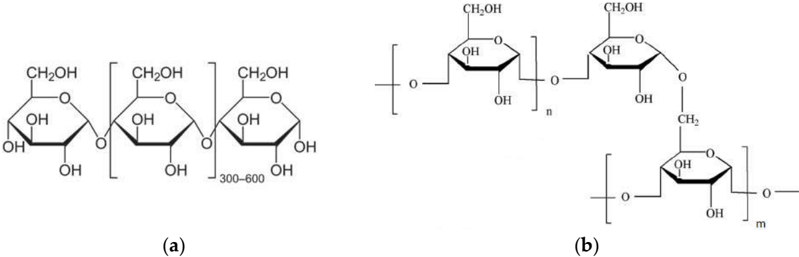
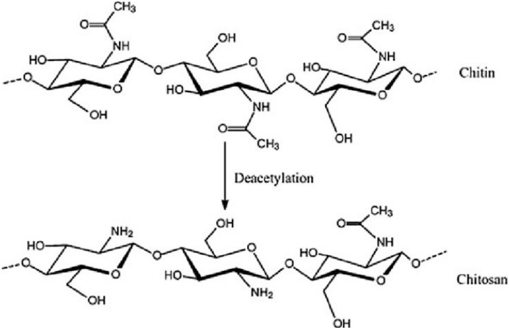
Verification
Claims the paper makes
The claims and statistics of this paper haven’t been checked yet.
Free: it reads the open-access text and checks the first 5 claims that cite a source we can check. Create a free account to check every claim.
Claims other papers make about this one
Each is checked against this paper’s own text: does it say what the citing paper says it does?
The source backs part of the claim, not all of it — or backs it for a different population, condition or comparison.
In the citing paper
“Plastics remain indispensable in cosmetic packaging due to their versatility, durability, and costeffectiveness, offering properties such as transparency, softness, heat sealability, and an optimal strength-to-weight ratio [107].”
From Advancing Cosmetic Sustainability: Upcycling for a Circular Product Life Cycle (2025) · cites this paper as [107]
Experimental — accuracy not yet measuredThe cited source says what the claim attributes to it.
In the citing paper
“Cosmetic packaging predominantly relies on petrochemical-derived polymers like poly(ethylene terephthalate) (PET), poly(vinyl chloride) (PVC), poly(ethylene) (PE), poly(propylene) (PP), poly(styrene) (PS), and poly(amide) (PA).”
From Advancing Cosmetic Sustainability: Upcycling for a Circular Product Life Cycle (2025) · cites this paper as [107]
The cited source says what the claim attributes to it.
In the citing paper
“When it comes to cosmetic packaging, recycling is very often impractical due to the presence of “greasy” products, which are challenging to remove through simple washing processes [10].”
From On the Path to Sustainable Cosmetics: Development of a Value-Added Formulation of Solid Shampoo Incorporating Mango Peel Extract (2023) · cites this paper as [10]
The cited source says what the claim attributes to it.
In the citing paper
“Despite the existence of waste management systems, plastic packaging is the most often used option in the industry due to its flexibility and light weight [46,47].”
From Use of Waste from the Food Industry and Applications of the Fermentation Process to Create Sustainable Cosmetic Products: A Review (2024) · cites this paper as [47]
Self-check
Percentages, sums and reported differences re-computed from the paper’s own numbers.
The self-check needs the paper’s full text.
Citations
Cites
Synthesis, structure and properties of polyhydroxyalkanoates: biological polyesters
Sudesh, K., Abe, H., & Doi, Y. (2000) · Progress in Polymer Science · doi:10.1016/s0079-6700(00)00035-6 · Cited by 2,254 · cited 2×
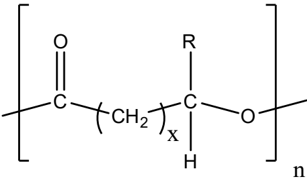
“Poly(3-hydroxybutyrate) (PHB) is a homopolymer f 3-hydroxybutyrate and is the most widespread and best characterized member of the PHAs family (Figure 3) [47].”
BackgroundSINHARAY, S., & BOUSMINA, M. (2005) · Progress in Materials Science · doi:10.1016/j.pmatsci.2005.05.002 · Cited by 1,611
Poly(lactic acid)—Mass production, processing, industrial applications, and end of life
Castro-Aguirre, E., Iñiguez-Franco, F., Samsudin, H., Fang, X., & Auras, R. (2016) · Advanced Drug Delivery Reviews · doi:10.1016/j.addr.2016.03.010 · Cited by 1,329 · cited 2×
“PL is a ther oplastic aterial that can be processed by injection olding, blo olding, ther ofor ing, and extrusion [21].”
BackgroundModels for the Permeability of Filled Polymer Systems
Nielsen, L. E. (1967) · Journal of Macromolecular Science: Part A - Chemistry · doi:10.1080/10601326708053745 · Cited by 1,127 · cited 1×
“, reducing chain mobility and permeability [13], as well as to the enhancement of the path’s tortuosity [14] required for small molecules to permeate through a polymer film due to the presence of silicate lamellae).”
BackgroundStudy on antimicrobial activity of chitosan with different molecular weights
Zheng, L.-Y., & Zhu, J.-F. (2003) · Carbohydrate Polymers · doi:10.1016/j.carbpol.2003.07.009 · Cited by 1,030 · cited 1×
“The presence of anti-microbial coatings based on natural biopolymers that can also improve cells vitality and their regeneration [73], can suggest the possibility of transforming some general hygienic products in more sophisticated products promoting health and beauty of skin.”
BackgroundBugnicourt, E., Cinelli, P., Lazzeri, A., & Alvarez, V. (2014) · Express Polymer Letters · doi:10.3144/expresspolymlett.2014.82 · Cited by 943
Self-citationDevlieghere, F., Vermeulen, A., & Debevere, J. (2004) · Food Microbiology · doi:10.1016/j.fm.2004.02.008 · Cited by 908 · cited 1×
“For these reasons, chitosan is largely used in many applications such as coatings to fruit and vegetables [67], meat [68], cheese [69], and sea-food [70].”
BackgroundRecent developments in antibacterial and antifungal chitosan and its derivatives
Verlee, A., Mincke, S., & Stevens, C. V. (2017) · Carbohydrate Polymers · doi:10.1016/j.carbpol.2017.02.001 · Cited by 843 · cited 1×
“In general, chitosan is characterized by a lack of toxicity, biodegradability, film-forming capacity, anti-fungal and antioxidant properties, and good barrier properties of chitosan films to oxygen [66].”
BackgroundModel polymer nanocomposites provide an understanding of confinement effects in real nanocomposites
Rittigstein, P., Priestley, R. D., Broadbelt, L. J., & Torkelson, J. M. (2007) · Nature Materials · doi:10.1038/nmat1870 · Cited by 691 · cited 1×
“, reducing chain mobility and permeability [13], as well as to the enhancement of the path’s tortuosity [14] required for small molecules to permeate through a polymer film due to the presence of silicate lamellae).”
BackgroundSignori, F., Coltelli, M.-B., & Bronco, S. (2009) · Polymer Degradation and Stability · doi:10.1016/j.polymdegradstab.2008.10.004 · Cited by 503 · cited 2×
“PLA is industrially compostable and its degradation is dependent on time, temperature, olecular weight, crystallinity, impurities, and catalyst concentration [22].”
BackgroundSelf-citation
Research works printed but not linked: 2
- Ehilen, O.; Obadoni, B.; Imade, F.; Eseigbe, D.; Mensah, J.K. The Effect of Detergents on the Germination and Growth of Amaranthus hybridus L. and Solanum lycopersicon L. Niger. Ann. Natural Sci. 2017, 16, 100-108.
- Fatoba, P.O.; Olorunmaiye, K.S.; Adepoju, A.O. Effects of soaps and detergents wastes on seed germination, flowering and fruiting of tomato (Lycopersico nesculentum) and Okra (Abelmoschus esculentus) plants. Ecol. Environ. Conserv. 2011, 17, 7-11.
Cited by
Green Consumer Behavior in the Cosmetics Market
Amberg, N., & Fogarassy, C. (2019) · Resources · doi:10.3390/resources8030137 · Cited by 417
Overview of Bioplastic Introduction and Its Applications in Product Packaging
Ibrahim, N. I., Shahar, F. S., Sultan, M. T. H., Shah, A. U. M., Safri, S. N. A., & Mat Yazik, M. H. (2021) · Coatings · doi:10.3390/coatings11111423 · Cited by 201
Afshar, S. V., Boldrin, A., Astrup, T. F., Daugaard, A. E., & Hartmann, N. B. (2023) · Journal of Cleaner Production · doi:10.1016/j.jclepro.2023.140000 · Cited by 201
“…(Bangar et al., 2021) • Agricultural mulch films (Scarascia-Mugnozza et al., 2006) • Fillers to make plastics more degradable (Flieger et al., 2003; Cinelli et al., 2019; Thakur et al., 2018) • Foam in protective packaging (Cooper, 2013) • Food packaging applications (Jeremic et al., 2020) •…”
BackgroundA sustainable life cycle for cosmetics: from design and development to post-use phase
Martins, A. M., & Marto, J. M. (2023) · Sustainable Chemistry and Pharmacy · doi:10.1016/j.scp.2023.101178 · Cited by 160
Venkatesh, G. (2021) · Circular Economy and Sustainability · doi:10.1007/s43615-021-00084-3 · Cited by 171
Metadata
- Authors
- Cinelli, P., Coltelli, M., Signori, F., Morganti, P., & Lazzeri, A.
- Affiliations
- University of Pisa (IT)
- University of Campania "Luigi Vanvitelli" (IT)
- Corresponding author
- Cinelli, Patrizia
- Coltelli, Maria
- Venue
- Cosmetics
- Publisher
- MDPI AG
- Published
- 2019-04-15
- Volume
- 6
- Issue
- 2
- Pages
- 26
- ISSN
- 2079-9284 (ISSN-L)
- OpenAlex
- W2937592230
- Cited by
- 128
- References
- 66
- Citations by year
- 2026: 17 · 2025: 19 · 2024: 27 · 2023: 23 · 2022: 14 · 2021: 17 · 2020: 10 · 2019: 1
- FWCI
- 2.98
- Type
- journal article
- Language
- en
- Open access
- gold
- doi.org
- Licence
- Locations
- Cosmetics (publishedVersion, cc-by)
- CINECA IRIS Institutial research information system (University of Pisa) (submittedVersion, other-oa)
- DOAJ (DOAJ: Directory of Open Access Journals) (submittedVersion, cc-by-sa)
- Funders
- Horizon 2020 Framework Programme (745839)
- Topics
- Physical Sciences › Materials Science › Biomaterials › biodegradable polymer synthesis and properties
- Physical Sciences › Materials Science › Biomaterials › Nanocomposite Films for Food Packaging
- Physical Sciences › Materials Science › Polymers and Plastics › Natural Fiber Reinforced Composites
- Keywords
- cosmetic packaging, plastic packaging waste, bio-based polymers, biodegradable polymers, polylactic acid, polyhydroxyalkanoates, polysaccharides, cosmetic preservation, circular economy, bioeconomy, sustainable packaging
About these checks
Registry, retraction, Cites and statistics results are computed, not judged, with one exception: a printed reference that no index lists is read once by a model before it counts as a citation error. Claims are extracted by a model and kept only when their quote appears verbatim in the text; each cited source is then checked, with a model’s help, for whether it says what the claim relies on. Those verdicts can be wrong — read the claim’s quote and the cited source before relying on one.
Statistics and arithmetic are recomputed, not judged.
Confidence bands are shown only for fields calibrated on our annotated test set. None is calibrated yet, so no band is shown.
What counts as a claim ›How we measure confidence ›How we check this ›
Are you an author, or do you see a problem with this page? Request a review
Data sources
Bibliographic data: Semantic Scholar, OpenAlex, Crossref.
Contains information from the Semantic Scholar Academic Graph Datasets, made available under the ODC Attribution License (ODC-BY 1.0).
Semantic Scholar’s data is described in: Kinney, R., et al. (2023). The Semantic Scholar Open Data Platform. arXiv:2301.10140.
