

The k-means Algorithm: A Comprehensive Survey and Performance Evaluation
Open accessThe DOI matches its Crossref record; 76 of the 76 references it cites were found in a registry or an index.
Abstract
The k-means clustering algorithm is considered one of the most powerful and popular data mining algorithms in the research community. However, despite its popularity, the algorithm has certain limitations, including problems associated with random initialization of the centroids which leads to unexpected convergence. Additionally, such a clustering algorithm requires the number of clusters to be defined beforehand, which is responsible for different cluster shapes and outlier effects. A fundamental problem of the k-means algorithm is its inability to handle various data types. This paper provides a structured and synoptic overview of research conducted on the k-means algorithm to overcome such shortcomings. Variants of the k-means algorithms including their recent developments are discussed, where their effectiveness is investigated based on the experimental analysis of a variety of datasets. The detailed experimental analysis along with a thorough comparison among different k-means clustering algorithms differentiates our work compared to other existing survey papers. Furthermore, it outlines a clear and thorough understanding of the k-means algorithm along with its different research directions.
Overview
The claims and statistics of this paper haven’t been checked yet.
Free: it reads the open-access text and checks the first 5 claims that cite a source we can check. Create a free account to check every claim.
Integrity signals
Registry
Cites
Statistics
Figures
Verification
Claims the paper makes
The claims and statistics of this paper haven’t been checked yet.
Free: it reads the open-access text and checks the first 5 claims that cite a source we can check. Create a free account to check every claim.
Claims other papers make about this one
Each is checked against this paper’s own text: does it say what the citing paper says it does?
The check wasn’t confident either way, so it gives no verdict — never disputed.
In the citing paper
“First, k-means does not account for uncertainty associated with yield environment classifications [1, 19].”
From A Bayesian framework to model variance of grain yield response to plant density (2025) · cites this paper as [1]
Experimental — accuracy not yet measured
Self-check
Percentages, sums and reported differences re-computed from the paper’s own numbers.
The self-check needs the paper’s full text.
Citations
Cites
Estimating the Dimension of a Model
Schwarz, G. (1978) · The Annals of Statistics · doi:10.1214/aos/1176344136 · Cited by 47,033 · cited 1×
“In x-means clustering [49], the BIC (Bayesian information criterion) or “Schwarz criterion” [50,51] is utilised to find the number of k clusters.”
UCI Machine Learning Repository
Asuncion, A. (2007) · Medical Entomology and Zoology · Cited by 25,411
(1967) · Cited by 23,719
Neural networks for pattern recognition
(1994) · Choice Reviews Online · doi:10.5860/choice.31-5500 · Cited by 18,538
Jain, A. K., Murty, M. N., & Flynn, P. J. (1999) · ACM Computing Surveys · doi:10.1145/331499.331504 · Cited by 13,199
Neural Networks for Pattern Recognition
Bishop, C. M. (1995) · doi:10.1093/oso/9780198538493.001.0001 · Cited by 12,287
Finding groups in data: an introduction to cluster analysis
(1991) · Choice Reviews Online · doi:10.5860/choice.28-4558 · Cited by 10,474
Top 10 algorithms in data mining
Wu, X., Kumar, V., Ross Quinlan, J., Ghosh, J., Yang, Q., Motoda, H., McLachlan, G. J., Ng, A., Liu, B., Yu, P. S., et al. (2008) · Knowledge and Information Systems · doi:10.1007/s10115-007-0114-2 · Cited by 5,667 · cited 1×
“This survey studies the problems of and solutions to partition-based clustering, and more specifically the widely used k-means algorithm [9], which has been listed among the top 10 clustering algorithms for data analysis [35].”
An efficient k-means clustering algorithm: analysis and implementation
Kanungo, T., Mount, D. M., Netanyahu, N. S., Piatko, C. D., Silverman, R., & Wu, A. Y. (2002) · IEEE Transactions on Pattern Analysis and Machine Intelligence · doi:10.1109/tpami.2002.1017616 · Cited by 5,660
Bozdogan, H. (1987) · Psychometrika · doi:10.1007/bf02294361 · Cited by 4,468 · cited 1×
“In x-means clustering [49], the BIC (Bayesian information criterion) or “Schwarz criterion” [50,51] is utilised to find the number of k clusters.”
Research works printed but not linked: 1
- Mohri, M., Rostamizadeh, A., and Talwalkar, A. (2012). Foundations of Machine Learning, MIT Press.
Cited by
Items 901–1,000 of 1,001
Velázquez, C., Chávez, D., Acuña, C., Vargas, G., & Castelán, M. (2023) · Coatings · doi:10.3390/coatings13111890 · Cited by 2
Efficient nonlinear homogenization of bones using a cluster‐based model order reduction technique
Ju, X., Zhou, C., Liang, J., Tao, W., Liang, L., & Xu, Y. (2023) · International Journal for Numerical Methods in Biomedical Engineering · doi:10.1002/cnm.3784 · Cited by 2
“48 Finally, the k-means algorithm returns clustered element sets for a given number K of clusters.”
MethodNandakumar, D., Murli, S., Khosla, A., Choi, K., Rahman, A., Walsh, D., Riede, S., Dull, E., & Bowen, E. (2023) · International Conference on Machine Learning and Cybernetics · doi:10.1109/icmlc58545.2023.10327975 · Cited by 2
“Zolotukhin et al. [11] used an N-gram model to extract features from UAS, followed by mathematical modeling and Principal Component Analysis (PCA) [12] combined with Support Vector Data Distribution (SVDD) [13], K-means [14], Density-based spatial clustering of applications with noise (DBSCAN) [15] and aggregated time…”
MethodOnline Quantitative Analysis of Perception Uncertainty Based on High-Definition Map
Yang, M., Jiao, X., Jiang, K., Cheng, Q., Yang, Y., Yang, M., & Yang, D. (2023) · Sensors · doi:10.3390/s23249876 · Cited by 3
“This paper further utilizes the K-means [36] clustering method for this secondary clustering, the specific implementation of clustering is illustrated in Algorithm 2.”
MethodLi, D., Park, H., Dong, X., Lai, Y.-L., Zhang, H., Teoh, A. B. J., & Jin, Z. (2023) · Lecture notes in computer science · doi:10.1007/978-981-99-8469-5_5 · Cited by 2
Zhou, J., Zhi, R., Shang, Y., Li, Z., & Shang, S. (2024) · Journal of Physics Conference Series · doi:10.1088/1742-6596/2683/1/012009 · Cited by 2
de Sena, W. L. B., & Neves, R. F. P. (2024) · Congresso Brasileiro de Inteligência Computacional (CBIC) · doi:10.21528/cbic2023-142 · Cited by 2
Health Monitor: An IoMT Based Patient Health Monitoring System Using Blockchain and k-means
Asri, I. E., Ayache, M., Belayachi, S. O., & Laktaoui, H. (2023) · International Conference on Future Internet of Things and Cloud (FiCloud) · doi:10.1109/ficloud58648.2023.00014 · Cited by 2
“This score measures the similarity of an object to its own cluster compared to other clusters [22].”
BackgroundBelciu, A., Corbea, A. M. I., Dıaconıța, V., & Simonca, I. (2024) · Smart innovation, systems and technologies · doi:10.1007/978-981-99-6529-8_5 · Cited by 2
Hatimi, R. E., Choukhan, C. F., & Esghir, M. (2024) · International Journal of Advanced Computer Science and Applications · doi:10.14569/ijacsa.2024.01501109 · Cited by 2
A two-stage deep learning method for foreign object detection and localization
Zhang, Y., Yuan, M., & Wang, Z. (2024) · International Conference on Optical and Photonic Engineering (icOPEN) · doi:10.1117/12.3024079 · Cited by 2
“21 By grouping similar edge pixels, the K-Means++ algorithm helps to refine the localization and reduce noise or erroneous detections.”
MethodAn open intent detection model optimized for datasets based on the Bert large model
Dong, Y., Wang, Z., & Wu, T. (2024) · Applied and Computational Engineering · doi:10.54254/2755-2721/47/20241381 · Cited by 2
ODRL: Reinforcement Learning in Priority Scheduling for Running Cost Optimization
Kuang, C., Duan, M., Lv, T., Wu, Y., Li, L., & Wang, L. (2023) · IEEE International Conference on Parallel and Distributed Systems (ICPADS) · doi:10.1109/icpads60453.2023.00322 · Cited by 3
Research on Tractor Condition Recognition Based on Neural Networks
Luo, Y., Li, C., Jiang, P., Shi, Y., Li, B., & Hu, W. (2024) · Agriculture · doi:10.3390/agriculture14040584 · Cited by 2
“K-means [13] clustering algorithm present in the unsupervised learning [14] The K-means [13] clustering algorithm present in the unsupervised learning [14] algorithm was used to cluster the real-world data, outputting the cluster center, cluster category (KM-K-Means), and the distance between the…”
MethodKLATERISASI DATA PENDUDUK BERDASARKAN PEKERJAAN MENGGUNAKAN METODE K-MEANS PADA WILAYAH JAWA BARAT
Jannah, E. R., & Martanto, M. (2024) · JATI (Jurnal Mahasiswa Teknik Informatika) · doi:10.36040/jati.v8i2.9055 · Cited by 2
“Pada akhirnya, bagian ini diakhiri dengan merangkum temuan dan implikasi yang diperoleh dari penggunaan algoritme K-Means secara ekstensif, yang selanjutnya menekankan signifikansinya sebagai alat yang berharga di bidang pembelajaran mesin dan analisis data [4].”
BackgroundZhao, N., Zhao, W., Tang, X., Jiao, C., & Zhang, Z. (2024) · PLoS ONE · doi:10.1371/journal.pone.0302741 · Cited by 2
Hariyanto, D. C., Harini, S., & Chamidy, T. (2024) · JIPI (Jurnal Ilmiah Penelitian dan Pembelajaran Informatika) · doi:10.29100/jipi.v9i2.5507 · Cited by 2
Dirichlet compound negative multinomial mixture models and applications
Bregu, O., & Bouguila, N. (2024) · Advances in Data Analysis and Classification · doi:10.1007/s11634-024-00598-2 · Cited by 3
“Centroid-based algorithms are efficient but sensitive to initial conditions and outliers (Ahmed et al. 2020; Sinaga and Yang 2020).”
Location Selection Methods for Urban Terminal Co-Distribution Centers with Air–Land Collaboration
Qi, W. M., Li, A., & Zhang, H. (2024) · Applied Sciences · doi:10.3390/app14135814 · Cited by 2
PENERAPAN ALGORITMA K-MEANS UNTUK MELAKUKAN KLASTERISASI PADA PERINGKASAN TEKS
Kurniawan, E., & Hendrastuty, N. (2024) · Jurnal Informatika Teknologi dan Sains (Jinteks) · doi:10.51401/jinteks.v6i3.4435 · Cited by 2
“…proses dan eksekusi diagram proses [16]. f. TF-IDF Metode TF-IDF (Term Frequency-Inverse Document Frequency) merupakan sebuah metode yang digunakan dalam pengolahan teks atau dokumen untuk mengevaluasi seberapa penting sebuah kata dalam sebuah dokumen terhadap kumpulan dokumen yang lain [17].”
BackgroundA Surrogate-Assisted Clustering-Based Evolutionary Algorithm for Expensive Optimization
Hai, C., Wang, J., & Mei, L. (2024) · IEEE Congress on Evolutionary Computation (CEC) · doi:10.1109/cec60901.2024.10612088 · Cited by 2
“As an effi-cient method for clustering discrete numerical data, we have selected the k -means algorithm [26] due to its effectiveness.”
MethodTemporal variability in soybean sowing and harvesting according to K-means and silhouette scores
de Oliveira, B. R., Silva, F. C. D. S., Mezzomo, R., Barrozo, L. M., Zanatta, T. S. D. C., dos Santos, J. C., Sousa, C. H. C., Coelho, Y. P., Caldas, A. D. N. S., & Zuffo, A. M. (2024) · Trends in Agricultural and Environmental Sciences. · doi:10.46420/taes.e240010 · Cited by 2
Logging response prediction of high-lithium coal seam based on K-means clustering algorithm
Mu, X., Zhu, Y., Dou, K., Shi, Y., & Huang, M. (2024) · Frontiers in Earth Science · doi:10.3389/feart.2024.1443458 · Cited by 2
Applications and Economic Profiles of the Turnkey Contract Business Model
Donati, E., Copiello, S., & Bonifaci, P. (2024) · Lecture notes in computer science · doi:10.1007/978-3-031-65273-8_10 · Cited by 2
Sáez, J. A., & Vera, J. F. (2024) · IEEE Transactions on Computational Biology and Bioinformatics · doi:10.1109/tcbb.2024.3448617 · Cited by 2
“The K -means [22] clustering algorithm is applied to assign categories to clusters based on their proximity in the Euclidean space representing homogeneous associations.”
Intrinsic K-means clustering over homogeneous manifolds
Tan, C. D., Zhao, H., & Ding, H. (2024) · Pattern Analysis and Applications · doi:10.1007/s10044-024-01330-8 · Cited by 2
“The K-means algorithm uses distance as a similarity to partition the dataset [48], which is not only denoted in a simple form but also has high computational efficiency [49].”
K-means clustering-based young users’ kitchen needs analysis and personalized design strategy
Xu, L., Ren, T. H., & Zhu, J. (2024) · Interdisciplinary Nursing Research · doi:10.1097/nr9.0000000000000068 · Cited by 2
Exploring Clustering to Improve Interpretability in Complex Energy Forecasting Models
Teixeira, B., Valina, L., Pinto, T. D. O., dos Reis, A. M., Barroso, J., & Vale, Z. (2024) · International Conference on Smart Energy Systems and Technologies (SEST) · doi:10.1109/sest61601.2024.10694413 · Cited by 2
“The solution the paper proposes takes advantage of state-of-the-art inter-pretability techniques, namely SHAP [9], and the clustering method, namely K-Means [10] to face the challenges posed by XAI in Deep Learning.”
MethodSau, A., Phadikar, S., & Bhakta, I. (2024) · Discover Public Health · doi:10.1186/s12982-024-00245-3 · Cited by 2
“DBSCAN’s ability to classify points as noise (or anomalies) when they do not belong to any dense region provides a distinct advantage over algorithms like K-Means, which may force every data point into a cluster [42].”
DGSIST: Clustering spatial transcriptome data based on deep graph structure Infomax
Xiu, Y.-H., Sun, S.-L., Zhou, B.-W., Wan, Y., Tang, H., & Long, H.-X. (2024) · Methods · doi:10.1016/j.ymeth.2024.10.002 · Cited by 3
Generating Evaluation Criteria of Domain-Specific Large Language Model Using Word Vector Clustering
Yang, J., Hao, X., Wang, R., Ming, X., & Li, S. (2024) · IEEE International Conference on Software Quality, Reliability and Security Companion (QRS-C) · doi:10.1109/qrs-c63300.2024.00023 · Cited by 2
“Finally,the k-means algorithm [24][25] is used to cluster the text after dimensionality reduction.”
MethodDiversity of lakes and ponds in the forest-tundra ecozone: from limnicity to limnodiversity
Freitas, P., Vieira, G. T., Martins, D., Canário, J., Pina, P., Heim, B., Juhls, B., Couture, R., & Vincent, W. F. (2024) · GIScience & Remote Sensing · doi:10.1080/15481603.2024.2427309 · Cited by 3
“Finally, for automatically establishing the main water body optical clusters, we used K-Means as unsupervised clustering method (Ahmed, Seraj, and Mohammed 2020) (Figure 3).”
Li, Z., Cao, B., Zhang, W., Li, X., Zhang, X., Wei, Y., Xiao, L., Duan, C., & Li, P. (2024) · Remote Sensing · doi:10.3390/rs16234442 · Cited by 2
Enhancing Potential: Performance Evaluation of Arabic Language Teachers
Misra, M., Sahraini, S., & Kartini, K. (2024) · International Journal of Asian Education · doi:10.46966/ijae.v5i4.446 · Cited by 2
Sihotang, F. P., Ermatita, E., Rini, D. P., & Samsuryadi, S. (2024) · International Journal of Advanced Computer Science and Applications · doi:10.14569/ijacsa.2024.0151219 · Cited by 2
kProtoClust: Towards Adaptive k-Prototype Clustering without Known k
Ping, Y., Li, H., Guo, C., & Hao, B. (2025) · Computers, materials & continua/Computers, materials & continua (Print) · doi:10.32604/cmc.2025.057693 · Cited by 2
Improved Honey Badger Algorithm and Its Application to K-Means Clustering
Jiang, S., Gao, H., Lu, Y., Song, H., Zhang, Y., & Wang, M. (2025) · Applied Sciences · doi:10.3390/app15020718 · Cited by 2
Toward Grid-Based Models for Molecular Association
Zupan, H., & Keller, B. G. (2025) · Journal of Chemical Theory and Computation · doi:10.1021/acs.jctc.4c01293 · Cited by 3
Chaotic quasi-opposition marine predator algorithm for automatic data clustering
Ouertani, M. W., Manita, G., Chhabra, A., & Korbaa, O. (2025) · Cluster Computing · doi:10.1007/s10586-024-04721-y · Cited by 3
Radočaj, D., Plašćak, I., Jurišić, M., Majić, I., Ozimec, S., Sarajlić, A., & Rožac, V. (2024) · Geographica Pannonica · doi:10.5937/gp28-50802 · Cited by 2
Ren, X., Wang, M., Dai, G., Peng, L., Chen, X., & Song, Z. (2025) · Engineering Optimization · doi:10.1080/0305215x.2024.2434726 · Cited by 2
“…can adapt to the unknown shape of the PF. (2) There is no need to pre-specify the number of clusters: Unlike traditional algorithms such as K-means (Ahmed, Seraj, and Islam 2020; H. Liu et al. 2023; Sinaga and Yang 2020), DBSCAN does not require the user to pre-specify the number of clusters; it…”
Optimization of EMS Station Layout Based on a New Decision Support Framework
Yang, P., Zhang, B., & Yang, J. (2025) · Systems · doi:10.3390/systems13020092 · Cited by 2
A Data-Driven Assessment of Redesign Initiatives in Financial Management Processes
Tsakalidis, G., & Vergidis, K. (2025) · Information · doi:10.3390/info16030179 · Cited by 2
“The K-means clustering algorithm was selected for its effectiveness in grouping data based on similarity [35].”
K-Volume Clustering Algorithms for scRNA-Seq Data Analysis
Chen, Y., & Li, F. (2025) · Biology · doi:10.3390/biology14030283 · Cited by 2
“Among the various clustering methods, K -means and its variants are widely recognized for their simplicity, scalability, and efficiency [2,3].”
Smart Sales Forecasting Machine Learning Models for Demand Prediction in Retail
Sandeep, V., Kandavel, N., Saivenkat, R., Gowri, R., Thirumalai Murugan, R., & Zahid Hussain, J. (2025) · International Conference on Intelligent Data Communication Technologies and Internet of Things (IDCIoT) · doi:10.1109/idciot64235.2025.10915120 · Cited by 2
“However, operates sequentially through a product of the algorithm in charging items to particular clusters, and the shifting of the centroids found in the cluster before arriving at the best disaggregation[11].”
Adaptive Gap-Filling of Multispectral Images at Coarse and Fine Spatial Resolution
Afsharipour, S., Li, J., Menenti, M., & Malamiri, H. R. G. (2025) · IEEE Journal of Selected Topics in Applied Earth Observations and Remote Sensing · doi:10.1109/jstars.2025.3551360 · Cited by 2
“The decision to use K = 5 in the K -means clustering algorithm was guided by prior research [17], Ahmed et al. [69] applied this method to gap-filling tasks.”
Fraud Detection in Mobile Phone Recharge Transactions Using K-Means and T-SNE Visualization
Sakti, I., Mareta, A., & Wasito, I. (2025) · SinkrOn · doi:10.33395/sinkron.v9i1.14330 · Cited by 2
A Novel Color Difference-Based Method for Palette Extraction and Evaluation Using Images of Birds
Kösesoy, M. B., & Yılmaz, S. (2025) · IEEE Access · doi:10.1109/access.2025.3553252 · Cited by 2
“Once the data points in the clusters do not change, the process is complete [37].”
Alifah, A. N., Permata, R. P., Sanjaya, I. M. W. A., Arismawati, P., & Prastyabudi, W. A. (2024) · Beyond Technology Summit on Informatics International Conference (BTS-I2C) · doi:10.1109/bts-i2c63534.2024.10941845 · Cited by 2
“K-means is sensitive to the initial placement of centroids, which can lead to unexpected convergence and suboptimal clustering results [17].”
Comparison of Clustering Techniques for Vessel Sailing Pattern Utilizing Space-Based AIS Data
Rahayu, D. A., Arifianto, R., Ardiyanto, I., Widyawan, W., & Hasbi, W. (2024) · Beyond Technology Summit on Informatics International Conference (BTS-I2C) · doi:10.1109/bts-i2c63534.2024.10941953 · Cited by 2
“Given the versatility of AIS data, clustering techniques like K-Means [12] and DBSCAN [13] provide an effective way to analyze vessel movement by grouping vessels based on similar behaviors.”
Adaptive Topology Construction for Heterogeneous UAV Clusters in Dynamic Localization Tasks
Li, Y., Du, S., Wen, F., Xiong, M., Li, K. F., & Liu, Q. (2024) · IEEE International Conference on Computer and Communications (ICCC) · doi:10.1109/iccc62609.2024.10942188 · Cited by 2
“K-means, a common partition-based method, is sensitive to initial values and noise, leading to local optima [6].”
Xu, W., Wu, X., Shi, X., Yan, Y., Liu, C., Chuang, Y., & Cai, F. (2025) · Journal of Tissue Viability · doi:10.1016/j.jtv.2025.100899 · Cited by 2
Zhao, S., Wu, S., Liang, H., & Zhang, H. (2025) · Applied Soft Computing · doi:10.1016/j.asoc.2025.113168 · Cited by 2
Multi-Type GNSS User Classification Using RANSAC-K-Means Clustering
Li, K., Chen, S., Zheng, S., Wang, X., Liu, J., Yang, P., Gao, M., & Jin, X. (2025) · Chinese Journal of Electronics · doi:10.23919/cje.2024.00.041 · Cited by 2
Personalized Beauty: How Clinical Insights Shape Tailored Aesthetic Treatments
Campanella, S., & Palma, L. (2025) · Cosmetics · doi:10.3390/cosmetics12030094 · Cited by 2
“Specifically, we used the K-means algorithm [28], a form of unsupervised learning suited for unlabeled data.”
Monitoring and Sensing System for People's Behavior During Fall Events Based on Mobility Analysis
Maligne, L., Campo, É., BOSSCHE, A. V. D., Vigouroux, N., Vella, F., Negro, O., Istrate, D., Zalc, V., & Rumeau, P. (2025) · IRBM · doi:10.1016/j.irbm.2025.100895 · Cited by 2
Parashchenko, V., & Berest, O. B. (2025) · Наука і техніка сьогодні · doi:10.52058/2786-6025-2025-5(46)-1909-1924 · Cited by 2
Rahman, S. A. F. S. A., Maulud, K. N. A., Ujang, U., Jaafar, W. S. W. M., & Pradhan, B. (2025) · KSCE Journal of Civil Engineering · doi:10.1016/j.kscej.2025.100324 · Cited by 2
Saber, A., Mahmoud, A., & El-Sharkawy, Y. H. (2025) · Sensing and Imaging · doi:10.1007/s11220-025-00623-4 · Cited by 2
“This technique is particularly effective for grouping data with complex patterns and is extensively utilized in various fields, including image processing [2].”
Prediction method for rockburst risk using unsupervised clustering in small sample scenarios
Xiao, H., Cao, R., Zheng, Z., Zhang, Q., & Yu, H. (2025) · Georisk Assessment and Management of Risk for Engineered Systems and Geohazards · doi:10.1080/17499518.2025.2547367 · Cited by 2
“Its primary objective is to ensure that data points within each cluster are as similar as possible, while maximising dissimilarity between clusters (Ahmed, Seraj, and Islam 2020).”
Mitigation strategies for weakest bus vulnerabilities in power grids
Wu, B., Wang, X., & Zhao, Z. (2025) · Reliability Engineering & System Safety · doi:10.1016/j.ress.2025.111622 · Cited by 2
Qu, C., Liu, Y., Wu, Z., & Wang, W. (2025) · Sensors · doi:10.3390/s25175507 · Cited by 2
“Compared to traditional classification models (e.g., K-Nearest Neighbors [32]), RF demonstrates significant advantages in the following aspects: First, it offers higher efficiency and robustness.”
BNFW: Boundary and noise detection clustering for data with fuzzy boundaries and weak connectivity
Li, T., Pu, R., Wang, F., Chen, Z., Tang, D., & Yang, L. (2025) · Expert Systems with Applications · doi:10.1016/j.eswa.2025.129714 · Cited by 2
Kahyaoğlu, İ. M., Uyanık, A., Akarsu, C. H., Küçükdeniz, T., Karakuş, S., & Güney, M. (2025) · Analytica Chimica Acta · doi:10.1016/j.aca.2025.344730 · Cited by 2
Pendekatan Unsupervised learning dalam Segmentasi Kesehatan: Perbandingan K-Means dan DBSCAN
Masruriyah, A. F. N., Mardiah, M., ANANDA, M. D., & Malik, K. N. (2025) · MIND Journal · doi:10.26760/mindjournal.v10i1.99-113 · Cited by 2
Qin, D., Chen, Y., & Kuruoğlu, E. E. (2026) · Entropy · doi:10.3390/e28050567 · Cited by 2
Automatic Clustering of CT Scans of COVID-19 Patients Based on Deep Learning
Bemportato, P., Casalino, G., Castellano, G., & Vessio, G. (2021) · Lecture notes in computer science · doi:10.1007/978-3-030-85529-1_19 · Cited by 2
Comparison of Clustering Techniques for Thai Mutual Funds Fee Dataset
Whasphuttisit, J., Jitsakul, W., & Kaewkiriya, T. (2022) · International Conference on Knowledge and Smart Technology · doi:10.1109/kst53302.2022.9729076 · Cited by 2
Forest fire modeling and analysis based on K-means clustering algorithm and time series forecasting
Li, Y., Zhang, S., & Fu, G. (2022) · International Conference on Bioinformatics and Intelligent Computing (BIC) · doi:10.1145/3523286.3524560 · Cited by 2
“Next, according to the K-means + + algorithm [4], a fire sample point is selected as the cluster center C1.”
MethodValidation of Evacuation Assessment Algorithm in Finding the Best Indoor Evacuation Model
Halim, A. H. A., & Samah, K. A. F. A. (2022) · International Journal of Advanced Computer Science and Applications · doi:10.14569/ijacsa.2022.0130540 · Cited by 2
“Clustering with various k values will provide diverse outcomes [16].”
BackgroundAn Efficient Parallel Algorithm for Clustering Big Data based on the Spark Framework
Dafir, Z., & Slaoui, S. C. (2022) · International Journal of Advanced Computer Science and Applications · doi:10.14569/ijacsa.2022.01307103 · Cited by 2
“Among the solutions to improve the performance of this algorithm and make it suitable for processing Big Data is the parallelization of its tasks using the open-source Hadoop, Spark RDD, and Machine Learning-based Model.”
BackgroundInfluentialOPTIMIZATION MODEL IN CLUSTERING THE HAZARD ZONE AFTER AN EARTHQUAKE DISASTER
Bangun, M. N., Darnius, O., & Sutarman, S. (2022) · SinkrOn · doi:10.33395/sinkron.v7i3.11598 · Cited by 2
“The main problem with this algorithm is that it is sensitive to the initial partition selection and may converge to the local minimum of the criterion function value if the initial partition is not selected correctly (Ahmed et al., 2020).”
BackgroundResearch on Customer Value Identification of Video-on-demand services Based on RFM Improved Model
Sun, J., & Meng, Z. (2022) · International Conference on Computer Science, Electronic Information Engineering and Intelligent Control Technology (CEI) · doi:10.1109/cei57409.2022.9950144 · Cited by 2
“The K-means clustering algorithm is used to cluster the customer data and conduct index characteristics analysis for different customer groups in order to better identify the value of various customer groups[4].”
MethodJulio, F., Vanni, A., Amanda, S., Joey, V., & Halim, S. (2023) · Jurnal Teknik Industri · doi:10.9744/jti.25.1.43-52 · Cited by 2
Eye-Blink Artifact Removal from EEG Signal using Machine Learning and De-noising Techniques
Faisal, M., Sahoo, S., & Hazarika, J. (2023) · International Conference on Communication, Circuits, and Systems (IC3S) · doi:10.1109/ic3s57698.2023.10169844 · Cited by 2
New RFI Model for Behavioral Audience Segmentation in Wi-Fi Advertising System
Lim, S.-T., Ong, L.-Y., & Leow, M.-C. (2023) · Future Internet · doi:10.3390/fi15110351 · Cited by 2
Utomo, P., Adi, K., & Nurhayati, O. D. (2023) · International Seminar on Application for Technology of Information and Communication (iSemantic) · doi:10.1109/isemantic59612.2023.10295348 · Cited by 2
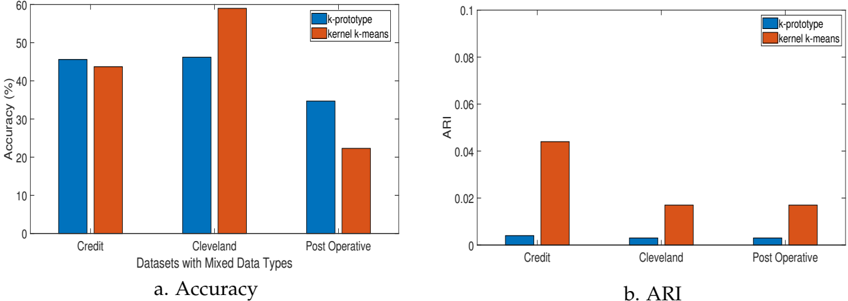
“For Postoperative data clustering, the K-Means method has an accuracy of 22% [32].”
MethodAnalysis and Optimization of the K-Means Algorithm in Determining Course Scheduling
Martiano, M., Sari, Y., & Akbar, F. (2023) · Journal of Information System Research (JOSH) · doi:10.47065/josh.v5i1.4343 · Cited by 2
“MySQL merupakan salah satu sistem manajemen basis data yang banyak digunakan dan mempunyai konsep sistem manajemen basis data relasional[17].”
BackgroundStadtler, H., & Heinrichs, N. (2024) · OR Spectrum · doi:10.1007/s00291-023-00743-x · Cited by 2
“For scenario reduction clustering methods are usually used (see, e.g., the survey paper on k-means algorithms by Ahmed et al. (2020)).”
EOFA: An Extended Version of the Optimal Foraging Algorithm for Global Optimization Problems
Kyrou, G., Charilogis, V., & Tsoulos, I. G. (2024) · Computation · doi:10.3390/computation12080158 · Cited by 2
“The incorporation of a sampling technique that utilizes the K-means method [52].”
MethodEMGA: An Evolutionary Memory Grouping Algorithm for MBIST
Li, Y., Duan, Y., Zhang, H., Niu, D., Wu, X. D., & Jin, Z. (2024) · International Symposium of Electronics Design Automation (ISEDA) · doi:10.1109/iseda62518.2024.10617612 · Cited by 2
Network Analysis of Multisource Packet Capture Files Using Machine Learning
Khanum, F., Lakshmi, P. S., & Reddy, H. V. (2024) · International Conference on Circuits, Control, Communication and Computing (I4C) · doi:10.1109/i4c62240.2024.10748490 · Cited by 2
The importance of the clustering model to detect new types of intrusion in data trafficPreprint
Abd, N. S., Khalid, N. W., & Ali, B. H. (2024) · arXiv (Cornell University) · doi:10.48550/arxiv.2411.14550 · Cited by 2
“One comparatively easy method for implementing clustering analysis is K-means cluster algorithm [27].”
YOLOv4-A: Research on Traffic Sign Detection Based on Hybrid Attention Mechanism
Yin, S. Y. S., & Yin, F. T. S. (2022) · 電腦學刊 · doi:10.53106/199115992022123306015 · Cited by 1
Machine learning quantitatively characterizes the deformation and destruction of explosive molecules
Zhang, K., Chen, L., Zhang, T., Lu, J., Liu, D., & Wu, J. (2023) · Physical Chemistry Chemical Physics · doi:10.1039/d2cp04623g · Cited by 1
Cellular Network Coverage Hole Detection and Diagnosis Method Using WaveCluster
Yang, Z., Xu, L., Lyu, F., Liu, L., Zhu, J., Chao, K., & Cheng, X. (2023) · Lecture notes in electrical engineering · doi:10.1007/978-981-19-9968-0_121 · Cited by 1
Su, X. D., Li, N., Hu, Y., & Li, H. (2023) · Computer Modeling in Engineering & Sciences · doi:10.32604/cmes.2023.026083 · Cited by 1
Acceleration and Clustering of Liver Disorder Using K-Means Clustering Method with Mahout’s Library
Samer, T. B., & Darujati, C. (2023) · Journal of Systems Engineering and Information Technology (JOSEIT) · doi:10.29207/joseit.v2i2.5334 · Cited by 1
Online Identification of Vehicle Driving Conditions Using Machine-Learned Clusters
Marrone, J. F., Kwok, I., & Fraser, R. A. (2023) · SAE technical papers on CD-ROM/SAE technical paper series · doi:10.4271/2023-01-1607 · Cited by 1
Gikera, R., Mwaura, J., Muuro, E., & Mambo, S. M. (2023) · Journal on artificial intelligence · doi:10.32604/jai.2023.043229 · Cited by 1
Simulation Environment for the Evaluation of Lightweight Intrusion Detection Systems
Vivo, S. D., & Liguori, P. (2023) · IEEE International Symposium on Software Reliability Engineering Workshops (ISSREW) · doi:10.1109/issrew60843.2023.00061 · Cited by 1
“Particularly, we chose the K-means algorithm for clustering-based data analysis due to its ability to handle large datasets effectively [18].”
MethodSimanjorang, S. P., & Yanti, M. (2023) · Emerging Statistics and Data Science Journal · doi:10.20885/esds.vol1.iss.3.art46 · Cited by 1
Hidayati, S. K. S. C., Raharja, P. B. G. P., Wardhiana, I. N. G. A. M., & Klemm, S. (2023) · Journal of Information Engineering and Educational Technology · doi:10.26740/jieet.v7n2.p59-65 · Cited by 1
K-Means Algorithm for District/City Classification in West Java Based on Stunting Toddler Data
Riyan, A. B., & Nendi, I. (2024) · Journal Transnational Universal Studies · doi:10.58631/jtus.v2i2.80 · Cited by 1
Robust Low-Rank Correlation Fitting
Phi, T. H., Hippert-Ferrer, A., Bouchard, F., & Breloy, A. (2024) · IEEE International Conference on Acoustics Speech and Signal Processing · doi:10.1109/icassp48485.2024.10446634 · Cited by 1
“This property is here quantified by the clustering accuracy of the K -means ++ [17] applied on the projected data.”
MethodLian, H. K., Waiyamai, K., Slavakis, K., & Haruechaiyasak, C. (2024) · International Conference on Knowledge and Smart Technology · doi:10.1109/kst61284.2024.10499654 · Cited by 1
Anchored to features: an image-feature-aware planner for stable visual localization
Li, S., Zhang, C., Wang, J., Wu, J., Tan, L., & Dong, P. (2024) · Aerospace Systems · doi:10.1007/s42401-024-00298-x · Cited by 1
“K -means clustering, characterized by its mean-centred iteration, is favoured for its simplicity and computational efficiency [33].”
Lahitani, A. R., Zhafarina, A. N., Oktavia, N. S. W., & Jariyah, N. (2024) · Jurnal Teknik Elektro Uniba (JTE Uniba) · doi:10.36277/jteuniba.v8i2.253 · Cited by 1
“Penelitian dengan algotirma K-Means clustering sebagai cara identifikasi awal cyberbullying [14],[3],[15],[16],[17].”
BackgroundSaxena, A., Pandey, S. N., & Dixit, S. (2024) · Cogent Engineering · doi:10.1080/23311916.2024.2340321 · Cited by 1
“To overcome this problem wheeling prices lie in a closed range are grouped to form different clusters (Ahmed et al., 2020).”
Caballero-Martin, D., López-Guede, J. M., Estévez, J., & Graña, M. (2024) · Lecture notes in computer science · doi:10.1007/978-3-031-61137-7_19 · Cited by 1
Metadata
- Authors
- Ahmed, M., Seraj, R., & Islam, S. M. S.
- Affiliations
- Edith Cowan University (AU)
- McGill University (CA)
- Corresponding author
- Ahmed, Mohiuddin
- Venue
- Electronics
- Publisher
- MDPI AG
- Published
- 2020-08-12
- Volume
- 9
- Issue
- 8
- Pages
- 1295
- ISSN
- 2079-9292 (ISSN-L)
- OpenAlex
- W3048804154
- Cited by
- 1,717
- References
- 76
- Citations by year
- 2026: 311 · 2025: 471 · 2024: 484 · 2023: 302 · 2022: 109 · 2021: 35 · 2020: 5
- FWCI
- 44.33
- Type
- journal article
- Language
- en
- Open access
- gold
- doi.org
- Licence
- Locations
- Electronics (publishedVersion, cc-by)
- UWA Profiles and Research Repository (UWA) (submittedVersion, cc-by)
- Australasian Journal of Paramedicine (submittedVersion, cc-by)
- DOAJ (DOAJ: Directory of Open Access Journals) (submittedVersion, cc-by-sa)
- Topics
- Physical Sciences › Computer Science › Artificial Intelligence › Advanced Clustering Algorithms Research
- Physical Sciences › Computer Science › Information Systems › Data Mining and Machine Learning Applications
- Physical Sciences › Computer Science › Artificial Intelligence › Bayesian Methods and Mixture Models
- Keywords
- K-means clustering, centroid initialization, optimal number of clusters, cluster shape, outliers, algorithm comparison, convergence
About these checks
Registry, retraction, Cites and statistics results are computed, not judged, with one exception: a printed reference that no index lists is read once by a model before it counts as a citation error. Claims are extracted by a model and kept only when their quote appears verbatim in the text; each cited source is then checked, with a model’s help, for whether it says what the claim relies on. Those verdicts can be wrong — read the claim’s quote and the cited source before relying on one.
Statistics and arithmetic are recomputed, not judged.
Confidence bands are shown only for fields calibrated on our annotated test set. None is calibrated yet, so no band is shown.
What counts as a claim ›How we measure confidence ›How we check this ›
Are you an author, or do you see a problem with this page? Request a review
Data sources
Bibliographic data: Semantic Scholar, OpenAlex, Crossref.
Contains information from the Semantic Scholar Academic Graph Datasets, made available under the ODC Attribution License (ODC-BY 1.0).
Semantic Scholar’s data is described in: Kinney, R., et al. (2023). The Semantic Scholar Open Data Platform. arXiv:2301.10140.
