

The k-means Algorithm: A Comprehensive Survey and Performance Evaluation
Open accessThe DOI matches its Crossref record; 76 of the 76 references it cites were found in a registry or an index.
Abstract
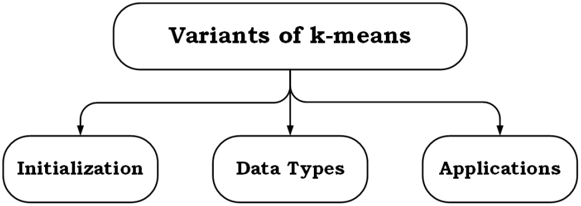
The k-means clustering algorithm is considered one of the most powerful and popular data mining algorithms in the research community. However, despite its popularity, the algorithm has certain limitations, including problems associated with random initialization of the centroids which leads to unexpected convergence. Additionally, such a clustering algorithm requires the number of clusters to be defined beforehand, which is responsible for different cluster shapes and outlier effects. A fundamental problem of the k-means algorithm is its inability to handle various data types. This paper provides a structured and synoptic overview of research conducted on the k-means algorithm to overcome such shortcomings. Variants of the k-means algorithms including their recent developments are discussed, where their effectiveness is investigated based on the experimental analysis of a variety of datasets. The detailed experimental analysis along with a thorough comparison among different k-means clustering algorithms differentiates our work compared to other existing survey papers. Furthermore, it outlines a clear and thorough understanding of the k-means algorithm along with its different research directions.
Overview
The claims and statistics of this paper haven’t been checked yet.
Free: it reads the open-access text and checks the first 5 claims that cite a source we can check. Create a free account to check every claim.
Integrity signals
Registry
Cites
Statistics
Figures
Verification
Claims the paper makes
The claims and statistics of this paper haven’t been checked yet.
Free: it reads the open-access text and checks the first 5 claims that cite a source we can check. Create a free account to check every claim.
Claims other papers make about this one
Each is checked against this paper’s own text: does it say what the citing paper says it does?
The check wasn’t confident either way, so it gives no verdict — never disputed.
In the citing paper
“First, k-means does not account for uncertainty associated with yield environment classifications [1, 19].”
From A Bayesian framework to model variance of grain yield response to plant density (2025) · cites this paper as [1]
Experimental — accuracy not yet measured
Self-check
Percentages, sums and reported differences re-computed from the paper’s own numbers.
The self-check needs the paper’s full text.
Citations
Cites
Estimating the Dimension of a Model
Schwarz, G. (1978) · The Annals of Statistics · doi:10.1214/aos/1176344136 · Cited by 47,033 · cited 1×
“In x-means clustering [49], the BIC (Bayesian information criterion) or “Schwarz criterion” [50,51] is utilised to find the number of k clusters.”
UCI Machine Learning Repository
Asuncion, A. (2007) · Medical Entomology and Zoology · Cited by 25,411
(1967) · Cited by 23,719
Neural networks for pattern recognition
(1994) · Choice Reviews Online · doi:10.5860/choice.31-5500 · Cited by 18,538
Jain, A. K., Murty, M. N., & Flynn, P. J. (1999) · ACM Computing Surveys · doi:10.1145/331499.331504 · Cited by 13,199
Neural Networks for Pattern Recognition
Bishop, C. M. (1995) · doi:10.1093/oso/9780198538493.001.0001 · Cited by 12,287
Finding groups in data: an introduction to cluster analysis
(1991) · Choice Reviews Online · doi:10.5860/choice.28-4558 · Cited by 10,474
Top 10 algorithms in data mining
Wu, X., Kumar, V., Ross Quinlan, J., Ghosh, J., Yang, Q., Motoda, H., McLachlan, G. J., Ng, A., Liu, B., Yu, P. S., et al. (2008) · Knowledge and Information Systems · doi:10.1007/s10115-007-0114-2 · Cited by 5,667 · cited 1×
“This survey studies the problems of and solutions to partition-based clustering, and more specifically the widely used k-means algorithm [9], which has been listed among the top 10 clustering algorithms for data analysis [35].”
An efficient k-means clustering algorithm: analysis and implementation
Kanungo, T., Mount, D. M., Netanyahu, N. S., Piatko, C. D., Silverman, R., & Wu, A. Y. (2002) · IEEE Transactions on Pattern Analysis and Machine Intelligence · doi:10.1109/tpami.2002.1017616 · Cited by 5,660
Bozdogan, H. (1987) · Psychometrika · doi:10.1007/bf02294361 · Cited by 4,468 · cited 1×
“In x-means clustering [49], the BIC (Bayesian information criterion) or “Schwarz criterion” [50,51] is utilised to find the number of k clusters.”
Research works printed but not linked: 1
- Mohri, M., Rostamizadeh, A., and Talwalkar, A. (2012). Foundations of Machine Learning, MIT Press.
Cited by
Items 101–200 of 1,001
Hou, S., Zhao, A., Liang, J., Shen, Z., & Wu, H. (2025) · Knowledge-Based Systems · doi:10.1016/j.knosys.2025.113624 · Cited by 30
Zhang, J., Yu, Z., Li, Y., & Wang, X. (2023) · Land · doi:10.3390/land12071322 · Cited by 31
Laridi, S., Palmer, G., & Tam, K.-M. M. (2024) · Scientific Reports · doi:10.1038/s41598-024-76961-2 · Cited by 36
“…the Credit Card Fraud Detection dataset, which is binary, was also split among six clients by applying the k-means clustering algorithm (Ahmed et al. 32 ) to both normal and anomalous data, thus simulating a highly non-IID scenario similar to that of the other datasets (Zhao et al. 9 ).”
MethodTransHuman: A Transformer-based Human Representation for Generalizable Neural Human Rendering
Pan, X., Yang, Z., Ma, J., Zhou, C., & Yang, Y. (2023) · IEEE/CVF International Conference on Computer Vision (ICCV) · doi:10.1109/iccv51070.2023.00328 · Cited by 36
“Formally, we first process the canonically posed (T-posed) SMPL V c ∈ R 6890 × 3 with a clustering algorithm ( e.g ., k-means [1]) based on the 3D coordinates, and get a grouping dictionary D c caching the indexes of the SMPL vertices that belong to the same cluster, as illustrated in Fig.”
MethodYang, H., Ran, M., Feng, H., & Hou, D. (2024) · Applied Energy · doi:10.1016/j.apenergy.2024.124584 · Cited by 31
Application of Artificial Intelligence for Better Investment in Human Capital
Ammer, M. A., Ahmed, Z. A. T., Alsubari, S. N., Aldhyani, T. H. H., & Maaytah, S. A. A. (2023) · Mathematics · doi:10.3390/math11030612 · Cited by 27
Concrete forensic analysis using deep learning-based coarse aggregate segmentation
Ullah, M., Mir, J., Husain, S. S., Shahid, M. L. U. R., & Ahmad, A. (2024) · Automation in Construction · doi:10.1016/j.autcon.2024.105372 · Cited by 27
Guo, H., Liu, X., & Zhang, Q. (2024) · AQUA - Water Infrastructure Ecosystems and Society · doi:10.2166/aqua.2024.294 · Cited by 27
“KC is a typical unsupervised clustering algorithm(Ahmed et al. 2020), which aims to divide the input sample dataset D ¼ { x 1 , x 2 , .. .”
BackgroundLiu, J., Ding, G., Xia, Y., Sun, J., Huang, T., Xie, L., & Zhu, B. (2024) · IEEE Intelligent Vehicles Symposium · doi:10.1109/iv55156.2024.10588837 · Cited by 27
“As the distribution and density of point clouds can vary between objects, different clustering algorithms such as DBSCAN [54] and k -means [55] with different parameter settings are usually employed to generate as many different measurement partitions as possible.”
MethodJiang, X., Sengupta, R., Demmel, J. W., & Williams, S. (2024) · Transportation Research Part C Emerging Technologies · doi:10.1016/j.trc.2024.104873 · Cited by 27
“…than the GPU number k ) ( Remark: Detailed Explanation of Community Detection ) We introduce the concept of modularity and community detection in the following content as the complement of contents above Lancichinetti and Fortunato (2009)Fortunato (2010)Traag et al. (2019)Ahmed et al. (2020).”
MethodFu, R., Chen, Z., Tian, H., Hu, J., Bu, F., Peng, Z., Chi, L., Xue, L., Jiang, Q. Y., Li, L., et al. (2025) · Smart Materials in Medicine · doi:10.1016/j.smaim.2025.06.003 · Cited by 51
Kazazi, A. K., Amiri, F., Rahmani, Y., Samouei, R., & Rabiei‐Dastjerdi, H. (2022) · Sustainability · doi:10.3390/su142114106 · Cited by 27
“The K-Means clustering algorithm is an iterative process that tries to minimize the distance of the data point from the average data point in the cluster [42].”
MethodTy, P. H., Quang, N. H., Le, K. P., Tran, T.-P., & Ha, N. T. (2023) · Water · doi:10.3390/w15050854 · Cited by 27
An Improved YOLOv5 Network for Detection of Printed Circuit Board Defects
Niu, J., Li, H., Chen, X., & Qian, K. (2023) · Journal of Sensors · doi:10.1155/2023/7270093 · Cited by 26
“YOLOv5 uses k-means [32] to cluster the anchor boxes, but this method has certain limitations.”
MethodAn intriguing future is approaching: Artificial intelligence meets molecularly imprinted polymers
Karasu, T., Çalışır, F., Pişkin, S., Özgür, E., Armutçu, C., Çorman, M. E., & Uzun, L. (2024) · Journal of Pharmaceutical and Biomedical Analysis Open · doi:10.1016/j.jpbao.2024.100041 · Cited by 35
Graph Neural Networks with scattering transform for network anomaly detection
Zoubir, A., & Missaoui, B. (2025) · Engineering Applications of Artificial Intelligence · doi:10.1016/j.engappai.2025.110546 · Cited by 25
Mazzetto, S. (2025) · Buildings · doi:10.3390/buildings15071123 · Cited by 28
Artificial Intelligence Adoption in the European Union: A Data-Driven Cluster Analysis (2021–2024)
IONAȘCU, C. M. (2025) · Economies · doi:10.3390/economies13050145 · Cited by 25
“The following arguments recommend the use of the K-means algorithm (Celebi et al., 2013; Ahmed et al., 2020; Ikotun et al., 2023):”
Intelligent Detection and Control of Crop Pests and Diseases: Current Status and Future Prospects
Xie, J., Lu, M., Gao, Q., Chen, L., Zou, Y., Wu, J., Cao, Y., Xu, N., Wang, W., & Li, J. (2025) · Agronomy · doi:10.3390/agronomy15061416 · Cited by 27
Digitalization-based process improvement and decision-making in offsite construction
Barkokébas, B., Martínez, P., Bouferguène, A., Hamzeh, F., & Al‐Hussein, M. (2023) · Automation in Construction · doi:10.1016/j.autcon.2023.105052 · Cited by 25
Defect Classification for Additive Manufacturing with Machine Learning
Altmann, M. L., Benthien, T., Ellendt, N., & Toenjes, A. (2023) · Materials · doi:10.3390/ma16186242 · Cited by 27
“Unsupervised methods, in this case, involve the use of kMeans and DBSCAN algorithms [32,33].”
MethodBeyond k -Means++: Towards better cluster exploration with geometrical information
Ping, Y., Li, H., Hao, B., Guo, C., & Wang, B. (2023) · Pattern Recognition · doi:10.1016/j.patcog.2023.110036 · Cited by 25
Clustering graph data: the roadmap to spectral techniques
Mondal, R., Ignatova, E., Walke, D., Broneske, D., Saake, G., & Heyer, R. (2024) · Discover Artificial Intelligence · doi:10.1007/s44163-024-00102-x · Cited by 28
Novielli, P., Magarelli, M., Romano, D., Bitonto, P. D., Stellacci, A. M., Monaco, A., Amoroso, N., Bellotti, R., & Tangaro, S. (2025) · Scientific Reports · doi:10.1038/s41598-025-96216-y · Cited by 24
“It works by minimizing the within-cluster variance by iteratively assigning data points to the nearest cluster centroid and then updating the centroids based on the mean of the points in each cluster 37 .”
Panczyk, N., Erdem, O., & Radaideh, M. I. (2025) · Energy and AI · doi:10.1016/j.egyai.2025.100595 · Cited by 41
Junthopas, W., & Wongoutong, C. (2025) · Applied Sciences · doi:10.3390/app152111372 · Cited by 24
Machine learning based attribution mapping of climate related discussions on social media
Kaushal, A., Acharjee, A., & Mandal, A. (2022) · Scientific Reports · doi:10.1038/s41598-022-22034-1 · Cited by 24
“We use K-means 44 , an unsupervised machine learning algorithm, to identify distinct clusters within our dataset, with the main advantage of this approach being a large constant-factor speedup that is gained by training with K-means and easy implementation at large scale 60 .”
MethodGu, Z., Yang, X., Zhang, Q., Yu, W., & Liu, Z. (2023) · IEEE Transactions on Knowledge and Data Engineering · doi:10.1109/tkde.2023.3272688 · Cited by 49
“Many off-the-shelf clustering algorithms can be applied, such as K-means [13] and density-based spatial clustering of applications with noise (DBSCAN) [14].”
MethodHu, X., Kong, D., Liu, X., Zhang, J., & Zhang, D. (2024) · Computers, materials & continua/Computers, materials & continua (Print) · doi:10.32604/cmc.2023.046376 · Cited by 24
Zhu, J., Tian, Z., Niu, J., Lu, Y., Cheng, B., & Zhou, H. (2025) · Building Simulation · doi:10.1007/s12273-025-1275-1 · Cited by 26
“To balance computational costs, K-means clustering method (Ahmed et al. 2020) was employed to select representative boundaries for closed-loop simulations.”
Li, R., Chen, Q., & Wang, Q. (2025) · Renewable and Sustainable Energy Reviews · doi:10.1016/j.rser.2025.115969 · Cited by 24
Alghamedy, F. H., Shafiq, M., Liu, L., Yasin, A., Khan, R. A., & Mohammed, H. S. (2022) · Computational Intelligence and Neuroscience · doi:10.1155/2022/9211477 · Cited by 27
Dörterler, S., Dumlu, H., Özdemir, D., & Temurtaş, H. (2024) · Gazi Journal of Engineering Sciences · doi:10.30855/gmbd.0705n01 · Cited by 35
Fontes, T., Arantes, M., Figueiredo, P., & Nováis, P. (2022) · Smart Cities · doi:10.3390/smartcities5010016 · Cited by 22
Machine learning classifiers predict key genomic and evolutionary traits across the kingdoms of life
Hallee, L., & Khomtchouk, B. B. (2023) · Scientific Reports · doi:10.1038/s41598-023-28965-7 · Cited by 25
“K-Means is a clustering algorithm that optimizes k centroids to separate the feature data 26 .”
MethodRansikarbum, K., Wattanasaeng, N., & Madathil, S. C. (2023) · Journal of Open Innovation Technology Market and Complexity · doi:10.1016/j.joitmc.2023.100024 · Cited by 22
A branch-and-cut embedded matheuristic for the inventory routing problem
Skålnes, J., Vadseth, S. T., Andersson, H., & Stålhane, M. (2023) · Computers & Operations Research · doi:10.1016/j.cor.2023.106353 · Cited by 22
Corecco, S., Adorni, G., & Gambardella, L. M. (2023) · Machine Learning and Knowledge Extraction · doi:10.3390/make5040082 · Cited by 26
“Among these, K-means [32–34] and spectral clustering [35–38] are notable examples.”
BackgroundShi, J., Fu, K., Wang, J., Chen, Q., Zeng, D., & Guo, M. (2024) · IEEE Transactions on Parallel and Distributed Systems · doi:10.1109/tpds.2024.3425931 · Cited by 22
“Theclusteringideais widely utilized in many areas nowadays, e.g., data mining [64], image processing [60], and bioinformatics [35], and many clustering algorithms have been designed [9], [10], [37], [47].”
BackgroundHou, P., Ma, H., Ju, P., Chen, X., & Zhu, C. (2021) · IEEE Access · doi:10.1109/access.2021.3068264 · Cited by 22
“Then, the prototype points of the k clusters can represent the repetitive all-status information of the structure signals [34], [35].”
BackgroundOptimizing Electric Vehicle Routing Efficiency Using K-Means Clustering and Genetic Algorithms
Gaon, T., Gabay, Y., & Cohen, M. W. (2025) · Future Internet · doi:10.3390/fi17030097 · Cited by 21
Zhou, Y., Zhao, H., Luo, Y., Yi, X., & Lun, F. (2025) · Landscape and Urban Planning · doi:10.1016/j.landurbplan.2025.105390 · Cited by 22
MEA-Based Graph Deviation Network for Early Autism Syndrome Signatures in Human Forebrain Organoids
Mencattini, A., Curci, G., Riccardi, A., Casti, P., D’Orazio, M., Filippi, J., Antonelli, G., Debbi, E., Daprati, E., Zhang, W., et al. (2025) · Cyborg and Bionic Systems · doi:10.34133/cbsystems.0441 · Cited by 22
“Specifically, we applied an unsupervised clustering algorithm (k-means [ 54 ]) to the AM-spike signals recorded at the 24-h session that previously showed the highest discrimination between CTRL and VPA groups.”
Dutriez, C., Oubbati, O. S., Gueguen, C., & Rachedi, A. (2025) · Globecom · doi:10.1109/globecom59602.2025.11431923 · Cited by 21
“Our implementation integrates Scikit-learn for clustering algorithms (agglomerative, k -means [13], and DBSCAN [14]), and Pagmo 2 [15] for solving the CH election problem via a single-objective SGA.”
Mahmoud, A., Elbasuney, S., & El-Sharkawy, Y. H. (2023) · Journal of Photochemistry and Photobiology B Biology · doi:10.1016/j.jphotobiol.2023.112749 · Cited by 21
Improving conformalized quantile regression through cluster-based feature relevance
Sousa, M., Tomé, A. M., & Moreira, J. E. (2023) · Expert Systems with Applications · doi:10.1016/j.eswa.2023.122322 · Cited by 25
Estimation of Weight and Body Measurement Model for Pigs Based on Back Point Cloud Data
Liu, Y., Zhou, J., Bian, Y., Wang, T., Xue, H., & Liu, L. (2024) · Animals · doi:10.3390/ani14071046 · Cited by 25
Zhao, J., Yang, J.-Q., Xie, H., Qin, X., & Huang, R. (2024) · Agricultural Systems · doi:10.1016/j.agsy.2024.103944 · Cited by 21
Dual alignment feature embedding network for multi-omics data clustering
Xiao, Y., Yang, D., Li, J., Zou, X., Zhou, H., & Tang, C. (2024) · Knowledge-Based Systems · doi:10.1016/j.knosys.2024.112774 · Cited by 28
Juanita, S., & Cahyono, R. D. (2024) · Jurnal Teknik Informatika (Jutif) · doi:10.52436/1.jutif.2024.5.1.1349 · Cited by 21
“Sehingga penelitian ini mengusulkan pengolahan kumpulan data ulasan obat menggunakan algoritma K-Means karena komunitas penelitian menganggap bahwa algoritma ini paling kuat dan populer diantara algoritma klastering lainnya [3], [4].”
Attia, E. A., Mahmoud, A., Fedawy, M., & El-Sharkawy, Y. H. (2023) · SN Applied Sciences · doi:10.1007/s42452-023-05431-7 · Cited by 20
Reducing Uncertainty and Increasing Confidence in Unsupervised Learning
Christakis, N., & Drikakis, D. (2023) · Mathematics · doi:10.3390/math11143063 · Cited by 21
“Although it was developed more than 50 years ago [19], it is still widely used today [20].”
Study on Machine Learning Methods for General Aviation Flight Phase Identification
Fala, N., Georgalis, G., & Arzamani, N. (2023) · Journal of Aerospace Information Systems · doi:10.2514/1.i011246 · Cited by 20
Gao, B., Zhu, Y., & Li, Y. (2024) · Journal of Modern Power Systems and Clean Energy · doi:10.35833/mpce.2022.000681 · Cited by 20
Tian, Y., Zou, Q., Wang, C., & Jia, C. (2024) · IEEE Journal of Biomedical and Health Informatics · doi:10.1109/jbhi.2024.3385352 · Cited by 21
“K-means [24] clustering randomly chooses k unknown associated samples in Dataset-1 as the initial clustering center.”
MethodA machine learning based method for constructing group profiles of university students
Song, R., Pang, F., Jiang, H., & Zhu, H. (2024) · Heliyon · doi:10.1016/j.heliyon.2024.e29181 · Cited by 22
“However, when k is less than the actual number of clusters, augmenting k significantly bolsters the cohesion within the clusters, resulting in a sharp decline in the SSE [25,26].”
BackgroundSun, Z., Wang, Z., & Jiang, M. (2024) · Talanta · doi:10.1016/j.talanta.2024.126076 · Cited by 20
Electromagnetic Property Sensing: A New Paradigm of Integrated Sensing and Communication
Jiang, Y., Gao, F., & Jin, S. (2024) · IEEE Transactions on Wireless Communications · doi:10.1109/twc.2024.3401859 · Cited by 20
“To accomplish this, we utilize the K-means clustering algorithm to divide the sampling points in D into two categories [34].”
MethodHassan, S. E. H., & Duong‐Trung, N. (2024) · EAI Endorsed Transactions on Industrial Networks and Intelligent Systems · doi:10.4108/eetinis.v11i3.5237 · Cited by 27
“LightGBM's ability to handle imbalanced data sets and its feature importance output are particularly useful for identifying key indicators of malicious activity.”
BackgroundHan, F., Liu, Y., Tian, H., Li, J., & Tian, Y. (2024) · ICES Journal of Marine Science · doi:10.1093/icesjms/fsae166 · Cited by 19
Larasati, A., Maren, R., & Wulandari, R. (2021) · Jurnal Teknik Industri · doi:10.9744/jti.23.2.111-120 · Cited by 19
“The approach can be a clustering method to group the tweet contents using the k-means algorithm due to its convenience and relatively low time complexity of the implementation in handling large amounts of data [8].”
MethodThe Next Generation of eHealth: A Multidisciplinary Survey
Suraci, C., Angelis, V. D., Lofaro, G., Giudice, M. L., Marrara, G., Rinaldi, F., Russo, A., Bevacqua, M. T., Lax, G., Mammone, N., et al. (2022) · IEEE Access · doi:10.1109/access.2022.3231446 · Cited by 23
“The most popular unsupervised methods include: Autoencoders [104], Self-Organizing Maps [105], k-Means [106], and Density-based Clustering [107].”
MethodFault tolerance in fog-based Social Internet of Things
Mohammadi, V., Rahmani, A. M., Darwesh, A. M., & Sahafi, A. (2023) · Knowledge-Based Systems · doi:10.1016/j.knosys.2023.110376 · Cited by 21
Marwal, A., & Silva, E. A. (2023) · npj Urban Sustainability · doi:10.1038/s42949-023-00112-1 · Cited by 21
Geissler, J., Rathmann, L., & Weiler, M. (2023) · Water Resources Research · doi:10.1029/2023wr034460 · Cited by 19
Saavedra, L., Jiménez-Fernández, S., Portilla-Figueras, A., Casillas-Pérez, D., & Salcedo‐Sanz, S. (2023) · Computers & Operations Research · doi:10.1016/j.cor.2023.106516 · Cited by 19
“Algorithms such as k-Means [33], Gaussian Mixture Model [34], Balance Iterative Reducing and Clustering using”
Novel subgroups of obesity and their association with outcomes: a data-driven cluster analysis
Takeshita, S., Nishioka, Y., Tamaki, Y., Kamitani, F., Mohri, T., Nakajima, H., Kurematsu, Y., Okada, S., Myojin, T., Noda, T., et al. (2024) · BMC Public Health · doi:10.1186/s12889-024-17648-1 · Cited by 19
“K-Means clustering is an unsupervised machine learning which categorizes the items into k groups of similarity [32].”
MethodDamos, M. A., Zhu, J., Li, W., Khalifa, E., Hassan, A., Elhabob, R., Hm, A., & Ei, E. (2024) · ISPRS International Journal of Geo-Information · doi:10.3390/ijgi13020040 · Cited by 19
“The choice of k significantly influences the outcomes, and researchers often employ methods like the elbow method and silhouette score for the k selection [13–15].”
MethodNovel dual-image encryption scheme based on memristive cellular neural network and K-means alogrithm
Zhao, Y., Zheng, M., Zhang, Y., Yuan, M., & Zhao, H. M. (2024) · Nonlinear Dynamics · doi:10.1007/s11071-024-10013-2 · Cited by 21
Research on Innovative Apple Grading Technology Driven by Intelligent Vision and Machine Learning
Han, B., Zhang, J., Almodfer, R., Wang, Y., Sun, W., Bai, T., Dong, L., & Hou, W. (2025) · Foods · doi:10.3390/foods14020258 · Cited by 23
Meng, Z., Hu, Y., Jiang, S., Zheng, S., Zhang, J., Yuan, Z., & Yao, S. (2025) · Fractal and Fractional · doi:10.3390/fractalfract9040210 · Cited by 19
SMC++: Masked Learning of Unsupervised Video Semantic Compression
Tian, Y., Ling, X., Geng, C., Hu, Q., Lu, G., & Zhai, G. (2025) · IEEE Transactions on Pattern Analysis and Machine Intelligence · doi:10.1109/tpami.2025.3625063 · Cited by 33
“Let C be the dis-creterepresentationof S obtainedviaaclusteringalgorithmsuch as KMeans [86].”
Seismic Facies Analysis Using the Multiattribute SOM-K-Means Clustering
Zhu, Z., Chen, X., Ren, H., Tao, L., Jiang, J., Wang, T., Cheng, M., Ding, S., & Du, R. (2022) · Computational Intelligence and Neuroscience · doi:10.1155/2022/1688233 · Cited by 18
Tsoukas, V., Boumpa, E., Chioktour, V., Kalafati, M., Spathoulas, G. P., & Kakarountas, A. P. (2023) · Analytics · doi:10.3390/analytics2020018 · Cited by 18
“Clustering techniques [32] use the data distribution’s inner principle and develop rules for grouping data with comparable features.”
MethodUAV-Enhanced Service Caching for IoT Systems in Extreme Environments
Yan, H., Li, H., Xu, X., & Bilal, M. (2023) · IEEE Internet of Things Journal · doi:10.1109/jiot.2023.3288200 · Cited by 18
Liu, Z., Zhang, X., Wang, J., Shen, L., & Tang, E. (2023) · PLoS ONE · doi:10.1371/journal.pone.0291936 · Cited by 18
“By increasing or decreasing the value of K , the granularity of clustering results can be controlled, thus catering to practical needs [88].”
BackgroundRetractedThottolil, R., Kumar, U., & Chakraborty, T. (2023) · Scientific Reports · doi:10.1038/s41598-023-49343-3 · Cited by 20
“Further, we cluster the radial profiles of real cities using the K-means algorithm 59,60 and compare it to the typical profile of generated cities.”
MethodSF-CABD: Secure Byzantine fault tolerance federated learning on Non-IID data
Lin, X., Li, Y., Xie, X., Ding, Y., Wu, X., & Ge, C. (2024) · Knowledge-Based Systems · doi:10.1016/j.knosys.2024.111851 · Cited by 21
Boosting Offline Reinforcement Learning for Autonomous Driving with Hierarchical Latent Skills
Li, Z., Nie, F., Sun, Q., Da, F., & Zhao, H. (2024) · Proceedings - IEEE International Conference on Robotics and Automation/Proceedings · doi:10.1109/icra57147.2024.10611197 · Cited by 25
“Since the action sequences can already reflect the driving skills to a great extent (e.g., the turning and straight behaviors can be easily distinguished by corresponding action sequences), we concatenate these 𝑐 -step low-dimensional actions into vectors 𝒂 0: 𝑐 − 1 and conduct clustering [45].”
MethodLocal differential privacy federated learning based on heterogeneous data multi-privacy mechanism
Wang, J., Zhang, Z., Tian, J., & Li, H. (2024) · Computer Networks · doi:10.1016/j.comnet.2024.110822 · Cited by 20
Ship-Yolo: A Deep Learning Approach for Ship Detection in Remote Sensing Images
Shi, W., Zheng, W., & Xu, Z. (2025) · Journal of Marine Science and Engineering · doi:10.3390/jmse13040737 · Cited by 18
A Field Collection of Indigenous Grapevines as a Valuable Repository for Applied Research
Shecori, S., Kher, M. M., Tyagi, K., Lerno, L., Netzer, Y., Lichter, A., Ebeler, S. E., & Drori, E. (2022) · Plants · doi:10.3390/plants11192563 · Cited by 18
“Phenological parameters were observed for each variety, with a minimum of six replicates.”
BackgroundOtone, J. D. D. Q., Theodoro, G. D. F., Santana, D. C., Teodoro, L. P. R., de Oliveira, J. T., de Oliveira, I. C., da Silva, C. A., Teodoro, P. E., & Baio, F. H. R. (2024) · AgriEngineering · doi:10.3390/agriengineering6010020 · Cited by 18
“Overall, healthy plants have low reflectance in the visible and mid-infrared regions and high reflectance in the NIR [39], This pattern of reflectance in the spectral regions provides valuable indications of the plant’s phytosanitary condition, and is particularly relevant for plant health…”
BackgroundActive learning for advanced biodegradable film design
Gao, Y., Liu, C., Zhao, Y., Zhao, P., Chen, F., Li, Q., Zhang, Y., Yang, B., & Zhou, H. (2025) · Nexus · doi:10.1016/j.ynexs.2025.100070 · Cited by 17
Yuan, M., Jin, K., Yan, H., Schroeder, A. R., Luo, C., Yao, S., Dumoulin, B., Levinsohn, J. L., Luo, T., Clemenceau, J. R. V., et al. (2025) · Nature Cell Biology · doi:10.1038/s41556-025-01811-w · Cited by 21
An Approach for Opening Doors with a Mobile Robot Using Machine Learning Methods
Mochurad, L., Hladun, Y., Zasoba, Y., & Greguš, M. (2023) · Big Data and Cognitive Computing · doi:10.3390/bdcc7020069 · Cited by 17
“In the second case, the a priori data of the position and orientation of the door and the door handle were used. the a priori data of the position”
MethodMachine Learning in Bioelectrocatalysis
Huang, J., Gao, Y., Chang, Y., Peng, J., Yu, Y., & Wang, B. (2023) · Advanced Science · doi:10.1002/advs.202306583 · Cited by 25
Variability in airborne noise emissions of container ships approaching ports
Bernardini, M., Fredianelli, L., Nastasi, M., Pizzo, L. G. D., Fidecaro, F., & Licitra, G. (2024) · Ocean Engineering · doi:10.1016/j.oceaneng.2024.118492 · Cited by 17
Xiao, Y., Tao, Q., Hu, L., Liu, R., & Li, X. (2024) · Scientific Reports · doi:10.1038/s41598-024-70115-0 · Cited by 17
“In this study, the third condition was selected as the iterative termination condition, and the objective function of K-means clustering was defined as 37 : where C i refers to the i th cluster, D i refers to the cluster center of C i , x refers to the pixels of C i .”
MethodAI-Driven Customers Segmentation Using K-Means Clustering
Lathifah, S. N., & Azzahra, Z. F. (2025) · Jurnal Teknologi Terapan G-Tech · doi:10.70609/gtech.v9i1.6202 · Cited by 17
DAFFnet: Seed classification of soybean variety based on dual attention feature fusion networks
Zhang, L., Sun, L., Jin, X., Zhao, X., & Li, S. (2025) · The Crop Journal · doi:10.1016/j.cj.2024.12.023 · Cited by 17
Adaptive Graph Partitioning for Clustering Datasets with Heterogeneous Density
Geng, J., Zhao, S., weizhe, W., & Li, Q. (2025) · ACM Transactions on Knowledge Discovery from Data · doi:10.1145/3785361 · Cited by 16
Laksana, A. J., Choi, Y., Kim, J., Kim, B.-S., & Kim, J. (2022) · Foods · doi:10.3390/foods11152323 · Cited by 17
Tian, X., Bai, Y., Li, G., Yang, X., Huang, J., & Chen, Z. (2023) · Remote Sensing · doi:10.3390/rs15081990 · Cited by 19
Research on 3D image reconstruction of sparse power lines by array GM-APD lidar
Ni, H., Sun, J., Ma, L., Liu, D., Zhang, H., & Zhou, S. (2023) · Optics & Laser Technology · doi:10.1016/j.optlastec.2023.109987 · Cited by 16
UMAP for Geospatial Data Visualization
de Zarzà, I., de Curtò, J., & Calafate, C. T. (2023) · Procedia Computer Science · doi:10.1016/j.procs.2023.10.155 · Cited by 21
West, N., Schlegl, T., & Deuse, J. (2023) · Procedia CIRP · doi:10.1016/j.procir.2023.09.146 · Cited by 16
Network anomaly detection via similarity-aware ensemble learning with ADSim
Chen, W., Wang, Z., Chang, L., Wang, K., Zhong, Y. C., Han, D., Duan, C., Yin, X., Yang, J., & Shi, X. (2024) · Computer Networks · doi:10.1016/j.comnet.2024.110423 · Cited by 16
Khanal, R., Choi, Y., & Lee, J. (2024) · Sensors · doi:10.3390/s24102977 · Cited by 17
Exploring food and beverage pairing from a cross-cultural projective mapping
Arellano-Covarrubias, A., Varela, P., Escalona‐Buendía, H. B., Gómez‐Corona, C., & Galmarini, M. V. (2024) · Food Research International · doi:10.1016/j.foodres.2024.114515 · Cited by 16
Metadata
- Authors
- Ahmed, M., Seraj, R., & Islam, S. M. S.
- Affiliations
- Edith Cowan University (AU)
- McGill University (CA)
- Corresponding author
- Ahmed, Mohiuddin
- Venue
- Electronics
- Publisher
- MDPI AG
- Published
- 2020-08-12
- Volume
- 9
- Issue
- 8
- Pages
- 1295
- ISSN
- 2079-9292 (ISSN-L)
- OpenAlex
- W3048804154
- Cited by
- 1,717
- References
- 76
- Citations by year
- 2026: 311 · 2025: 471 · 2024: 484 · 2023: 302 · 2022: 109 · 2021: 35 · 2020: 5
- FWCI
- 44.33
- Type
- journal article
- Language
- en
- Open access
- gold
- doi.org
- Licence
- Locations
- Electronics (publishedVersion, cc-by)
- UWA Profiles and Research Repository (UWA) (submittedVersion, cc-by)
- Australasian Journal of Paramedicine (submittedVersion, cc-by)
- DOAJ (DOAJ: Directory of Open Access Journals) (submittedVersion, cc-by-sa)
- Topics
- Physical Sciences › Computer Science › Artificial Intelligence › Advanced Clustering Algorithms Research
- Physical Sciences › Computer Science › Information Systems › Data Mining and Machine Learning Applications
- Physical Sciences › Computer Science › Artificial Intelligence › Bayesian Methods and Mixture Models
- Keywords
- K-means clustering, centroid initialization, optimal number of clusters, cluster shape, outliers, algorithm comparison, convergence
About these checks
Registry, retraction, Cites and statistics results are computed, not judged, with one exception: a printed reference that no index lists is read once by a model before it counts as a citation error. Claims are extracted by a model and kept only when their quote appears verbatim in the text; each cited source is then checked, with a model’s help, for whether it says what the claim relies on. Those verdicts can be wrong — read the claim’s quote and the cited source before relying on one.
Statistics and arithmetic are recomputed, not judged.
Confidence bands are shown only for fields calibrated on our annotated test set. None is calibrated yet, so no band is shown.
What counts as a claim ›How we measure confidence ›How we check this ›
Are you an author, or do you see a problem with this page? Request a review
Data sources
Bibliographic data: Semantic Scholar, OpenAlex, Crossref.
Contains information from the Semantic Scholar Academic Graph Datasets, made available under the ODC Attribution License (ODC-BY 1.0).
Semantic Scholar’s data is described in: Kinney, R., et al. (2023). The Semantic Scholar Open Data Platform. arXiv:2301.10140.
