

The k-means Algorithm: A Comprehensive Survey and Performance Evaluation
Open accessThe DOI matches its Crossref record; 76 of the 76 references it cites were found in a registry or an index.
Abstract
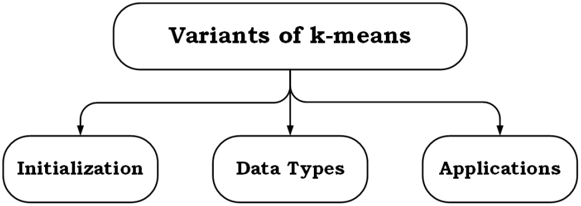
The k-means clustering algorithm is considered one of the most powerful and popular data mining algorithms in the research community. However, despite its popularity, the algorithm has certain limitations, including problems associated with random initialization of the centroids which leads to unexpected convergence. Additionally, such a clustering algorithm requires the number of clusters to be defined beforehand, which is responsible for different cluster shapes and outlier effects. A fundamental problem of the k-means algorithm is its inability to handle various data types. This paper provides a structured and synoptic overview of research conducted on the k-means algorithm to overcome such shortcomings. Variants of the k-means algorithms including their recent developments are discussed, where their effectiveness is investigated based on the experimental analysis of a variety of datasets. The detailed experimental analysis along with a thorough comparison among different k-means clustering algorithms differentiates our work compared to other existing survey papers. Furthermore, it outlines a clear and thorough understanding of the k-means algorithm along with its different research directions.
Overview
The claims and statistics of this paper haven’t been checked yet.
Free: it reads the open-access text and checks the first 5 claims that cite a source we can check. Create a free account to check every claim.
Integrity signals
Registry
Cites
Statistics
Figures
Verification
Claims the paper makes
The claims and statistics of this paper haven’t been checked yet.
Free: it reads the open-access text and checks the first 5 claims that cite a source we can check. Create a free account to check every claim.
Claims other papers make about this one
Each is checked against this paper’s own text: does it say what the citing paper says it does?
The check wasn’t confident either way, so it gives no verdict — never disputed.
In the citing paper
“First, k-means does not account for uncertainty associated with yield environment classifications [1, 19].”
From A Bayesian framework to model variance of grain yield response to plant density (2025) · cites this paper as [1]
Experimental — accuracy not yet measured
Self-check
Percentages, sums and reported differences re-computed from the paper’s own numbers.
The self-check needs the paper’s full text.
Citations
Cites
Estimating the Dimension of a Model
Schwarz, G. (1978) · The Annals of Statistics · doi:10.1214/aos/1176344136 · Cited by 47,033 · cited 1×
“In x-means clustering [49], the BIC (Bayesian information criterion) or “Schwarz criterion” [50,51] is utilised to find the number of k clusters.”
UCI Machine Learning Repository
Asuncion, A. (2007) · Medical Entomology and Zoology · Cited by 25,411
(1967) · Cited by 23,719
Neural networks for pattern recognition
(1994) · Choice Reviews Online · doi:10.5860/choice.31-5500 · Cited by 18,538
Jain, A. K., Murty, M. N., & Flynn, P. J. (1999) · ACM Computing Surveys · doi:10.1145/331499.331504 · Cited by 13,199
Neural Networks for Pattern Recognition
Bishop, C. M. (1995) · doi:10.1093/oso/9780198538493.001.0001 · Cited by 12,287
Finding groups in data: an introduction to cluster analysis
(1991) · Choice Reviews Online · doi:10.5860/choice.28-4558 · Cited by 10,474
Top 10 algorithms in data mining
Wu, X., Kumar, V., Ross Quinlan, J., Ghosh, J., Yang, Q., Motoda, H., McLachlan, G. J., Ng, A., Liu, B., Yu, P. S., et al. (2008) · Knowledge and Information Systems · doi:10.1007/s10115-007-0114-2 · Cited by 5,667 · cited 1×
“This survey studies the problems of and solutions to partition-based clustering, and more specifically the widely used k-means algorithm [9], which has been listed among the top 10 clustering algorithms for data analysis [35].”
An efficient k-means clustering algorithm: analysis and implementation
Kanungo, T., Mount, D. M., Netanyahu, N. S., Piatko, C. D., Silverman, R., & Wu, A. Y. (2002) · IEEE Transactions on Pattern Analysis and Machine Intelligence · doi:10.1109/tpami.2002.1017616 · Cited by 5,660
Bozdogan, H. (1987) · Psychometrika · doi:10.1007/bf02294361 · Cited by 4,468 · cited 1×
“In x-means clustering [49], the BIC (Bayesian information criterion) or “Schwarz criterion” [50,51] is utilised to find the number of k clusters.”
Research works printed but not linked: 1
- Mohri, M., Rostamizadeh, A., and Talwalkar, A. (2012). Foundations of Machine Learning, MIT Press.
Cited by
Items 601–700 of 1,001
High Performance Time Series Anomaly Detection Using Brain Inspired Cortical Coding Method
Yücel, M., Sertbaş, A., & Üstündağ, B. B. (2023) · IEEE Access · doi:10.1109/access.2023.3239212 · Cited by 7
“It is widely used in data mining and clustering areas such as business intelligence, pattern classification, social science, anomaly detection, etc. [45], [46].”
MethodAutonomous Decentralized Spectral Clustering for Hierarchical Routing of Multi-Hop Wireless Networks
Matsuhashi, N., Takano, C., & Aida, M. (2023) · IEEE Access · doi:10.1109/access.2023.3288075 · Cited by 5
“In particular, the k -means method is one of the critical techniques used to solve the routing problem for multi-hop wireless networks [17], [24].”
MethodMucherino, S., Dima, A. L., Coscioni, E., Vassallo, M. G., Orlando, V., & Menditto, E. (2023) · Pharmaceutics · doi:10.3390/pharmaceutics15112568 · Cited by 5
“…and the last dose, which immediately precedes discontinuation. with common characteristics (e.g., potential determinants or predictors of risk) [21,34–36]. histories for a single medication (sac/val) over an observation period of 365 days (1-year) were calculated on the identified cohort of HF…”
Tang, Q., Yang, R., & Guo, Y. (2023) · IEEE International Conference on Communication Software and Networks · doi:10.1109/iccsn57992.2023.10297329 · Cited by 5
“CRTE uses the K-means clustering algorithm [12] to cluster the traffic data into several classes and finds the cluster center of each class.”
MethodZhou, Y., Shao, G., & Jiang, Y. (2024) · Water · doi:10.3390/w16030372 · Cited by 5
Flexible Spatio-Temporal Energy-Efficient Runtime Management
Khasanov, R., Dietrich, M., & Castrillón, J. (2024) · Asia and South Pacific Design Automation Conference (ASP-DAC) · doi:10.1109/asp-dac58780.2024.10473885 · Cited by 5
“The 8B8L platform’s operating points were generated using a genetic algorithm in Mocasin, with 40 operating points selected using the k-means method [26].”
MethodChen, X., Liao, X.-C., Wei, F.-F., & Chen, W. (2024) · Genetic and Evolutionary Computation Conference (GECCO) · doi:10.1145/3638529.3654106 · Cited by 5
“As for task assignment, K-means clustering algorithm [16] is employed to generate task allocation schemes.”
Identifying Landslide Hotspots Using Unsupervised Clustering: A Case Study
Daniel, I., Akinyemi, L. A., & Udekwu, O. (2024) · Journal of Future Artificial Intelligence and Technologies · doi:10.62411/faith.3048-3719-37 · Cited by 5
“Its ability to model the true underlying distribution of landslides without assuming spherical clusters or requiring predefined cluster numbers, made it the best-performing algo-rithm for this study[58].”
BackgroundSelahvarzi, M., Naghedifar, S. M., Oliazadeh, A., & Loáiciga, H. A. (2024) · Journal of Hydrology · doi:10.1016/j.jhydrol.2024.132459 · Cited by 5
Assessing the Role of Machine Learning in Climate Research Publications
Niculae, A.-M., Oprea, S., Văduva, A.-G., Bârã, A., & ANDREESCU, A. I. (2024) · Sustainability · doi:10.3390/su162411086 · Cited by 5
Hybrid Deep Learning for Gas Price Prediction Using Multi-Factor and Temporal Features
Zhang, S., Wu, H., Wang, J., & Du, L. (2025) · IEEE Access · doi:10.1109/access.2024.3525128 · Cited by 5
“In implementation, we innovatively introduce k-means clustering analysis [17] to accurately identify and group correlated factors, ensuring that the model independently captures the impact of each factor on prices, thereby enhancing the accuracy and reliability of predictions.”
Cross-Domain Text Classification Based on BERT Model
Zhang, K., Hei, X., Fei, R., Guo, Y., & Jiao, R. (2021) · Lecture notes in computer science · doi:10.1007/978-3-030-73216-5_14 · Cited by 5
Evaluation of Clustering Algorithms on HPC Platforms
Cebrián, J. M., Imbernón, B., Soto, J., & Cecilia, J. M. (2021) · Mathematics · doi:10.3390/math9172156 · Cited by 5
“The k-means algorithm is one of the most studied clustering methods [27].”
MethodAn Optimized BP Neural Network Model and Its Application in the Credit Evaluation of Venture Loans
Chen, M., & Ma, X. (2022) · Computational Intelligence and Neuroscience · doi:10.1155/2022/8791968 · Cited by 5
WAHID, M. N. A. (2022) · JOURNAL OF INFORMATICS AND TELECOMMUNICATION ENGINEERING · doi:10.31289/jite.v6i1.6126 · Cited by 5
Computer cyberspace security mechanism supported by cloud computing
Fu, Z. (2022) · PLoS ONE · doi:10.1371/journal.pone.0271546 · Cited by 5
“More-over, when the amount of data is large, the algorithm needs more iterations to update the cluster center, greatly increasing calculation and memory overhead [18].”
Brain Inspired Cortical Coding Method for Fast Clustering and Codebook Generation
Yücel, M., Bagis, S., Sertbaş, A., Sarıkaya, M., & Üstündağ, B. B. (2022) · Entropy · doi:10.3390/e24111678 · Cited by 6
Xie, Z., Guo, Z., Hong, X., Zhao, Z., Liu, J., & Li, X. (2023) · International Conference on Cloud Computing and Big Data Analytics (ICCCBDA) · doi:10.1109/icccbda56900.2023.10154828 · Cited by 5
“[8] clustering algorithm is an iterative clustering analysis algorithm.”
MethodAI2: a novel explainable machine learning framework using an NLP interface
Dessureault, J.-S., & Massicotte, D. (2023) · International Conference on Machine Learning Technologies (ICMLT) · doi:10.1145/3589883.3589884 · Cited by 5
Exploring EEG Features for Differentiating Between Secure and Insecure Attachment Styles
Zuckerman, I., Mizrahi, D., & Laufer, I. (2024) · Lecture notes in networks and systems · doi:10.1007/978-3-031-47718-8_29 · Cited by 5
DLCS: A deep learning-based Clustering solution without any clustering algorithm, Utopia?
Ros, F., & Riad, R. (2024) · Knowledge-Based Systems · doi:10.1016/j.knosys.2024.111834 · Cited by 5
Waele, T. D., Shahid, A., Peralta, D., Tuyttens, F., & Poorter, E. D. (2024) · Research Square · doi:10.21203/rs.3.rs-3920731/v1 · Cited by 5
IJID (International Journal on Informatics for Development)
(2025) · doi:10.14421/ijid · Cited by 5
Time series compression based on reinforcement learning
Jiang, N., Xiang, Q., Wang, H., & Zheng, B. (2023) · Information Sciences · doi:10.1016/j.ins.2023.119490 · Cited by 4
Cultivar shifts have offset climate warming impacts on soybean phenology in China since 1981
Mei, Q., Zhang, Z., Han, J., Song, J., Cheng, F., Zhuang, H., Wu, H., & Xu, J. (2025) · Agricultural Systems · doi:10.1016/j.agsy.2024.104260 · Cited by 4
Han, J., Liu, H., Fang, J., Tan, N., & Xiong, H. (2025) · International World Wide Web Conference (WWW) · doi:10.1145/3696410.3714817 · Cited by 8
“For example, we can use K-Means clustering [3] for data partitioning.”
Dong, X., Zhang, Z., Liao, J., Chen, J., Zhang, S., & Rao, Y. (2025) · Journal of Animal Science · doi:10.1093/jas/skaf084 · Cited by 4
Understanding Model Weaknesses: A Path to Strengthening DNN-Based Android Malware Detection
Li, H., Cheng, X. Y., Zhao, Y., Xu, G., Xu, G., & Wang, H. (2025) · Proceedings of the ACM on software engineering. · doi:10.1145/3728884 · Cited by 5
“In the curriculum learning, malware samples that are difficult-to-learn are reserved for the final phase of learning, whereas the easy-to-learn samples are introduced to the model at the beginning of the training process.”
Dai, R., Wang, Z., Zhang, Z., Lei, L., Wang, M., Han, K., Wang, Z., Li, Z., Zhang, J., & Guo, Q. (2025) · Journal of Molecular Medicine · doi:10.1007/s00109-025-02575-4 · Cited by 5
“Finally, the latent representations are clustered using the K-means [35] algorithm, achieving precise spatial domain identification and visualization.”
InfluentialCross-Domain Continual Learning for Edge Intelligence in Wireless ISAC Networks
Hu, J., Li, X., Su, Z., & Luo, J. (2025) · IEEE Transactions on Wireless Communications · doi:10.1109/twc.2025.3588914 · Cited by 7
“Selecting βE exemplars using the K-means clustering method with k-means++ initialization has a complexity of O ( βEML ) [55], and the complexity of selecting the remaining (1 − β ) E exemplars with the herding method is O ((1 − β ) EML ) .”
User Immersion-aware Short Video Recommendation
He, Z., Zhang, S., Ma, W., Li, J., Sun, P., Ai, Q., Liu, Y., & Zhang, M. (2025) · ACM Transactions on Information Systems · doi:10.1145/3748303 · Cited by 7
Energy-Aware Congestion Control in WBAN-SDN Based on a Metaheuristic Approach
Mozaffari, J., Azgomi, M. A., Madadi, H., & Dishabi, M. R. E. (2025) · Wireless Personal Communications · doi:10.1007/s11277-025-11814-3 · Cited by 4
“These advancements demonstrate that with minor modifications, clustering algorithms can remain pivotal tools for data analysis in the face of technological changes [30, 31].”
InfluentialRobust multi-view discrete clustering with unified graph learning
Nie, J., Chen, R., Huang, J., Yang, B. Q., & Zhang, X. (2025) · Knowledge-Based Systems · doi:10.1016/j.knosys.2025.114510 · Cited by 4
Pepxml: ESM2-based extreme multilabel classification of pathogen-targeted antimicrobial peptides
Bin, Y.-N., Zhang, D., Hu, Z., Xu, C., & Su, Y.-S. (2025) · Briefings Bioinform. · doi:10.1093/bib/bbaf548 · Cited by 4
An, J., Li, T., Wang, C., Yan, D., & Hu, S. (2025) · Energy and Buildings · doi:10.1016/j.enbuild.2025.116796 · Cited by 4
Tang, X., Li, K., Xie, D., & Yuan, F. (2025) · Land · doi:10.3390/land14122427 · Cited by 4
Medina-Ortiz, D., Escobedo, S., Murillo-Acevedo, N., Soto-García, N., Villegas, D. F., Sandoval, D., & Sanchez–Daza, A. (2026) · IntechOpen eBooks · doi:10.5772/intechopen.1013230 · Cited by 5
Wang, B., Zhou, Y., Sui, H., Ma, G., Cheng, P., & Wang, D. (2026) · ISPRS Journal of Photogrammetry and Remote Sensing · doi:10.1016/j.isprsjprs.2026.01.038 · Cited by 4
Fleet renewal and retrofit for emission reductions in offshore logistics
Ormevik, A. B., Bjørke, M., Lie, C., Vingsnes, M., & Fagerholt, K. (2026) · Maritime Transport Research · doi:10.1016/j.martra.2026.100150 · Cited by 4
Moussaid, A., Bayad, M., Gamoussi, Y., Hamdouni, Y. E., & Briak, H. (2026) · Scientific Reports · doi:10.1038/s41598-026-41167-1 · Cited by 4
“K-means is one of the most widely used algorithms in unsupervised machine learning 51 .”
AI-Driven Decision Support System for Proactive Risk Management in Construction Projects
Zorrilla, J., Seijo, S., Arenal, U., & Mena, J. R. (2026) · Intelligent infrastructure and construction · doi:10.3390/iic2020004 · Cited by 4
Machine learning for additive manufacturing of implants: a review of metal and ceramic applications
Antonini, L., Giardini, C., Quarto, M., Herranz-Diez, C., & Buj-Corral, I. (2026) · Materials & Design · doi:10.1016/j.matdes.2026.116333 · Cited by 4
LIU, Z., Liu, Q., Wang, W., Wang, Y., Jia, P., Xu, T., Huang, W., Chen, C., & Zhao, X. (2026) · International ACM SIGIR Conference on Research and Development in Information Retrieval (SIGIR) · doi:10.1145/3805712.3809748 · Cited by 4
“Specifically, in the A2B perspective, the items in domain A will first be grouped us-ing the K-means method [1], which ensures the diversity of the selected samples.”
Bhattacharjee, S., Hwang, Y.-B., Sumon, R. I., Rahman, H., Hyeon, D.-W., Moon, D., Carole, K. S., Kim, H., & Choi, H. (2022) · IEEE International Conference on Image Processing, Applications and Systems (IPAS) · doi:10.1109/ipas55744.2022.10052952 · Cited by 4
“In order to perform unsupervised classification, we used K-means [14], K-medoids [15], AH [16], GMM with expectation maximization [17] and variation inference [18], and Spectral [19] clustering algorithms.”
MethodAn interpretable neural network for robustly determining the location and number of cluster centers
Xie, X., Pu, Y., Zhang, H., Mańdziuk, J., El-Alfy, E.-S. M., & Wang, J. (2023) · International Journal of Machine Learning and Cybernetics · doi:10.1007/s13042-023-01978-4 · Cited by 4
Automatic assignment of microgenres to movies using a word embedding-based approach
González-Santos, C., Vega-Rodríguez, M. A., López-Muñoz, J. M., Martínez-Sarriegui, I., & Pérez, C. J. (2023) · Multimedia Tools and Applications · doi:10.1007/s11042-023-17442-y · Cited by 4
“K-Means K-Means [16] (partitional model) and BIRCH [17] (hierarchical model) are two of the most used methods from these two clustering types.”
Leveraging Machine Learning For Enhanced Database Integration
Palnati, N. R., Julakanti, V. K. R., & Bayyavarapu, N. (2024) · Procedia Computer Science · doi:10.1016/j.procs.2024.04.154 · Cited by 4
Dynamic Segmentation Analysis for Expedition Services: Integrating K-Means and Decision Tree
Khoiriyah, D. H., & Ambarwati, R. (2024) · Journal of Information Systems and Informatics · doi:10.51519/journalisi.v6i1.666 · Cited by 4
“1) K-Means K-means is a learning technique used to group data sets into separate groups so that each group can be divided according to similar characteristics [16].”
MethodŞimşek, A. B. (2024) · Anadolu Üniversitesi İktisadi ve İdari Bilimler Fakültesi Dergisi · doi:10.53443/anadoluibfd.1344618 · Cited by 4
“The differences between the well-known and frequently used K-means, Hierarchical, and DBSCAN methods can be discussed as follows (Ahmed et al., 2020; Fuchs & Höpken, 2022; Shahriar et al., 2019).”
MethodOn Entropic Learning from Noisy Time Series in the Small Data Regime
Bassetti, D., Pospíšil, L., & Horenko, I. (2024) · Entropy · doi:10.3390/e26070553 · Cited by 6
“Let us consider the identification of the state at a given time by using techniques that do not intrinsically possess a notion of order or time, for example, k-means clustering [31,32].”
BackgroundMerchán, F., Contreras, K., Poveda, H., Guzmán, H. M., & Sánchez-Galán, J. E. (2024) · Frontiers in Marine Science · doi:10.3389/fmars.2024.1416247 · Cited by 4
Jesús-Azabal, M., García-Alonso, J. M., & Galán–Jiménez, J. (2024) · IT Professional · doi:10.1109/mitp.2024.3433399 · Cited by 4
Calvo-Yuste, J., Ruiz-Rodríguez, Á. L., Hermosilla, B., Agut, A., Martínez‐Ortega, M. M., & Tejero, P. (2024) · Plants · doi:10.3390/plants13223208 · Cited by 4
Silva, E. C., de Medeiros, I. P., de Menezes, M. V., & Kamikawachi, D. S. L. (2024) · Anais do Symposium on Knowledge Discovery, Mining and Learning (KDMiLe) · doi:10.5753/kdmile.2024.244753 · Cited by 4
“…quatro arquiteturas distintas para essa tarefa: (i) a primeira, usa segmentação por sentenças, seguida de clusterização com o algoritmo K-means [Ahmed et al. 2020]; (ii) a segunda, usa segmentação por seções, seguida de clusterização com K-Means ; (iii) a terceira, usa segmentação por…”
Sone, Y., Matsumoto, C., Woo, J., & Ohyama, Y. (2025) · ROBOMECH Journal · doi:10.1186/s40648-024-00288-w · Cited by 4
“Numerous studies and discussions have explored the performance and utilization of the K-means method [25, 26].”
Sinko, D. P., & Sinko, K. D. (2025) · Èlektronnoe modelirovanie · doi:10.15407/emodel.47.01.022 · Cited by 4
Xie, Z., Lin, Z., Cai, Q., & Chen, Z. (2025) · Energy Conversion and Management · doi:10.1016/j.enconman.2025.119792 · Cited by 4
Research on recognition of bedding system coverage rate using infrared thermal imaging
Ma, H., Liu, G., Lin, Y., Zhu, G., Zhang, P., Lu, M., & Hu, S. (2025) · Journal of Thermal Biology · doi:10.1016/j.jtherbio.2025.104146 · Cited by 4
Zou, Q., Xia, Y., Ran, X., Guo, X., & Feng, J. (2025) · PLoS ONE · doi:10.1371/journal.pone.0323937 · Cited by 4
Xie, W., Liu, J., Wang, C., Wang, J., Han, W., Peng, Y., Du, X., Meng, J., Ning, K., & Jiang, T. (2025) · Briefings in Bioinformatics · doi:10.1093/bib/bbaf308 · Cited by 4
Learning from the Past: Adaptive Parallelism Tuning for Stream Processing Systems
Han, Y., Chen, L., Wang, H., Chen, Z., Zhang, Y., Yang, C., Hao, K., & Yang, Z. (2025) · IEEE International Conference on Data Engineering (ICDE) · doi:10.1109/icde65448.2025.00264 · Cited by 4
“With the distance metric defined, the K-means clustering algorithm [49] is applied to group similar dataflow DAGs, treating each DAG as a data point in the clustering space.”
Gârbea, R., & Grigoraş, G. (2022) · International Conference and Exposition on Electrical and Power Engineering (EPE) · doi:10.1109/epe56121.2022.9959819 · Cited by 4
“The steps of the algorithm to obtain the representative patterns are presented in the following [18], [21]: 1.”
MethodSurface Approximation by Means of Gaussian Process Latent Variable Models and Line Element Geometry
Boi, I. D., Ek, C. H., & Penne, R. (2023) · Mathematics · doi:10.3390/math11020380 · Cited by 4
Sistem Klasterisasi Volume Sampah Organik di Kota Magelang menggunakan K-Means
Nurrohman, M., Maimunah, M., & Sukmasetya, P. (2023) · TEMATIK · doi:10.38204/tematik.v10i1.1338 · Cited by 4
Panthong, R., & Wongkanthiya, T. (2023) · IAES International Journal of Artificial Intelligence · doi:10.11591/ijai.v12.i4.pp1774-1783 · Cited by 4
“It is a popular method used to classify the similar data into a partitional clustering and then measuring the distance between each data and the centroid [12], [13].”
Sudriyanto, S., Khairi, A., & Hikam, A. S. (2023) · NJCA (Nusantara Journal of Computers and Its Applications) · doi:10.36564/njca.v8i1.234 · Cited by 4
He, W., Fan, C., Wu, Z., & Yong, Q. (2023) · Energy and Built Environment · doi:10.1016/j.enbenv.2023.09.001 · Cited by 4
Text embeddings and clustering for characterizing online communities on Reddit
Sawicki, J. (2023) · Annals of Computer Science and Information Systems · doi:10.15439/2023f6275 · Cited by 4
“Use of K-means for clustering followed results found in [19], [20].”
ResultEnhancing K-means Clustering Results with Gradient Boosting: A Post-Processing Approach
Alzakan, M., Almousa, H., Almarzoqi, A., Alghasham, M., Aldawsari, M., & Al-Hagery, M. A. (2024) · International Journal of Advanced Computer Science and Applications · doi:10.14569/ijacsa.2024.0150292 · Cited by 4
Langhorst, J., Chan, K. W., Meerpohl, C., & Büskens, C. (2024) · Vehicles · doi:10.3390/vehicles6020027 · Cited by 4
“The well-known k-means consists of two main components: a function measuring distances and a function calculating a cluster center, which represents a cluster [30].”
BackgroundRastogi, S., Duttagupta, S. P., & Guha, A. (2024) · Machine Learning and Knowledge Extraction · doi:10.3390/make6020056 · Cited by 4
“Thus, to illustrate, let there be a method C (e.g., K-means clustering [20]).”
MethodZhao, Y., & Wang, P. (2024) · IEEE International Conference on Control, Electronics and Computer Technology (ICCECT) · doi:10.1109/iccect60629.2024.10545914 · Cited by 4
“Based on common characteristics within the dataset, the study employed the K-means clustering algorithm [9] to segment the data into distinct groups.”
MethodEfficient Road Traffic Estimation for Proactive Beam Allocation in an ISAC Setup
Amiri, W. A., Guo, T. N., & MacKenzie, A. B. (2024) · IEEE Access · doi:10.1109/access.2024.3415956 · Cited by 4
Ozone exceedance forecasting with enhanced extreme instance augmentation: A case study in Germany
Deng, T., Manders, A., Segers, A. J., Heemink, A. W., & Lin, H. X. (2024) · Environmental Modelling & Software · doi:10.1016/j.envsoft.2024.106162 · Cited by 4
Predicting defects in SLM-produced parts based on melt pools clustering analysis
Malashin, I. P., Martysyuk, D., Тынченко, В. С., Evsyukov, D., Nelyub, V., Бородулин, А. С., Gantimurov, A., & Galinovsky, A. L. (2024) · The International Journal of Advanced Manufacturing Technology · doi:10.1007/s00170-024-14134-1 · Cited by 4
“Our method leverages the t-SNE algorithm for dimensionality reduction of the image vectors, followed by k-means [21] and DBSCAN [22] clustering algorithms to categorize these reduced dimensions.”
Vosoughkhosravi, S., & Jafari, A. (2024) · Journal of Computing in Civil Engineering · doi:10.1061/jccee5.cpeng-6002 · Cited by 4
Guo, W., Xu, X., Xiao-qiang, X., Gao, S., & Wu, Z. (2024) · Remote Sensing · doi:10.3390/rs16173230 · Cited by 4
PACT: Accurate Power Analysis and Carbon Emission Tracking for Sustainability
Ukarande, A., Başaklar, T., Cao, M., & Ogras, U. Y. (2024) · International Symposium on Low Power Electronics and Design (ISLPED) · doi:10.1145/3665314.3670809 · Cited by 4
“Based on the insights obtained from Figure 2, the training set is divided into five clusters using K-Means [8] with the Euclidean distance metric.”
Refining the Eel and Grouper Optimizer with Intelligent Modifications for Global Optimization
Kyrou, G., Charilogis, V., & Tsoulos, I. G. (2024) · Computation · doi:10.3390/computation12100205 · Cited by 4
Clustering and Investigation of Human Driving Behavior Using Autoencoder and Risk Assessment
Shin, D., Myoung, J., Jeon, W., & Park, K.-M. (2025) · IEEE Access · doi:10.1109/access.2025.3529883 · Cited by 6
“K-means clustering tries to partition the data into k clusters by minimizing the sum of squared distances between the data points and their assigned cluster centers [36], [37].”
Fish-Bone Diagram of Research Issue: Gain a Bird's-Eye View on a Specific Research Topic
Li, J., Phan, H., Gu, W., Ota, K., & Hasegawa, S. (2024) · Conference proceedings/Conference proceedings - IEEE International Conference on Systems, Man, and Cybernetics · doi:10.1109/smc54092.2024.10830995 · Cited by 4
“These sentence vectors are then clustered using the k-means[16] method.”
Wei, C., Zheng, D., Zheng, X., & Ni, H. (2025) · Scientometrics · doi:10.1007/s11192-025-05230-4 · Cited by 4
“The algorithm iteratively adjusts the distribution of samples within clusters to find an optimal solution, aiming for maximal compactness of intra-cluster vectors and maximal dispersion of inter-cluster vectors (Ahmed et al., 2020; Chakraborty et al., 2024).”
Yan, Y., Wang, Q., Zhou, H., & Song, Y. (2025) · Buildings · doi:10.3390/buildings15060876 · Cited by 4
Zhao, K., Wang, J., Chen, Y., Sun, J., & Zhang, R. (2025) · Agriculture · doi:10.3390/agriculture15070710 · Cited by 4
PCA-assisted clustering approaches for soft-failure detection in optical networks
Ribeiro, A. N., Lobato, F. R. L., Silva, M. F., Sgambelluri, A., Valcarenghi, L., Wosinska, L., & Costa, J. C. W. A. (2025) · Journal of Optical Communications and Networking · doi:10.1364/jocn.549205 · Cited by 4
“The user defines the number of clusters, and the initial positions of the clusters are generally random [41].”
A BOX-YOLOv8 framework for automated hyperspectral core analysis
Zhu, H., Li, A., Lin, C., Qin, S., Xie, J., Chai, J. J. K., Rogers, R., & Xu, J. (2025) · Geoderma · doi:10.1016/j.geoderma.2025.117325 · Cited by 4
Naufan, M. H., Kurniawan, R., & Suprapti, T. (2025) · E-Link Jurnal Teknik Elektro dan Informatika · doi:10.30587/e-link.v20i1.9063 · Cited by 4
“Oleh karena itu, beberapa kali percobaan diperlukan untuk menemukan jumlah inisialisasi yang lebih baik [7].”
Machine Learning Models for Metabolic Syndrome Identification with Explainable AI
Asoka, E., Asoka, E., Fathoni, F., Primanita, A., & Isa, I. G. T. (2025) · Jurnal Teknik Informatika (Jutif) · doi:10.52436/1.jutif.2025.6.3.4430 · Cited by 4
Khosa, J. (2025) · Journal of Current Research in Blockchain. · doi:10.47738/jcrb.v2i2.34 · Cited by 5
Yang, L., Yang, F., Feng, Y., Hu, W. J., & Cheng, Y. (2025) · Energies · doi:10.3390/en18164380 · Cited by 4
A fast instance reduction algorithm for intrusion detection scenarios
Herrera-Semenets, V., Hernández-León, R., & van den Berg, J. (2022) · Computers & Electrical Engineering · doi:10.1016/j.compeleceng.2022.107963 · Cited by 4
Automated and lightweight feature detection and matching towards real-time SHM of large structures
Prasad, S., Kumar, D., Kalra, S., Chiang, C.-H., & Khandelwal, A. (2022) · SPIE Health Monitoring of Structural and Biological Systems · doi:10.1117/12.2612799 · Cited by 4
Automatic Botnet Attack Identification Based on Machine Learning
Li, P. H., Xu, J., Xu, Z. Y., Chen, S., Niu, B. W., Yin, J., Sun, X. F., Lan, H. L., & Chen, L. L. (2022) · Computers, materials & continua/Computers, materials & continua (Print) · doi:10.32604/cmc.2022.029969 · Cited by 4
Clustering and Visualizing of Chest X-ray Images for Covid-19 Detection
Saaudi, A., Mansoor, R., & Abed, A. K. (2021) · Information Technology To Enhance e-learning and Other Application (IT-ELA) · doi:10.1109/it-ela52201.2021.9773539 · Cited by 4
Surya, S., & Suresh, K. (2022) · IEEE Mysore Sub Section International Conference (MysuruCon) · doi:10.1109/mysurucon55714.2022.9972675 · Cited by 4
“This work [28] provides a clear overview of the k means algorithm and the research to overcome the existing drawbacks.”
BackgroundLuchia, N. T., & Mustakim, M. (2022) · Journal of Information System Research (JOSH) · doi:10.47065/josh.v4i1.2385 · Cited by 4
“K-Means membutuhkan jumlah cluster dalam pengelompokan data [15].”
BackgroundKumar, K. B. S., & Samuel, P. (2023) · International Journal of Intelligent Transportation Systems Research · doi:10.1007/s13177-023-00350-8 · Cited by 4
“However, k-means is prone to produce spherical clusters and can work efficiently only on well-clusterable data [3].”
BackgroundMahardhika, F., Warnars, H. L. H. S., Nugroho, A. S., & Budiharto, W. (2023) · International Journal of Computing and Digital Systems · doi:10.12785/ijcds/140178 · Cited by 4
$$AI^{2}$$: the next leap toward native language-based and explainable machine learning framework
Dessureault, J.-S., & Massicotte, D. (2023) · Automated Software Engineering · doi:10.1007/s10515-023-00399-5 · Cited by 4
Analysis of Smart Grid Optimal Scheduling considering the Demand Response of Different EV Owners
Zhang, X., Liao, C., Chen, X., Deng, K., Chen, B., & Gong, Y. (2023) · International Transactions on Electrical Energy Systems · doi:10.1155/2023/6670897 · Cited by 4
Metadata
- Authors
- Ahmed, M., Seraj, R., & Islam, S. M. S.
- Affiliations
- Edith Cowan University (AU)
- McGill University (CA)
- Corresponding author
- Ahmed, Mohiuddin
- Venue
- Electronics
- Publisher
- MDPI AG
- Published
- 2020-08-12
- Volume
- 9
- Issue
- 8
- Pages
- 1295
- ISSN
- 2079-9292 (ISSN-L)
- OpenAlex
- W3048804154
- Cited by
- 1,717
- References
- 76
- Citations by year
- 2026: 311 · 2025: 471 · 2024: 484 · 2023: 302 · 2022: 109 · 2021: 35 · 2020: 5
- FWCI
- 44.33
- Type
- journal article
- Language
- en
- Open access
- gold
- doi.org
- Licence
- Locations
- Electronics (publishedVersion, cc-by)
- UWA Profiles and Research Repository (UWA) (submittedVersion, cc-by)
- Australasian Journal of Paramedicine (submittedVersion, cc-by)
- DOAJ (DOAJ: Directory of Open Access Journals) (submittedVersion, cc-by-sa)
- Topics
- Physical Sciences › Computer Science › Artificial Intelligence › Advanced Clustering Algorithms Research
- Physical Sciences › Computer Science › Information Systems › Data Mining and Machine Learning Applications
- Physical Sciences › Computer Science › Artificial Intelligence › Bayesian Methods and Mixture Models
- Keywords
- K-means clustering, centroid initialization, optimal number of clusters, cluster shape, outliers, algorithm comparison, convergence
About these checks
Registry, retraction, Cites and statistics results are computed, not judged, with one exception: a printed reference that no index lists is read once by a model before it counts as a citation error. Claims are extracted by a model and kept only when their quote appears verbatim in the text; each cited source is then checked, with a model’s help, for whether it says what the claim relies on. Those verdicts can be wrong — read the claim’s quote and the cited source before relying on one.
Statistics and arithmetic are recomputed, not judged.
Confidence bands are shown only for fields calibrated on our annotated test set. None is calibrated yet, so no band is shown.
What counts as a claim ›How we measure confidence ›How we check this ›
Are you an author, or do you see a problem with this page? Request a review
Data sources
Bibliographic data: Semantic Scholar, OpenAlex, Crossref.
Contains information from the Semantic Scholar Academic Graph Datasets, made available under the ODC Attribution License (ODC-BY 1.0).
Semantic Scholar’s data is described in: Kinney, R., et al. (2023). The Semantic Scholar Open Data Platform. arXiv:2301.10140.
