

An Overview of Recent Developments in Biomass Pyrolysis Technologies
Open accessThe DOI matches its Crossref record; 157 of the 157 references it cites were found in a registry or an index.
Abstract
Biomass is a promising sustainable and renewable energy source, due to its high diversity of sources, and as it is profusely obtainable everywhere in the world. It is the third most important fuel source used to generate electricity and for thermal applications, as 50% of the global population depends on biomass. The increase in availability and technological developments of recent years allow the use of biomass as a renewable energy source with low levels of emissions and environmental impacts. Biomass energy can be in the forms of biogas, bio-liquid, and bio-solid fuels. It can be used to replace fossil fuels in the power and transportation sectors. This paper critically reviews the facts and prospects of biomass, the pyrolysis process to obtain bio-oil, the impact of different pyrolysis technology (for example, temperature and speed of pyrolysis process), and the impact of various reactors. The paper also discusses different pyrolysis products, their yields, and factors affecting biomass products, including the present status of the pyrolysis process and future challenges. This study concluded that the characteristics of pyrolysis products depend on the biomass used, and what the pyrolysis product, such as bio-oil, can contribute to the local economy. Finally, more research, along with government subsidies and technology transfer, is needed to tackle the future challenges of the development of pyrolysis technology.
Overview
The claims and statistics of this paper haven’t been checked yet.
Free: it reads the open-access text and checks the first 5 claims that cite a source we can check. Create a free account to check every claim.
Integrity signals
Registry
Cites
Statistics
Figures
Verification
Claims the paper makes
The claims and statistics of this paper haven’t been checked yet.
Free: it reads the open-access text and checks the first 5 claims that cite a source we can check. Create a free account to check every claim.
Claims other papers make about this one
Each is checked against this paper’s own text: does it say what the citing paper says it does?
The source backs part of the claim, not all of it — or backs it for a different population, condition or comparison.
In the citing paper
“In this method, the biomass is heated in the complete absence of oxygen or with a limited supply of oxygen, thereby preventing significant combustion [18].”
From Production of Biochar from Plantain Rachis and Cassava Peel Towards Sustainable Management of Caribbean Agricultural Waste (2025) · cites this paper as [18]
Experimental — accuracy not yet measured
Self-check
Percentages, sums and reported differences re-computed from the paper’s own numbers.
The self-check needs the paper’s full text.
Citations
Cites
The HITRAN2016 molecular spectroscopic database
Gordon, I. E., Rothman, L. S., Hill, C., Kochanov, R. V., Tan, Y., Bernath, P. F., Birk, M., Boudon, V., Campargue, A., Chance, K. V., et al. (2017) · Journal of Quantitative Spectroscopy and Radiative Transfer · doi:10.1016/j.jqsrt.2017.06.038 · Cited by 7,721
Synthesis of Transportation Fuels from Biomass: Chemistry, Catalysts, and Engineering
Huber, G. W., Iborra, S., & Corma, A. (2006) · Chemical Reviews · doi:10.1021/cr068360d · Cited by 7,664 · cited 1×
“Slow pyrolysis of wood, with a 24 h endurance, was a very common technology in industries until the early 1900s, where coal, acetic acid, methanol, and ethanol were obtained from wood [68,69].”
BackgroundPyrolysis of Wood/Biomass for Bio-oil: A Critical Review
Mohan, D., Pittman, C. U., & Steele, P. H. (2006) · Energy & Fuels · doi:10.1021/ef0502397 · Cited by 5,663 · cited 2×
“boats [16], and the ancient Egyptians performed wood decontamination by assembling tars and pyrolignous acid for use in their mummifying industry [38,39].”
BackgroundReview of fast pyrolysis of biomass and product upgrading
Bridgwater, A. V. (2012) · Biomass and Bioenergy · doi:10.1016/j.biombioe.2011.01.048 · Cited by 4,856 · cited 2×
“After cooling and condensation, a homogeneous mobile dark brown liquid is formed, which has a calorific value corresponding to half of the conventional fuel oil [71].”
BackgroundBiochar as a sorbent for contaminant management in soil and water: A review
Ahmad, M., Rajapaksha, A. U., Lim, J. E., Zhang, M., Bolan, N., Mohan, D., Vithanage, M., Lee, S. S., & Ok, Y. S. (2014) · Chemosphere · doi:10.1016/j.chemosphere.2013.10.071 · Cited by 4,662
Overview of Applications of Biomass Fast Pyrolysis Oil
Czernik, S., & Bridgwater, A. V. (2004) · Energy & Fuels · doi:10.1021/ef034067u · Cited by 2,880 · cited 1×
“Another possibility is to transfer heat quickly, only to the surface of the particles that are in contact with the heat source, which is applied in ablation processes [75,76].”
BackgroundBiochar for Environmental Management: Science, Technology and Implementation
(2015) · doi:10.4324/9780203762264 · Cited by 2,280 · cited 3×
“The production of biochar is an emerging technology which can improve countries’ food security and mitigate climate change [79].”
BackgroundMohanty, A. K., Misra, M., & Drzal, L. T. (2002) · Journal of Polymers and the Environment · doi:10.1023/a:1021013921916 · Cited by 2,151
Biomass resource facilities and biomass conversion processing for fuels and chemicals
Demirbaş, A. (2001) · Energy Conversion and Management · doi:10.1016/s0196-8904(00)00137-0 · Cited by 1,864 · cited 2×
“boats [16], and the ancient Egyptians performed wood decontamination by assembling tars and pyrolignous acid for use in their mummifying industry [38,39].”
BackgroundFast pyrolysis processes for biomass
Bridgwater, A. (2000) · Renewable and Sustainable Energy Reviews · doi:10.1016/s1364-0321(99)00007-6 · Cited by 1,751
Research works printed but not linked: 11
- 2. Kusumo, F.; Silitonga, A.S.; Ong, H.C.; Masjuki, H.H.; Mahlia, T.M.I. A comparative study of ultrasound and infrared transesterification of sterculia foetida oil for biodiesel production. Energy Sources Part a- Recovery Utilization and Environmental Effects 2017, 39, 1339-1346.
- 13. Basu, P. Biomass Gasification and Pyrolysis: Practical Design and Theory; Academic Press: Cambridge, MA, USA, 2010.
- 27. Boyle, G. Renewable Energy: Power for a Sustainable Future; Oxford University Press: Oxford, UK, 1996; Volume 2.
- 26. Ramage, J. and Scurlock, J. "Biomass". In Renewable energy-power for a sustainable future, Edited by: Boyle, G. Oxford, UK: Oxford University Press, Oxford, UK, 1996.
- 37. Meier, D.; Schoell, S.; Klaubert, H. New ablative pyrolyser in operation in Germany. PyNe Newslett. 2004. Available: https://www.researchgate.net/publication/237289951_New_Ablative_Pyrolyser_in_Operation (accessed on 9 November 2018).
- 66. Luengo, C.; Felfli, F.; Bezzon, G. Pirólise e Torrefação de Biomassa. Biomassa Para Energia. Cortez, LAB, Lora, EES, Gómez EO (Organizadores); Editora da Unicamp: Campinas, Brazil, 2008; pp. 333-351.
- 73. da Silva Mota, F.D.A.; Viegas, R.A.; da Silva Lima, A.A.; dos Santos, F.F.P.; Caselli, F.D.T.R. Pirólise da biomassa lignocelulósica: Uma revisão pyrolysis of lignocellulose biomass: A review. Rev. GEINTEC 2015, 5, 2511-2525. · DOI
- Brown, D. (2013). Using Mobile Distributed Pyrolysis Facilities to Deliver a Forest Residue Resource for Bio-Fuel Production. [Ph.D. Thesis, University of Victoria]. · DOI
- Brown, D. (1996). Continuous ablative regenerator system. Proceedings of the 2nd EU-Canada Workshop on Thermal Biomass Processing, 1996, CPL Press.
- Bridgewater, A.V., and Hogan, E.N. (1996). Bio-Oil Production & Utilisation: Proceedings of the 2nd EU-Canada Workshop on Thermal Biomass Processing, CPL Scientific Information Services Ltd.
- Babu, B., and Chaurasia, A. (2003, January 15–18). Optimization of pyrolysis of biomass using differential evolution approach. Proceedings of the Second International Conference on Computational Intelligence, Robotics, and Autonomous Systems (CIRAS-2003), Singapore.
Cited by
Items 101–200 of 413
Rasaq, W. A., Okpala, C. O. R., Igwegbe, C. A., & Białowiec, A. (2024) · Materials · doi:10.3390/ma17030725 · Cited by 40
Recent advances in thermochemical conversion technology for anaerobic digestate from food waste
Mei, C., Cheng, M., Xie, M., Yang, R., Liu, T., Huang, Z., Zhou, T., Zhao, Y., Liu, Z., & Li, B. (2024) · Bioresource Technology · doi:10.1016/j.biortech.2024.131527 · Cited by 39
Khan, S. R., & Zeeshan, M. (2021) · Energy · doi:10.1016/j.energy.2021.121820 · Cited by 39
Hossain, N., Razali, A. N., Mahlia, T. M. I., Chowdhury, T., Chowdhury, H., Ong, H. C., Shamsuddin, A. H., & Silitonga, A. S. (2019) · Energies · doi:10.3390/en12203947 · Cited by 37
“Besides that, many countries worldwide have highlighted biomass as an alternative fuel for renewable sources power generation [7,8].”
BackgroundSelf-citationOng, H. C., Mofijur, M., Silitonga, A. S., Gumilang, D. C., Kusumo, F., & Mahlia, T. M. I. (2020) · Energies · doi:10.3390/en13061319 · Cited by 37
Self-citationValorization of cotton residues for production of bio-oil and engineered biochar
Primaz, C. T., Ribes-Greus, A., & Jacques, R. A. (2021) · Energy · doi:10.1016/j.energy.2021.121363 · Cited by 37
Biochar as an eco-friendly adsorbent for ibuprofen removal via adsorption: A review
Ahmed, H. R., Kayani, K. F., Ealias, A. M., & George, G. (2024) · Inorganic Chemistry Communications · doi:10.1016/j.inoche.2024.113397 · Cited by 41
Abnisa, F., Sharuddin, S. D. A., Zanil, M. F., Daud, W. M. A. W., & Mahlia, T. M. I. (2019) · Polymers · doi:10.3390/polym11111853 · Cited by 38
Self-citationRenewable Energy Entrepreneurs: A Conceptual Framework
Eitan, A., Rosen, G., Herman, L., & Fishhendler, I. (2020) · Energies · doi:10.3390/en13102554 · Cited by 37
Lanjekar, P. R., & Panwar, N. L. (2023) · BioEnergy Research · doi:10.1007/s12155-023-10697-1 · Cited by 40
“Carbonaceous gases, methane, and H 2 were the principal byproducts of this process, and the end product was seen to include varied quantities of biochar, oil, and gases [33, 145].”
Fast pyrolysis of rice husk under vacuum conditions to produce levoglucosan
Téllez, J. F., Silva, M. P., Simister, R., Gomez, L. D., Fuertes, V. C., Paoli, J. M. D., & Moyano, E. L. (2021) · Journal of Analytical and Applied Pyrolysis · doi:10.1016/j.jaap.2021.105105 · Cited by 37
“[3–5,8–10] Pyrolysis, that is the thermal decomposition of biomass in absence of oxygen, produces three fractions for different applications: biochar, bio-oil, and gas.[11,12] These fractions are obtained in different proportions according to the heat rate, final temperature, pressure, and residence times.”
BackgroundAyub, Y., Zhou, J., Ren, J., Wang, Y., Shen, W., He, C., Dong, L., & Toniolo, S. (2023) · Energy Conversion and Management · doi:10.1016/j.enconman.2023.116878 · Cited by 39
Mukhtar, M. N. A., Hagos, F. Y., Noor, M. M., Mamat, R., Abdullah, A. A., & Aziz, A. R. A. (2019) · Renewable and Sustainable Energy Reviews · doi:10.1016/j.rser.2019.05.035 · Cited by 37
Nardella, F., Mattonai, M., & Ribechini, E. (2019) · Journal of Analytical and Applied Pyrolysis · doi:10.1016/j.jaap.2019.104725 · Cited by 35
Miskolczi, N., Gao, N., & Quan, C. (2023) · Journal of the Energy Institute · doi:10.1016/j.joei.2023.101233 · Cited by 34
Köves, M., Madár, V., Ringer, M., & Kocsis, T. (2024) · Land · doi:10.3390/land13091388 · Cited by 36
“During pyrolysis, a series of concurrent and sequential reactions occur, such as dehydration, depolymerization, volatilization, carbonization, aromatization, and others [2,39–41].”
Biochar and carbon-negative technologies: exploring opportunities for climate change mitigation
Ayaz, M., Muntaha, S. T., Baltrėnaitė, E., & Kriaučiūnienė, Z. (2025) · Biochar · doi:10.1007/s42773-024-00421-3 · Cited by 39
Machine learning-driven catalyst design, synthesis and performance prediction for CO2 hydrogenation
Asif, M., Yao, C., Zuo, Z., Bilal, M., Zeb, H., Lee, S., Wang, Z., & Kim, T. (2024) · Journal of Industrial and Engineering Chemistry · doi:10.1016/j.jiec.2024.09.035 · Cited by 45
Jamaluddin, N., Riayatsyah, T. M. I., Silitonga, A. S., Mofijur, M., Shamsuddin, A. H., Ong, H. C., Mahlia, T. M. I., & Rahman, S. M. A. (2019) · Processes · doi:10.3390/pr7090636 · Cited by 34
Self-citationQureshi, K. M., Lup, A. N. K., Khan, S., Abnisa, F., & Daud, W. M. A. W. (2021) · Korean Journal of Chemical Engineering · doi:10.1007/s11814-021-0842-0 · Cited by 32
Bu, Q., Bai, J., Wang, B., Dai, L., & Long, H. (2025) · Waste Management · doi:10.1016/j.wasman.2025.114748 · Cited by 34
Exploring biomass pyrolysis for sustainable hydrogen-rich gas production
Rathi, N., & Das, T. (2025) · Biomass and Bioenergy · doi:10.1016/j.biombioe.2025.108162 · Cited by 32
Mohammed, H. I., Garba, K., Ahmed, S. I., & Abubakar, L. G. (2022) · Sustainable Energy Technologies and Assessments · doi:10.1016/j.seta.2022.102984 · Cited by 39
Theoretical and Experimental Analysis on Co-Gasification of Sewage Sludge with Energetic Crops
Szwaja, S., Poskart, A., Zajemska, M., & Szwaja, M. (2019) · Energies · doi:10.3390/en12091750 · Cited by 30
Effect of pyrolysis temperature on blast furnace injection performance of biochar
Ning, X., Wang, L., Wang, G., Xu, R., Wang, P., Zhang, J., Guo, X., Jiang, C., Li, J., & Wang, C. (2021) · Fuel · doi:10.1016/j.fuel.2021.122648 · Cited by 30
Pyrolysis of wheat straw pellets in a pilot‐scale reactor: Effect of temperature and residence time
Nath, B., Chen, G., Bowtell, L., & Nguyen‐Huy, T. (2024) · Energy Science & Engineering · doi:10.1002/ese3.1833 · Cited by 33
“26 Moreover, the reactor ‐ related factors also influence reactor outputs.”
Revolutionizing bioenergy production: a review on sustainable biomass feedstock
Baidoo, E. B., Tulashie, S. K., Alale, E. M., Addai, C. M., Acquah, D., Agudah, P. Q., & Asante, P. A. (2025) · Biomass and Bioenergy · doi:10.1016/j.biombioe.2025.108113 · Cited by 33
Renewable aromatic production from waste: exploring pathways, source materials, and catalysts
Nayak, R. R., & Gupta, N. K. (2025) · Green Chemistry · doi:10.1039/d4gc05683c · Cited by 30
Albalushi, J., Saadi, S. A., Ahanchi, M., Attar, M. A., Jafary, T., Hinai, M. A., Yeneneh, A. M., & Basha, J. S. (2025) · Biomass · doi:10.3390/biomass5030055 · Cited by 32
“SCGs also consist of carbon, oxygen, nitrogen, and hydrogen, while sulfur is found in lower concentrations [33].”
Phytotoxic condensed organic compounds are common in fast but not slow pyrolysis biochars
Gezahegn, S., Sain, M. M., & Thomas, S. C. (2020) · Bioresource Technology Reports · doi:10.1016/j.biteb.2020.100613 · Cited by 33
Effect of feedstocks and free-fall pyrolysis on bio-oil and biochar attributes
Struhs, E., Sotoudehnia, F., Mirkouei, A., McDonald, A. G., & Ramírez-Corredores, M. M. (2022) · Journal of Analytical and Applied Pyrolysis · doi:10.1016/j.jaap.2022.105616 · Cited by 30
Arfelli, F., Tosi, C., Ciacci, L., & Passarini, F. (2024) · Energies · doi:10.3390/en17112599 · Cited by 28
A bibliographic study of biochar and hydrochar: Differences and similarities
Cognigni, P., Leonelli, C., & Berrettoni, M. (2025) · Journal of Analytical and Applied Pyrolysis · doi:10.1016/j.jaap.2025.106985 · Cited by 28
Kale, R. D., Lenka, M., & Rao, C. S. (2025) · Journal of Analytical and Applied Pyrolysis · doi:10.1016/j.jaap.2025.107249 · Cited by 29
Nardella, F., Bellavia, S., Mattonai, M., & Ribechini, E. (2021) · Journal of Analytical and Applied Pyrolysis · doi:10.1016/j.jaap.2021.105308 · Cited by 26
Recent advances in selective laser–material interaction for biomedical device applications
Um, S., Hwang, S., Grigoropoulos, C. P., Jeon, H., & Ko, S. H. (2022) · Applied Physics Reviews · doi:10.1063/5.0101634 · Cited by 28
Landrat, M., Abawalo, M., Pikoń, K., Fufa, P. A., & Seyid, S. (2024) · Energies · doi:10.3390/en17091988 · Cited by 27
Sari, R. M., Gea, S., Wirjosentono, B., Hendrana, S., & Hutapea, Y. A. (2020) · Polish Journal of Environmental Studies · doi:10.15244/pjoes/110582 · Cited by 28
Nurfahmi, Mofijur, M., Ong, H. C., Jan, B. M., Kusumo, F., Sebayang, A. H., Husin, H., Silitonga, A. S., Mahlia, T. M. I., & Rahman, S. M. A. (2019) · Processes · doi:10.3390/pr7100715 · Cited by 26
Self-citationBiochars in Iron Ores Sintering Process: Effect on Sinter Quality and Emission
Niesler, M., STECKO, J., Stelmach, S., & Kwiecińska, A. (2021) · Energies · doi:10.3390/en14133749 · Cited by 25
“%, which makes the produced (bio)char far more attractive than the feedstock used to its production [25].”
BackgroundPatil, S. C., Netzer, C., & Korpås, M. (2024) · Smart Energy · doi:10.1016/j.segy.2024.100157 · Cited by 26
A Mini Review of Biochar Synthesis, Characterization, and Related Standardization and Legislation
Adilla Rashidi, N., & Yusup, S. (2020) · Applications of Biochar for Environmental Safety · doi:10.5772/intechopen.92621 · Cited by 12
“Process conditions for slow (conventional), fast, and flash pyrolysis and product distribution [40, 41].”
BackgroundSalman, B., Ong, M. Y., Nomanbhay, S. M., Salema, A. A., Sankaran, R., & Show, P. L. (2019) · Processes · doi:10.3390/pr7070475 · Cited by 27
Damanik, N., Ong, H. C., Mofijur, M., Chong, W. T., Silitonga, A. S., Shamsuddin, A. H., Sebayang, A. H., Mahlia, T. M. I., Wang, C., & Jang, J. (2019) · Processes · doi:10.3390/pr7090597 · Cited by 24
Self-citationDavidraj, J. M., Sathish, C., Ruban, A. M., Perumalsamy, V., Narayanan, V., Yu, X., Breese, M. B. H., Yi, J., & Vinu, A. (2025) · Carbon · doi:10.1016/j.carbon.2025.120409 · Cited by 24
Chambers, E., Hassall, M., Johnson, D., Mcgoran, C., Williams, O., Blair, A., Catlow, F., & Saha, B. (2025) · RSC Sustainability · doi:10.1039/d4su00800f · Cited by 26
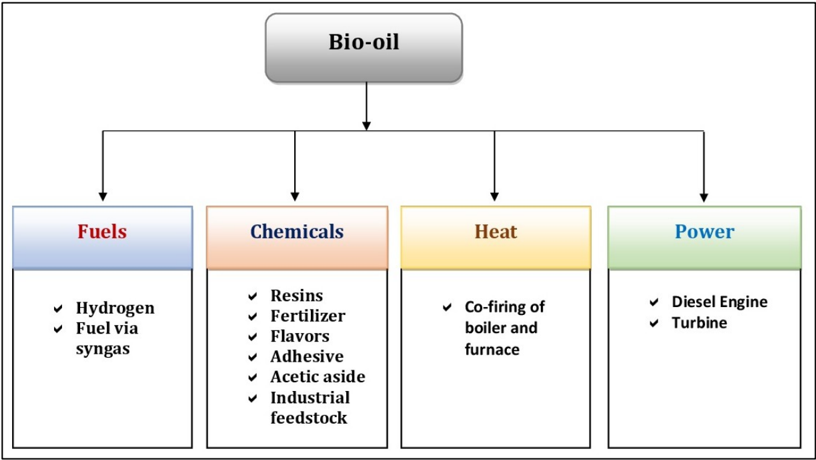
“10,20 The liquid bio-oil has a heating value half that of gasoline and has the additional potential to supply several valuable chemical commodities such as food avour-ings, resins and fertilisers.”
Gómez, E. M. P., Domínguez, R. E., López, D. A., Téllez, J. F., Marino, M. D., Almada, N., Gange, J. M., & Moyano, E. L. (2022) · Journal of Analytical and Applied Pyrolysis · doi:10.1016/j.jaap.2022.105796 · Cited by 23
Microwave-assisted pyrolysis of biomass for bioenergy production
Bisht, P., Mishra, A., Anand, V., Singh, A., Tiwari, H., Shobana, S., Kumar, G., Kumar, S., Pant, K. K., & Prajapati, S. K. (2025) · Renewable and Sustainable Energy Reviews · doi:10.1016/j.rser.2025.116344 · Cited by 24
Tursi, A., & Olivito, F. (2021) · Elsevier eBooks · doi:10.1016/b978-0-12-821601-9.00001-7 · Cited by 26
Fast Pyrolysis Bio-Oil-Based Epoxy as an Adhesive in Oriented Strand Board Production
Asafu‐Adjaye, O., Street, J., Bansode, A., Auad, M. L., Peresin, M. S., Adhikari, S., Liles, T., & Via, B. K. (2022) · Polymers · doi:10.3390/polym14061244 · Cited by 22
“The presence of carbonyl moieties in bio-oil is associated with the decomposition of cellulose and hemicellulose of the pine biomass [3].”
BackgroundIge, A. R., & Łaska, G. (2024) · Renewable and Sustainable Energy Reviews · doi:10.1016/j.rser.2024.115037 · Cited by 26
Opportunities and Threats for Supercapacitor Technology Based on Biochar—A Review
Kwarciany, R., Fiedur, M., & Saletnik, B. A. (2024) · Energies · doi:10.3390/en17184617 · Cited by 22
Kamdem, B. M., Lemaire, R., & Nikiema, J. (2024) · Industrial Crops and Products · doi:10.1016/j.indcrop.2024.120134 · Cited by 22
Introduction to Pyrolysis as a Thermo-Chemical Conversion Technology
Xu, L., Jiang, L., Zhang, H., Fang, Z. Y., & Smith, R. L. (2020) · Biofuels and biorefineries · doi:10.1007/978-981-15-2732-6_1 · Cited by 31
Value‐added products from waste: Slow pyrolysis of used polyethylene‐lined paper coffee cup waste
Lee, H., Papari, S., Bernardini, G., Gallorini, R., Rosi, L., & Berruti, F. (2022) · The Canadian Journal of Chemical Engineering · doi:10.1002/cjce.24472 · Cited by 22
Progress and innovation in key technologies for converting biomass to hydrogen
Kamshybayeva, G. K., Sadvakasova, A. K., MARATOVICH, B. A., Kossalbayev, B. D., Bauenova, M. O., Zharmukhamedov, S. K., Hou, H. J. M., & Allakhverdiev, S. I. (2025) · International Journal of Hydrogen Energy · doi:10.1016/j.ijhydene.2025.02.437 · Cited by 22
Goh, S. M. X., Chin, B. L. F., Huang, M. M., Yiin, C. L., Kurnia, J. C., Lam, S. S., Tan, Y. H., Chai, Y. H., & Rashidi, N. A. (2024) · Journal of Energy Storage · doi:10.1016/j.est.2024.114613 · Cited by 23
Uddin, M. N., Rahman, M. A., Taweekun, J., Techato, K., Mofijur, M., & Rasul, M. G. (2019) · Energy Procedia · doi:10.1016/j.egypro.2019.02.220 · Cited by 20
Self-citationA., M. M. N., Aziz, A. R. A., Hagos, F. Y., Noor, M. M., Kadirgama, K., Mamat, R., & Abdullah, A. A. (2019) · Energies · doi:10.3390/en12091708 · Cited by 22
“With recent development of second-generation bioethanol [8,9] and second-generation biodiesel production [10,11], mixing diesel with biofuels could be a promising option, and it should be able to be introduced without significant modification of the engine.”
BackgroundSuryani, R., Rizal, W. A., Pratiwi, D., & Prasetyo, D. J. (2020) · Jurnal Teknologi Pertanian · doi:10.21776/ub.jtp.2020.021.02.4 · Cited by 35
Biomass conversion to biomethanol
Farsi, M. (2021) · Elsevier eBooks · doi:10.1016/b978-0-12-821601-9.00009-1 · Cited by 20
Kim, G.-M., Lee, D.-G., & Jeon, C. (2019) · Energies · doi:10.3390/en12061008 · Cited by 20
Biomass-to-electricity conversion technologies: a review
Balopi, B., Moyo, M., Gorimbo, J., & Liu, X. (2025) · Waste Disposal & Sustainable Energy · doi:10.1007/s42768-025-00226-5 · Cited by 25
“Biogas is produced from anaerobically digested organic waste from plants and animals, which is a source of renewable energy [8, 12, 72].”
Megía, P. J., Morales, A., Vizcaíno, A. J., Calles, J. A., & Carrero, A. (2023) · International Journal of Hydrogen Energy · doi:10.1016/j.ijhydene.2023.06.283 · Cited by 19
Clemente-Castro, S., Palma, A., Montoya, M. R., Giráldez, I., & Díaz, M. J. (2023) · Environmental Sciences Europe · doi:10.1186/s12302-023-00800-w · Cited by 20
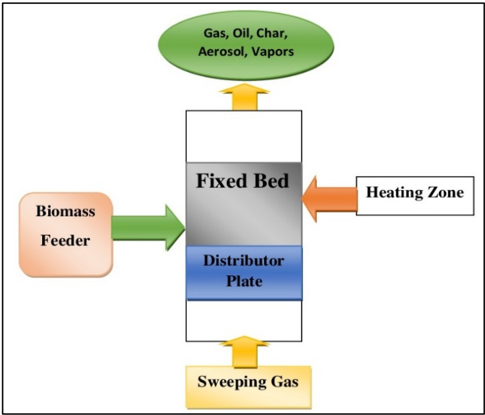
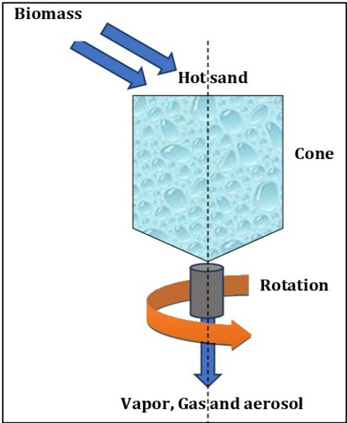
“There are many types of reactors such as fixed bed reactor, fluid-ized bed reactor (subdivided into bubbling, circulating and spouted), ablative, vacuum, rotating cone and auger reactor [15].”
BackgroundBiomass Pyrolysis-Derived Biochar: A Versatile Precursor for Graphene Synthesis
Plenča, K., Cvetnić, S., Prskalo, H., Kovačić, M., Cvetnić, M., Kušić, H., Matusinović, Z., Roković, M. K., Genorio, B., Štangar, U. L., et al. (2023) · Materials · doi:10.3390/ma16247658 · Cited by 20
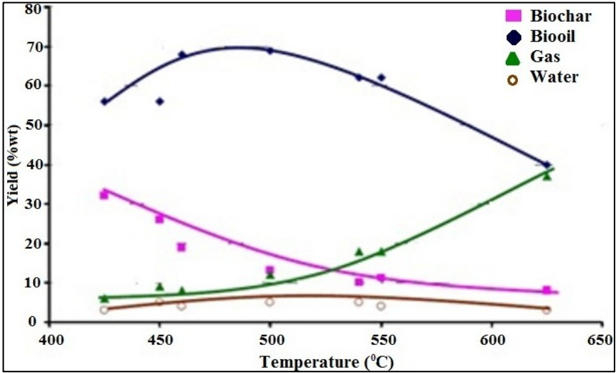
“9.112 formic acid 2.127 Accordingly, as showed in Figure 5A, the elevation of pyrolysis temperature caused a lowering of solids content, which was followed by a proportional increase in gaseous products.”
BackgroundInfluentialBiochar modification and application to improve soil fertility and crop productivity
Ghassemi‐Golezani, K., & Rahimzadeh, S. (2022) · Polnohospodarstvo · doi:10.2478/agri-2022-0005 · Cited by 29
Artillo, F., Cueto, J., Hernando, H., Pizarro, P., & Serrano, D. P. (2023) · Industrial Crops and Products · doi:10.1016/j.indcrop.2023.116313 · Cited by 20
Gao, G., Zhang, S., Gao, A., Li, C., Zhang, L., Gao, W., Ding, K., Huang, Y. D., Gholizadeh, M., & Hu, X. (2024) · Journal of the Energy Institute · doi:10.1016/j.joei.2024.101624 · Cited by 18
A review on exploring pyrolysis potential of invasive aquatic plants
Palai, S. P., Sahoo, B. P., Senapati, S., Panda, A. K., Bastia, T. K., Rath, P., & Parhi, P. K. (2024) · Journal of Environmental Management · doi:10.1016/j.jenvman.2024.123017 · Cited by 20
Evaluation of Press Mud, Vinasse Powder and Extraction Sludge with Ethanol in a Pyrolysis Process
Devia-Orjuela, J. S., Alvarez‐Pugliese, C. E., Donneys-Victoria, D., Marriaga-Cabrales, N., Ho, L. E. B., Brém, B., Sauciuc, A., Gál, E., Espin, D., Schichtel, M., et al. (2019) · Energies · doi:10.3390/en12214145 · Cited by 19
“Moreover, the liquid pyrolysis fraction can be used for production of various speciality chemicals [14,15].”
BackgroundMethodOptimizing Yield and Quality of Bio-Oil: A Comparative Study of Acacia tortilis and Pine Dust
Charis, G., Danha, G., & Muzenda, E. (2020) · Processes · doi:10.3390/pr8050551 · Cited by 20
“This may require fast pyrolysis conditions with a continuous low-moderate flow of purge gas to increase overall yields of the oil to about 75% which, typically should give a higher quality liquid product [20,23].”
BackgroundDual Fluidized Bed Gasification Configurations for Carbon Recovery from Biomass
Pissot, S., Vilches, T. B., Thunman, H., & Seemann, M. C. (2020) · Energy & Fuels · doi:10.1021/acs.energyfuels.0c02781 · Cited by 18
Ervilha, R., Campos, D., Macêdo, B. D. S., Bertuol, D. A., Tanabe, E. H., Yaseen, Z. M., Bodini, M., Saporetti, C. M., & Goliatt, L. (2025) · Biomass and Bioenergy · doi:10.1016/j.biombioe.2025.108280 · Cited by 18
Chen, B., & Yang, Y. (2023) · Journal of Thermal Analysis and Calorimetry · doi:10.1007/s10973-022-11895-3 · Cited by 17
Ishfaq, M. K., Asghar, A., Ali, I., Khan, A. Z., Shahid, A., Wang, N., Zhu, H., El-Seedi, H. R., Mehmood, M. A., & Liu, C. (2024) · Energy Conversion and Management · doi:10.1016/j.enconman.2024.118229 · Cited by 18
Qin, L., Shao, Y., Hou, Z., & Jiang, E. (2019) · Energy Sources Part A Recovery Utilization and Environmental Effects · doi:10.1080/15567036.2019.1618993 · Cited by 17
DFT insights into competing mechanisms of guaiacol hydrodeoxygenation on a platinum cluster
Nania, C., Bertini, M., Gueci, L., Ferrante, F., & Duca, D. (2023) · Physical Chemistry Chemical Physics · doi:10.1039/d2cp06077a · Cited by 16
Cheng, S., Yao, K., Tian, H., Yang, T., & Chen, L. (2024) · Molecules · doi:10.3390/molecules29133118 · Cited by 16
“These factors severely limit the utility and application scope of the pyrolysis products [13].”
BackgroundAbdelfatah-Aldayyat, E., González-Rojo, S., & Gómez, X. (2024) · Environments · doi:10.3390/environments11110239 · Cited by 17
Kusumo, F., Mahlia, T. M. I., Shamsuddin, A. H., Ong, H. C., Ahmad, A. R., Ismail, Z., Ong, Z. C., & Silitonga, A. S. (2019) · Energies · doi:10.3390/en12173291 · Cited by 16
Self-citationYang, L., Allaoui, B. E., Wu, X., Wu, T., Chai, W. S., & Pang, C. H. (2025) · Bioresource Technology · doi:10.1016/j.biortech.2025.133777 · Cited by 23
Life cycle and decision analysis of electricity production from biomass – Portugal case study
Loução, P. O., Ribau, J., & Ferreira, A. F. (2019) · Renewable and Sustainable Energy Reviews · doi:10.1016/j.rser.2019.03.063 · Cited by 15
Li, L., Cao, K., Cai, D., Zhang, Z., Zhao, Z., Yu, M., Zhang, L., Zhang, Q., Zou, G., & Wang, C. (2023) · Energy · doi:10.1016/j.energy.2023.127549 · Cited by 16
Slow pyrolysis of buri palm: Investigation of pyrolysis temperature and residence time effects
Rubi, R. V. C., Dimalibot, P. A., Hutamares, M., Solatre, S., Cruzada, K. I., Olay, J. G., Roque, E. C., Lopez, E. C. R., & Halabaso, E. R. (2023) · Materials Today Proceedings · doi:10.1016/j.matpr.2023.04.454 · Cited by 15
Biochar revolution: Harnessing pyrolysis for climate resilience and circular environmental solutions
Ouahabi, H. E., Bayessi, O., Mouaky, A., Hirt, A., & Rachidi, S. (2026) · Carbon Trends · doi:10.1016/j.cartre.2026.100628 · Cited by 18
Enhancing sustainable energy production through biomass gasification gas technology: a review
Alabi, O. O., Gbadeyan, O. J., Towoju, O. A., & Deenadayalu, N. (2024) · F1000Research · doi:10.12688/f1000research.147958.1 · Cited by 14
Fast Pyrolysis of Cellulose by Infrared Heating
Nomura, T., Mizuno, H., Minami, E., & Kawamoto, H. (2021) · Energies · doi:10.3390/en14071842 · Cited by 15
Experimental study of thermal energy battery working with nano-enhanced phase change material
Alqahtani, T., Bouzgarrou, F., Askri, F., Mellouli, S., Algarni, S. A., Ghachem, K., & Kolsi, L. (2022) · Case Studies in Thermal Engineering · doi:10.1016/j.csite.2022.102051 · Cited by 15
Chen, B., Kan, Y., Zhai, S., Mei, C., Huang, C., & Yong, Q. (2021) · Biomass Conversion and Biorefinery · doi:10.1007/s13399-021-01299-y · Cited by 14
Yadav, D., Saha, S., Sahu, G., Chavan, P. D., Datta, S., Chauhan, V., & Kumari, N. (2022) · Journal of Thermal Analysis and Calorimetry · doi:10.1007/s10973-022-11757-y · Cited by 15
Piñas, J. A. V., Ghofrani‐Isfahani, P., Maya, D. M. Y., Ravenni, G., Castro, L. E. N., Angelidaki, İ., & Forster‐Carneiro, T. (2025) · Biofuels Bioproducts and Biorefining · doi:10.1002/bbb.2808 · Cited by 16
Muthu, P., Gunasekaran, M., & Jeyakumar, R. B. (2023) · Processes · doi:10.3390/pr11030702 · Cited by 15
“Thus, it is necessary to reduce the water content by adopting a suitable pretreatment method to diminish the energy input during processing [16].”
MethodYan, T., Xie, W., Wang, C., He, G., & Wang, K. (2024) · Journal of Analytical and Applied Pyrolysis · doi:10.1016/j.jaap.2023.106337 · Cited by 13
Innovative Circular Biowaste Valorisation—State of the Art and Guidance for Cities and Regions
Valdés, M. Á. S., Soriano‐Disla, J. M., Gambuzzi, E., & Martínez, G. C. (2024) · Sustainability · doi:10.3390/su16208963 · Cited by 18
Castor: A Renewed Oil Crop for the Mediterranean Environment
Cafaro, V., Testa, G., & Patanè, C. (2025) · Agronomy · doi:10.3390/agronomy15061402 · Cited by 13
Mazariegos, I., Abdelfatah-Aldayyat, E., González-Rojo, S., & Gómez, X. (2025) · RSC Sustainability · doi:10.1039/d5su00148j · Cited by 13
Emerging paradigms in renewable hydrogen production: Technology, challenges, and global impact
Jolly, S. S., Twinkle, A. R., Sasi, B. S. A., & Reshma, R. (2025) · Next Energy · doi:10.1016/j.nxener.2025.100343 · Cited by 17
Sustainable Aviation Fuels: Addressing Barriers to Global Adoption
Uddin, M. A., & Wang, F. (2025) · Applied Sciences · doi:10.3390/app152010925 · Cited by 16
Self-citationRahman, S. M. A., Mahila, T. M. I., Ahmad, A., Nabi, M. N., Jafari, M., Dowell, A., Islam, M. A., Marchese, A. J., Tryner, J., Brooks, P. R., et al. (2019) · Energy & Fuels · doi:10.1021/acs.energyfuels.9b01604 · Cited by 13
Metadata
- Authors
- Uddin, M. N., Techato, K., Taweekun, J., Rahman, M. M., Rasul, M. G., Mahlia, T. M. I., & Ashrafur, S. M.
- Affiliations
- Prince of Songkla University (TH)
- School of Engineering & Technology, Central Queensland University, Rockhampton, QLD 4701, Australia
- Central Queensland University (AU)
- University of Technology Sydney (AU)
- Queensland University of Technology (AU)
- Venue
- Energies
- Publisher
- MDPI AG
- Published
- 2018-11-10
- Volume
- 11
- Issue
- 11
- Pages
- 3115
- ISSN
- 1996-1073 (ISSN-L)
- OpenAlex
- W2911976353
- Cited by
- 377
- References
- 157
- Citations by year
- 2026: 31 · 2025: 71 · 2024: 59 · 2023: 54 · 2022: 44 · 2021: 46 · 2020: 33 · 2019: 39
- FWCI
- 11.81
- Type
- journal article
- Language
- en
- Open access
- gold
- doi.org
- Licence
- Locations
- Energies (publishedVersion, cc-by)
- QUT ePrints (Queensland University of Technology) (submittedVersion, cc-by)
- OPUS - Open Publications of UTS Scholars (University of Technology Sydney) (submittedVersion, other-oa)
- Acquire (CQUniversity) (submittedVersion, cc-by)
- RePEc: Research Papers in Economics (submittedVersion)
- DOAJ (DOAJ: Directory of Open Access Journals) (submittedVersion, cc-by-sa)
- Figshare (submittedVersion, cc-by)
- Topics
- Physical Sciences › Energy › Fuel Technology › Thermochemical Biomass Conversion Processes
- Physical Sciences › Energy › Fuel Technology › Biodiesel Production and Applications
- Physical Sciences › Materials Science › Materials Chemistry › Thermal and Kinetic Analysis
- Keywords
- biomass pyrolysis, bio-oil, pyrolysis reactor, pyrolysis temperature, pyrolysis rate, pyrolysis products, biofuels, renewable energy, biomass energy, pyrolysis product yields
About these checks
Registry, retraction, Cites and statistics results are computed, not judged, with one exception: a printed reference that no index lists is read once by a model before it counts as a citation error. Claims are extracted by a model and kept only when their quote appears verbatim in the text; each cited source is then checked, with a model’s help, for whether it says what the claim relies on. Those verdicts can be wrong — read the claim’s quote and the cited source before relying on one.
Statistics and arithmetic are recomputed, not judged.
Confidence bands are shown only for fields calibrated on our annotated test set. None is calibrated yet, so no band is shown.
What counts as a claim ›How we measure confidence ›How we check this ›
Are you an author, or do you see a problem with this page? Request a review
Data sources
Bibliographic data: Semantic Scholar, OpenAlex, Crossref.
Contains information from the Semantic Scholar Academic Graph Datasets, made available under the ODC Attribution License (ODC-BY 1.0).
Semantic Scholar’s data is described in: Kinney, R., et al. (2023). The Semantic Scholar Open Data Platform. arXiv:2301.10140.
