

The DOI matches its Crossref record; 47 of the 48 references it cites were found in a registry or an index.
An Optimized Solution for Fault Detection and Location in Underground Cables Based on Traveling Waves
Open accessAbstract
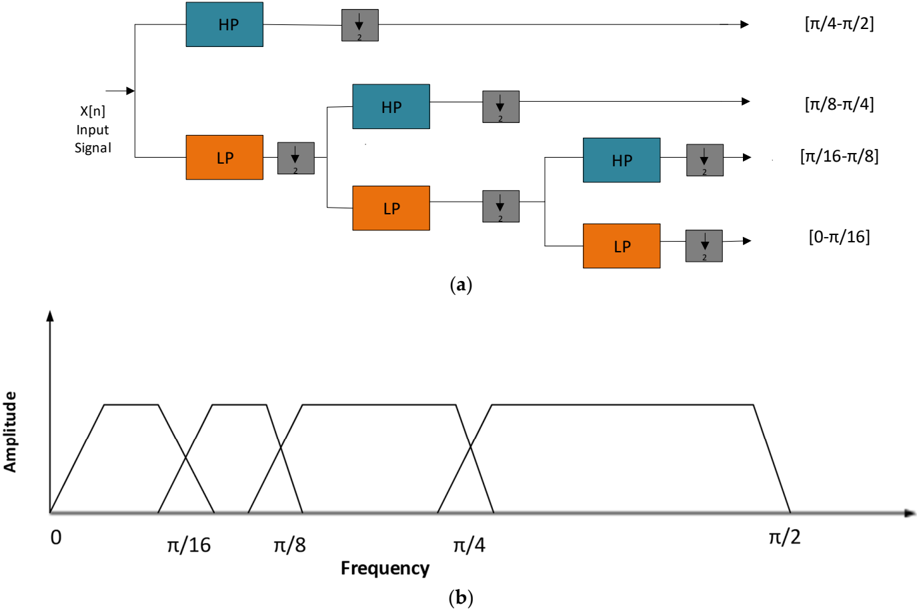
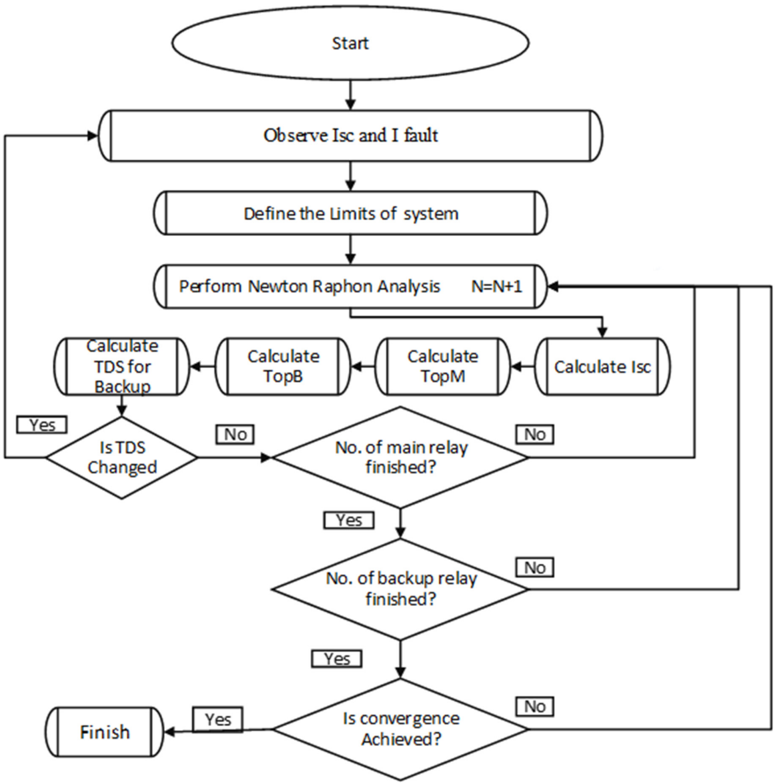
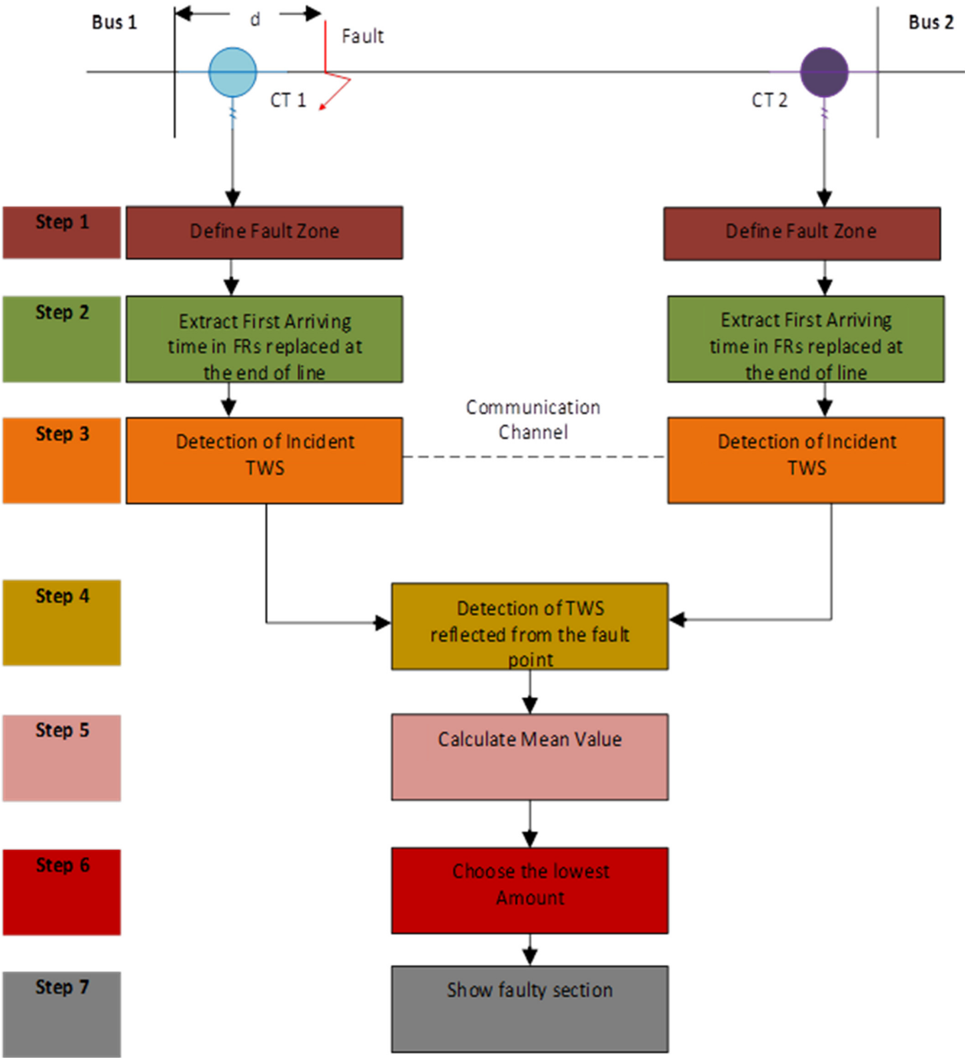
Faults in the power system affect the reliability, safety, and stability. Power-distribution systems are familiar with the different faults that can damage the overall performance of the entire system, from which they need to be effectively cleared. Underground power systems are more complex and require extra accuracy in fault detection and location for optimum fault management. Slow processing and the unavailability of a protection zone for relay coordination are concerns in fault detection and location, as these reduce the performance of power-protection systems. In this regard, this article proposes an optimized solution for a fault detection and location framework for underground cables based on a discrete wavelet transform (DWT). The proposed model supports area detection, the identification of faulty sections, and fault location. To overcome the abovementioned facts, we optimize the relay coordination for the overcurrent and timing relays. The proposed protection zone has two sequential stages for the current and time at which it optimizes the current and time settings of the connected relays through Newton–Raphson analysis (NRA). Moreover, the traveling times for the DWT are modeled, which relate to the protection zone provided by the relay coordination, and the faulty line that is identified as the relay protection is not overlapped. The model was tested for 132 kV/11 kV and 16-node networks for underground cables, and the obtained results show that the proposed model can detect and locate the cable’s faults speedily, as it detects the fault in 0.01 s, and at the accurate location. MATLAB/Simulink (DigSILENT Toolbox) is used to establish the underground network for fault location and detection.
Overview
The claims and statistics of this paper haven’t been checked yet.
Free: it reads the open-access text and checks the first 5 claims that cite a source we can check. Create a free account to check every claim.
Integrity signals
Registry
Cites
Statistics
Figures





Verification
Claims the paper makes
The claims and statistics of this paper haven’t been checked yet.
Free: it reads the open-access text and checks the first 5 claims that cite a source we can check. Create a free account to check every claim.
Claims other papers make about this one
Each is checked against this paper’s own text: does it say what the citing paper says it does?
The check wasn’t confident either way, so it gives no verdict — never disputed.
In the citing paper
“According to numerical findings, this method can locate the ideal global solution more quickly than a traditional GA.”
From A Comprehensive Review on the Role of Artificial Intelligence in Power System Stability, Control, and Protection: Insights and Future Directions (2024) · cites this paper as [117]
Experimental — accuracy not yet measured
Self-check
Percentages, sums and reported differences re-computed from the paper’s own numbers.
The self-check needs the paper’s full text.
Citations
Cites
E-eyes: device-free location-oriented activity identification using fine-grained WiFi signatures
Wang, Y., Liu, J., Chen, Y., Gruteser, M., Yang, J., & Liu, H. (2014) · Proceedings of the 20th annual international conference on Mobile computing and networking · doi:10.1145/2639108.2639143 · Cited by 817
Fault Diagnosis for Electrical Systems and Power Networks: A Review
Furse, C. M., Kafal, M., Razzaghi, R., & Shin, Y.-J. (2021) · IEEE Sensors Journal · doi:10.1109/jsen.2020.2987321 · Cited by 296
Quilty, J., & Adamowski, J. (2018) · Journal of Hydrology · doi:10.1016/j.jhydrol.2018.05.003 · Cited by 245
Li, X., Dysko, A., & Burt, G. M. (2014) · IEEE Transactions on Smart Grid · doi:10.1109/tsg.2014.2320365 · Cited by 205
Mahela, O. P., Khan, B., Alhelou, H. H., & Siano, P. (2020) · IEEE Transactions on Industrial Informatics · doi:10.1109/tii.2020.2971709 · Cited by 189
Aftab, M. A., Hussain, S. M. S., Ali, I., & Ustun, T. S. (2020) · International Journal of Electrical Power & Energy Systems · doi:10.1016/j.ijepes.2019.105410 · Cited by 169
Demonstration of a High Power, Wideband 220-GHz Traveling Wave Amplifier Fabricated by UV-LIGA
Joye, C. D., Kimura, T., Hyttinen, M., Levush, B., Cook, A. M., Calame, J. P., Abe, D. K., Vlasov, A. N., Chernyavskiy, I. A., Nguyen, K. T., et al. (2014) · IEEE Transactions on Electron Devices · doi:10.1109/ted.2014.2300014 · Cited by 158
On the use of continuous-wavelet transform for fault location in distribution power systems
Borghetti, A., Corsi, S., Nucci, C. A., Paolone, M., Peretto, L., & Tinarelli, R. (2006) · International Journal of Electrical Power & Energy Systems · doi:10.1016/j.ijepes.2006.03.001 · Cited by 149
A survey of fault prediction and location methods in electrical energy distribution networks
Dashti, R., Daisy, M., Mirshekali, H., Shaker, H. R., & Aliabadi, M. H. (2021) · Measurement · doi:10.1016/j.measurement.2021.109947 · Cited by 144
Amiruddin, A. A. A. M., Zabiri, H. B., Taqvi, S. A. A., & Tufa, L. D. (2018) · Neural Computing and Applications · doi:10.1007/s00521-018-3911-5 · Cited by 131
Research works printed but not linked: 2
- Mansingh, 2017, Underground Cable Fault Detection using Raspberry Pi and Arduino, Int. J. Emerg. Technol. Eng. Res., 5, 1
- Gowrishankar, 2016, Transmission line fault detection and classification using discrete wavelet transform and artificial neural network, Middle-East J. Sci. Res., 24, 1112
Cited by
Alhamrouni, I., Abdul Kahar, N. H., Salem, M., Swadi, M., Zahroui, Y., Kadhim, D. J., Mohamed, F. A., & Alhuyi Nazari, M. (2024) · Applied Sciences · doi:10.3390/app14146214 · Cited by 217
“A new global tuning method was suggested for fuzzy power system stabilizers to reduce oscillations in a multi-machine power system [117].”
MethodSelf-citationShao, Q., Fan, S., Zhang, Z., Liu, F., Fu, Z., Lv, P., & Mu, Z. (2025) · Energies · doi:10.3390/en18143662 · Cited by 40
Partial Discharge Detection and Defect Location Method in GIS Cable Terminal
Li, S., Song, P., Wei, Z., Li, X., Tang, Q., Meng, Z., Li, J., Li, J., Wang, Y., & Li, J. (2022) · Energies · doi:10.3390/en16010413 · Cited by 24
Rehman, A., Imran-Daud, M., Haider, S. K., Rehman, A. U., Shafiq, M., & Eldin, S. M. (2022) · Symmetry · doi:10.3390/sym14102027 · Cited by 24
Self-citationPrediction of Faults Location and Type in Electrical Cables Using Artificial Neural Network
Moldovan, A.-M., & Buzdugan, M. I. (2023) · Sustainability · doi:10.3390/su15076162 · Cited by 16
Metadata
- Authors
- Tariq, R., Alhamrouni, I., Rehman, A. U., Tag Eldin, E., Shafiq, M., Ghamry, N. A., & Hamam, H.
- Affiliations
- University of Kuala Lumpur (MY)
- Government College University, Lahore (PK)
- Faculty of Engineering and Technology, Future University in Egypt, New Cairo 11835, Egypt
- Yeungnam University (KR)
- Cairo University (EG)
- Université de Moncton (CA)
- Corresponding author
- Alhamrouni, Ibrahim
- Rehman, Ateeq Ur
- Shafiq, Muhammad
- Venue
- Energies
- Publisher
- MDPI AG
- Published
- 2022-09-05
- Volume
- 15
- Issue
- 17
- Pages
- 6468
- ISSN
- 1996-1073 (ISSN-L)
- OpenAlex
- W4294833770
- Cited by
- 30
- References
- 48
- Citations by year
- 2026: 5 · 2025: 10 · 2024: 6 · 2023: 7 · 2022: 2
- FWCI
- 2.52
- Type
- journal article
- Language
- en
- Open access
- gold
- doi.org
- Licence
- Locations
- Energies (publishedVersion, cc-by)
- RePEc: Research Papers in Economics (submittedVersion)
- DOAJ (DOAJ: Directory of Open Access Journals) (submittedVersion, cc-by-sa)
- Funders
- Future University Researchers Supporting Project (FUESP-2020/48)
- Topics
- Physical Sciences › Engineering › Control and Systems Engineering › Power Systems Fault Detection
- Physical Sciences › Engineering › Electrical and Electronic Engineering › Electrical Fault Detection and Protection
- Physical Sciences › Engineering › Electrical and Electronic Engineering › Power Quality and Harmonics
- Keywords
- fault detection, fault location, underground cables, traveling waves, discrete wavelet transform, relay coordination, overcurrent relays, protection zones, distribution networks
About these checks
Registry, retraction, Cites and statistics results are computed, not judged, with one exception: a printed reference that no index lists is read once by a model before it counts as a citation error. Claims are extracted by a model and kept only when their quote appears verbatim in the text; each cited source is then checked, with a model’s help, for whether it says what the claim relies on. Those verdicts can be wrong — read the claim’s quote and the cited source before relying on one.
Statistics and arithmetic are recomputed, not judged.
Confidence bands are shown only for fields calibrated on our annotated test set. None is calibrated yet, so no band is shown.
What counts as a claim ›How we measure confidence ›How we check this ›
Are you an author, or do you see a problem with this page? Request a review
How to cite
Cite CoChat for the checks on this page, and the paper for its own findings.
- This page
- CoChat. (2026). Citation check: An Optimized Solution for Fault Detection and Location in Underground Cables Based on Traveling Waves. https://app.cochat.ai/papers/10.3390/en15176468
- The paper
- Tariq, R., Alhamrouni, I., Rehman, A. U., Tag Eldin, E., Shafiq, M., Ghamry, N. A., & Hamam, H. (2022). An Optimized Solution for Fault Detection and Location in Underground Cables Based on Traveling Waves. Energies. https://doi.org/10.3390/en15176468
Data sources
Bibliographic data: Semantic Scholar, OpenAlex, Crossref.
Contains information from the Semantic Scholar Academic Graph Datasets, made available under the ODC Attribution License (ODC-BY 1.0).
Semantic Scholar’s data is described in: Kinney, R., et al. (2023). The Semantic Scholar Open Data Platform. arXiv:2301.10140.
