

Evaluation Method of Internal Resistance for Repurposing Using Middle and Large-Sized Batteries
Open accessThe DOI matches its Crossref record; 14 of the 14 references it cites were found in a registry or an index.
Abstract
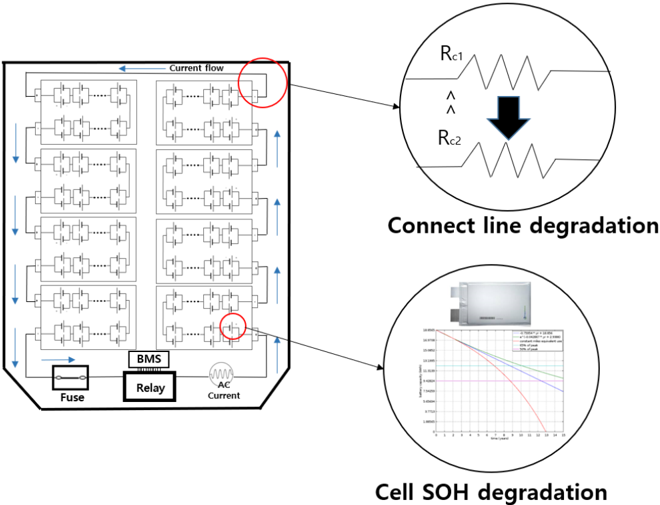
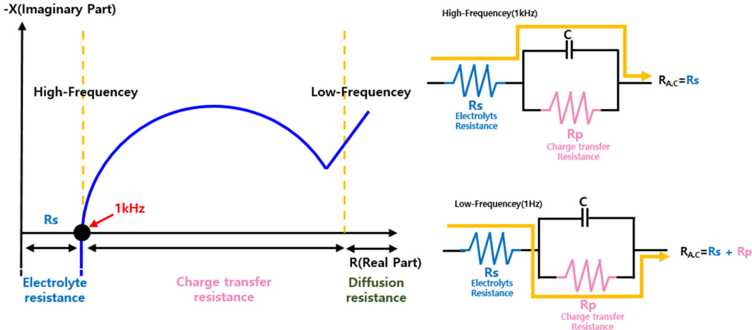
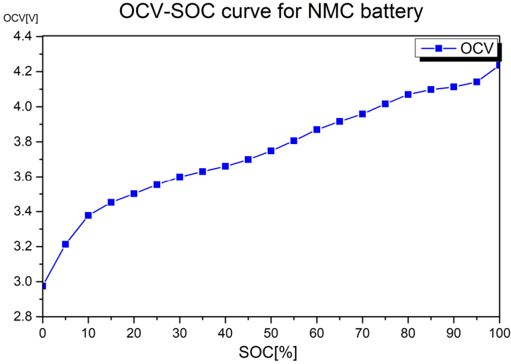
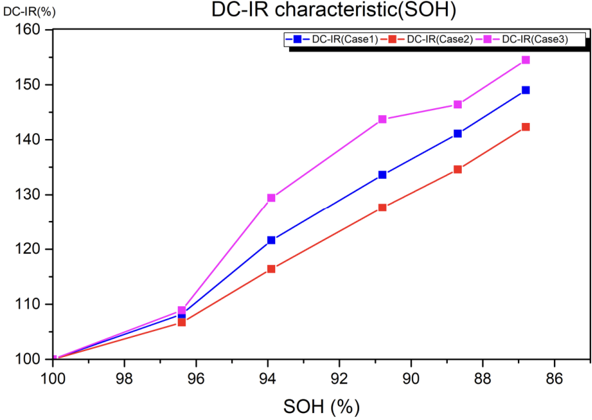
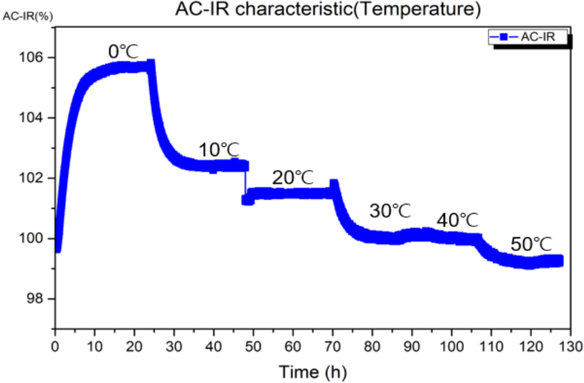
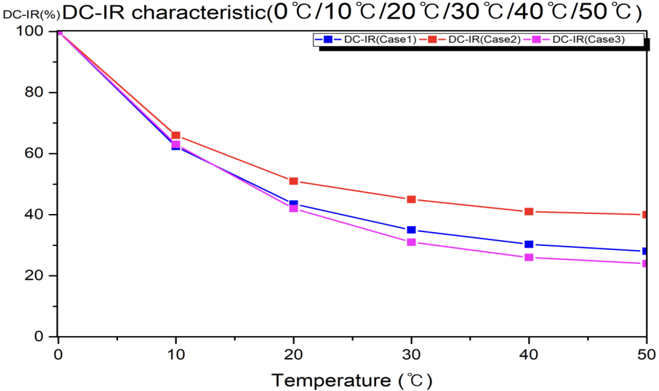
The number of used batteries is expected to dramatically increase in the near future due to the expansion of the electric vehicle (EV) market globally. Accordingly, the Korean government has improved the supporting structures for the recycling system for used batteries, and in particular, in the field of repurposing, various studies are being conducted with a focus on effective evaluation methods that can secure the performance and safety of batteries after use. The repurposing of used batteries is mostly adapted in the field of energy storage systems for normally used EV batteries and a total inspection before repurposing is required due to battery characteristics that can vary depending on the operational environments of and accidents involving medium- and large-sized batteries for EVs and energy storage systems (ESSs) that have been occurring continuously for the past few years. Therefore, this paper investigates the operating mechanisms of the internal resistance test method and implements a test device for middle- and large-sized cells and packs. Based on the proposed test method, the internal resistance of nickel manganese cobalt (NMC)-type commercial large batteries is analyzed according to the SOC (state of charge), SOH (state of health), ambient temperature, and connection degradation of batteries. The distribution degrees of the alternative current (AC) internal resistance (IR) and direct current (DC) internal resistance (IR) measurement methods under state of health (SOH) test conditions are about 7% and 50%. It was found that the DC IR measurement method is more effective in diagnosing battery cell degradation. The distribution degree of DC IR measurements for the degraded connection condition shows an increase of less than 1% regardless of the state of charge (SOC), while the distribution degree of the AC IR measurements shows an increase of up to 319%, indicating that the AC IR method is more effective than the DC IR method in identifying connection degradation. It is confirmed that the proposed method is effective in internal resistance measurement and safety evaluations for the repurposing of batteries.
Overview
The claims and statistics of this paper haven’t been checked yet.
Free: it reads the open-access text and checks the first 5 claims that cite a source we can check. Create a free account to check every claim.
Integrity signals
Registry
Cites
Statistics
Figures
Verification
Claims the paper makes
The claims and statistics of this paper haven’t been checked yet.
Free: it reads the open-access text and checks the first 5 claims that cite a source we can check. Create a free account to check every claim.
Claims other papers make about this one
Each is checked against this paper’s own text: does it say what the citing paper says it does?
The source backs part of the claim, not all of it — or backs it for a different population, condition or comparison.
In the citing paper
“Direct measurement methods assess the SOH by acquiring fundamental battery physical parameters, primarily including capacity measurement, charge-discharge curve analysis, and internal resistance measurement [51-55].”
From The State of Health Estimation of Lithium-Ion Batteries: A Review of Health Indicators, Estimation Methods, Development Trends and Challenges (2025) · cites this paper as [55]
Experimental — accuracy not yet measuredThe check wasn’t confident either way, so it gives no verdict — never disputed.
In the citing paper
“The capacity method quantifies degradation through the ratio of maximum available capacity to nominal capacity, providing precise evaluation but requiring prolonged testing duration.”
From The State of Health Estimation of Lithium-Ion Batteries: A Review of Health Indicators, Estimation Methods, Development Trends and Challenges (2025) · cites this paper as [55]
Experimental — accuracy not yet measured
Self-check
Percentages, sums and reported differences re-computed from the paper’s own numbers.
The self-check needs the paper’s full text.
Citations
Cites
Temperature effect and thermal impact in lithium-ion batteries: A review
Ma, S., Jiang, M., Tao, P., Song, C., Wu, J., Wang, J., Deng, T., & Shang, W. (2018) · Progress in Natural Science: Materials International · doi:10.1016/j.pnsc.2018.11.002 · Cited by 1,674
Review on modeling of the anode solid electrolyte interphase (SEI) for lithium-ion batteries
Wang, A., Kadam, S., Li, H., Shi, S., & Qi, Y. (2018) · npj Computational Materials · doi:10.1038/s41524-018-0064-0 · Cited by 1,639
Electrochemical Impedance Spectroscopy (EIS): Principles, Construction, and Biosensing Applications
Magar, H. S., Hassan, R. Y. A., & Mulchandani, A. (2021) · Sensors · doi:10.3390/s21196578 · Cited by 1,335
Barai, A., Uddin, K., Widanage, W. D., McGordon, A., & Jennings, P. (2018) · Scientific Reports · doi:10.1038/s41598-017-18424-5 · Cited by 276
Lithium-Ion Batteries Hazard and Use Assessment
Mikolajczak, C., Kahn, M., White, K., & Long, R. T. (2011) · SpringerBriefs in Fire · doi:10.1007/978-1-4614-3486-3 · Cited by 233
Kampouris, D. K., Ji, X., Randviir, E. P., & Banks, C. E. (2015) · RSC Advances · doi:10.1039/c4ra17132b · Cited by 107
Temperature dependency of diagnostic methods in lithium-ion batteries
Fly, A., Wimarshana, B., Bin-Mat-Arishad, I., & Sarmiento-Carnevali, M. L. (2022) · Journal of Energy Storage · doi:10.1016/j.est.2022.104721 · Cited by 44
Key Figure Based Incoming Inspection of Lithium-Ion Battery Cells
Ryll, K., Hoffmann, L., Landrath, O., Lienesch, F., & Kurrat, M. (2021) · Batteries · doi:10.3390/batteries7010009 · Cited by 24
Gao, Z., Zhang, X., Xiao, Y., Gao, H., Wang, H., & Piao, C. (2019) · Energies · doi:10.3390/en12050797 · Cited by 17
A Study on Modeling of Leakage Current in ESS Using PSCAD/EMTDC
Kim, J.-M., Tae, D.-H., Lee, I.-M., Lim, G.-P., & Rho, D.-S. (2021) · Journal of the Korea Academia-Industrial cooperation Society · doi:10.5762/kais.2021.22.2.810 · Cited by 2
Self-citation
Research works printed but not linked: 1
- Mori, T. Advanced Technologies for Impedance-based Performance Estimation and Deterioration Diagnosis of Lithium-ion batteries. Kogyo Zairyo 2021, 69, 30-35.
Cited by
Tang, K., Luo, B., Chen, D., Wang, C., Chen, L., Li, F., Cao, Y., & Wang, C. (2025) · World Electric Vehicle Journal · doi:10.3390/wevj16080429 · Cited by 68
Enhanced state-of-charge estimation of Li-ion batteries using an extended particle filter approach
Guerrab, O., & Lakhdari, F. (2025) · Electric Power Systems Research · doi:10.1016/j.epsr.2025.111932 · Cited by 15
Sustainable repurposing of EV batteries: A methodology for certification in the EU
Manaia, J. P., Pedreiro, G. E. G., Dias, J. P., dos Santos, J. A. B., Alves, A., & Pardal, A. (2025) · Future Batteries · doi:10.1016/j.fub.2025.100101 · Cited by 10
Voltage drop screening for defective cells during the battery formation process
Lee, J., Yang, M., Lee, D., Ha, S., Doo, S., Lee, S., & Shim, J. (2025) · Journal of Energy Storage · doi:10.1016/j.est.2025.117579 · Cited by 9
On physics-informed fuzzy neural network for the state of health prediction of lithium-ion batteries
Ren, Z., & Wei, Y. (2026) · Journal of Energy Storage · doi:10.1016/j.est.2026.121467 · Cited by 9
Metadata
- Authors
- Lim, M.-G., Jung, J.-B., Kim, N.-H., Kim, J.-M., Shen, J., & Rho, D.-S.
- Affiliations
- Korea University of Technology and Education (KR)
- Korea Testing Laboratory, 112 Jiksanro, Seobukgu, Cheonan-si 31253, Chungcheongnamdo, Republic of Korea
- Corresponding author
- Rho, Dae-Seok
- Venue
- Energies
- Publisher
- MDPI AG
- Published
- 2023-07-27
- Volume
- 16
- Issue
- 15
- Pages
- 5652
- ISSN
- 1996-1073 (ISSN-L)
- OpenAlex
- W4385348007
- Cited by
- 11
- References
- 14
- Citations by year
- 2026: 3 · 2025: 7 · 2024: 1
- FWCI
- 0.80
- Type
- journal article
- Language
- en
- Open access
- gold
- doi.org
- Licence
- Locations
- Energies (publishedVersion, cc-by)
- RePEc: Research Papers in Economics (submittedVersion)
- DOAJ (DOAJ: Directory of Open Access Journals) (submittedVersion, cc-by-sa)
- Funders
- Korea Institute of Energy Technology Evaluation and Planning (KETEP) (20215410100010, 20224000000160)
- Topics
- Physical Sciences › Engineering › Automotive Engineering › Battery Modeling and Management
- Physical Sciences › Materials Science › Metals and Alloys › Extraction and Separation Processes
- Physical Sciences › Engineering › Electrical and Electronic Engineering › Advancements in Battery Materials
- Keywords
- battery repurposing, internal resistance measurement, health status (engineering condition monitoring), state of charge, NMC batteries, electric vehicle batteries, energy storage systems, battery recycling
About these checks
Registry, retraction, Cites and statistics results are computed, not judged, with one exception: a printed reference that no index lists is read once by a model before it counts as a citation error. Claims are extracted by a model and kept only when their quote appears verbatim in the text; each cited source is then checked, with a model’s help, for whether it says what the claim relies on. Those verdicts can be wrong — read the claim’s quote and the cited source before relying on one.
Statistics and arithmetic are recomputed, not judged.
Confidence bands are shown only for fields calibrated on our annotated test set. None is calibrated yet, so no band is shown.
What counts as a claim ›How we measure confidence ›How we check this ›
Are you an author, or do you see a problem with this page? Request a review
How to cite
Cite CoChat for the checks on this page, and the paper for its own findings.
- This page
- CoChat. (2026). Citation check: Evaluation Method of Internal Resistance for Repurposing Using Middle and Large-Sized Batteries. https://app.cochat.ai/papers/10.3390/en16155652
- The paper
- Lim, M.-G., Jung, J.-B., Kim, N.-H., Kim, J.-M., Shen, J., & Rho, D.-S. (2023). Evaluation Method of Internal Resistance for Repurposing Using Middle and Large-Sized Batteries. Energies. https://doi.org/10.3390/en16155652
Data sources
Bibliographic data: Semantic Scholar, OpenAlex, Crossref.
Contains information from the Semantic Scholar Academic Graph Datasets, made available under the ODC Attribution License (ODC-BY 1.0).
Semantic Scholar’s data is described in: Kinney, R., et al. (2023). The Semantic Scholar Open Data Platform. arXiv:2301.10140.
