

Microalgae for Biofuels and Animal Feeds
Open accessThe DOI matches its Crossref record; 27 of the 27 references it cites were found in a registry or an index.
Abstract
The potential of microalgae biomass production for low-cost commodities—biofuels and animal feeds—using sunlight and CO2 is reviewed. Microalgae are currently cultivated in relatively small-scale systems, mainly for high value human nutritional products. For commodities, production costs must be decreased by an order of magnitude, and high productivity algal strains must be developed that can be stably cultivated in large open ponds and harvested by low-cost processes. For animal feeds, the algal biomass must be high in digestible protein and long-chain omega-3 fatty acids that can substitute for fish meal and fish oils. Biofuels will require a high content of vegetable oils (preferably triglycerides), hydrocarbons or fermentable carbohydrates. Many different cultivation systems, algal species, harvesting methods, and biomass processing technologies are being developed worldwide. However, only raceway-type open pond systems are suitable for the production of low-cost commodities.
Overview
The claims and statistics of this paper haven’t been checked yet.
Free: it reads the open-access text and checks the first 5 claims that cite a source we can check. Create a free account to check every claim.
Integrity signals
Registry
Cites
Statistics
Figures
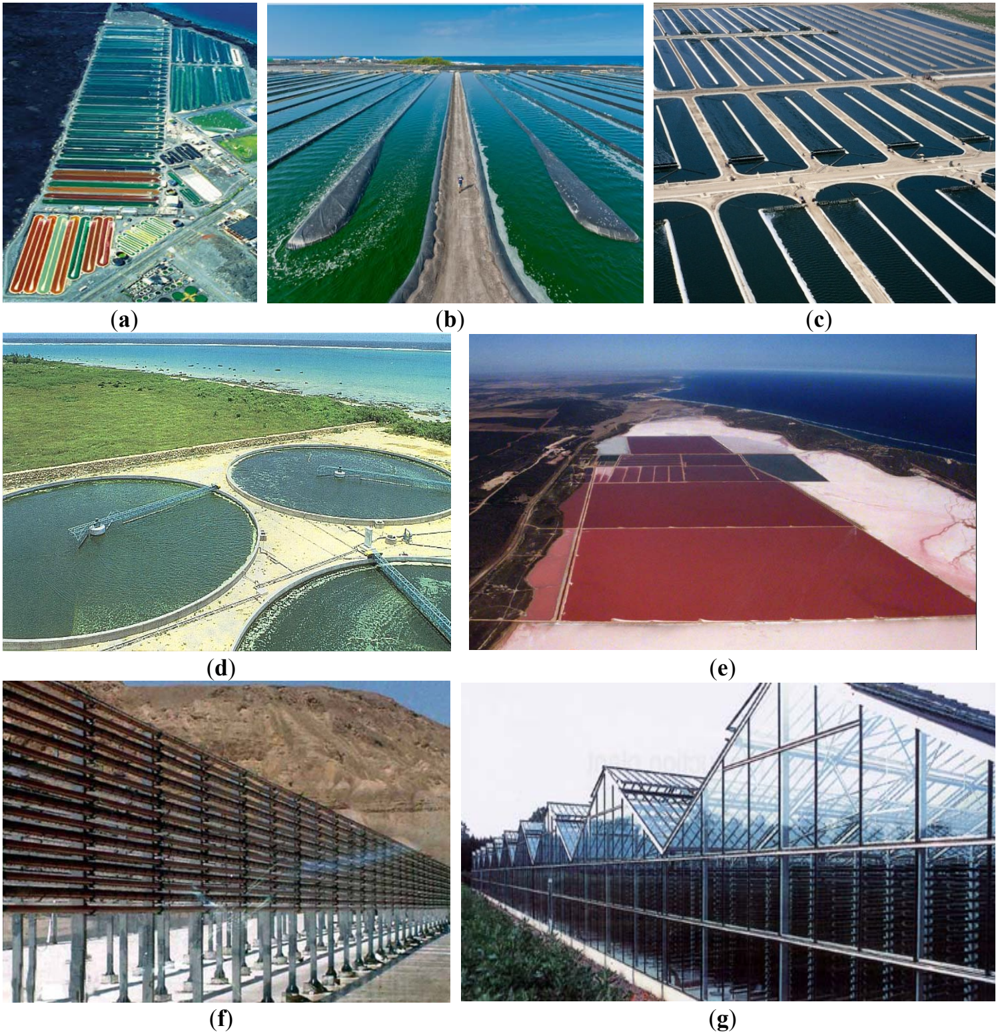
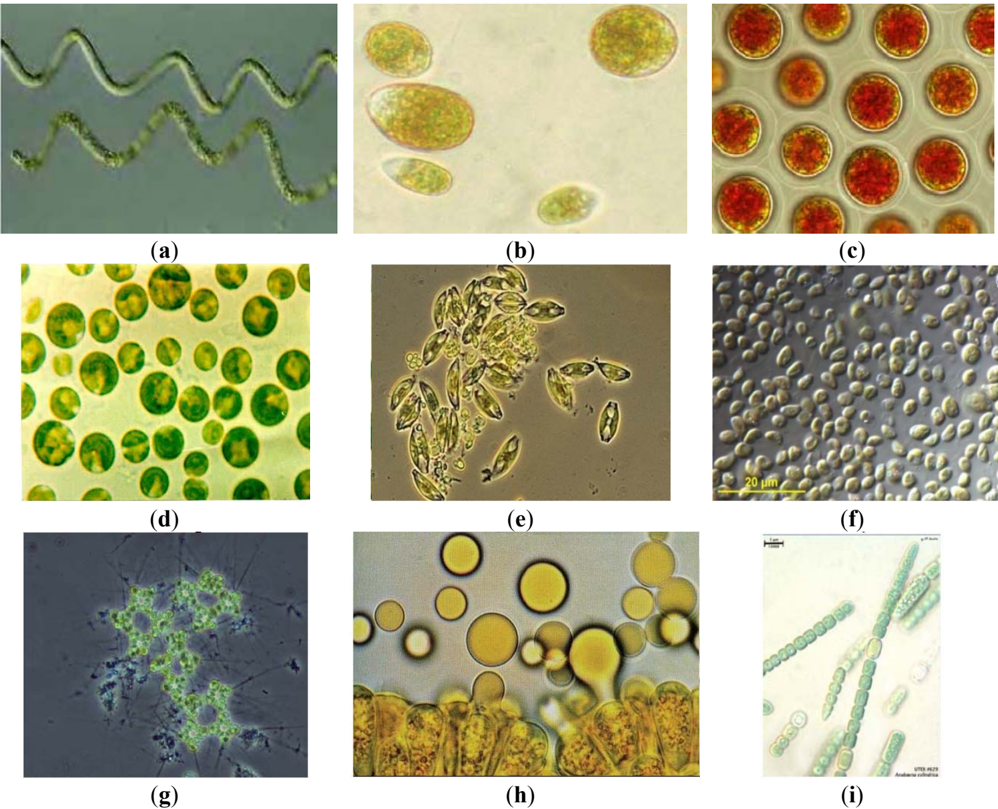
Verification
Claims the paper makes
The claims and statistics of this paper haven’t been checked yet.
Free: it reads the open-access text and checks the first 5 claims that cite a source we can check. Create a free account to check every claim.
Self-check
Percentages, sums and reported differences re-computed from the paper’s own numbers.
The self-check needs the paper’s full text.
Citations
Cites
Sheehan, J., Dunahay, T., Benemann, J., & Roessler, P. (1998) · doi:10.2172/15003040 · Cited by 1,753 · cited 2×
“Brackish inland water sources, not useful in agriculture, were considered for microalgae biofuels production by the US Aquatic Species Program [4], which, as noted in the introduction, was a precursor to many of the now ongoing worldwide activities in this field.”
BackgroundSelf-citationFERMENTATIVE AND PHOTOCHEMICAL PRODUCTION OF HYDROGEN IN ALGAE
Gaffron, H., & Rubin, J. (1942) · Journal of General Physiology · doi:10.1085/jgp.26.2.219 · Cited by 631 · cited 1×
“Hydrogen gas evolution by microalgae was first reported in the 1940s [9], and H2 fuel production has been the subject of extensive R&D starting forty years ago [10], and continues to be an active field of research, though with no prospects of practical applications in the foreseeable future [11].”
BackgroundA Realistic Technology and Engineering Assessment of Algae Biofuel Production
Lundquist, T., Woertz, I., Quinn, N. W. T., & Benemann, J. R. (2010) · DigitalCommons - CalPoly (California State Polytechnic University) · Cited by 579
Self-citationPhotosynthesis in Sewage Treatment
Oswald, W. J., & Gotaas, H. B. (1957) · Transactions of the American Society of Civil Engineers · doi:10.1061/taceat.0007483 · Cited by 446
Biological Transformation of Solar Energy
Oswald, W. J., & Golueke, C. G. (1960) · Advances in Applied Microbiology · doi:10.1016/s0065-2164(08)70127-8 · Cited by 387 · cited 2×
“Brackish inland water sources, not useful in agriculture, were considered for microalgae biofuels production by the US Aquatic Species Program [4], which, as noted in the introduction, was a precursor to many of the now ongoing worldwide activities in this field.”
BackgroundMethodGolueke, C. G., Oswald, W. J., & Gotaas, H. B. (1957) · Applied Microbiology · doi:10.1128/aem.5.1.47-55.1957 · Cited by 380 · cited 1×
“Methane (biogas) production was the first biofuel from microalgae proposed and already studied in the 1950s [8].”
BackgroundPhotobioreactor design: Mixing, carbon utilization, and oxygen accumulation
Weissman, J. C., Goebel, R. P., & Benemann, J. R. (1988) · Biotechnology and Bioengineering · doi:10.1002/bit.260310409 · Cited by 376
Self-citationSystems and economic analysis of microalgae ponds for conversion of CO2 to biomass
Benemann, J. R., & Oswald, W. J. (1994) · NASA STI/Recon Technical Report N · Cited by 374
Self-citationHydrogen production by microalgae
Benemann, J. R. (2000) · Journal of Applied Phycology · doi:10.1023/a:1008175112704 · Cited by 262
Self-citationBenemann, J. R., & Oswald, W. J. (1996) · doi:10.2172/493389 · Cited by 247
Self-citation
Research works printed but not linked: 7
- 1. Little, A.D. Pilot Plant Studies in the Production of Chlorella. In Algal Culture: From Laboratory to Pilot Plant ; Burlew, J.S., Ed.; Carnegie Institution of Washington: Washington, DC, USA, 1953; Chapter 17, pp. 235-273.
- 3. Fisher, A.W. Engineering for Algae Culture. In Proceedings of the World Symposium on Applied Solar Energy, Phoenix, AZ, USA, 1-5 November 1955; pp. 243-253.
- 14. Benemann, J.R.; Pursoff, P.; Oswald, W.J. Engineering Design and Cost Analysis of a Large-Scale Microalgae Biomass System ; NTIS# HCP/T1605-01 UC-61; Final Report to the U.S. Department of Energy Department: Washington, DC, USA, 1978; pp. 1-91.
- 18. Kok, B. Experiments on Photosynthesis by Chlorella in Flashing Light. In Algal Culture: From Laboratory to Pilot Plant ; Burlew, J.S., Ed.; Carnegie Institution of Washington: Washington, DC, USA, 1953; Chapter 6, pp. 63-76.
- 19. Kok, B. Photosynthesis. In Proceedings of the Workshop on Bio-solar Conversion, Bethesda, MD, USA, 5-6 September 1973.
- 20. Benemann, J.R. The Future of Microalgae Biotechnology. In Algal and Cyanobacteria Biotechnology ; Cresswell, R.C., Rees, T.A.V., Shah, N., Eds.; Longman Scientific & Technical: Harlow, UK, 1990; pp. 317-337.
- 27. Harder, R.; von Witsch, H. Ueber Massenkultur von Diatomeen. Ber. Dtsch. Bot. Ges. 1942 , 60 , 146-153 (in German).
Cited by
Microalgae in aquafeeds for a sustainable aquaculture industry
Shah, M. R., Lutzu, G. A., Alam, A., Sarker, P., Kabir Chowdhury, M. A., Parsaeimehr, A., Liang, Y., & Daroch, M. (2018) · Journal of Applied Phycology · doi:10.1007/s10811-017-1234-z · Cited by 463
“Several recent reviews (Hemaiswarya et al. 2011; Priyadarshani and Rath 2012; Benemann 2013; Roy and Pal 2014; Yaakob et al. 2014) have indicated high potential for microalgae as a bulk feedstuff for aquaculture feeds.”
BackgroundPhotobioreactors for the production of microalgae
Acién Fernández, F. G., Fernández Sevilla, J. M., & Molina Grima, E. (2013) · Reviews in Environmental Science and Bio/Technology · doi:10.1007/s11157-012-9307-6 · Cited by 445
Chauton, M. S., Reitan, K. I., Norsker, N. H., Tveterås, R., & Kleivdal, H. T. (2015) · Aquaculture · doi:10.1016/j.aquaculture.2014.10.038 · Cited by 323
Nutritional Evaluation of Australian Microalgae as Potential Human Health Supplements
Kent, M., Welladsen, H. M., Mangott, A., & Li, Y. (2015) · PLOS ONE · doi:10.1371/journal.pone.0118985 · Cited by 305
Amorim, M. L., Soares, J., Coimbra, J. S. D. R., Leite, M. D. O., Albino, L. F. T., & Martins, M. A. (2021) · Critical Reviews in Food Science and Nutrition · doi:10.1080/10408398.2020.1768046 · Cited by 301
“A reduction of at least one order of magnitude is necessary to improve the commercial competitiveness of microalgae as raw material for the production of food, feed and biofuels (Benemann 2013).”
Background
Metadata
- Authors
- Benemann, J.
- Affiliations
- MicroBio Engineering (United States) (US)
- Corresponding author
- Benemann, John
- ORCID
- Benemann, John
- Venue
- Energies
- Publisher
- MDPI AG
- Published
- 2013-11-11
- Volume
- 6
- Issue
- 11
- Pages
- 5869-5886
- ISSN
- 1996-1073 (ISSN-L)
- OpenAlex
- W2094064759
- Semantic Scholar
- 376e421a245b47e0d2687ba3d888e13a0a300316
- Cited by
- 329
- References
- 27
- Citations by year
- 2026: 14 · 2025: 12 · 2024: 19 · 2023: 24 · 2022: 31 · 2021: 24 · 2020: 27 · 2019: 38 · 2018: 34 · 2017: 30 · 2016: 29 · 2015: 27 · 2014: 18 · 2013: 1
- FWCI
- 9.09
- Type
- journal article
- Language
- en
- Open access
- gold
- doi.org
- Licence
- Locations
- Energies (publishedVersion, cc-by)
- RePEc: Research Papers in Economics (submittedVersion)
- DOAJ (DOAJ: Directory of Open Access Journals) (submittedVersion, cc-by-sa)
- Topics
- Physical Sciences › Energy › Renewable Energy, Sustainability and the Environment › Algal biology and biofuel production
- Life Sciences › Agricultural and Biological Sciences › Aquatic Science › Aquaculture Nutrition and Growth
- Life Sciences › Biochemistry, Genetics and Molecular Biology › Molecular Biology › Microbial Metabolic Engineering and Bioproduction
- Keywords
- microalgae, biofuels, animal feed, algal biomass production, raceway ponds, open pond cultivation, CO2 utilization, sunlight, omega-3 fatty acids, fish meal replacement, vegetable oils, hydrocarbons, fermentable carbohydrates, biomass harvesting, biomass processing, production cost reduction
About these checks
Registry, retraction, Cites and statistics results are computed, not judged, with one exception: a printed reference that no index lists is read once by a model before it counts as a citation error. Claims are extracted by a model and kept only when their quote appears verbatim in the text; each cited source is then checked, with a model’s help, for whether it says what the claim relies on. Those verdicts can be wrong — read the claim’s quote and the cited source before relying on one.
Statistics and arithmetic are recomputed, not judged.
Confidence bands are shown only for fields calibrated on our annotated test set. None is calibrated yet, so no band is shown.
What counts as a claim ›How we measure confidence ›How we check this ›
Are you an author, or do you see a problem with this page? Request a review
Data sources
Bibliographic data: Semantic Scholar, OpenAlex, Crossref.
Contains information from the Semantic Scholar Academic Graph Datasets, made available under the ODC Attribution License (ODC-BY 1.0).
Semantic Scholar’s data is described in: Kinney, R., et al. (2023). The Semantic Scholar Open Data Platform. arXiv:2301.10140.
