

Almond By-Products: Valorization for Sustainability and Competitiveness of the Industry
Open accessThe DOI matches its Crossref record; 94 of the 94 references it cites were found in a registry or an index.
Abstract
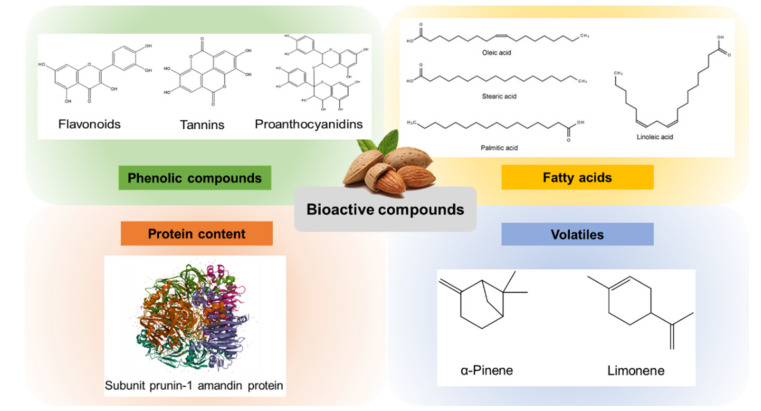
The search for waste minimization and the valorization of by-products are key practices for good management and improved sustainability in the food industry. The production of almonds generates a large amount of waste, most of which is not used. Until now, almonds have been used for their high nutritional value as food, especially almond meat. The other remaining parts (skin, shell, hulls, etc.) are still little explored, even though they have been used as fuel by burning or as livestock feed. However, interest in these by-products has been increasing as they possess beneficial properties (caused mainly by polyphenols and unsaturated fatty acids) and can be used as new ingredients for the food, cosmetic, and pharmaceutical industries. Therefore, it is important to explore almond’s valorization of by-products for the development of new added-value products that would contribute to the reduction of environmental impact and an improvement in the sustainability and competitiveness of the almond industry.
Overview
The claims and statistics of this paper haven’t been checked yet.
Free: it reads the open-access text and checks the first 5 claims that cite a source we can check. Create a free account to check every claim.
Integrity signals
Registry
Cites
Statistics
Figures
Verification
Claims the paper makes
The claims and statistics of this paper haven’t been checked yet.
Free: it reads the open-access text and checks the first 5 claims that cite a source we can check. Create a free account to check every claim.
Claims other papers make about this one
Each is checked against this paper’s own text: does it say what the citing paper says it does?
The source backs part of the claim, not all of it — or backs it for a different population, condition or comparison.
In the citing paper
“Almonds ( Prunus dulcis Mill.) are the most consumed walnuts in the world nowadays. These are treated industrially to serve as highly nutritious food; however, their peel, bark, leaves, and branches are not used, generating abundant residues (just the shells of almonds generate 0.8 to 1.7 tons of discard/year). These residues preserve part of the plant's bioactive compounds, including polyphenols”
From Innovative Approaches to an Eco-Friendly Cosmetic Industry: A Review of Sustainable Ingredients (2024) · cites this paper as [107]
Experimental — accuracy not yet measured
Self-check
Percentages, sums and reported differences re-computed from the paper’s own numbers.
The self-check needs the paper’s full text.
Citations
Cites
Proanthocyanidins and hydrolysable tannins: occurrence, dietary intake and pharmacological effects
Smeriglio, A., Barreca, D., Bellocco, E., & Trombetta, D. (2017) · British Journal of Pharmacology · doi:10.1111/bph.13630 · Cited by 688
Almonds (Prunus Dulcis Mill. D. A. Webb): A Source of Nutrients and Health-Promoting Compounds
Barreca, D., Nabavi, S. M., Sureda, A., Rasekhian, M., Raciti, R., Silva, A. S., Annunziata, G., Arnone, A., Tenore, G. C., Süntar, İ., et al. (2020) · Nutrients · doi:10.3390/nu12030672 · Cited by 287
Determination of Flavonoids and Phenolics and Their Distribution in Almonds
Milbury, P. E., Chen, C.-Y., Dolnikowski, G. G., & Blumberg, J. B. (2006) · Journal of Agricultural and Food Chemistry · doi:10.1021/jf0603937 · Cited by 286 · cited 1×
“Quantitative data extracted from [4,14,20] 1.”
Bioactives and health benefits of nuts and dried fruits
Alasalvar, C., Salvadó, J.-S., & Ros, E. (2020) · Food Chemistry · doi:10.1016/j.foodchem.2020.126192 · Cited by 269 · cited 2×
“They are well recognized in gastronomy for their distinguished flavor, and their consumption is recommended by nutritionists and doctors for providing antioxidants, bioactive molecules, and nutrients [2,3].”
BackgroundDoulati Ardejani, F., Badii, K., Limaee, N. Y., Shafaei, S. Z., & Mirhabibi, A. R. (2008) · Journal of Hazardous Materials · doi:10.1016/j.jhazmat.2007.06.048 · Cited by 261
The importance of almond (Prunus amygdalus L.) and its by-products
Esfahlan, A. J., Jamei, R., & Esfahlan, R. J. (2010) · Food Chemistry · doi:10.1016/j.foodchem.2009.09.063 · Cited by 245 · cited 8×
“Many studies have demonstrated that they contain beneficial phytochemical properties, as they are a great source of phenolic compounds, such as quercetin glycosides, kaempferol, naringenin, catechin, protocatechuic acid, and vanillic acid [3,4].”
BackgroundInfluentialLi, S.-C., Liu, Y.-H., Liu, J.-F., Chang, W.-H., Chen, C.-M., & Chen, C.-Y. O. (2011) · Metabolism · doi:10.1016/j.metabol.2010.04.009 · Cited by 218
Ait Ahsaine, H., Zbair, M., Anfar, Z., Naciri, Y., El haouti, R., El Alem, N., & Ezahri, M. (2018) · Materials Today Chemistry · doi:10.1016/j.mtchem.2018.03.004 · Cited by 196
Fruit Oils: Chemistry and Functionality
(2019) · Springer eBooks · doi:10.1007/978-3-030-12473-1 · Cited by 192
HS-SPME GC/MS characterization of volatiles in raw and dry-roasted almonds (Prunus dulcis)
Xiao, L., Lee, J., Zhang, G., Ebeler, S. E., Wickramasinghe, N., Seiber, J., & Mitchell, A. E. (2014) · Food Chemistry · doi:10.1016/j.foodchem.2013.11.052 · Cited by 185 · cited 1×
“The most relevant increments of volatiles after the roasting of raw almonds were found for 2- and 3-methylbutanal that increased their presence more than 100 and 400 times, respectively [28,29].”
Background
Research works printed but not linked: 5
- EFSA Panel on Dietetic Products Nutrition and Allergies (NDA) Scientific Opinion on the Substantiation of Health Claims Related to Almonds and Maintenance of Normal Blood LDL Cholesterol Concentrations (ID 1131) and Maintenance of Normal Erectile Function (ID 2482) Pursuant to Article 13 (1) of Regulation (EC) No 19 Wiley Online Library Hoboken, NJ, USA 2011 Volume 9 PMC13130020 42078708
- Zrig A. Mohamed H.B. Tounekti T. Ahmed S.O. Khemira H. Differential responses of antioxidant enzymes in salt-stressed almond tree grown under sun and shade conditions J. Plant Sci. Res. 2015 2 117 127
- Hikal D.M. Awad N.S. Abdein M.A. The anticancer activity of cashew (Anacardium occidentale) and almond (Prunus dulcis) kernels Adv. Environ. Biol. 2017 11 31 41
- Lim T.K. Prunus dulcis Edible Medicinal and Non-Medicinal Plants: Volume 4, Fruits Springer Science & Business Media Berlin/Heidelberg, Germany 2012 Volume 4 491 9789400740532
- Krist S. Almond oil Vegetable Fats and Oils Puri S. Springer Nature Switzerland AG Cham, Switzerland 2021 77 79 9783030303143
Cited by
Innovative Approaches to an Eco-Friendly Cosmetic Industry: A Review of Sustainable Ingredients
Sasounian, R., Martinez, R. M., Lopes, A. M., Giarolla, J., Rosado, C., Magalhães, W. V., Velasco, M. V. R., & Baby, A. R. (2024) · Clean Technologies · doi:10.3390/cleantechnol6010011 · Cited by 96
“These residues preserve part of the plant’s bioactive compounds, including polyphenols (such as catechins and kaempferol) and polyunsaturated fatty acids (PUFAs) that can act as antioxidants and as a source of lipids [107].”
BackgroundAhmad, T., Esposito, F., & Cirillo, T. (2024) · Food Bioscience · doi:10.1016/j.fbio.2024.105194 · Cited by 110
Salgado-Ramos, M., Martí-Quijal, F. J., Huertas-Alonso, A. J., Sánchez‐Verdú, P., Barba, F. J., & Moreno, A. (2022) · Industrial Crops and Products · doi:10.1016/j.indcrop.2022.114697 · Cited by 62
Recent Innovations on the Reuse of Almond and Hazelnut By-Products: A Review
Ollani, S., Peano, C., & Sottile, F. (2024) · Sustainability · doi:10.3390/su16062577 · Cited by 44
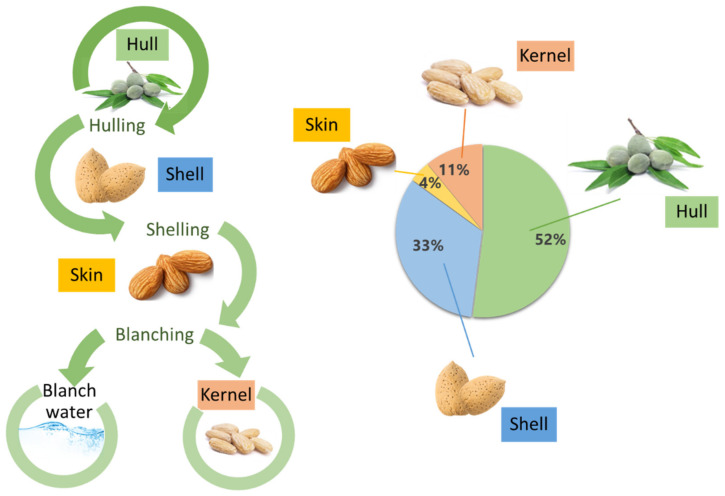
“This kernel is covered by a thin brown skin, enveloped by a wooden shell and positioned inside the hull that opens when the almond is mature [33,34].”
Madhogaria, B., Banerjee, S., Kundu, A., & Dhak, P. (2024) · Infectious Medicine · doi:10.1016/j.imj.2024.100092 · Cited by 43
“It has also been shown to be active against Pseudomonas aeruginosa [ 135 , 136 ].”
BackgroundSingar, S., Kadyan, S., Patoine, C., Park, G., Arjmandi, B. H., & Nagpal, R. (2024) · Nutrients · doi:10.3390/nu16121964 · Cited by 49
Almond By-Products: A Comprehensive Review of Composition, Bioactivities, and Influencing Factors
Silva, V., Oliveira, I. V., Pereira, J. A., & Gonçalves, B. C. (2025) · Foods · doi:10.3390/foods14061042 · Cited by 45
“D.A. Webb] is one of the nut trees with great economic relevance in Portugal and worldwide, valued for its nutritious edible kernels [9,10] and wide culinary applicability in bakeries and confectioneries [11–13].”
InfluentialGaglio, R., Tesoriere, L., Maggio, A., Viola, E., Attanzio, A., Frazzitta, A., Badalamenti, N., Bruno, M., Franciosi, E., Moschetti, G., et al. (2023) · International Journal of Food Microbiology · doi:10.1016/j.ijfoodmicro.2023.110194 · Cited by 38
Sadalage, P. S., Dar, M. A., Bhor, R. D., Bhalerao, B. M., Kamble, P. N., Paiva‐Santos, A. C., Nimbalkar, M. S., Sonawane, K. D., Pai, K. R., Patil, P. S., et al. (2022) · Food Bioscience · doi:10.1016/j.fbio.2022.102024 · Cited by 39
Microwave-assisted extraction of cellulose nanocrystals from almond (Prunus amygdalus) shell waste
Valdés, A., Mondragón, G., Garrigós, M. C., Eceiza, A., & Jiménez, A. (2023) · Frontiers in Nutrition · doi:10.3389/fnut.2022.1071754 · Cited by 33
Castagna, A., Aboudia, A., Guendouz, A., Scieuzo, C., Falabella, P., Matthes, J., Schmid, M., Drissner, D., Allais, F., Chadni, M., et al. (2025) · Materials · doi:10.3390/ma18071464 · Cited by 47
“Almond, walnut, and argan shells are composed of cellulose, hemicellulose, lignin, and other bioactive compounds [25].”
Kahlaoui, M., Bertolino, M., Barbosa‐Pereira, L., Kbaier, H. B. H., Bouzouita, N., & Zeppa, G. (2022) · Foods · doi:10.3390/foods11060777 · Cited by 39
“When incorporated into the diet, almond hulls (AHs) not only reduce colon cancer risk in rats, increase high-density lipoprotein cholesterol levels, and reduce LDL cholesterol levels in humans [4,6], but also reduce DNA scission and metal ion chelation activities [4,5].”
BackgroundGil-Guillén, I., Freitas, P. A. V., González‐Martínez, C., & Chiralt, A. (2024) · Molecules · doi:10.3390/molecules29143284 · Cited by 30
The Potential of Almond Skin as a Sustainable Biomaterial for Eliminating Azo Dye in Aqueous Media
Atmani, F., Balamane-Zizi, O., Akkari, I., Pazos, M. M., Yeddou-Mezenner, N., Manseri, A., & Kaci, M. M. (2024) · Water Air & Soil Pollution · doi:10.1007/s11270-024-07057-w · Cited by 27
Study of Phenolic Compounds and Antioxidant Capacity of Spanish Almonds
Gracia, B. M., Reig, D. L., Cabetas, M. J. R., & Sanz, M. Á. (2021) · Foods · doi:10.3390/foods10102334 · Cited by 26
“[44] assembled lower results in whole almonds of flavan-3-ols (1.”
BackgroundA Comparison of Three Artificial Rumen Systems for Rumen Microbiome Modeling
Shaw, C. A., Park, Y., Gonzalez, M., Duong, R. A., Pandey, P. K., Brooke, C. G., & Hess, M. (2023) · Fermentation · doi:10.3390/fermentation9110953 · Cited by 25
Lacivita, V., Anonymous, R, C., Lamacchia, C., B., S., A, G., A., R., Mr, C., M., S., & Severini, C. (2024) · Future Foods · doi:10.1016/j.fufo.2024.100398 · Cited by 20
Root, K. P., Pal, A. K., Pesaranhajiabbas, E., Mohanty, A. K., & Misra, M. (2023) · Composites Part C Open Access · doi:10.1016/j.jcomc.2023.100358 · Cited by 30
Ingegneri, M., Smeriglio, A., Rando, R., Gervasi, T., Tamburello, M. P., Ginestra, G., Camera, E. L., Pennisi, R., Sciortino, M. T., Mandalari, G., et al. (2023) · Nutrients · doi:10.3390/nu15061545 · Cited by 28
“Despite their beneficial effect, the increased production of almonds also proportionally implements the amount of processing by-products [7], mainly hulls (0.”
BackgroundPhytochemical Profiling and Biological Potential of Prunus dulcis Shell Extracts
Khadher, T. B., Aydi, S. S., Aydi, S., Mars, M., & Bouajila, J. (2023) · Plants · doi:10.3390/plants12142733 · Cited by 23
“Various biological proprieties have been reported in the almond, such as antimicrobial, antioxidant, anti-inflammatory, anticancer, laxative, hepatoprotective, cardiometabolic protective, neotropic, sedative, hypnotic, anxiolytic, and neuroprotective effects [4].”
BackgroundSubcritical Water Extraction for Valorisation of Almond Skin from Almond Industrial Processing
Freitas, P. A. V., Martín-Pérez, L., Gil-Guillén, I., González‐Martínez, C., & Chiralt, A. (2023) · Foods · doi:10.3390/foods12203759 · Cited by 22
“Several authors [1,4,5] have reviewed the phenolic composition of AS reported in different studies using different extraction methods.”
BackgroundNew Route to the Production of Almond Beverages Using Hydrodynamic Cavitation
Faraloni, C., Albanese, L., Zittelli, G. C., Meneguzzo, F., Tagliavento, L., & Zabini, F. (2023) · Foods · doi:10.3390/foods12050935 · Cited by 19
“) has been the most produced nut worldwide in recent years [4], gaining economic significance in the global food supply chain.”
BackgroundInfluentialAbo-Elghiet, F., Ibrahim, M. H., Hassab, M. A. E., Bader, A., Abdallah, Q., & Temraz, A. (2022) · Journal of Ethnopharmacology · doi:10.1016/j.jep.2022.115439 · Cited by 21
Mohammed, D., Freije, A. M., Abdulhussain, H., Khonji, A., Hasan, M., Ferraris, C., Gasparri, C., Aljar, M. A. A., Redha, A. A., Giacosa, A., et al. (2023) · AppliedChem · doi:10.3390/appliedchem3010008 · Cited by 24
“Almond also contains high quantities of phenolic compounds that can be highly variable due to the different methods of detection, extraction, quantification, and analysis of these compounds [22].”
BackgroundInfluentialBaran, M. F., Keskin, C., Baran, A., Eftekhari, A., Omarova, S., Khalilov, R. I., Adıcan, M. T., Rosic, G. L., Selaković, D., Yıldıztekin, M., et al. (2023) · Molecules · doi:10.3390/molecules28062428 · Cited by 18
“More research has revealed the abundance of tannins, phenols, flavonoids, carotenoids, and alkaloids in the Amygdalus species [21,22].”
BackgroundAcute Oral Toxicity Evaluation of Almond Hull Powders in BALB/c Mice
Liu, J., Yao, Y., Cheng, Y., Hua, W., Zhu, X., Miao, Q., Huang, G., Mi, S., & Ruan, R. R. (2023) · Foods · doi:10.3390/foods12224111 · Cited by 14
Zahrani, A. J. A., & Shori, A. B. (2023) · Food Science and Technology · doi:10.1590/fst.118122 · Cited by 13
Antioxidant Activity of a Sicilian Almond Skin Extract Using In Vitro and In Vivo Models
Arangia, A., Ragno, A., Cordaro, M., D’Amico, R., Siracusa, R., Fusco, R., Marino‐Merlo, F., Smeriglio, A., Impellizzeri, D., Cuzzocrea, S., et al. (2023) · International Journal of Molecular Sciences · doi:10.3390/ijms241512115 · Cited by 12
“Antioxidant effects of the ASE after CAR induction: SOD (A), GSH (B), GPx (C), and CAT (D).”
ResultInfluentialA review on the utilization of the by-products generated during the production of Argan oil
Hallouch, O., Ibourki, M., Bijla, L., Oubannin, S., Asbbane, A., Mazar, A., Devkota, K. P., Guillaume, D., Goh, K. W., Bouyahya, A., et al. (2025) · Journal of Agriculture and Food Research · doi:10.1016/j.jafr.2025.101770 · Cited by 16
Puton, B. M. S., Oro, C. E. D., Bernardi, J. L., Finkler, D. E., Venquiaruto, L. D., Dallago, R. M., & Tres, M. V. (2025) · Processes · doi:10.3390/pr13051314 · Cited by 20
Malayil, S., Surendran, A. N., Kate, K. H., & Satyavolu, J. V. (2022) · Bioresource Technology Reports · doi:10.1016/j.biteb.2022.101150 · Cited by 12
Hallouch, O., Ibourki, M., Devkota, K. P., Majourhat, K., & Gharby, S. (2024) · Research Square · doi:10.21203/rs.3.rs-3944130/v1 · Cited by 11
D’Arcangelo, S., Santonocito, D., Messina, L., Greco, V., Giuffrida, A., Puglia, C., Giulio, M. D., Inturri, R., & Vaccaro, S. (2024) · Foods · doi:10.3390/foods13233834 · Cited by 9
Chen, Y., Wang, L., Zhang, Y., Zheng, N., Zhang, Y., & Zhang, Y. (2024) · Agriculture · doi:10.3390/agriculture15010005 · Cited by 9
Afsah‐Hejri, L., Maharlooei, M., Ehsani, R. J., & Maboudian, R. (2025) · npj Materials Sustainability · doi:10.1038/s44296-025-00060-0 · Cited by 16
“…previous sections, the following California ’ s specialty crop waste can be used as a source for biofertilizer production: olive and fruit pomace after oil or juice extraction, stone fruits post-harvest processing residues, pistachio soft hull and hard shell, and almond shell and hull 239 – 241 .”
Valorization of wastes and by-products of nuts, seeds, cereals and legumes processing
Tomar, G. S., Gundogan, R., Karaça, A. C., & Nickerson, M. T. (2023) · Advances in food and nutrition research · doi:10.1016/bs.afnr.2023.03.004 · Cited by 14
Nolasco, A., Squillante, J., Velotto, S., D’Auria, G., Ferranti, P., Mamone, G., Errico, M. E., Avolio, R., Castaldo, R., Luca, L. D., et al. (2024) · Foods · doi:10.3390/foods13071044 · Cited by 11
“Total fat content accounted for 9.8%, and protein content was found to be 6.1% of the PNS. Nuts are renowned for their high lipid content, which encompasses various bioactive compounds that contribute to health benefits [58].”
BackgroundInfluentialRecalde, A., de Evan, T., Fernández, C., Roldán, R. A., López-Feria, S., & Carro, M. D. (2024) · Veterinary Sciences · doi:10.3390/vetsci11060242 · Cited by 8
“The AH is the outer covering of the nut and the hard shell, which can represent about 50% of the weight of the total fruit on a fresh matter basis [1,2], although this value can range from 41.5 to 70.0% for different almond varieties [3].”
BackgroundInfluentialHallouch, O., Ibourki, M., Asbbane, A., Devkota, K. P., Giuffrè, A. M., Majourhat, K., & Gharby, S. (2025) · Current Research in Nutrition and Food Science Journal · doi:10.12944/crnfsj.13.1.5 · Cited by 9
Ragno, A., Imbesi, M., Gervasi, T., Smeriglio, A., Mandalari, G., Impellizzeri, D., & Trombetta, D. (2025) · Frontiers in Nutrition · doi:10.3389/fnut.2025.1582434 · Cited by 8
Patinha, S., Murteira, J. V., Costa, C. P., Salvador, Â. C., Santos, S. A. O., Silvestre, A. J. D., & Rocha, S. M. (2021) · Applied Sciences · doi:10.3390/app12010382 · Cited by 9
Adsorption of Polyphenols from Almond Blanching Water by Macroporous Resin
Tabib, M., Giniès, C., Rakotomanomana, N., & Remmal, A. (2022) · International Journal of Food Science · doi:10.1155/2022/7847276 · Cited by 8
“Hence, the exploitation of almond by-products must be integrated into a sustainability context, outlining strategies to establish a circular economy around the almond industry [6].”
BackgroundChemical, nutritive, fermentative and microbial composition of almond hull silage
SIRAKAYA, S. (2022) · Journal of Applied Animal Research · doi:10.1080/09712119.2022.2148678 · Cited by 8
“Minimization of waste products and evaluation of by-products play a key role in terms of sustainability and proper management (Barral-martinez et al. 2021).”
Backgroundde Souza, R. L., Pérez-Gago, M. B., & Palou, L. (2025) · Postharvest Biology and Technology · doi:10.1016/j.postharvbio.2025.114054 · Cited by 7
Nutritional and health-beneficial values of almond nuts consumption
Ouzir, M. (2023) · Nutrire · doi:10.1186/s41110-023-00239-2 · Cited by 9
“Moreover, the almonds’ by-products (skin, shell, hulls, and blanch water) were also reported to improve the antioxidant defense of the organism and to act as anti-inflammatory, anticarcinogenic, and antimicrobial agents [10].”
Chukwuma, I. F., Ossai, E. C., Nworah, F. N., Apeh, V. O., Abiaziem, E. O., Iheagwam, F. N., Skendrović, H., Juchniewicz, S., Leicht, K., Okpala, C. O. R., et al. (2024) · PLoS ONE · doi:10.1371/journal.pone.0287840 · Cited by 10
Tarantino, A., Frabboni, L., & Disciglio, G. (2024) · Agriculture · doi:10.3390/agriculture14020230 · Cited by 7
Ruiz, E., Martínez-Miró, S., Hernández, F., Ayala, L., Madrid, J., & Ortega, N. (2025) · Italian Journal of Animal Science · doi:10.1080/1828051x.2025.2499128 · Cited by 6
“These compounds in almond byproducts have interesting anti-inflammatory, antimicrobial, and antioxidant activity (Barral-Martinez et al. 2021).”
Khanzadeh, M., Farhadi, A., & JEFFS, A. G. (2025) · Aquaculture Nutrition · doi:10.1155/anu/4057455 · Cited by 7
Sardar, C., Bhadra, S., Jana, H. K., & Mondal, S. (2023) · Journal of Pure and Applied Microbiology · doi:10.22207/jpam.17.3.29 · Cited by 7
Kodad, S., Müller, C. M., Jawarneh, M., Becker, A., Sanne, M., Pfriem, A., Elamrani, A., Mihamou, A., & Abid, M. (2024) · Genetic Resources and Crop Evolution · doi:10.1007/s10722-024-02166-1 · Cited by 6
Harkat-Madouri, L., Touati, H., Boulekbache‐Makhlouf, L., Madani, K., & Haddadi‐Guemghar, H. (2025) · Journal of Food Processing and Preservation · doi:10.1155/jfpp/3294168 · Cited by 8
Almond shell utilization in next-generation biocomposite packaging: A review
Akbar, U., Altaf, A., Mondol, M. S. A., Sidiqi, U. S., Dar, A. H., Dash, K. K., & Bashir, I. (2025) · Trends in Food Science & Technology · doi:10.1016/j.tifs.2025.105258 · Cited by 6
Rodríguez, B. C., Lipan, L., Zuazo, V. H. D., Soriano, M., Sendra, E., Carbonell-Barrachina, Á. A., Hernández, F., Herencia, J. F., Rubio-Casal, A. E., & García-Tejero, I. F. (2023) · Agronomy · doi:10.3390/agronomy13112834 · Cited by 7
“In any case, it is necessary to highlight the difficulty of comparing with the existing values of phenolic content and antioxidant activity in the peer-reviewed literature because they are dependent on multiple factors: edaphoclimatics, season, harvest time, determination methodology, etc. [98–100].”
Bioactive Compounds of Portuguese Fruits with PDO and PGI
Farinha, D., Faustino, H., Nunes, C., Sales, H., Pontes, R., & Nunes, J. (2023) · Foods · doi:10.3390/foods12162994 · Cited by 5
“The by-products of almond processing, like shell, skin, and blanch water, contain, as previously mentioned, numerous phenolic compounds that can be recovered and possess biological activities [66].”
BackgroundZahrani, A. J. A., Shori, A. B., & Altammar, K. A. (2025) · Fermentation · doi:10.3390/fermentation11110616 · Cited by 6
Recalde, A., de Evan, T., Benítez, M., la Fuente, J. D., Domínguez, B. B., Sánchez, A. G., & Carro, M. D. (2024) · Animal Feed Science and Technology · doi:10.1016/j.anifeedsci.2024.116090 · Cited by 4
Duarte, S., Sánchez-García, J., Harasym, J., & Betoret, N. (2025) · Foods · doi:10.3390/foods14132382 · Cited by 5
“Almond processing generates substantial residues that constitute approximately 70–85% of the total fruit mass [4,5].”
Şahin, A., Buran, İ., & Akal, C. (2025) · Food Science & Nutrition · doi:10.1002/fsn3.70719 · Cited by 4
“Supporting these results, Barral-Martinez et al. (2021) reported that almond skin contains bioactive prebiotic compounds such as xylooligosaccharides, polysaccharides, hemicellulose, and dietary fiber, which can enhance the growth of Bifidobacterium spp. during fermentation and storage.”
Barbosa, R., Martins, A., Oliveira, I. V., Días, M. I., Monteiro, S. M., Venâncio, C. A. S., & Félix, L. M. (2025) · Planta Medica · doi:10.1055/a-2654-9426 · Cited by 6
“D.A. Webb, a member of the Rosaceae family), which are rich in bioactive compounds and antioxidants, have become a particular focus in the fields of food science and nutrition [9,10].”
Babashpour-Asl, M., Yousefpour-Dokhanieh, A., & Tabrizi, E. F. M. (2025) · BMC Plant Biology · doi:10.1186/s12870-025-07626-z · Cited by 4
“Almonds also play a critical role in the food industry, with almond oil, flour, and other by-products being widely used in products ranging from confectioneries to beverages and cosmetics [15].”
Yao, Y., Liu, J., Miao, Q., Zhu, X., Sun, L., Hua, W., Zhang, N., Huang, G., Ruan, R. R., Cheng, Y., et al. (2024) · Journal of Functional Foods · doi:10.1016/j.jff.2024.106624 · Cited by 5
Antioxidant and Antimicrobial Activities of Optimized Extract Obtained from Almond Shell Residues
Gizaw, Y., Benito, M. J., Gudiño, I., Caballero, M. D. C., Córdoba, M. D. G., & Casquete, R. (2025) · Molecules · doi:10.3390/molecules30122614 · Cited by 4
“…however, the quantities and number of total phenolic compounds detected vary greatly depending on the study, the extraction protocol applied, the quantification units used, the standards employed to express final concentrations, and the detection method chosen to analyze phenolic content [5].”
Recalde, A., Arroyo, J. M., Evan, T. D., Alcamí-Aguado, A., Díaz, A., & Carro, M. D. (2026) · Animal Feed Science and Technology · doi:10.1016/j.anifeedsci.2026.116774 · Cited by 3
Schimmenti, E., Galati, A., Varisco, M., Mirabella, C., & Borsellino, V. (2025) · British Food Journal · doi:10.1108/bfj-09-2024-0967 · Cited by 3
Koçyiğit, H., Gök, G., & Çelebi, H. (2025) · Applied Water Science · doi:10.1007/s13201-025-02520-3 · Cited by 3
“In terms of dry weight, almond shell constitutes approximately 75% of the almond fruit (Barral-Martinez et al. 2021; Root et al. 2023).”
Hasenay, S., & Ačkar, Đ. (2022) · Sustainability · doi:10.3390/su142416910 · Cited by 3
Sustainable and Biomimetic Methodology for Extraction of High-Value-Added Compounds in Almond Hulls
Cremasco, G., Sutton, A. T., Funari, C. S., Arrua, R. D., Dussan, K. J., Hilder, E. F., Bolzani, V. D. S., & Rinaldo, D. (2024) · Molecules · doi:10.3390/molecules29133034 · Cited by 3
“One promising option to add value to the almond production chain is the sustainable exploration of almond by-products as a potential long-term source of bioactive natural products [3].”
BackgroundBioactive Phytochemicals from Almond (Prunus dulcis) Oil Processing By-products
Kara, H., Ayyıldız, H. F., Tarhan, İ., Erci, F., & Bakır, M. R. (2023) · Reference series in phytochemistry · doi:10.1007/978-3-030-91381-6_28 · Cited by 3
Ruiz, E., Martínez-Miró, S., Madrid, J., Ortega, N., Sánchez, C. J., Montalbán, A., Ayala, L., Pallarés, F. J., & Hernández, F. (2025) · Journal of Animal Science · doi:10.1093/jas/skaf420 · Cited by 2
Çokyaşa, M., Ekinci, A., Şahin, Ö., & Baytar, O. (2025) · International Journal of Hydrogen Energy · doi:10.1016/j.ijhydene.2025.153035 · Cited by 2
Abid, K. (2026) · Fermentation · doi:10.3390/fermentation12020106 · Cited by 2
“Therefore, the development of sustainable valorization strategies for AHs is essential to integrate agro-industrial residues into circular bioeconomy frameworks and reduce the environmental impact [7].”
Carneiro, P., Pais, P., Oliveira, I. V., Monteiro, S. M., Venâncio, C. A. S., & Félix, L. M. (2026) · International Journal of Molecular Sciences · doi:10.3390/ijms27062590 · Cited by 2
“Among these by-products, almond by-products, particularly almond skins, have gained increasing interest due to their high content of phenolic compounds and associated biological properties [16,17].”
Mediterranean Food By-products as a Valuable Source of Bioactive Compounds with Health Properties
Santonocito, D., Montenegro, L., & Puglia, C. (2024) · Current Medicinal Chemistry · doi:10.2174/0109298673309549240723054831 · Cited by 3
Bioactive Phytochemicals from Almond (Prunus dulcis) Oil Processing By-Products
Kara, H., Ayyıldız, H. F., Tarhan, İ., Erci, F., & Bakır, M. R. (2022) · Reference series in phytochemistry · doi:10.1007/978-3-030-63961-7_28-1 · Cited by 2
Chamorro, F., Echave, J., Prieto, M. A., Simal‐Gándara, J., & Otero, P. (2023) · doi:10.3390/ecp2023-14712 · Cited by 1
Self-citationGOUDE, K. A., Adingra, K. M.-D., Kouame, K. H., Soro, S., & Kouadio, E. J. P. (2023) · Food and Environment Safety Journal · doi:10.4316/fens.2023.011 · Cited by 1
Tracking the Mandorla di Avola Almond Variety by Means of ICP Analysis
Gulino, F., Siragusa, C., Calà, E., Gullo, F., & Aceto, M. (2024) · Foods · doi:10.3390/foods13162634 · Cited by 1
“Moreover, their by-products have relevant properties for sustainable food systems [4,5].”
BackgroundThe Health-Promoting Potential of Wafers Enriched with Almond Peel
Szymanowska, U., Karaś, M., Oliveira, I. V., Afonso, S., Chilczuk, B., & Lisiecka, K. (2025) · Molecules · doi:10.3390/molecules31010129 · Cited by 2
“Recent reviews on the valorization of nut byproducts, including almonds, highlight their potential as sources of functional ingredients within sustainable food systems [3,5,7,8].”
Harnessing fungal fermentation for waste-to-food conversion
Black, B., Massa, A., Lurie, F., Preidl, A.-K., & Rekdal, V. M. (2026) · Trends in biotechnology · doi:10.1016/j.tibtech.2026.02.018 · Cited by 1
Ruiz, E., Montalbán, A., Ayala, L., Sánchez, C. J., Hernández, F., Madrid, J., Ortega, N., Rodríguez, M., & Martínez-Miró, S. (2026) · Veterinary and Animal Science · doi:10.1016/j.vas.2026.100690 · Cited by 1
Keshavarz, F., Gharibi, S., Poursina, F., & Fakhim, H. (2025) · Canadian Journal of Infectious Diseases and Medical Microbiology · doi:10.1155/cjid/5587156 · Cited by 1
“Some compounds present in almond skin extracts, such as tannins, favonoids, and phenolic acids, possess strong antimicrobial properties and can efectively inhibit the growth and proliferation of bacteria [41, 42].”
Comparison of three artificial rumen systems for rumen microbiome modelingPreprint
Shaw, C. A., Park, Y., Gonzalez, M., Pandey, P. K., Brooke, C. G., & Hess, M. (2022) · Research Square · doi:10.21203/rs.3.rs-2176669/v1 · Cited by 1
Carro, M. D., Recalde, A., de Evan, T., Benítez, M., la Fuente, J. D., Domínguez, B. B., & García-Sánchez, A. (2024) · SSRN Electronic Journal · doi:10.2139/ssrn.4847669
Towards a circular economy for fruit and vegetable waste streams: An overview
Meester, F. D., Takahashi, T., Wilson, D. W., Rb, S., & Buttar, H. S. (2025) · Elsevier eBooks · doi:10.1016/b978-0-443-22300-6.00022-x
Tlais, A. Z. A., Trossolo, E., Stringari, A., Gramenzi, G., Filannino, P., Pinto, D., Gobbetti, M., & Cagno, R. D. (2025) · LWT · doi:10.1016/j.lwt.2025.118030 · Cited by 2
Reducing the Weaning Impact in Piglets with Dietary Fibre: The Role of Milled Almond ShellPreprint
Ruiz, E., Martínez-Miró, S., Madrid, J., Ortega, N., Sánchez, C. J., Montalbán, A., García, L. A., Pallarés, F. J., & Hernández, F. (2025) · SSRN Electronic Journal · doi:10.2139/ssrn.5384055
Valorization of Almond Fruit Residue in Eco-friendly Biodiesel ProductionPreprint
Omoniyi, S. C., Adelaja, O. A., Ogunsuyi, H. O., & Babaniyi, B. R. (2025) · Research Square · doi:10.21203/rs.3.rs-7381280/v1
Yao, Y., Liu, J., Cheng, Y., Miao, Q., Zhu, X., Xie, J., Zhang, N., Hua, W., Huang, G., Lin, X., et al. (2025) · Food and Chemical Toxicology · doi:10.1016/j.fct.2025.115814
Olmedo-Navarro, M., Pérez, J. M., García-Salas, F. M., López-Lao, E., & Fernández, I. (2025) · Environmental Technology & Innovation · doi:10.1016/j.eti.2025.104632
Matti-Alapafuja, A. O., Ahmed, E., Noronha, A. M. D. C. G., Matti-Sanni, R. O., HANADA, M., Fukuma, N. M., & Nishida, T. (2026) · Animals · doi:10.3390/ani16030489
“…almond diets remained comparable to those of the control across all inclusion levels, indicating sustained ruminal fermentation activity and efficient utilization of digestible substrates, which is typical of feeds rich in readily fermentable carbohydrates and energy-dense components [29,31].”
Caractérisation des extraits actifs de sous-produits de vigne, amande et abricot
Khadher, T. B. (2023) · theses.fr (ABES) · doi:10.70675/4b14d286za8d6z407eza461z2f713cd22b26
Kamath, A., & Muhialdin, B. J. (2026) · SSRN Electronic Journal · doi:10.2139/ssrn.6670020
Lightweight machine vision framework for automated almond variety classification
Hoang, P.-H., & Phan, T.-T.-H. (2026) · Future Foods · doi:10.1016/j.fufo.2026.101027
Pesce, F., Spagna, G., Parafati, L., Todaro, A., Distefano, G., Luca, L. P., & Palmeri, R. (2026) · Foods · doi:10.3390/foods15101668
“From a technological perspective, this aspect highlights the importance of developing alternative peeling strategies capable of preserving phenolic compounds associated with almond skin [33].”
Aly, E., Elsawy, H. A., & Abo-Taleb, H. M. (2026) · ACS Food Science & Technology · doi:10.1021/acsfoodscitech.6c00163
An, D., Paek, Y. C., Cho, M.-J., Kim, J.-K., Kim, S. H., Kim, Y. K., & Doh, H. (2026) · Food and Bioproducts Processing · doi:10.1016/j.fbp.2026.06.001
Antioxidant blend films of PLA and PVA with almond skin powder to preserve toasted almonds
Gil-Guillén, I., González‐Martínez, C., & Chiralt, A. (2026) · Sustainable Food Technology · doi:10.1039/d6fb00088f
Elvira-Pérez, H., Martínez-Alonso, C., Ruiz, M.-J., & Rodríguez-Carrasco, Y. (2026) · Foods · doi:10.3390/foods15122175
“In addition, Barral-Martínez et al. [9] reported that in blanched almond skin, the predominant compounds were flavanols (61.5–134 µ g/g) and flavanol glycosides (15.6–100 µ g/g), both belonging to the flavonoid family.”
InfluentialLacivita, V., Lamacchia, C., Speranza, B., Racioppo, A., Caporizzi, R., & Derossi, A. (2026) · Food Research International · doi:10.1016/j.foodres.2026.119897
Metadata
- Authors
- Barral-Martinez, M., Fraga-Corral, M., Garcia-Perez, P., Simal-Gandara, J., & Prieto, M. A.
- Affiliations
- Universidade de Vigo (ES)
- Nutrition and Bromatology Group, Analytical and Food Chemistry Department, Faculty of Food Science and Technology, Ourense Campus, University of Vigo, E-32004 Ourense, Spain
- Universidade Politécnica de Bragança (PT)
- Corresponding author
- Prieto, Miguel A.
- ORCID
- Venue
- Foods
- Publisher
- MDPI AG
- Published
- 2021-08-02
- Volume
- 10
- Issue
- 8
- Pages
- 1793
- ISSN
- 2304-8158 (ISSN-L)
- PMC
- PMC8394390
- OpenAlex
- W3192357840
- Semantic Scholar
- 2c00180af2227693b91e09863dd214c720849d43
- Cited by
- 107
- References
- 94
- Citations by year
- 2026: 21 · 2025: 30 · 2024: 22 · 2023: 22 · 2022: 10 · 2021: 2
- FWCI
- 1.87
- Type
- journal article
- Language
- en
- Open access
- gold
- doi.org
- Licence
- Locations
- Foods (publishedVersion, cc-by)
- PubMed Central (publishedVersion, cc-by)
- PubMed (publishedVersion)
- Portuguese National Funding Agency for Science, Research and Technology (RCAAP Project by FCT) (submittedVersion, other-oa)
- DOAJ (DOAJ: Directory of Open Access Journals) (submittedVersion, cc-by-sa)
- Investigo repository of University of Vigo (University of Vigo) (submittedVersion, cc-by)
- Investigo Institutional repository of UVigo (Universidade de Vigo) (submittedVersion, cc-by)
- Funders
- Joint Programming Initiative A healthy diet for a healthy life (696295)
- European Commission (696295, 888003)
- Fonds Wetenschappelijk Onderzoek
- Ministerio de Ciencia e Innovación (ED481B-2019/096, EXCELENCIA-ED431F, 696295, H2020-BBI-JTI-2019, RYC 2017, 888003, RYC‐2017‐22891)
- Ministero delle Politiche Agricole Alimentari e Forestali (696295)
- Institut National de la Recherche Agronomique
- CYTED Ciencia y Tecnología para el Desarrollo (UP4HEALTH, P317RT0003)
- Xunta de Galicia (EXCELENCIA-ED431F 2020/12, EXCELENCIA-ED431F, H2020-BBI-JTI-2019, RYC-2017-22891, 696295, ED431F, ED481B‐2019‐096, ED481B-, P317RT0003)
- Horizon 2020 Framework Programme (888003, H2020-BBI-JTI-2019, 696295)
- Fundação para a Ciência e a Tecnologia (H2020, 696295)
- Agencia Estatal de Investigación (RYC-2017, 696295)
- Topics
- Health Sciences › Nursing › Nutrition and Dietetics › Nuts composition and effects
- Life Sciences › Agricultural and Biological Sciences › Forestry › Wood Residue Utilization and Solid Biofuels
- Physical Sciences › Chemistry › Organic Chemistry › Edible Oils Quality and Analysis
- Keywords
- almond by-products, almond hulls, almond shell, almond skin, polyphenols, unsaturated fatty acids, value-added products
About these checks
Registry, retraction, Cites and statistics results are computed, not judged, with one exception: a printed reference that no index lists is read once by a model before it counts as a citation error. Claims are extracted by a model and kept only when their quote appears verbatim in the text; each cited source is then checked, with a model’s help, for whether it says what the claim relies on. Those verdicts can be wrong — read the claim’s quote and the cited source before relying on one.
Statistics and arithmetic are recomputed, not judged.
Confidence bands are shown only for fields calibrated on our annotated test set. None is calibrated yet, so no band is shown.
What counts as a claim ›How we measure confidence ›How we check this ›
Are you an author, or do you see a problem with this page? Request a review
Data sources
Bibliographic data: Semantic Scholar, OpenAlex, Crossref.
Contains information from the Semantic Scholar Academic Graph Datasets, made available under the ODC Attribution License (ODC-BY 1.0).
Semantic Scholar’s data is described in: Kinney, R., et al. (2023). The Semantic Scholar Open Data Platform. arXiv:2301.10140.
