

Almond By-Products: Valorization for Sustainability and Competitiveness of the Industry
Open accessThe DOI matches its Crossref record; 94 of the 94 references it cites were found in a registry or an index.
Abstract
The search for waste minimization and the valorization of by-products are key practices for good management and improved sustainability in the food industry. The production of almonds generates a large amount of waste, most of which is not used. Until now, almonds have been used for their high nutritional value as food, especially almond meat. The other remaining parts (skin, shell, hulls, etc.) are still little explored, even though they have been used as fuel by burning or as livestock feed. However, interest in these by-products has been increasing as they possess beneficial properties (caused mainly by polyphenols and unsaturated fatty acids) and can be used as new ingredients for the food, cosmetic, and pharmaceutical industries. Therefore, it is important to explore almond’s valorization of by-products for the development of new added-value products that would contribute to the reduction of environmental impact and an improvement in the sustainability and competitiveness of the almond industry.
Overview
The claims and statistics of this paper haven’t been checked yet.
Free: it reads the open-access text and checks the first 5 claims that cite a source we can check. Create a free account to check every claim.
Integrity signals
Registry
Cites
Statistics
Figures
Verification
Claims the paper makes
The claims and statistics of this paper haven’t been checked yet.
Free: it reads the open-access text and checks the first 5 claims that cite a source we can check. Create a free account to check every claim.
Claims other papers make about this one
Each is checked against this paper’s own text: does it say what the citing paper says it does?
The source backs part of the claim, not all of it — or backs it for a different population, condition or comparison.
In the citing paper
“Almonds ( Prunus dulcis Mill.) are the most consumed walnuts in the world nowadays. These are treated industrially to serve as highly nutritious food; however, their peel, bark, leaves, and branches are not used, generating abundant residues (just the shells of almonds generate 0.8 to 1.7 tons of discard/year). These residues preserve part of the plant's bioactive compounds, including polyphenols”
From Innovative Approaches to an Eco-Friendly Cosmetic Industry: A Review of Sustainable Ingredients (2024) · cites this paper as [107]
Experimental — accuracy not yet measured
Self-check
Percentages, sums and reported differences re-computed from the paper’s own numbers.
The self-check needs the paper’s full text.
Citations
Cites
Proanthocyanidins and hydrolysable tannins: occurrence, dietary intake and pharmacological effects
Smeriglio, A., Barreca, D., Bellocco, E., & Trombetta, D. (2017) · British Journal of Pharmacology · doi:10.1111/bph.13630 · Cited by 688
Almonds (Prunus Dulcis Mill. D. A. Webb): A Source of Nutrients and Health-Promoting Compounds
Barreca, D., Nabavi, S. M., Sureda, A., Rasekhian, M., Raciti, R., Silva, A. S., Annunziata, G., Arnone, A., Tenore, G. C., Süntar, İ., et al. (2020) · Nutrients · doi:10.3390/nu12030672 · Cited by 287
Determination of Flavonoids and Phenolics and Their Distribution in Almonds
Milbury, P. E., Chen, C.-Y., Dolnikowski, G. G., & Blumberg, J. B. (2006) · Journal of Agricultural and Food Chemistry · doi:10.1021/jf0603937 · Cited by 286 · cited 1×
“Quantitative data extracted from [4,14,20] 1.”
Bioactives and health benefits of nuts and dried fruits
Alasalvar, C., Salvadó, J.-S., & Ros, E. (2020) · Food Chemistry · doi:10.1016/j.foodchem.2020.126192 · Cited by 269 · cited 2×
“They are well recognized in gastronomy for their distinguished flavor, and their consumption is recommended by nutritionists and doctors for providing antioxidants, bioactive molecules, and nutrients [2,3].”
BackgroundDoulati Ardejani, F., Badii, K., Limaee, N. Y., Shafaei, S. Z., & Mirhabibi, A. R. (2008) · Journal of Hazardous Materials · doi:10.1016/j.jhazmat.2007.06.048 · Cited by 261
The importance of almond (Prunus amygdalus L.) and its by-products
Esfahlan, A. J., Jamei, R., & Esfahlan, R. J. (2010) · Food Chemistry · doi:10.1016/j.foodchem.2009.09.063 · Cited by 245 · cited 8×
“Many studies have demonstrated that they contain beneficial phytochemical properties, as they are a great source of phenolic compounds, such as quercetin glycosides, kaempferol, naringenin, catechin, protocatechuic acid, and vanillic acid [3,4].”
BackgroundInfluentialLi, S.-C., Liu, Y.-H., Liu, J.-F., Chang, W.-H., Chen, C.-M., & Chen, C.-Y. O. (2011) · Metabolism · doi:10.1016/j.metabol.2010.04.009 · Cited by 218
Ait Ahsaine, H., Zbair, M., Anfar, Z., Naciri, Y., El haouti, R., El Alem, N., & Ezahri, M. (2018) · Materials Today Chemistry · doi:10.1016/j.mtchem.2018.03.004 · Cited by 196
Fruit Oils: Chemistry and Functionality
(2019) · Springer eBooks · doi:10.1007/978-3-030-12473-1 · Cited by 192
HS-SPME GC/MS characterization of volatiles in raw and dry-roasted almonds (Prunus dulcis)
Xiao, L., Lee, J., Zhang, G., Ebeler, S. E., Wickramasinghe, N., Seiber, J., & Mitchell, A. E. (2014) · Food Chemistry · doi:10.1016/j.foodchem.2013.11.052 · Cited by 185 · cited 1×
“The most relevant increments of volatiles after the roasting of raw almonds were found for 2- and 3-methylbutanal that increased their presence more than 100 and 400 times, respectively [28,29].”
BackgroundTheophil Anand, G., Renuka, D., Ramesh, R., Anandaraj, L., John Sundaram, S., Ramalingam, G., Magdalane, C. M., Bashir, A. K. H., Maaza, M., & Kaviyarasu, K. (2019) · Surfaces and Interfaces · doi:10.1016/j.surfin.2019.100376 · Cited by 184
Gorji, N., Moeini, R., & Memariani, Z. (2017) · Pharmacological Research · doi:10.1016/j.phrs.2017.12.003 · Cited by 180
Almond (Prunus dulcis (Mill.) D.A. Webb) Skins as a Potential Source of Bioactive Polyphenols
Monagas, M., Garrido, I., Lebrón-Aguilar, R., Bartolome, B., & Gómez-Cordovés, C. (2007) · Journal of Agricultural and Food Chemistry · doi:10.1021/jf071780z · Cited by 169
Bolling, B. W., Dolnikowski, G. G., Blumberg, J. B., & Chen, C. ‐. O. (2010) · Food Chemistry · doi:10.1016/j.foodchem.2010.03.068 · Cited by 161 · cited 1×
“For instance, in a study where 18 specific polyphenols were evaluated, these following molecules were underlined as the major ones: catechin, epicatechin, naringenin-7-O-glucoside, kaempferol-3-O-rutinoside, dihydroxykaempferol, isorhamnetin-3-O-rutinoside, isorhamnetin-3-O-glucoside, and naringenin [16].”
BackgroundUsing almond (Prunus amygdalus L.) shell as a bio-waste resource in wood based composite
Pirayesh, H., & Khazaeian, A. (2011) · Composites Part B Engineering · doi:10.1016/j.compositesb.2011.06.008 · Cited by 156
Fuel Characteristics of Olive Husk and Walnut, Hazelnut, Sunflower, and Almond Shells
Demirbaş, A. (2002) · Energy Sources · doi:10.1080/009083102317243601 · Cited by 155
Prebiotic effects of almonds and almond skins on intestinal microbiota in healthy adult humans
Liu, Z., Lin, X., Huang, G., Zhang, W., Rao, P., & Ni, L. (2013) · Anaerobe · doi:10.1016/j.anaerobe.2013.11.007 · Cited by 153
Valorization Challenges to Almond Residues: Phytochemical Composition and Functional Application
Prgomet, I., Gonçalves, B. C., Domínguez‐Perles, R., Pascual-Seva, N., & Barros, A. (2017) · Molecules · doi:10.3390/molecules22101774 · Cited by 148 · cited 1×
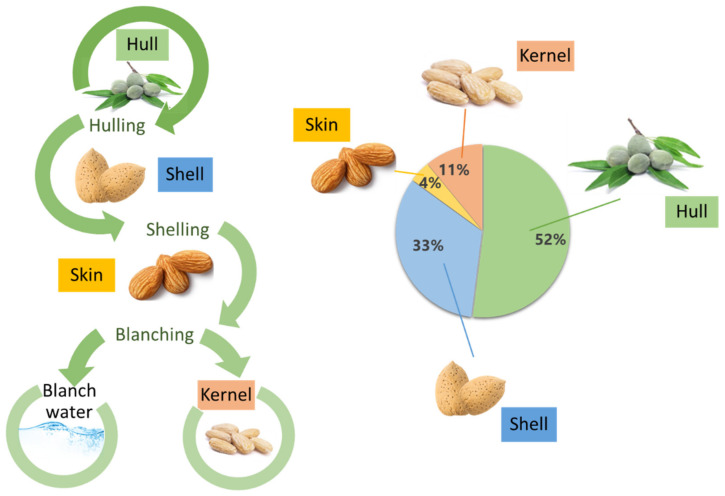
“It is the heaviest part of the kernel, representing around 52% of the total fresh weight [6].”
BackgroundAlmond (Prunus dulcis L.) Protein Quality
Ahrens, S., Venkatachalam, M., Mistry, A. M., Lapsley, K., & Sathe, S. K. (2005) · Plant Foods for Human Nutrition · doi:10.1007/s11130-005-6840-2 · Cited by 147 · cited 3×
“Instead, in adults, almonds constitute a more complete protein source since the sulfur amino acids alone are considered limiting [32].”
BackgroundBarreira, J. C. M., Ferreira, I. C. F. R., Oliveira, M. B. P. P., & Pereira, J. A. (2008) · Food and Chemical Toxicology · doi:10.1016/j.fct.2008.02.024 · Cited by 145 · cited 1×
“While these two studies ([17,19]) employed LC–MS data for the final quantification of the targeted polyphenols analyzed, other authors [15,17] quantified the polyphenolic content using spectrophotometric techniques based on absorbance measurements, and thus they did not provide specific information on the chemical pro…”
MethodRen, M., Zhang, H., Qi, J., Hu, A., Jiang, Q., Hou, Y., Feng, Q., Ojo, O., & Wang, X. (2020) · Nutrients · doi:10.3390/nu12103036 · Cited by 139
Biochemical Characterization of Amandin, the Major Storage Protein in Almond (Prunus dulcis L.)
Sathe, S. K., Wolf, W. J., Roux, K. H., Teuber, S. S., Venkatachalam, M., & Sze-Tao, K. W. C. (2002) · Journal of Agricultural and Food Chemistry · doi:10.1021/jf020007v · Cited by 135 · cited 2×
“Regarding its amino acid profile, it is consistent with that from almonds, since its essential limiting amino acids are methionine, lysine, and threonine [31].”
BackgroundAntimicrobial potential of polyphenols extracted from almond skins
Mandalari, G., Bisignano, G., D’Arrigo, M., Ginestra, G., Arena, A., Tomaino, A., & Wickham, M. S. J. (2010) · Letters in Applied Microbiology · doi:10.1111/j.1472-765x.2010.02862.x · Cited by 133
Holscher, H., Taylor, A., Swanson, K., Novotny, J., & Baer, D. (2018) · Nutrients · doi:10.3390/nu10020126 · Cited by 126
Vanga, S. K., Wang, J., Orsat, V., & Raghavan, V. (2020) · Food Research International · doi:10.1016/j.foodres.2020.109523 · Cited by 126
The Antimicrobial and Antiviral Activity of Polyphenols from Almond (Prunus dulcis L.) Skin
Musarra‐Pizzo, M., Ginestra, G., Smeriglio, A., Pennisi, R., Sciortino, M. T., & Mandalari, G. (2019) · Nutrients · doi:10.3390/nu11102355 · Cited by 125
Almond Consumption Reduces Oxidative DNA Damage and Lipid Peroxidation in Male Smokers ,
Li, N., Jia, X., Chen, C.-Y. O., Blumberg, J. B., Song, Y., Zhang, W., Zhang, X., Ma, G., & Chen, J. (2007) · Journal of Nutrition · doi:10.1093/jn/137.12.2717 · Cited by 121
Smeriglio, A., Mandalari, G., Bisignano, C., Filocamo, A., Barreca, D., Bellocco, E., & Trombetta, D. (2016) · Industrial Crops and Products · doi:10.1016/j.indcrop.2015.11.089 · Cited by 111
Antioxidants in Vegetables and Nuts - Properties and Health Benefits
(2020) · Springer eBooks · doi:10.1007/978-981-15-7470-2 · Cited by 108
Valdés, A., Vidal, L., Sanahuja, A. B., Canals, A., & Garrigós, M. C. (2015) · Journal of Agricultural and Food Chemistry · doi:10.1021/acs.jafc.5b01011 · Cited by 103
Characterisation of stilbenes in California almonds (Prunus dulcis) by UHPLC–MS
Xie, L., & Bolling, B. W. (2013) · Food Chemistry · doi:10.1016/j.foodchem.2013.10.057 · Cited by 103 · cited 5×
“8, and 72 ng/g), while piceatannol and oxyresveratrol were found in almond blanch water (17 ng/g) [14].”
BackgroundInfluentialSingh, R. D., Nadar, C. G., Muir, J. G., & Arora, A. (2019) · Journal of Cleaner Production · doi:10.1016/j.jclepro.2019.118237 · Cited by 101
Fatty acid and phenolic profiles of almond grown in Serbia
Čolić, S. D., Akšić, M. F., Lazarević, K. B., Zec, G. N., Gašić, U. M., Zagorac, D. D., & Natić, M. (2017) · Food Chemistry · doi:10.1016/j.foodchem.2017.05.006 · Cited by 96 · cited 1×
“Other fatty acids present at trace levels include the SFAs pentadecanoic (C15:0), margaric (C17:0), heneicosylic (C21:0), behenic (C22:0), tricosanoic acid (C23:0), and lignoceric (C24:0) acids and the UFAs paullinic (C20:1), α-linolenic (C18:3), dihomo-γ-linolenic (C20:3), and docosadienoic (C22:2 cis 13, 16) acids […”
BackgroundAlmonds and Cardiovascular Health: A Review
Kalita, S., Khandelwal, S., Madan, J., Pandya, H. V., Sesikeran, B., & Krishnaswamy, K. (2018) · Nutrients · doi:10.3390/nu10040468 · Cited by 90
Meriçli, F., Becer, E., Kabadayı, H., Hanoğlu, A., Hanoğlu, D. Y., Yavuz, D. Ö., Özek, T., & Vatansever, S. (2017) · Pharmaceutical Biology · doi:10.1080/13880209.2017.1296003 · Cited by 88
Amico, V., Barresi, V., Condorelli, D. F., Spatafora, C., & Tringali, C. (2006) · Journal of Agricultural and Food Chemistry · doi:10.1021/jf052812q · Cited by 85
Gomaa, E. Z. (2013) · Food Science and Biotechnology · doi:10.1007/s10068-013-0101-1 · Cited by 83
López-Ortiz, C. M., Moya, S. P., Sanahuja, A. B., Pérez, S. E. M., Grané-Teruel, N., & Martín-Carratalá, M. L. (2007) · Journal of Food Composition and Analysis · doi:10.1016/j.jfca.2007.09.004 · Cited by 81 · cited 1×
“Nevertheless, different works point to similar ranges than those provided by European Food Safety Authority (EFSA), showing that the lipid content of almonds from different cultivars and locations is quite constant and in the range of 36 and 63% [19,22,23].”
ResultIn vitro evaluation of the prebiotic properties of almond skins (Amygdalus communis L.)
Mandalari, G., Faulks, R. M., Bisignano, C., Waldron, K. W., Narbad, A., & Wickham, M. S. J. (2010) · FEMS Microbiology Letters · doi:10.1111/j.1574-6968.2010.01898.x · Cited by 79
Almond shell waste: possible local rockwool substitute in soilless crop culture
Urrestarazu, M., Martínez-Gutiérrez, G. A., & Sanjuán, M. D. C. S. (2004) · Scientia Horticulturae · doi:10.1016/j.scienta.2004.06.011 · Cited by 76
Mandalari, G., Bisignano, C., Genovese, T., Mazzon, E., Wickham, M. S. J., Paterniti, I., & Cuzzocrea, S. (2011) · International Immunopharmacology · doi:10.1016/j.intimp.2011.02.003 · Cited by 74
Kahlaoui, M., Borotto Dalla Vecchia, S., Giovine, F., Ben Haj Kbaier, H., Bouzouita, N., Barbosa Pereira, L., & Zeppa, G. (2019) · Antioxidants · doi:10.3390/antiox8120647 · Cited by 74
Summo, C., Palasciano, M., Angelis, D. D., Paradiso, V. M., Caponio, F., & Pasqualone, A. (2018) · Journal of the Science of Food and Agriculture · doi:10.1002/jsfa.9110 · Cited by 73 · cited 1×
“While these two studies ([17,19]) employed LC–MS data for the final quantification of the targeted polyphenols analyzed, other authors [15,17] quantified the polyphenolic content using spectrophotometric techniques based on absorbance measurements, and thus they did not provide specific information on the chemical pro…”
MethodAlmond Skin Extracts Abrogate HSV-1 Replication by Blocking Virus Binding to the Cell
Bisignano, C., Mandalari, G., Smeriglio, A., Trombetta, D., Musarra‐Pizzo, M., Pennisi, R., & Sciortino, M. T. (2017) · Viruses · doi:10.3390/v9070178 · Cited by 71
Barreira, J. C. M., Casal, S. I. P., Ferreira, I. C. F. R., Peres, A. M., Pereira, J. A., & Oliveira, M. B. P. P. (2012) · Journal of Agricultural and Food Chemistry · doi:10.1021/jf301402t · Cited by 67 · cited 2×
“Other fatty acids present at trace levels include the SFAs pentadecanoic (C15:0), margaric (C17:0), heneicosylic (C21:0), behenic (C22:0), tricosanoic acid (C23:0), and lignoceric (C24:0) acids and the UFAs paullinic (C20:1), α-linolenic (C18:3), dihomo-γ-linolenic (C20:3), and docosadienoic (C22:2 cis 13, 16) acids […”
BackgroundResultReview about Non-Lipid Components and Minor Fat-Soluble Bioactive Compounds of Almond Kernel
Roncero, J. M., Álvarez‐Ortí, M., Pardo‐Giménez, A., Rabadán, A., & González, J. E. P. (2020) · Foods · doi:10.3390/foods9111646 · Cited by 67
Pasqualone, A., Laddomada, B., Boukid, F., Angelis, D. D., & Summo, C. (2020) · Foods · doi:10.3390/foods9111705 · Cited by 66
Bartolomé, B., Monagas, M., Garrido, I., Gómez‐Cordovés, C., Martín‐Álvarez, P. J., Lebrón‐Aguilar, R., Urpí-Sardà, M., Llorach, R., & Andrés‐Lacueva, C. (2010) · Archives of Biochemistry and Biophysics · doi:10.1016/j.abb.2010.03.020 · Cited by 64
Purification, structural data and biological properties of polysaccharide from Prunus amygdalus gum
Bouaziz, F., Koubaa, M., Helbert, C. B., Kallel, F., Driss, D., Kacem, I., Ghorbel, R., & Chaabouni, S. E. (2015) · International Journal of Food Science & Technology · doi:10.1111/ijfs.12687 · Cited by 63
Pasqualone, A., Laddomada, B., Spina, A., Todaro, A., Guzmán, C., Summo, C., Mita, G., & Giannone, V. (2017) · LWT · doi:10.1016/j.lwt.2017.10.066 · Cited by 63
Rocchetti, G., Bhumireddy, S. R., Giuberti, G., Mandal, R., Lucini, L., & Wishart, D. S. (2018) · Food Research International · doi:10.1016/j.foodres.2018.09.012 · Cited by 62 · cited 1×
“Such butyrate-mediated bifidobacterial promotion was assessed by Rocchetti et al. (2019), suggesting that polyphenols from almond seeds are catabolized by colonic bacteria during fecal fermentation [57].”
Backgroundİzgi, M. S., Saka, C., Baytar, O., Saraçoğlu, G., & Şahin, Ö. (2018) · Analytical Letters · doi:10.1080/00032719.2018.1495223 · Cited by 62
Barreira, J. C. M., Nunes, M. A., da Silva, B. V., Pimentel, F. B., Costa, A. S. G., Álvarez‐Ortí, M., González, J. E. P., & Oliveira, M. B. P. P. (2019) · Food Science and Human Wellness · doi:10.1016/j.fshw.2019.07.002 · Cited by 62 · cited 1×
“One of the proposed strategies is the use of by-products derived from industrial processes with interesting applications as a source of food ingredients [1].”
BackgroundXie, L., Cataldo, A. V. R., & Bolling, B. W. (2012) · Journal of Agricultural and Food Chemistry · doi:10.1021/jf303673r · Cited by 59 · cited 4×
“While these two studies ([17,19]) employed LC–MS data for the final quantification of the targeted polyphenols analyzed, other authors [15,17] quantified the polyphenolic content using spectrophotometric techniques based on absorbance measurements, and thus they did not provide specific information on the chemical pro…”
BackgroundMethodResultInfluentialVariability of Chemical Profile in Almonds (Prunus dulcis) of Different Cultivars and Origins
Sanahuja, A. B., Pérez, S. E. M., Teruel, N. G., Valdés, A., & Moya, S. P. (2021) · Foods · doi:10.3390/foods10010153 · Cited by 58
Bisignano, C., Filocamo, A., Camera, E. L., Zummo, S., Fera, M. T., & Mandalari, G. (2013) · BMC Microbiology · doi:10.1186/1471-2180-13-103 · Cited by 57
Liu, Z., Wang, W., Huang, G., Zhang, W., & Ni, L. (2016) · Journal of the Science of Food and Agriculture · doi:10.1002/jsfa.7604 · Cited by 57
Nanopaper from almond (Prunus dulcis) shell
Urruzola, I., Robles, E., Serrano, L., & Labidi, J. (2014) · Cellulose · doi:10.1007/s10570-014-0238-y · Cited by 56
Nutritional Value of Almond Hulls for Dairy Cows
Aguilar, A. A., Smith, N. E., & Baldwin, R. L. (1984) · Journal of Dairy Science · doi:10.3168/jds.s0022-0302(84)81271-0 · Cited by 54
Lammi, C., Bellumori, M., Cecchi, L., Bartolomei, M., Bollati, C., Clodoveo, M. L., Corbo, F., Arnoldi, A., & Mulinacci, N. (2020) · Nutrients · doi:10.3390/nu12061723 · Cited by 53 · cited 1×
“As explained for other nuts, the consumption of whole almonds has been described to possess certain health benefits as it reduces postprandial glycaemia, insulinemia, and others [8].”
Backgroundde Souza, T. S. P., Dias, F. F. G., Oliveira, J. P. D. S., Bell, J. M. L. N. D. M., & Koblitz, M. G. B. (2020) · Scientific Reports · doi:10.1038/s41598-020-67682-3 · Cited by 53
Karimi, Z., Firouzi, M., Dadmehr, M., Javad‐Mousavi, S. A., Bagheriani, N., & Sadeghpour, O. (2020) · Phytotherapy Research · doi:10.1002/ptr.7006 · Cited by 53 · cited 1×
“dulcis has various biological activities such as prebiotic, antimicrobial, antioxidant, anti-inflammatory, anticancer, laxative, hepatoprotective, cardiometabolic protective, neotropic, anxiolytic, sedative, hypnotic, and neuroprotective effects [9].”
BackgroundEslampour, E., Asbaghi, O., Hadi, A., Abedi, S., Ghaedi, E., Lazaridi, A.-V., & Miraghajani, M. S. (2020) · Complementary Therapies in Medicine · doi:10.1016/j.ctim.2020.102399 · Cited by 52
Aktaş, T., Thy, P., Williams, R. B., McCaffrey, Z., Khatami, R., & Jenkins, B. M. (2015) · Fuel Processing Technology · doi:10.1016/j.fuproc.2015.08.030 · Cited by 51 · cited 4×
“Both hulls and sticks are predominant among all these fractions, although shells are also an important output [12].”
BackgroundInfluentialLong-term almond yield response to deficit irrigation
Moldero, D., López‐Bernal, Á., Testi, L., Lorite, I. J., Fereres, E., & Orgaz, F. (2021) · Irrigation Science · doi:10.1007/s00271-021-00720-8 · Cited by 50 · cited 1×
“the USA, and is the country with the largest area under almond cultivation, accounting for more than 700,000 ha [11].”
BackgroundChen, C.-Y. O., Milbury, P. E., & Blumberg, J. B. (2019) · Antioxidants · doi:10.3390/antiox8040095 · Cited by 49
Irrigation deficit turns almond by-products into a valuable source of antimicrobial (poly)phenols
Prgomet, I., Gonçalves, B. C., Domínguez‐Perles, R., Santos, R. A., Saavedra, M. J., Aires, A., Pascual-Seva, N., & Barros, A. (2019) · Industrial Crops and Products · doi:10.1016/j.indcrop.2019.02.024 · Cited by 48 · cited 3×
“There is a worldwide trend towards an increase in the production of this product, which is accompanied of a parallel increase in the amount of by-products that can result in being environmentally and economically harmful if they are not properly managed [10].”
BackgroundInfluentialImmunomodulatory and antiviral activity of almond skins
Arena, A., Bisignano, C., Stassi, G., Mandalari, G., Wickham, M. S. J., & Bisignano, G. (2010) · Immunology Letters · doi:10.1016/j.imlet.2010.04.010 · Cited by 47
Tungmunnithum, D., Elamrani, A., Abid, M., Drouet, S., Kiani, R., Garros, L., Kabra, A., Addi, M., & Hano, C. (2020) · Applied Sciences · doi:10.3390/app10093313 · Cited by 47
Udenigwe, C. C., Je, J., Cho, Y.-S., & Yada, R. Y. (2013) · Food & Function · doi:10.1039/c3fo30327f · Cited by 46
Kernel fatty acid and triacylglycerol composition for three almond cultivars during maturation
Chérif, A., Sebei, K., Boukhchina, S., Kallel, H., Belkacemi, K., & Arul, J. (2004) · Journal of the American Oil Chemists Society · doi:10.1007/s11746-004-0999-z · Cited by 45 · cited 1×
“Along this period of days, the maximum accumulation rate was 18 μg/day/g of fresh weight (fw), and then it decreased [26,27].”
BackgroundNawade, B. D., Yahyaa, M., Reuveny, H., Shaltiel‐Harpaz, L., Eisenbach, O., Faigenboim, A., Bar-Ya’akov, I., Holland, D., & Ibdah, M. (2019) · Plant Science · doi:10.1016/j.plantsci.2019.110187 · Cited by 42 · cited 2×
“The most relevant increments of volatiles after the roasting of raw almonds were found for 2- and 3-methylbutanal that increased their presence more than 100 and 400 times, respectively [28,29].”
BackgroundBiological properties of water-soluble polysaccharides and hemicelluloses from almond gum
Bouaziz, F., Koubaa, M., Ghorbel, R. E., & Châabouni, S. E. (2016) · International Journal of Biological Macromolecules · doi:10.1016/j.ijbiomac.2016.11.104 · Cited by 40
Bioactive Natural Products From the Genus Kalanchoe as Cancer Chemopreventive Agents: A Review
García-Pérez, P., Barreal, M. E., Dios, L. R.-D., Cameselle‐Teijeiro, J., & Gallego, P. P. F. (2018) · Studies in natural products chemistry · doi:10.1016/b978-0-444-64183-0.00002-6 · Cited by 39
Dammak, M. I., Chakroun, I., Mzoughi, Z., Amamou, S., Mansour, H. B., Cerf, D. L., & Majdoub, H. (2018) · International Journal of Biological Macromolecules · doi:10.1016/j.ijbiomac.2018.07.125 · Cited by 37
Antioxidant Defense and Hepatoprotection by Procyanidins from Almond ( Prunus amygdalus ) Skins
Truong, V., Bak, M.-J., Jun, M., Kong, A. T., Ho, C., & Jeong, W. (2014) · Journal of Agricultural and Food Chemistry · doi:10.1021/jf5027247 · Cited by 36
Superfood as spatial fix: the ascent of the almond
Reisman, E. (2019) · Agriculture and Human Values · doi:10.1007/s10460-019-09993-4 · Cited by 36
An, J., Liu, J., Liang, Y., Ma, Y., Chen, C., Cheng, Y., Peng, P., Zhou, N., Zhang, R., Addy, M., et al. (2020) · Food Chemistry · doi:10.1016/j.foodchem.2020.126742 · Cited by 35
Use of Almond Shells and Rice Husk as Fillers of Poly(Methyl Methacrylate) (PMMA) Composites
Sabbatini, A., Lanari, S., Santulli, C., & Pettinari, C. (2017) · Materials · doi:10.3390/ma10080872 · Cited by 30
Zhu, Y., Wilkinson, K. L., & Wirthensohn, M. G. (2017) · Scientia Horticulturae · doi:10.1016/j.scienta.2017.07.008 · Cited by 26 · cited 1×
“Along this period of days, the maximum accumulation rate was 18 μg/day/g of fresh weight (fw), and then it decreased [26,27].”
BackgroundBottone, A., Montoro, P., Masullo, M., Pìzza, C., & Piacente, S. (2020) · Journal of Pharmaceutical and Biomedical Analysis · doi:10.1016/j.jpba.2020.113518 · Cited by 26
Dhingra, N., Kar, A., Sharma, R., & Bhasin, S. (2016) · South African Journal of Botany · doi:10.1016/j.sajb.2016.10.013 · Cited by 24
Emerging Functional Foods Derived from Almonds
Martins, I. M., Chen, Q., & Chen, C. Y. O. (2016) · Wiley eBooks · doi:10.1002/9781118944653.ch14 · Cited by 24
Bottone, A., Masullo, M., Montoro, P., Pìzza, C., & Piacente, S. (2019) · Phytochemical Analysis · doi:10.1002/pca.2824 · Cited by 23
Moya, S. P., Grané-Teruel, N., Berenguer-Navarro, V., & Martín-Carratalá, M. L. (1999) · Journal of the American Oil Chemists Society · doi:10.1007/s11746-999-0229-6 · Cited by 22
Shell hardness in almond: Cracking load and kernel percentage
Comas, J. F., & Segura, J. M. A. (2018) · Scientia Horticulturae · doi:10.1016/j.scienta.2018.09.075 · Cited by 22 · cited 3×
“In detail, almond shells have been utilized during the process of scalding grains for heating water [7], and, similarly, have been exploited by other industries to generate energy as part of boiler fuel.”
BackgroundInfluentialTungmunnithum, D., Elamrani, A., Abid, M., et al. (2020) · Preprints.org · doi:10.20944/preprints202004.0319.v1 · Cited by 22
Zorrilla, P., Rodríguez‐Nogales, A., Algieri, F., Garrido‐Mesa, N., Olivares, M. M., Rondón, D., Zarzuelo, A., Utrilla, M. P., Gálvez, J., & Rodríguez‐Cabezas, M. E. (2014) · Journal of Functional Foods · doi:10.1016/j.jff.2014.10.022 · Cited by 20
Oliveira, I. V., Malheiro, R., Meyer, A. S., Pereira, J. A., & Gonçalves, B. C. (2019) · Journal of Food Science and Technology · doi:10.1007/s13197-019-03847-x · Cited by 18 · cited 1×
“The effect of roasting on the volatile profile of almonds was also recorded on several Portuguese varieties, showing a marked increase of hexanal and benzaldehyde after roasting, whereas benzaldehyde together with 3-methyl-1-butanol were mostly reported on raw almond fruits [30].”
BackgroundMüller, A. K., Schmölz, L., Wallert, M., Schubert, M., Schlörmann, W., Glei, M., & Lorkowski, S. (2019) · Nutrients · doi:10.3390/nu11030503 · Cited by 17
Pandey, P., Bhatt, P. C., Rahman, M., Patel, D. K., Anwar, F., Al-Abbasi, F. A., Verma, A., & Kumar, V. (2017) · Archives of Physiology and Biochemistry · doi:10.1080/13813455.2017.1364773 · Cited by 16
Khani, A., & Meshkini, A. (2020) · Waste and Biomass Valorization · doi:10.1007/s12649-020-01072-8 · Cited by 15
Lauro, M. R., Marzocco, S., Rapa, S. F., Musumeci, T., Giannone, V., Picerno, P., Aquino, R. P., & Puglisi, G. (2020) · Pharmaceutics · doi:10.3390/pharmaceutics12090884 · Cited by 13
Almond protects the liver in coronary artery disease – a randomized controlled clinical trial
Jamshed, H., Arslan, J., Sultan, F. A. T., Siddiqi, H. S., Qasim, M., Gilani, A. H., & Admin (2020) · Journal of the Pakistan Medical Association · doi:10.47391/jpma.198 · Cited by 5
Research works printed but not linked: 5
- EFSA Panel on Dietetic Products Nutrition and Allergies (NDA) Scientific Opinion on the Substantiation of Health Claims Related to Almonds and Maintenance of Normal Blood LDL Cholesterol Concentrations (ID 1131) and Maintenance of Normal Erectile Function (ID 2482) Pursuant to Article 13 (1) of Regulation (EC) No 19 Wiley Online Library Hoboken, NJ, USA 2011 Volume 9 PMC13130020 42078708
- Zrig A. Mohamed H.B. Tounekti T. Ahmed S.O. Khemira H. Differential responses of antioxidant enzymes in salt-stressed almond tree grown under sun and shade conditions J. Plant Sci. Res. 2015 2 117 127
- Hikal D.M. Awad N.S. Abdein M.A. The anticancer activity of cashew (Anacardium occidentale) and almond (Prunus dulcis) kernels Adv. Environ. Biol. 2017 11 31 41
- Lim T.K. Prunus dulcis Edible Medicinal and Non-Medicinal Plants: Volume 4, Fruits Springer Science & Business Media Berlin/Heidelberg, Germany 2012 Volume 4 491 9789400740532
- Krist S. Almond oil Vegetable Fats and Oils Puri S. Springer Nature Switzerland AG Cham, Switzerland 2021 77 79 9783030303143
Cited by
Innovative Approaches to an Eco-Friendly Cosmetic Industry: A Review of Sustainable Ingredients
Sasounian, R., Martinez, R. M., Lopes, A. M., Giarolla, J., Rosado, C., Magalhães, W. V., Velasco, M. V. R., & Baby, A. R. (2024) · Clean Technologies · doi:10.3390/cleantechnol6010011 · Cited by 96
“These residues preserve part of the plant’s bioactive compounds, including polyphenols (such as catechins and kaempferol) and polyunsaturated fatty acids (PUFAs) that can act as antioxidants and as a source of lipids [107].”
BackgroundAhmad, T., Esposito, F., & Cirillo, T. (2024) · Food Bioscience · doi:10.1016/j.fbio.2024.105194 · Cited by 110
Salgado-Ramos, M., Martí-Quijal, F. J., Huertas-Alonso, A. J., Sánchez‐Verdú, P., Barba, F. J., & Moreno, A. (2022) · Industrial Crops and Products · doi:10.1016/j.indcrop.2022.114697 · Cited by 62
Recent Innovations on the Reuse of Almond and Hazelnut By-Products: A Review
Ollani, S., Peano, C., & Sottile, F. (2024) · Sustainability · doi:10.3390/su16062577 · Cited by 44
“This kernel is covered by a thin brown skin, enveloped by a wooden shell and positioned inside the hull that opens when the almond is mature [33,34].”
Madhogaria, B., Banerjee, S., Kundu, A., & Dhak, P. (2024) · Infectious Medicine · doi:10.1016/j.imj.2024.100092 · Cited by 43
“It has also been shown to be active against Pseudomonas aeruginosa [ 135 , 136 ].”
Background
Metadata
- Authors
- Barral-Martinez, M., Fraga-Corral, M., Garcia-Perez, P., Simal-Gandara, J., & Prieto, M. A.
- Affiliations
- Universidade de Vigo (ES)
- Nutrition and Bromatology Group, Analytical and Food Chemistry Department, Faculty of Food Science and Technology, Ourense Campus, University of Vigo, E-32004 Ourense, Spain
- Universidade Politécnica de Bragança (PT)
- Corresponding author
- Prieto, Miguel A.
- ORCID
- Venue
- Foods
- Publisher
- MDPI AG
- Published
- 2021-08-02
- Volume
- 10
- Issue
- 8
- Pages
- 1793
- ISSN
- 2304-8158 (ISSN-L)
- PMC
- PMC8394390
- OpenAlex
- W3192357840
- Cited by
- 107
- References
- 94
- Citations by year
- 2026: 21 · 2025: 30 · 2024: 22 · 2023: 22 · 2022: 10 · 2021: 2
- FWCI
- 1.87
- Type
- journal article
- Language
- en
- Open access
- gold
- doi.org
- Licence
- Locations
- Foods (publishedVersion, cc-by)
- PubMed Central (publishedVersion, cc-by)
- PubMed (publishedVersion)
- Portuguese National Funding Agency for Science, Research and Technology (RCAAP Project by FCT) (submittedVersion, other-oa)
- DOAJ (DOAJ: Directory of Open Access Journals) (submittedVersion, cc-by-sa)
- Investigo repository of University of Vigo (University of Vigo) (submittedVersion, cc-by)
- Investigo Institutional repository of UVigo (Universidade de Vigo) (submittedVersion, cc-by)
- Funders
- Joint Programming Initiative A healthy diet for a healthy life (696295)
- European Commission (696295, 888003)
- Fonds Wetenschappelijk Onderzoek
- Ministerio de Ciencia e Innovación (ED481B-2019/096, EXCELENCIA-ED431F, 696295, H2020-BBI-JTI-2019, RYC 2017, 888003, RYC‐2017‐22891)
- Ministero delle Politiche Agricole Alimentari e Forestali (696295)
- Institut National de la Recherche Agronomique
- CYTED Ciencia y Tecnología para el Desarrollo (UP4HEALTH, P317RT0003)
- Xunta de Galicia (EXCELENCIA-ED431F 2020/12, EXCELENCIA-ED431F, H2020-BBI-JTI-2019, RYC-2017-22891, 696295, ED431F, ED481B‐2019‐096, ED481B-, P317RT0003)
- Horizon 2020 Framework Programme (888003, H2020-BBI-JTI-2019, 696295)
- Fundação para a Ciência e a Tecnologia (H2020, 696295)
- Agencia Estatal de Investigación (RYC-2017, 696295)
- Topics
- Health Sciences › Nursing › Nutrition and Dietetics › Nuts composition and effects
- Life Sciences › Agricultural and Biological Sciences › Forestry › Wood Residue Utilization and Solid Biofuels
- Physical Sciences › Chemistry › Organic Chemistry › Edible Oils Quality and Analysis
- Keywords
- almond by-products, almond hulls, almond shell, almond skin, polyphenols, unsaturated fatty acids, value-added products
About these checks
Registry, retraction, Cites and statistics results are computed, not judged, with one exception: a printed reference that no index lists is read once by a model before it counts as a citation error. Claims are extracted by a model and kept only when their quote appears verbatim in the text; each cited source is then checked, with a model’s help, for whether it says what the claim relies on. Those verdicts can be wrong — read the claim’s quote and the cited source before relying on one.
Statistics and arithmetic are recomputed, not judged.
Confidence bands are shown only for fields calibrated on our annotated test set. None is calibrated yet, so no band is shown.
What counts as a claim ›How we measure confidence ›How we check this ›
Are you an author, or do you see a problem with this page? Request a review
Data sources
Bibliographic data: Semantic Scholar, OpenAlex, Crossref.
Contains information from the Semantic Scholar Academic Graph Datasets, made available under the ODC Attribution License (ODC-BY 1.0).
Semantic Scholar’s data is described in: Kinney, R., et al. (2023). The Semantic Scholar Open Data Platform. arXiv:2301.10140.
