

An Evaluation of a Virtual Food Safety Program for Low-Income Families: Applying the Theory of Planned Behavior
Open accessThe DOI matches its Crossref record; 81 of the 83 references it cites were found in a registry or an index.
Abstract
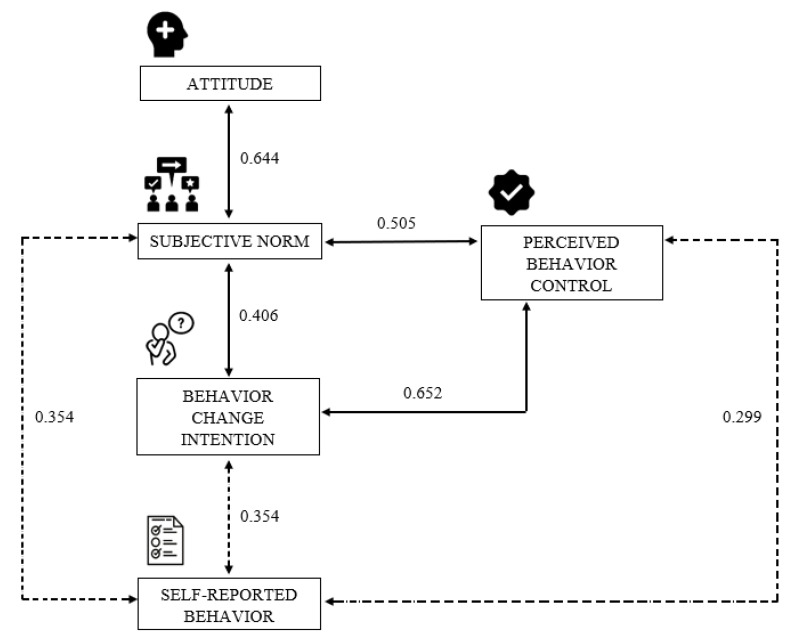
Low-income families are reported to have a limited knowledge of food safety and resources to follow food safety practices compared with the rest of the population. This paper evaluated a virtual food safety educational program targeting food handlers in low-income families. Trained native speakers of English and Spanish delivered course materials in both languages. A total of 60 individuals participated in the program, with 30 participants in each language group. Most were female, and most had fewer than three children. After the program, participants’ food safety knowledge and self-reported safe food practice behavior scores increased significantly from 5.32 to 7.43 (out of 8.00) and from 24.78 to 29.30 (out of 35.00), respectively. The theory of planned behavior (TPB) was used to understand individuals’ behavior change intention of food safety practices. All the TPB constructs’ scores, including attitudes toward the behavior, perceived behavioral control, subjective norms, and behavior change intentions, were improved significantly; however, only the subjective norms and perceived behavioral control were significantly correlated with the behavior change intentions. This virtual educational program improved low-income individuals’ food safety knowledge and changed their food safety attitudes and behaviors, giving a path to develop and evaluate more virtual food safety educational programs in the future.
Overview
The claims and statistics of this paper haven’t been checked yet.
Free: it reads the open-access text and checks the first 5 claims that cite a source we can check. Create a free account to check every claim.
Integrity signals
Registry
Cites
Statistics
Figures
Verification
Claims the paper makes
The claims and statistics of this paper haven’t been checked yet.
Free: it reads the open-access text and checks the first 5 claims that cite a source we can check. Create a free account to check every claim.
Claims other papers make about this one
Each is checked against this paper’s own text: does it say what the citing paper says it does?
The check wasn’t confident either way, so it gives no verdict — never disputed.
In the citing paper
“Although studies investigating food safety practices at home often employ questionnaires as their primary data collection method, there is no consistent methodological framework across the existing literature. Most prior research relies on simple statistical tests, such as chi-square or t-tests, to analyze their findings [14–18].”
From Assessing food safety practices and foodborne illness risk factors in Brazilian households. (2025) · cites this paper as [16]
Experimental — accuracy not yet measured
Self-check
Percentages, sums and reported differences re-computed from the paper’s own numbers.
The self-check needs the paper’s full text.
Citations
Cites
The theory of planned behavior
Ajzen, I. (1991) · Organizational Behavior and Human Decision Processes · doi:10.1016/0749-5978(91)90020-t · Cited by 134,657
The Use of Cronbach’s Alpha When Developing and Reporting Research Instruments in Science Education
Taber, K. S. (2018) · Research in Science Education · doi:10.1007/s11165-016-9602-2 · Cited by 10,679 · cited 1×
“85, indicating acceptable reliability [34].”
‘Small Changes' to Diet and Physical Activity Behaviors for Weight Management
Hills, A. P., Byrne, N. M., Lindstrom, R., & Hill, J. O. (2013) · Obesity Facts · doi:10.1159/000345030 · Cited by 9,493
User’s guide to correlation coefficients
Akoglu, H. (2018) · Turkish Journal of Emergency Medicine · doi:10.1016/j.tjem.2018.08.001 · Cited by 5,849 · cited 1×
“A Spearman correlation was conducted to determine the strength of association between each factor measured; Table 1 shows the coefficient interpretation adapted from Akoglu [40].”
MethodThe theory of planned behavior: Frequently asked questions
Ajzen, I. (2020) · Human Behavior and Emerging Technologies · doi:10.1002/hbe2.195 · Cited by 3,347 · cited 3×
“Multiple factors can contribute to the results gathered when evaluating each of the TPB constructs, such as the sample size used, the demographic characteristics of participants, when participants are evaluated, and how the intervention and evaluation tools were developed [62,95].”
BackgroundSocioeconomic Disparities in Health Behaviors
Pampel, F. C., Krueger, P. M., & Denney, J. T. (2010) · Annual Review of Sociology · doi:10.1146/annurev.soc.012809.102529 · Cited by 1,841
Zenk, S. N., Schulz, A. J., Israel, B. A., James, S. A., Bao, S., & Wilson, M. L. (2005) · American Journal of Public Health · doi:10.2105/ajph.2004.042150 · Cited by 981 · cited 1×
“For example, geospatial data from Detroit, Michigan, suggests that residents of poorer neighborhoods must travel farther to the nearest supermarket than residents of more affluent neighborhoods [5].”
BackgroundAre Current Health Behavioral Change Models Helpful in Guiding Prevention of Weight Gain Efforts?
Baranowski, T., Cullen, K. W., Nicklas, T., Thompson, D., & Baranowski, J. (2003) · Obesity Research · doi:10.1038/oby.2003.222 · Cited by 716 · cited 1×
“Multiple factors can contribute to the results gathered when evaluating each of the TPB constructs, such as the sample size used, the demographic characteristics of participants, when participants are evaluated, and how the intervention and evaluation tools were developed [62,95].”
BackgroundSample size and multiple regression analysis.
Maxwell, S. E. (2000) · Psychological Methods · doi:10.1037//1082-989x.5.4.434 · Cited by 452 · cited 1×
“In this study, the prediction of each of the individual constructs’ link to the behavior change intentions was not performed due to the small sample size and, hence, low power of the analysis [63].”
BackgroundA review of food safety and food hygiene training studies in the commercial sector
Egan, M. B., Raats, M. M., Grubb, S. M., Eves, A., Lumbers, M. L., Dean, M. S., & Adams, M. R. (2007) · Food Control · doi:10.1016/j.foodcont.2006.08.001 · Cited by 321
for the PROMISE study team, Hann, K. E. J., Freeman, M., Fraser, L., Waller, J., Sanderson, S. C., Rahman, B., Side, L., Gessler, S., & Lanceley, A. (2017) · BMC Public Health · doi:10.1186/s12889-017-4375-8 · Cited by 314 · cited 1×
“While other factors could also influence the difference among English and Spanish participants, such as the ethnicity or racial groups [75], comparisons cannot be established since inside the English program, two main racial groups were identified, while in the Spanish program there was just one major ethnic group.”
BackgroundThe Effects of Teacher Match on Students’ Academic Perceptions and Attitudes
Egalite, A. J., & Kisida, B. (2018) · Educational Evaluation and Policy Analysis · doi:10.3102/0162373717714056 · Cited by 304 · cited 1×
“Moreover, participants receiving an educational program from instructors with similar backgrounds can be beneficial for the learning experience [89].”
BackgroundLee, L. A., Gerber, A. R., Lonsway, D. R., Smith, J. D., Carter, G. P., Puhr, N. D., Parrish, C. M., Sikes, R. K., Finton, R. J., & Tauxe, R. V. (1990) · New England Journal of Medicine · doi:10.1056/nejm199004053221407 · Cited by 202 · cited 1×
“, queso fresco) and chitterlings, are linked to higher risk for foodborne illness [9,10].”
BackgroundAligning Programs and Policies to Support Food Security and Public Health Goals in the United States
Seligman, H. K., & Berkowitz, S. A. (2019) · Annual Review of Public Health · doi:10.1146/annurev-publhealth-040218-044132 · Cited by 201
Flagg, L. A., Sen, B., Kilgore, M., & Locher, J. L. (2014) · Public Health Nutrition · doi:10.1017/s1368980013002267 · Cited by 194 · cited 1×
“[42] also found that females were more likely than men to be the primary planners, preparers, and grocery shoppers for their households.”
BackgroundLarson, A. L., Cycyk, L. M., Carta, J. J., Hammer, C. S., Baralt, M., Uchikoshi, Y., An, Z. G., & Wood, C. L. (2019) · Early Childhood Research Quarterly · doi:10.1016/j.ecresq.2019.06.001 · Cited by 182 · cited 1×
“Additionally, providing information to the target audience in their first language can positively influence their learning process and reduce the wording gaps [90].”
BackgroundRezaei, R., Mianaji, S., & Ganjloo, A. (2018) · Journal of Rural Studies · doi:10.1016/j.jrurstud.2018.04.005 · Cited by 181 · cited 1×
“Previous studies using the TPB suggested implementing an extended model because participants’ background and cultural factors can influence their intentions to adopt food safety practices [64,76,96].”
MethodTaillie, L. S. (2018) · Nutrition Journal · doi:10.1186/s12937-018-0347-9 · Cited by 173
Curtis, M. E., Clingan, S. E., Guo, H., Zhu, Y., Mooney, L. J., & Hser, Y. (2022) · The Journal of Rural Health · doi:10.1111/jrh.12614 · Cited by 161
Clayton, D. A., & Griffith, C. J. (2008) · International Journal of Environmental Health Research · doi:10.1080/09603120701358424 · Cited by 157 · cited 3×
“However, some studies have predicted hand hygiene behavior of caterers [64] and farmworkers [65], finding that the PBC was a significant predictor for this specific behavior.”
BackgroundMethodEvaluation of Food Safety Education for Consumers
Medeiros, L. C., Hillers, V. N., Kendall, P. A., & Mason, A. C. (2001) · Journal of Nutrition Education · doi:10.1016/s1499-4046(06)60067-5 · Cited by 154
Predicting adolescents' safe food handling using an extended theory of planned behavior
Mullan, B. A., Wong, C. L., & Kothe, E. J. (2012) · Food Control · doi:10.1016/j.foodcont.2012.10.027 · Cited by 152 · cited 1×
“The TPB has been used in studies on predicting food safety practices among school food handlers [24], primary preparers of home meals [25], and adolescent populations [26,27].”
MethodThe use and performance of household refrigerators: a review
James, C., Onarinde, B. A., & James, S. J. (2017) · Comprehensive Reviews in Food Science and Food Safety · doi:10.1111/1541-4337.12242 · Cited by 140 · cited 1×
“Consumers rarely check refrigerator and freezer temperatures at home and are still unaware of the safety consequences of an inadequate temperature [55].”
BackgroundArgueTutor: An Adaptive Dialog-Based Learning System for Argumentation Skills
Wambsganss, T., Kueng, T., Soellner, M., & Leimeister, J. M. (2021) · Proceedings of the 2021 CHI Conference on Human Factors in Computing Systems · doi:10.1145/3411764.3445781 · Cited by 138 · cited 1×
“[84], created “ArgueTutor”, a conversational facilitator chatbot that provides feedback to students on their writing skills, and found that students demonstrated better argumentation skills in their written texts when using it.”
BackgroundQuinlan, J. (2013) · International Journal of Environmental Research and Public Health · doi:10.3390/ijerph10083634 · Cited by 125 · cited 1×
“Therefore, low-income individuals are more susceptible to this condition [3].”
BackgroundLin, N., & Roberts, K. R. (2020) · International Journal of Hospitality Management · doi:10.1016/j.ijhm.2020.102612 · Cited by 125
Food safety and nutrition: Improving consumer behaviour
Losasso, C., Cibin, V., Cappa, V., Roccato, A., Vanzo, A., Andrighetto, I., & Ricci, A. (2012) · Food Control · doi:10.1016/j.foodcont.2012.01.038 · Cited by 120 · cited 1×
“Different formats have also been used to deliver these topics to consumers, such as campaigns [17,18], online materials [19], and combinations of formats, such as videos and brochures [20], fotonovela brochures, videos, an animation, a website, and promotional pens containing the website link [21].”
BackgroundShapiro, M. A., Porticella, N., Jiang, L., & Gravani, R. B. (2010) · Appetite · doi:10.1016/j.appet.2010.11.148 · Cited by 113 · cited 1×
“The TPB has been used in studies on predicting food safety practices among school food handlers [24], primary preparers of home meals [25], and adolescent populations [26,27].”
MethodListeriosis Outbreaks Associated with Soft Cheeses, United States, 1998–20141
Jackson, K. A., Gould, L. H., Hunter, J. C., Kučerová, Z., & Jackson, B. R. (2018) · Emerging infectious diseases · doi:10.3201/eid2406.171051 · Cited by 103
Food safety training and evaluation of handwashing intention among fresh produce farm workers
Soon, J. M., & Baines, R. N. (2012) · Food Control · doi:10.1016/j.foodcont.2011.08.012 · Cited by 99 · cited 2×
“However, some studies have predicted hand hygiene behavior of caterers [64] and farmworkers [65], finding that the PBC was a significant predictor for this specific behavior.”
BackgroundWired and Hired: Employment Effects of Subsidized Broadband Internet for Low-Income Americans
Zuo, G., & Kolliner, D. (2019) · American Economic Journal Economic Policy · doi:10.1257/pol.20190648 · Cited by 99
Milton, A. C., & Mullan, B. A. (2012) · Health Psychology · doi:10.1037/a0025852 · Cited by 91 · cited 4×
“Some interventions and evaluations have included behavior change theories such as the TPB [26] and the Health Action Model [70].”
BackgroundMethodResultInfluentialNieto-Montenegro, S., Brown, J. L., & LaBorde, L. F. (2008) · Food Control · doi:10.1016/j.foodcont.2007.07.005 · Cited by 87 · cited 1×
“Some interventions and evaluations have included behavior change theories such as the TPB [26] and the Health Action Model [70].”
BackgroundHispanic Population Growth Engenders Conservative Shift Among Non-Hispanic Racial Minorities
Craig, M. A., & Richeson, J. A. (2017) · Social Psychological and Personality Science · doi:10.1177/1948550617712029 · Cited by 86 · cited 1×
“English is the most spoken language in the United States; however, the Hispanic population in the country has been increasing, and, hence, the Spanish language speakers [87].”
BackgroundGreat Expectations? Working‐ and Middle‐Class Cohabitors' Expected and Actual Divisions of Housework
Miller, A. J., & Carlson, D. L. (2015) · Journal of Marriage and the Family · doi:10.1111/jomf.12276 · Cited by 85 · cited 1×
“A qualitative study found that men whose jobs usually involve physical work were less willing to help in domestic chores than those men whose jobs do not demand physical work [43].”
BackgroundUsing the Theory of Planned Behaviour to design a food hygiene intervention
Mullan, B., & Wong, C. (2010) · Food Control · doi:10.1016/j.foodcont.2010.04.026 · Cited by 84 · cited 1×
“Mullan and Wong [48] found that more information to emphasize PBC in safe food handling resulted in a significant increase in the PBC construct.”
BackgroundLi, J., Zhang, X.-A., & Sun, G. (2015) · Psychological Reports · doi:10.2466/17.07.pr0.116k11w3 · Cited by 82 · cited 1×
“Face consciousness refers to how an individual tries to fit in to a specific society by increasing their reputation [77].”
BackgroundDudeja, P., Singh, A., Sahni, N., Kaur, S., & Goel, S. (2016) · Medical Journal Armed Forces India · doi:10.1016/j.mjafi.2016.10.002 · Cited by 76 · cited 1×
“Other studies have also shown that food handlers, both households and commercial, have reported stronger attitudes about food safety when they have been exposed to food safety topics [44].”
BackgroundConsumer food safety education for the domestic environment: a systematic review
Milton, A., & Mullan, B. (2010) · British Food Journal · doi:10.1108/00070701011074363 · Cited by 72 · cited 1×
“Some of these challenges have been addressed by food safety programs and campaigns for consumers [14,15], but little is known about programs specifically targeting food handlers in low-income families.”
BackgroundNik Husain, N. R., Wan Muda, W. M., Noor Jamil, N. I., Nik Hanafi, N. N., & Abdul Rahman, R. (2016) · British Food Journal · doi:10.1108/bfj-08-2015-0294 · Cited by 70 · cited 1×
“The TPB has been used in studies on predicting food safety practices among school food handlers [24], primary preparers of home meals [25], and adolescent populations [26,27].”
MethodFood Safety Beliefs and Barriers to Safe Food Handling among WIC Program Clients, Miami, Florida
Trepka, M. J., Murunga, V., Cherry, S., Huffman, F. G., & Dixon, Z. (2006) · Journal of Nutrition Education and Behavior · doi:10.1016/j.jneb.2006.05.022 · Cited by 69
Bai, L., Tang, J., Yang, Y., & Gong, S. (2014) · Food Control · doi:10.1016/j.foodcont.2014.02.008 · Cited by 68 · cited 3×
“On the other hand, conformity consciousness refers to how an individual tries to replicate another person’s behavior [76].”
BackgroundMethodFood Insecurity and Food Access in U.S. Metropolitan Areas
Bonanno, A., & Li, J. (2014) · Applied Economic Perspectives and Policy · doi:10.1093/aepp/ppu032 · Cited by 62
Kwon, J., Wilson, A. N. S., Bednar, C., & Kennon, L. R. (2008) · Journal of Food Protection · doi:10.4315/0362-028x-71.8.1651 · Cited by 58
Bermúdez‐Millán, A., Pérez‐Escamilla, R., Damio, G., González, A., & Segura‐Pérez, S. (2004) · Journal of Food Protection · doi:10.4315/0362-028x-67.3.512 · Cited by 55 · cited 1×
“A survey conducted among the Hispanic population in Connecticut showed that only 5% of the 100 participants knew the definition of cross-contamination, and those who preferred to be interviewed in English were more likely to know such a definition [11].”
BackgroundYardley, L., Miller, S., Schlotz, W., & Little, P. (2011) · Journal of Medical Internet Research · doi:10.2196/jmir.1963 · Cited by 55 · cited 2×
“[16] related to a virtual handwashing intervention showed that handwashing intentions increased after the intervention, and these intentions were higher than those from the control group.”
BackgroundZhang, J., Shi, L., Chen, D., Wang, J., & Wang, Y. (2009) · Preventive Medicine · doi:10.1016/j.ypmed.2009.10.002 · Cited by 51
Microbial Quality of Food Available to Populations of Differing Socioeconomic Status
Koro, M. E., Anandan, S., & Quinlan, J. J. (2010) · American Journal of Preventive Medicine · doi:10.1016/j.amepre.2010.01.017 · Cited by 51 · cited 1×
“the variability of food quality in markets by neighborhoods’ socioeconomic status levels reported higher microbial loads of foodborne pathogens on produce and food-contact surfaces in grocery stores located in low-income neighborhoods [7].”
BackgroundFeng, Y., & Bruhn, C. M. (2019) · Journal of Food Protection · doi:10.4315/0362-028x.jfp-18-245 · Cited by 49 · cited 1×
“Multiple research studies have shown that this is not a common practice among commercial food handlers nor household food handlers [53].”
BackgroundSelf-citationIncreasing low-income broadband adoption through private incentives
Rosston, G. L., & Wallsten, S. (2020) · Telecommunications Policy · doi:10.1016/j.telpol.2020.102020 · Cited by 49
Sivaramalingam, B., Young, I., Pham, M. T., Waddell, L., Greig, J., Mascarenhas, M., & Papadopoulos, A. (2015) · Foodborne Pathogens and Disease · doi:10.1089/fpd.2014.1927 · Cited by 47 · cited 2×
“However, some interventions evaluated other factors: attitudes, perceived risk, and social norms [19].”
BackgroundTHE ROLE OF LEARNING STYLES IN THE TEACHING/LEARNING PROCESS
Csapo, N., & Hayen, R. L. (2006) · Issues in Information Systems · doi:10.48009/1_iis_2006_129-133 · Cited by 46 · cited 1×
“Other studies in different research areas have also demonstrated the importance of designing educational materials to fit the different types of learners to increase audience engagement and achieve better results [85].”
BackgroundHenley, S., Stein, S. E., & Quinlan, J. J. (2012) · Journal of Food Protection · doi:10.4315/0362-028x.jfp-12-146 · Cited by 45 · cited 2×
“Asian and Hispanic consumers were reported to commonly prepare meats in small pieces, which can be cooked in a short period of time that might be insufficient to kill pathogens [6].”
BackgroundSelf-citationRestaurant Manager and Worker Food Safety Certification and Knowledge
Brown, L. G., Le, B., Wong, M. R., Reimann, D. W., Nicholas, D., Faw, B. V., Davis, E. B., & Selman, C. A. (2014) · Foodborne Pathogens and Disease · doi:10.1089/fpd.2014.1787 · Cited by 45 · cited 1×
“Similar results were found in an interview conducted with restaurant managers and workers in which food safety-related knowledge was associated with participants’ primary language [74].”
ResultBarrett, T., & Feng, Y. (2020) · Food Control · doi:10.1016/j.foodcont.2020.107587 · Cited by 43 · cited 3×
“However, a food safety curriculum developed for high school students demonstrated that after students acquired certain food safety knowledge and skills, they perceived that a cooking thermometer was an appropriate method to check the safe cooking temperature of food, and some even reported using it more frequently [45…”
BackgroundSelf-citationStenger, K. M., Ritter-Gooder, P. K., Perry, C., & Albrecht, J. A. (2014) · Appetite · doi:10.1016/j.appet.2014.08.034 · Cited by 42 · cited 1×
“A previous study assessing Hispanic consumers’ food safety knowledge showed that few participants knew the proper storage practices for a large pot of soup [52].”
BackgroundAttitudes and the Prediction of Behavior
Crano, W. D., & Prišlin, R. (2011) · doi:10.4324/9780203838068-24 · Cited by 40 · cited 1×
“The TPB postulates that attitudes toward a behavior, perceived behavioral control (PBC), and subjective norms can drive behavior change intentions [22,23].”
BackgroundDevelopment and Deployment of a Large-Scale Dialog-based Intelligent Tutoring System
Afzal, S., Dhamecha, T. I., Mukhi, N. K., Sindhgatta, R., Marvaniya, S., Ventura, M., & Yarbro, J. (2019) · Conference of the North American Chapter of the Association for Computational Linguistics: Human Language Technologies (NAACL-HLT) · doi:10.18653/v1/n19-2015 · Cited by 37 · cited 1×
“[83] developed a dialogue-based facilitator chatbot and found that natural human language was one of the critical factors to the program’s success.”
BackgroundCaring through Relation and Dialogue: A Nursing Perspective for Patient Education
Sanford, R. C. (2000) · Advances in Nursing Science · doi:10.1097/00012272-200003000-00002 · Cited by 30 · cited 1×
“a series of topic-related questions to guide learners in understanding the topic through reflecting their related personal experiences and discussing the questions with their peer learners and the facilitator [29,30].”
BackgroundDarcey, V. L., & Quinlan, J. J. (2011) · Journal of Food Protection · doi:10.4315/0362-028x.jfp-11-101 · Cited by 30 · cited 2×
“Darcey and Quinlan [8] used a geographic information system to track the food service critical health code violations in Philadelphia and found that more establishments in higher poverty rate areas had at least one health code violation compared to lower poverty rate areas.”
MethodInfluentialTakeuchi, M. T., Edlefsen, M., Mccurdy, S. M., & Hillers, V. N. (2005) · Journal of Food Protection · doi:10.4315/0362-028x-68.9.1874 · Cited by 29 · cited 1×
“Different formats have also been used to deliver these topics to consumers, such as campaigns [17,18], online materials [19], and combinations of formats, such as videos and brochures [20], fotonovela brochures, videos, an animation, a website, and promotional pens containing the website link [21].”
BackgroundJensen, N. K., Pals, R. A. S., & Willaing, I. (2016) · Chronic Illness · doi:10.1177/1742395315625099 · Cited by 29 · cited 1×
“In the meantime, the facilitator can gain a deeper understanding of learners’ challenges and needs and provide individualized feedback and support accordingly [32].”
BackgroundTowns, R. E., Cullen, R. W., Memken, J. A., & Nnakwe, N. E. (2006) · Journal of Food Protection · doi:10.4315/0362-028x-69.7.1640 · Cited by 29 · cited 1×
“[57] found that fewer than one-quarter of consumers in their study had a freezer and/or a refrigerator thermometer.”
BackgroundFood safety education for people with diabetes and pregnant women: A positive deviance approach
Feng, Y., Bruhn, C., & Education, H. M. A. (2016) · Food Control · doi:10.1016/j.foodcont.2016.01.039 · Cited by 28 · cited 1×
“This approach enables the peer-learning process among learners to learn from the successful experiences of those with similar backgrounds [31].”
BackgroundSelf-citationEvaluation of different food safety education interventions
Feng, Y., Bruhn, C., & Marx, D. (2016) · British Food Journal · doi:10.1108/bfj-10-2015-0372 · Cited by 27 · cited 2×
“However, educational interventions have been effective in making consumers aware of checking the correct refrigerator and freezer temperatures [59].”
BackgroundSelf-citationMeat thermometer usage amongst European and north American consumers: a scoping review
Elshahat, S., Woodside, J. V., & McKinley, M. C. (2019) · Food Control · doi:10.1016/j.foodcont.2019.06.018 · Cited by 24
Gold, A., Yu, N., Buro, B. L., & Garden-Robinson, J. (2014) · Journal of Nutrition Education and Behavior · doi:10.1016/j.jneb.2013.11.014 · Cited by 22 · cited 1×
“In addition, the sample size for this study was determined based on previous food safety intervention programs [26,36,37], and an appropriate number of participants needed to perform statistical analysis of pre- and post-data collected [38,39].”
MethodSharpe, P. A., Liese, A. D., Bell, B. A., Wilcox, S., Hutto, B., & Stucker, J. (2017) · Journal of Hunger & Environmental Nutrition · doi:10.1080/19320248.2017.1364188 · Cited by 22
Hajivandi, L., Noroozi, M., Mostafavi, F., & Ekramzadeh, M. (2021) · BMC Pediatrics · doi:10.1186/s12887-021-02784-z · Cited by 22
Henley, S., Gleason, J., & Quinlan, J. J. (2016) · Food Protection Trends · Cited by 21
Self-citationEvaluation of the Fight BAC! The Story of Your Dinner Campaign Video: A Multistate Study
Barrett, T., Feng, Y., Chen, H., Chuang, E., Feist, S., & Choate, M. (2020) · Journal of Food Protection · doi:10.4315/0362-028x.jfp-19-329 · Cited by 19 · cited 4×
“[17], and the TPB constructs were developed based on Ajzen’s guidelines for developing the TPB questionnaire [33].”
BackgroundMethodInfluentialSelf-citationFood Safety Education Needs of High‐School Students: Leftovers, Lunches, and Microwaves
Diplock, K. J., Jones‐Bitton, A., Leatherdale, S. T., Rebellato, S., Hammond, D. G., & Majowicz, S. E. (2019) · Journal of School Health · doi:10.1111/josh.12782 · Cited by 18 · cited 1×
“Providing hands-on experience can promote an engagement in participants’ food safety behaviors because those activities are linked to daily food preparation at home [45,46].”
BackgroundFood Safety Knowledge and Practices of Low Income Adults in Pennsylvania
Wenrich, T. R., Cason, K. L., Lv, N., & Kassab, C. D. (2003) · Food Protection Trends · Cited by 18
Taghdisi, M. H., Babazadeh, T., Moradi, F., & Shariat, F. (2016) · PubMed Central · Cited by 17
Yiannas, F. (2015) · Springer eBooks · doi:10.1007/978-1-4939-2489-9 · Cited by 16
Evaluation of in-person and on-line food safety education programs for community volunteers
Yeung, H. F., Bruhn, C., Blackburn, M. L., Ganthavorn, C., Martin, A., Mendoza, C., Neelon, M., Smith, D., Soule, K. E., Spezzano, T., et al. (2018) · Food Control · doi:10.1016/j.foodcont.2018.12.021 · Cited by 14 · cited 1×
“Different types of interventions can be found in the literature: some have evaluated courses, workshops, and campaigns, among others [45,68,69].”
BackgroundSelf-citationInferential Statistics II: Parametric Hypothesis Testing
King, A. P., & Eckersley, R. J. (2019) · Elsevier eBooks · doi:10.1016/b978-0-08-102939-8.00014-1 · Cited by 14
Food Safety Knowledge and Practice in Low-income Families in the United States: An Exploratory Study
Liu, P. (2020) · Food Protection Trends · Cited by 9
Visual Audit of Food Safety Hazards Present in Homes in an Urban Environment
Patricia, A. B., Henley, S., & Jennifer, J. Q. (2015) · Food Protection Trends · Cited by 9
Self-citationA Dialog-Based Tutoring System for Project-Based Learning in Information Systems Education
Witschel, H. F., Diwanji, P., & Hinkelmann, K. (2020) · Studies in systems, decision and control · doi:10.1007/978-3-030-48332-6_6 · Cited by 4 · cited 1×
“Some studies have a focus on intelligent dialogue-based methodology in which learners can interact with chatbots, and the chatbot can provide the answers or more information in a natural language [82].”
BackgroundSmith, J. M., & Hayes, R. M. (2016) · Contemporary Justice Review · doi:10.1080/10282580.2015.1101684 · Cited by 1 · cited 2×
“Smith and Haynes [81] showed that dialogue-based educational programs were effective for learners regarding topics related to criminal justice because they allowed them to analyze and understand different perspectives.”
Background
Research works printed but not linked: 7
- Henley S. Kitchen Kaizen: Preliminary Findings of a Hands-on Consumer Food Safety Workshop Proceedings of the International Association of Food Protection Annual Meeting Lousiville, KY, USA 22 July 2019
- Ajzen I. Constructing a Theory of Planned Behavior Questionnaire Available online: https://www.researchgate.net/publication/235913732_Constructing_a_Theory_of_Planned_Behavior_Questionnaire (accessed on 12 September 2021)
- Smith L. Sirsat S.A. Neal J.A. Does food safety training for non-profit food service volunteers improve food safety knowledge and behavior Food Prot. Trends 2014 34 156 163
- Pathak R.P. Chapter 3. Significance of diference of means Statistics in Education and Psychology Pearson Education Noida, India 2011
- Panchal P.K. Liu L. Dworkin M.S. Food safety knowledge is lower among Spanish-speaking than among English-speaking restaurant food handlers in Chicago Food Prot. Trends 2012 32 16 25
- Landale N.S. Oropesa R.S. Bradatan C. Hispanic Families in the United States: Family Structure and Process in an Era of Family Change National Academies Press Washington, DC, USA 2006 138 178
- Clemons S.A. Developing on-line courses for visual/kinesthetic learners: A case study Int. J. Instr. Technol. Distance Learn. 2004 1 51
Cited by
Chai, D., Meng, T., & Zhang, D. (2022) · Foods · doi:10.3390/foods11192965 · Cited by 33
“Secondly, judgments, recognition, persuasion and the recommendations of relatives and friends may also form a psychological implication of “organic food with high value” for residents [36] which can significantly affect personal feelings about well-being, and “outsiders” such as colleagues from work have an even stron…”
BackgroundBerglund, Z., Şimşek, Ş., & Feng, Y. (2024) · Foods · doi:10.3390/foods13050794 · Cited by 32
Self-citationTacardon, E. R., Ong, A. K. S., & Gumasing, M. J. J. (2023) · Future Foods · doi:10.1016/j.fufo.2023.100261 · Cited by 24
Mohammadkhah, F., Amirhajelu, R. M., Bakhtiar, M., Salemi, S. A., Kevenjan, M., & Jeihooni, A. K. (2023) · BMC Oral Health · doi:10.1186/s12903-023-03239-w · Cited by 20
Bayır, T., Çam, S., & Tuna, M. F. (2024) · Frontiers in Nutrition · doi:10.3389/fnut.2023.1305964 · Cited by 24
“…studies using the TPB based on consumers have addressed food safety in the hygienic dimension, which is a sub-dimension related to food safety (42, 43), in a limited period such as the pandemic (9, 44), and in the direction of informing specific consumer groups such as low-income families (45).”
Background
Metadata
- Authors
- Archila-Godínez, J. C., Chen, H., Klinestiver, L., Rosa, L., Barrett, T., Henley, S. C., & Feng, Y.
- Affiliations
- Purdue University West Lafayette (US)
- University of Maryland Extension (US)
- Corresponding author
- Feng, Yaohua
- Venue
- Foods
- Publisher
- MDPI AG
- Published
- 2022-01-26
- Volume
- 11
- Issue
- 3
- Pages
- 355
- ISSN
- 2304-8158 (ISSN-L)
- PMC
- PMC8834591
- OpenAlex
- W4210583859
- Cited by
- 24
- References
- 83
- Citations by year
- 2026: 6 · 2025: 5 · 2024: 6 · 2023: 4 · 2022: 3
- FWCI
- 2.39
- Type
- journal article
- Language
- en
- Open access
- gold
- doi.org
- Licence
- Locations
- Foods (publishedVersion, cc-by)
- PubMed Central (publishedVersion, cc-by)
- PubMed (publishedVersion)
- DOAJ (DOAJ: Directory of Open Access Journals) (submittedVersion, cc-by-sa)
- Funders
- National Institute of Food and Agriculture (Hatch project 1016049)
- Topics
- Life Sciences › Agricultural and Biological Sciences › Food Science › Food Safety and Hygiene
- Health Sciences › Nursing › Nutrition and Dietetics › Nutrition, Health and Food Behavior
- Social Sciences › Psychology › Applied Psychology › Behavioral Health and Interventions
- Keywords
- food safety education, low-income households, theory of planned behavior, food handlers, Spanish language instruction, food safety knowledge, subjective norms, perceived behavioral control
About these checks
Registry, retraction, Cites and statistics results are computed, not judged, with one exception: a printed reference that no index lists is read once by a model before it counts as a citation error. Claims are extracted by a model and kept only when their quote appears verbatim in the text; each cited source is then checked, with a model’s help, for whether it says what the claim relies on. Those verdicts can be wrong — read the claim’s quote and the cited source before relying on one.
Statistics and arithmetic are recomputed, not judged.
Confidence bands are shown only for fields calibrated on our annotated test set. None is calibrated yet, so no band is shown.
What counts as a claim ›How we measure confidence ›How we check this ›
Are you an author, or do you see a problem with this page? Request a review
Data sources
Bibliographic data: Semantic Scholar, OpenAlex, Crossref.
Contains information from the Semantic Scholar Academic Graph Datasets, made available under the ODC Attribution License (ODC-BY 1.0).
Semantic Scholar’s data is described in: Kinney, R., et al. (2023). The Semantic Scholar Open Data Platform. arXiv:2301.10140.
