

Structural Characterization and Evaluation of Interfacial Properties of Pea Protein Isolate–EGCG Molecular Complexes
Open accessThe DOI matches its Crossref record; 48 of the 48 references it cites were found in a registry or an index.
Abstract
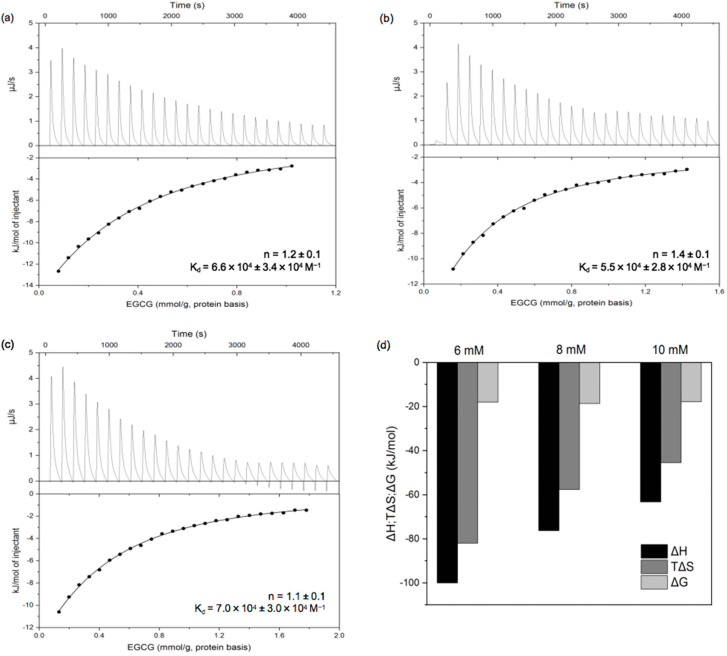
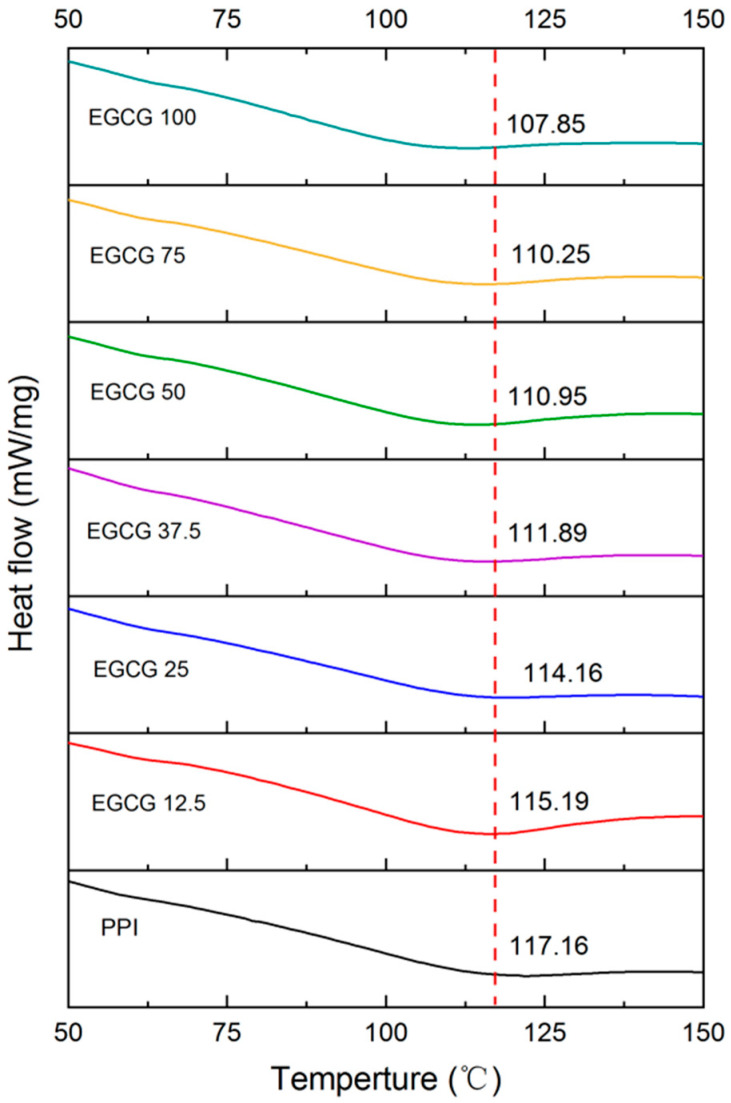
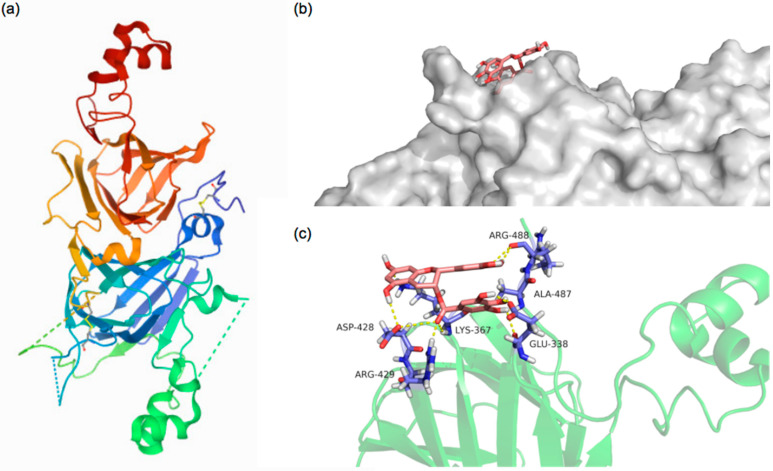
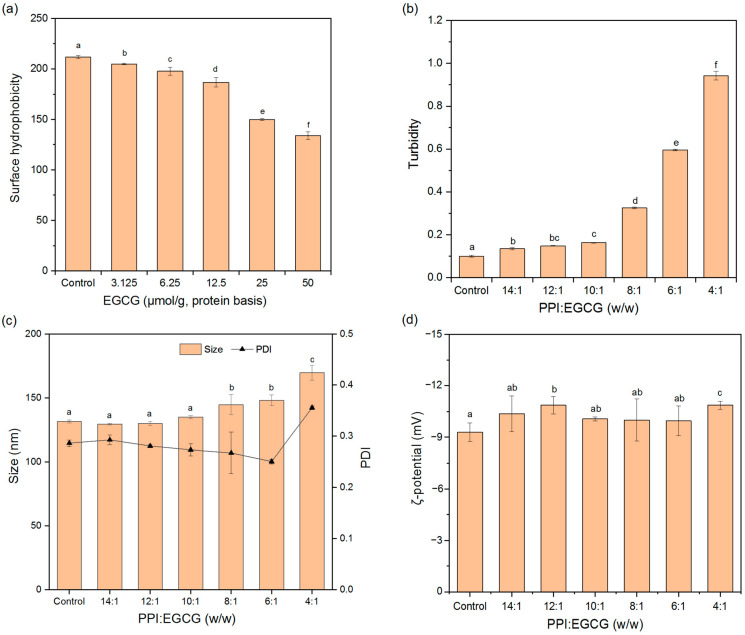
There is increasing interest in using plant-derived proteins in foods and beverages for environmental, health, and ethical reasons. However, the inherent physicochemical properties and functional performance of many plant proteins limit their widespread application. Here, we prepared pea protein isolate (PPI) dispersions using a combined pH-shift/heat treatment method, and then, prepared PPI-epigallocatechin-3-gallate (EGCG) complexes under neutral conditions. Spectroscopy, calorimetry, molecular docking, and light scattering analysis demonstrated that the molecular complexes formed spontaneously. This was primarily ascribed to hydrogen bonds and van der Waals forces. The complexation of EGCG caused changes in the secondary structure of PPI, including the reduction in the α-helix and increase in the β-sheet and disordered regions. These changes slightly decreased the thermal stability of the protein. With the accretion of EGCG, the hydrophilicity of the complexes increased significantly, which improved the functional attributes of the protein. Optimization of the PPI-to-EGCG ratio led to the complexes having better foaming and emulsifying properties than the protein alone. This study could broaden the utilization of pea proteins as functional ingredients in foods. Moreover, protein–polyphenol complexes can be used as multifunctional ingredients, such as antioxidants or nutraceutical emulsifiers.
Overview
The claims and statistics of this paper haven’t been checked yet.
Free: it reads the open-access text and checks the first 5 claims that cite a source we can check. Create a free account to check every claim.
Integrity signals
Registry
Cites
Statistics
Figures
Verification
Claims the paper makes
The claims and statistics of this paper haven’t been checked yet.
Free: it reads the open-access text and checks the first 5 claims that cite a source we can check. Create a free account to check every claim.
Claims other papers make about this one
Each is checked against this paper’s own text: does it say what the citing paper says it does?
The source backs part of the claim, not all of it — or backs it for a different population, condition or comparison.
In the citing paper
“Polyphenol complexation with compounds like EGCG improves foaming and emulsifying properties while adding antioxidant functionality [36].”
From Pea Protein Isolates: From Extraction to Functionality. (2025) · cites this paper as [36]
Experimental — accuracy not yet measuredThe source backs part of the claim, not all of it — or backs it for a different population, condition or comparison.
In the citing paper
“Polyphenol complexation with compounds like EGCG alters secondary structure and enhances foaming activity while providing antioxidant functionality [36].”
From Pea Protein Isolates: From Extraction to Functionality. (2025) · cites this paper as [36]
Experimental — accuracy not yet measuredThe cited source says what the claim attributes to it.
In the citing paper
“Complexation with polyphenols such as epigallocatechin-3-gallate (EGCG) can lead to shifts from α-helix to β-sheet and increased disorder, resulting in modified thermal and emulsifying properties [36].”
From Pea Protein Isolates: From Extraction to Functionality. (2025) · cites this paper as [36]
Self-check
Percentages, sums and reported differences re-computed from the paper’s own numbers.
The self-check needs the paper’s full text.
Citations
Cites
Food in the Anthropocene: the EAT–Lancet Commission on healthy diets from sustainable food systems
Willett, W., Rockström, J., Loken, B., Springmann, M., Lang, T., Vermeulen, S., Garnett, T., Tilman, D., DeClerck, F., Wood, A., et al. (2019) · The Lancet · doi:10.1016/s0140-6736(18)31788-4 · Cited by 10,880
Reducing food's environmental impacts through producers and consumers
Poore, J., & Nemecek, T. (2018) · Science · doi:10.1126/science.aaq0216 · Cited by 6,085 · cited 1×
“Concerns about the adverse effects of animal-derived foods on the environment, health, and religion are leading to increasing interest in plant-based diets [1,2].”
BackgroundProtein–polyphenol conjugates: Antioxidant property, functionalities and their applications
Quan, T. H., Benjakul, S., Sae-leaw, T., Balange, A. K., & Maqsood, S. (2019) · Trends in Food Science & Technology · doi:10.1016/j.tifs.2019.07.049 · Cited by 732 · cited 1×
“Polyphenols are secondary metabolites of edible plants, and can reduce the oxidative damage that occurs in proteins, lipids, and carbohydrates in active cells and tissues [13].”
BackgroundThe science of plant‐based foods: Constructing next‐generation meat, fish, milk, and egg analogs
McClements, D. J., & Grossmann, L. (2021) · Comprehensive Reviews in Food Science and Food Safety · doi:10.1111/1541-4337.12771 · Cited by 600
Self-citationSui, X., Sun, H., Qi, B., Zhang, M., Li, Y., & Jiang, L. (2018) · Food Chemistry · doi:10.1016/j.foodchem.2017.11.090 · Cited by 500
Liu, F., Ma, C., McClements, D. J., & Gao, Y. (2017) · Food Hydrocolloids · doi:10.1016/j.foodhyd.2016.09.041 · Cited by 440 · cited 2×
“Our previous study also reported that the Td value of zein-EGCG complexes was slightly lower than that of protein [42].”
BackgroundSelf-citationJiang, J., Zhang, Z., Zhao, J., & Liu, Y. (2018) · Food Chemistry · doi:10.1016/j.foodchem.2018.06.015 · Cited by 432 · cited 2×
“[19] reported that chlorogenic acid improved the solubility and digestibility of caseins and whey proteins.”
BackgroundA brief review of the science behind the design of healthy and sustainable plant-based foods
McClements, D. J., & Grossmann, L. (2021) · npj Science of Food · doi:10.1038/s41538-021-00099-y · Cited by 338
Self-citationZhou, S.-D., Lin, Y.-F., Xu, X., Meng, L., & Dong, M.-S. (2020) · Food Chemistry · doi:10.1016/j.foodchem.2019.125718 · Cited by 332 · cited 1×
“In contrast, complexes are formed through physical interactions, for example, hydrogen bonding, van der Waals and/or electrostatic forces [22].”
BackgroundSelf-citationGe, J., Sun, C., Corke, H., Gul, K., Gan, R., & Fang, Y. (2020) · Comprehensive Reviews in Food Science and Food Safety · doi:10.1111/1541-4337.12573 · Cited by 318
Cited by
Li, W., Han, S., Huang, H., McClements, D. J., Chen, S., Ma, C., Liu, X., & Liu, F. (2024) · Food Hydrocolloids · doi:10.1016/j.foodhyd.2024.109729 · Cited by 79
Self-citationKim, Y. J., Yong, H. I., Chun, Y. G., Kim, B., & Lee, M. H. (2023) · Food Chemistry · doi:10.1016/j.foodchem.2023.137639 · Cited by 77
Impact of metal-phenolic networks on the structural and functional properties of soy protein
Wang, X., Lan, T., Jin, M., Dong, Y., Shi, J., Xu, Z., Jiang, L., Zhang, Y., & Sui, X. (2023) · Food Hydrocolloids · doi:10.1016/j.foodhyd.2023.109019 · Cited by 60
Zheng, Y., Chen, B., Huang, X., Teng, H., Ai, C., & Chen, L. (2023) · Ultrasonics Sonochemistry · doi:10.1016/j.ultsonch.2023.106396 · Cited by 58
Li, M., Kong, J., Chen, Y., Li, Y., Xuan, H., Liu, M., Zhang, Q., & Liu, J. (2023) · Food Chemistry · doi:10.1016/j.foodchem.2023.135738 · Cited by 50
Metadata
- Authors
- Han, S., Cui, F., McClements, D. J., Xu, X., Ma, C., Wang, Y., Liu, X., & Liu, F.
- Affiliations
- Northwest A&F University (CN)
- University of Massachusetts Amherst (US)
- Qingdao Agricultural University (CN)
- Corresponding author
- Liu, Fuguo
- Venue
- Foods
- Publisher
- MDPI AG
- Published
- 2022-09-18
- Volume
- 11
- Issue
- 18
- Pages
- 2895
- ISSN
- 2304-8158 (ISSN-L)
- PMC
- PMC9498586
- OpenAlex
- W4296307130
- Semantic Scholar
- a79b41a3956bab7f9d152c5b2cc3c3ca7ff1932d
- Cited by
- 64
- References
- 48
- Citations by year
- 2026: 17 · 2025: 22 · 2024: 17 · 2023: 8
- FWCI
- 6.25
- Type
- journal article
- Language
- en
- Open access
- gold
- doi.org
- Licence
- Locations
- Foods (publishedVersion, cc-by)
- PubMed Central (publishedVersion, cc-by)
- PubMed (publishedVersion)
- DOAJ (DOAJ: Directory of Open Access Journals) (submittedVersion, cc-by-sa)
- Funders
- Shaanxi Province via the Innovation Talents Promotion Plan of Shaanxi Province (2020KJXX-034, S2022-YF-YBNY-0331)
- Key Research and Development Program of Shaanxi Province (2020KJXX-034, S2022-YF-YBNY-0331)
- Breeding Plan of Shandong Provincial Qingchuang Research Team (2021 Innovation Team of Functional Plant Protein-Based Food) (2020KJXX-034, S2022-YF-YBNY-0331)
- Topics
- Life Sciences › Agricultural and Biological Sciences › Food Science › Proteins in Food Systems
- Life Sciences › Biochemistry, Genetics and Molecular Biology › Molecular Biology › Protein Interaction Studies and Fluorescence Analysis
- Life Sciences › Biochemistry, Genetics and Molecular Biology › Molecular Biology › Protein Structure and Dynamics
- Keywords
- pea protein isolate, epigallocatechin gallate, protein-polyphenol complexes, interfacial properties, protein secondary structure, thermal stability, foaming properties, emulsifying properties, protein hydrophilicity, hydrogen bonding, plant proteins, functional food ingredients, antioxidants
About these checks
Registry, retraction, Cites and statistics results are computed, not judged, with one exception: a printed reference that no index lists is read once by a model before it counts as a citation error. Claims are extracted by a model and kept only when their quote appears verbatim in the text; each cited source is then checked, with a model’s help, for whether it says what the claim relies on. Those verdicts can be wrong — read the claim’s quote and the cited source before relying on one.
Statistics and arithmetic are recomputed, not judged.
Confidence bands are shown only for fields calibrated on our annotated test set. None is calibrated yet, so no band is shown.
What counts as a claim ›How we measure confidence ›How we check this ›
Are you an author, or do you see a problem with this page? Request a review
Data sources
Bibliographic data: Semantic Scholar, OpenAlex, Crossref.
Contains information from the Semantic Scholar Academic Graph Datasets, made available under the ODC Attribution License (ODC-BY 1.0).
Semantic Scholar’s data is described in: Kinney, R., et al. (2023). The Semantic Scholar Open Data Platform. arXiv:2301.10140.
