

Downregulation of Cell Cycle and Checkpoint Genes by Class I HDAC Inhibitors Limits Synergism with G2/M Checkpoint Inhibitor MK-1775 in Bladder Cancer Cells
Open accessThe DOI matches its Crossref record; 65 of the 65 references it cites were found in a registry or an index.
Abstract
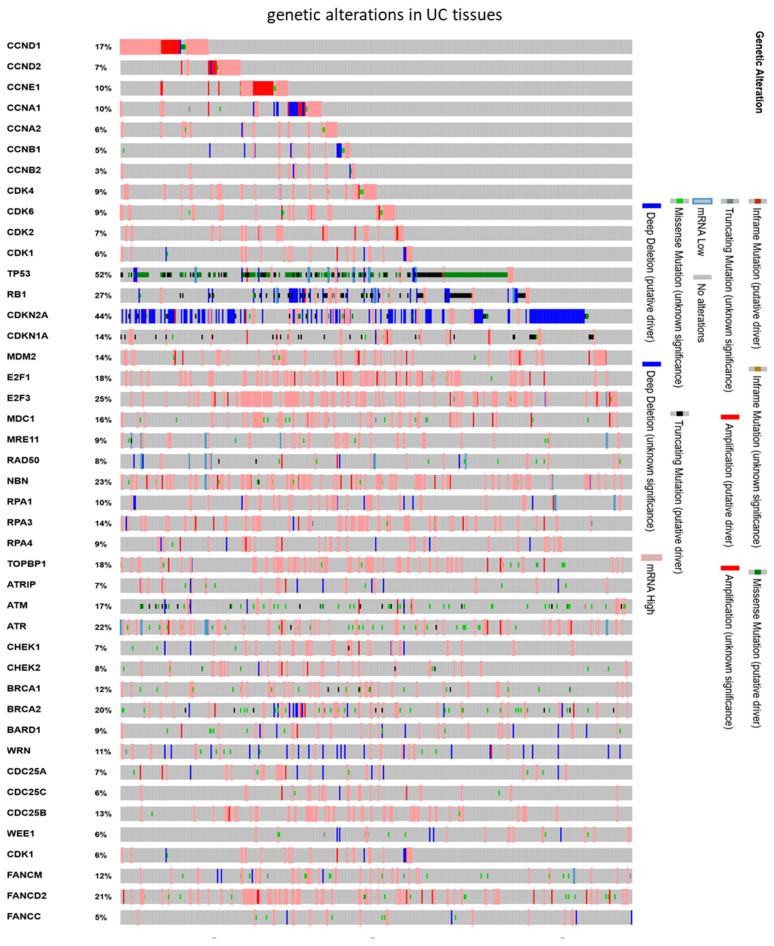
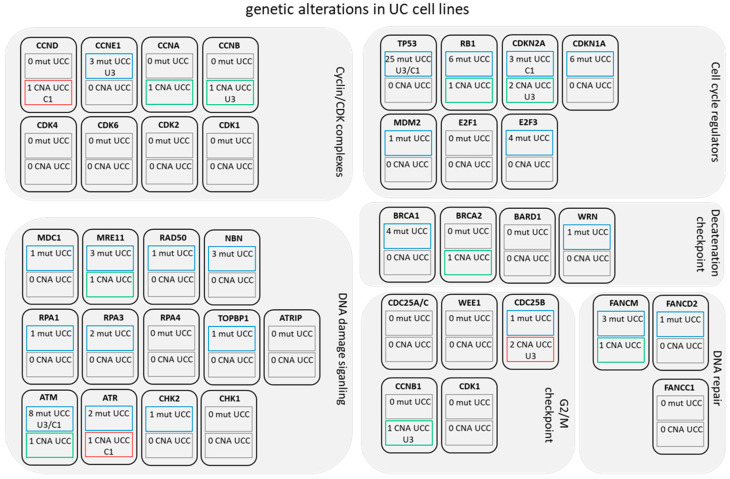
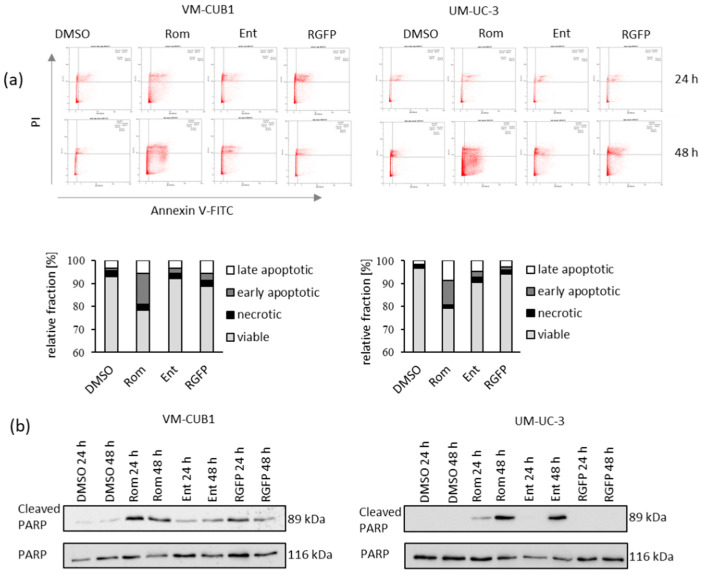
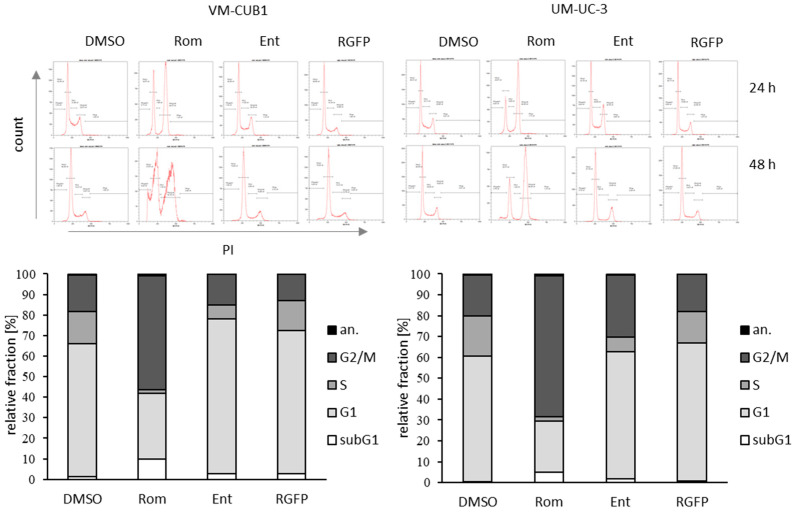
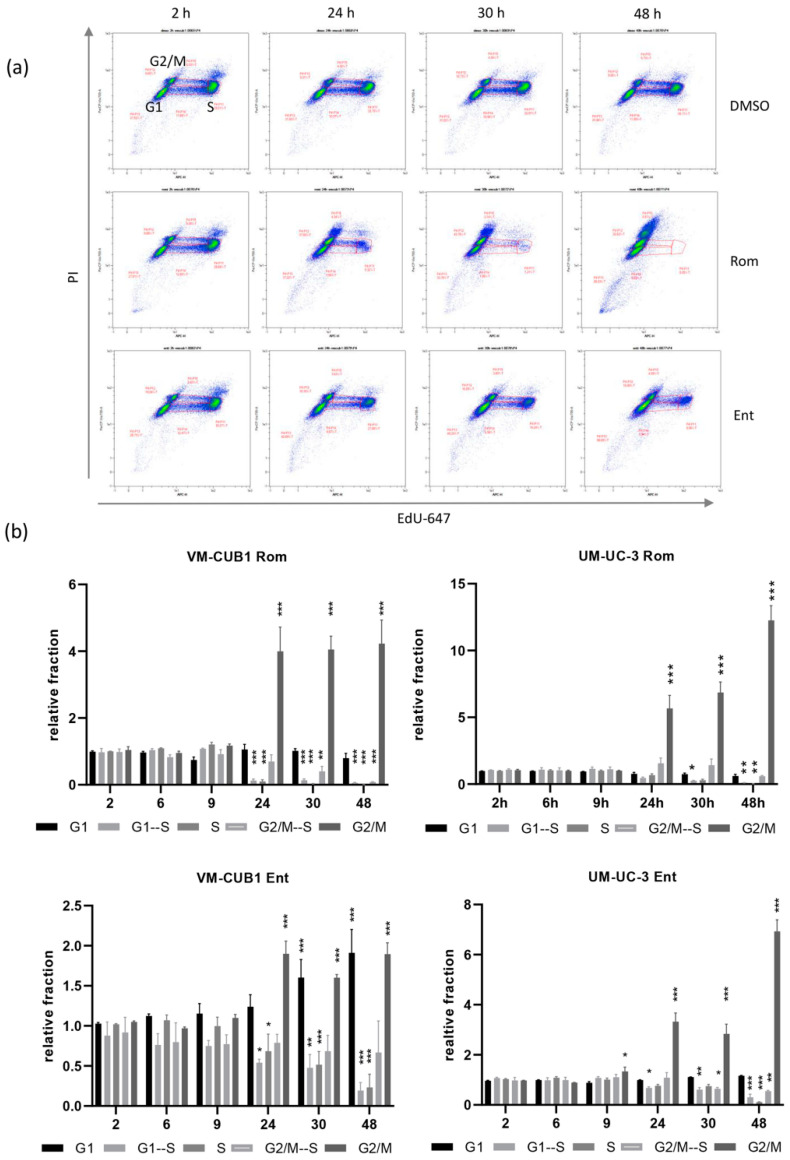
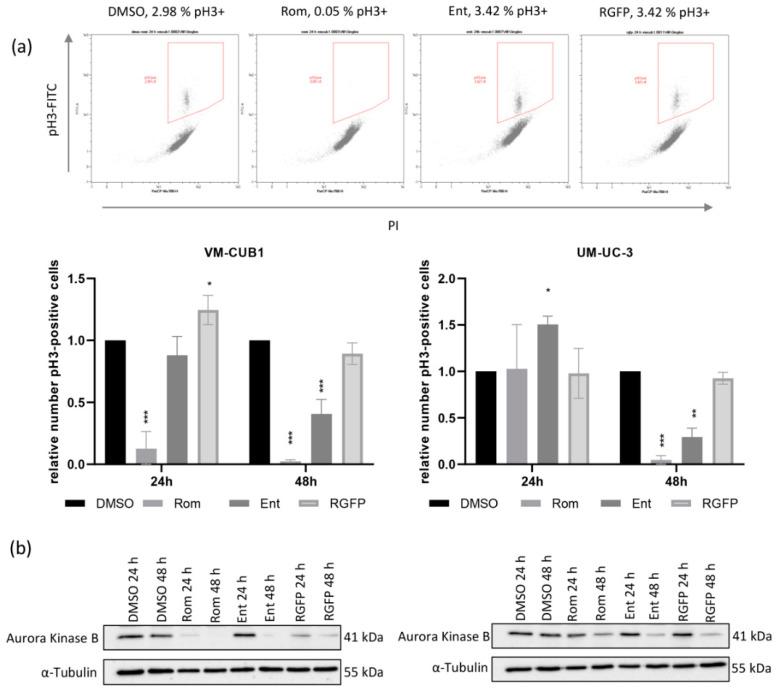
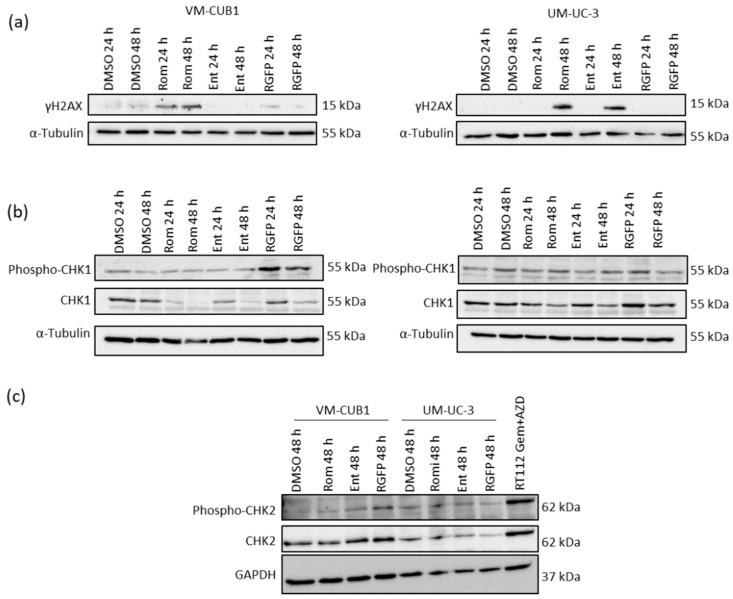
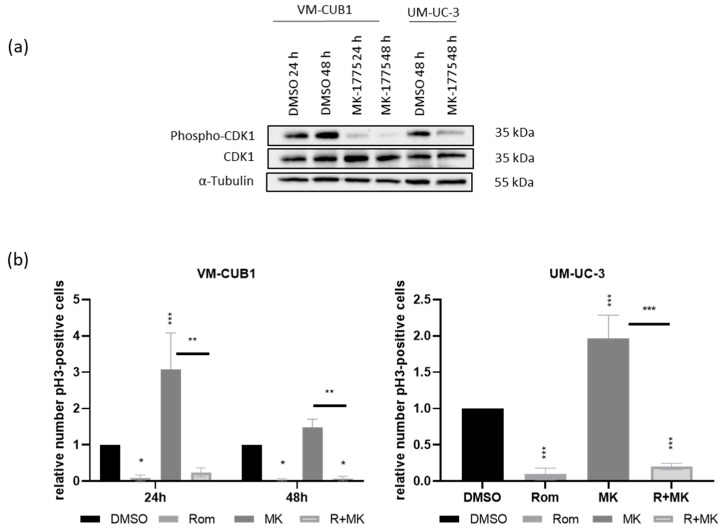
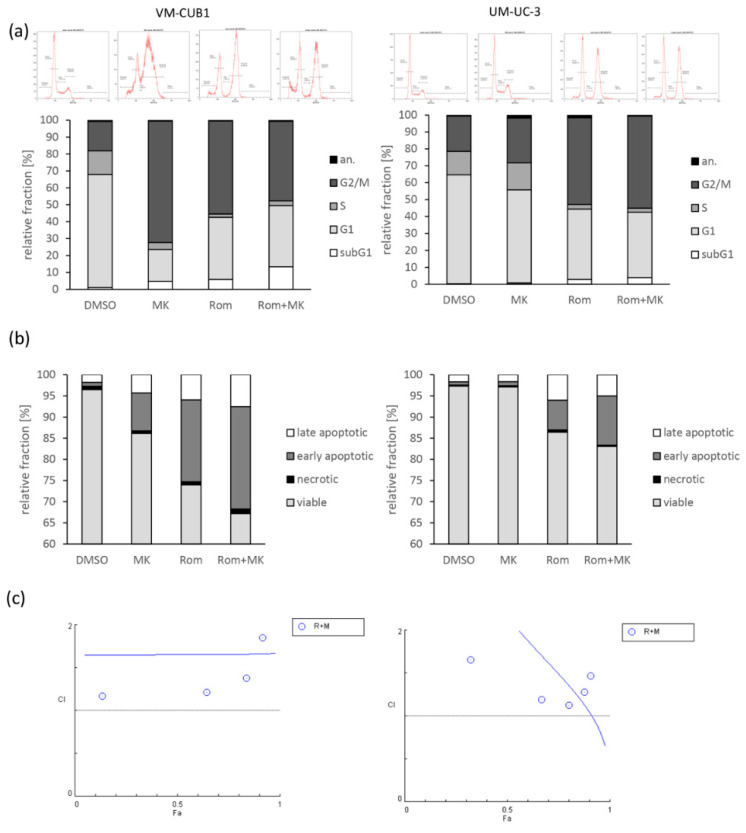
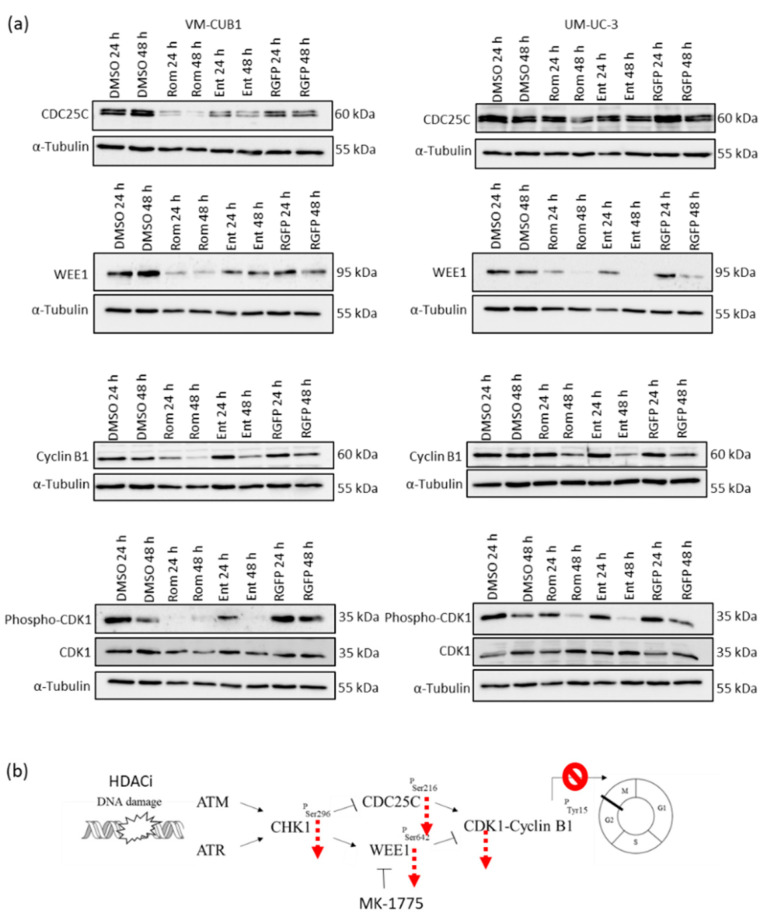
Since genes encoding epigenetic regulators are often mutated or deregulated in urothelial carcinoma (UC), they represent promising therapeutic targets. Specifically, inhibition of Class-I histone deacetylase (HDAC) isoenzymes induces cell death in UC cell lines (UCC) and, in contrast to other cancer types, cell cycle arrest in G2/M. Here, we investigated whether mutations in cell cycle genes contribute to G2/M rather than G1 arrest, identified the precise point of arrest and clarified the function of individual HDAC Class-I isoenzymes. Database analyses of UC tissues and cell lines revealed mutations in G1/S, but not G2/M checkpoint regulators. Using class I-specific HDAC inhibitors (HDACi) with different isoenzyme specificity (Romidepsin, Entinostat, RGFP966), cell cycle arrest was shown to occur at the G2/M transition and to depend on inhibition of HDAC1/2 rather than HDAC3. Since HDAC1/2 inhibition caused cell-type-specific downregulation of genes encoding G2/M regulators, the WEE1 inhibitor MK-1775 could not overcome G2/M checkpoint arrest and therefore did not synergize with Romidepsin inhibiting HDAC1/2. Instead, since DNA damage was induced by inhibition of HDAC1/2, but not of HDAC3, combinations between inhibitors of HDAC1/2 and of DNA repair should be attempted.
Overview
The claims and statistics of this paper haven’t been checked yet.
Free: it reads the open-access text and checks the first 5 claims that cite a source we can check. Create a free account to check every claim.
Integrity signals
Registry
Cites
Statistics
Figures
Verification
Claims the paper makes
The claims and statistics of this paper haven’t been checked yet.
Free: it reads the open-access text and checks the first 5 claims that cite a source we can check. Create a free account to check every claim.
Claims other papers make about this one
Each is checked against this paper’s own text: does it say what the citing paper says it does?
The cited source doesn’t support the claim as written.
In the citing paper
“we concluded that deleting HDAC3 down-regulated mitosis-related genes transcriptionally, which may obstruct mitotic phase entry as suggested by a previous study (34).”
From Arresting the bad seed: HDAC3 regulates proliferation of different microglia after ischemic stroke (2024) · cites this paper as [34]
Checked by a reasoning model — may be wrong.
Experimental — accuracy not yet measured
Self-check
Percentages, sums and reported differences re-computed from the paper’s own numbers.
The self-check needs the paper’s full text.
Citations
Cites
Cerami, E., Gao, J., Dogrusoz, U., Gross, B. E., Sumer, S. O., Aksoy, B. A., Jacobsen, A., Byrne, C. J., Heuer, M. L., Larsson, E., et al. (2012) · Cancer Discovery · doi:10.1158/2159-8290.cd-12-0095 · Cited by 17,455 · cited 1×
“org/, accessed on 10 December 2020) [38,39].”
Integrative Analysis of Complex Cancer Genomics and Clinical Profiles Using the cBioPortal
Gao, J., Aksoy, B. A., Dogrusoz, U., Dresdner, G., Gross, B., Sumer, S. O., Sun, Y., Jacobsen, A., Sinha, R., Larsson, E., et al. (2013) · Science Signaling · doi:10.1126/scisignal.2004088 · Cited by 15,160 · cited 1×
“org/, accessed on 10 December 2020) [38,39].”
Estimating the global cancer incidence and mortality in 2018: GLOBOCAN sources and methods
Ferlay, J., Colombet, M., Soerjomataram, I., Mathers, C., Parkin, D. M., Piñeros, M., Znaor, A., & Bray, F. (2019) · International Journal of Cancer · doi:10.1002/ijc.31937 · Cited by 7,553 · cited 1×
“Urothelial carcinoma (UC) of the bladder constitutes a common cancer type and comprises 90% of cases with bladder cancer in industrialized countries [1].”
BackgroundDrug combination studies and their synergy quantification using the Chou-Talalay method
Chou, T.-C. (2010) · Cancer Research · doi:10.1158/0008-5472.can-09-1947 · Cited by 5,739 · cited 3×
“Six different combinations of concentrations were applied and then analyzed by the Chou-Talalay method using the CompuSyn software [40].”
MethodInfluentialOncogenic Signaling Pathways in The Cancer Genome Atlas
Sanchez-Vega, F., Mina, M., Armenia, J., Chatila, W. K., Luna, A., La, K. C., Dimitriadoy, S., Liu, D. L., Kantheti, H. S., Saghafinia, S., et al. (2018) · Cell · doi:10.1016/j.cell.2018.03.035 · Cited by 3,201 · cited 1×
“While cell cycle regulators in bladder cancers may be more regularly mutated than in some other cancer types [50], most alterations concern TP53, RB1, and CDKN2A, which are also frequently mutated in other cancer types—e.”
BackgroundComprehensive molecular characterization of urothelial bladder carcinoma
Weinstein, J. N., Akbani, R., Broom, B. M., Wang, W., Verhaak, R. G. W., Liu, W., Ju, Z., Motter, T., Peng, B., Ryan, M., et al. (2014) · Nature · doi:10.1038/nature12965 · Cited by 3,142
Comprehensive molecular characterization of urothelial bladder carcinoma
Perou, C. M. (2019) · Carolina Digital Repository (University of North Carolina at Chapel Hill) · doi:10.17615/za09-dk57 · Cited by 2,990
Comprehensive Molecular Characterization of Muscle-Invasive Bladder Cancer
Robertson, A. G., Kim, J., Al-Ahmadie, H., Bellmunt, J., Guo, G., Cherniack, A. D., Hinoue, T., Laird, P. W., Hoadley, K. A., Akbani, R., et al. (2017) · Cell · doi:10.1016/j.cell.2017.09.007 · Cited by 2,443
von der Maase, H., Sengelov, L., Roberts, J. T., Ricci, S., Dogliotti, L., Oliver, T., Moore, M. J., Zimmermann, A., & Arning, M. (2005) · Journal of Clinical Oncology · doi:10.1200/jco.2005.07.757 · Cited by 1,850
Mitotic kinases as regulators of cell division and its checkpoints
Nigg, E. A. (2001) · Nature Reviews Molecular Cell Biology · doi:10.1038/35048096 · Cited by 1,547 · cited 1×
“Progression into anaphase is dependent on its sudden destruction by the anaphase-promoting complex (APC) [61].”
Background
Cited by
Programmed cell death, redox imbalance, and cancer therapeutics
Dai, X., Wang, D., & Zhang, J. (2021) · APOPTOSIS · doi:10.1007/s10495-021-01682-0 · Cited by 88
Arresting the bad seed: HDAC3 regulates proliferation of different microglia after ischemic stroke
Zhang, Y., Li, J., Zhao, Y., Huang, Y., Shi, Z., Wang, H., Cao, H., Wang, C., Wang, Y., Chen, D., et al. (2024) · Science Advances · doi:10.1126/sciadv.ade6900 · Cited by 55
“5, H and I), we concluded that deleting HDAC3 down-regulated mitosis-related genes transcriptionally, which may obstruct mitotic phase entry as suggested by a previous study ( 34 ).”
ResultSemlali, A., Beji, S., Ajala, I., & Rouabhia, M. (2021) · Archives of Oral Biology · doi:10.1016/j.archoralbio.2021.105200 · Cited by 55
HDAC-an important target for improving tumor radiotherapy resistance
Ling, R., Wang, J., Fang, Y., Yu, Y., Su, Y., Sun, W., Li, X., & Tang, X. (2023) · Frontiers in Oncology · doi:10.3389/fonc.2023.1193637 · Cited by 22
Schiedlauske, K., Deipenbrock, A., Pflieger, M., Hamacher, A., Hänsel, J., Kassack, M. U., Kurz, T., & Teusch, N. E. (2024) · Pharmaceuticals · doi:10.3390/ph17060752 · Cited by 18
“HDAC inhibition has been shown to affect the cell cycle and induce apoptosis in cancer cells [55].”
BackgroundELK1 suppresses SYTL1 expression by recruiting HDAC2 in bladder cancer progression
Wang, J., Luo, J., Wu, X., & Li, Z. (2022) · Human Cell · doi:10.1007/s13577-022-00789-z · Cited by 15
Modulation of tumor microenvironment by targeting histone acetylation in bladder cancer
Nunes, S. P., Morales, L., Rubio, C., Munera-Maravilla, E., Lodewijk, I., Suárez-Cabrera, C., Martínez, V. G., Pérez-Escavy, M., Pérez-Crespo, M., Sánchez, M. A., et al. (2024) · Cell Death Discovery · doi:10.1038/s41420-023-01786-3 · Cited by 18
“…grown in EMEM medium (Lonza, Basel, Switzerland) and 5637 cells were maintained in RPMI 1640 medium (Thermo Fisher Scienti fi c), all supplemented with 10% fetal bovine serum (FBS) and 1% of Antibiotic Antimycotic solution (Thermo Fisher Scienti fi c), at 5% CO2 and 37°C in a humidifying chamber.”
MethodThy, S., Hommel, A., Meneceur, S., Bartkowiak, A. L., Schulz, W. A., Niegisch, G., & Hoffmann, M. J. (2021) · Cancers · doi:10.3390/cancers13061376 · Cited by 12
Self-citationXu, G., Liang, S., Hu, G., Zhao, W., Li, Y., Zheng, M., Wu, Z., Xie, T., Fang, S., Peng, S., et al. (2025) · Journal of Experimental & Clinical Cancer Research · doi:10.1186/s13046-025-03610-5 · Cited by 14
“Previous studies have shown that HDAC inhibitors can suppress the activity of class I HDACs, including HDAC2, inducing cell cycle arrest, apoptosis, and DNA damage in BCa cells, thereby impairing tumor progression and overcoming resistance to PARP inhibitors and cisplatin [36, 37].”
Zrimšek, M., Kuchaříková, H., Draganić, K., Dobrovolná, P., Spornberger, V. H., Winkelmayer, L., Hassler, M. R., Lochmanová, G., Zdráhal, Z., & Egger, G. (2022) · Cells · doi:10.3390/cells11152380 · Cited by 10
Wang, T., Zou, Y., Meng, H., Zheng, P., Teng, J., Huang, N., & Chen, J. (2024) · Current Biology · doi:10.1016/j.cub.2024.02.038 · Cited by 9
Meneceur, S., Vos, C. E. D., Petzsch, P., Köhrer, K., Niegisch, G., & Hoffmann, M. J. (2024) · Journal of Cellular and Molecular Medicine · doi:10.1111/jcmm.18342 · Cited by 8
“12,13 16 We also reported earlier that rather HDAC1 and HDAC 2 are better suited targets than HDAC 8 and 3.”
BackgroundInfluentialSelf-citationYin, W., Cao, X., Li, S.-X., Zhang, F., & Guan, Y. (2022) · Arabian Journal of Chemistry · doi:10.1016/j.arabjc.2022.104018 · Cited by 6
Epigenetic Priming and Development of New Combination Therapy Approaches
Meneceur, S., Grunewald, C. M., Niegisch, G., & Hoffmann, M. J. (2023) · Methods in molecular biology · doi:10.1007/978-1-0716-3291-8_16 · Cited by 6
Self-citationTehrani, G. A., Kubick, R. N., Zarodniuk, M., & Datta, M. (2025) · Scientific Reports · doi:10.1038/s41598-025-20749-5 · Cited by 9
“…including induction of cell cycle arrest and promotion of apoptosis. of cell cycle progression by HDACis—particularly at the G1/S or G2/M transition checkpoints—is a well-documented mechanism in other tumors and appears to be a critical mechanism underlying their anti-cancer activity 47,48 .”
Targeting refractory diffuse large B cell lymphoma by CAR-WEE1 T-cells: In vitro evaluation
Ahmed, H. M., Moselhy, S. S., Mohamad, M. I., Soliman, A. F., Hassan, M. N. M., & El-Khazragy, N. N. (2025) · Annals of Hematology · doi:10.1007/s00277-024-06134-8 · Cited by 4
“This downregulation of key genes essential for cell survival and proliferation under-scores the therapeutic potential of WEE1-CAR T cells in targeting refractory DLBCL [74].”
Yang, F., Mai, T., Lin, Y. J., Chen, Y., Kuo, S., Lin, C., Lee, M., & Su, J. (2024) · Archiv der Pharmazie · doi:10.1002/ardp.202300435 · Cited by 4
Mendiola, M., Saarela, J., Escudero, J., Heredia-Soto, V., Potdar, S., Rodriguez-Marrero, S., Miguel, M. P. D., Pozo‐Kreilinger, J. J., Berjón, A., Ortiz-Cruz, E. J., et al. (2024) · Biomedicine & Pharmacotherapy · doi:10.1016/j.biopha.2024.116397 · Cited by 3
Hypoglychemic activity of Moringa oleifera extract in streptozotocin-induced diabetic rats
Adawiyah, R., Setyawati, T., Badaruddin, R., & Listawati (2024) · Acta Biochimica Indonesiana · doi:10.32889/actabioina.130 · Cited by 2
Hirano, S., Uneda, A., Otani, Y., Suruga, Y., Imoto, R., Hokama, M., Umeda, T., Ikemachi, R., Nishigaki, S., Tsuboi, N., et al. (2025) · iScience · doi:10.1016/j.isci.2025.113456 · Cited by 2
Bao, Q., Li, Y., Chen, Y., Zheng, J., Jiang, Z., & Hu, T. (2024) · Clinical Genitourinary Cancer · doi:10.1016/j.clgc.2024.102262 · Cited by 3
Wu, J., Chen, Z., Wu, W., Qin, J., Zhong, R., Meng, J., Yin, Y., Guo, P., & Fan, S. (2025) · Journal of Cellular and Molecular Medicine · doi:10.1111/jcmm.70806 · Cited by 4
Social Studies Curriculum, K-8.
Boocker, S. (1985) · Cited by 2
Elkafoury, E. M., Mahmoud, S., Afarinkia, K., Salih, M. A. M., El‐Damasy, A. K., Ibrahim, M. A. A., Shawky, A. M., Sharaf, S. E., Alzahrani, O. R., Jaragh-Alhadad, L. A., et al. (2026) · Bioorganic Chemistry · doi:10.1016/j.bioorg.2026.110048 · Cited by 3
Brücksken, K. A., Lappe, L., Chen, Q.-Y., Luesch, H., Korsching, E., Reichstein, L., Marzi, A., Espinoza‐Sánchez, N. A., Habig, T., Fuentes‐Pananá, E. M., et al. (2026) · Frontiers in Pharmacology · doi:10.3389/fphar.2026.1745079 · Cited by 1
Identification of cardiac premature senescence markers through GEO database interaction approach
Susantiningsih, T., Prijanti, A. R., Hardiany, N. S., & Fadilah, F. (2024) · Acta Biochimica Indonesiana · doi:10.32889/actabioina.110
Zhu, J., Jiang, W., Yin, Z., 李海英, Yu, Z. C., & Li, Y. (2026) · Research Square · doi:10.21203/rs.3.rs-9479003/v1
Kamaly, O. M. A., El‐Fakharany, E. M., El‐Maradny, Y. A., Alshabani, L. A., Alsfouk, A. A., & Abdallah, A. E. (2026) · RSC Advances · doi:10.1039/d6ra05385h
Metadata
- Authors
- Hoffmann, M. J., Meneceur, S., Hommel, K., Schulz, W. A., & Niegisch, G.
- Affiliations
- Heinrich Heine University Düsseldorf (DE)
- Corresponding author
- Hoffmann, Michèle J.
- Venue
- Genes
- Publisher
- MDPI AG
- Published
- 2021-02-11
- Volume
- 12
- Issue
- 2
- Pages
- 260
- ISSN
- 2073-4425 (ISSN-L)
- PMC
- PMC7916885
- OpenAlex
- W3128905199
- Cited by
- 28
- References
- 64
- Citations by year
- 2026: 4 · 2025: 5 · 2024: 10 · 2023: 2 · 2022: 3 · 2021: 3
- FWCI
- 1.41
- Type
- journal article
- Language
- en
- Open access
- gold
- doi.org
- Licence
- Locations
- Genes (publishedVersion, cc-by)
- PubMed Central (publishedVersion, cc-by)
- PubMed (publishedVersion)
- DOAJ (DOAJ: Directory of Open Access Journals) (submittedVersion, cc-by-sa)
- Funders
- Deutsche Forschungsgemeinschaft (HO 6448/ NI 1398)
- Topics
- Life Sciences › Biochemistry, Genetics and Molecular Biology › Molecular Biology › Histone Deacetylase Inhibitors Research
- Life Sciences › Biochemistry, Genetics and Molecular Biology › Molecular Biology › Epigenetics and DNA Methylation
- Health Sciences › Medicine › Surgery › Bladder and Urothelial Cancer Treatments
- Keywords
- class I histone deacetylase inhibitors, urothelial carcinoma, bladder cancer, G2/M checkpoint, cell cycle arrest, MK-1775, WEE1 inhibitor, HDAC1/2, HDAC3, romidepsin, entinostat, RGFP966, epigenetic regulators, genetic mutations, DNA damage, DNA repair, combination therapy
- MeSH terms
- Histone Deacetylase 3, Acrylamides, Benzamides, Urinary Bladder Neoplasms, Drug Synergism, Histone Deacetylases, Humans, Phenylenediamines, Pyrazoles, Pyridines, Pyrimidinones, Genes, cdc, Cell Line, Tumor, Depsipeptides, Histone Deacetylase 1, Histone Deacetylase 2, Histone Deacetylase Inhibitors, Cell Cycle Checkpoints, G2 Phase Cell Cycle Checkpoints
About these checks
Registry, retraction, Cites and statistics results are computed, not judged, with one exception: a printed reference that no index lists is read once by a model before it counts as a citation error. Claims are extracted by a model and kept only when their quote appears verbatim in the text; each cited source is then checked, with a model’s help, for whether it says what the claim relies on. Those verdicts can be wrong — read the claim’s quote and the cited source before relying on one.
Statistics and arithmetic are recomputed, not judged.
Confidence bands are shown only for fields calibrated on our annotated test set. None is calibrated yet, so no band is shown.
What counts as a claim ›How we measure confidence ›How we check this ›
Are you an author, or do you see a problem with this page? Request a review
Data sources
Bibliographic data: Semantic Scholar, OpenAlex, Crossref.
Contains information from the Semantic Scholar Academic Graph Datasets, made available under the ODC Attribution License (ODC-BY 1.0).
Semantic Scholar’s data is described in: Kinney, R., et al. (2023). The Semantic Scholar Open Data Platform. arXiv:2301.10140.
