

Downregulation of Cell Cycle and Checkpoint Genes by Class I HDAC Inhibitors Limits Synergism with G2/M Checkpoint Inhibitor MK-1775 in Bladder Cancer Cells
Open accessThe DOI matches its Crossref record; 65 of the 65 references it cites were found in a registry or an index.
Abstract
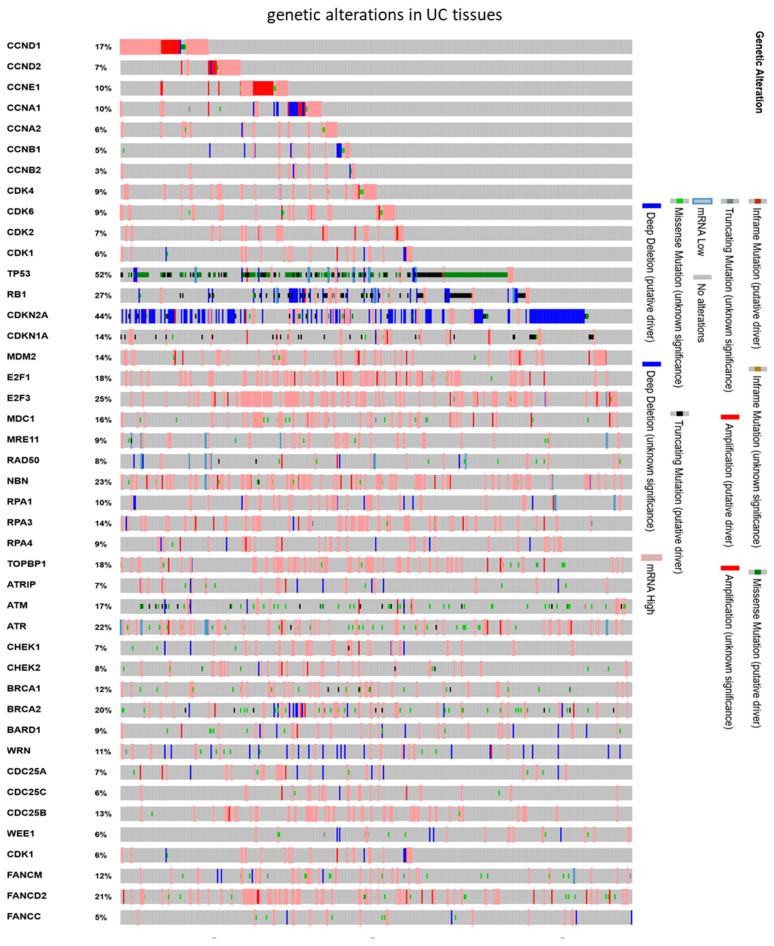
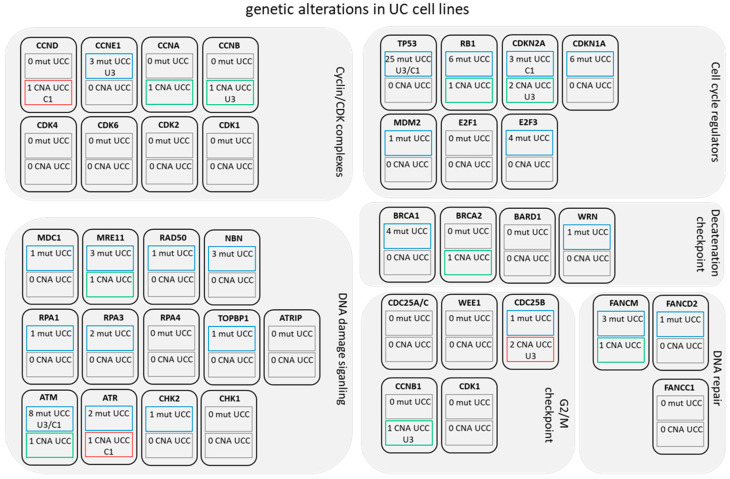
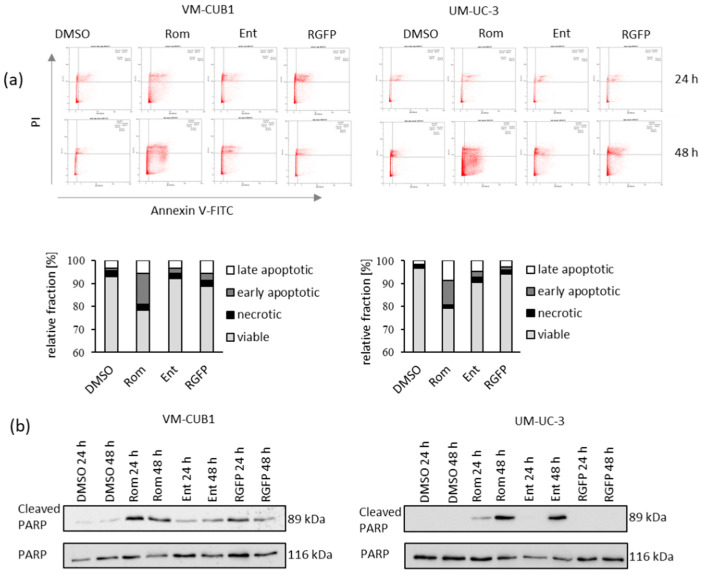
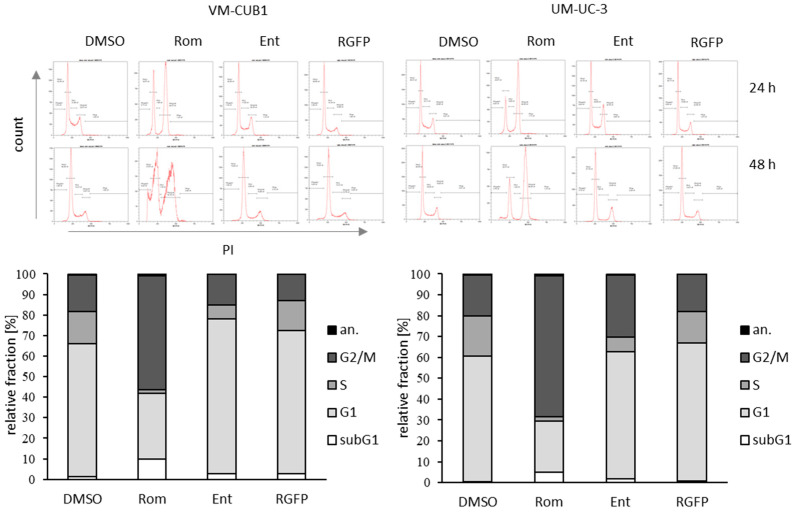
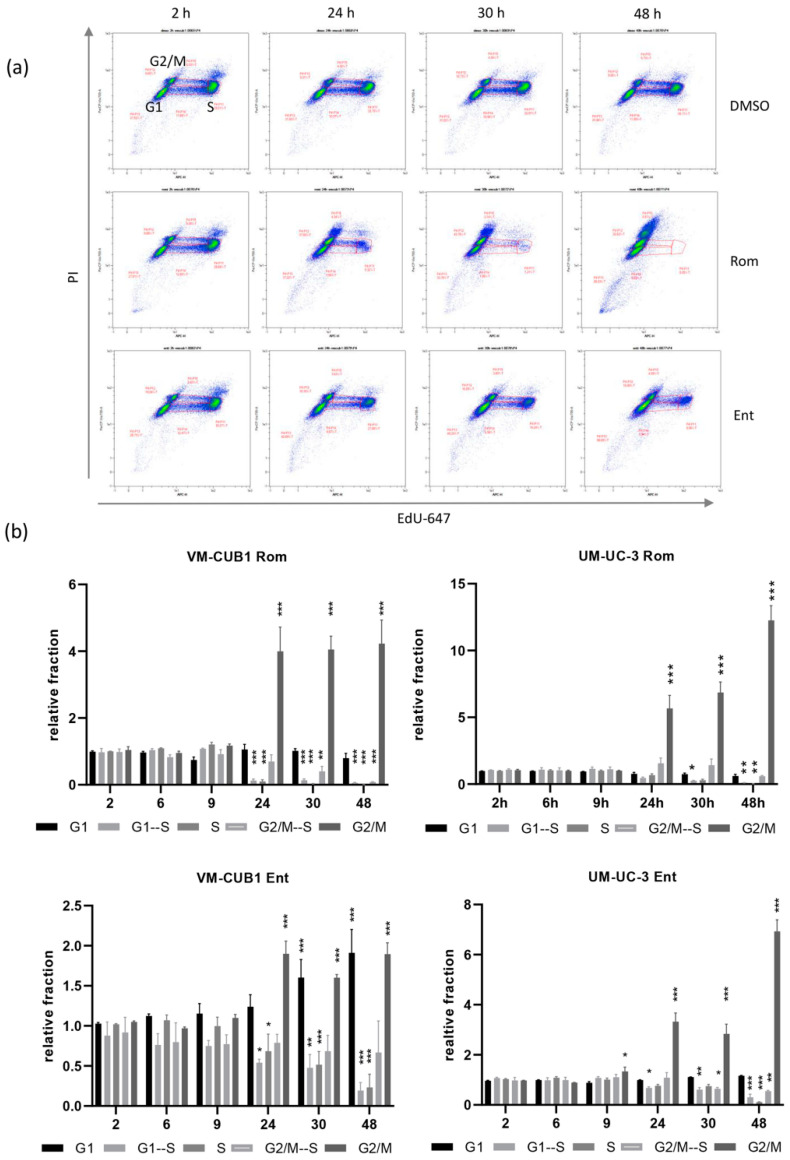
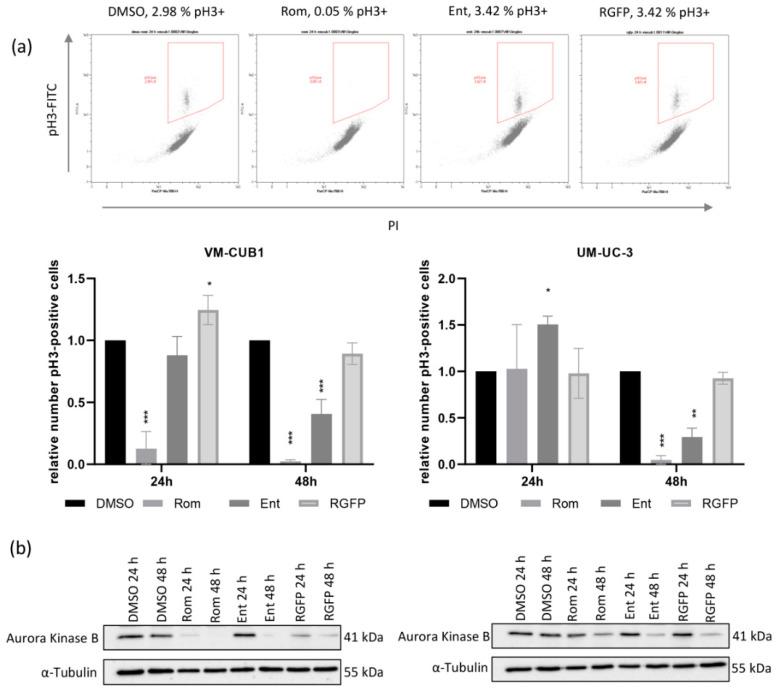
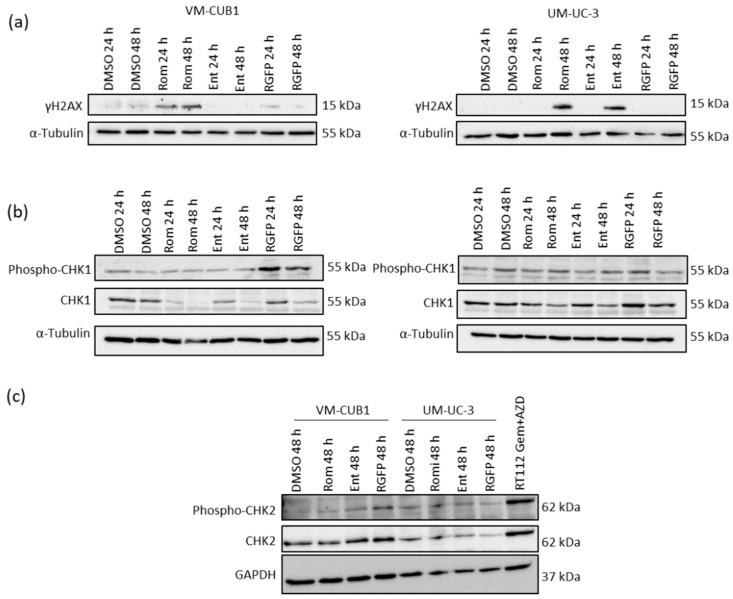
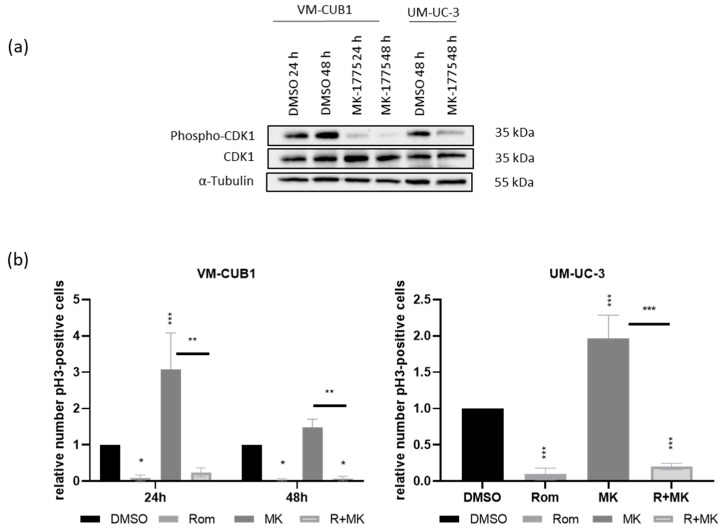
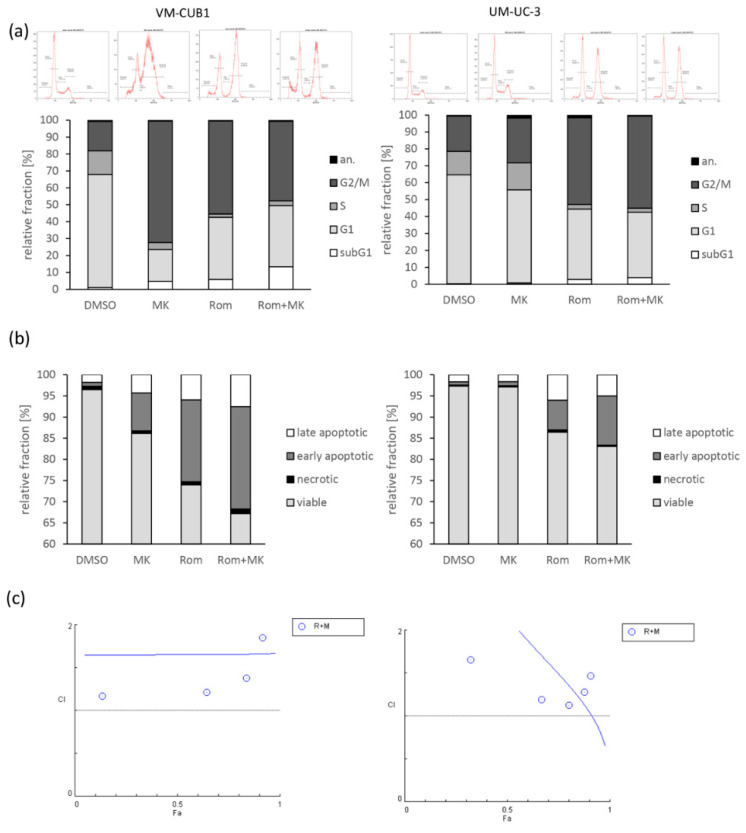
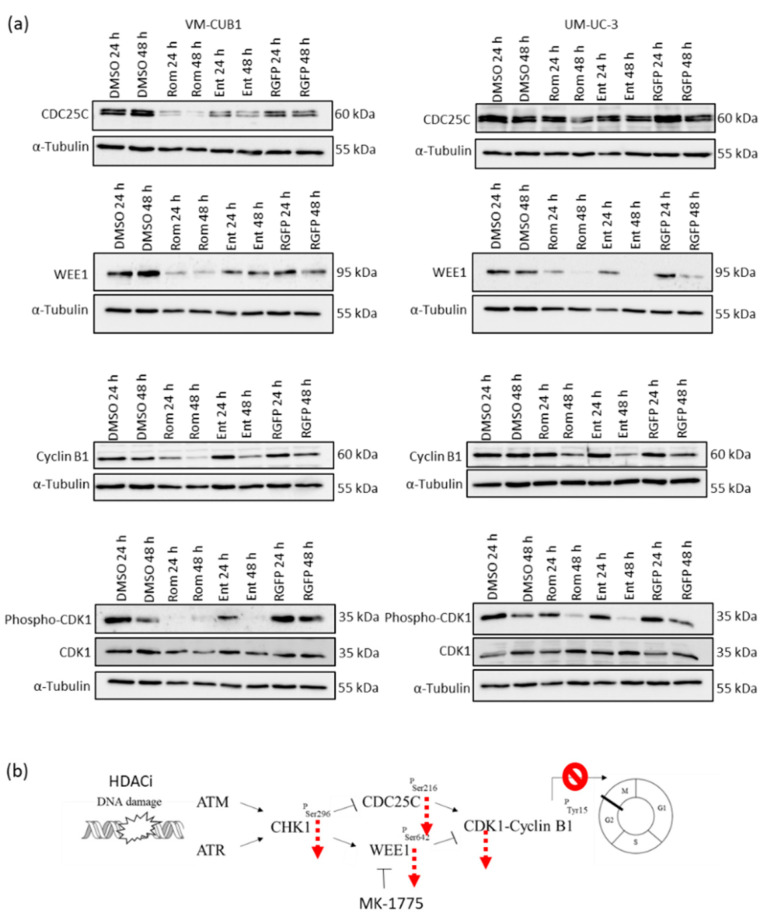
Since genes encoding epigenetic regulators are often mutated or deregulated in urothelial carcinoma (UC), they represent promising therapeutic targets. Specifically, inhibition of Class-I histone deacetylase (HDAC) isoenzymes induces cell death in UC cell lines (UCC) and, in contrast to other cancer types, cell cycle arrest in G2/M. Here, we investigated whether mutations in cell cycle genes contribute to G2/M rather than G1 arrest, identified the precise point of arrest and clarified the function of individual HDAC Class-I isoenzymes. Database analyses of UC tissues and cell lines revealed mutations in G1/S, but not G2/M checkpoint regulators. Using class I-specific HDAC inhibitors (HDACi) with different isoenzyme specificity (Romidepsin, Entinostat, RGFP966), cell cycle arrest was shown to occur at the G2/M transition and to depend on inhibition of HDAC1/2 rather than HDAC3. Since HDAC1/2 inhibition caused cell-type-specific downregulation of genes encoding G2/M regulators, the WEE1 inhibitor MK-1775 could not overcome G2/M checkpoint arrest and therefore did not synergize with Romidepsin inhibiting HDAC1/2. Instead, since DNA damage was induced by inhibition of HDAC1/2, but not of HDAC3, combinations between inhibitors of HDAC1/2 and of DNA repair should be attempted.
Overview
The claims and statistics of this paper haven’t been checked yet.
Free: it reads the open-access text and checks the first 5 claims that cite a source we can check. Create a free account to check every claim.
Integrity signals
Registry
Cites
Statistics
Figures
Verification
Claims the paper makes
The claims and statistics of this paper haven’t been checked yet.
Free: it reads the open-access text and checks the first 5 claims that cite a source we can check. Create a free account to check every claim.
Claims other papers make about this one
Each is checked against this paper’s own text: does it say what the citing paper says it does?
The cited source doesn’t support the claim as written.
In the citing paper
“we concluded that deleting HDAC3 down-regulated mitosis-related genes transcriptionally, which may obstruct mitotic phase entry as suggested by a previous study (34).”
From Arresting the bad seed: HDAC3 regulates proliferation of different microglia after ischemic stroke (2024) · cites this paper as [34]
Checked by a reasoning model — may be wrong.
Experimental — accuracy not yet measured
Self-check
Percentages, sums and reported differences re-computed from the paper’s own numbers.
The self-check needs the paper’s full text.
Citations
Cites
Cerami, E., Gao, J., Dogrusoz, U., Gross, B. E., Sumer, S. O., Aksoy, B. A., Jacobsen, A., Byrne, C. J., Heuer, M. L., Larsson, E., et al. (2012) · Cancer Discovery · doi:10.1158/2159-8290.cd-12-0095 · Cited by 17,455 · cited 1×
“org/, accessed on 10 December 2020) [38,39].”
Integrative Analysis of Complex Cancer Genomics and Clinical Profiles Using the cBioPortal
Gao, J., Aksoy, B. A., Dogrusoz, U., Dresdner, G., Gross, B., Sumer, S. O., Sun, Y., Jacobsen, A., Sinha, R., Larsson, E., et al. (2013) · Science Signaling · doi:10.1126/scisignal.2004088 · Cited by 15,160 · cited 1×
“org/, accessed on 10 December 2020) [38,39].”
Estimating the global cancer incidence and mortality in 2018: GLOBOCAN sources and methods
Ferlay, J., Colombet, M., Soerjomataram, I., Mathers, C., Parkin, D. M., Piñeros, M., Znaor, A., & Bray, F. (2019) · International Journal of Cancer · doi:10.1002/ijc.31937 · Cited by 7,553 · cited 1×
“Urothelial carcinoma (UC) of the bladder constitutes a common cancer type and comprises 90% of cases with bladder cancer in industrialized countries [1].”
BackgroundDrug combination studies and their synergy quantification using the Chou-Talalay method
Chou, T.-C. (2010) · Cancer Research · doi:10.1158/0008-5472.can-09-1947 · Cited by 5,739 · cited 3×
“Six different combinations of concentrations were applied and then analyzed by the Chou-Talalay method using the CompuSyn software [40].”
MethodInfluentialOncogenic Signaling Pathways in The Cancer Genome Atlas
Sanchez-Vega, F., Mina, M., Armenia, J., Chatila, W. K., Luna, A., La, K. C., Dimitriadoy, S., Liu, D. L., Kantheti, H. S., Saghafinia, S., et al. (2018) · Cell · doi:10.1016/j.cell.2018.03.035 · Cited by 3,201 · cited 1×
“While cell cycle regulators in bladder cancers may be more regularly mutated than in some other cancer types [50], most alterations concern TP53, RB1, and CDKN2A, which are also frequently mutated in other cancer types—e.”
BackgroundComprehensive molecular characterization of urothelial bladder carcinoma
Weinstein, J. N., Akbani, R., Broom, B. M., Wang, W., Verhaak, R. G. W., Liu, W., Ju, Z., Motter, T., Peng, B., Ryan, M., et al. (2014) · Nature · doi:10.1038/nature12965 · Cited by 3,142
Comprehensive molecular characterization of urothelial bladder carcinoma
Perou, C. M. (2019) · Carolina Digital Repository (University of North Carolina at Chapel Hill) · doi:10.17615/za09-dk57 · Cited by 2,990
Comprehensive Molecular Characterization of Muscle-Invasive Bladder Cancer
Robertson, A. G., Kim, J., Al-Ahmadie, H., Bellmunt, J., Guo, G., Cherniack, A. D., Hinoue, T., Laird, P. W., Hoadley, K. A., Akbani, R., et al. (2017) · Cell · doi:10.1016/j.cell.2017.09.007 · Cited by 2,443
von der Maase, H., Sengelov, L., Roberts, J. T., Ricci, S., Dogliotti, L., Oliver, T., Moore, M. J., Zimmermann, A., & Arning, M. (2005) · Journal of Clinical Oncology · doi:10.1200/jco.2005.07.757 · Cited by 1,850
Mitotic kinases as regulators of cell division and its checkpoints
Nigg, E. A. (2001) · Nature Reviews Molecular Cell Biology · doi:10.1038/35048096 · Cited by 1,547 · cited 1×
“Progression into anaphase is dependent on its sudden destruction by the anaphase-promoting complex (APC) [61].”
BackgroundChk1 and Chk2 kinases in checkpoint control and cancer
Bartek, J., & Lukas, J. (2003) · Cancer Cell · doi:10.1016/s1535-6108(03)00110-7 · Cited by 1,513 · cited 1×
“While CHK1 and CHK2 share substrate homology, CHK1 is believed to be the main executory kinase [60].”
BackgroundAvelumab Maintenance Therapy for Advanced or Metastatic Urothelial Carcinoma
Powles, T., Park, S. H., Voog, E., Caserta, C., Valderrama, B. P., Gurney, H., Kalofonos, H., Radulović, S., Demey, W., Ullén, A., et al. (2020) · New England Journal of Medicine · doi:10.1056/nejmoa2002788 · Cited by 1,493 · cited 1×
“Even with the advent of novel immunotherapeutic treatments, outcomes have improved only marginally [5,6].”
BackgroundCell death by mitotic catastrophe: a molecular definition
Castedo, M., Perfettini, J.-L., Roumier, T., Andreau, K., Medema, R., & Kroemer, G. (2004) · Oncogene · doi:10.1038/sj.onc.1207528 · Cited by 1,269 · cited 15×
“Thus, the activity of CDK1 is regulated at several levels: (1) at the transcriptional level for CCNB1 and CDK1, (2) via its phosphorylation state by kinases and phosphatases as a downstream consequence of CHK1 signaling and (3) through degradation of CCNB1 [52].”
BackgroundInfluentialMolecular biology of bladder cancer: new insights into pathogenesis and clinical diversity
Knowles, M. A., & Hurst, C. D. (2015) · Nature Reviews Cancer · doi:10.1038/nrc3817 · Cited by 1,247 · cited 1×
“A query of public TCGA data for genetic alterations in 413 UC tissues revealed mainly well‐known drivers of UC, like TP53 mutations or RB1 and CDKN2A deletions (Figure 1) [41].”
BackgroundHistone Deacetylase Inhibitors as Anticancer Drugs
Eckschlager, T., Plch, J., Stiborova, M., & Hrabeta, J. (2017) · International Journal of Molecular Sciences · doi:10.3390/ijms18071414 · Cited by 1,206
HDAC family: What are the cancer relevant targets?
Witt, O., Deubzer, H. E., Milde, T., & Oehme, I. (2009) · Cancer Letters · doi:10.1016/j.canlet.2008.08.016 · Cited by 1,069
Extraction, purification and analysis of histones
Shechter, D., Dormann, H. L., Allis, C. D., & Hake, S. B. (2007) · Nature Protocols · doi:10.1038/nprot.2007.202 · Cited by 1,064
Galsky, M. D., Arija, J. Á. A., Bamias, A., Davis, I. D., De Santis, M., Kikuchi, E., Garcia-del-Muro, X., De Giorgi, U., Mencinger, M., Izumi, K., et al. (2020) · The Lancet · doi:10.1016/s0140-6736(20)30230-0 · Cited by 786
Suraweera, A., O’Byrne, K. J., & Richard, D. J. (2018) · Frontiers in Oncology · doi:10.3389/fonc.2018.00092 · Cited by 669 · cited 1×
“Since epigenetic modifications can be influenced by pharmaceutical inhibitors, they constitute new rational therapeutic targets for treatment of UC [11,12].”
BackgroundH2AX Phosphorylation: Its Role in DNA Damage Response and Cancer Therapy
Podhorecka, M., Skladanowski, A., & Bozko, P. (2010) · Journal of Nucleic Acids · doi:10.4061/2010/920161 · Cited by 612 · cited 1×
“Since γH2AX is phosphorylated during DNA damage response signaling [44], we investigated the activity and expression of checkpoint kinases (CHK) after HDACi treatment.”
BackgroundHistone H3 phosphorylation and cell division
Hans, F., & Dimitrov, S. (2001) · Oncogene · doi:10.1038/sj.onc.1204326 · Cited by 518 · cited 1×
“H3 becomes phosphorylated at Serin 10 by Aurora Kinase B (AURKB) at the entry of M phase [42].”
BackgroundDelcuve, G. P., Khan, D. H., & Davie, J. R. (2012) · Clinical Epigenetics · doi:10.1186/1868-7083-4-5 · Cited by 505 · cited 2×
“While HDAC1 and HDAC2 can be components of CoREST, Sin3 or NuRD complexes, HDAC3 rather acts as a part of N‐CoR and SMRT complexes [26,27].”
BackgroundTargeting WEE1 Kinase in Cancer
Matheson, C. J., Backos, D. S., & Reigan, P. (2016) · Trends in Pharmacological Sciences · doi:10.1016/j.tips.2016.06.006 · Cited by 408 · cited 1×
“Thus, a combination treatment of class I HDACi and MK‐1775 targeting G2/M checkpoint signaling appeared a reasonable approach to drive UC cells into mitotic catastrophe to enhance cell death [57].”
BackgroundHDAC3-selective inhibitor enhances extinction of cocaine-seeking behavior in a persistent manner
Malvaez, M., McQuown, S. C., Rogge, G. A., Astarabadi, M., Jacques, V., Carreiro, S., Rusche, J. R., & Wood, M. A. (2013) · Proceedings of the National Academy of Sciences · doi:10.1073/pnas.1213364110 · Cited by 395 · cited 1×
“We further used RGFP966 to specifically target HDAC3 only [32].”
MethodCheckpoint kinase 1 in DNA damage response and cell cycle regulation
Patil, M., Pabla, N., & Dong, Z. (2013) · Cellular and Molecular Life Sciences · doi:10.1007/s00018-013-1307-3 · Cited by 317 · cited 1×
“CDK1 becomes activated by dephosphorylation through CDC25C and is inactivated by phosphorylation through WEE1, which results in G2 arrest [46].”
BackgroundHistone deacetylase inhibitors (HDACIs): multitargeted anticancer agents
Licciardi, P., Ververis, Hiong, & Karagiannis (2013) · Biologics: Targets and Therapy · doi:10.2147/btt.s29965 · Cited by 274
Hirai, H., Arai, T., Okada, M., Nishibata, T., Kobayashi, M., Sakai, N., Imagaki, K., Ohtani, J., Sakai, T., Yoshizumi, T., et al. (2010) · Cancer Biology & Therapy · doi:10.4161/cbt.9.7.11115 · Cited by 237 · cited 1×
“MK‐1775 (AZD1775) is a specific inhibitor of WEE1 that is already evaluated in clinical trials [47].”
BackgroundThe multifaceted influence of histone deacetylases on DNA damage signalling and DNA repair
Roos, W. P., & Krumm, A. (2016) · Nucleic Acids Research · doi:10.1093/nar/gkw922 · Cited by 139
The clinical epidemiology of superficial bladder cancer
the members of the Dutch South-East Cooperative Urological Group, Kiemeney, L. A. L. M., Witjes, J., Verbeek, A. L. M., Heijbroek, R. P., & Debruyne, F. M. J. (1993) · British Journal of Cancer · doi:10.1038/bjc.1993.147 · Cited by 131
Targeting the Checkpoint to Kill Cancer Cells
Benada, J., & Macůrek, L. (2015) · Biomolecules · doi:10.3390/biom5031912 · Cited by 127 · cited 2×
“Nevertheless, MK‐1775 was described as synergizing particularly in TP53 mutant cells with other DNA damage inducing compounds [63].”
BackgroundCornago, M., Garcia-Alberich, C., Blasco-Angulo, N., Vall-llaura, N., Nager, M., Herreros, J., Comella, J. X., Sanchis, D., & Llovera, M. (2014) · Cell Death & Disease · doi:10.1038/cddis.2014.412 · Cited by 107 · cited 2×
“Interestingly, CHK1 downregulation by HDACi was also described for lung cancer and glioblastoma cells that too accumulated in G2 after HDACi treatment [54,55].”
BackgroundXue, K., Gu, J. J., Zhang, Q., Mavis, C. K., Hernandez‐Ilizaliturri, F. J., Czuczman, M. S., & Guo, Y. (2015) · Journal of Cancer Research and Clinical Oncology · doi:10.1007/s00432-015-2026-y · Cited by 97
Göder, A., Emmerich, C., Nikolova, T., Kiweler, N., Schreiber, M., Kühl, T., Imhof, D., Christmann, M., Heinzel, T., Schneider, G., et al. (2018) · Nature Communications · doi:10.1038/s41467-018-03096-0 · Cited by 96 · cited 1×
“reported that treatment of HCT116 cells with Entinostat arrested the cells in G1 phase and prevented activation of checkpoint kinases through phosphorylation, but not their expression [56].”
BackgroundCodina, A., Love, J. D., Li, Y., Lazar, M. A., Neuhaus, D., & Schwabe, J. W. R. (2005) · Proceedings of the National Academy of Sciences · doi:10.1073/pnas.0500299102 · Cited by 95 · cited 2×
“While HDAC1 and HDAC2 can be components of CoREST, Sin3 or NuRD complexes, HDAC3 rather acts as a part of N‐CoR and SMRT complexes [26,27].”
BackgroundCheckpoint kinase inhibitor AZD7762 strongly sensitises urothelial carcinoma cells to gemcitabine
Isono, M., Hoffmann, M. J., Pinkerneil, M., Sato, A., Michaelis, M., Cinatl, J. J., Niegisch, G., & Schulz, W. A. (2017) · Journal of Experimental & Clinical Cancer Research · doi:10.1186/s13046-016-0473-1 · Cited by 87 · cited 2×
“a positive control for CHK2 activation [45].”
BackgroundSelf-citationSikandar, S. S., Dizon, D., Shen, X., Li, Z., Besterman, J., & Lipkin, S. M. (2010) · Oncotarget · doi:10.18632/oncotarget.194 · Cited by 84
Zhou, L., Zhang, Y., Chen, S., Kmieciak, M., Leng, Y., Lin, H., Rizzo, K. A., Dumur, C. I., Ferreira-Gonzalez, A., Dai, Y., et al. (2015) · Leukemia · doi:10.1038/leu.2014.296 · Cited by 84
Niegisch, G., Knievel, J., Koch, A., Hader, C., Fischer, U., Albers, P., & Schulz, W. A. (2012) · Urologic Oncology Seminars and Original Investigations · doi:10.1016/j.urolonc.2012.06.015 · Cited by 82 · cited 1×
“Other epigenetic enzymes like histone deacetylases (HDAC) are frequently upregulated [9,10].”
BackgroundSelf-citationHistone deacetylase 3 is required for centromeric H3K4 deacetylation and sister chromatid cohesionPreprint
Éot-Houllier, G., Fulcrand, G., Watanabe, Y., Magnaghi-Jaulin, L., & Jaulin, C. (2008) · Genes & Development · doi:10.1101/gad.484108 · Cited by 81
Entinostat for the treatment of breast cancer
Trapani, D., Esposito, A., Criscitiello, C., Mazzarella, L., Locatelli, M., Minchella, I., Minucci, S., & Curigliano, G. (2017) · Expert Opinion on Investigational Drugs · doi:10.1080/13543784.2017.1353077 · Cited by 80
Selvaraju, K., Renu, S., Krishnamoorthy, V., & Ravikumar, V. (2014) · Biomedicine & Pharmacotherapy · doi:10.1016/j.biopha.2014.01.002 · Cited by 77 · cited 1×
“However, colon, and lung cancer cells still respond to Romidepsin with cell cycle arrest in G1 and not G2/M [21,23].”
BackgroundEffects of novel HDAC inhibitors on urothelial carcinoma cells
Kaletsch, A., Pinkerneil, M., Hoffmann, M. J., Jaguva Vasudevan, A. A., Wang, C., Hansen, F. K., Wiek, C., Hanenberg, H., Gertzen, C., Gohlke, H., et al. (2018) · Clinical Epigenetics · doi:10.1186/s13148-018-0531-y · Cited by 75
Self-citationTetraploidy/aneuploidy and stem cells in cancer promotion: The role of chromosome passenger proteins
Nguyen, H. G., & Ravid, K. (2005) · Journal of Cellular Physiology · doi:10.1002/jcp.20565 · Cited by 73 · cited 1×
“In addition, lack of AURKB, with its various functions in cell cycle, may also prevent progression of HDACi treated cells into mitosis and limit the effect of the combination treatment [62].”
BackgroundCell Cycle Checkpoint Function in Bladder Cancer
Doherty, S. C., McKeown, S. R., McKelvey-Martin, V., Downes, C. S., Atala, A., Yoo, J. J., Simpson, D. A., & Kaufmann, W. K. (2003) · JNCI Journal of the National Cancer Institute · doi:10.1093/jnci/djg120 · Cited by 73 · cited 1×
“, lung, colorectal, and brain cancers—and are known to contribute to deficient G1 checkpoint control in UC [51].”
BackgroundBrazelle, W., Kreahling, J. M., Gemmer, J., Ma, Y., Cress, W. D., Haura, E., & Altiok, S. (2010) · PLoS ONE · doi:10.1371/journal.pone.0014335 · Cited by 70 · cited 1×
“Interestingly, CHK1 downregulation by HDACi was also described for lung cancer and glioblastoma cells that too accumulated in G2 after HDACi treatment [54,55].”
BackgroundRomidepsin (FK228), A Histone Deacetylase Inhibitor and its Analogues in Cancer Chemotherapy
Pojani, E., & Barlocco, D. (2020) · Current Medicinal Chemistry · doi:10.2174/0929867327666200203113926 · Cited by 69
Shi, Y., Fu, Y., Zhang, X., Zhao, G., Yao, Y., Guo, Y., Ma, G., Bai, S., & Li, H. (2021) · Cancer Immunology, Immunotherapy · doi:10.1007/s00262-020-02653-1 · Cited by 69 · cited 1×
“However, colon, and lung cancer cells still respond to Romidepsin with cell cycle arrest in G1 and not G2/M [21,23].”
BackgroundNiegisch, G., Gerullis, H., Lin, S., Pavlova, J., Gondos, Á., Rudolph, A., Haas, G., Hennies, N., & Kramer, M. W. (2018) · Journal of Cancer · doi:10.7150/jca.23162 · Cited by 68 · cited 1×
“Even though about 30–50% of patients respond initially, the majority of patients will progress or become refractory to treatment leading to a five‐year survival below 30– 40% [3,4].”
BackgroundSelf-citationPinkerneil, M., Hoffmann, M. J., Deenen, R., Köhrer, K., Arent, T., Schulz, W. A., & Niegisch, G. (2016) · Molecular Cancer Therapeutics · doi:10.1158/1535-7163.mct-15-0618 · Cited by 65 · cited 12×
“Cell cycle and cell death analyses were performed as previously described [15].”
BackgroundMethodInfluentialSelf-citationBernhart, E. M., Stuendl, N., Kaltenegger, H., Windpassinger, C., Donohue, N., Leithner, A., & Lohberger, B. (2017) · Oncotarget · doi:10.18632/oncotarget.20460 · Cited by 60
Stengel, K. R., & Hiebert, S. W. (2015) · Antioxidants & Redox Signaling · doi:10.1089/ars.2014.5915 · Cited by 59
Zhang, X.-H., Rao, M., Loprieato, J. A., Hong, J. A., Zhao, M., Chen, G.-Z., Humphries, A. E., Nguyen, D. M., Trepel, J. B., Yu, X., et al. (2008) · Cancer Biology & Therapy · doi:10.4161/cbt.7.9.6415 · Cited by 57
Wee1 is required to sustain ATR/Chk1 signaling upon replicative stress
Saini, P., Li, Y., & Dobbelstein, M. (2015) · Oncotarget · doi:10.18632/oncotarget.3865 · Cited by 55 · cited 1×
“Downregulation of WEE1 may further contribute to lacking CHK1 signaling since WEE1 is needed for ATR/CHK1 activation and WEE1 inhibition mediates inactivation of CHK1 [64].”
BackgroundPinkerneil, M., Hoffmann, M. J., Kohlhof, H., Schulz, W. A., & Niegisch, G. (2016) · Targeted Oncology · doi:10.1007/s11523-016-0444-7 · Cited by 55
Self-citationHoffmann, M. J., Koutsogiannouli, E. A., Skowron, M. A., Pinkerneil, M., Niegisch, G., Brandt, A., Stepanow, S., Rieder, H., & Schulz, W. A. (2016) · Bladder Cancer · doi:10.3233/blc-160065 · Cited by 51
Self-citationHe, B., Dai, L., Zhang, X., Chen, D., Wu, J., Feng, X., Zhang, Y., Xie, H., Zhou, L., Wu, J., et al. (2018) · International Journal of Biological Sciences · doi:10.7150/ijbs.27661 · Cited by 48
Li, L.-H., Zhang, P., Cai, P., & Li, Z. (2016) · Biomedicine & Pharmacotherapy · doi:10.1016/j.biopha.2016.04.053 · Cited by 39
Upregulation of the long non-coding RNA CASC9 as a biomarker for squamous cell carcinoma
Sassenberg, M., Droop, J., Schulz, W. A., Dietrich, D., Loick, S., Wiek, C., Scheckenbach, K., Gaisa, N. T., & Hoffmann, M. J. (2019) · BMC Cancer · doi:10.1186/s12885-019-6021-6 · Cited by 39 · cited 1×
“Cells were cultured as described previously [34].”
Self-citationHistone deacetylase 8 is deregulated in urothelial cancer but not a target for efficient treatment
Lehmann, M., Hoffmann, M. J., Koch, A., Ulrich, S. M., Schulz, W. A., & Niegisch, G. (2014) · Journal of Experimental & Clinical Cancer Research · doi:10.1186/s13046-014-0059-8 · Cited by 34
Self-citationThe prognostic role of epigenetic dysregulation in bladder cancer: A systematic review
Casadevall, D., Kilian, A. Y., & Bellmunt, J. (2017) · Cancer Treatment Reviews · doi:10.1016/j.ctrv.2017.10.004 · Cited by 31 · cited 1×
“Chromatin regulators and histone-modifying enzymes are exceptionally frequently mutated in UC, suggesting that epigenetic changes drive urothelial tumorigenesis and cancer progression [7,8].”
BackgroundHDACs and HDAC Inhibitors in Urothelial Carcinoma – Perspectives for an Antineoplastic Treatment
Pinkerneil, M., Hoffmann, M. J., Schulz, W. A., & Niegisch, G. (2017) · Current Medicinal Chemistry · doi:10.2174/0929867324666170207142740 · Cited by 29
Self-citationFriedrich, A., Aßmann, A.-S., Schumacher, L., van Stuijvenberg, J., Kassack, M. U., Schulz, W. A., Roos, W. P., Hansen, F. K., Pflieger, M., Kurz, T., et al. (2020) · International Journal of Molecular Sciences · doi:10.3390/ijms21134747 · Cited by 23
Self-citationBuckwalter, J. M., Chan, W. H.-C., Shuman, L., Wildermuth, T., Ellis-Mohl, J., Walter, V., Warrick, J. I., Wu, X., Kaag, M. G., Raman, J. D., et al. (2019) · International Journal of Molecular Sciences · doi:10.3390/ijms20102599 · Cited by 20 · cited 1×
“Other epigenetic enzymes like histone deacetylases (HDAC) are frequently upregulated [9,10].”
BackgroundVasudevan, A. A. J., Hoffmann, M. J., Beck, M. L. C., Poschmann, G., Petzsch, P., Wiek, C., Stühler, K., Köhrer, K., Schulz, W. A., & Niegisch, G. (2019) · International Journal of Molecular Sciences · doi:10.3390/ijms20092135 · Cited by 19 · cited 1×
“Louis, MO, USA) as described previously [35].”
Self-citationTargeting histone deacetylases (HDACs) and Wee1 for treating high‐risk neuroblastoma
Hanmod, S. S., Wang, G., Edwards, H. J., Buck, S. A., Ge, Y., Taub, J. W., & Wang, Z. (2014) · Pediatric Blood & Cancer · doi:10.1002/pbc.25232 · Cited by 15
Cited by
Programmed cell death, redox imbalance, and cancer therapeutics
Dai, X., Wang, D., & Zhang, J. (2021) · APOPTOSIS · doi:10.1007/s10495-021-01682-0 · Cited by 88
Arresting the bad seed: HDAC3 regulates proliferation of different microglia after ischemic stroke
Zhang, Y., Li, J., Zhao, Y., Huang, Y., Shi, Z., Wang, H., Cao, H., Wang, C., Wang, Y., Chen, D., et al. (2024) · Science Advances · doi:10.1126/sciadv.ade6900 · Cited by 55
“5, H and I), we concluded that deleting HDAC3 down-regulated mitosis-related genes transcriptionally, which may obstruct mitotic phase entry as suggested by a previous study ( 34 ).”
ResultSemlali, A., Beji, S., Ajala, I., & Rouabhia, M. (2021) · Archives of Oral Biology · doi:10.1016/j.archoralbio.2021.105200 · Cited by 55
HDAC-an important target for improving tumor radiotherapy resistance
Ling, R., Wang, J., Fang, Y., Yu, Y., Su, Y., Sun, W., Li, X., & Tang, X. (2023) · Frontiers in Oncology · doi:10.3389/fonc.2023.1193637 · Cited by 22
Schiedlauske, K., Deipenbrock, A., Pflieger, M., Hamacher, A., Hänsel, J., Kassack, M. U., Kurz, T., & Teusch, N. E. (2024) · Pharmaceuticals · doi:10.3390/ph17060752 · Cited by 18
“HDAC inhibition has been shown to affect the cell cycle and induce apoptosis in cancer cells [55].”
Background
Metadata
- Authors
- Hoffmann, M. J., Meneceur, S., Hommel, K., Schulz, W. A., & Niegisch, G.
- Affiliations
- Heinrich Heine University Düsseldorf (DE)
- Corresponding author
- Hoffmann, Michèle J.
- Venue
- Genes
- Publisher
- MDPI AG
- Published
- 2021-02-11
- Volume
- 12
- Issue
- 2
- Pages
- 260
- ISSN
- 2073-4425 (ISSN-L)
- PMC
- PMC7916885
- OpenAlex
- W3128905199
- Cited by
- 28
- References
- 64
- Citations by year
- 2026: 4 · 2025: 5 · 2024: 10 · 2023: 2 · 2022: 3 · 2021: 3
- FWCI
- 1.41
- Type
- journal article
- Language
- en
- Open access
- gold
- doi.org
- Licence
- Locations
- Genes (publishedVersion, cc-by)
- PubMed Central (publishedVersion, cc-by)
- PubMed (publishedVersion)
- DOAJ (DOAJ: Directory of Open Access Journals) (submittedVersion, cc-by-sa)
- Funders
- Deutsche Forschungsgemeinschaft (HO 6448/ NI 1398)
- Topics
- Life Sciences › Biochemistry, Genetics and Molecular Biology › Molecular Biology › Histone Deacetylase Inhibitors Research
- Life Sciences › Biochemistry, Genetics and Molecular Biology › Molecular Biology › Epigenetics and DNA Methylation
- Health Sciences › Medicine › Surgery › Bladder and Urothelial Cancer Treatments
- Keywords
- class I histone deacetylase inhibitors, urothelial carcinoma, bladder cancer, G2/M checkpoint, cell cycle arrest, MK-1775, WEE1 inhibitor, HDAC1/2, HDAC3, romidepsin, entinostat, RGFP966, epigenetic regulators, genetic mutations, DNA damage, DNA repair, combination therapy
- MeSH terms
- Histone Deacetylase 3, Acrylamides, Benzamides, Urinary Bladder Neoplasms, Drug Synergism, Histone Deacetylases, Humans, Phenylenediamines, Pyrazoles, Pyridines, Pyrimidinones, Genes, cdc, Cell Line, Tumor, Depsipeptides, Histone Deacetylase 1, Histone Deacetylase 2, Histone Deacetylase Inhibitors, Cell Cycle Checkpoints, G2 Phase Cell Cycle Checkpoints
About these checks
Registry, retraction, Cites and statistics results are computed, not judged, with one exception: a printed reference that no index lists is read once by a model before it counts as a citation error. Claims are extracted by a model and kept only when their quote appears verbatim in the text; each cited source is then checked, with a model’s help, for whether it says what the claim relies on. Those verdicts can be wrong — read the claim’s quote and the cited source before relying on one.
Statistics and arithmetic are recomputed, not judged.
Confidence bands are shown only for fields calibrated on our annotated test set. None is calibrated yet, so no band is shown.
What counts as a claim ›How we measure confidence ›How we check this ›
Are you an author, or do you see a problem with this page? Request a review
Data sources
Bibliographic data: Semantic Scholar, OpenAlex, Crossref.
Contains information from the Semantic Scholar Academic Graph Datasets, made available under the ODC Attribution License (ODC-BY 1.0).
Semantic Scholar’s data is described in: Kinney, R., et al. (2023). The Semantic Scholar Open Data Platform. arXiv:2301.10140.
