

The DOI matches its Crossref record; 79 of the 79 references it cites were found in a registry or an index.
Wool Keratin-Associated Protein Genes in Sheep—A Review
Open accessAbstract
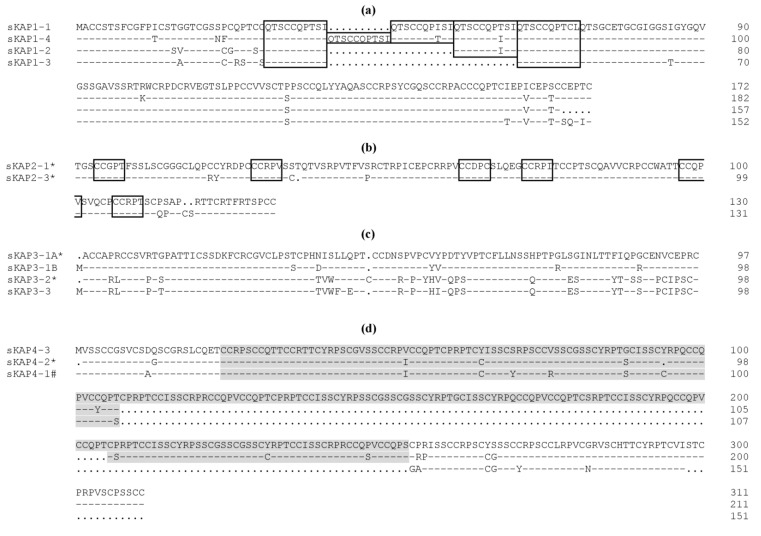
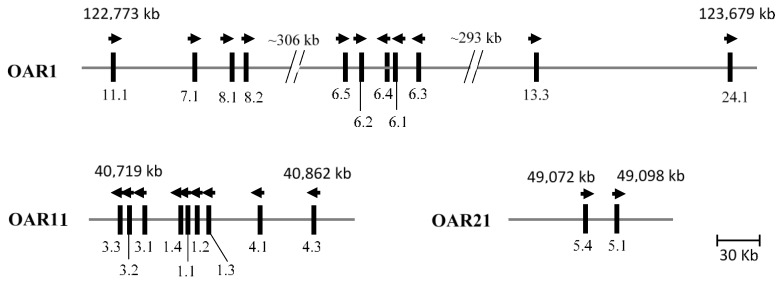
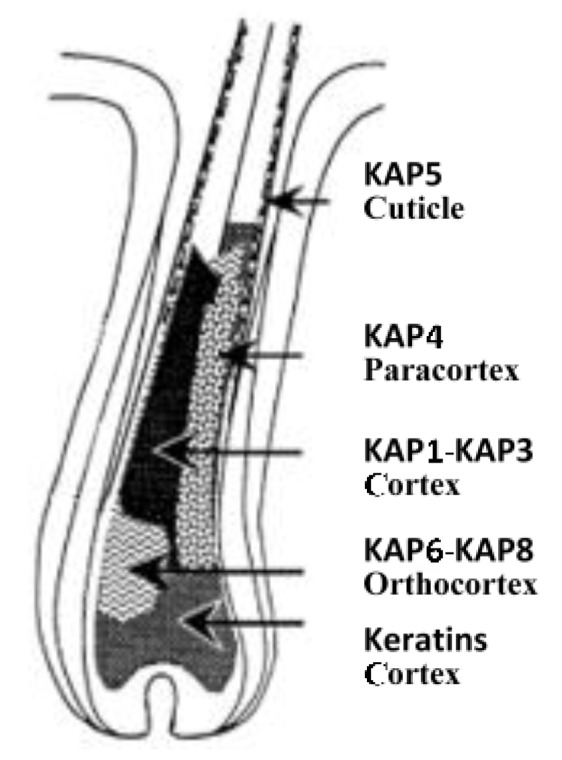
The importance of sheep’s wool in making textiles has inspired extensive research into its structure and the underlying genetics since the 1960s. Wool keratin-associated proteins (KAPs) are a key structural component of the wool fibre. The characterisation of the genes encoding these proteins has progressed rapidly with advances in the nucleotide and protein sequencing. This review describes our knowledge of ovine KAPs, their categorisation into families, polymorphism in the proteins and genes, the clustering and chromosomal location of the genes, some characteristics of gene expression and some potential effects of the KAPs on wool traits. The extent and nature of genetic variation in wool KAP genes and its association with fibre characteristics, provides an opportunity for the development of gene-markers for selective breeding of sheep to produce better wool with properties highly matched to specific end-uses.
Overview
The claims and statistics of this paper haven’t been checked yet.
Run the check — free, no account needed. It reads the open-access text and checks the sources it cites.
Integrity signals
Registry
Cites
Statistics
Figures
Verification
Claims the paper makes
The claims and statistics of this paper haven’t been checked yet.
Run the check — free, no account needed. It reads the open-access text and checks the sources it cites.
Claims other papers make about this one
Each is checked against this paper’s own text: does it say what the citing paper says it does?
The source backs part of the claim, not all of it — or backs it for a different population, condition or comparison.
In the citing paper
“Keratins and the keratin-associated proteins are conserved across multiple species with family members encoding the principal structural components of hair and wool160–163.”
From Chromosomal-level reference genome assembly of muskox (Ovibos moschatus) from Banks Island in the Canadian Arctic, a resource for conservation genomics (2024) · cites this paper as [162]
Experimental — accuracy not yet measured
Self-check
Percentages, sums and reported differences re-computed from the paper’s own numbers.
The self-check needs the paper’s full text.
Citations
Cites
Correlation between Protein and mRNA Abundance in Yeast
Gygi, S. P., Rochon, Y., Franza, B. R., & Aebersold, R. (1999) · Molecular and Cellular Biology · doi:10.1128/mcb.19.3.1720 · Cited by 3,819
Hair—the most sophisticated biological composite material
Popescu, C., & Höcker, H. (2007) · Chemical Society Reviews · doi:10.1039/b604537p · Cited by 283
Cellular and Molecular Biology of Intermediate Filaments
Goldman, R. D., & Steinert, P. M. (1990) · Springer eBooks · doi:10.1007/978-1-4757-9604-9 · Cited by 264
Human Hair Keratin‐Associated Proteins (KAPs)
Rogers, M. A., Langbein, L., Praetzel‐Wunder, S., Winter, H., & Schweizer, J. (2006) · International review of cytology · doi:10.1016/s0074-7696(06)51006-x · Cited by 237
The role of keratin proteins and their genes in the growth, structure and properties of hair
Powell, B. C., & Rogers, G. E. (1997) · Birkhäuser Basel eBooks · doi:10.1007/978-3-0348-9223-0_3 · Cited by 227
Hair follicle differentiation and regulation.
Rogers, G. E. (2004) · The International Journal of Developmental Biology · doi:10.1387/ijdb.15272381 · Cited by 203
Feather Keratin: Composition, Structure and Biogenesis
Gregg, K., & Rogers, G. E. (1986) · Springer eBooks · doi:10.1007/978-3-662-00989-5_33 · Cited by 166
Sickmann, A., & Meyer, H. E. (2001) · PROTEOMICS · doi:10.1002/1615-9861(200102)1:2 · Cited by 162
Goddard, D. R., & Michaelis, L. (1935) · Journal of Biological Chemistry · doi:10.1016/s0021-9258(18)74993-4 · Cited by 127
Genome-Wide Association Study for Wool Production Traits in a Chinese Merino Sheep Population
Wang, Z., Zhang, H., Yang, H., Wang, S., Rong, E., Pei, W., Li, H., & Wang, N. (2014) · PLoS ONE · doi:10.1371/journal.pone.0107101 · Cited by 127
Research works printed but not linked: 1
- Rogers, G., Hickford, J., and Bickerstaffe, R. (1994, January 7–12). A Potential QTL for Wool Strength Located on Ovine Chromosome 11. Proceedings of the 5th World Congress on Genetics Applied to Livestock Production, Guelph, ON, Canada.
Cited by
Sorted by citations
Extraction and application of keratin from natural resources: a review
Chilakamarry, C. R., Mahmood, S., Saffe, S. N. B. M., Arifin, M. A., Gupta, A. K., Sikkandar, M. Y., Begum, S. S., & Narasaiah, B. P. (2021) · 3 Biotech · doi:10.1007/s13205-021-02734-7 · Cited by 244
Innovative bioinks for 3D bioprinting: Exploring technological potential and regulatory challenges
Mathur, V., Agarwal, P., Kasturi, M., Srinivasan, V., Seetharam, R. N., & Vasanthan, K. S. (2025) · Journal of Tissue Engineering · doi:10.1177/20417314241308022 · Cited by 96
Valorisation of keratinous wastes: A sustainable approach towards a circular economy
Ossai, I. C., Hamid, F. S., & Hassan, A. (2022) · Waste Management · doi:10.1016/j.wasman.2022.07.021 · Cited by 93
Genetics of the phenotypic evolution in sheep: a molecular look at diversity-driving genes
Kalds, P., Zhou, S., Gao, Y., Cai, B., Huang, S., Chen, Y., & Wang, X. (2022) · Genetics Selection Evolution · doi:10.1186/s12711-022-00753-3 · Cited by 85
Rani, S., Kadam, V., Rose, N. M., Jose, S., Yadav, S., & Shakyawar, D. B. (2020) · International Journal of Biological Macromolecules · doi:10.1016/j.ijbiomac.2020.07.061 · Cited by 65
Metadata
- Authors
- Gong, H., Zhou, H., Forrest, R., Li, S., Wang, J., Dyer, J., Luo, Y., & Hickford, J.
- Affiliations
- Gansu Agricultural University (CN)
- Eastern Institute of Technology (NZ)
- AgResearch (NZ)
- Corresponding author
- Luo, Yuzhu
- Hickford, Jon
- Venue
- Genes
- Publisher
- MDPI AG
- Published
- 2016-05-28
- Volume
- 7
- Issue
- 6
- Pages
- 24
- ISSN
- 2073-4425 (ISSN-L)
- PMC
- PMC4929423
- OpenAlex
- W2395447748
- Cited by
- 124
- References
- 78
- Citations by year
- 2026: 12 · 2025: 7 · 2024: 18 · 2023: 13 · 2022: 16 · 2021: 13 · 2020: 11 · 2019: 12 · 2018: 10 · 2017: 11 · 2016: 1
- FWCI
- 1.52
- Type
- journal article
- Language
- en
- Open access
- gold
- doi.org
- Licence
- Locations
- Genes (publishedVersion, cc-by)
- PubMed Central (publishedVersion, cc-by)
- PubMed (publishedVersion)
- DOAJ (DOAJ: Directory of Open Access Journals) (submittedVersion, cc-by-sa)
- Figshare (submittedVersion, cc-by)
- Lincoln University Research Archive (Lincoln University) (submittedVersion, cc-by)
- Funders
- FRST (C10X0710)
- Topics
- Life Sciences › Biochemistry, Genetics and Molecular Biology › Genetics › Genetic and phenotypic traits in livestock
- Health Sciences › Medicine › Dermatology › Hair Growth and Disorders
- Life Sciences › Biochemistry, Genetics and Molecular Biology › Cell Biology › Skin and Cellular Biology Research
- Keywords
- sheep, genetic polymorphism, gene clustering, chromosomal location, gene expression, wool traits, genetic markers, selective breeding, fiber properties
About these checks
Registry, retraction, Cites and statistics results are computed, not judged, with one exception: a printed reference that no index lists is read once by a model before it counts as a citation error. Claims are extracted by a model and kept only when their quote appears verbatim in the text; each cited source is then checked, with a model’s help, for whether it says what the claim relies on. Those verdicts can be wrong — read the claim’s quote and the cited source before relying on one.
Statistics and arithmetic are recomputed, not judged.
Confidence bands are shown only for fields calibrated on our annotated test set. None is calibrated yet, so no band is shown.
What counts as a claim ›How we measure confidence ›How we check this ›
Are you an author, or do you see a problem with this page? Request a review
