

The DOI matches its Crossref record; 135 of the 135 references it cites were found in a registry or an index.
Machine-Learning-Based Disease Diagnosis: A Comprehensive Review
Open accessAbstract
Globally, there is a substantial unmet need to diagnose various diseases effectively. The complexity of the different disease mechanisms and underlying symptoms of the patient population presents massive challenges in developing the early diagnosis tool and effective treatment. Machine learning (ML), an area of artificial intelligence (AI), enables researchers, physicians, and patients to solve some of these issues. Based on relevant research, this review explains how machine learning (ML) is being used to help in the early identification of numerous diseases. Initially, a bibliometric analysis of the publication is carried out using data from the Scopus and Web of Science (WOS) databases. The bibliometric study of 1216 publications was undertaken to determine the most prolific authors, nations, organizations, and most cited articles. The review then summarizes the most recent trends and approaches in machine-learning-based disease diagnosis (MLBDD), considering the following factors: algorithm, disease types, data type, application, and evaluation metrics. Finally, in this paper, we highlight key results and provides insight into future trends and opportunities in the MLBDD area.
Overview
The claims and statistics of this paper haven’t been checked yet.
Run the check — free, no account needed. It reads the open-access text and checks the sources it cites.
Integrity signals
Registry
Cites
Statistics
Figures
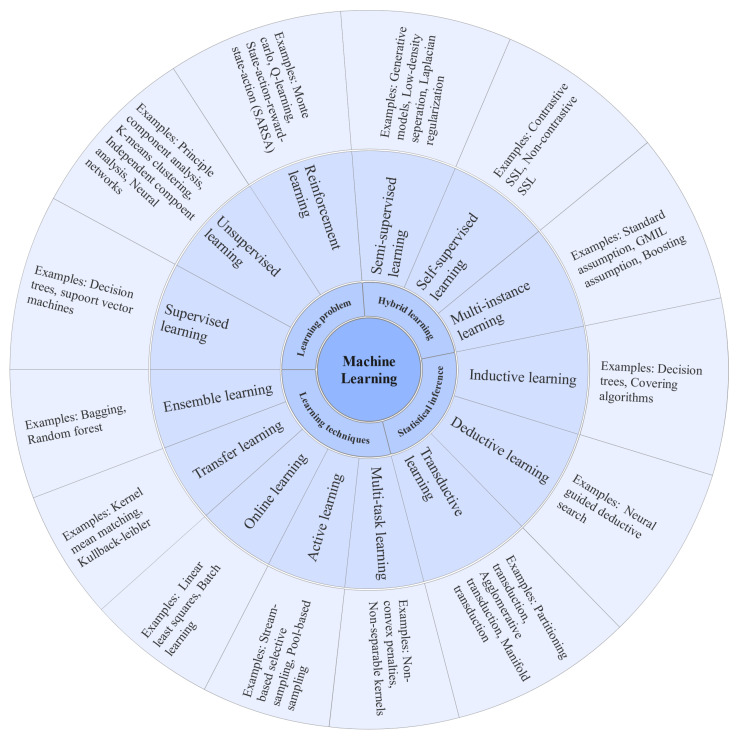


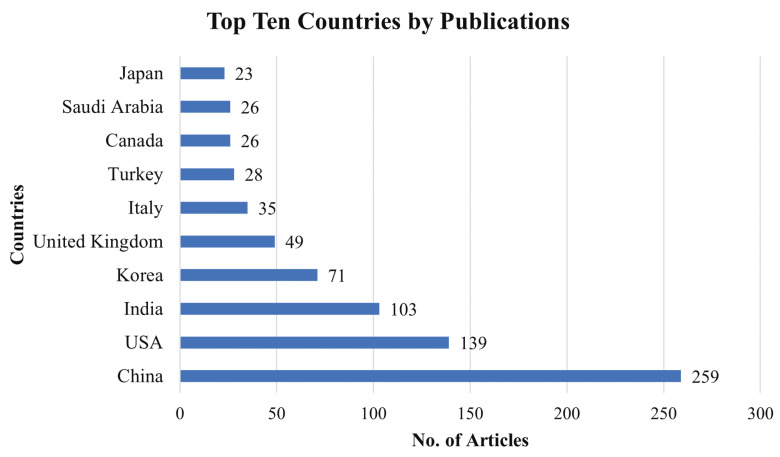

Verification
Claims the paper makes
The claims and statistics of this paper haven’t been checked yet.
Run the check — free, no account needed. It reads the open-access text and checks the sources it cites.
Claims other papers make about this one
Each is checked against this paper’s own text: does it say what the citing paper says it does?
The source backs part of the claim, not all of it — or backs it for a different population, condition or comparison.
In the citing paper
“While the advancement of manual diagnosis through the Placenta Accreta Index (PAI) process does improve the accuracy of diagnosis, it does not improve upon the PAS diagnostic issues of manual time consumption, proper symptom identification, and other complexities introduced via human error [10]”
From Machine Learning in Maternity: Early Diagnosis of Placenta Accreta Spectrum (2026) · cites this paper as [10]
Experimental — accuracy not yet measured
Self-check
Percentages, sums and reported differences re-computed from the paper’s own numbers.
The self-check needs the paper’s full text.
Citations
Cites
1 retracted
Saw, M., Saxena, T. K., Kaithwas, S., Yadav, R., & Lal, N. (2020) · International Conference on Computer Communication and Informatics (ICCCI) · doi:10.1109/iccci48352.2020.9104210 · Cited by 73
RetractedSome Studies in Machine Learning Using the Game of Checkers
Samuel, A. L. (1959) · IBM Journal of Research and Development · doi:10.1147/rd.33.0210 · Cited by 4,443
Wang, L., Lin, Z. Q., & Wong, A. (2020) · Scientific Reports · doi:10.1038/s41598-020-76550-z · Cited by 3,113
Discriminatory Analysis. Nonparametric Discrimination: Consistency Properties
Fix, E., & Hodges, J. L. (1989) · International Statistical Review / Revue Internationale de Statistique · doi:10.2307/1403797 · Cited by 2,516
Apostolopoulos, I. D., & Mpesiana, T. A. (2020) · Physical and Engineering Sciences in Medicine · doi:10.1007/s13246-020-00865-4 · Cited by 2,338
Green supply chain management: A review and bibliometric analysis
Fahimnia, B., Sarkis, J., & Davarzani, H. (2015) · International Journal of Production Economics · doi:10.1016/j.ijpe.2015.01.003 · Cited by 2,131
Narin, A., Kaya, C., & Pamuk, Z. (2021) · Pattern Analysis and Applications · doi:10.1007/s10044-021-00984-y · Cited by 2,054
Effective Heart Disease Prediction Using Hybrid Machine Learning Techniques
Mohan, S., Thirumalai, C., & Srivastava, G. (2019) · IEEE Access · doi:10.1109/access.2019.2923707 · Cited by 1,951 · cited 1×
“(2019) [29] Effective Heart disease prediction Using hybrid Machine Learning techniques 214”
BackgroundLi, L., Qin, L., Xu, Z., Yin, Y., Wang, X., Kong, B., Bai, J., Lu, Y., Fang, Z., Song, Q., et al. (2020) · Radiology · doi:10.1148/radiol.2020200905 · Cited by 1,927
Levey, A. S., & Coresh, J. (2012) · The Lancet · doi:10.1016/s0140-6736(11)60178-5 · Cited by 1,841
Research works printed but not linked: 8
- McPhee, S.J., Papadakis, M.A., and Rabow, M.W. (2010). Current Medical Diagnosis & Treatment, McGraw-Hill Medical.
- Brownlee, 2016, Machine learning mastery with Python, Mach. Learn. Mastery Pty Ltd., 527, 100
- Goodfellow, I., Bengio, Y., and Courville, A. (2016). Deep Learning, MIT Press.
- Qtea, 2021, Using Hybrid Model of Particle Swarm Optimization and Multi-Layer Perceptron Neural Networks for Classification of Diabete, Int. J. Intell. Eng. Syst., 14, 11
- Sriram, 2013, Intelligent Parkinson disease prediction using machine learning algorithms, Int. J. Eng. Innov. Technol. (IJEIT), 3, 1568
- Ghoshal, B., and Tucker, A. (2020). Estimating uncertainty and interpretability in deep learning for coronavirus (COVID-19) detection. arXiv.
- Vidushi, 2019, Diagnosis of Alzheimer disease using machine learning approaches, Int. J. Adv. Sci. Technol., 29, 7062
- Gill, 2016, A computational hybrid model with two level classification using SVM and neural network for predicting the diabetes disease, J. Theor. Appl. Inf. Technol, 87, 1
Cited by
Revolutionizing healthcare: the role of artificial intelligence in clinical practice
Alowais, S. A., Alghamdi, S. S., Alsuhebany, N., Alqahtani, T., Alshaya, A. I., Almohareb, S. N., Aldairem, A., Alrashed, M., Bin Saleh, K., Badreldin, H. A., et al. (2023) · BMC Medical Education · doi:10.1186/s12909-023-04698-z · Cited by 3,146
Iqbal, S., N. Qureshi, A., Li, J., & Mahmood, T. (2023) · Archives of Computational Methods in Engineering · doi:10.1007/s11831-023-09899-9 · Cited by 210
Dixon, D., Sattar, H., Moros, N., Kesireddy, S. R., Ahsan, H., Lakkimsetti, M., Fatima, M., Doshi, D., Sadhu, K., & Junaid Hassan, M. (2024) · Cureus · doi:10.7759/cureus.59954 · Cited by 203
Feigerlova, E., Hani, H., & Hothersall-Davies, E. (2025) · BMC Medical Education · doi:10.1186/s12909-025-06719-5 · Cited by 166
Ramadan, O. M. E., Alruwaili, M. M., Alruwaili, A. N., Elsehrawy, M. G., & Alanazi, S. (2024) · BMC Nursing · doi:10.1186/s12912-024-02571-y · Cited by 165
Metadata
- Authors
- Ahsan, M. M., Luna, S. A., & Siddique, Z.
- Affiliations
- University of Oklahoma (US)
- Dhaka Medical College and Hospital (BD)
- Corresponding author
- Ahsan, Md Manjurul
- Venue
- Healthcare
- Publisher
- MDPI AG
- Published
- 2022-03-15
- Volume
- 10
- Issue
- 3
- Pages
- 541
- ISSN
- 2227-9032 (ISSN-L)
- PMC
- PMC8950225
- OpenAlex
- W4220862305
- Cited by
- 603
- References
- 131
- Citations by year
- 2026: 102 · 2025: 203 · 2024: 182 · 2023: 91 · 2022: 24
- FWCI
- 18.24
- Type
- journal article
- Language
- en
- Open access
- gold
- doi.org
- Licence
- Locations
- Healthcare (publishedVersion, cc-by)
- PubMed Central (publishedVersion, cc-by)
- PubMed (publishedVersion)
- arXiv (Cornell University) (submittedVersion)
- arXiv (Cornell University) (cc-by)
- Topics
- Health Sciences › Health Professions › Health Information Management › Artificial Intelligence in Healthcare
- Health Sciences › Medicine › Health Informatics › Artificial Intelligence in Healthcare and Education
- Physical Sciences › Computer Science › Artificial Intelligence › AI in cancer detection
- Keywords
- machine learning, disease diagnosis, early diagnosis, artificial intelligence in healthcare, diagnostic algorithm, evaluation metrics, bibliometric analysis
About these checks
Registry, retraction, Cites and statistics results are computed, not judged, with one exception: a printed reference that no index lists is read once by a model before it counts as a citation error. Claims are extracted by a model and kept only when their quote appears verbatim in the text; each cited source is then checked, with a model’s help, for whether it says what the claim relies on. Those verdicts can be wrong — read the claim’s quote and the cited source before relying on one.
Statistics and arithmetic are recomputed, not judged.
Confidence bands are shown only for fields calibrated on our annotated test set. None is calibrated yet, so no band is shown.
What counts as a claim ›How we measure confidence ›How we check this ›
Are you an author, or do you see a problem with this page? Request a review
How to cite
Cite CoChat for the checks on this page, and the paper for its own findings.
- This page
- CoChat. (2026). Citation check: Machine-Learning-Based Disease Diagnosis: A Comprehensive Review. https://app.cochat.ai/papers/10.3390/healthcare10030541
- The paper
- Ahsan, M. M., Luna, S. A., & Siddique, Z. (2022). Machine-Learning-Based Disease Diagnosis: A Comprehensive Review. Healthcare. https://doi.org/10.3390/healthcare10030541
Data sources
Bibliographic data: Semantic Scholar, OpenAlex, Crossref.
Contains information from the Semantic Scholar Academic Graph Datasets, made available under the ODC Attribution License (ODC-BY 1.0).
Semantic Scholar’s data is described in: Kinney, R., et al. (2023). The Semantic Scholar Open Data Platform. arXiv:2301.10140.
