

Understanding Psychosocial Barriers to Healthcare Technology Adoption: A Review of TAM Technology Acceptance Model and Unified Theory of Acceptance and Use of Technology and UTAUT Frameworks
Open accessPublished version of a preprint
The DOI matches its Crossref record; 42 of the 42 references it cites were found in a registry or an index.
Abstract
Background: Leveraging healthcare technology improves human development and well-being. However, adoption is frequently delayed by behavioural and psychological barriers, such as perceived usefulness, trust, and organisational readiness. This review examines the suitability of the Unified Theory of Acceptance and Use of Technology (UTAUT) and the Technology Acceptance Model (TAM) frameworks in healthcare settings, focusing on behavioural, educational, and psychological factors that influence technology adoption. Methods: A total of 20 peer-reviewed articles from 2019 to 2024 were examined. Results: The review identified significant organisational and psychological obstacles, including a lack of trust, inadequate training, and organisational support. While the UTAUT provided a more comprehensive viewpoint, it needed to be modified to include context-specific factors, including trust, facilitating circumstances, and educational interventions. Meanwhile, the TAM’s emphasis on perceived usefulness and ease of use was shown to be insufficient for dealing with complex healthcare situations. Conclusions: Interventions targeting stakeholders’ organisational and psychological preparation and educational strategies are essential to overcoming resistance and enhancing trust. Future research should look into integrative frameworks incorporating behavioural, psychological, and instructional tactics to improve the use of technology in healthcare.
Overview
The claims and statistics of this paper haven’t been checked yet.
Free: it reads the open-access text and checks the first 5 claims that cite a source we can check. Create a free account to check every claim.
Integrity signals
Registry
Cites
Statistics
Figures
Verification
Claims the paper makes
The claims and statistics of this paper haven’t been checked yet.
Free: it reads the open-access text and checks the first 5 claims that cite a source we can check. Create a free account to check every claim.
Self-check
Percentages, sums and reported differences re-computed from the paper’s own numbers.
The self-check needs the paper’s full text.
Citations
Cites
User Acceptance of Information Technology: Toward A Unified View1
Venkatesh, V., Morris, M. G., Davis, G. B., & Davis, F. D. (2003) · MIS Quarterly · doi:10.2307/30036540 · Cited by 45,035 · cited 4×
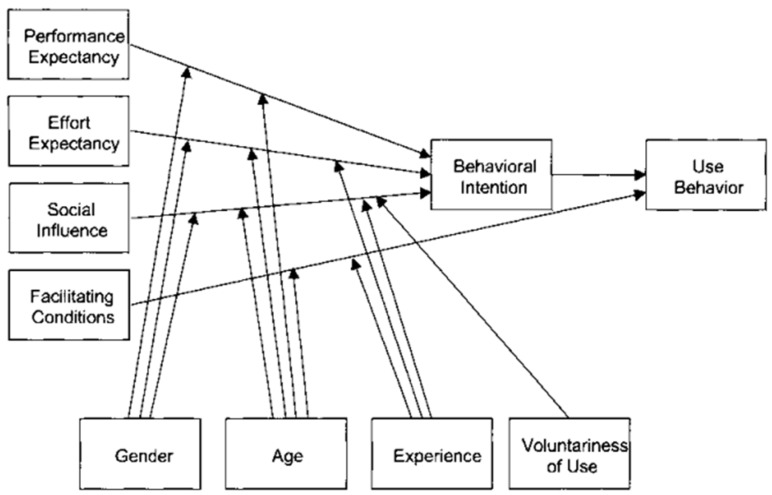
“According to Venkatesh et al. (2003) [21], the UTAUT may explain as much as 70% of the variation in intention.”
InfluentialUser Acceptance of Computer Technology: A Comparison of Two Theoretical Models
Davis, F. D., Bagozzi, R. P., & Warshaw, P. R. (1989) · Management Science · doi:10.1287/mnsc.35.8.982 · Cited by 25,709 · cited 2×
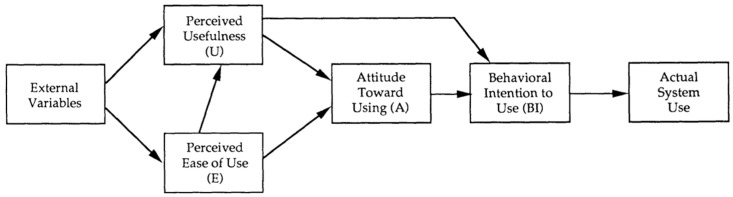
“The TAM was developed in 1989 by Fred Davis and adopted from the Theory of Reasoned Action (TRA) [18].”
Technology acceptance model: a literature review from 1986 to 2013
Marangunić, N., & Granić, A. (2015) · Universal Access in the Information Society · doi:10.1007/s10209-014-0348-1 · Cited by 2,458
Dwivedi, Y. K., Rana, N. P., Jeyaraj, A., Clement, M., & Williams, M. D. (2019) · Information Systems Frontiers · doi:10.1007/s10796-017-9774-y · Cited by 2,137 · cited 1×
“This consolidates the current theoretical viewpoints and enhances research on individual acceptance. made the UTAUT one of the most popular These improvements have made the UTAUT one of the most popular theoretical frameworks in IT/IS research [23]. theoretical frameworks in IT/IS research [23].”
The rise of artificial intelligence in healthcare applications
Bohr, A., & Memarzadeh, K. (2020) · Artificial Intelligence in Healthcare · doi:10.1016/b978-0-12-818438-7.00002-2 · Cited by 1,636 · cited 1×
“As is widely known, the healthcare industry has long struggled with a labour shortage [1,2].”
Kamal, S. A., Shafiq, M., & Kakria, P. (2020) · Technology in Society · doi:10.1016/j.techsoc.2019.101212 · Cited by 894 · cited 2×
“Furthermore, it is commonly used in studies investigating the interaction between technology and individual behaviours and intentions [19].”
Impact of Trust and Privacy Concerns on Technology Acceptance in Healthcare: An Indian Perspective
Dhagarra, D., Goswami, M., & Kumar, G. (2020) · International Journal of Medical Informatics · doi:10.1016/j.ijmedinf.2020.104164 · Cited by 436 · cited 4×
“Dhagarra et al. (2020) [13] investigated the effect of trust and privacy issues on the acceptance of technology in healthcare from an Indian viewpoint.”
InfluentialSchaper, L. K., & Pervan, G. P. (2007) · International Journal of Medical Informatics · doi:10.1016/j.ijmedinf.2006.05.028 · Cited by 371
Mackey, T. K., Kuo, T.-T., Gummadi, B., Clauson, K. A., Church, G., Grishin, D., Obbad, K., Barkovich, R., & Palombini, M. (2019) · BMC Medicine · doi:10.1186/s12916-019-1296-7 · Cited by 318 · cited 1×
“The healthcare industry faces one of the most serious problems in terms of technology adoption because people find it very difficult to adapt to new technologies despite the industry being the most important for people’s health [17].”
Technology Acceptance Models in Health Informatics: TAM and UTAUT
Elske, A. (2019) · Studies in Health Technology and Informatics · doi:10.3233/shti190111 · Cited by 296
Research works printed but not linked: 1
- Christian M. Gularso K. Utomo P. Yulita H. Wibowo S. Sunarno S. Melati R. Generation YZ’s E-Healthcare Use Factors Distribution in COVID-19’s Third Year: A UTAUT Modeling J. Distrib. Sci. 2023 21 117 129 10.15722/jds.21.07.202307.117 · doi:10.15722/jds.21.07.202307.117
Cited by
Items 101–200 of 476
Faktor Psikologis yang Mempengaruhi Penerimaan Teknologi AI dalam Bisnis Digital (Kajian Literatur)
Siregar, T. W. (2025) · RIGGS Journal of Artificial Intelligence and Digital Business · doi:10.31004/riggs.v4i4.3558 · Cited by 2
“Sebagai contoh, Lee et al. (2025) dalam tinjauan mereka tentang adopsi teknologi kesehatan menyoroti bahwa faktor psikologis seperti kepercayaan (trust), kecemasan terhadap teknologi (anxiety), dan kondisi fasilitasi (facilitating conditions) memiliki pengaruh penting terhadap penerimaan sistem…”
Determinants of Consumer Trust in Green FinTech Platforms
Veckalne, R. (2025) · FinTech · doi:10.3390/fintech4040072 · Cited by 2
Evaluation of Hospice@Home for Home-Based Palliative Care: Development and Usability Pilot Study
Kwon, S.-H., Lee, M. A., Kim, Y.-J., Park, S.-H., Lee, M.-J., Han, Y., & Kim, A.-S. (2025) · JMIR Formative Research · doi:10.2196/79334 · Cited by 2
“Although the small sample size limits generalizability, these observations may be considered in relation to the technology acceptance model, which proposes that perceived ease of use and perceived usefulness influence an individual’s intention to adopt technology [36].”
Mubarak, R. (2025) · European Scientific Journal ESJ · doi:10.19044/esj.2025.v21n35p1 · Cited by 2
Oraini, B. A. (2026) · Sustainability · doi:10.3390/su18031556 · Cited by 2
Wulansari, W. T., Sundari, S., Prasetyo, A., Hutapea, Y., Amir, H. T., & Tarmizi, A. (2026) · Quality Management Journal · doi:10.1080/10686967.2025.2611728 · Cited by 2
“Psychosocial factors such as trust in the system, organizational support, and positive attitudes toward technology are important variables that contribute to shaping the intend use EMR (Binyamin and Zafar 2021; Lee, Ramasamy, et al. 2025).”
Adoption of autonomous and shared autonomous vehicles: a multi-criteria decision-making approach
Alharasees, O., Hasanat, H. A. A., & Alothman, D. (2026) · International Journal of Transportation Science and Technology · doi:10.1016/j.ijtst.2025.09.002 · Cited by 2
Chellappa, V. (2026) · Safety Science · doi:10.1016/j.ssci.2026.107194 · Cited by 2
Conocimiento, emociones y actitudes ante la inteligencia artificial en España
Lodeiro-Vázquez, A., Buceta, B. B., & Gómez, F. E. H. (2026) · European Public & Social Innovation Review · doi:10.31637/epsir-2026-2844 · Cited by 2
Gabunilas, J. L., & Naval, A. B. (2026) · International Journal of Education in Mathematics Science and Technology · doi:10.46328/ijemst.5683 · Cited by 2
“The highest HTMT was between Perceived Ease of Use and Perceived Usefulness (HTMT = .892), which is expected since TAM theory posits these are related constructs which suggests that easier-to-use technology tends to be perceived as more useful (Luo et al., 2024; Lee et al., 2025).”
Digitalization of Police Services as Public Service Innovation: A Case Study of the Parepare Police
Ahmad, J., Nonci, N., Zainuddin, A. M., Astuti, Y., & Gafur, A. (2026) · Journal of Local Government Issues · doi:10.22219/logos.v9i1.43348 · Cited by 2
Alrashedi, H., Alnomasy, N., & Mostoles, R. (2026) · JMIR Nursing · doi:10.2196/85385 · Cited by 2
“The lack of predictive ability for sustainability and engagement constructs also aligns with the results in the context of a lack of practical experience [34,35].”
Nurses’ Evaluation of a Service Robot for Inpatient Care: Technology Acceptance Study
Friese, C., Klebbe, R., & Steinert, A. (2026) · JMIR Nursing · doi:10.2196/86824 · Cited by 2
“These findings extend beyond the core constructs of the TAM and under-score the necessity of adapting and expanding the model for health care contexts through the inclusion of additional context-sensitive factors [29].”
Gil-Hernández, E., Carrillo, I., Pérez-Esteve, C., Rodríguez, A. A., Guilabert, M., Ballester, P., & Mira, J. J. (2026) · International Journal of Medical Informatics · doi:10.1016/j.ijmedinf.2026.106444 · Cited by 2
Alli, A. O., Alabi, O. A., Oose, M. O., & Oyeyinka, R. (2026) · British Journal of Education · doi:10.37745/bje.2013/vol14n44265 · Cited by 2
Factors influencing college student intention to use ChatGPT with an integrated TAM and IDT model
Li, C., Yang, J., Tian, L., Zhang, H., & Chen, X. (2026) · Scientific Reports · doi:10.1038/s41598-026-51344-x · Cited by 2
“Likewise, Lee et al. argued that PEU represents a key mechanism through which technological attributes are translated into acceptance behaviours across different technology contexts 38 .”
Khan, S. (2026) · Journal of Sustainability Research · doi:10.20900/jsr20260045 · Cited by 2
Wang, X., Li, L., Cai, X., Luo, W., Shen, M., Zuo, Y., Zhang, J., Bai, Z., Yao, Y., Zhang, M., et al. (2026) · Frontiers in Public Health · doi:10.3389/fpubh.2026.1779200 · Cited by 2
“Within health contexts, extensions that incorporate trust, perceived risk, and privacy concern are particularly defensible because adoption decisions carry perceived stakes beyond convenience and productivity (39, 40).”
Love, B., Ghosh, C., Shi, W., Quaack, K. R., & Mackert, M. (2026) · Cancer Control · doi:10.1177/10732748261454474 · Cited by 2
Sutrisno, J., Makarawung, R. J. N., Bernanda, D. Y., Kembau, A. S., Felix, A., & Dermawan, R. M. (2026) · International Conference on Current Research in Artificial Intelligence and Data Science (ICCRAIDS) · doi:10.1109/iccraids67816.2026.11519712 · Cited by 2
Wiedermann, C. J., Piccoliori, G., Prainsack, D. H. V. S., & Ausserhofer, D. (2026) · Medical Sciences · doi:10.3390/medsci14020276 · Cited by 2
Özenir, Ç., Altınsoy, C., Kaçar, M., Kılınç, F. N., & Çakır, B. (2026) · Nutrients · doi:10.3390/nu18172931 · Cited by 2
“This interpretation is further supported by technology-acceptance frameworks, which conceptualise engagement with health technologies as a multifactorial process involving perceived usefulness, ease of use, self-efficacy, trust, social influence, and facilitating conditions [54].”
Sadar, S., & Ratia, M. R. (2025) · Journal of Government Insight · Cited by 2
Dogbanya, G., Fagbemi, B. T., Asorho, B. M., Alo, T. E., Ogunrinde, A. S., Dilioha, J. O., Obiechi, M. N., Ezeamii, P. C., & Agu, C. P. (2025) · Journal of Life Science and Public Health · doi:10.69739/jlsph.v1i2.966 · Cited by 2
Mosbeh, R., & Baghdadi, A. (2025) · SSRN Electronic Journal · doi:10.2139/ssrn.5478117 · Cited by 2
McKenna, S., Chong, M. K., Poulsen, A., Turner, A., Gorban, C., Crouse, J. J., Capon, W., Varidel, M., Aji, M., Scott, E. M., et al. (2025) · JMIR Human Factors · doi:10.2196/71678 · Cited by 1
“…challenges to implementing AI tools in health care settings, including regulatory restrictions and clinical decision systems, along with a lack of trust as compared to other industries, likely because making a mistake in health care settings could have serious consequences, even death [22,23].”
Koroma, M., Fofanah, M. S., Sesay, M., & Sawaneh, I. A. (2025) · International Journal of Scientific Research and Management (IJSRM) · doi:10.18535/ijsrm/v13i08.ec06 · Cited by 1
“Notably, emerging research in Kenya confirms similar institutional divides, with private universities reporting 40% higher security tool adoption (Lee et al., 2025).”
Determinants of the Success of E-Faktur Tax Application Implementation: A Quantitative Study
Nur, M., Mulang, H., & Rosmawati, R. (2025) · Jurnal Akuntansi · doi:10.24912/ja.v29i3.3251 · Cited by 1
“(Lee et al., 2025) Their study on adopting artificial intelligence in the healthcare sector in the United Arab Emirates showed that perceived usefulness significantly influences healthcare workers' willingness to accept new systems.”
Irgang, L., Zborowski, W., Stakionytė, E., Barth, H., & Holmén, M. (2025) · Journal of Health Organization and Management · doi:10.1108/jhom-01-2025-0038 · Cited by 1
“Evidence shows that involving clinicians in technology selection decisions significantly increases user buy-in and ownership (Bardhan et al. , 2023), while robust support networks and efficient after-sales support from technology providers improve adoption outcomes (Lee et al. , 2025).”
Nur, I. L., Nurtam, M. R., & Nugraha, D. (2025) · Jurnal Komputer dan Informatika · doi:10.35508/jicon.v13i2.23586 · Cited by 1
“…is the Technology Acceptance Model (TAM), which posits that perceived usefulness and perceived ease of use are primary determinants of users' intentions to adopt and utilize information systems, particularly in healthcare settings where user adoption directly impacts patient outcomes [6].”
Ellyamurti, D. O., & Arianto, R. F. (2025) · Jurnal Ilmiah Manajemen Kesatuan · doi:10.37641/jimkes.v13i6.4315 · Cited by 1
The effect of teachers’ digital competencies on behavioral intention to use digital technologies
Kurtoğlu, Y. B., Yıldırım, M., & Reisoğlu, İ. (2025) · Education and Information Technologies · doi:10.1007/s10639-025-13858-1 · Cited by 1
Ikwap, F., Oonge, S., & Otieno, C. (2025) · American Journal of Computer Science and Technology · doi:10.11648/j.ajcst.20250804.16 · Cited by 1
Rajković, T., Radovanović, S., Lečić-Cvetković, D., & Suknović, M. (2025) · Journal of East European Management Studies · doi:10.31083/jeems41522 · Cited by 1
Díaz, G., Pellejero, M., Sánchez-Sánchez, R., & Sánchez-Medina Agustín, J. (2026) · Humanities and Social Sciences Communications · doi:10.1057/s41599-025-06439-7 · Cited by 1
“This is also a great contribution in seeking to understand trust from other approaches, as suggested in the literature (e.g., Ekaimi et al., 2024; König et al., 2021; Lee et al., 2025).”
InfluentialEmran, H. A. A., Salem, M. A., & Elhony, F. M. (2026) · Journal of Business Management and Social Studies · doi:10.53748/jbms.v5i4.153 · Cited by 1
“The Technology Acceptance Model (TAM) serves as a robust framework for understanding user adoption of new technologies and has been widely applied across sectors such as telecommunications, education, and healthcare (Lee et al., 2025).”
Alipanahzadeh, H., Eikefjord, E., & Korbmacher, M. (2026) · Computers in Human Behavior Reports · doi:10.1016/j.chbr.2026.100936 · Cited by 1
Liu, K. N., Yang, Y., Song, Z., Li, H., Yanli, L., Zhang, K., Wu, X., Hou, Z., & Wang, Y. (2026) · JMIR Human Factors · doi:10.2196/78457 · Cited by 1
“Consequently, researchers turned to behavioral frameworks, such as the unified theory of acceptance and use of technology (UTAUT) [18], the technology acceptance model (TAM) [19], and the theory of planned behavior [20].”
Anitha, K., Amala, J., & Gareh, F. E. (2026) · Advances in computational intelligence and robotics book series · doi:10.4018/979-8-3373-5891-8.ch001 · Cited by 1
Abdullahi, U., Mudey, M. H., Manaf, H. B. A., & JiFang, C. (2026) · Multidisciplinary Reviews · doi:10.31893/multirev.2026403 · Cited by 1
“However, recent scholarship argues that these models, while widely validated in developed contexts, may oversimplify the adoption process in developing environments, where users’ confidence and contextual constraints play pivotal roles (Davis & Granić, 2024; Lee et al., 2025).”
Santos, N. K. R., Fariñas, M. R., Behan, S. J. E., Agraviador, R. M., Buquing, E. D., Diosanta, J. M., Evangelio, K. C., & Santiago, M. D. R. (2026) · doi:10.36413/pjahs.0902.008 · Cited by 1
Susiani, A., Wennie, J., & Masliha, M. (2025) · International Journal of Nursing Information · doi:10.58418/ijni.v4i2.165 · Cited by 1
“Consistent with the Technology Acceptance Model, perceived ease of use influences technology adoption behaviors (Alsyouf et al., 2023; Lee et al., 2025); when nursing tools adopt a simple interface, nurses can more readily access visual aids or digital brochures without distraction, directly…”
Safarov, M. A., Mammadzada, A. Y., Polukhova, S. M. P., Abaszade, Z. A., Ismayilova, S., Mammadov, F. Y., & Mahmudova, P. A. (2026) · Archives of Academic Emergency Medicine · doi:10.22037/aaem.v14i1.2893 · Cited by 1
“Technology acceptance models (TAM/UTAUT) These models stress the influence of perceived usefulness and ease of use in the process of technology uptake (20).”
Correa, M. P., Giordani, C. B., da Motta-Leal-Filho, J. M., Marques, M. A., Saleh, J. N., & Rossi, G. B. (2026) · Radiologia Brasileira · doi:10.1590/0100-3984.2025.0058 · Cited by 1
“This integration enables the development of unified instru - ments and interventions that are better suited to the complexity of health care environments (17,18) .”
Almutairi, M. G., Alyousef, A. M., Alduraywish, W., Hafiz, R. A., Almutairi, K. K., & Alturki, M. (2026) · Saudi Journal of Health Systems Research · doi:10.1159/000551453 · Cited by 1
Poerwadi, S. A., & Lhaksmana, K. M. (2025) · International Conference on Computer and Applications (ICCA) · doi:10.1109/icca66035.2025.11431071 · Cited by 1
Aktepe, B., ÇITAK, B., Temizkan, S. P., Temizkan, R., & CANKÜL, D. (2026) · Journal of Hospitality Leisure Sport & Tourism Education · doi:10.1016/j.jhlste.2026.100603 · Cited by 1
Marston, H. R., Brittain, K., Lynch, J. K., Lariviere, M., Mehta, R., Thorn, J. C., Henderson, C., Steils, N., Wilson-Nash, C., & Gibson, G. (2026) · Cogent Gerontology · doi:10.1080/28324897.2026.2645518 · Cited by 1
“Additional methodological limitations include the following: (1) solely focusing on co-production activities, with limited quantitative data collected from frameworks such as the TAM, UTAUT, and SUS; future work should consider utilising these frameworks (Lee et al., 2025).”
ALruwaili, B. F., Alruwili, A. N., Alruwaili, A. M., Alruwaili, H. S., Almutairi, N. A., Alruwaili, T. T., Alsirhani, B. T., Thirunavukkarasu, A., & AL-Ruwaili, H. I. (2026) · Healthcare · doi:10.3390/healthcare14070865 · Cited by 1
“These associations can be further explained by previous studies that demonstrated that physicians’ acceptance is closely related to its usefulness, while the barriers undermine adoption [39,60].”
OKOYE, K. O. (2026) · Social Sciences & Humanities Open · doi:10.1016/j.ssaho.2026.102743 · Cited by 1
Nakao, T., & Seo, Y. (2026) · Cleaner Waste Systems · doi:10.1016/j.clwas.2026.100514 · Cited by 1
Tikawati, & Qomariah, S. (2025) · MORFAI JOURNAL · doi:10.5281/zenodo.19565498 · Cited by 1
Aanazy, W., & Almutairi, N. (2026) · Journal of Pioneering Medical Science · doi:10.47310/jpms202515s0110 · Cited by 1
Chabata, T. T., Muresherwa, G., Marumbwa, J., & Mabuyana, B. (2026) · Cogent Business & Management · doi:10.1080/23311975.2026.2664255 · Cited by 1
Adapting to Digitalization: Employee Readiness and Challenges in a Philippine Insurance Company
Briones, J. P., Llorin, C. M., Angustia, B. G., Carig, M. G., Flores, C. L., & Galapon, M. M. (2026) · Journal of Governance Risk Management Compliance and Sustainability · doi:10.31098/jgrcs.v6i1.3901 · Cited by 1
Mahmood, S., Sabir, I., & Masud, S. (2025) · Journal of Applied Research and Multidisciplinary Studies · doi:10.32350/jarms.62.04 · Cited by 1
Matli, W. (2026) · Universal Access in the Information Society · doi:10.1007/s10209-026-01338-3 · Cited by 1
“Similarly, Lee et al. [ 37 ] analysed the adaptability of both TAM and UTAUT in the healthcare domain, by identifying gaps such as the psychosocial barriers within healthcare settings, also using a systematic review approach.”
Ivanka, C. S. I. D., Hardjono, E. A., Allysha, K., Kristo, T. G., & Kosasih (2026) · International Archives of Medical Sciences and Public Health · doi:10.53806/iamsph.v7i1.1389 · Cited by 1
“Literature indicates that units receiving intensive training achieve utilization rates of 88–92%, compared to 52–61% in unsupported units [32].”
Pulkkinen, J. (2026) · BMC Health Services Research · doi:10.1186/s12913-026-14855-x · Cited by 1
“The survey instrument was developed from the UTAUT framework [24] and prior research on technology adoption in public sector service production organizations [29–31].”
Zhang, D., Yunlong, Z., & Jiang, X. (2026) · PLoS ONE · doi:10.1371/journal.pone.0349450 · Cited by 1
“…studies, Lee et al. implicitly followed its core logic in their study on how cultural cognition influences digital literacy through technology acceptance [53]; while the S-O-R model has been validated in single-culture settings, it has not yet formed a cross-cultural integration framework.”
Sultan, M. A., Ali, A. H., Barakat, M. R., & Kramberger, T. (2026) · Humanities and Social Sciences Communications · doi:10.1057/s41599-026-07096-0 · Cited by 1
“The integration of SST and UTAUT in this study responds to that gap by offering a comprehensive approach that considers both structural enablers and individual choices (Lee et al., 2025).”
The Role of Rating Valence in AI Skin Cancer App Acceptance: Eye-Tracking and Questionnaire Study
Jagemann, I., Hegner, S. M., & Hirschfeld, G. H. F. (2026) · JMIR Human Factors · doi:10.2196/93489 · Cited by 1
“A recent review by Lee et al [30] shows that the core TAM constructs are insufficient in complex health care environments, where additional factors, such as trust, organizational support, and education, significantly influence adoption.”
Weaving Digital–Physical Realities: Conditional Empowerment in Women’s Smart Tourism
Torabi, Z.-A. (2026) · Journal of Travel Research · doi:10.1177/00472875261447273 · Cited by 1
Perceptions of care home residents, families and staff about wearable devices: a scoping review
Swain-Velasco, A., Hynes, K., Shenkin, S. D., & Drummond, M. (2026) · European Geriatric Medicine · doi:10.1007/s41999-026-01550-7 · Cited by 1
“Outcomes often pri-oritise efficiency, clinical effectiveness, and health-related behaviours [36, 37].”
Lynch, P. D. (2026) · Frontiers in Artificial Intelligence · doi:10.3389/frai.2026.1801235 · Cited by 1
“A recent review of TAM in the adoption of healthcare innovations similarly found that boundary conditions matter: patient use of technology, including AI, depends more on ease of use, whereas perceived usefulness matters more for healthcare professionals (Lee et al., 2025).”
Sitompul, R. P. (2026) · Decision Sciences in Human Learning and Development · doi:10.64268/decision.v1i1.8 · Cited by 1
de Moraes, B. R. S., Teles, A. S., da Silva, J. C., Batista, A. D. A., dos Santos, A. M., Silva, F., & Coutinho, L. (2026) · IEEE Access · doi:10.1109/access.2026.3714975 · Cited by 1
“The TAM is widely used to investigate factors influencing the acceptance or rejection of information systems and technologies, including in healthcare settings [46].”
Rompas, R. R., & Fajar, A. N. (2026) · Jurnal Ilmiah Ilmu Terapan Universitas Jambi|JIITUJ| · doi:10.22437/jiituj.v10i3.56301 · Cited by 1
Socially Assistive Robots for Cognitive Assessment and Training in Older Adults: A Systematic Review
Zubair, M., Tamantini, C., Benedictis, R. D., Fracasso, F., Umbrico, A., Beraldo, G., Orlandini, A., & Cortellessa, G. (2026) · Robotics · doi:10.3390/robotics15080152 · Cited by 1
“Complex or unfamiliar interfaces may cause anxiety, rejection, reduced confidence, or low adherence, particularly when users receive insufficient assistance or perceive limited usefulness in the proposed technology [29,30].”
Man, S. S., Wu, X., Chiu, K. T., Ma, Q., & Chan, A. H. S. (2026) · Disability and Rehabilitation Assistive Technology · doi:10.1080/17483107.2026.2716566 · Cited by 1
Ajayi, O. E. (2026) · NUML International Journal of Business & Management · doi:10.52015/nijbm.v21i1.262 · Cited by 1
Jiménez-García, S., Pozo, M. D., García‐Rodríguez, J., Tomás, D., Ortiz-Pérez, D., Mikkonen, K., Jarva, E., & Vizcaya-Moreno, M. F. (2026) · Journal of Medical Internet Research · doi:10.2196/96170 · Cited by 1
“…of technology (UTAUT) provide a conceptual basis for understanding health care professionals’ engagement with digital technologies, emphasizing the role of perceived usefulness, ease of use, social influence, facilitating conditions, and trust in shaping intention to use AI-enabled systems [16-19].”
John, D. T., Rechberg, K.-H., Guthardt, L., Helten, A.-K., Sahan, F., Lehr, D., Pryss, R. C., Schobel, J., & Apolinário-Hagen, J. (2026) · European Journal of Health Psychology · doi:10.1027/2512-8442/a000201 · Cited by 1
Nguyen, D. N. K., & Luan, N. T. (2026) · National Conference on Technical Education and International Conference on Technical Education (NCTechEd & ICTechEd) · doi:10.1109/icteched69022.2026.11682858 · Cited by 1
“Subsequent extensions introduce perceived value (PV), offering a broader evaluation of how learners assess technological benefits in complex environments [11], [12].”
Handayani, R., & Afandi, A. (2026) · Sharia Economic and Management Business Journal (SEMBJ) · doi:10.62159/sembj.v7i2.1980 · Cited by 1
“This aligns with the views of Hussein (2017), Gupta et al. (2022), and Lee et al. (2025), who argue that attitudes are a key predictor of adoption intentions in the TAM model.”
Patriansyah, M., Natalisa, D., & Maulana, A. (2026) · Business and Applied Management Journal. · doi:10.61987/bamj.v4i2.2411 · Cited by 1
Klein, A., & Sharma, V. M. (2026) · Behaviour and Information Technology · doi:10.1080/0144929x.2026.2734076 · Cited by 2
Cao, D., Peng, Y., Yang, X., Chen, B., Chen, Z., & Sun, Q. (2026) · Frontiers in Education · doi:10.3389/feduc.2026.1896901 · Cited by 1
Analisis Model Penerimaan Teknologi dengan EXT TAM Pada E-learning di Perguruan Tinggi
Syahidurrahman, A. M., Alwi, M. N. R., Fadly, N., & Aprilianti Nirmala, S. (2025) · Journal of Education for Creativity and Innovation · Cited by 1
Suwardi, A., & Jumono, S. (2025) · Journal of Innovative and Creativity (Joecy) · doi:10.31004/joecy.v5i3.3562 · Cited by 1
Figueiredo, I., Marques, B., Palricas, D., de Oliveira, S., Graça, M., Silva, S., Reisinho, P., Costa, L. V., Amorim, P., Dias, P., et al. (2026) · Computers & Graphics · doi:10.1016/j.cag.2026.104773 · Cited by 1
BOZDAĞ, A. N. S., Büyükdereci, F. B., & Artan, H. N. (2026) · Nutrition & Dietetics · doi:10.1111/1747-0080.70094 · Cited by 1
Kim, B. H., Nam, H. J., Lee, H., Park, H. N., & Yoon, J. Y. (2025) · PLoS ONE · doi:10.1371/journal.pone.0332072 · Cited by 1
“For instance, peer mentoring and practical training can enhance the staff’s proficiency and confidence, which in turn may improve perceived usefulness [35].”
Cao, D., Cao, D., Chen, B., Liao, Y., Chen, Z., Peng, Y., Zhuge, J., & Sun, Q. (2025) · SSRN Electronic Journal · doi:10.2139/ssrn.5401522 · Cited by 1
Elgammal, N., Hassan, D., Selim, N., Hegazy, A., & Khadragy, S. (2025) · International Journal of Innovative Research and Scientific Studies · doi:10.53894/ijirss.v8i3.7392
“In addition, certain findings demonstrated a positive attitude amongst faculty members who seek to incorporate AI technologies or applications into design courses taught in higher education [17].”
InfluentialLagunday, E. J. B., & Menes, C. C. (2025) · Technium Social Sciences Journal · doi:10.47577/tssj.v72i1.12896
Rohim, A., Fahrudda, A., Suswojo, H., & Wiliyanarti, P. F. (2025) · Health and Technology Journal (HTechJ) · doi:10.53713/htechj.v3i3.355
Aurea, A. R., & Pribadi, F. (2025) · Media Publikasi Promosi Kesehatan Indonesia (MPPKI) · doi:10.56338/mppki.v8i8.7464
Alzubaidi, H., & Alyafie, K. (2025) · المجلة العربیة للإدارة · doi:10.21608/aja.2025.401724.1892
Makula, J. J., William, F. K., & Nguru, F. B. (2025) · CTE Workshop Proceedings · doi:10.55056/cte.985
“It is also considered one of the most influential theories in contemporary information systems research [12].”
Zheng, J., Tang, W., Zheng, B., Xu, H., Zhou, J., & Chen, M. (2026) · BMC Nursing · doi:10.1186/s12912-026-05164-z
“Such constructs closely align with nursing perceptions of telehealth, including satisfaction, rejection, and developmental perspectives, highlighting the need for validated instruments that capture these dimensions across cultural settings [10].”
Behavioural insights into older adults’ intention to use self-service technology in restaurants
Anbealagan, N. D., Anthonysamy, L., & Pang, S. M. (2025) · International Journal of Innovative Research and Scientific Studies · doi:10.53894/ijirss.v8i6.10109
“TAM has become one of the most influential frameworks for exploring the issues regarding technology acceptance and rejection [12].”
Dijitalleşmenin fitness sektöründe getirdiği yenilikler ve bu yeniliklere işletmecilerin bakış açısı
İnce, U., & Turhan, F. H. (2025) · International Journal Of Eurasia Social Sciences · doi:10.70736/ijoess.1781
Quan, H. M., Thang, P. Q., & Vinh, V. M. (2025) · Journal of Economics Finance and Management Studies · doi:10.47191/jefms/v8-i10-02
Invasive rapid innovation: An introduction and exploration of their acceptance
Lasarov, W., & Hoffmann, S. (2025) · Technology in Society · doi:10.1016/j.techsoc.2025.103118
Mo, W., Singh, A., Ayobi, A., & Holloway, C. (2025) · International ACM SIGACCESS Conference on Computers and Accessibility (ASSETS) · doi:10.1145/3663547.3746340
“In particular, a broad range of use cases has been explored [44, 77], such as ChatGPT’s application in medical research [41], health literacy education [20, 36, 85, 94], scenario simulations for training [16, 47], and daily clinical practices (e.g., triage, consul-tation, and post-treatment care…”
Woods, G., Gaffney, C. J., Ryska, O., & Hayes, L. D. (2026) · JMIR Research Protocols · doi:10.2196/86610
“TAM will be applied to capture user acceptance constructs, including perceived usefulness, perceived ease of use, behavioral intention to use the technology, and actual use or engagement [32].”
Pradeep, P., & -, A. S. (2025) · International Journal For Multidisciplinary Research · doi:10.36948/ijfmr.2025.v07i06.60009
A Conceptual Framework for Disruptive Technology Adoption in the Construction Industry
Hassim, N., Razali, M. N., Razak, K. A. B. A., Lee, W. C., Hanapi, R., & Arabi, A. (2025) · IEEE International Conference on Recent Advances and Innovations in Engineering (ICRAIE) · doi:10.1109/icraie65839.2025.11239284
“This is due to the TAM straightforward approach, which simplifies complex technology acceptance by focusing on two key components only, that are perceived usefulness (PU) and perceived ease of use (PEOU) [29].”
Ethical AI Storytelling in Volunteer Tourism: Code Meets Compassion
Cheraghian, M., & Vayghan, S. (2025) · Advances in computational intelligence and robotics book series · doi:10.4018/979-8-3373-5022-6.ch005
Metadata
- Authors
- Lee, A. T., Ramasamy, R. K., & Subbarao, A.
- Affiliations
- Multimedia University (MY)
- Corresponding author
- Ramasamy, R Kanesaraj
- Venue
- Healthcare
- Publisher
- MDPI AG
- Published
- 2025-01-27
- Volume
- 13
- Issue
- 3
- Pages
- 250
- ISSN
- 2227-9032 (ISSN-L)
- PMC
- PMC11816427
- OpenAlex
- W4406873496
- Cited by
- 241
- References
- 40
- Citations by year
- 2026: 160 · 2025: 81
- FWCI
- 60.43
- Type
- journal article
- Language
- en
- Open access
- gold
- doi.org
- Licence
- Locations
- Healthcare (publishedVersion, cc-by)
- Preprints.org (acceptedVersion, cc-by)
- PubMed Central (publishedVersion, cc-by)
- PubMed (publishedVersion)
- Siti Hasmah Digital Library-MMU Institutiona Repository (Multimedia University) (acceptedVersion)
- Funders
- Telekom Research & Development Sdn Bhd (TM R&D) (RDTC/241124)
- Topics
- Social Sciences › Decision Sciences › Information Systems and Management › Technology Adoption and User Behaviour
- Health Sciences › Health Professions › Health Information Management › Electronic Health Records Systems
- Health Sciences › Health Professions › Health Information Management › Health, Technology, Consumer Behavior
- Keywords
- health technology adoption, technology acceptance model, UTAUT, Unified Theory of Acceptance and Use of Technology, psychosocial barriers, trust in technology, perceived usefulness, perceived ease of use, organizational readiness, employee training, organizational support, resistance to technology
About these checks
Registry, retraction, Cites and statistics results are computed, not judged, with one exception: a printed reference that no index lists is read once by a model before it counts as a citation error. Claims are extracted by a model and kept only when their quote appears verbatim in the text; each cited source is then checked, with a model’s help, for whether it says what the claim relies on. Those verdicts can be wrong — read the claim’s quote and the cited source before relying on one.
Statistics and arithmetic are recomputed, not judged.
Confidence bands are shown only for fields calibrated on our annotated test set. None is calibrated yet, so no band is shown.
What counts as a claim ›How we measure confidence ›How we check this ›
Are you an author, or do you see a problem with this page? Request a review
Data sources
Bibliographic data: Semantic Scholar, OpenAlex, Crossref.
Contains information from the Semantic Scholar Academic Graph Datasets, made available under the ODC Attribution License (ODC-BY 1.0).
Semantic Scholar’s data is described in: Kinney, R., et al. (2023). The Semantic Scholar Open Data Platform. arXiv:2301.10140.
