

Impact of Green Space Exposure on Children’s and Adolescents’ Mental Health: A Systematic Review
Open accessThe DOI matches its Crossref record; 45 of the 45 references it cites were found in a registry or an index.
Abstract
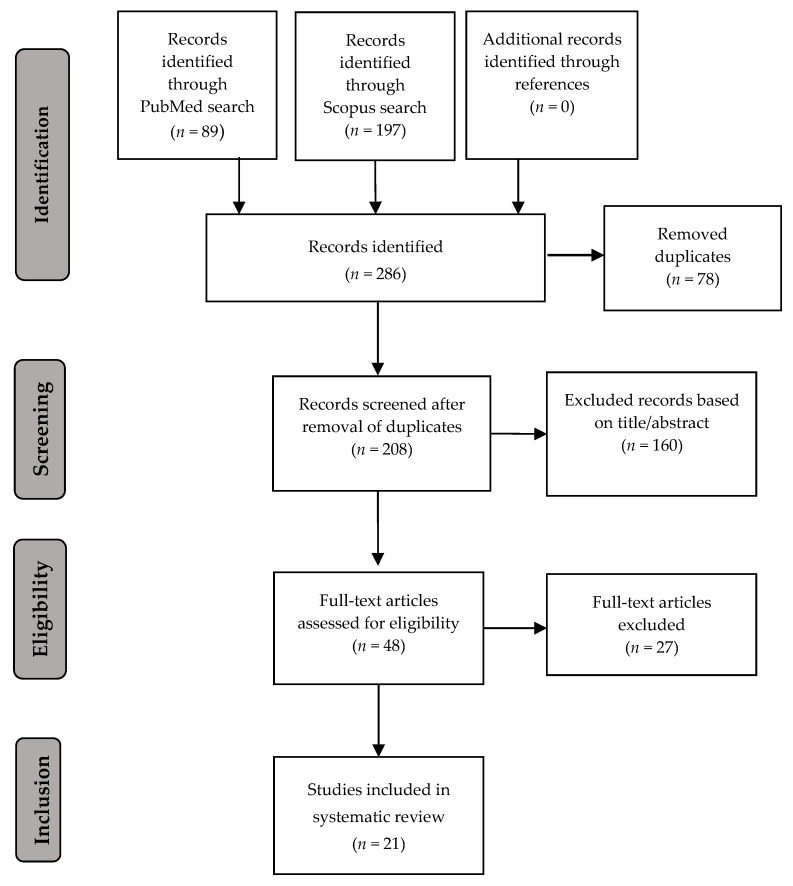
In recent years, the interest in the relationship between exposure to green spaces and children’s and adolescents’ mental health has risen. This systematic review aims to provide an overview of observational studies assessing the association between empirical green space exposure with standardized outcome measures of mental health problems, mental well-being and developmental problems in children, adolescents and young adults. The PRISMA statement guidelines for reporting systematic reviews were followed. A PubMed and Scopus search resulted in the inclusion of 21 studies. The evidence consistently suggests a beneficial association between green space exposure and children’s emotional and behavioral difficulties, particularly with hyperactivity and inattention problems. Limited evidence suggests a beneficial association with mental well-being in children and depressive symptoms in adolescents and young adults. These beneficial associations are resistant to adjustment for demographic and socio-economic confounders, which thus may represent independent links. Mediating factors and the variability of this association between different age groups are discussed. From a precautionary principle, evidence up to now demands the attention of policy makers, urban planners and mental healthcare workers in order to protect children’s and adolescents’ mental health in light of rapid global urbanization by providing sufficient exposure to green spaces.
Overview
The claims and statistics of this paper haven’t been checked yet.
Free: it reads the open-access text and checks the first 5 claims that cite a source we can check. Create a free account to check every claim.
Integrity signals
Registry
Cites
Statistics
Figures
Verification
Claims the paper makes
The claims and statistics of this paper haven’t been checked yet.
Free: it reads the open-access text and checks the first 5 claims that cite a source we can check. Create a free account to check every claim.
Claims other papers make about this one
Each is checked against this paper’s own text: does it say what the citing paper says it does?
The source backs part of the claim, not all of it — or backs it for a different population, condition or comparison.
In the citing paper
“Cross-sectional studies show an association between greater green space exposure and greater mental well-being and cognitive development.188,189”
From Digital Ecosystems, Children, and Adolescents: Technical Report (2026) · cites this paper as [188]
Experimental — accuracy not yet measuredThe source backs part of the claim, not all of it — or backs it for a different population, condition or comparison.
In the citing paper
“Regarding children and adolescents, previous systematic reviews have shown beneficial associations between exposure and access to greenspace, and depression and anxiety symptoms, mood, mental well-being, cognitive development, stress and emotional and behavioural difficulties (McCormick, 2017;Tillmann et al., 2018;Vanaken and Danckaerts, 2018;Zhang et al., 2020).”
From Exploring the role of exposure to green and blue spaces in preventing anxiety and depression among young people aged 14–24 years living in urban settings: A systematic review and conceptual framework (2022) · cites this paper as Vanaken and Danckaerts, 2018
Experimental — accuracy not yet measuredThe source backs part of the claim, not all of it — or backs it for a different population, condition or comparison.
In the citing paper
“However, the evidence from observational studies that residential exposure to vegetation is associated with reduced risk of depressive symptoms for young people is crucial in terms of implementing change that will have broad reach and lasting benefits (Vanaken and Danckaerts, 2018).”
From Exploring the role of exposure to green and blue spaces in preventing anxiety and depression among young people aged 14–24 years living in urban settings: A systematic review and conceptual framework (2022) · cites this paper as Vanaken and Danckaerts, 2018
Experimental — accuracy not yet measuredThe check wasn’t confident either way, so it gives no verdict — never disputed.
In the citing paper
“Research studies on adolescents a part of at least one minoritized community based on race, ethnicity, faith, disability, and/or sexuality found that they most commonly use the digital environment to facilitate positive connections.187,188”
From Digital Ecosystems, Children, and Adolescents: Technical Report (2026) · cites this paper as [188]
Experimental — accuracy not yet measuredThe check wasn’t confident either way, so it gives no verdict — never disputed.
In the citing paper
“The use of psychological theory to understand links between mental health and green and blue spaces has been limited for children and adolescents (Vanaken and Danckaerts, 2018).”
From Exploring the role of exposure to green and blue spaces in preventing anxiety and depression among young people aged 14–24 years living in urban settings: A systematic review and conceptual framework (2022) · cites this paper as Vanaken and Danckaerts, 2018
Experimental — accuracy not yet measured
Self-check
Percentages, sums and reported differences re-computed from the paper’s own numbers.
The self-check needs the paper’s full text.
Citations
Cites
Preferred Reporting Items for Systematic Reviews and Meta-Analyses: the PRISMA statement
Moher, D., Liberati, A., Tetzlaff, J., Altman, D. G., & for the PRISMA Group (2009) · BMJ · doi:10.1136/bmj.b2535 · Cited by 83,823
Preferred reporting items for systematic reviews and meta-analyses: The PRISMA statement
Moher, D., Liberati, A., Tetzlaff, J., Altman, D. G., & the PRISMA Group* (2009) · Annals of Internal Medicine · doi:10.7326/0003-4819-151-4-200908180-00135 · Cited by 37,554
World Urbanization Prospects: The 1996 Revision
Brockerhoff, M., & Nations, U. (1998) · Population and Development Review · doi:10.2307/2808041 · Cited by 5,881
Gascon, M., Triguero-Mas, M., Martínez, D., Dadvand, P., Forns, J., Plasència, A., & Nieuwenhuijsen, M. (2015) · International Journal of Environmental Research and Public Health · doi:10.3390/ijerph120404354 · Cited by 1,171 · cited 5×
“In previous work, a multitude of mediators of the association between green space and mental health were suggested [2].”
BackgroundMethodInfluentialMorbidity is related to a green living environment
Maas, J., Verheij, R. A., de Vries, S., Spreeuwenberg, P., Schellevis, F. G., & Groenewegen, P. P. (2009) · Journal of Epidemiology and Community Health · doi:10.1136/jech.2008.079038 · Cited by 1,133 · cited 2×
“In 2009, Maas and colleagues published a landmark study linking data of residential land use to medical diagnoses in primary care settings for approximately 345,000 Dutch patients from different age groups [9].”
Backgroundvan den Bosch, M., & Ode Sang, Å. (2017) · Environmental Research · doi:10.1016/j.envres.2017.05.040 · Cited by 968
Green spaces and cognitive development in primary schoolchildren
Dadvand, P., Nieuwenhuijsen, M. J., Esnaola, M., Forns, J., Basagaña, X., Alvarez-Pedrerol, M., Rivas, I., López-Vicente, M., De Castro Pascual, M., Su, J., et al. (2015) · Proceedings of the National Academy of Sciences · doi:10.1073/pnas.1503402112 · Cited by 942 · cited 5×
“, 2015, Spain [22] longitudinal 2593 7–10 years NDVI residence, school, commuting average greenness (250 m residence, 50 m commuting route, 50 m school) Compu-terized n-back, ANT age, gender, SES, nSES, air pollution Average greenness positively associated with 12 m development of two-back, three-back and ANT results.”
BackgroundInfluentialDefining greenspace: Multiple uses across multiple disciplines
Taylor, L., & Hochuli, D. F. (2017) · Landscape and Urban Planning · doi:10.1016/j.landurbplan.2016.09.024 · Cited by 784 · cited 1×
“Of course urbanized regions can offer contact with green spaces as well, defined in this context as urban vegetated spaces such as parks, grasslands, cemeteries, sports and playing fields and near-road trees [7].”
BackgroundDoes access to green space impact the mental well-being of children: A systematic review
McCormick, R. (2017) · Journal of Pediatric Nursing · doi:10.1016/j.pedn.2017.08.027 · Cited by 467 · cited 2×
“More recently, in 2017, McCormick published another systematic review in this domain [10].”
BackgroundResultEpidemiology of Internet Behaviors and Addiction Among Adolescents in Six Asian Countries
Mak, K.-K., Lai, C.-M., Watanabe, H., Kim, D.-I., Bahar, N., Ramos, M., Young, K. S., Ho, R. C. M., Aum, N.-R., & Cheng, C. (2014) · Cyberpsychology, Behavior, and Social Networking · doi:10.1089/cyber.2014.0139 · Cited by 422 · cited 1×
“Studying the role of green spaces seems particularly valuable in rapidly urbanizing and highly urbanized countries in Northeast Asia where internet addiction is reported to be highly prevalent [42].”
Background
Cited by
Items 101–200 of 435
Jimenez, M. P., Aris, I. M., Rifas‐Shiman, S. L., Young, J. G., Tiemeier, H. W., Hivert, M., Oken, E., & James, P. (2021) · Environmental Pollution · doi:10.1016/j.envpol.2021.118208 · Cited by 30
Mental Health and Positive Development Prevention Interventions: Overview of Systematic Reviews
Harrison, L., Sharma, N., Irfan, O., Zaman, M., Vaivada, T., & Bhutta, Z. A. (2022) · PEDIATRICS · doi:10.1542/peds.2021-053852g · Cited by 32
Taylor, A. F., Butts‐Wilmsmeyer, C. J., & Jordan, C. M. (2022) · Environmental Education Research · doi:10.1080/13504622.2022.2076811 · Cited by 34
Happiness and well-being: The value and findings from genetic studies
van de Weijer, M. P., de Vries, L. P., & Bartels, M. (2022) · Elsevier eBooks · doi:10.1016/b978-0-12-821514-2.00016-7 · Cited by 35
Green Space and Internalizing or Externalizing Symptoms Among Children
Towe‐Goodman, N. R., McArthur, K., Willoughby, M. T., Swingler, M. M., Wychgram, C., Just, A. C., Kloog, I., Bennett, D. H., Berry, D. J., Hazlehurst, M. F., et al. (2024) · JAMA Network Open · doi:10.1001/jamanetworkopen.2024.5742 · Cited by 33
Urban greenspace use among adolescents and young adults: An integrative review
Lyons, R., Colbert, A. M., Browning, M. H. E. M., & Jakub, K. (2021) · Public Health Nursing · doi:10.1111/phn.13010 · Cited by 29
Owusu, C., Flanagan, B. E., Lavery, A. M., Mertzlufft, C. E., McKenzie, B. A., Kolling, J., Lewis, B. E., Dunn, I., Hallisey, E. J., Lehnert, E. A., et al. (2022) · The Science of The Total Environment · doi:10.1016/j.scitotenv.2022.155908 · Cited by 29
A systematic review on the relationship between the built environment and children’s quality of life
Kodali, H., Hitch, L., Dunlap, A. F., Starvaggi, M., Wyka, K., & Huang, T. T. ‐. (2023) · BMC Public Health · doi:10.1186/s12889-023-17388-8 · Cited by 33
“At the same time, the built environment has also been shown to influence children’s health specifically [13–15].”
BackgroundWang, H., Abbey, C., Kennedy, T., Feng, E., Li, R. G., Liu, F., Zhu, A., Shen, S. T., Wadhavkar, P., Rozelle, S., et al. (2023) · Risk Management and Healthcare Policy · doi:10.2147/rmhp.s384997 · Cited by 32
“6 9 A second line of research focuses on academic performance as an outcome of interest.”
Toews, B., Wagenfeld, A., Stevens, J., & Shoemaker, C. (2020) · Journal of Offender Rehabilitation · doi:10.1080/10509674.2020.1733165 · Cited by 27
“Research finds that natural environments and imagery restore attention and mitigate stress (Kaplan, 1995; Ulrich, 2002; Vanaken & Danckaerts, 2018), even in children with ADHD (Taylor & Kuo, 2009); may offer psychological benefits (McCaffrey, Hanson, & McCaffrey, 2010; Mitchell, 2013); and can even…”
BackgroundBogan, E. D., Adams‐Bass, V. N., Francis, L. A., Gaylord‐Harden, N. K., Seaton, E. K., Scott, J. C., & Williams, J. L. (2022) · Child Policy Nexus · doi:10.1002/sop2.23 · Cited by 26
Connecting Urban Green Spaces with Children: A Scientometric Analysis Using CiteSpace
Niu, Y., Adam, M., & Hussein, H. (2022) · Land · doi:10.3390/land11081259 · Cited by 25
Fleckney, P. (2023) · Landscape and Urban Planning · doi:10.1016/j.landurbplan.2023.104753 · Cited by 28
Lee, E. K., Donley, G., Ciesielski, T. H., Freedman, D. A., & Cole, M. B. (2023) · Social Science & Medicine · doi:10.1016/j.socscimed.2023.116009 · Cited by 28
Sewell, K., Paul, S., Polt, K. D., Sugg, M. M., Leeper, R. D., Rao, Y. D., & Runkle, J. D. (2024) · Discover Mental Health · doi:10.1007/s44192-023-00055-0 · Cited by 30
“Research has shown a strong linkage between the greenest neighborhoods and fewer psychiatric conditions in this age group, as well as improved mental health and well-being and neurocognitive development [95–97].”
BackgroundChildren’s perceptions of their neighbourhoods during COVID-19 lockdown in Aotearoa New Zealand
Smith, M., Donnellan, N., Zhao, J., Egli, V., Ma, C., & Clark, T. C. (2022) · Children s Geographies · doi:10.1080/14733285.2022.2026887 · Cited by 27
“Protecting existing and providing additional natural spaces is important for child well-being (Vanaken and Danckaerts 2018).”
BackgroundPerceived green space quality, child biomarkers and health-related outcomes: A longitudinal study
Putra, I. G. N. E., Astell‐Burt, T., & Feng, X. (2022) · Environmental Pollution · doi:10.1016/j.envpol.2022.119075 · Cited by 27
Mueller, M. A. E., & Flouri, E. (2020) · Journal of Environmental Psychology · doi:10.1016/j.jenvp.2020.101472 · Cited by 27
Elevating the Role of the Outdoor Environment for Adolescent Wellbeing in Everyday Life
Wales, M., Mårtensson, F., Hoff, E. V., & Jansson, M. (2022) · Frontiers in Psychology · doi:10.3389/fpsyg.2022.774592 · Cited by 28
Bourke, M., Hilland, T. A., & Craike, M. J. (2021) · Journal of Happiness Studies · doi:10.1007/s10902-021-00431-z · Cited by 23
Aghabozorgi, K., van der Jagt, A., Bell, S., & Brown, C. (2023) · Health & Place · doi:10.1016/j.healthplace.2023.103141 · Cited by 25
Built Environment, Natural Environment, and Mental Health
Wei, Y. D., Wang, Y., Curtis, D. S., Shin, S. C., & Wen, M. (2024) · GeoHealth · doi:10.1029/2024gh001047 · Cited by 23
“Thus, green space is usually defined as urban vegetated space such as parks, grasslands, sports and playing fields and near‐road trees, rather than agricultural land (Vanaken & Danckaerts, 2018).”
BackgroundIs Brief Exposure to Green Space in School the Best Option to Improve Attention in Children?
Anabitarte, A., García‐Baquero, G., Andiarena, A., Lertxundi, N., Urbieta, N., Babarro, I., Ibarluzea, J. M., & Lertxundi, A. (2021) · International Journal of Environmental Research and Public Health · doi:10.3390/ijerph18147484 · Cited by 23
“Those are the reasons why it is important to provide young students with care restoration areas [26].”
BackgroundUrban Adolescence: The Role of Neighbourhood Greenspace in Mental Well-Being
Mueller, M. A. E., & Flouri, E. (2021) · Frontiers in Psychology · doi:10.3389/fpsyg.2021.712065 · Cited by 23
“Indeed, several studies do suggest an association of greenspace with children’s and adolescents’ emotional and behavioural adjustment (Vanaken and Danckaerts, 2018; Weeland et al., 2019b).”
BackgroundFranzoi, D., Bockting, C. L., Bennett, K. F., Odom, A., Lucassen, P. J., Pathania, A., Lee, A., Brouwer, M. E., van de Schoot, R., Wiers, R. W., et al. (2024) · SSM - Population Health · doi:10.1016/j.ssmph.2023.101575 · Cited by 21
Rowley, M., Topciu, R. A., & Owens, M. (2022) · International Journal of Environmental Research and Public Health · doi:10.3390/ijerph191912649 · Cited by 23
Theron, L. C., Höltge, J., & Ungar, M. T. (2023) · Development and Psychopathology · doi:10.1017/s0954579423000494 · Cited by 22
“…et al., 2021; Theron et al., 2022), but do not support understanding of the protective value of other co-occurring systemic resources (e.g., relational resources outside of the family, Rueger et al., 2016; ecological resources, Vanaken & Danckaerts, 2018) among adolescents at risk for depression.”
Advancing Understanding on Greenspace and Mental Health in Young People
Ryan, S. C., Sugg, M. M., Runkle, J. D., & Thapa, B. (2024) · GeoHealth · doi:10.1029/2023gh000959 · Cited by 25
“Third, there is less focus on mental health concerns, such as mood disorders or substance use disorders, with more attention targeted at childhood and adolescent behavior, hyperactivity, and attention (Vanaken & Danckaerts, 2018).”
BackgroundResultInfluentialZhu, C., Zheng, S., Yang, S., Dong, J., Ma, M., Zhang, S., Liu, S., Liu, X., Yao, Y., & Han, B. (2024) · Journal of Environmental Management · doi:10.1016/j.jenvman.2024.121510 · Cited by 21
Ahmed, S. M., Knibbs, L. D., Moss, K. M., Mouly, T. A., Yang, I. A., & Mishra, G. D. (2022) · The Science of The Total Environment · doi:10.1016/j.scitotenv.2022.155214 · Cited by 23
Outdoor Cold Stress and Cold Risk for Children during Winter: A Study in China’s Severe Cold Regions
Shao, L., He, X., Tang, Y., & Wu, S. (2022) · Buildings · doi:10.3390/buildings12070936 · Cited by 22
“Children’s emotional and behavioral challenges share an inverse relationship with exposure to green spaces [15].”
BackgroundDuku, E., Mensah, C. A., Amadu, I., & Adzigbli, W. K. (2023) · Geo Geography and Environment · doi:10.1002/geo2.119 · Cited by 26
Bolanis, D., Vergunst, F., Mavoa, S., Schmelefske, E., Khoury, B., Turecki, G., Orri, M., & Geoffroy, M. (2023) · The Science of The Total Environment · doi:10.1016/j.scitotenv.2023.167451 · Cited by 23
Khanh, H. N. T., Rigau-Sabadell, M., Khomenko, S., Barboza, E. P., Cirach, M., Duarte‐Salles, T., Nieuwenhuijsen, M. J., Vrijheid, M., Mueller, N., & de Bont, J. (2024) · Environmental Research · doi:10.1016/j.envres.2024.120306 · Cited by 23
Gallez, E., Canters, F., Gadeyne, S., & Baró, F. (2024) · Ecosystem Services · doi:10.1016/j.ecoser.2024.101677 · Cited by 21
Brons, M. E., Bolt, G., Helbich, M., Visser, K., & Stevens, G. W. J. M. (2022) · Health & Place · doi:10.1016/j.healthplace.2022.102765 · Cited by 20
Fahy, K., Alexiou, A., Mason, K., Bennett, D. L., Egan, M., Taylor-Robinson, D. C., & Barr, B. (2023) · BMC Public Health · doi:10.1186/s12889-023-15179-9 · Cited by 22
“Multiple systematic reviews have evidenced the importance of greenspace for the mental health of children, through pathways such as moderating stress and improving issues with hyperactivity and inattention [9, 10].”
BackgroundBiodiversity, Microbiomes, and Human Health
Stanhope, J., Breed, M. F., & Weinstein, P. (2022) · Progress in inflammation research · doi:10.1007/978-3-030-91051-8_3 · Cited by 19
Shareck, M., Aubé, E., & Sersli, S. (2023) · International Journal of Environmental Research and Public Health · doi:10.3390/ijerph20085474 · Cited by 21
Eco-Capabilities: Arts-in-Nature for Supporting Nature Visibilisation and Wellbeing in Children
Walshe, N., Perry, J., & Moula, Z. (2023) · Sustainability · doi:10.3390/su151612290 · Cited by 19
“Though evidence suggests clearly that contact with nature has considerable benefits for wellbeing [8–10], the number of children in the UK who regularly play outdoors has drastically decreased by 90% since the 1970s [11]; following the COVID-19 pandemic, 60% in England alone were found to be…”
Liao, Y., & Furuya, K. (2024) · Land · doi:10.3390/land13091522 · Cited by 19
Pathways between urbanization and harmful substance use
Morgan, N., & Mall, S. (2019) · Current Opinion in Psychiatry · doi:10.1097/yco.0000000000000488 · Cited by 21
Kioumourtzoglou, M. (2019) · JAMA Psychiatry · doi:10.1001/jamapsychiatry.2019.0010 · Cited by 19
Can restoring vacant lots help reduce crime? An examination of a program in Baltimore, MD
Kvit, A., Corrigan, A. E., Locke, D. H., Curriero, F. C., & Mmari, K. (2022) · Urban forestry & urban greening · doi:10.1016/j.ufug.2022.127630 · Cited by 20
Associations between the urban environment and psychotic experiences in adolescents
Bouter, D. C., Ravensbergen, S. J., Lakerveld, J., Hoogendijk, W. J. G., & Mil, N. H. G. (2023) · Schizophrenia Research · doi:10.1016/j.schres.2023.08.016 · Cited by 21
Smith, M., Spencer, G., Fouché, C., & Hoare, K. (2021) · Wellbeing Space and Society · doi:10.1016/j.wss.2021.100053 · Cited by 20
Shrestha, T., Cassarino, M., Foley, S., & Blasi, Z. D. (2025) · Journal of Environmental Psychology · doi:10.1016/j.jenvp.2025.102556 · Cited by 20
Li, Q., Whittle, S., & Rakesh, D. (2025) · Biological Psychiatry · doi:10.1016/j.biopsych.2025.03.026 · Cited by 27
Gemmell, E., Adjei-Boadi, D., Sarkar, A., Shoari, N., White, K. R., Zdero, S., Kassem, H., Pujara, T., & Brauer, M. D. (2023) · Health & Place · doi:10.1016/j.healthplace.2023.103081 · Cited by 19
Exposure to Residential Green Space and Bone Mineral Density in Young Children
Sleurs, H., Silva, A. I., Bijnens, E. M., Dockx, Y., Peusens, M., Rasking, L., Plusquin, M., & Nawrot, T. S. (2024) · JAMA Network Open · doi:10.1001/jamanetworkopen.2023.50214 · Cited by 20
Wang, Y., Desha, C., Caldera, S., & Beer, T. (2024) · Sustainability · doi:10.3390/su16030988 · Cited by 19
Farris, S., Dempsey, N., McEwan, K., Hoyle, H. E., & Cameron, R. W. F. (2024) · PLoS ONE · doi:10.1371/journal.pone.0297179 · Cited by 19
Is prosocial behaviour a missing link between green space quality and child health-related outcomes?
Putra, I. G. N. E., Astell‐Burt, T., Cliff, D. P., Vella, S. A., & Feng, X. (2022) · Social Psychiatry and Psychiatric Epidemiology · doi:10.1007/s00127-021-02186-7 · Cited by 17
Stahlmann, K., Mena, E., Kuhnert, R., Conrad, A., & Bolte, G. (2022) · International Journal of Environmental Research and Public Health · doi:10.3390/ijerph19116760 · Cited by 19
“The negative association between park access and mental health difficulties is in line with recent systematic reviews about the effect of public greenspace on children’s and adolescents’ mental health [16,18,19].”
BackgroundResultInfluentialPotential pathways of association from green space to smartphone addiction
Li, H., Browning, M. H. E. M., Dzhambov, A. M., Patwary, M. M., & Zhang, G. (2023) · Environmental Pollution · doi:10.1016/j.envpol.2023.121852 · Cited by 19
Marquez, J., Lambert, L., & Cutts, M. (2022) · Child Indicators Research · doi:10.1007/s12187-022-09993-7 · Cited by 16
“…et al., 2022; Murphy et al., 2020; Tomyn et al., 2017), the impact of lower urban density or quality of place and neighbourhood, or greater access to nature (Carmona, 2019; Gorski-Steiner et al., 2022; Rentfrow, 2018; Silva et al., 2016; Vanaken & Danckaerts, 2018; Ward et al., 2016).”
BackgroundMeasuring Green Space Effects on Attention and Stress in Children and Youth: A Scoping Review
Barger, Torquati, Larson, L. R., Bartz, Johnson-Gaither, Gardner, Moody, Rosenberg, Schutte, Murray, et al. (2021) · Children Youth and Environments · doi:10.7721/chilyoutenvi.31.1.0001 · Cited by 19
“…screened out numerous studies related to health, educational outcomes, and quality of life, each with recent child-focused reviews (Alderton et al., 2019; Browning & Rigolon, 2019; Mygind et al., 2021; Gray et al., 2015; Kabisch et al., 2017; Lambert et al., 2018; Vanaken & Danckaerts, 2018).”
BackgroundLuo, X. H., Tao, M., Lu, J., Lu, L., & He, X. (2023) · BMC Pediatrics · doi:10.1186/s12887-023-03868-8 · Cited by 15
“Moreover, several short intervention studies have confirmed the positive effects of physical activity interventions on promoting attention improvement [9, 10, 11].”
BackgroundRuíz-Mallén, I., Baró, F., Satorras, M., Atún, F., Blanc, N., Bortolamiol, S., Casas, L., Clauzel, C., Gallez, E., Grand-Meyer, E., et al. (2023) · Urban sustainability · doi:10.1007/978-981-99-2695-4_6 · Cited by 23
Fahy, K., Alexiou, A., Daras, K., Mason, K., Bennett, D. L., Taylor-Robinson, D. C., & Barr, B. (2023) · BMC Public Health · doi:10.1186/s12889-023-16340-0 · Cited by 17
“Systematic reviews have demonstrated the effects on attention restoration of exposure to green space, including the alleviation of hyperactivity and inattention problems in children [27], and some evidence of attention restoration for adults [28].”
BackgroundDonison, L., & Halsall, T. (2023) · Journal of Childhood Education & Society · doi:10.37291/2717638x.202343281 · Cited by 21
Exploring inequality in green space accessibility for women - Evidence from Mashhad, Iran
Minaei, M., Salar, Y. S., Zwierzchowska, I., Azinmoghaddam, F., & Hof, A. (2025) · Sustainable Cities and Society · doi:10.1016/j.scs.2025.106406 · Cited by 16
Yusof, J. N., Said, I., Aziz, N. F., & Rusli, N. (2021) · Children s Geographies · doi:10.1080/14733285.2021.1919997 · Cited by 15
“Moreover, Vanaken and Danckaerts (2018) found that exposure to green space elevates children’s mental health.”
BackgroundA multi-scalar perspective on health and urban housing: an umbrella review
Turcu, C., Crane, M. A., Hutchinson, E. J., Lloyd, S. J., Belesova, K., Wilkinson, P., & Davies, M. (2021) · Buildings and Cities · doi:10.5334/bc.119 · Cited by 15
“Five studies assessed various mental health outcomes, including stress and anxiety more generally (Calogiuri & Chroni 2014; Felappi et al. 2020; Gascon et al. 2017; Kondo et al. 2018a; Chastin et al. 2015), and in children and adolescents (Vanaken & Danckaerts 2018).”
BackgroundSainz-Santamaría, J., Moctezuma, D., Martínez-Cruz, A. L., Téllez, E. S., Graff, M., & Miranda‐Jiménez, S. (2022) · Cities · doi:10.1016/j.cities.2022.104094 · Cited by 15
How ‘outdoors time’ transforms the social relationships of children in Iceland
Þorsteinsson, J. F., Arnarsson, Á. M., & Jónasson, J. T. (2023) · Journal of Outdoor and Environmental Education · doi:10.1007/s42322-023-00123-7 · Cited by 16
“…of young children (Ulset et al., 2017), reduced symptoms of depression and anxiety (Beyer et al., 2014), and there is significant evidence of an inverse relationship between children’s and adolescents’ greenspace exposure and emotional and behavioural problems (Vanaken & Danckaerts, 2018).”
BackgroundDigital Ecosystems, Children, and Adolescents: Technical Report
Munzer, T., Milkovich, L. M., Madigan, S., Tomopoulos, S., Parga-Belinkie, J., Ajumobi, T., Cross, C., Gerwin, R., Council on Communications and Media, Radesky, J., et al. (2026) · Pediatrics · doi:10.1542/peds.2025-075321 · Cited by 14
Shaughnessy, S., Messinger, D. S., & Evans, S. C. (2025) · Child and Adolescent Mental Health · doi:10.1111/camh.12763 · Cited by 14
Kinder- und Jugendgesundheit in der Klimakrise
Eichinger, M., Andreas, M., Hoeppe, A., Nisius, K., & Rink, K. (2023) · Monatsschrift Kinderheilkunde · doi:10.1007/s00112-022-01685-4 · Cited by 14
Green space and substance use and addiction: A new frontier
Wiley, E. R., Seabrook, J. A., Gilliland, J., Anderson, K. K., & Stranges, S. (2019) · Addictive Behaviors · doi:10.1016/j.addbeh.2019.106155 · Cited by 15
Urban mental health: a position paper of the European psychiatric association
Misiak, B., Karska, J., Kowalski, S., Courtet, P., Volpe, U., Schouler‐Ocak, M., Destoop, M., Adorjan, K., Kraxner, F. H., Buwalda, V. J. A., et al. (2025) · European Psychiatry · doi:10.1192/j.eurpsy.2025.10100 · Cited by 14
Zhang, Y., Zhao, J., Mavoa, S., Fenaughty, J., Clark, T. C., Crengle, S. M., & Smith, M. (2024) · SSM - Population Health · doi:10.1016/j.ssmph.2024.101603 · Cited by 16
“…factors and the context of the study areas (Bray, Reece, Sinnett, Martin, & Hayward, 2022; Moll, Collado, Staats, & Corraliza, 2022; Sprague, Bancalari, Karim, & Siddiq, 2022; Tillmann, Tobin, Avison, & Gilliland, 2018; Vanaken & Danckaerts, 2018; Zhang, Mavoa, Zhao, Raphael, & Smith, 2020).”
Pediatric climate distress: A scoping review and clinical resource
Wortzel, J. D., Denga, V.-S., Angrish, J., Dooley, L. N., Manjón, I., Shabdar, S., Lykins, A. D., Cosh, S., Bain, P. A., Olagunju, A. T., et al. (2024) · The Journal of Climate Change and Health · doi:10.1016/j.joclim.2024.100349 · Cited by 13
Robinson, T., Nathan, A., Murray, K., & Christian, H. E. (2022) · International Journal of Environmental Research and Public Health · doi:10.3390/ijerph19116476 · Cited by 17
Neighborhood Greenspace and Changes in Pediatric Obesity During COVID-19
Mayne, S. L., Kelleher, S., Hannan, C., Kelly, M. K., Powell, M., Dalembert, G., McPeak, K. E., Jenssen, B. P., & Fiks, A. G. (2022) · American Journal of Preventive Medicine · doi:10.1016/j.amepre.2022.07.014 · Cited by 14
“The primary exposure was neighborhood Normalized Difference Vegetation Index (NDVI),(18) a satellite imagery-based measure of overall greenness that is widely used as an indicator of greenspace exposure.(19) NDVI is calculated from near-infrared and visible light radiation reflected by vegetation and ranges from 1 to…”
BackgroundKınay, P., & Ji, J. S. (2022) · Environmental Research Climate · doi:10.1088/2752-5295/ac4da2 · Cited by 14
“Many studies have examined the impact of greenness exposure and cognition among adults, and some results varied from studies among school-aged children [141, 162–164].”
BackgroundResultWang, A., Meng, Z., Zhao, B., & Zhang, F. (2024) · Sustainability · doi:10.3390/su16020691 · Cited by 14
“While many studies have investigated the beneficial effects of green spaces on different social groups [35,36], including adolescents and young adults [37–39], few scholars have specifically focused on the college student population.”
BackgroundKuzuoglu, S., Glover, T. D., Moyer, L., & Todd, J. (2024) · International Journal of Environmental Research and Public Health · doi:10.3390/ijerph21111519 · Cited by 15
“While previous research underlined the wide-ranging positive effect of access to urban green spaces on mental health on both the individual and the population-based levels [44–46], it is important to note the mostly quantitative nature of this body of literature.”
Deng, B., Boden, J. M., Ye, N., Morgenroth, J. A., Campbell, M. H., Eggleton, P., McLeod, G., & Hobbs, M. (2024) · Environment International · doi:10.1016/j.envint.2024.109223 · Cited by 14
Cleveland, B., Imms, C., Merrick, N., Imms, W., Aston, R., Cândido, C., Tregloan, K., Clinton, J. M., Alterator, S., Loh, P., et al. (2025) · International Journal of Inclusive Education · doi:10.1080/13603116.2025.2553212 · Cited by 12
“Consistent with prior research (McCormick 2017; Vanaken and Danckaerts 2018), the calming effects of interactions with nature (i.e. biophilic elements) were also highlighted as beneficial to students with disability.”
Beneficios de la actividad física en espacios naturales sobre la salud del adulto mayor
Reyes-Rincón, H., & Campos-Uscanga, Y. (2020) · Ene · doi:10.4321/s1988-348x2020000200007 · Cited by 32
Karimi, N., Sajadzadeh, H., & Aram, F. (2022) · Urban Science · doi:10.3390/urbansci6010020 · Cited by 15
Wilson, S. J., Juno, E., Pool, J.-R., Ray, S., Phillips, M., Francisco, S., & McCallum, S. (2022) · doi:10.46830/wrirpt.19.00013 · Cited by 14
Parenting on Earth: A Philosopher's Guide to Doing Right by Your Kids—and Everyone Else
Cripps, E. (2023) · The MIT Press eBooks · doi:10.7551/mitpress/14297.001.0001 · Cited by 15
de Vries, S., Kamphorst, D. A., & Langers, F. (2022) · doi:10.18174/569997 · Cited by 19
Gonçalves, C., Ip, K. I., Stanton, C. A., Bamwine, P., Williams, D. R., Rao, U., & Murry, V. M. (2026) · Neuropsychopharmacology · doi:10.1038/s41386-025-02239-4 · Cited by 11
den Berg, A. E. V., Hovinga, D., Joven, M., Steensma, R., & Maas, J. (2023) · Urban forestry & urban greening · doi:10.1016/j.ufug.2023.128188 · Cited by 12
Greenspace exposure and associated health outcomes: a systematic review of reviews
Bryer, B., Odebeatu, C. C., Lee, W. R., Vitangcol, K. J., Gallegos-Rejas, V. M., Osborne, N. J., Williams, G., & Darssan, D. (2024) · F1000Research · doi:10.12688/f1000research.148878.1 · Cited by 16
Raza, W., Bojke, L., Coventry, P. A., Murphy, P. J., Fulbright, H., & White, P. C. L. (2024) · International Journal of Environmental Research and Public Health · doi:10.3390/ijerph21111452 · Cited by 14
“For example, use of green spaces can decrease overall mortality [11], improve mental health [12,13] and improve cognitive abilities or educational outcomes [14], but there is limited evidence on the benefits arising from specific improvements to these green spaces.”
Urban green space and mental well-being of Aotearoa New Zealand adolescents: A path analysis
Zhang, Y., Zhao, J., Mavoa, S., Ikeda, E., Clark, T. C., Crengle, S. M., & Smith, M. (2022) · Wellbeing Space and Society · doi:10.1016/j.wss.2022.100085 · Cited by 13
“As highlighted by the systematic reviews (Vanaken & Danckaerts, 2018; Zhang et al., 2020), few studies have explored plausible mediators in the green space and mental well-being associations in adolescents, where multiple mediators were seldom included simultaneously and the mediatory role of sleep…”
de Vries, S., & Verheij, R. A. (2022) · Frontiers in Psychology · doi:10.3389/fpsyg.2022.948942 · Cited by 16
“A systematic review suggests that this may have detrimental consequences for the mental health of children, especially when it comes to hyperactivity and inattention problems (Vanaken and Danckaerts, 2018).”
BackgroundHuerta, C. M. (2023) · PLoS ONE · doi:10.1371/journal.pone.0295013 · Cited by 11
Buttazzoni, A. N., & Minaker, L. M. (2022) · Urban Studies · doi:10.1177/00420980221138311 · Cited by 12
“Although these relationships have received more study recently, the impacts of specific exposure concepts (e.g. the quality of spaces) (Vanaken and Danckaerts, 2018) remain unclear.”
BackgroundDzhambov, A. M., Lercher, P., Rüdisser, J., Browning, M. H. E. M., & Markevych, I. (2022) · International Journal of Hygiene and Environmental Health · doi:10.1016/j.ijheh.2022.113975 · Cited by 11
Elementary Classroom Views of Nature Are Associated with Lower Child Externalizing Behavior Problems
Pearson, A. L., Brown, C. D., Reuben, A., Nicholls, N., Pfeiffer, K. A., & Clevenger, K. A. (2023) · International Journal of Environmental Research and Public Health · doi:10.3390/ijerph20095653 · Cited by 12
Kim, E., Lee, W., Lee, J., Kim, Y., Lee, J. H., Hong, Y., Park, H., Kim, Y., Ha, M., Kim, Y., et al. (2023) · The Science of The Total Environment · doi:10.1016/j.scitotenv.2023.164888 · Cited by 10
Kyambade, M., Sewante, L., & Namatovu, A. (2025) · Cogent Social Sciences · doi:10.1080/23311886.2025.2466790 · Cited by 12
“…are known to affect children in three primary ways: they harm physical health, lead to mental health challenges, and disrupt education by displacing families, destroying schools, and forcing children into labor to support their families during crises (Kousky, 2016; Vanaken & Danckaerts, 2018).”
Greenspace Exposure and Obsessive-Compulsive Behaviors in Schoolchildren
Ezpeleta, L., Navarro, J. B., Alonso, L., de la Osa, N., Ambrós, A., Ubalde, M., Penelo, E., & Dadvand, P. (2022) · Environment and Behavior · doi:10.1177/00139165221095384 · Cited by 11
Friedman, S., Noble, R., Archer, S., Gibson, J. L., & Hughes, C. H. (2023) · Autism · doi:10.1177/13623613231166462 · Cited by 12
“Time in and near nature has well-evidenced associations with improved well-being in children (McCormick, 2017; Vanaken & many autistic adults and children experienced an increase in mental health difficulties during the pandemic (National Health Service, 2020; O’Connor et al., 2020).”
Advocating for planetary health is an essential part of advocating for children’s health
Haq, M., Sampath, V., Sheffield, P. E., Jackson, R. J., & Nadeau, K. C. (2024) · Pediatric Research · doi:10.1038/s41390-024-03665-8 · Cited by 11
“81 Such spaces can also decrease risk of allergic disease and increase immunological resilience.”
Metadata
- Authors
- Vanaken, G.-J., & Danckaerts, M.
- Affiliations
- KU Leuven (BE)
- Corresponding author
- Vanaken, Gert-Jan
- Venue
- International Journal of Environmental Research and Public Health
- Publisher
- MDPI AG
- Published
- 2018-11-27
- Volume
- 15
- Issue
- 12
- Pages
- 2668
- ISSN
- 1660-4601 (ISSN-L)
- PMC
- PMC6313536
- OpenAlex
- W2902918778
- Cited by
- 398
- References
- 45
- Citations by year
- 2026: 54 · 2025: 50 · 2024: 70 · 2023: 67 · 2022: 61 · 2021: 57 · 2020: 28 · 2019: 11
- FWCI
- 2.51
- Type
- journal article
- Language
- en
- Open access
- gold
- dx.doi.org
- Licence
- Locations
- International Journal of Environmental Research and Public Health (publishedVersion, cc-by)
- Europe PMC (PubMed Central) (publishedVersion, cc-by)
- PubMed Central (publishedVersion, cc-by)
- PubMed (publishedVersion)
- Lirias (submittedVersion, other-oa)
- RePEc: Research Papers in Economics (submittedVersion)
- DOAJ (DOAJ: Directory of Open Access Journals) (submittedVersion)
- Topics
- Social Sciences › Urban Studies › Urban Green Space and Health
- Social Sciences › Sociology and Political Science › Environmental Justice and Health Disparities
- Physical Sciences › Environmental Science › Management, Monitoring, Policy and Law › Urban Arborization and Environmental Studies
- Keywords
- green space exposure, child mental health, adolescent mental health, young adults, psychological well-being, emotional and behavioral problems, hyperactivity, inattention, depressive symptoms, urbanization, urban green space, mediators
- MeSH terms
- Parks, Recreational, Adolescent, Mental Disorders, Child, Child, Preschool, Environment Design, Female, Health Status, Humans, Male, Urbanization, Guidelines as Topic
About these checks
Registry, retraction, Cites and statistics results are computed, not judged, with one exception: a printed reference that no index lists is read once by a model before it counts as a citation error. Claims are extracted by a model and kept only when their quote appears verbatim in the text; each cited source is then checked, with a model’s help, for whether it says what the claim relies on. Those verdicts can be wrong — read the claim’s quote and the cited source before relying on one.
Statistics and arithmetic are recomputed, not judged.
Confidence bands are shown only for fields calibrated on our annotated test set. None is calibrated yet, so no band is shown.
What counts as a claim ›How we measure confidence ›How we check this ›
Are you an author, or do you see a problem with this page? Request a review
Data sources
Bibliographic data: Semantic Scholar, OpenAlex, Crossref.
Contains information from the Semantic Scholar Academic Graph Datasets, made available under the ODC Attribution License (ODC-BY 1.0).
Semantic Scholar’s data is described in: Kinney, R., et al. (2023). The Semantic Scholar Open Data Platform. arXiv:2301.10140.
