

Impact of Green Space Exposure on Children’s and Adolescents’ Mental Health: A Systematic Review
Open accessThe DOI matches its Crossref record; 45 of the 45 references it cites were found in a registry or an index.
Abstract
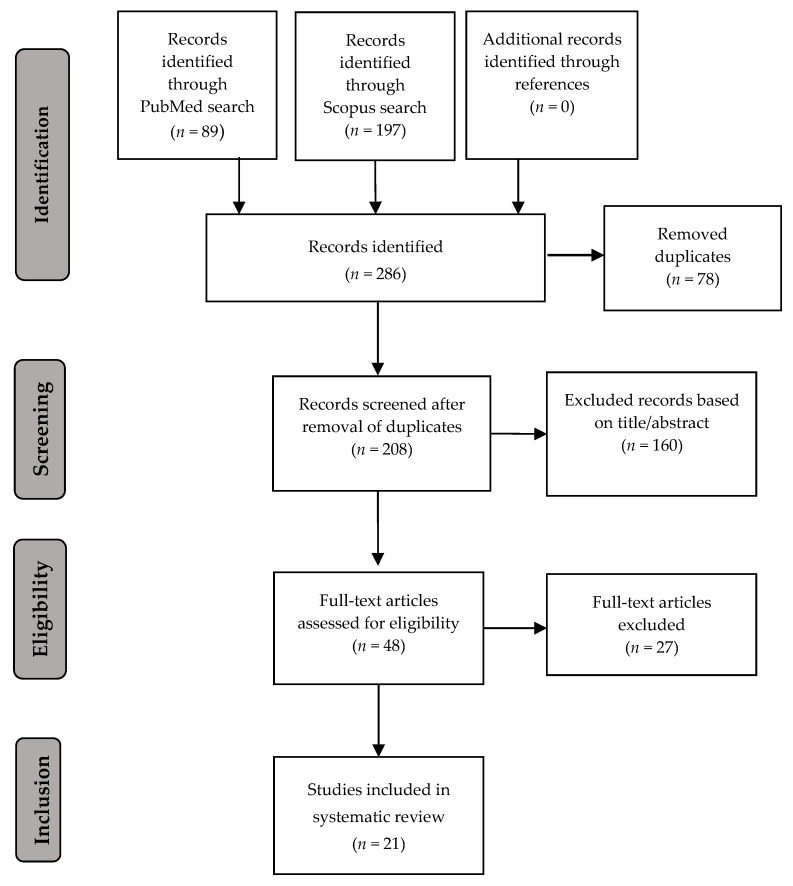
In recent years, the interest in the relationship between exposure to green spaces and children’s and adolescents’ mental health has risen. This systematic review aims to provide an overview of observational studies assessing the association between empirical green space exposure with standardized outcome measures of mental health problems, mental well-being and developmental problems in children, adolescents and young adults. The PRISMA statement guidelines for reporting systematic reviews were followed. A PubMed and Scopus search resulted in the inclusion of 21 studies. The evidence consistently suggests a beneficial association between green space exposure and children’s emotional and behavioral difficulties, particularly with hyperactivity and inattention problems. Limited evidence suggests a beneficial association with mental well-being in children and depressive symptoms in adolescents and young adults. These beneficial associations are resistant to adjustment for demographic and socio-economic confounders, which thus may represent independent links. Mediating factors and the variability of this association between different age groups are discussed. From a precautionary principle, evidence up to now demands the attention of policy makers, urban planners and mental healthcare workers in order to protect children’s and adolescents’ mental health in light of rapid global urbanization by providing sufficient exposure to green spaces.
Overview
The claims and statistics of this paper haven’t been checked yet.
Free: it reads the open-access text and checks the first 5 claims that cite a source we can check. Create a free account to check every claim.
Integrity signals
Registry
Cites
Statistics
Figures
Verification
Claims the paper makes
The claims and statistics of this paper haven’t been checked yet.
Free: it reads the open-access text and checks the first 5 claims that cite a source we can check. Create a free account to check every claim.
Claims other papers make about this one
Each is checked against this paper’s own text: does it say what the citing paper says it does?
The source backs part of the claim, not all of it — or backs it for a different population, condition or comparison.
In the citing paper
“Cross-sectional studies show an association between greater green space exposure and greater mental well-being and cognitive development.188,189”
From Digital Ecosystems, Children, and Adolescents: Technical Report (2026) · cites this paper as [188]
Experimental — accuracy not yet measuredThe source backs part of the claim, not all of it — or backs it for a different population, condition or comparison.
In the citing paper
“Regarding children and adolescents, previous systematic reviews have shown beneficial associations between exposure and access to greenspace, and depression and anxiety symptoms, mood, mental well-being, cognitive development, stress and emotional and behavioural difficulties (McCormick, 2017;Tillmann et al., 2018;Vanaken and Danckaerts, 2018;Zhang et al., 2020).”
From Exploring the role of exposure to green and blue spaces in preventing anxiety and depression among young people aged 14–24 years living in urban settings: A systematic review and conceptual framework (2022) · cites this paper as Vanaken and Danckaerts, 2018
Experimental — accuracy not yet measuredThe source backs part of the claim, not all of it — or backs it for a different population, condition or comparison.
In the citing paper
“However, the evidence from observational studies that residential exposure to vegetation is associated with reduced risk of depressive symptoms for young people is crucial in terms of implementing change that will have broad reach and lasting benefits (Vanaken and Danckaerts, 2018).”
From Exploring the role of exposure to green and blue spaces in preventing anxiety and depression among young people aged 14–24 years living in urban settings: A systematic review and conceptual framework (2022) · cites this paper as Vanaken and Danckaerts, 2018
Experimental — accuracy not yet measuredThe check wasn’t confident either way, so it gives no verdict — never disputed.
In the citing paper
“Research studies on adolescents a part of at least one minoritized community based on race, ethnicity, faith, disability, and/or sexuality found that they most commonly use the digital environment to facilitate positive connections.187,188”
From Digital Ecosystems, Children, and Adolescents: Technical Report (2026) · cites this paper as [188]
Experimental — accuracy not yet measuredThe check wasn’t confident either way, so it gives no verdict — never disputed.
In the citing paper
“The use of psychological theory to understand links between mental health and green and blue spaces has been limited for children and adolescents (Vanaken and Danckaerts, 2018).”
From Exploring the role of exposure to green and blue spaces in preventing anxiety and depression among young people aged 14–24 years living in urban settings: A systematic review and conceptual framework (2022) · cites this paper as Vanaken and Danckaerts, 2018
Experimental — accuracy not yet measured
Self-check
Percentages, sums and reported differences re-computed from the paper’s own numbers.
The self-check needs the paper’s full text.
Citations
Cites
Preferred Reporting Items for Systematic Reviews and Meta-Analyses: the PRISMA statement
Moher, D., Liberati, A., Tetzlaff, J., Altman, D. G., & for the PRISMA Group (2009) · BMJ · doi:10.1136/bmj.b2535 · Cited by 83,823
Preferred reporting items for systematic reviews and meta-analyses: The PRISMA statement
Moher, D., Liberati, A., Tetzlaff, J., Altman, D. G., & the PRISMA Group* (2009) · Annals of Internal Medicine · doi:10.7326/0003-4819-151-4-200908180-00135 · Cited by 37,554
World Urbanization Prospects: The 1996 Revision
Brockerhoff, M., & Nations, U. (1998) · Population and Development Review · doi:10.2307/2808041 · Cited by 5,881
Gascon, M., Triguero-Mas, M., Martínez, D., Dadvand, P., Forns, J., Plasència, A., & Nieuwenhuijsen, M. (2015) · International Journal of Environmental Research and Public Health · doi:10.3390/ijerph120404354 · Cited by 1,171 · cited 5×
“In previous work, a multitude of mediators of the association between green space and mental health were suggested [2].”
BackgroundMethodInfluentialMorbidity is related to a green living environment
Maas, J., Verheij, R. A., de Vries, S., Spreeuwenberg, P., Schellevis, F. G., & Groenewegen, P. P. (2009) · Journal of Epidemiology and Community Health · doi:10.1136/jech.2008.079038 · Cited by 1,133 · cited 2×
“In 2009, Maas and colleagues published a landmark study linking data of residential land use to medical diagnoses in primary care settings for approximately 345,000 Dutch patients from different age groups [9].”
Backgroundvan den Bosch, M., & Ode Sang, Å. (2017) · Environmental Research · doi:10.1016/j.envres.2017.05.040 · Cited by 968
Green spaces and cognitive development in primary schoolchildren
Dadvand, P., Nieuwenhuijsen, M. J., Esnaola, M., Forns, J., Basagaña, X., Alvarez-Pedrerol, M., Rivas, I., López-Vicente, M., De Castro Pascual, M., Su, J., et al. (2015) · Proceedings of the National Academy of Sciences · doi:10.1073/pnas.1503402112 · Cited by 942 · cited 5×
“, 2015, Spain [22] longitudinal 2593 7–10 years NDVI residence, school, commuting average greenness (250 m residence, 50 m commuting route, 50 m school) Compu-terized n-back, ANT age, gender, SES, nSES, air pollution Average greenness positively associated with 12 m development of two-back, three-back and ANT results.”
BackgroundInfluentialDefining greenspace: Multiple uses across multiple disciplines
Taylor, L., & Hochuli, D. F. (2017) · Landscape and Urban Planning · doi:10.1016/j.landurbplan.2016.09.024 · Cited by 784 · cited 1×
“Of course urbanized regions can offer contact with green spaces as well, defined in this context as urban vegetated spaces such as parks, grasslands, cemeteries, sports and playing fields and near-road trees [7].”
BackgroundDoes access to green space impact the mental well-being of children: A systematic review
McCormick, R. (2017) · Journal of Pediatric Nursing · doi:10.1016/j.pedn.2017.08.027 · Cited by 467 · cited 2×
“More recently, in 2017, McCormick published another systematic review in this domain [10].”
BackgroundResultEpidemiology of Internet Behaviors and Addiction Among Adolescents in Six Asian Countries
Mak, K.-K., Lai, C.-M., Watanabe, H., Kim, D.-I., Bahar, N., Ramos, M., Young, K. S., Ho, R. C. M., Aum, N.-R., & Cheng, C. (2014) · Cyberpsychology, Behavior, and Social Networking · doi:10.1089/cyber.2014.0139 · Cited by 422 · cited 1×
“Studying the role of green spaces seems particularly valuable in rapidly urbanizing and highly urbanized countries in Northeast Asia where internet addiction is reported to be highly prevalent [42].”
Background
Cited by
Nature and mental health: An ecosystem service perspective
Bratman, G. N., Anderson, C. B., Berman, M. G., Cochran, B., de Vries, S., Flanders, J., Folke, C., Frumkin, H., Gross, J. J., Hartig, T., et al. (2019) · Science Advances · doi:10.1126/sciadv.aax0903 · Cited by 2,001
The social determinants of mental health and disorder: evidence, prevention and recommendations
Kirkbride, J. B., Anglin, D. M., Colman, I., Dykxhoorn, J., Jones, P. B., Patalay, P., Pitman, A., Soneson, E., Steare, T., Wright, T., et al. (2024) · World Psychiatry · doi:10.1002/wps.21160 · Cited by 1,253
Chawla, L. (2020) · People and Nature · doi:10.1002/pan3.10128 · Cited by 683
Associations between nature exposure and health: a review of the evidence
Jimenez, M. P., DeVille, N. V., Elliott, E. G., Schiff, J. E., Wilt, G. E., Hart, J. E., & James, P. (2021) · International Journal of Environmental Research and Public Health · doi:10.3390/ijerph18094790 · Cited by 726
Contact with blue-green spaces during the COVID-19 pandemic lockdown beneficial for mental health.
Pouso, S., Borja, Á., Fleming, L. E., Gómez-Baggethun, E., White, M. P., & Uyarra, M. C. (2021) · Science of The Total Environment · doi:10.1016/j.scitotenv.2020.143984 · Cited by 604
Lawrance, E. L., Thompson, R., Newberry Le Vay, J., Page, L., & Jennings, N. (2022) · International Review of Psychiatry · doi:10.1080/09540261.2022.2128725 · Cited by 500
Green Space Quality and Health: A Systematic Review
Nguyen, P.-Y., Astell-Burt, T., Rahimi-Ardabili, H., & Feng, X. (2021) · International Journal of Environmental Research and Public Health · doi:10.3390/ijerph182111028 · Cited by 420
Greenspace and human health: An umbrella review
Yang, B.-Y., Zhao, T., Hu, L.-X., Browning, M. H. E. M., Heinrich, J., Dharmage, S. C., Jalaludin, B., Knibbs, L. D., Liu, X.-X., Luo, Y.-N., et al. (2021) · The Innovation · doi:10.1016/j.xinn.2021.100164 · Cited by 313
“Further, Vanaken and Danckaerts reported that physical activity mediated the beneficial associations between greenspace exposure and emotional and behavioral problems.(26) Second, greenspace can mitigate environmental hazards, such as air pollution, noise, and air temperature,(5) which are well-documented environmenta…”
Defining pathways to healthy sustainable urban development
Tonne, C., Adair, L., Adlakha, D., Anguelovski, I., Belesova, K., Berger, M., Brelsford, C., Dadvand, P., Dimitrova, A., Giles-Corti, B., et al. (2021) · Environment International · doi:10.1016/j.envint.2020.106236 · Cited by 245
The association between green space and adolescents' mental well-being: a systematic review
Zhang, Y., Mavoa, S., Zhao, J., Raphael, D., & Smith, M. (2020) · International Journal of Environmental Research and Public Health · doi:10.3390/ijerph17186640 · Cited by 240
“The search terms were refined by considering previous related reviews [34,40,42], MeSH subject headings in Ovid, and expert comments and knowledge of the research team.”
BackgroundMethodResultVella-Brodrick, D. A., & Gilowska, K. (2022) · Educational Psychology Review · doi:10.1007/s10648-022-09658-5 · Cited by 175
“For example, a systematic review by Vanaken and Danckaerts (2018) included 21 studies examining the impact of greenspace on children and adolescents’ mental health.”
BackgroundA systematic map of research exploring the effect of greenspace on mental health
Collins, R. M., Spake, R., Brown, K. A., Ogutu, B. O., Smith, D., & Eigenbrod, F. (2020) · Landscape and Urban Planning · doi:10.1016/j.landurbplan.2020.103823 · Cited by 187
How Does Urban Green Space Impact Residents’ Mental Health: A Literature Review of Mediators
Kai-li, C., Zhang, T., Liu, F., Zhang, Y., & Song, Y. (2021) · International Journal of Environmental Research and Public Health · doi:10.3390/ijerph182211746 · Cited by 194
Green space exposure on depression and anxiety outcomes: A meta-analysis
Liu, Z., Chen, X., Cui, H., Ma, Y., Gao, N., Li, X., Meng, X., Lin, H., Abudou, H., Guo, L., et al. (2023) · Environmental Research · doi:10.1016/j.envres.2023.116303 · Cited by 155
Geneshka, M., Coventry, P., Cruz, J., & Gilbody, S. (2021) · International Journal of Environmental Research and Public Health · doi:10.3390/ijerph18179010 · Cited by 150
“These findings have been previously flagged in prior systematic reviews [34,109,110].”
Structuring Poverty: How Racism Shapes Child Poverty and Child and Adolescent Health
Heard-Garris, N., Boyd, R., Kan, K., Perez-Cardona, L., Heard, N. J., & Johnson, T. J. (2021) · Academic Pediatrics · doi:10.1016/j.acap.2021.05.026 · Cited by 131
Clemens, V., von Hirschhausen, E., & Fegert, J. M. (2022) · European Child & Adolescent Psychiatry · doi:10.1007/s00787-020-01615-3 · Cited by 147
Dzhambov, A. M., Hartig, T., Tilov, B., Atanasova, V., Makakova, D. R., & Dimitrova, D. D. (2019) · Environmental Research · doi:10.1016/j.envres.2019.108708 · Cited by 144
How do different types and characteristics of green space impact mental health? A scoping review
Beute, F., Marselle, M. R., Olszewska-Guizzo, A., Andreucci, M. B., Lammel, A., Davies, Z. G., Glanville, J., Keune, H., O’Brien, L., Remmen, R., et al. (2023) · People and Nature · doi:10.1002/pan3.10529 · Cited by 182
“…health (e.g. Gascon et al., 2015; Hartig et al., 2014; Houlden et al., 2018; Meredith et al., 2020; Tillmann, Tobin, et al., 2018 ; Van den Berg et al., 2015; Vanaken & Danckaerts, 2018), our scoping review highlights a need for scholars to think beyond green space as a uniform landscape type.”
BackgroundBijnens, E. M., Derom, C. A., Thiery, E. W., Weyers, S., & Nawrot, T. S. (2020) · PLoS Medicine · doi:10.1371/journal.pmed.1003213 · Cited by 136
“A systematic review present evidence for an association between green space exposure and the total difficulties score of the Strengths and Difficulties Questionnaire (SDQ), a measure of general mental health in children [62].”
BackgroundHarvey, D., Montgomery, L. N., Harvey, H., Hall, F., Gange, A. C., & Watling, D. (2019) · Journal of Environmental Psychology · doi:10.1016/j.jenvp.2019.101381 · Cited by 141
Association between urban environment and mental health in Brussels, Belgium
Pelgrims, I., Devleesschauwer, B., Guyot, M., Keune, H., Nawrot, T. S., Remmen, R., Saenen, N. D., Trabelsi, S., Thomas, I., Aerts, R., et al. (2021) · BMC Public Health · doi:10.1186/s12889-021-10557-7 · Cited by 137
Bray, I., Reece, R., Sinnett, D., Martin, F., & Hayward, R. (2022) · Environmental Research · doi:10.1016/j.envres.2022.114081 · Cited by 124
“The use of psychological theory to understand links between mental health and green and blue spaces has been limited for children and adolescents (Vanaken and Danckaerts, 2018).”
BackgroundInfluentialShoari, N., Ezzati, M., Baumgartner, J. C., Malacarne, D. F., & Fecht, D. (2020) · PLoS ONE · doi:10.1371/journal.pone.0241102 · Cited by 139
Rice, W. L., & Pan, B. (2021) · Wellbeing Space and Society · doi:10.1016/j.wss.2021.100037 · Cited by 128
Thoma, M. V., Rohleder, N., & Rohner, S. L. (2021) · Frontiers in Psychiatry · doi:10.3389/fpsyt.2021.675936 · Cited by 117
“An example of one health-damaging behavior is lack of physical activity, which has been associated with food insecurity (84), air pollution (86), and lower exposure to greenspace (151).”
BackgroundBaró, F., Camacho-Caballero, D., del Pulgar, C. P., Mas, M. T., & Anguelovski, I. (2020) · Landscape and Urban Planning · doi:10.1016/j.landurbplan.2020.104019 · Cited by 122
“Greener school grounds can enhance a broad range of health-promoting behaviors such as physical activity, diversify play options and improve children’s behavioral and learning attitudes, as well as their social interaction (Chawla et al., 2014; van Dijk-Wesselius et al., 2018).”
BackgroundGreenspace exposure and children behavior: A systematic review
Sakhvidi, M. J. Z., Knobel, P., Bauwelinck, M., de Keijzer, C., Boll, L. M., Spano, G., Ubalde-López, M., Sanesi, G., Mehrparvar, A. H., Jacquemin, B., et al. (2022) · The Science of The Total Environment · doi:10.1016/j.scitotenv.2022.153608 · Cited by 127
Besser, L. M. (2021) · BMJ Open · doi:10.1136/bmjopen-2020-043456 · Cited by 116
Putra, I. G. N. E., Astell-Burt, T., Cliff, D. P., Vella, S. A., John, E. E., & Feng, X. (2020) · Frontiers in Psychology · doi:10.3389/fpsyg.2020.00859 · Cited by 102
“Given the well-established relationships between green space and child mental well-being (Flouri et al., 2014; Feng and Astell-Burt, 2017c,d; McCormick, 2017; Vanaken and Danckaerts, 2018), it is plausible that mental health maymediate the association between green space and prosocial behaviour.”
BackgroundMethodInfluentialvan den Bogerd, N., Dijkstra, S. C., Koole, S. L., Seidell, J. C., de Vries, R., & Maas, J. (2020) · Health & Place · doi:10.1016/j.healthplace.2020.102403 · Cited by 112
Luque-García, L., Corrales, A., Lertxundi, A., Díaz, S., & Ibarluzea, J. M. (2021) · Environmental Research · doi:10.1016/j.envres.2021.112599 · Cited by 100
Greenspace and health outcomes in children and adolescents: A systematic review
Ye, T., Yu, P., Wen, B., Yang, Z., Huang, W., Guo, Y., Abramson, M. J., & Li, S. (2022) · Environmental Pollution · doi:10.1016/j.envpol.2022.120193 · Cited by 102
Bloemsma, L. D., Wijga, A. H., Klompmaker, J. O., Hoek, G., Janssen, N., Lebret, E., Brunekreef, B., & Gehring, U. (2022) · Environment International · doi:10.1016/j.envint.2022.107197 · Cited by 94
Xian, Z., Nakaya, T., Liu, K., Zhao, B., Zhang, J., Zhang, J., Lin, Y., & Zhang, J. (2024) · Humanities and Social Sciences Communications · doi:10.1057/s41599-024-02970-1 · Cited by 98
“A systematic review by Vanaken and Danckaerts (2018) suggested that this may be achieved through PA and the resulting social interactions.”
Thygesen, M., Engemann, K., Holst, G. J., Hansen, B. G., Geels, C., Brandt, J. G., Pedersen, C. B., & Dalsgaard, S. (2020) · Environmental Health Perspectives · doi:10.1289/ehp6729 · Cited by 93
“Access to green space has been suggested to have a bene fi cial impact on children ’ s cognitive development and mental health, including ADHD (Gascon et al. 2015; McCormick 2017; Tillmann et al. 2018; Vanaken and Danckaerts 2018).”
Davis, Z., Guhn, M., Jarvis, I., Jerrett, M., Nesbitt, L., Oberlander, T. F., Sbihi, H., Su, J. G., & van den Bosch, M. A. (2021) · International Journal of Hygiene and Environmental Health · doi:10.1016/j.ijheh.2021.113767 · Cited by 108
Li, X., Ni, G., & Dewancker, B. J. (2019) · Environmental Science and Pollution Research · doi:10.1007/s11356-019-06319-z · Cited by 82
Andrusaityte, S., Grazuleviciene, R., Dedele, A., & Balseviciene, B. (2020) · International Journal of Hygiene and Environmental Health · doi:10.1016/j.ijheh.2019.09.009 · Cited by 63
The urban public realm and adolescent mental health and wellbeing: A systematic review
Fleckney, P., & Bentley, R. (2021) · Social Science & Medicine · doi:10.1016/j.socscimed.2021.114242 · Cited by 86
Putra, I. G. N. E., Astell‐Burt, T., Cliff, D. P., Vella, S. A., & Feng, X. (2020) · Environmental Research · doi:10.1016/j.envres.2020.110334 · Cited by 72
Herman, K., Ciechanowski, L., & Przegalińska, A. (2021) · Sustainability · doi:10.3390/su13042212 · Cited by 78
“Limited evidence suggests a beneficial association between green space exposure and children’s emotional and mental well-being, behavioral difficulties and depressive symptoms [6].”
BackgroundGreen space quality and adolescent mental health: do personality traits matter?
Feng, X., Astell‐Burt, T., Standl, M., Flexeder, C., Heinrich, J., & Markevych, I. (2021) · Environmental Research · doi:10.1016/j.envres.2021.112591 · Cited by 75
Hartley, K., Perazzo, J. D., Brokamp, C., Gillespie, G. L., Cecil, K. M., LeMasters, G. K., Yolton, K. A., & Ryan, P. (2020) · Environmental Research · doi:10.1016/j.envres.2020.110628 · Cited by 69
Troy, D. M., Anderson, J., Jessiman, P., Albers, P. N., Williams, J. G., Sheard, S., Geijer‐Simpson, E., Spencer, L. P., Kaner, E., Limmer, M., et al. (2022) · BMC Public Health · doi:10.1186/s12889-022-12894-7 · Cited by 74
Ungar, M. T., Theron, L. C., & Höltge, J. (2023) · Development and Psychopathology · doi:10.1017/s0954579423000469 · Cited by 80
“…only recently been largely overlooked in studies of resilience even though we know from a robust literature in the field of environmental psychology that their influence on rates of physical activity and community cohesion is likely to predict population resilience (Vanaken & Danckaerts, 2018).”
BackgroundTrauma-Informed Design of Supported Housing: A Scoping Review through the Lens of Neuroscience
Owen, C., & Crane, J. W. (2022) · International Journal of Environmental Research and Public Health · doi:10.3390/ijerph192114279 · Cited by 68
Thompson, R., Fisher, H. L., Dewa, L. H., Hussain, T., Kabba, Z., & Toledano, M. B. (2021) · Child and Adolescent Mental Health · doi:10.1111/camh.12520 · Cited by 69
Nature-based interventions for vulnerable youth: a scoping review
Overbey, T. A., Diekmann, F., & Lekies, K. S. (2021) · International Journal of Environmental Health Research · doi:10.1080/09603123.2021.1998390 · Cited by 65
“…environments have been recognized to contribute to improving and promoting human health and well-being across the life span (Finlay et al. 2015; Cox et al. 2017; Frumkin et al. 2017; Aerts et al. 2018; Vanaken and Danckaerts 2018; Engemann et al. 2019; Mygind et al. 2019; Richardson et al. 2021).”
BackgroundInfluentialBrowning, M. H. E. M., & Locke, D. H. (2019) · Landscape and Urban Planning · doi:10.1016/j.landurbplan.2019.103706 · Cited by 62
Exposure to greenspace and bluespace and cognitive functioning in children – A systematic review
Buczyłowska, D., Zhao, T., Singh, N., Jurczak, A., Siry, A. M., & Markevych, I. (2023) · Environmental Research · doi:10.1016/j.envres.2023.115340 · Cited by 60
Roche, I. V., Ubalde-López, M., Daher, C., Nieuwenhuijsen, M. J., & Gascón, M. (2024) · Current Environmental Health Reports · doi:10.1007/s40572-024-00431-0 · Cited by 66
Overview of “Systematic Reviews” of the Built Environment’s Effects on Mental Health
Núñez-González, S., Delgado‐Ron, J. A., Gault, C., Lara-Vinueza, A., Calle-Celi, D., Porreca, R., & Simancas‐Racines, D. (2020) · Journal of Environmental and Public Health · doi:10.1155/2020/9523127 · Cited by 64
Putra, I. G. N. E., Astell‐Burt, T., Cliff, D. P., Vella, S. A., & Feng, X. (2021) · Urban forestry & urban greening · doi:10.1016/j.ufug.2021.127264 · Cited by 60
Friedman, S., Imrie, S., Fink, E., Gedikoglu, M., & Hughes, C. H. (2021) · People and Nature · doi:10.1002/pan3.10270 · Cited by 67
“…are each associated with wide- ranging benefits for children (and adults), including reductions in stress (Wells & Evans, 2003), improvements in emotional and behavioural problems (Richardson et al., 2017; Vanaken & Danckaerts, 2018) and lower levels of anxiety and depression (Maas et al., 2009).”
BackgroundYu, C., & Kwan, M. (2024) · Health & Place · doi:10.1016/j.healthplace.2024.103213 · Cited by 60
Russo, A., & Andreucci, M. B. (2023) · Sustainability · doi:10.3390/su15031982 · Cited by 66
van Velzen, C., & Helbich, M. (2023) · Landscape and Urban Planning · doi:10.1016/j.landurbplan.2023.104687 · Cited by 58
Effect of nature on the mental health and well-being of children and adolescents: meta-review
Lomax, T., Butler, J. A., Cipriani, A., & Singh, I. (2024) · The British Journal of Psychiatry · doi:10.1192/bjp.2024.109 · Cited by 58
Ly, V., & Vella‐Brodrick, D. (2024) · Educational Psychology Review · doi:10.1007/s10648-024-09963-1 · Cited by 58
“…exploring the impact of nature on children’s and adolescents’ wellbeing often include a wide range of nature interventions, such as residential greenspace, neighbourhood parks, and school greenspace (e.g., Mygind et al., 2019; Roberts et al., 2020; Vanaken & Danckaerts, 2018; Zhang et al., 2020).”
Reece, R., Bray, I., Sinnett, D., Hayward, R., & Martin, F. (2021) · Journal of Public Mental Health · doi:10.1108/jpmh-02-2021-0030 · Cited by 50
Hamza, E. A., Tindle, R., Pawlak, S., Bedewy, D., & Moustafa, A. A. (2024) · Reviews in the Neurosciences · doi:10.1515/revneuro-2023-0163 · Cited by 58
“Studies have also shown that the shortage of green spaces is related to health problems, including mental health (Collins et al. 2020; Nutsford et al. 2013; Vanaken and Danckaerts 2018).”
BackgroundYu, K., Zhang, Q., Meng, X., Zhang, L., Kan, H., & Chen, R. (2022) · Environment International · doi:10.1016/j.envint.2022.107654 · Cited by 50
Analytically articulating the effect of buffer size on urban green space exposure measures
Liu, Y., Kwan, M., & Wang, J. (2024) · International Journal of Geographical Information Systems · doi:10.1080/13658816.2024.2400260 · Cited by 52
“On a small scope, seeing green may promote people’s mental health (Vanaken and Danckaerts 2018), but close contact with vegetation also increases the risks of vector-borne diseases, such as mos-quitos and Dengue fever (Huang et al .”
Higher surrounding green space is associated with better attention in Flemish adolescents
Bijnens, E. M., Vos, S., Verheyen, V. J., Bruckers, L. M., Covaci, A., Henauw, S. D., Hond, E. D., Loots, I., Nelen, V., Plusquin, M., et al. (2021) · Environment International · doi:10.1016/j.envint.2021.107016 · Cited by 54
del Pulgar, C. P., Anguelovski, I., Cole, H. V. S., de Bont, J., Connolly, J. J., Baró, F., Díaz, Y., Fontán‐Vela, M., Duarte‐Salles, T., & Mas, M. T. (2021) · Environmental Research · doi:10.1016/j.envres.2021.111326 · Cited by 49
Browning, M. H. E. M., & Rigolon, A. (2019) · Environmental Research · doi:10.1016/j.envres.2019.04.016 · Cited by 45
Dong, X., & Geng, L. (2023) · Journal of Environmental Psychology · doi:10.1016/j.jenvp.2023.101995 · Cited by 50
Kühn, S., Schmalen, K., Beijers, R., Tyborowska, A., Roelofs, K., & de Weerth, C. (2023) · Environment and Behavior · doi:10.1177/00139165231183095 · Cited by 46
“Moreover, there is some evidence suggesting a positive association between green space around the home address and well-being in children and a negative association with depressive symptoms in adolescents and young adults (Vanaken & Danckaerts, 2018).”
Mizen, A., Thompson, D. A., Watkins, A. J., Akbari, A., Garrett, J. K., Geary, R. S., Lovell, R., Lyons, R. A., Nieuwenhuijsen, M. J., Parker, S. C., et al. (2024) · Journal of Exposure Science & Environmental Epidemiology · doi:10.1038/s41370-024-00650-5 · Cited by 48
Multisystemic enablers of sub-Saharan child and youth resilience to maltreatment
Theron, L. C., & van Breda, A. D. P. (2021) · Child Abuse & Neglect · doi:10.1016/j.chiabu.2021.105083 · Cited by 46
Lee, K., Kim, B.-N., Cho, J., Jang, Y.-Y., Choi, Y., Lee, W.-S., Han, C., Bae, H.-J., Lim, Y.-H., Kim, J. I., et al. (2020) · The Science of The Total Environment · doi:10.1016/j.scitotenv.2020.143561 · Cited by 47
Green Space and Health in Mainland China: A Systematic Review
Rahimi‐Ardabili, H., Astell‐Burt, T., Nguyen, P., Zhang, J., Jiang, Y., Dong, G., & Feng, X. (2021) · International Journal of Environmental Research and Public Health · doi:10.3390/ijerph18189937 · Cited by 44
McEwan, K., Potter, V., Kotera, Y., Jackson, J. E., & Greaves, S. (2022) · International Journal of Environmental Research and Public Health · doi:10.3390/ijerph192315594 · Cited by 45
“In addition to studies correlating access to nature with wellbeing, surveys have found that more access to nature was associated with fewer mental health issues [12]; improved ability to cope with adversity [13], improved ability to cope with problems, ability to think clearly, feeling relaxed [14], improved behaviour…”
BackgroundImproving children's outdoor thermal comfort: A field study in China's severely cold regions
He, X., Shao, L., Tang, Y., & Wu, S. (2023) · Urban Climate · doi:10.1016/j.uclim.2023.101620 · Cited by 42
Saenen, N. D., Nawrot, T. S., Hautekiet, P., Wang, C., Roels, H. A., Dadvand, P., Plusquin, M., & Bijnens, E. M. (2023) · Environmental Health · doi:10.1186/s12940-023-00982-z · Cited by 43
“One of the main challenges as to the impact of green space on children’s cognitive development is to unravel the independent role of green space exposure from other confounding variables [28].”
BackgroundButtazzoni, A. N., & Minaker, L. M. (2023) · Landscape and Urban Planning · doi:10.1016/j.landurbplan.2023.104736 · Cited by 38
Bardhan, M., Zhang, K., Browning, M. H. E. M., Dong, J., Liu, T., Bailey, C. R., McAnirlin, O., Hanley, J. R., Minson, C. T., Mutel, R. L., et al. (2023) · Journal of Environmental Psychology · doi:10.1016/j.jenvp.2023.102083 · Cited by 41
Park, H., Brown, C. D., & Pearson, A. L. (2024) · Health & Place · doi:10.1016/j.healthplace.2024.103185 · Cited by 39
Dzhambov, A. M., Lercher, P., Vincens, N., Waye, K. P., Klatte, M., Leist, L., Lachmann, T., Schreckenberg, D., Belke, C., Ристовска, Г., et al. (2023) · Environmental Research · doi:10.1016/j.envres.2023.116452 · Cited by 41
Shu, X., Mesimäki, M., Kotze, D. J., Wales, M., Xie, L. F., Benicke, R., & Lehvävirta, S. (2022) · Urban forestry & urban greening · doi:10.1016/j.ufug.2022.127476 · Cited by 38
Reece, R., Bornioli, A., Bray, I., Newbutt, N. A., Satenstein, D., & Alford, C. (2022) · International Journal of Environmental Research and Public Health · doi:10.3390/ijerph19159457 · Cited by 36
Long-term exposure to greenspace and anxiety from preschool and primary school children
de la Osa, N., Navarro, J. B., Penelo, E., Valentí, A., Ezpeleta, L., & Dadvand, P. (2023) · Journal of Environmental Psychology · doi:10.1016/j.jenvp.2023.102207 · Cited by 37
Hossain, M. M., Sultana, A., Ma, P., Fan, Q., Sharma, R., Purohit, N., & Sharmin, D. F. (2020) · PsyArXiv (OSF Preprints) · doi:10.31234/osf.io/4r3mh · Cited by 38
Shrestha, T., Chi, C. V. Y., Cassarino, M., Foley, S., & Blasi, Z. D. (2025) · Environment International · doi:10.1016/j.envint.2024.109217 · Cited by 40
Browning, M. H. E. M., Li, D., White, M. P., Bratman, G. N., Becker, D. A., & Benfield, J. A. (2022) · Health & Place · doi:10.1016/j.healthplace.2022.102755 · Cited by 39
Putra, I. G. N. E., Astell‐Burt, T., Cliff, D. P., Vella, S. A., & Feng, X. (2021) · Journal of Environmental Psychology · doi:10.1016/j.jenvp.2021.101579 · Cited by 36
Reece, R., Bornioli, A., Bray, I., & Alford, C. (2022) · International Journal of Environmental Research and Public Health · doi:10.3390/ijerph192013052 · Cited by 32
Sullivan, E., Egli, V., Donnellan, N., & Smith, M. (2020) · Kōtuitui New Zealand Journal of Social Sciences Online · doi:10.1080/1177083x.2020.1772325 · Cited by 34
“Indeed, systematic reviews have demonstrated the importance of green space for children’s physical and mental health (Twohig-Bennett and Jones 2018; Vanaken and Danckaerts 2018).”
BackgroundBeery, T. H., & Lekies, K. S. (2021) · Frontiers in Ecology and Evolution · doi:10.3389/fevo.2021.636944 · Cited by 34
Knowing Nature in Childhood: Learning and Well-Being Through Engagement with the Natural World
Chawla, L. (2021) · Nebraska Symposium on Motivation/The Nebraska symposium on motivation · doi:10.1007/978-3-030-69020-5_6 · Cited by 41
A spatial indicator of environmental and climatic vulnerability in Rome
Badaloní, C., Sario, M. D., Caranci, N., de'Donato, F. K., Bolignano, A., Davoli, M., Leccese, L., Michelozzi, P., & Leone, M. (2023) · Environment International · doi:10.1016/j.envint.2023.107970 · Cited by 32
Neighbourhood greenspace influences on childhood obesity in Sheffield, UK
Mears, M., Brindley, P., Baxter, I., Maheswaran, R., & Jørgensen, A. (2020) · Pediatric Obesity · doi:10.1111/ijpo.12629 · Cited by 39
“One of the wider behavioural factors that has been linked with obesity is a lack of unstructured time spent outdoors and in nature, leading to what has been termed ‘nature deficit disorder’.(7,8) Children”
BackgroundLenaerts, A., Heyman, S., Decker, A. D., Lauwers, L., Sterckx, A., Remmen, R., Bastiaens, H., & Keune, H. (2021) · Frontiers in Public Health · doi:10.3389/fpubh.2021.646568 · Cited by 35
“With a growing body of evidence of proven health benefits from visiting nature (6, 8, 37), the current study aimed to investigate to which extent people visit nature (more often) when the first confinement measures where applicable in Flanders, Belgium, and how this contributes to their perceived…”
Exploring the Effect of a Nature-based Virtual Reality Environment on Stress in Adolescents
Björling, E. A., Sonney, J., Rodriguez, S., Carr, N., Zade, H., & Moon, S. H. (2022) · Frontiers in Virtual Reality · doi:10.3389/frvir.2022.831026 · Cited by 34
“Access to environmental settings, or green spaces, has been shown to improve overall mental health in children and adolescents (Vanaken and Danckaerts, 2018) and significantly reduce problematic behavior in children (Lee et al., 2019).”
BackgroundJarvis, I., Sbihi, H., Davis, Z., Brauer, M. D., Czekajlo, A., Davies, H., Gergel, S. E., Guhn, M., Jerrett, M., Koehoorn, M. W., et al. (2022) · Environment International · doi:10.1016/j.envint.2022.107196 · Cited by 38
El-Kholy, S. A., Moustafa, Y. M., & El-Ela, M. A. S. A. (2022) · Journal of Engineering and Applied Science · doi:10.1186/s44147-022-00152-x · Cited by 36
“Research has shown that children’s access to green areas is associated with increased physical activity, better general health, improved psychological well-being and cognitive development, and decreased emotional and behavioral problems [6, 39].”
BackgroundThe significance of green spaces for protecting health of urban population
Revich, B. A. (2023) · Health Risk Analysis · doi:10.21668/health.risk/2023.2.17 · Cited by 39
Olfson, M., Wall, M. M., Wang, S., & Blanco, C. (2023) · Journal of the American Academy of Child & Adolescent Psychiatry · doi:10.1016/j.jaac.2023.04.005 · Cited by 31
Ahmed, K. R., Horwood, S., Kolbe-Alexander, T. L., & Khan, A. (2023) · Journal of Physical Activity and Health · doi:10.1123/jpah.2023-0062 · Cited by 32
Metadata
- Authors
- Vanaken, G.-J., & Danckaerts, M.
- Affiliations
- KU Leuven (BE)
- Corresponding author
- Vanaken, Gert-Jan
- Venue
- International Journal of Environmental Research and Public Health
- Publisher
- MDPI AG
- Published
- 2018-11-27
- Volume
- 15
- Issue
- 12
- Pages
- 2668
- ISSN
- 1660-4601 (ISSN-L)
- PMC
- PMC6313536
- OpenAlex
- W2902918778
- Cited by
- 398
- References
- 45
- Citations by year
- 2026: 54 · 2025: 50 · 2024: 70 · 2023: 67 · 2022: 61 · 2021: 57 · 2020: 28 · 2019: 11
- FWCI
- 2.51
- Type
- journal article
- Language
- en
- Open access
- gold
- dx.doi.org
- Licence
- Locations
- International Journal of Environmental Research and Public Health (publishedVersion, cc-by)
- Europe PMC (PubMed Central) (publishedVersion, cc-by)
- PubMed Central (publishedVersion, cc-by)
- PubMed (publishedVersion)
- Lirias (submittedVersion, other-oa)
- RePEc: Research Papers in Economics (submittedVersion)
- DOAJ (DOAJ: Directory of Open Access Journals) (submittedVersion)
- Topics
- Social Sciences › Urban Studies › Urban Green Space and Health
- Social Sciences › Sociology and Political Science › Environmental Justice and Health Disparities
- Physical Sciences › Environmental Science › Management, Monitoring, Policy and Law › Urban Arborization and Environmental Studies
- Keywords
- green space exposure, child mental health, adolescent mental health, young adults, psychological well-being, emotional and behavioral problems, hyperactivity, inattention, depressive symptoms, urbanization, urban green space, mediators
- MeSH terms
- Parks, Recreational, Adolescent, Mental Disorders, Child, Child, Preschool, Environment Design, Female, Health Status, Humans, Male, Urbanization, Guidelines as Topic
About these checks
Registry, retraction, Cites and statistics results are computed, not judged, with one exception: a printed reference that no index lists is read once by a model before it counts as a citation error. Claims are extracted by a model and kept only when their quote appears verbatim in the text; each cited source is then checked, with a model’s help, for whether it says what the claim relies on. Those verdicts can be wrong — read the claim’s quote and the cited source before relying on one.
Statistics and arithmetic are recomputed, not judged.
Confidence bands are shown only for fields calibrated on our annotated test set. None is calibrated yet, so no band is shown.
What counts as a claim ›How we measure confidence ›How we check this ›
Are you an author, or do you see a problem with this page? Request a review
Data sources
Bibliographic data: Semantic Scholar, OpenAlex, Crossref.
Contains information from the Semantic Scholar Academic Graph Datasets, made available under the ODC Attribution License (ODC-BY 1.0).
Semantic Scholar’s data is described in: Kinney, R., et al. (2023). The Semantic Scholar Open Data Platform. arXiv:2301.10140.
