

Impact of Green Space Exposure on Children’s and Adolescents’ Mental Health: A Systematic Review
Open accessThe DOI matches its Crossref record; 45 of the 45 references it cites were found in a registry or an index.
Abstract
In recent years, the interest in the relationship between exposure to green spaces and children’s and adolescents’ mental health has risen. This systematic review aims to provide an overview of observational studies assessing the association between empirical green space exposure with standardized outcome measures of mental health problems, mental well-being and developmental problems in children, adolescents and young adults. The PRISMA statement guidelines for reporting systematic reviews were followed. A PubMed and Scopus search resulted in the inclusion of 21 studies. The evidence consistently suggests a beneficial association between green space exposure and children’s emotional and behavioral difficulties, particularly with hyperactivity and inattention problems. Limited evidence suggests a beneficial association with mental well-being in children and depressive symptoms in adolescents and young adults. These beneficial associations are resistant to adjustment for demographic and socio-economic confounders, which thus may represent independent links. Mediating factors and the variability of this association between different age groups are discussed. From a precautionary principle, evidence up to now demands the attention of policy makers, urban planners and mental healthcare workers in order to protect children’s and adolescents’ mental health in light of rapid global urbanization by providing sufficient exposure to green spaces.
Overview
The claims and statistics of this paper haven’t been checked yet.
Free: it reads the open-access text and checks the first 5 claims that cite a source we can check. Create a free account to check every claim.
Integrity signals
Registry
Cites
Statistics
Figures
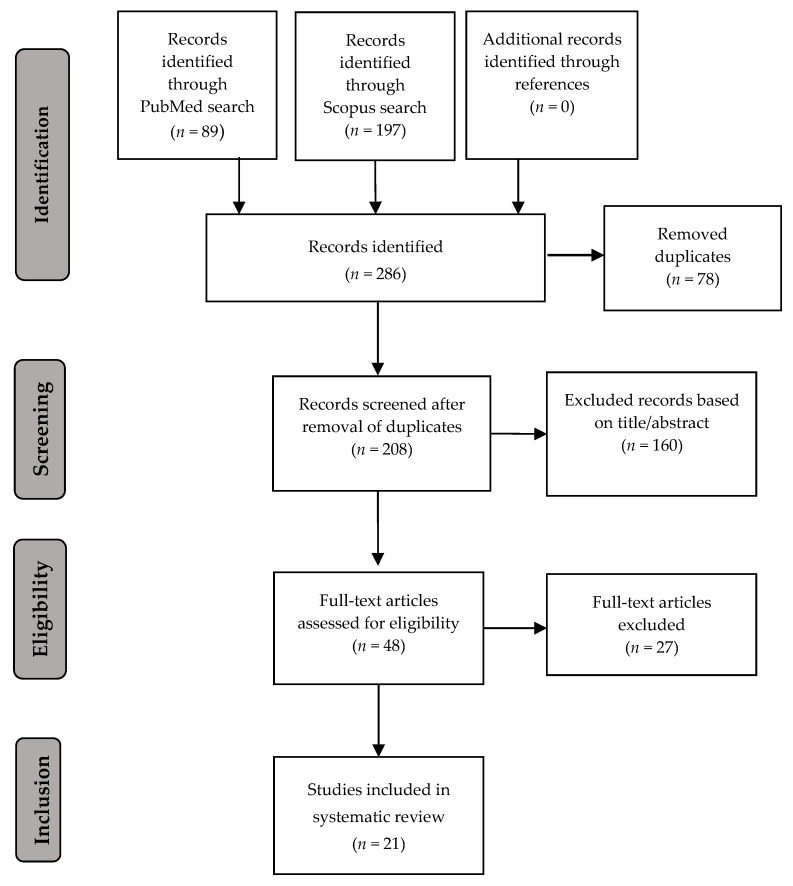
Verification
Claims the paper makes
The claims and statistics of this paper haven’t been checked yet.
Free: it reads the open-access text and checks the first 5 claims that cite a source we can check. Create a free account to check every claim.
Claims other papers make about this one
Each is checked against this paper’s own text: does it say what the citing paper says it does?
The source backs part of the claim, not all of it — or backs it for a different population, condition or comparison.
In the citing paper
“Cross-sectional studies show an association between greater green space exposure and greater mental well-being and cognitive development.188,189”
From Digital Ecosystems, Children, and Adolescents: Technical Report (2026) · cites this paper as [188]
Experimental — accuracy not yet measuredThe source backs part of the claim, not all of it — or backs it for a different population, condition or comparison.
In the citing paper
“Regarding children and adolescents, previous systematic reviews have shown beneficial associations between exposure and access to greenspace, and depression and anxiety symptoms, mood, mental well-being, cognitive development, stress and emotional and behavioural difficulties (McCormick, 2017;Tillmann et al., 2018;Vanaken and Danckaerts, 2018;Zhang et al., 2020).”
From Exploring the role of exposure to green and blue spaces in preventing anxiety and depression among young people aged 14–24 years living in urban settings: A systematic review and conceptual framework (2022) · cites this paper as Vanaken and Danckaerts, 2018
Experimental — accuracy not yet measuredThe source backs part of the claim, not all of it — or backs it for a different population, condition or comparison.
In the citing paper
“However, the evidence from observational studies that residential exposure to vegetation is associated with reduced risk of depressive symptoms for young people is crucial in terms of implementing change that will have broad reach and lasting benefits (Vanaken and Danckaerts, 2018).”
From Exploring the role of exposure to green and blue spaces in preventing anxiety and depression among young people aged 14–24 years living in urban settings: A systematic review and conceptual framework (2022) · cites this paper as Vanaken and Danckaerts, 2018
Experimental — accuracy not yet measuredThe check wasn’t confident either way, so it gives no verdict — never disputed.
In the citing paper
“Research studies on adolescents a part of at least one minoritized community based on race, ethnicity, faith, disability, and/or sexuality found that they most commonly use the digital environment to facilitate positive connections.187,188”
From Digital Ecosystems, Children, and Adolescents: Technical Report (2026) · cites this paper as [188]
Experimental — accuracy not yet measuredThe check wasn’t confident either way, so it gives no verdict — never disputed.
In the citing paper
“The use of psychological theory to understand links between mental health and green and blue spaces has been limited for children and adolescents (Vanaken and Danckaerts, 2018).”
From Exploring the role of exposure to green and blue spaces in preventing anxiety and depression among young people aged 14–24 years living in urban settings: A systematic review and conceptual framework (2022) · cites this paper as Vanaken and Danckaerts, 2018
Experimental — accuracy not yet measured
Self-check
Percentages, sums and reported differences re-computed from the paper’s own numbers.
The self-check needs the paper’s full text.
Citations
Cites
Preferred Reporting Items for Systematic Reviews and Meta-Analyses: the PRISMA statement
Moher, D., Liberati, A., Tetzlaff, J., Altman, D. G., & for the PRISMA Group (2009) · BMJ · doi:10.1136/bmj.b2535 · Cited by 83,823
Preferred reporting items for systematic reviews and meta-analyses: The PRISMA statement
Moher, D., Liberati, A., Tetzlaff, J., Altman, D. G., & the PRISMA Group* (2009) · Annals of Internal Medicine · doi:10.7326/0003-4819-151-4-200908180-00135 · Cited by 37,554
World Urbanization Prospects: The 1996 Revision
Brockerhoff, M., & Nations, U. (1998) · Population and Development Review · doi:10.2307/2808041 · Cited by 5,881
Gascon, M., Triguero-Mas, M., Martínez, D., Dadvand, P., Forns, J., Plasència, A., & Nieuwenhuijsen, M. (2015) · International Journal of Environmental Research and Public Health · doi:10.3390/ijerph120404354 · Cited by 1,171 · cited 5×
“In previous work, a multitude of mediators of the association between green space and mental health were suggested [2].”
BackgroundMethodInfluentialMorbidity is related to a green living environment
Maas, J., Verheij, R. A., de Vries, S., Spreeuwenberg, P., Schellevis, F. G., & Groenewegen, P. P. (2009) · Journal of Epidemiology and Community Health · doi:10.1136/jech.2008.079038 · Cited by 1,133 · cited 2×
“In 2009, Maas and colleagues published a landmark study linking data of residential land use to medical diagnoses in primary care settings for approximately 345,000 Dutch patients from different age groups [9].”
Backgroundvan den Bosch, M., & Ode Sang, Å. (2017) · Environmental Research · doi:10.1016/j.envres.2017.05.040 · Cited by 968
Green spaces and cognitive development in primary schoolchildren
Dadvand, P., Nieuwenhuijsen, M. J., Esnaola, M., Forns, J., Basagaña, X., Alvarez-Pedrerol, M., Rivas, I., López-Vicente, M., De Castro Pascual, M., Su, J., et al. (2015) · Proceedings of the National Academy of Sciences · doi:10.1073/pnas.1503402112 · Cited by 942 · cited 5×
“, 2015, Spain [22] longitudinal 2593 7–10 years NDVI residence, school, commuting average greenness (250 m residence, 50 m commuting route, 50 m school) Compu-terized n-back, ANT age, gender, SES, nSES, air pollution Average greenness positively associated with 12 m development of two-back, three-back and ANT results.”
BackgroundInfluentialDefining greenspace: Multiple uses across multiple disciplines
Taylor, L., & Hochuli, D. F. (2017) · Landscape and Urban Planning · doi:10.1016/j.landurbplan.2016.09.024 · Cited by 784 · cited 1×
“Of course urbanized regions can offer contact with green spaces as well, defined in this context as urban vegetated spaces such as parks, grasslands, cemeteries, sports and playing fields and near-road trees [7].”
BackgroundDoes access to green space impact the mental well-being of children: A systematic review
McCormick, R. (2017) · Journal of Pediatric Nursing · doi:10.1016/j.pedn.2017.08.027 · Cited by 467 · cited 2×
“More recently, in 2017, McCormick published another systematic review in this domain [10].”
BackgroundResultEpidemiology of Internet Behaviors and Addiction Among Adolescents in Six Asian Countries
Mak, K.-K., Lai, C.-M., Watanabe, H., Kim, D.-I., Bahar, N., Ramos, M., Young, K. S., Ho, R. C. M., Aum, N.-R., & Cheng, C. (2014) · Cyberpsychology, Behavior, and Social Networking · doi:10.1089/cyber.2014.0139 · Cited by 422 · cited 1×
“Studying the role of green spaces seems particularly valuable in rapidly urbanizing and highly urbanized countries in Northeast Asia where internet addiction is reported to be highly prevalent [42].”
Background
Cited by
Items 201–300 of 435
Putra, I. G. N. E., Astell‐Burt, T., & Feng, X. (2022) · Environmental Research · doi:10.1016/j.envres.2022.113187 · Cited by 10
Climate change injustice and school attendance and absenteeism: proximal and distal ecological links
Kearney, C. A., Ellis, K., & Arcaina, V. J. (2024) · Frontiers in Education · doi:10.3389/feduc.2024.1455430 · Cited by 10
de Vries, S., Baliatsas, C., Verheij, R. A., & Dückers, M. (2025) · Environment International · doi:10.1016/j.envint.2025.109450 · Cited by 10
Some Impacts on Health and Wellbeing from School-Based Outdoor Learning
Waite, S., & Aronsson, J. (2022) · Springer eBooks · doi:10.1007/978-3-031-04108-2_9 · Cited by 10
Home Greenery: Alleviating Anxiety during Lockdowns with Varied Landscape Preferences
Zhang, Z., Zhang, H., Yang, H., & Zhong, B. (2023) · Sustainability · doi:10.3390/su152115371 · Cited by 9
Associations between neighborhood characteristics and dating violence: does spatial scale matter?
Rodrigues, P., Hébert, M., & Philibert, M. D. (2022) · International Journal of Health Geographics · doi:10.1186/s12942-022-00306-3 · Cited by 10
Amorphous Nature of Green Spaces in Indian Urban Planning
Sangwan, A., Kumar, N., & Kumar, A. (2023) · International Review for Spatial Planning and Sustainable Development · doi:10.14246/irspsd.11.1_208 · Cited by 11
Brons, M. E., Helbich, M., Bolt, G., Visser, K., & Stevens, G. W. J. M. (2023) · Health & Place · doi:10.1016/j.healthplace.2023.103140 · Cited by 9
Ferguson, M., Teyhan, A., Lovell, R., Dodd, H. F., Wheeler, B., & McEachan, R. (2025) · Wellbeing Space and Society · doi:10.1016/j.wss.2025.100293 · Cited by 10
Wang, L., Gu, C., Zhang, Z., & Song, W. (2025) · Ecological Indicators · doi:10.1016/j.ecolind.2025.114339 · Cited by 9
A systematic review of green gentrification and mental health
Brown, C. D., Rigolon, A., Zdrodowski, P., & Pearson, A. L. (2025) · Health & Place · doi:10.1016/j.healthplace.2025.103599 · Cited by 11
O'Connor, A., King, A. C., Banchoff, A., Eyler, A. A., Reis, R. S., Brownson, R. C., Reséndiz, E., Holland, D., & Salvo, D. (2021) · Journal of Healthy Eating and Active Living · doi:10.51250/jheal.v1i4.29 · Cited by 11
Considerations for Children’s Nature Connection and Park Environmental Justice in Western Societies
Vansickle, M., & Coutts, C. (2022) · Land · doi:10.3390/land11091435 · Cited by 8
Fouad, A. T. Z., Sinnett, D., Bray, I., McClatchey, R., & Reece, R. (2023) · Land · doi:10.3390/land12040728 · Cited by 9
Lyons, R., Colbert, A. M., Browning, M. H. E. M., & Jakub, K. (2023) · Journal of Advanced Nursing · doi:10.1111/jan.15905 · Cited by 10
Honoré, F., Lestienne, L., Vieux, M., Bislimi, K., Chalancon, B., & Leaune, É. (2024) · Death Studies · doi:10.1080/07481187.2024.2355250 · Cited by 8
“Although the beneficial impact of green space on mental health has been strongly demonstrated (Vanaken & Danckaerts, 2018; Nguyen et al., 2021), no study has evaluated its impact on grief symptoms.”
Institutional Enhancement through Green School Program in Order to Achieving “Sekolah Adiwiyata”
Kuswati, R., Choirunnisa, B. A., Ahmadi, M. A., Abbas, N. I., Waskito, J., Achmad, N., Soepatini, S., & Irawati, Z. (2024) · British Journal of Environmental Studies · doi:10.32996/bjes.2024.4.1.6 · Cited by 8
Medical Geology of Soil Ecology
Pereg, L. L., Steffan, J. J., Gedeon, C. I., Thomas, P. E. J., & Brevik, E. C. (2021) · Springer eBooks · doi:10.1007/978-3-030-53893-4_12 · Cited by 8
Anwar, D. R., & Selim, G. (2025) · Sustainability · doi:10.3390/su17188495 · Cited by 10
Irajpour, A., Baró, F., Edwards, M., Moosavi, S., Lacroix, É., & Llaguno-Munitxa, M. (2025) · Urban forestry & urban greening · doi:10.1016/j.ufug.2025.129040 · Cited by 7
The role of urban greenspace in children’s reward and punishment sensitivity
Flouri, E., Ji, D., & Roiser, J. P. (2022) · Landscape Research · doi:10.1080/01426397.2021.2021160 · Cited by 7
Adams, D., & Beauchamp, G. (2021) · Australian Journal of Environmental Education · doi:10.1017/aee.2021.10 · Cited by 7
“There is also an increasing body of research that demonstrates children’s play in green spaces can provide beneficial health impacts (Hiscock & Mitchell, 2011; Vanaken & Danckaerts, 2018; Ward, Duncan, Jarden, & Stewart, 2016).”
BackgroundConserve My Village—Finnish, Norwegian and Swedish Students’ Valued Landscapes and Well-Being
Yli‐Panula, E., Jeronen, E. K., Matikainen, E., & Persson, C. (2022) · Sustainability · doi:10.3390/su14020671 · Cited by 7
Ahmed, S. M., Mishra, G. D., Moss, K. M., Mouly, T. A., Yang, I. A., & Knibbs, L. D. (2022) · Environmental Research · doi:10.1016/j.envres.2022.113759 · Cited by 8
Mental health benefits of specific blue space types and characteristics: A systematic evidence map
Beute, F., Marselle, M. R., Olszewska-Guizzo, A., Andreucci, M. B., Lammel, A., Davies, Z., Glanville, J., Keune, H., O’Brien, L., Remmen, R., et al. (2026) · Environmental Research · doi:10.1016/j.envres.2026.124054 · Cited by 8
Varadarajan, S., Herchet, M., Mack, M., Hofmann, M., Bisle, E., Sayer, E. J., & Kolassa, I. (2025) · Open Psychology · doi:10.1515/psych-2024-0003 · Cited by 7
Theron, L. C., Bergamini, M., Chambers, C., Choi, K. W., Fawole, O. I., Dumnamene, F., Höltge, J., Kapwata, T., Levine, D. T., Mai-Bornu, Z. L., et al. (2025) · Frontiers in Child and Adolescent Psychiatry · doi:10.3389/frcha.2025.1489950 · Cited by 9
Xie, Q., Fan, X. L., Sun, Y., Xuan, Y., Lu, J., & Zhou, X. (2025) · Journal of Affective Disorders · doi:10.1016/j.jad.2025.119751 · Cited by 6
Ury, B., Yang, J., Rosenthal, S. R., Barker, D., McGeary, J. E., DUNSIGER, S. I., & Grigsby‐Toussaint, D. S. (2025) · Urban forestry & urban greening · doi:10.1016/j.ufug.2025.129156 · Cited by 7
Neighborhood Beauty and the Brain in Older Japanese Adults
Tani, Y., Fujiwara, T., Sugihara, G., Hanazato, M., Suzuki, N., Machida, M., Amagasa, S., Murayama, H., Inoue, S., & Shobugawa, Y. (2022) · International Journal of Environmental Research and Public Health · doi:10.3390/ijerph20010679 · Cited by 6
Dam, J. L., Wright, A., Bos, J. J., & Bragge, P. (2023) · BMC Health Services Research · doi:10.1186/s12913-023-10087-5 · Cited by 6
“…for addressing the symptoms and risk factors of numerous chronic diseases (i.e. mental health disorders, obesity and cardiovascular disease) [61, 62], as well as helping to address the health and environmental impacts of climate change [63] through improved air quality, cooling and shade, and…”
Backgroundvan Wel, L., van Dommelen, P., Zuurbier, M., Heinen, D., Odink, J., Bezem, J., Verkerk, P. H., Pronk, A., Hoek, G., & Kuijpers, E. (2021) · International Journal of Environmental Research and Public Health · doi:10.3390/ijerph18157782 · Cited by 7
“Although no studies focusing on green space and 0–4-year old children were found, studies on mental health in older children and adolescents indicate that it would be of interest to assess different green space exposure concepts and ranges, with a Spanish study finding a beneficial effect of outdoor surrounding but no…”
BackgroundHartley, K., Prideaux, J., & Vaughn, L. M. (2023) · International Journal of Environmental Research and Public Health · doi:10.3390/ijerph20054280 · Cited by 6
“In epidemiologic studies, exposure to nature may be quantified using land use maps or satellite imagery to objectively measure variables such as distance to parks, surrounding vegetation, and tree counts, while some studies use subjective measures such as reported distance to parks or time spent in nature [4].”
BackgroundWijga, A. H., Gehring, U., van de Putte, E. M., Koppelman, G. H., Vader, S. S., Schmits, R. J. H., van der Wouden, J. C., & Picavet, H. S. J. (2020) · Pain · doi:10.1097/j.pain.0000000000002141 · Cited by 7
Urban Greenspace, Transportation, and Health
Dadvand, P., & Nieuwenhuijsen, M. J. (2021) · Elsevier eBooks · doi:10.1016/b978-0-08-102671-7.10733-x · Cited by 6
Yao, X., Zhang, J., Pei, T., Zhou, H., Lin, T., Sun, C., Chen, Y., Li, F., & Zhang, G. (2025) · Cities · doi:10.1016/j.cities.2025.106545 · Cited by 7
Urban biodiversity and adolescent mental health and well-being
Mueller, M. A. E., & Flouri, E. (2023) · Journal of Environmental Psychology · doi:10.1016/j.jenvp.2023.102154 · Cited by 5
“In recent years, there has also been much interest in the association between greenspace and mental health and well-being, especially among young people (Tillmann et al., 2018; Vanaken & Danckaerts, 2018; Zhang et al., 2020).”
BackgroundImpact of Park Redesign and Renovation on Children’s Health-Related Quality of Life
Hong, H., Kodali, H., Dunlap, A. F., Wyka, K., Thorpe, L. E., Evenson, K. R., & Huang, T. T. ‐. (2025) · Journal of Urban Health · doi:10.1007/s11524-024-00954-9 · Cited by 6
“Research has also shown a correlation between the presence of green spaces with larger and more tree coverage and lower rates of childhood obesity and health-related QoL [10].”
Nahin, K. T. K., Sara, H. H., Barai, K. R., Quayyum, Z., & Baumgartner, J. (2023) · S.M.A.R.T. environments · doi:10.1007/978-3-031-32840-4_7 · Cited by 5
McIntyre, E., Prior, J., Catling, C., Legg, R., Vilcins, D., Frawley, J., Perry, C. P., Henry, A., Rojas, C., & Eapen, V. (2023) · Public Health Research & Practice · doi:10.17061/phrp3342334 · Cited by 6
Aota, Y., Tsuchiya, K., Endo, S., & Soga, M. (2025) · Landscape and Urban Planning · doi:10.1016/j.landurbplan.2025.105408 · Cited by 5
Environmental Influences on Academic Proficiency
Grineski, S. E., Alexander, C., Allain, M. L., Clark, A. S., Collins, T. W., Goodwin, E., Mullen, C. J., Scott, M., Shaker, Y., Ramos, K. D., et al. (2023) · Current Epidemiology Reports · doi:10.1007/s40471-023-00324-0 · Cited by 4
“These intermediary variables could include absenteeism in studies focused on air pollution [22]; cognitive dissonance and attentional control in the area of noise pollution [49]; and mental health in the disaster [61] and greenspace [69] arenas.”
Measuring Disparity in the Distribution of ROS in Adolescents Using Geospatial Analysis
Shrivastava, A., & Mehrotra, S. (2024) · Journal of Urban Planning and Development · doi:10.1061/jupddm.upeng-5041 · Cited by 4
Advancing Population Health Through Open Environmental Data Platforms
Noaeen, M., Doiron, D., Syer, J., & Brook, J. R. (2024) · Current topics in behavioral neurosciences · doi:10.1007/7854_2024_512 · Cited by 5
Cronshaw, G., Midouhas, E., Murage, P., & Flouri, E. (2025) · Child and Adolescent Mental Health · doi:10.1111/camh.12767 · Cited by 5
Hunt, D. F., Morshead, G. R., Hayes, R. A., Mitchell, S. B., Chapman, B. L., Dutton, C., Adlam, A., & Mellor, C. (2025) · Child and Adolescent Mental Health · doi:10.1111/camh.12768 · Cited by 4
“…also support systemic approaches, enhancing familial bonding, providing opportunities for CYP to connect with their families and exploring new activities which can strengthen relationships and improve communication (Tillman, Tobin, Avison, Tillmann, & Gilli-land, 2018; Vanaken & Danckaerts, 2018).”
Sampath, V., Payne-Sturges, D., Slopen, N. B., Harnett, N. G., Lee, A., Nadeau, K. C., Taylor, N. M. I., & Burghardt, L. C. (2025) · Frontiers in Public Health · doi:10.3389/fpubh.2025.1654097 · Cited by 4
Breedvelt, J., Yap, J., Eising, D. D., Ebert, D. D., Smit, F., Thorpe, L. N., & Kousoulis, A. A. (2021) · American Journal of Health Promotion · doi:10.1177/0890117121998536 · Cited by 4
Robles-Ramamurthy, B., Bath, E. P. J., Lowenhaupt, E. A., & Tolou‐Shams, M. (2024) · Child and Adolescent Psychiatric Clinics of North America · doi:10.1016/j.chc.2024.03.006 · Cited by 4
Ratjen, L., Goddard, E., Gilcher, E. B., Nguyen, B. K., Kelley, M., Feldman, H. S., Akalaonu, K., Nyhan, K., Backhaus, A., Lascurain, M. L., et al. (2025) · GeoHealth · doi:10.1029/2024gh001254 · Cited by 6
Advancing equitable park access: a policy scan of 25 U.S. cities
Hughey, S. M., Zeidler, H., Stewart, K. B., Leake, L. W., Yip, J., & Friedmann, V. (2025) · Landscape and Urban Planning · doi:10.1016/j.landurbplan.2025.105424 · Cited by 4
Fatores de risco associados a sintomas depressivos em adolescentes de um município de pequeno porte
Bernardineli, A. J., Silva, L. L., Araújo, C. R. M. A., & Pedroso, R. B. (2021) · Research Society and Development · doi:10.33448/rsd-v10i4.14315 · Cited by 4
Meltzer, G., Merdjanoff, A. A., Xu, S., Gershon, R., Emrich, C. T., & Abramson, D. M. (2023) · Population and Environment · doi:10.1007/s11111-023-00436-1 · Cited by 3
Parental evaluations of neighbourhood green and play spaces and children's mental health
LeClair, J. (2024) · Canadian Geographies / Géographies canadiennes · doi:10.1111/cag.12903 · Cited by 3
Stonnill, M., Gray, S., Woolfenden, S. R., & Goldfeld, S. R. (2025) · Health Promotion Journal of Australia · doi:10.1002/hpja.70046 · Cited by 4
“…such as readiness to learn [9], neighbourhood green spaces are associated with reduced emotional and behavioural difficulties in children [10], and the instability in care and lack of access to mental health support for children in out- of-home care can result in poorer mental health…”
Robat, E. S., Bayazi, M. H., Nayyeri, M., Yasaghi, A. A., & Taimory, S. (2026) · Nature Human Behaviour · doi:10.1038/s41562-026-02433-4 · Cited by 5
Investigating heart rate responses of children to active travel: a mixed effects modeling analysis
Su, S., Stark, J., Hössinger, R., & Susilo, Y. O. (2024) · BMC Public Health · doi:10.1186/s12889-024-20634-2 · Cited by 3
Different user groups need varied park characteristics to encourage park exposure
Jiang, S., & Wang, Z. (2025) · Journal of Cleaner Production · doi:10.1016/j.jclepro.2025.145914 · Cited by 4
Coping Among Canadian Youth Living With Anxiety: A Phenomenological Photovoice Study
Woodgate, R. L., Tailor, K., Tennent, P., González, M., & Bell, A. (2024) · Journal of Humanistic Psychology · doi:10.1177/00221678241259110 · Cited by 3
A bird in the hand: connecting children and wildlife through hands-on experiences with birds
Shin, S., van Riper, C. J., Pollock, H. S., & Hauber, M. E. (2024) · Human Dimensions of Wildlife · doi:10.1080/10871209.2024.2396399 · Cited by 3
“In particular, rapid urbanization and increasing digital screen time have reduced children’s time in the outdoors and dampened their likelihood of gaining authentic nature-based experiences (Larson et al., 2019; Vanaken & Danckaerts, 2018).”
Whyte, M., Nichol, E., Hawke, L. D., Wuerth, K. C., Quinlan-Davidson, M., O’Reilly, A., Duffy, J., Mathias, S., Henderson, J. L., & Barbic, S. P. (2024) · BMC Health Services Research · doi:10.1186/s12913-024-11752-z · Cited by 5
“Access to green spaces was a positive factor; indeed, this has been shown to reduce symptoms of depression, anxiety, and stress [64–66].”
Do Green Spaces Mitigate Mental Health Disorders in Tehran? Evidence from 358 Neighborhoods
Shahmiri, M. S., Boujari, P., Dehkordi, Z. S. F., & Khatami, S. M. (2024) · HERD Health Environments Research & Design Journal · doi:10.1177/19375867241304004 · Cited by 5
“…suggest that these indicators may help reduce mental disorders, aligning with previous studies on the positive effects of public green spaces on mental well-being (Beyer et al., 2014; De Vries et al., 2016; Gascon et al., 2015; Gascon et al., 2018; Vanaken & Danckaerts, 2018; Wood et al., 2017).”
Exposure to green spaces as a modifiable risk factor in attention-deficit hyperactivity disorder
Rucklidge, J. J. (2019) · The Lancet Planetary Health · doi:10.1016/s2542-5196(19)30074-9 · Cited by 5
Klimapolitik als Chance für bessere Gesundheit
von Philipsborn, P., Wabnitz, K. J. P., Sell, K., Maintz, E., Rehfuess, E. A., & Gabrysch, S. (2020) · Public Health Forum · doi:10.1515/pubhef-2019-0128 · Cited by 3
“Die positiven Effekte öffentlicher Grünflächen auf zahlreiche Aspekte biopsychosozialer Gesundheit sind wissenschaftlich gut belegt [5].”
BackgroundNorman, J. A., van Weerdenburg, K., Furber, S. E., Stratten, M., & Okely, A. D. (2021) · Health Promotion International · doi:10.1093/heapro/daab065 · Cited by 3
Eling, J., & Cummins, S. (2025) · medRxiv · doi:10.1101/2025.01.09.25320287 · Cited by 6
Chapman, B. L., Mitchell, S. B., Hardwick, R., Bonnici, H., Banks, H., Mareva, S., & Hayes, R. A. (2025) · PLOS mental health. · doi:10.1371/journal.pmen.0000389 · Cited by 3
“Benefits of nature connectedness specifically for children and young people’s mental health, such as emotional wellbeing, stress and health-related quality of life, have been identified in systematic reviews [23,24].”
Neighbourhood green spaces and child well-being in Central India: a multisectoral perspective
Verma, M. C., & Kamat, R. (2025) · Local Environment · doi:10.1080/13549839.2025.2596720 · Cited by 2
Rich-Degeneve, S., & Reiss, M. J. (2025) · Journal of Biological Education · doi:10.1080/00219266.2025.2605035 · Cited by 2
“Being in nature is increasingly prescribed for improving mental health in adolescence (Lee, Kim, and Ha 2019; Vanaken and Danckaerts 2018).”
Zhang, T., Adamis, D., Langan, N., & O’Neill, M. (2026) · JMIR Research Protocols · doi:10.2196/82970 · Cited by 2
Carrick, C., Rakesh, D., Michel, L. C., Bates, K. E., & Fuhrmann, D. (2026) · Cerebral Cortex · doi:10.1093/cercor/bhag034 · Cited by 2
“Our findings align with extensive research showing that neighborhood environments shape developmental outcomes (Leventhal and Brooks-Gunn 2000; Vanaken and Danckaerts 2018; Leventhal and Dupéré 2019; Abouzeid and Johnson 2024; Cai et al. 2024; Christensen et al. 2024; Ferrara et al. 2024; Morrel et…”
Contemplation of Nature to Promote Mental Health and Prevent Depression in Youth
Medeiros, S., Langer, A. I., & Nielsen, S. S. (2022) · Depression and personality · doi:10.1007/978-3-031-13029-8_5 · Cited by 3
Vaughan, S., Tietz, C., & Ramirez, M. T. S. (2023) · Cogent Social Sciences · doi:10.1080/23311886.2023.2188678 · Cited by 2
“…also demonstrates that natural environments such as garden spaces restore attention and mitigate stress, which has particular implications for prison environments which are often regarded as highly-stressful environments (Kaplan, 1995; Toews et al., 2020; Ulrich, 2002; Vanaken & Danckaerts, 2018).”
BackgroundRice, W. L., Michels, S. Y., Foster, M. J., Graham, J., Whitney, P. J., & Thomsen, J. M. (2023) · Land · doi:10.3390/land12081613 · Cited by 2
Parczewska, T., & Andrésdóttir, M. E. (2023) · Journal of Modern Science · doi:10.13166/jms/176742 · Cited by 2
Integrating the Physical Environment Within a Population Neuroscience Perspective
Smith, L. (2024) · Current topics in behavioral neurosciences · doi:10.1007/7854_2024_477 · Cited by 2
Green space and mental well-being research in India
Banerjee, B., Basu, S., & Kumar, L. (2024) · Elsevier eBooks · doi:10.1016/b978-0-443-23788-1.00010-5 · Cited by 5
Holmes, E. A. F., Arkesteijn, M., Knowles, K., McKinney, T., Mizen, A., & Purcell, C. (2024) · PLoS ONE · doi:10.1371/journal.pone.0311498 · Cited by 2
“This concern stems from previous research that demonstrates that time spent outdoors supports good mental health and wellbeing in CYP [19], therefore finding ways to increase time spent outdoors, in any capacity, is a worthwhile goal.”
Ferrari, V., Marzana, D., & D’Angelo, C. (2024) · Journal of Prevention & Intervention in the Community · doi:10.1080/10852352.2025.2479999 · Cited by 2
“Contact with nature and the use of natural environments have been recognized for their contribution to improving and promoting human health and well-being throughout the life course (Engemann et al., 2019; Mygind et al., 2019; Vanaken & Danckaerts, 2018).”
A qualitative study exploring how local politicians influence healthy local planning policies
Gouais, A. L. (2025) · Cities & Health · doi:10.1080/23748834.2025.2493409 · Cited by 2
“For example, a green space may support biodiversity, as well as bring mental health benefits to local residents (Vanaken and Danckaerts 2018, Zhang et al .”
Kalantari, S. K. (2025) · فصلنامه علمی پژوهشی توانبخشی · doi:10.32598/rj.26.3.4063.1 · Cited by 4
“These findings further support the environmental regulation model emphasized in modern occupational therapy frameworks such as SI and NDT [12, 14].”
Urbanization Effect on Children’s Autonomic Nervous System
Berezhanskiy, P. V., & Tataurschikova, N. S. (2021) · Springer geography · doi:10.1007/978-3-030-75285-9_17 · Cited by 2
Davies, S., Bolea-Alamanac, B. M., Endo, K., Yamamoto, Y., Yamasaki, S., Malins, A., Evans, J., Sullivan, S. A., Ando, S., Nishida, A., et al. (2023) · Journal of Transport & Health · doi:10.1016/j.jth.2022.101564 · Cited by 4
Features of landscaping of children's open spaces
Косик, О. І., & Андрієнко, О. Р. (2020) · Teorìâ ta praktika dizajnu/Teorìâ ì praktika dizajnu · doi:10.18372/2415-8151.21.15060 · Cited by 1
A protocol of comprehensive assessment of exposure to greenspace in school children
Aval, H. E., Hashemian, M., & Miri, M. (2021) · MethodsX · doi:10.1016/j.mex.2021.101596 · Cited by 1
Berezhanskiy, P. V., & Tataurschikova, N. S. (2022) · Medical Immunology (Russia) · doi:10.15789/1563-0625-edm-2200 · Cited by 1
Adolescent outdoor life and well-being
Wales, M. (2024) · Acta universitatis agriculturae Sueciae · doi:10.54612/a.sdqucoei3v · Cited by 1
Funke, J. F., Spahr, J., Hirzle, T., & Rukzio, E. (2024) · ACM International Conference on Interactive Media Experiences · doi:10.1145/3639701.3663632 · Cited by 1
“Confrming results from earlier studies on green spaces[6, 19, 21, 22, 38, 47], we found signifcantly higher calming efects for (4) forest as a green space in VR.”
BackgroundResultPermata, D. D., Hanan, H., & Widiyani (2024) · IOP Conference Series Earth and Environmental Science · doi:10.1088/1755-1315/1394/1/012023 · Cited by 1
“Urban green spaces can improve the quality of life-related to the health of children aged 9 to 11 in Houston, USA [35] because with physical activity in an urban park, children get enough natural light to regulate their sleep cycles, which affects optimal growth and development.”
He, X., Nice, K. A., Tang, Y., & Shao, L. (2025) · Urban Climate · doi:10.1016/j.uclim.2025.102378 · Cited by 1
Cui, W., Xu, J., Cao, H., Zhang, Z., Gao, M. M., Yang, Z., & Han, Z. R. (2025) · Journal of Research on Adolescence · doi:10.1111/jora.70020 · Cited by 1
Karpova, Y., Villa, F., Vallada, E., & Pan, W. A. (2025) · Mathematics · doi:10.3390/math13122006 · Cited by 2
Darvishpour, A., Mansouri, F., Fashtami, S. M., Aramesh, S., & Nouri-Saeed, A. (2025) · Health Science Reports · doi:10.1002/hsr2.71104 · Cited by 1
“Research has examined green outdoor settings as a potential treatment for mental and behavioral disorders [44 – 46].”
Association Between Green Space Exposure and Depressive Symptoms in Adolescents: A Systematic Review
Yu, H. (2025) · Communications in Humanities Research · doi:10.54254/2753-7064/2025.lc26425 · Cited by 1
Social Determinants of Health and Pediatric Brain Tumor Neuropsychological Morbidities
Sharkey, C. M., Nielsen, J. D., Walsh, K. S., Weisman, H. S., & Hardy, K. K. (2025) · Pediatric Blood & Cancer · doi:10.1002/pbc.32050 · Cited by 1
Exploring the Impacts of Green Space and Healthcare Accessibility on Small for Gestational Age
Ma, J., Li, X., Xu, J., & Dong, G. (2025) · Applied Spatial Analysis and Policy · doi:10.1007/s12061-025-09736-5 · Cited by 1
“Beyond physical health, green spaces enhance emotional well-being by reducing stress and promoting psychologi - cal health through various restorative processes (Vanaken & Danckaerts, 2018; White et al., 2021; Zhang et al., 2020; Dzhambov et al., 2019a , b ; Bai et al., 2024).”
Du, X., Yuan, S., Lam, T. L. H., Browning, M. H. E. M., & Tan, Z. H. (2025) · Journal of Environmental Psychology · doi:10.1016/j.jenvp.2025.102863 · Cited by 1
Dodge, K. A. (2025) · Annual Review of Clinical Psychology · doi:10.1146/annurev-clinpsy-061724-081312 · Cited by 1
Tornquist, M., & Johnson, T. (2026) · International Journal of Wellbeing · doi:10.5502/ijw.v16i1.5183 · Cited by 2
Built environment determinants of mental health in Mashhad metropolis, Iran
Hosseini, S. H., Zarei, M., & Ghodrati, H. (2026) · Cities & Health · doi:10.1080/23748834.2025.2589638 · Cited by 1
Metadata
- Authors
- Vanaken, G.-J., & Danckaerts, M.
- Affiliations
- KU Leuven (BE)
- Corresponding author
- Vanaken, Gert-Jan
- Venue
- International Journal of Environmental Research and Public Health
- Publisher
- MDPI AG
- Published
- 2018-11-27
- Volume
- 15
- Issue
- 12
- Pages
- 2668
- ISSN
- 1660-4601 (ISSN-L)
- PMC
- PMC6313536
- OpenAlex
- W2902918778
- Cited by
- 398
- References
- 45
- Citations by year
- 2026: 54 · 2025: 50 · 2024: 70 · 2023: 67 · 2022: 61 · 2021: 57 · 2020: 28 · 2019: 11
- FWCI
- 2.51
- Type
- journal article
- Language
- en
- Open access
- gold
- dx.doi.org
- Licence
- Locations
- International Journal of Environmental Research and Public Health (publishedVersion, cc-by)
- Europe PMC (PubMed Central) (publishedVersion, cc-by)
- PubMed Central (publishedVersion, cc-by)
- PubMed (publishedVersion)
- Lirias (submittedVersion, other-oa)
- RePEc: Research Papers in Economics (submittedVersion)
- DOAJ (DOAJ: Directory of Open Access Journals) (submittedVersion)
- Topics
- Social Sciences › Urban Studies › Urban Green Space and Health
- Social Sciences › Sociology and Political Science › Environmental Justice and Health Disparities
- Physical Sciences › Environmental Science › Management, Monitoring, Policy and Law › Urban Arborization and Environmental Studies
- Keywords
- green space exposure, child mental health, adolescent mental health, young adults, psychological well-being, emotional and behavioral problems, hyperactivity, inattention, depressive symptoms, urbanization, urban green space, mediators
- MeSH terms
- Parks, Recreational, Adolescent, Mental Disorders, Child, Child, Preschool, Environment Design, Female, Health Status, Humans, Male, Urbanization, Guidelines as Topic
About these checks
Registry, retraction, Cites and statistics results are computed, not judged, with one exception: a printed reference that no index lists is read once by a model before it counts as a citation error. Claims are extracted by a model and kept only when their quote appears verbatim in the text; each cited source is then checked, with a model’s help, for whether it says what the claim relies on. Those verdicts can be wrong — read the claim’s quote and the cited source before relying on one.
Statistics and arithmetic are recomputed, not judged.
Confidence bands are shown only for fields calibrated on our annotated test set. None is calibrated yet, so no band is shown.
What counts as a claim ›How we measure confidence ›How we check this ›
Are you an author, or do you see a problem with this page? Request a review
Data sources
Bibliographic data: Semantic Scholar, OpenAlex, Crossref.
Contains information from the Semantic Scholar Academic Graph Datasets, made available under the ODC Attribution License (ODC-BY 1.0).
Semantic Scholar’s data is described in: Kinney, R., et al. (2023). The Semantic Scholar Open Data Platform. arXiv:2301.10140.
