

Impact of Green Space Exposure on Children’s and Adolescents’ Mental Health: A Systematic Review
Open accessThe DOI matches its Crossref record; 45 of the 45 references it cites were found in a registry or an index.
Abstract
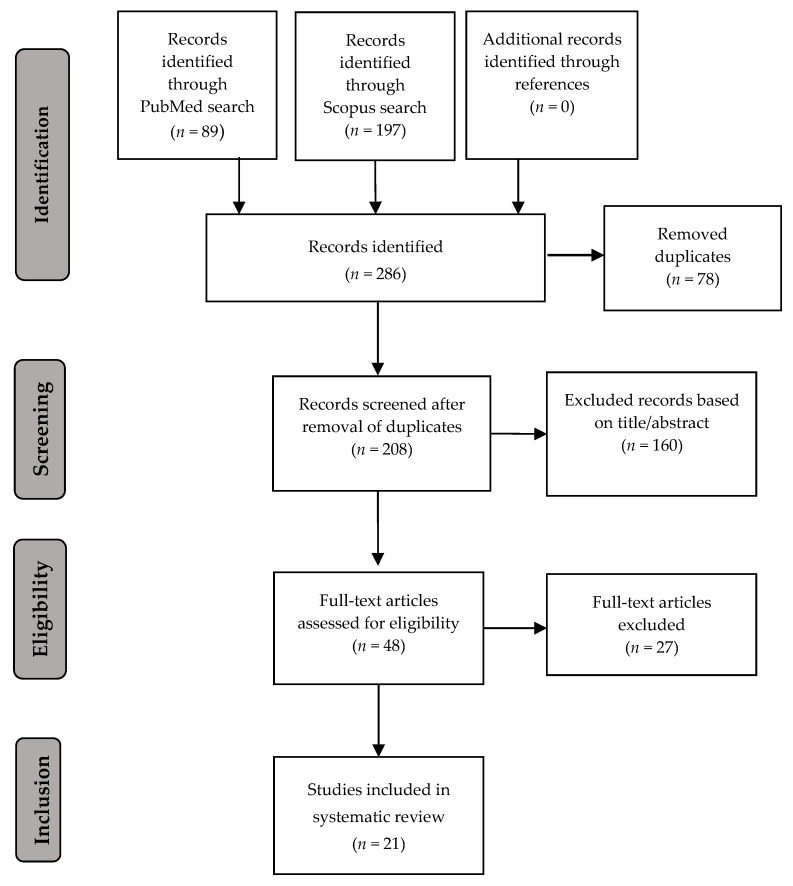
In recent years, the interest in the relationship between exposure to green spaces and children’s and adolescents’ mental health has risen. This systematic review aims to provide an overview of observational studies assessing the association between empirical green space exposure with standardized outcome measures of mental health problems, mental well-being and developmental problems in children, adolescents and young adults. The PRISMA statement guidelines for reporting systematic reviews were followed. A PubMed and Scopus search resulted in the inclusion of 21 studies. The evidence consistently suggests a beneficial association between green space exposure and children’s emotional and behavioral difficulties, particularly with hyperactivity and inattention problems. Limited evidence suggests a beneficial association with mental well-being in children and depressive symptoms in adolescents and young adults. These beneficial associations are resistant to adjustment for demographic and socio-economic confounders, which thus may represent independent links. Mediating factors and the variability of this association between different age groups are discussed. From a precautionary principle, evidence up to now demands the attention of policy makers, urban planners and mental healthcare workers in order to protect children’s and adolescents’ mental health in light of rapid global urbanization by providing sufficient exposure to green spaces.
Overview
The claims and statistics of this paper haven’t been checked yet.
Free: it reads the open-access text and checks the first 5 claims that cite a source we can check. Create a free account to check every claim.
Integrity signals
Registry
Cites
Statistics
Figures
Verification
Claims the paper makes
The claims and statistics of this paper haven’t been checked yet.
Free: it reads the open-access text and checks the first 5 claims that cite a source we can check. Create a free account to check every claim.
Claims other papers make about this one
Each is checked against this paper’s own text: does it say what the citing paper says it does?
The source backs part of the claim, not all of it — or backs it for a different population, condition or comparison.
In the citing paper
“Cross-sectional studies show an association between greater green space exposure and greater mental well-being and cognitive development.188,189”
From Digital Ecosystems, Children, and Adolescents: Technical Report (2026) · cites this paper as [188]
Experimental — accuracy not yet measuredThe source backs part of the claim, not all of it — or backs it for a different population, condition or comparison.
In the citing paper
“Regarding children and adolescents, previous systematic reviews have shown beneficial associations between exposure and access to greenspace, and depression and anxiety symptoms, mood, mental well-being, cognitive development, stress and emotional and behavioural difficulties (McCormick, 2017;Tillmann et al., 2018;Vanaken and Danckaerts, 2018;Zhang et al., 2020).”
From Exploring the role of exposure to green and blue spaces in preventing anxiety and depression among young people aged 14–24 years living in urban settings: A systematic review and conceptual framework (2022) · cites this paper as Vanaken and Danckaerts, 2018
Experimental — accuracy not yet measuredThe source backs part of the claim, not all of it — or backs it for a different population, condition or comparison.
In the citing paper
“However, the evidence from observational studies that residential exposure to vegetation is associated with reduced risk of depressive symptoms for young people is crucial in terms of implementing change that will have broad reach and lasting benefits (Vanaken and Danckaerts, 2018).”
From Exploring the role of exposure to green and blue spaces in preventing anxiety and depression among young people aged 14–24 years living in urban settings: A systematic review and conceptual framework (2022) · cites this paper as Vanaken and Danckaerts, 2018
Experimental — accuracy not yet measuredThe check wasn’t confident either way, so it gives no verdict — never disputed.
In the citing paper
“Research studies on adolescents a part of at least one minoritized community based on race, ethnicity, faith, disability, and/or sexuality found that they most commonly use the digital environment to facilitate positive connections.187,188”
From Digital Ecosystems, Children, and Adolescents: Technical Report (2026) · cites this paper as [188]
Experimental — accuracy not yet measuredThe check wasn’t confident either way, so it gives no verdict — never disputed.
In the citing paper
“The use of psychological theory to understand links between mental health and green and blue spaces has been limited for children and adolescents (Vanaken and Danckaerts, 2018).”
From Exploring the role of exposure to green and blue spaces in preventing anxiety and depression among young people aged 14–24 years living in urban settings: A systematic review and conceptual framework (2022) · cites this paper as Vanaken and Danckaerts, 2018
Experimental — accuracy not yet measured
Self-check
Percentages, sums and reported differences re-computed from the paper’s own numbers.
The self-check needs the paper’s full text.
Citations
Cites
Preferred Reporting Items for Systematic Reviews and Meta-Analyses: the PRISMA statement
Moher, D., Liberati, A., Tetzlaff, J., Altman, D. G., & for the PRISMA Group (2009) · BMJ · doi:10.1136/bmj.b2535 · Cited by 83,823
Preferred reporting items for systematic reviews and meta-analyses: The PRISMA statement
Moher, D., Liberati, A., Tetzlaff, J., Altman, D. G., & the PRISMA Group* (2009) · Annals of Internal Medicine · doi:10.7326/0003-4819-151-4-200908180-00135 · Cited by 37,554
World Urbanization Prospects: The 1996 Revision
Brockerhoff, M., & Nations, U. (1998) · Population and Development Review · doi:10.2307/2808041 · Cited by 5,881
Gascon, M., Triguero-Mas, M., Martínez, D., Dadvand, P., Forns, J., Plasència, A., & Nieuwenhuijsen, M. (2015) · International Journal of Environmental Research and Public Health · doi:10.3390/ijerph120404354 · Cited by 1,171 · cited 5×
“In previous work, a multitude of mediators of the association between green space and mental health were suggested [2].”
BackgroundMethodInfluentialMorbidity is related to a green living environment
Maas, J., Verheij, R. A., de Vries, S., Spreeuwenberg, P., Schellevis, F. G., & Groenewegen, P. P. (2009) · Journal of Epidemiology and Community Health · doi:10.1136/jech.2008.079038 · Cited by 1,133 · cited 2×
“In 2009, Maas and colleagues published a landmark study linking data of residential land use to medical diagnoses in primary care settings for approximately 345,000 Dutch patients from different age groups [9].”
Backgroundvan den Bosch, M., & Ode Sang, Å. (2017) · Environmental Research · doi:10.1016/j.envres.2017.05.040 · Cited by 968
Green spaces and cognitive development in primary schoolchildren
Dadvand, P., Nieuwenhuijsen, M. J., Esnaola, M., Forns, J., Basagaña, X., Alvarez-Pedrerol, M., Rivas, I., López-Vicente, M., De Castro Pascual, M., Su, J., et al. (2015) · Proceedings of the National Academy of Sciences · doi:10.1073/pnas.1503402112 · Cited by 942 · cited 5×
“, 2015, Spain [22] longitudinal 2593 7–10 years NDVI residence, school, commuting average greenness (250 m residence, 50 m commuting route, 50 m school) Compu-terized n-back, ANT age, gender, SES, nSES, air pollution Average greenness positively associated with 12 m development of two-back, three-back and ANT results.”
BackgroundInfluentialDefining greenspace: Multiple uses across multiple disciplines
Taylor, L., & Hochuli, D. F. (2017) · Landscape and Urban Planning · doi:10.1016/j.landurbplan.2016.09.024 · Cited by 784 · cited 1×
“Of course urbanized regions can offer contact with green spaces as well, defined in this context as urban vegetated spaces such as parks, grasslands, cemeteries, sports and playing fields and near-road trees [7].”
BackgroundDoes access to green space impact the mental well-being of children: A systematic review
McCormick, R. (2017) · Journal of Pediatric Nursing · doi:10.1016/j.pedn.2017.08.027 · Cited by 467 · cited 2×
“More recently, in 2017, McCormick published another systematic review in this domain [10].”
BackgroundResultEpidemiology of Internet Behaviors and Addiction Among Adolescents in Six Asian Countries
Mak, K.-K., Lai, C.-M., Watanabe, H., Kim, D.-I., Bahar, N., Ramos, M., Young, K. S., Ho, R. C. M., Aum, N.-R., & Cheng, C. (2014) · Cyberpsychology, Behavior, and Social Networking · doi:10.1089/cyber.2014.0139 · Cited by 422 · cited 1×
“Studying the role of green spaces seems particularly valuable in rapidly urbanizing and highly urbanized countries in Northeast Asia where internet addiction is reported to be highly prevalent [42].”
Background
Cited by
Items 401–435 of 435
Antoniou, T., Gozdyra, P., Fridman, D., PAJER, K. A., Gomes, T., Penner, M., Tadrous, M., Juurlink, D. N., & Gardner, W. P. (2026) · Frontiers in Child and Adolescent Psychiatry · doi:10.3389/frcha.2026.1575531
“…reviews of exposure to nature and green space have found beneficial associations with reduced stress, positive mood, emotional well-being, overall mental health, and improvements in attention deficit hyperactivity disorder (ADHD) symptoms, resilience and health-related quality of life (37–39).”
Measuring children’s spatial accessibility to urban park green spaces
Mohammadi, A., Moghabeli, R., Ahmed, A., Bergquist, R. N., & Jorge, R. (2026) · Scientific Reports · doi:10.1038/s41598-026-48526-y
Smolović, V., Zizic, N., & Spalevıć, V. (2026) · Lecture notes in networks and systems · doi:10.1007/978-3-032-30107-9_51
Long, Y., Zhen, C., Cheng, L., Kang, F., Lin, Y., Li, J., Chen, Z., Chen, W., Liu, X. Y., & Song, Y. (2026) · iScience · doi:10.1016/j.isci.2026.116483
“28 As high-quality public social spaces, UGS provide adolescents with informal meeting venues, which help strengthen community cohesion and social support, thereby enhancing their self-identity and psychological well-being.”
Lyu, Y., Deng, H., & Cheng, Y. (2026) · Building and Environment · doi:10.1016/j.buildenv.2026.114942
Can, A., Renterghem, T. V., Lercher, P., Bogers, R. P., Vrijkotte, T. G. M., KAMP, I. V., & Botteldooren, D. B. (2026) · Applied Acoustics · doi:10.1016/j.apacoust.2026.111458
Katsiaflaka, G., Pergantis, P., Georgiou, K., & Petropoulos, A. (2026) · World Journal of Advanced Research and Reviews · doi:10.30574/wjarr.2026.31.1.1839
DESIGNING OUTDOOR SPACES FOR MENTAL HEALTH: INNOVATIVE EVIDENCE-BASED LANDSCAPING APPROACHES
Yatsiuk, V. (2026) · Economics & Education · doi:10.30525/2500-946x/2026-2-16
“Additionally, several studies document the beneficial impact of green spaces on behavior problems and emotional regulation of children and adolescents (Vanaken & Danckaerts, 2018).”
Wellbeing effects of outdoor education programs for students over time: a scoping review
Stefanos, K., & Vella‐Brodrick, D. (2026) · Journal of Outdoor and Environmental Education · doi:10.1007/s42322-026-00259-2
Greening primary schools for children’s mental health and psychosocial wellbeing: A mapping review
Kellett-Renzella, S., Veitch, J., Cornejo, M., Sahlqvist, S., Mazzoli, E., Swelam, B. A., Ja, J., & O’Shea, M. (2026) · Wellbeing Space and Society · doi:10.1016/j.wss.2026.100441
Maloney, S., Henning, T., Zhu, H., Martin, B., Hinze, V., Montero‐Marín, J., van der Velden, A. M., Moore, J., Wilhelm, K., Lomax, T., et al. (2026) · The Lancet Planetary Health · doi:10.1016/j.lanplh.2026.101450 · Cited by 2
Wang, J., Lu, Z., Zhu, Z., Liao, J., Pan, Y., Chen, S., & Chen, K. (2026) · Sustainability · doi:10.3390/su18157699
Qu, Z., Zhai, B., Duan, Y., Tang, S., Zhang, L., Zhang, Z., Dong, X., Zhu, J., & 和锡健 (2026) · Sustainability · doi:10.3390/su18157846
Yang, A. Y., Zhang, Y., & Yang, S. (2026) · Frontiers in Psychology · doi:10.3389/fpsyg.2026.1816161
“Furthermore, green spaces are associated with improved mental and physical health in adolescents, and studies have shown that adolescents’ mood improves with exposure to nature (Chawla et al., 2014; Norwood et al., 2019; Tillmann et al., 2018; Vanaken and Danckaerts, 2018).”
Climate Justice for Children: Impacts of Climate Change and Solutions
Akyiğit, H., Yiğit, M. G., Manion, K., Cortés, V., Yay, A. S. E., Atamer, D. D., Gültekin, G. S., Orhan, B., Özdemirci-Cinal, A. S., Karayaman, S., et al. (2026) · doi:10.59537/saupress.2547
DEMİR, F., Korkmaz, N., & Çoruh, H. (2026) · doi:10.59537/saupress.2562
Wilson, C., Hanson, S., Flannery, L., Warncken, K. A., & Steel, N. (2026) · Social Science & Medicine · doi:10.1016/j.socscimed.2026.119680
Shang, K., Wei, S., & Hu, B. (2026) · BMC Psychology · doi:10.1186/s40359-026-05293-9
“Formal schooling occupies a substantial share of adolescents’ daily time, opportunities to spend unstructured time outdoors are limited and unevenly distributed across the week [21, 70].”
Urban green space engagement patterns and mental health in a Mediterranean City
Lilli, A., Liana, A., Tsekeri, E., Daras, T., & Kolokotsa, D. D. (2026) · City and Environment Interactions · doi:10.1016/j.cacint.2026.100444
Goldenberg, G., & Wass, S. V. (2026) · Journal of Environmental Psychology · doi:10.1016/j.jenvp.2026.103187
LeClair, J. (2026) · Canadian Geographies / Géographies canadiennes · doi:10.1111/cag.70095
Kurz, S., & Thompson, H. J. (2026) · European Journal of Education and Pedagogy · doi:10.24018/ejedu.2026.7.5.70657
“…green space exposure and children’s emotional and behavioral functioning, with the most consistent findings for attention and hyperactivity outcomes (Vanaken & Danckaerts, 2018; Tillmann et al ., 2018); between nature contact, physical activity, and cognitive, behavioral, or mental health outcomes…”
Verheyen, L., Alfano, R., Sleurs, H., Giesberts, N., Bijnens, E. M., Reimann, B., Martens, D. S., Ottoy, S., Malina, R. M., Nawrot, T. S., et al. (2026) · Environmental Science & Technology · doi:10.1021/acs.est.6c04150
Promoting Holistic and Healing-Centered Solutions in Education
Mitchell, B. D. (2026) · Holistic Education Review · Cited by 2
Zhang, D., Leng, H., Meng, J., Liu, Y., & Fecht, D. (2026) · Applied Spatial Analysis and Policy · doi:10.1007/s12061-026-10015-0
Landscape and Senior Health: Approaches for Incorporating Nature into Elderly Living Spaces
Ruchi, R. K. (2024) · Frontiers in Health Informatics
Clayton, N. (2026) · PEARL (University of Plymouth)
Wang, C., He, J., Wang, L., & Chen, S. (2026) · Cities · doi:10.1016/j.cities.2026.107673
Shu, L., Liao, J., Cai, B., Li, S., Liu, X., Yao, D., Ding, R., Zhang, X., & Wang, Y. (2026) · Psychological Medicine · doi:10.1017/s0033291726105923
“…and reduce the incidence of depression across diverse populations, including expectant mothers (McEachan et al., 2016), postpartum women (Sun et al., 2023), American (Fossa et al., 2024) and Italian (Ricciardi et al., 2023) seniors, as well as children and adolescents (Vanaken & Danckaerts, 2018).”
Early-Life Neighborhood Resources and Later-Life Mental Health
Farmer, J. R., Lin, J. J. Y., Kubzansky, L. D., James, P., Mukherjee, R., McAlaine, K., & Weisskopf, M. G. (2026) · Environmental Health Perspectives · doi:10.1021/ehp.6c00793
Pontvianne, A., Hahs, A. K., Rayner, J., Williams, N. S. G., Cornish, K. M., & Johnson, K. A. (2026) · Journal of Environmental Psychology · doi:10.1016/j.jenvp.2026.103258
Roba, H. S., Biddle, S., Kalra, A., & Kolbe-Alexander, T. L. (2026) · Australian and New Zealand Journal of Public Health · doi:10.1016/j.anzjph.2026.100606
Clarke, A. (2026) · The British Journal of Social Work · doi:10.1093/bjsw/bcag237
Determining the economic value of interventions for urban green spaces
Raza, W. (2026) · White Rose eTheses Online (University of Leeds, The University of Sheffield, University of York)
Wu, Y., Liu, Y., Lin, J., Sun, B., & Lin, W. (2026) · Humanities and Social Sciences Communications · doi:10.1057/s41599-026-09348-5
Metadata
- Authors
- Vanaken, G.-J., & Danckaerts, M.
- Affiliations
- KU Leuven (BE)
- Corresponding author
- Vanaken, Gert-Jan
- Venue
- International Journal of Environmental Research and Public Health
- Publisher
- MDPI AG
- Published
- 2018-11-27
- Volume
- 15
- Issue
- 12
- Pages
- 2668
- ISSN
- 1660-4601 (ISSN-L)
- PMC
- PMC6313536
- OpenAlex
- W2902918778
- Cited by
- 398
- References
- 45
- Citations by year
- 2026: 54 · 2025: 50 · 2024: 70 · 2023: 67 · 2022: 61 · 2021: 57 · 2020: 28 · 2019: 11
- FWCI
- 2.51
- Type
- journal article
- Language
- en
- Open access
- gold
- dx.doi.org
- Licence
- Locations
- International Journal of Environmental Research and Public Health (publishedVersion, cc-by)
- Europe PMC (PubMed Central) (publishedVersion, cc-by)
- PubMed Central (publishedVersion, cc-by)
- PubMed (publishedVersion)
- Lirias (submittedVersion, other-oa)
- RePEc: Research Papers in Economics (submittedVersion)
- DOAJ (DOAJ: Directory of Open Access Journals) (submittedVersion)
- Topics
- Social Sciences › Urban Studies › Urban Green Space and Health
- Social Sciences › Sociology and Political Science › Environmental Justice and Health Disparities
- Physical Sciences › Environmental Science › Management, Monitoring, Policy and Law › Urban Arborization and Environmental Studies
- Keywords
- green space exposure, child mental health, adolescent mental health, young adults, psychological well-being, emotional and behavioral problems, hyperactivity, inattention, depressive symptoms, urbanization, urban green space, mediators
- MeSH terms
- Parks, Recreational, Adolescent, Mental Disorders, Child, Child, Preschool, Environment Design, Female, Health Status, Humans, Male, Urbanization, Guidelines as Topic
About these checks
Registry, retraction, Cites and statistics results are computed, not judged, with one exception: a printed reference that no index lists is read once by a model before it counts as a citation error. Claims are extracted by a model and kept only when their quote appears verbatim in the text; each cited source is then checked, with a model’s help, for whether it says what the claim relies on. Those verdicts can be wrong — read the claim’s quote and the cited source before relying on one.
Statistics and arithmetic are recomputed, not judged.
Confidence bands are shown only for fields calibrated on our annotated test set. None is calibrated yet, so no band is shown.
What counts as a claim ›How we measure confidence ›How we check this ›
Are you an author, or do you see a problem with this page? Request a review
Data sources
Bibliographic data: Semantic Scholar, OpenAlex, Crossref.
Contains information from the Semantic Scholar Academic Graph Datasets, made available under the ODC Attribution License (ODC-BY 1.0).
Semantic Scholar’s data is described in: Kinney, R., et al. (2023). The Semantic Scholar Open Data Platform. arXiv:2301.10140.
