

Walking Green: Developing an Evidence Base for Nature Prescriptions
Open accessThe DOI matches its Crossref record; 100 of the 106 references it cites were found in a registry or an index; 51 of the 104 sources its claims cite were checked for support.
Abstract
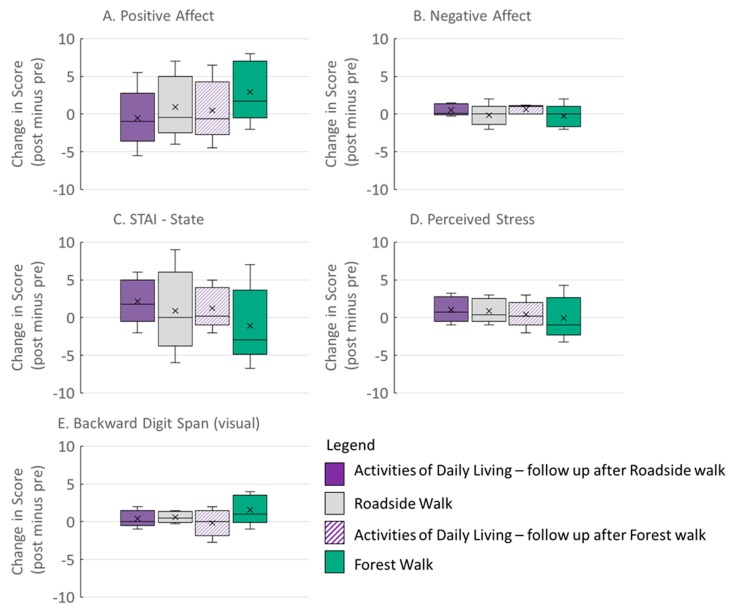
Linear mixed-models regression revealed that walking improved psychological state when compared to activities of daily living, regardless of walk environment (p < 0.05). Comparison of mean differences showed that forest walks yielded the largest and most consistent improvements in psychological state.
Overview
CoChat Summary
## TL;DR
This pilot randomized crossover study found that 50-minute walks improved acute mental health measures compared with a 2-hour activities-of-daily-living control, and forest walks generally produced the largest gains. The study was designed to inform longer-term “Nature Rx” protocols and to identify recruitment/retention issues for future studies.
## Key findings
- In the full sample of 38 participants who completed the protocol, linear mixed-models regression found that intervention affected Positive Affect, Negative Affect, STAI-state, and Perceived Stress, but not working memory (vBDS).
- Compared with ADL sessions, forest walks improved all psychological health measures; roadside walks improved negative affect and state anxiety but not as broadly as forest walks.
- Reported mean changes showed the largest forest-walk improvements in:
- Positive affect: +1.7 points
- Negative affect: −1.4 points
- State anxiety: −3.0 points
- Perceived stress: −1.4 points
- Working memory did not differ by intervention: p = 0.57, with overlapping confidence intervals across forest, roadside, and ADL conditions.
## Methods
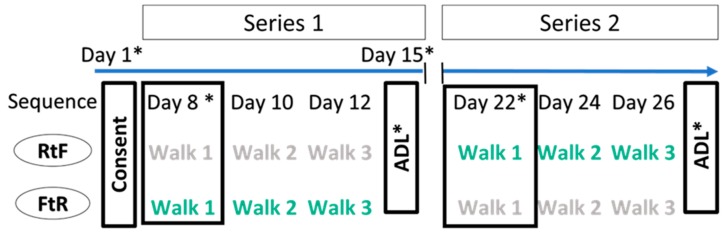
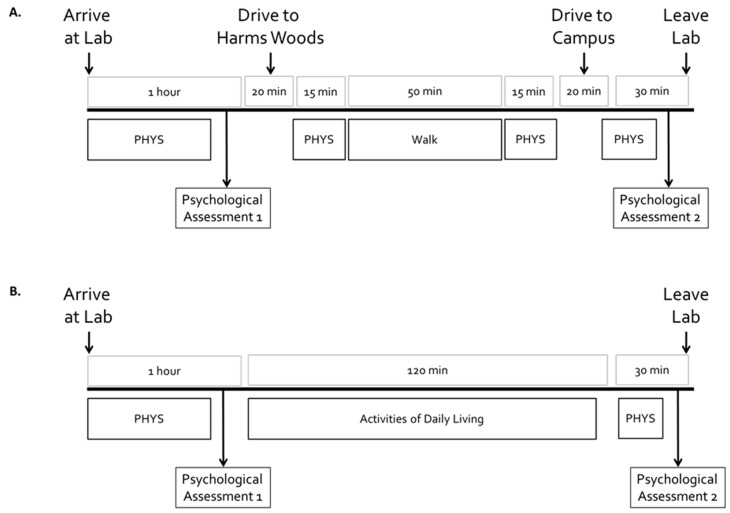
- Design: Within-subjects randomized crossover study with two 3-walk series (forest path vs busy road), separated by a 9-day washout; the report analyzes days 1, 8, 15, 22, and 29.
- Sample/data: Convenience sample recruited from Northwestern University and nearby Evanston communities; inclusion was ages 18–35, fluent in English, and healthy for moderate physical activity. 41 consented, 38 completed (20 women, 18 men).
- Main analysis: Pre/post changes were analyzed with repeated-measures linear mixed models in NCSS 8, with intervention, series, and time modeled; series was dropped after showing no significant effect. Outcomes were PANAS, STAI-state, PSS-10, and visual backward digit span.
## Limitations
- The paper explicitly states this was a pilot study intended to refine protocols for future longitudinal studies, so conclusions are preliminary and not definitive.
- The authors note significant participant burden: 9 lab visits, 3.5 hours per study day, and 52% of eligible people enrolled after learning the full protocol.
- The paper states a measurement limitation: the STAI response wording was inadvertently changed from the standard scale wording, though baseline scores were similar to normative data.
- Evident from the text: the sample was a convenience sample of healthy young adults from one university/community area, which limits generalizability.
Model-written summary. Check it against the paper before relying on it.
Integrity signals
Registry
Cites
Statistics
Figures
Verification
Claims the paper makes
22 Valid · 3 Not valid · 12 Not checked · 53 Own results and interpretations
Some cited sources support this claim and some don’t — read each source’s verdict below.
In the paper
“The fact that both the forest and roadside walks started from the same location, the parking lot of the Forest Preserve, and the fact that the roadside walk took place on a suburban roadside, may also explain why the differences between the psychological outcomes for roadside and forest walk were attenuated as compared to other studies [46,47,48,59].”
§ Walking Green: Developing an Evidence Base for Nature Prescriptions > 4. Discussion
What the sources say
- Not checked — no full text of the sourcecites [46] Berman M.G. Jonides J. Kaplan S. The cognitive benefits of interacting with nature Psychol. Sci. 2008 19 1207 1212 10.1111/j.1467-9280.2008.02225.x 19121124 source
- Disputedcites [47] Bratman G.N. Hamilton J.P. Hahn K.S. Daily G.C. Gross J.J. Nature experience reduces rumination and subgenual prefrontal cortex activation Proc. Natl. Acad. Sci. USA 2015 112 8567 8572 10.1073/pnas.1510459112 26124129 PMC4507237 sourceExperimental — accuracy not yet measured
Split into 2 atoms — 1 confirmed, 0 partially supported, 1 disputed, 0 misattributed, 0 unverifiable. Expand the claim to see per-atom verdicts.
Checked by a reasoning model — may be wrong.
- Supportedcites [48] Park B.J. Tsunetsugu Y. Kasetani T. Hirano H. Kagawa T. Sato M. Miyazaki Y. Physiological effects of Shinrin-yoku (taking in the atmosphere of the forest)--using salivary cortisol and cerebral activity as indicators J. Physiol. Anthropol. 2007 26 123 128 10.2114/jpa2.26.123 17435354 source
Split into 2 atoms — 2 confirmed, 0 partially supported, 0 disputed, 0 misattributed, 0 unverifiable. Expand the claim to see per-atom verdicts.
- Partly supportedcites [59] De Brito J.N. Pope Z.C. Mitchell N.R. Schneider I.E. Larson J.M. Horton T.H. Pereira M.A. Changes in Psychological and Cognitive Outcomes after Green versus Suburban Walking: A Pilot Crossover Study Int. J. Environ. Res. Public Health 2019 16 2894 10.3390/ijerph16162894 PMC6719990 31412602 sourceExperimental — accuracy not yet measured
Split into 2 atoms — 1 confirmed, 1 partially supported, 0 disputed, 0 misattributed, 0 unverifiable. Expand the claim to see per-atom verdicts.
hedgedstates a possible cause- Asserted: passes — The authors put it forward as true.
- Checkable: passes — It can be checked against evidence.
- Load-bearing: passes — The paper’s conclusions depend on it.
- Based: passes — The paper gives a reason why it holds.
The sources with a verdict support this claim; the rest weren’t checked yet, have no full text we could read, or their verdicts aren’t rated yet.
In the paper
“Thus, while numerous studies have long indicated that light-to-moderate physical activity has a strong positive association with health and well-being [40,41,42,43], greenspace exposure has unique characteristics that may confer added health benefits via multiple pathways for those completing physical activity in a green environment.”
§ Walking Green: Developing an Evidence Base for Nature Prescriptions > 1. Introduction
What the sources say
- Not checked — no full text of the sourcecites [9] Hunter R.F. Christian H. Veitch J. Astell-Burt T. Hipp J.A. Schipperijn J. The impact of interventions to promote physical activity in urban green space: A systematic review and recommendations for future research Soc. Sci. Med. 2015 124 246 256 10.1016/j.socscimed.2014.11.051 25462429 source
- Not checked — no full text of the sourcecites [19] Sullivan W.C. Frumkin H. Jackson R.J. Chang C.-Y. Gaia meets Asclepius: Creating healthy places Landsc. Urban Plan. 2014 127 182 184 10.1016/j.landurbplan.2014.03.005 source
- Supportedcites [20] Frumkin H. Bratman G.N. Breslow S.J. Cochran B. Kahn P.H. Jr. Lawler J.J. Levin P.S. Tandon P.S. Varanasi U. Wolf K.L. Nature Contact and Human Health: A Research Agenda Environ. Health Perspect. 2017 125 075001 10.1289/EHP1663 28796634 PMC5744722 source
The 'Increased Physical Activity' section says there is some evidence that exercise in outdoor natural settings confers more benefits than equivalent exertion indoors or in constructed settings. Its discussion of benefits independent of physical activity, together with the 'Psychological Pathways' section on stress reduction, supports the claim’s hedged reference to added benefits through multiple pathways. Page numbers were not available in our copy. (LLM, conf=0.91)
hedgedstates a possible cause- Asserted: passes — The authors put it forward as true.
- Checkable: passes — It can be checked against evidence.
- Load-bearing: passes — The paper’s conclusions depend on it.
- Based: passes — The paper gives a reason why it holds.
The cited sources support only part of this claim — read each source’s verdict below.
In the paper
“Although the health benefits of exercise and exposure to nature are well established, most evidence of their interaction comes from acute observations of single sessions of activity.”
§ Walking Green: Developing an Evidence Base for Nature Prescriptions > Abstract
What the sources say
- Not checked — no full text of the sourcecites [46] Berman M.G. Jonides J. Kaplan S. The cognitive benefits of interacting with nature Psychol. Sci. 2008 19 1207 1212 10.1111/j.1467-9280.2008.02225.x 19121124 source
- Partly supportedcites [47] Bratman G.N. Hamilton J.P. Hahn K.S. Daily G.C. Gross J.J. Nature experience reduces rumination and subgenual prefrontal cortex activation Proc. Natl. Acad. Sci. USA 2015 112 8567 8572 10.1073/pnas.1510459112 26124129 PMC4507237 sourceExperimental — accuracy not yet measured
The Methods describe a single 90-minute nature or urban walk, with outcomes measured before and after it, so this paper is an example of acute, single-session evidence. The Discussion calls the experience relatively brief and says more research is needed on duration and frequency. Neither passage establishes that most evidence on the interaction between exercise and nature exposure comes from single sessions. (LLM, conf=0.83)
- Partly supportedcites [48] Park B.J. Tsunetsugu Y. Kasetani T. Hirano H. Kagawa T. Sato M. Miyazaki Y. Physiological effects of Shinrin-yoku (taking in the atmosphere of the forest)--using salivary cortisol and cerebral activity as indicators J. Physiol. Anthropol. 2007 26 123 128 10.2114/jpa2.26.123 17435354 sourceExperimental — accuracy not yet measured
The Procedure (page not specified) describes brief, 20-minute walks in forest and city settings, with physiological measurements taken around those activities. This paper is an example of acute evidence on exercise and nature exposure, but it does not assess whether most evidence in the field comes from single-session observations. (LLM, conf=0.85)
plain- Asserted: passes — The authors put it forward as true.
- Checkable: passes — It can be checked against evidence.
- Load-bearing: passes — The paper’s conclusions depend on it.
- Based: passes — The paper gives a reason why it holds.
The cited sources support only part of this claim — read each source’s verdict below.
In the paper
“A limited number of longitudinal studies also support the hypothesis that exposure to greenspace may promote improved health outcomes, such as self-reported mental health and the incidence of type 2 diabetes, independently of increased physical activity [37,38,39].”
§ Walking Green: Developing an Evidence Base for Nature Prescriptions > 1. Introduction
What the sources say
- Partly supportedcites [37] South E.C. Hohl B.C. Kondo M.C. MacDonald J.M. Branas C.C. Effect of greening vacant land on mental health of community-dwelling adults: A cluster randomized trial JAMA Netw. Open 2018 1 e180298 10.1001/jamanetworkopen.2018.0298 30646029 PMC6324526 sourceExperimental — accuracy not yet measured
Split into 2 atoms — 1 confirmed, 1 partially supported, 0 disputed, 0 misattributed, 0 unverifiable. Expand the claim to see per-atom verdicts.
- Partly supportedcites [38] Jerrett M. van den Bosch M. Nature exposure gets a boost from a cluster randomized trial on the mental health benefits of greening vacant lots JAMA Netw. Open 2018 1 e180299 10.1001/jamanetworkopen.2018.0299 30646026 sourceExperimental — accuracy not yet measured
The main text describes a rare longitudinal study finding mental-health benefits after a move to greener areas. Its JAMA Network Open discussion says fenced greening sites suggest a mental-health effect from seeing nature rather than physical activity. The paper does not address type 2 diabetes incidence, and the physical-activity point is an inference about the greening trial, not a finding attributed to the longitudinal studies. (LLM, conf=0.87)
- Supportedcites [39] Dalton A.M. Jones A.P. Sharp S.J. Cooper A.J. Griffin S. Wareham N.J. Residential neighbourhood greenspace is associated with reduced risk of incident diabetes in older people: A prospective cohort study BMC Public Health 2016 16 1171 10.1186/s12889-016-3833-z 27863516 PMC5116148 source
Split into 2 atoms — 2 confirmed, 0 partially supported, 0 disputed, 0 misattributed, 0 unverifiable. Expand the claim to see per-atom verdicts.
hedgedstates a possible cause- Asserted: passes — The authors put it forward as true.
- Checkable: passes — It can be checked against evidence.
- Load-bearing: passes — The paper’s conclusions depend on it.
- Based: passes — The paper gives a reason why it holds.
- Partly supported
The cited sources support only part of this claim — read each source’s verdict below.
In the paper
“In contrast, studies of walking interventions aimed at improving health outcomes typically last weeks or months [53,54,55,56,57,58].”
§ Walking Green: Developing an Evidence Base for Nature Prescriptions > 1. Introduction
What the sources say
- Not checked — no full text of the sourcecites [53] Rimmer J.H. Hsieh K. Graham B.C. Gerber B.S. Gray-Stanley J.A. Barrier removal in increasing physical activity levels in obese African American women with disabilities J. Womens Health (Larchmt) 2010 19 1869 1876 10.1089/jwh.2010.1941 20815739 source
- Partly supportedcites [54] Robbins L.B. Pfeiffer K.A. Vermeesch A. Resnicow K. You Z. An L. Wesolek S.M. “Girls on the Move” intervention protocol for increasing physical activity among low-active underserved urban girls: A group randomized trial BMC Public Health 2013 13 474 10.1186/1471-2458-13-474 23672272 PMC3661346 sourceExperimental — accuracy not yet measured
The Background > Aims and hypotheses describes a planned 17-week physical-activity intervention intended to improve cardiovascular fitness, BMI, and body fat. That supports an example of an intervention lasting months, but the paper does not identify it as a walking intervention or establish what duration is typical of walking-intervention studies. No page number is available in our copy. (LLM, conf=0.84)
- Partly supportedcites [55] Hurley J.C. Hollingshead K.E. Todd M. Jarrett C.L. Tucker W.J. Angadi S.S. Adams M.A. The Walking Interventions Through Texting (WalkIT) Trial: Rationale, Design, and Protocol for a Factorial Randomized Controlled Trial of Adaptive Interventions for Overweight and Obese, Inactive Adults JMIR Res. Protoc. 2015 4 e108 10.2196/resprot.4856 26362511 PMC4704955 sourceExperimental — accuracy not yet measured
The Discussion (Principal Considerations; page unavailable) describes a walking intervention designed to run for four months, and the Limitations section confirms its four-month length. This supports the paper as an example of a months-long study, but it does not establish that walking-intervention studies typically last weeks or months. (LLM, conf=0.84)
- Partly supportedcites [56] Johnson U. Ivarsson A. Parker J. Andersen M. Svetoft I. Connection in the fresh air: A study on the benefits of participation in an electronic tracking outdoor gym exercise programme Montenegrin J. Sports Sci. Med. 2019 8 61 67 10.26773/mjssm.190309 sourceExperimental — accuracy not yet measured
The Abstract describes a six-week intervention that assessed physical and psychological health measures, supporting the weeks-long duration. But the Exercise intervention section identifies it as outdoor-gym resistance training, not a walking intervention, and the paper does not establish what duration is typical for walking studies. (LLM, conf=0.82)
- Supportedcites [57] Chudyk A. Petrella R.J. Effects of exercise on cardiovascular risk factors in type 2 diabetes: A meta-analysis Diabetes Care 2011 34 1228 1237 10.2337/dc10-1881 21525503 PMC3114506 source
The Results section’s Table 1 lists walking interventions lasting 10 weeks and 4 months; Table 3 lists a rapid-walking intervention lasting 16 weeks. These examples support the cited sentence’s broad description of intervention durations, although this review concerns people with type 2 diabetes. (LLM, conf=0.88)
- Not checked — no full text of the sourcecites [58] Perez-Lopez F.R. Martinez-Dominguez S.J. Lajusticia H. Chedraui P. The Health Outcomes Systematic Analyses Project Effects of programmed exercise on depressive symptoms in midlife and older women: A meta-analysis of randomized controlled trials Maturitas 2017 106 38 47 10.1016/j.maturitas.2017.09.001 29150165 source
plain- Asserted: passes — The authors put it forward as true.
- Checkable: passes — It can be checked against evidence.
- Load-bearing: passes — The paper’s conclusions depend on it.
- Based: passes — The paper gives a reason why it holds.
29 more claims · 3 with their cited sources checked
Create a free account to see all 90 claims and to verify the 8 references still open.
- Probably not a substantial claim. 28
- It may state two separate claims as one. 36
- Borderline: one of the tests for a substantial claim is unclear. 1
- The quote only partly states this claim. 1
Citations
Cites
Faul, F., Erdfelder, E., Lang, A.-G., & Buchner, A. (2007) · Behavior Research Methods · doi:10.3758/bf03193146 · Cited by 65,971
Statistical power analyses using G∗Power 3.1: tests for correlation and regression analyses
Faul, F., Erdfelder, E., Buchner, A., & Lang, A.-G. (2009) · Behavior Research Methods · doi:10.3758/brm.41.4.1149 · Cited by 37,615
A Global Measure of Perceived Stress
Cohen, S., Kamarck, T., & Mermelstein, R. (1983) · Journal of Health and Social Behavior · doi:10.2307/2136404 · Cited by 32,807
Development and validation of brief measures of positive and negative affect: The PANAS scales.
Watson, D., Clark, L. A., & Tellegen, A. (1988) · Journal of Personality and Social Psychology · doi:10.1037/0022-3514.54.6.1063 · Cited by 32,433
Lakens, D. (2013) · Frontiers in Psychology · doi:10.3389/fpsyg.2013.00863 · Cited by 10,303
Generalized linear mixed models: a practical guide for ecology and evolution
Bolker, B. M., Brooks, M. E., Clark, C. J., Geange, S. W., Poulsen, J. R., Stevens, M. H. H., & White, J.-S. S. (2009) · Trends in Ecology & Evolution · doi:10.1016/j.tree.2008.10.008 · Cited by 8,910 · cited 1×
“We used a repeated measures linear mixed-model in NCSS 8 [81] to determine whether changes in scores were dependent upon the Intervention and to estimate relative effect sizes [76,77,82].”
MethodThe restorative benefits of nature: toward an integrative framework
Kaplan, S. (1995) · Journal of Environmental Psychology · doi:10.1016/0272-4944(95)90001-2 · Cited by 6,923
The magical number 4 in short-term memory: A reconsideration of mental storage capacity
Cowan, N. (2001) · Behavioral and Brain Sciences · doi:10.1017/s0140525x01003922 · Cited by 6,779
Stress recovery during exposure to natural and urban environments
Ulrich, R. S., Simons, R. F., Losito, B. D., Fiorito, E., Miles, M. A., & Zelson, M. (1991) · Journal of Environmental Psychology · doi:10.1016/s0272-4944(05)80184-7 · Cited by 5,990
View Through a Window May Influence Recovery from Surgery
Ulrich, R. S. (1984) · Science · doi:10.1126/science.6143402 · Cited by 5,341
Research works printed but not linked: 4
- WHO Urban Green Space Interventions and Health: A Review of Impacts and Effectiveness World Health Organization Copenhagen, Denmark 2017
- WHO Urban Green Spaces and Health. A Review of the Evidence WHO Regional Office for Europe Copenhagen, Denmark 2016
- Kaplan R. Kaplan S. The Experience of Nature: A Psychological Perspective Cambridge University Press New York, NY, USA 1989 368
- Cohen J. Statistical Power Analysis for the Behavioral Sciences 2nd ed. Routledge Academic New York, NY, USA 1988
Cited by
Associations between nature exposure and health: a review of the evidence
Jimenez, M. P., DeVille, N. V., Elliott, E. G., Schiff, J. E., Wilt, G. E., Hart, J. E., & James, P. (2021) · International Journal of Environmental Research and Public Health · doi:10.3390/ijerph18094790 · Cited by 726
“Another study examining walking in different environments observed the largest and most consistent improvements in psychological states associated with forest walks [25].”
BackgroundNguyen, P.-Y., Astell-Burt, T., Rahimi-Ardabili, H., & Feng, X. (2023) · The Lancet Planetary Health · doi:10.1016/s2542-5196(23)00025-6 · Cited by 209
Gaekwad, J. S., Sal Moslehian, A., Roös, P. B., & Walker, A. (2022) · Frontiers in Psychology · doi:10.3389/fpsyg.2022.750245 · Cited by 179
Vert, C., Gascón, M., Ranzani, O., Márquez, S., Mas, M. T., Carrasco‐Turigas, G., Arjona, L., Koch, S., Llopis, M., Donaire-González, D., et al. (2020) · Environmental Research · doi:10.1016/j.envres.2020.109812 · Cited by 171
Forest bathing as a mindful tourism practice
Farkić, J. M., Isailović, G., & Taylor, S. (2021) · Annals of Tourism Research Empirical Insights · doi:10.1016/j.annale.2021.100028 · Cited by 156
How do different types and characteristics of green space impact mental health? A scoping review
Beute, F., Marselle, M. R., Olszewska-Guizzo, A., Andreucci, M. B., Lammel, A., Davies, Z. G., Glanville, J., Keune, H., O’Brien, L., Remmen, R., et al. (2023) · People and Nature · doi:10.1002/pan3.10529 · Cited by 182
Effect of Nature Walks on Depression and Anxiety: A Systematic Review
Kotera, Y., Lyons, M., Vione, K. C., & Norton, B. (2021) · Sustainability · doi:10.3390/su13074015 · Cited by 107
“There were water features present near the route in three studies [48,50,53].”
BackgroundInfluentialKip, E., & Parr‐Brownlie, L. C. (2023) · Frontiers in Neuroscience · doi:10.3389/fnins.2023.1092537 · Cited by 115
“In fact, in Scotland, medical doctors are now prescribing time spent in natural environments as treatments (Carrell, 2018; Koselka et al., 2019).”
BackgroundWhat is the impact of nature on human health? A scoping review of the literature
Nejade, R., Grace, D., & Bowman, L. (2022) · Journal of Global Health · doi:10.7189/jogh.12.04099 · Cited by 127
The effects of forest bathing on psychological well‐being: A systematic review and meta‐analysis
Siah, C. J. R., Goh, Y. S., Lee, J., Poon, S. N., Yong, J. Q. Y. O., & Tam, W. W. (2023) · International Journal of Mental Health Nursing · doi:10.1111/inm.13131 · Cited by 150
Tomasso, L. P., Yin, J., Laurent, J. G. C., Chen, J. T., Catalano, P. J., & Spengler, J. D. (2021) · International Journal of Environmental Research and Public Health · doi:10.3390/ijerph18041511 · Cited by 86
“Shared concern for a phenomenon described as the “rarity of direct experience,” [68] and characterized in the literature as nature deficiency [69] or nature impoverishment [23] has led to research on prescriptive nature re-engagement [70, 71] and nature-based health treatment [72], especially among children.”
BackgroundMa, J., Lin, P., & Williams, J. M. (2023) · Current Psychology · doi:10.1007/s12144-023-05112-z · Cited by 106
“…Geniole et al., 2016; Hassan et al., 2018; Song et al., 2014, 2015, 2018), in busy shopping streets (Aspinall et al., 2015; Goulding et al., 2018; Koselka et al., 2019), in residential areas with traffic roads (Koselka et al., 2019), and in concrete areas with buildings (Keenan et al., 2021;…”
InfluentialSilva, A. L., de Matos, M. A. V., & Gonçalves, M. (2023) · Journal of Environmental Planning and Management · doi:10.1080/09640568.2023.2227761 · Cited by 91
Li, H., Liu, H., Yang, Z., Bi, S., Cao, Y., & Zhang, G. (2020) · International Journal of Environmental Research and Public Health · doi:10.3390/ijerph18010090 · Cited by 53
“In response, various attempts have been made to relieve stress and maintain health, and green walking is one of the important solutions, which refers to walking in forests or other natural environments with plants [6].”
BackgroundWatkins‐Martin, K., Bolanis, D., Richard‐Devantoy, S., Pennestri, M., Malboeuf‐Hurtubise, C., Philippe, F. L., Guindon, J., Gouin, J., Ouellet‐Morin, I., & Geoffroy, M. (2022) · Journal of Affective Disorders · doi:10.1016/j.jad.2022.08.121 · Cited by 53
Forest features and mental health and wellbeing: A scoping review
Clark, H., Vanclay, J. K., & Brymer, E. (2023) · Journal of Environmental Psychology · doi:10.1016/j.jenvp.2023.102040 · Cited by 50
Shrestha, T., Blasi, Z. D., & Cassarino, M. (2021) · International Journal of Environmental Research and Public Health · doi:10.3390/ijerph18042003 · Cited by 43
“This may suggest an overall benefit of being outdoors, despite the environment, which is in line with previous research that has highlighted an overall vitalizing effect of outdoor experiences [25,26,50].”
ResultResilience After Trauma in Kosovo and Southeastern Europe: A Scoping Review
Kelmendi, K., & Hamby, S. L. (2022) · Trauma Violence & Abuse · doi:10.1177/15248380221093693 · Cited by 38
“Evidence shows that walking or spending time in green spaces is a cost-effective way to improve mental and physical health and helps in reducing stress, anxiety, and mood (Koselka et al., 2019; Leung et al., 2012).”
BackgroundWalter, K. H., Otis, N. P., Ray, T. N., Glassman, L. H., Beltran, J. L., Kobayashi Elliott, K. T., & Michalewicz-Kragh, B. (2023) · BMC Psychiatry · doi:10.1186/s12888-022-04452-7 · Cited by 33
“Hiking/ walking in nature has demonstrated greater improvements in depression [36, 37] and related symptoms [38, 39] compared with walking in an indoor or urban area.”
BackgroundPearson, A. L., Pfeiffer, K. A., Gardiner, J. C., Horton, T. H., Buxton, R. T., Hunter, R. F., Breeze, V., & McDade, T. W. (2020) · BMC Public Health · doi:10.1186/s12889-020-08716-3 · Cited by 37
“Parks serve as places to engage in PA in direct contact with nature — called ‘green PA’ — which has been shown to lower anxiety [28] and perceived stress [29, 30] over and above the effects of indoor PA [23] or outdoor PA without greenery [31].”
BackgroundSelf-citationWhat Activities in Forests Are Beneficial for Human Health? A Systematic Review
Park, S., Kim, E., Kim, G., Kim, S.-J., Choi, Y., & Paek, D. (2022) · International Journal of Environmental Research and Public Health · doi:10.3390/ijerph19052692 · Cited by 38
A systematic review of the anxiety-alleviation benefits of exposure to the natural environment
Zhang, X., Zhang, Y., Yun, J., & Yao, W. (2022) · Reviews on Environmental Health · doi:10.1515/reveh-2021-0157 · Cited by 41
Chen, L., Yan, R., & Hu, Y. (2025) · Urban forestry & urban greening · doi:10.1016/j.ufug.2025.128726 · Cited by 31
Maharja, C., Praptiwi, R. A., Roberts, B. R., Morrissey, K., White, M. P., Sari, N. M., Cholifatullah, F., Sugardjito, J., & Fleming, L. E. (2022) · Journal of Outdoor Recreation and Tourism · doi:10.1016/j.jort.2022.100584 · Cited by 37
Forest Therapy Trails: A Conceptual Framework and Scoping Review of Research
Gobster, P. H., Schultz, C. L., Kruger, L. E., & Henderson, J. R. (2022) · Forests · doi:10.3390/f13101613 · Cited by 35
“…2016 experimental forest walks Finland various urban SocSci [103] Korpela et al., 2017 experimental forest walks Europe forest rural For-Soc [181] Koselka et al., 2019 experimental forest walks US forest urban Med-Soc [198] Kotera & Fido 2021 experimental forest bathing Japan forest rural SocSci…”
BackgroundKim, E., Park, S., Kim, S.-J., Choi, Y., Cho, J., Cho, S., Chun, H.-R., & Kim, G. (2021) · Healthcare · doi:10.3390/healthcare9111427 · Cited by 31
Climate adaptation actions for urban forests and human health
Janowiak, M. K., Brandt, L. A., Wolf, K. K., Brady, M., Darling, L., Lewis, A. D., Fahey, R. T., Giesting, K., Hall, E., Henry, M., et al. (2021) · doi:10.2737/nrs-gtr-203 · Cited by 33
Weinstein, A. A., van Aert, R. C. M., Donovan, K., Muskens, L., & Kop, W. J. (2024) · Psychosomatic Medicine · doi:10.1097/psy.0000000000001321 · Cited by 42
Li, W., Damdinsuren, M., Qin, Y., Gonchigsumlaa, G., Yadmaa, Z., & Zhang, Z. (2024) · Sustainability · doi:10.3390/su16093609 · Cited by 44
“The forest is the best place for forest therapy [7], providing opportunities for the development of the wellness industry.”
BackgroundInteractions with Nature, Good for the Mind and Body: A Narrative Review
Stott, D., Forde, D., Sharma, C., Deutsch, J. M., Bruneau, M. L., Nasser, J. A., Vitolins, M. Z., & Milliron, B. (2024) · International Journal of Environmental Research and Public Health · doi:10.3390/ijerph21030329 · Cited by 42
Measuring urban nature for pedestrian health: Systematic review and expert survey
Lee, C., Park, A. H., Lee, H., Bratman, G. N., Hankey, S., & Li, D. (2024) · Landscape and Urban Planning · doi:10.1016/j.landurbplan.2024.105129 · Cited by 21
Patwary, M. M., Bardhan, M., Browning, M. H. E. M., Astell‐Burt, T., van den Bosch, M. A., Dong, J., Dzhambov, A. M., Dadvand, P., Fasolino, T. K., Markevych, I., et al. (2023) · The Science of The Total Environment · doi:10.1016/j.scitotenv.2023.169635 · Cited by 28
“Researchers have also examined nature prescriptions as a public health intervention (Carpenter, 2013; Koselka et al. , 2019; Kondo et al. , 2020).”
BackgroundVeitch, J., Timperio, A. F., Salmon, J., Hall, S. J., Abbott, G., Flowers, E. P., & Turner, A. I. (2022) · Urban forestry & urban greening · doi:10.1016/j.ufug.2022.127660 · Cited by 21
Paraskevopoulou, A. T., Chletsou, M., & Malesios, C. (2022) · Sustainability · doi:10.3390/su142316280 · Cited by 17
Kim, E., Park, S., Kim, S.-J., Choi, Y., Cho, J. H., & Kim, G. (2022) · Frontiers in Public Health · doi:10.3389/fpubh.2022.1021618 · Cited by 18
Yeşil Egzersizin Kronik Ağrıya, Fiziksel ve Mental Sağlığa Etkileri
DURUSOY, E., & Mutuş, R. (2021) · İstanbul Gelişim Üniversitesi Sağlık Bilimleri Dergisi · doi:10.38079/igusabder.939915 · Cited by 20
Walter, K. H., Otis, N. P., Miggantz, E. L., Ray, T. N., Glassman, L. H., Beltran, J. L., Elliott, K. T. K., & Michalewicz-Kragh, B. (2023) · Frontiers in Psychology · doi:10.3389/fpsyg.2023.1185774 · Cited by 15
“, 2008) and related symptoms (Niedermeier et al., 2017; Koselka et al., 2019) compared with walking in an indoor or urban area.”
BackgroundFlowers, E. P., Turner, A. I., Abbott, G., Timperio, A. F., Salmon, J., & Veitch, J. (2022) · Urban forestry & urban greening · doi:10.1016/j.ufug.2022.127587 · Cited by 17
Pearson, A. L., Shewark, E. A., & Burt, S. A. (2022) · BMC Public Health · doi:10.1186/s12889-022-13442-z · Cited by 14
Nature prescriptions: a scoping review with a nested meta-analysisPreprint
Nguyen, P., Astell-Burt, T., Rahimi‐Ardabili, H., & Feng, X. (2022) · medRxiv · doi:10.1101/2022.03.23.22272674 · Cited by 11
Firnhaber, M., Varol, T., Gugushvili, N., Kwaśnicka, D., Kleuters, P., Keller, J., Massar, K., de Visser, I., & ten Hoor, G. A. (2025) · Current Research in Ecological and Social Psychology · doi:10.1016/j.cresp.2025.100244 · Cited by 14
Enabling Health Outcomes of Nature-based Interventions: A Systematic Scoping Review
(2022) · doi:10.1101/2022.03.16.22272412 · Cited by 11
“Most reported improved affect [58, 64, 70, 73, 81-83, 86, 87], mood [62, 287 65, 79, 80, 89, 91], self-esteem [61, 73, 80, 84, 90], self-confidence [75] and vitality [79].”
BackgroundResultInfluentialThe impact of physical activity on cognitive functions
Sumińska, S. (2021) · Medycyna Pracy · doi:10.13075/mp.5893.01103 · Cited by 18
Effects of virtual exposure to urban greenways on mental health
Jiang, X., Wang, X., He, L., Gu, Q., Wei, X., Xu, M., & SULLIVAN, W. C. (2024) · Frontiers in Psychiatry · doi:10.3389/fpsyt.2024.1256897 · Cited by 14
Cognitive-Emotional Benefits of Weekly Exposure to Nature: A Taiwanese Study on Young Adults
Yeung, Y.-Y., & Yu, C.-P. (2022) · Sustainability · doi:10.3390/su14137828 · Cited by 12
Berry, C., Fountain, J., Forbes, L. J. L., Bogen‐Johnston, L., Thomson, A. C., Zylko, Y., Tunks, A., Hotham, S., & Michelson, D. (2024) · PLoS ONE · doi:10.1371/journal.pone.0304470 · Cited by 14
Dietrich, K. M., & Bidart, M. G. (2021) · OBM Integrative and Complementary Medicine · doi:10.21926/obm.icm.2104046 · Cited by 9
“The most common type of green exercise study compares walking in natural versus urban environments [38, 39].”
BackgroundAn Introduction to Nature Prescribing: Health Benefits of Nature
Rariden, C. A., & Kuhn, A. (2024) · The Journal for Nurse Practitioners · doi:10.1016/j.nurpra.2024.105161 · Cited by 8
Yang, X., Orjuela, J. P., McCoy, E. J., Vich, G., Anaya-Boig, E., Ávila-Palència, I., Brand, C., Carrasco‐Turigas, G., Dons, E., Gerike, R., et al. (2022) · Environmental Research · doi:10.1016/j.envres.2022.114083 · Cited by 9
The impact of built and natural environments on working memory - A systematic literature review
Huynh, D. C., Fich, L. B., & Djebbara, Z. (2025) · Journal of Environmental Psychology · doi:10.1016/j.jenvp.2025.102763 · Cited by 6
Tsokani, A., Dimopoulos, T., Vourazanis, E., Στριμπάκος, Ν., Billis, E. V., Pepera, G., & Kapreli, E. (2023) · Applied Sciences · doi:10.3390/app131810077 · Cited by 6
Tomasso, L. P., Yin, J., Laurent, J. G. C., et al. (2020) · Preprints.org · doi:10.20944/preprints202012.0484.v1 · Cited by 4
Tu, R., Xiao, Y., Huang, J., Zhou, J., Yin, S., & Song, S. (2025) · Journal of Transport & Health · doi:10.1016/j.jth.2025.102246 · Cited by 5
Narraway, C., van Remortel, E., Cowling, S. B., Kumar, D., Mroczka, H., Rudzinskaite, E., Sturgeon, G., Woods, S., & Hayhow, D. B. (2025) · People and Nature · doi:10.1002/pan3.70123 · Cited by 3
What Is Outdoor Therapy? A New Name for an Old Therapeutic Practice
Harper, N. J., & Dobud, W. W. (2024) · OBM Integrative and Complementary Medicine · doi:10.21926/obm.icm.2404065 · Cited by 7
Patwary, M. M., Bardhan, M., Browning, M. H. E. M., Astell‐Burt, T., van den Bosch, M. A., Dong, J., Dzhambov, A. M., Dadvand, P., Fasolino, T. K., Markevych, I., et al. (2023) · doi:10.32942/x2h60b · Cited by 3
Implementation of Biophilic Design at Workplaces
Yildirim, M., Globa, A., Brambilla, A., & Göçer, Ö. (2023) · Sustainable development goals series · doi:10.1007/978-3-031-36316-0_31 · Cited by 4
Forest Therapy and Well-Being Tourism Literature Review – With Assessment of Potential for Slovenia
Cvikl, D. (2022) · Academica Turistica · doi:10.26493/2335-4194.15.25-41 · Cited by 3
Sudimac, S., Drewelies, J., de Weerth, C., & Kühn, S. (2026) · Environmental Research · doi:10.1016/j.envres.2026.125125 · Cited by 2
Predictors of sustained physical activity: behaviour, bodily health, and the living environment
Diaconaşu, D. E., Stoleriu, I., Câmpanu, I. A., Andrei, A., Boncu, Ș., Honceriu, C., Mocanu, V., & Juravle, G. (2024) · Frontiers in Physiology · doi:10.3389/fphys.2023.1213075 · Cited by 2
Climate change and mental health: Global challenges for psychosocial resilience and recovery
Chiu, L. (2023) · Australasian Psychiatry · doi:10.1177/10398562231211115 · Cited by 7
“17 The Japanese practice of shinrin-yoku (forest bathing) also improves stress and anxiety, with reduced negative feelings, cortisol levels, and pulse rates, and signi fi cantly increased positive feelings.”
BackgroundWatkins‐Martin, K., Bolanis, D., Richard‐Devantoy, S., Pennestri, M., Malboeuf‐Hurtubise, C., Philippe, F. L., Guindon, J., Gouin, J., Ouellet‐Morin, I., & Geoffroy, M. (2021) · medRxiv · doi:10.1101/2021.11.25.21266872 · Cited by 2
Nature-based activities and mental well-being in adults: a study on perceived health outcomes
Okudan, B., Işık, Ö., Yağmur, R., SALKIM, C. B., Talaghir, L.-G., & Iconomescu, T. M. (2025) · Frontiers in Public Health · doi:10.3389/fpubh.2025.1611830 · Cited by 7
Netto, G. F., Bilibio, M. A., Andrade, A. M., de França, G. V. A., Bentes, A. M., Oliveira, R. R., Daher, T. G. B. R. C., Fenner, A. L. D., Netto, L. C. R. F., Durães, S. D. F., et al. (2026) · Frontiers in Public Health · doi:10.3389/fpubh.2026.1817791 · Cited by 1
Birdwatching vs. nature walks: a randomized trial to compare mental health outcomes in Iran
Ebrahimi, I., Kazemi, F., & Ebrahimi, M. A. A. (2025) · Human Dimensions of Wildlife · doi:10.1080/10871209.2025.2589874 · Cited by 1
“Nature-based interventions operationalize nature’s restorative potential by engaging individuals in structured, meaningful outdoor experiences (Koselka et al., 2019).”
Baker, S., Aumiller, B. B., Henao, M. P., George, D. R., Morales, T. S., & Kraschnewski, J. L. (2024) · American Journal of Health Behavior · doi:10.5993/ajhb.48.1.11 · Cited by 1
Greenness Exposure Assessment Methods
Mazumdar, S., Knibbs, L. D., Browning, M. H. E. M., Huang, W., & Jalaludin, B. B. (2024) · Springer eBooks · doi:10.1007/978-981-97-3102-2_2 · Cited by 3
Effects of Short-Term Natural Environment Exposure on Preservice Teacher Well-Being
Allen, L. V. Z., Crim, C., Sosnaud, B., Barnett, E., & King, J. (2023) · Texas Educator Preparation · doi:10.59719/txep.v7i2.31 · Cited by 1
Chen, H., Liu, Z., Wang, M., et al. (2023) · doi:10.22541/au.168488284.47466372/v1 · Cited by 1
Nature Based Interventions for Human Health and Wellbeing
Moyers-Kinsella, S. I. (2023) · The Research Repository @ WVU (West Virginia University) · doi:10.33915/etd.11951 · Cited by 2
The role of blue spaces on health and well-being
Vert, C. (2020) · Dialnet (Universidad de la Rioja) · Cited by 1
Okorie, A. I., Santacrose, L. B., Dunuwila, E., Austin, J., Thrasher-Carroll, C., & Rakow, D. A. (2026) · Journal of American College Health · doi:10.1080/07448481.2026.2721432
Kaia, W.-M., Frederick, P., Fuoco, J., Loose, T., Chartrand, E., Alain, G., Bolanis, D., Pennestri, M., Khoury, B., Ouellet‐Morin, I., et al. (2026) · Journal of Environmental Psychology · doi:10.1016/j.jenvp.2026.103188
Malkin, C., Kota, N., Nakhoul, C., Saracco, B., Meenar, M., & Cerceo, E. A. (2026) · Ecopsychology · doi:10.1177/19429347261477618
Matejová, K. (2026) · Frontiers in Psychology · doi:10.3389/fpsyg.2026.1880259
“…with a range of potentially beneficial outcomes, including affective and cognitive restoration (Roe and Aspinall, 2010), improved working memory (Koselka et al., 2019), reduced depression and anxiety symptoms (Kotera et al., 2021; Robertson et al., 2012), improved mood (Koselka et al., 2019;…”
Boskova, K., Anders, M., & Vňuková, M. (2026) · Research Square · doi:10.21203/rs.3.rs-9277393/v1
The effectiveness of nature‐based interventions on mental health: A systematic review
Heinen, D., Herbold, E., Hendricks, C. L., Zuch, N., Rapp, M. A., Birtel, M. D., & Tschorn, M. (2026) · Applied Psychology Health and Well-Being · doi:10.1111/aphw.70164 · Cited by 7
Bilen, M., & Koç, C. (2026) · Peyzaj Araştırmaları ve Uygulamaları Dergisi · doi:10.56629/paud.1862377
Hale-Gallardo, J. L., Bogan, Y. K. H., Slande Alliance, Parry, K. J., Sanders, S. M., & Ciceron, M. (2026) · The Journal of Rural Health · doi:10.1111/jrh.70215 · Cited by 1
Natural environments and adolescent depression: A literature review
Zheng, Y.-F., Zheng, Y.-M., & Liu, X. (2026) · World Journal of Psychiatry · doi:10.5498/wjp.v16.i4.115550
Keith, R. J., Willis, S., Christian, N., Khayat, F., Gallagher, J., Gunter, W. S., Kachanova, J. P., Mehring, A. S., Pigg, R. M., Proctor, D., et al. (2026) · International Journal of Environmental Research and Public Health · doi:10.3390/ijerph23030365
“These estimates align with sample sizes used in previous studies employing similar protocols, including Lee et al., n = 43 [55], Koselka et al., n = 38 [51], and de Brito et al., n = 23 [54].”
Zhang, T., Adamis, D., Langan, N., & O’Neill, M. (2026) · JMIR Research Protocols · doi:10.2196/82970 · Cited by 2
Nature and Human Health: Exploring the Vital Connection for Wellbeing
Farhadi, R., Soltanifard, H., Meybodi, F. M., Noroozi, M., & Nasehi, S. (2026) · Urban sustainability · doi:10.1007/978-981-95-5487-4_2
Aguilar, P., Stuardo, A. P., Solari, F., de la Fuente, L. M., & Ginocchio, R. (2025) · Wellbeing Space and Society · doi:10.1016/j.wss.2025.100340 · Cited by 1
Reddit posts reveal how natural environments affect social anxiety in young peoplePreprint
O’Connor, K., Hernandez, S., Schmidt, A. L., Shirey, P. D., & Gonzalez‐Hernandez, G. (2025) · medRxiv · doi:10.64898/2025.12.10.25341922
“Given this and the results of this paper, outdoor activities and time outdoors may be considered as potentially beneficial for alleviating social anxiety symptoms 50 .”
BLUFFSTONE, R. A., Chan, M., Cox, C., Davis, M. M., Dickinson, C., Dissanayake, S. T. M., Kline, J. D., López, C. C., Ojha, H., Stokes, S., et al. (2025) · Forests · doi:10.3390/f16050752
An Introduction to Nature Prescribing: Health Benefits of NaturePreprint
Rariden, C. A., & Kuhn, A. L. R. (2024) · SSRN Electronic Journal · doi:10.2139/ssrn.4676014
Jinakote, M., Laothamatas, J., Suwannaphim, A., Sroysuwan, T., Krabuanrat, N., Porkachamnan, P., & Kasiyaphat, A. (2023) · International Journal of Environmental Health Research · doi:10.1080/09603123.2023.2264804
“Walking in a green environment has proven to provide numerous health benefits (Koselka et al. 2019).”
BackgroundChen, H., Liu, Z., Wang, M., et al. (2023) · SSRN Electronic Journal · doi:10.2139/ssrn.4464352
Metadata
- Authors
- Koselka, E. P. D., Weidner, L. C., Minasov, A., Berman, M. G., Leonard, W. R., Santoso, M. V., de Brito, J. N., Pope, Z. C., Pereira, M. A., & Horton, T. H.
- Affiliations
- Northwestern University (US)
- University of Chicago (US)
- Cornell University (US)
- School of Public Health, Division of Epidemiology and Community Health, 1300 S. 2nd Street, Room 300 West Bank Office Building, Minneapolis, MN 55454, USA
- University of Minnesota (US)
- Corresponding author
- Horton, Teresa H.
- ORCID
- Venue
- International Journal of Environmental Research and Public Health
- Publisher
- MDPI AG
- Published
- 2019-11-07
- Volume
- 16
- Issue
- 22
- Pages
- 4338
- ISSN
- 1660-4601 (ISSN-L)
- PMC
- PMC6888434
- OpenAlex
- W2985709541
- Cited by
- 89
- References
- 106
- Citations by year
- 2026: 14 · 2025: 10 · 2024: 12 · 2023: 18 · 2022: 19 · 2021: 12 · 2020: 4
- FWCI
- 3.77
- Type
- journal article
- Language
- en
- Open access
- gold
- dx.doi.org
- Licence
- Locations
- International Journal of Environmental Research and Public Health (publishedVersion, cc-by)
- PubMed Central (publishedVersion, cc-by)
- PubMed (publishedVersion)
- RePEc: Research Papers in Economics (submittedVersion)
- DOAJ (DOAJ: Directory of Open Access Journals) (submittedVersion)
- Funders
- Forest Preserve District of Cook County, IL (15-10-001)
- The Negaunee Foundation (2016-2019)
- TKF (MGB)
- Topics
- Social Sciences › Urban Studies › Urban Green Space and Health
- Health Sciences › Medicine › Public Health, Environmental and Occupational Health › Physical Activity and Health
- Social Sciences › Business, Management and Accounting › Tourism, Leisure and Hospitality Management › Recreation, Leisure, Wilderness Management
- Keywords
- walking, forest environment, green space exposure, psychological well-being, positive and negative affect, anxiety, perceived stress, working memory, activities of daily living
- MeSH terms
- Activities of Daily Living, Adult, Affect, Anxiety, Female, Humans, Male, Pilot Projects, Stress, Psychological, Exercise, Walking, Cross-Over Studies, Young Adult, Forests
About these checks
Registry, retraction, Cites and statistics results are computed, not judged, with one exception: a printed reference that no index lists is read once by a model before it counts as a citation error. Claims are extracted by a model and kept only when their quote appears verbatim in the text; each cited source is then checked, with a model’s help, for whether it says what the claim relies on. Those verdicts can be wrong — read the claim’s quote and the cited source before relying on one.
The claim verdicts this report counts are experimental: their accuracy is not yet measured.
A language model drew the claims from the paper on 2026-09-30, under version 3 of the claim definition (model deepseek-v4.1-flash, prompt extract-v3).
A second model labelled each claim on 2026-09-30 (model jev-1.13-20260917, definition revision gold-guideline-v0.2).
Cited sources are checked with a language model’s help (gpt-6-sol).
Statistics and arithmetic are recomputed, not judged.
Confidence bands are shown only for fields calibrated on our annotated test set. None is calibrated yet, so no band is shown.
What counts as a claim ›How we measure confidence ›How we check this ›
Are you an author, or do you see a problem with this page? Request a review
Data sources
Bibliographic data: Semantic Scholar, OpenAlex, Crossref.
Contains information from the Semantic Scholar Academic Graph Datasets, made available under the ODC Attribution License (ODC-BY 1.0).
Semantic Scholar’s data is described in: Kinney, R., et al. (2023). The Semantic Scholar Open Data Platform. arXiv:2301.10140.
