

Risk Perception and Depression in Public Health Crises: Evidence from the COVID-19 Crisis in China
Open accessThe DOI matches its Crossref record; 48 of the 50 references it cites were found in a registry or an index, and 1 are not checked yet.
Abstract
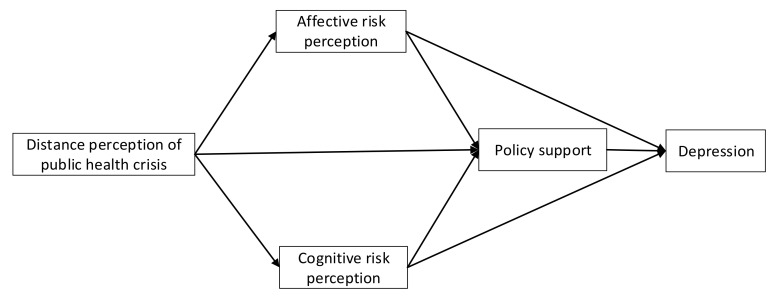
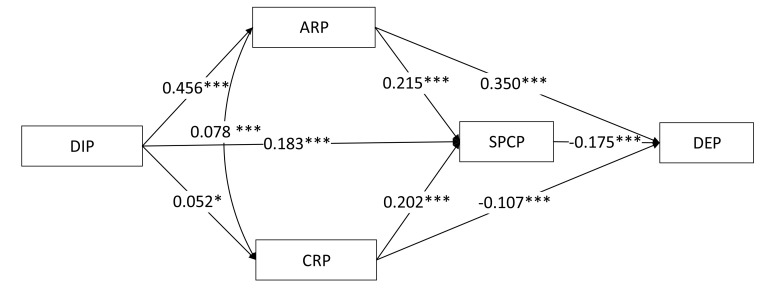
Background: Scant attention has been paid to how risk perceptions of public health crises may affect people’s mental health. Aims: The aims of this study are to (1) construct a conceptual framework for risk perception and depression of people in public health crises, (2) examine how the mental health of people in the crisis of Coronavirus Disease 2019 (COVID-19) is affected by risk perception and its associated factors, including distance perception of the crisis and support of prevention and control policies, and (3) propose policy recommendations on how to deal with psychological problems in the current COVID-19 crisis. Methods: Online questionnaire survey was implemented. A total of 6373 people visited the questionnaire online, 1115 people completed the questionnaire, and the number of valid questionnaires was 1081. Structural equation modeling was employed for data analysis. Results: Risk perception and its associated factors significantly affect the mental health of people in public health crises. Specifically, (1) distance perception of public health crises is negatively associated with depression among people, (2) affective risk perception is positively associated with depression of people in public health crises, (3) cognitive risk perception is negatively associated with depression of people in public health crises, and (4) support of prevention and control policies is negatively associated with depression of people in public health crises. Conclusion: The findings of this study suggest that risk perception plays an important role in affecting the mental health of people in a public health crisis. Therefore, health policies aiming to improve the psychological wellbeing of the people in a public health crisis should take risk perception into consideration.
Overview
The claims and statistics of this paper haven’t been checked yet.
Free: it reads the open-access text and checks the first 5 claims that cite a source we can check. Create a free account to check every claim.
Integrity signals
Registry
Cites
Statistics
Figures
Verification
Claims the paper makes
The claims and statistics of this paper haven’t been checked yet.
Free: it reads the open-access text and checks the first 5 claims that cite a source we can check. Create a free account to check every claim.
Self-check
Percentages, sums and reported differences re-computed from the paper’s own numbers.
The self-check needs the paper’s full text.
Citations
Cites
SCL-90: an outpatient psychiatric rating scale--preliminary report.
Derogatis, L. R., Lipman, R. S., & Covi, L. (1973) · PubMed · Cited by 4,633
Will raising the incomes of all increase the happiness of all?
Easterlin, R. A. (1995) · Journal of Economic Behavior & Organization · doi:10.1016/0167-2681(95)00003-b · Cited by 3,116
Integration of the cognitive and the psychodynamic unconscious
Epstein, S. (1994) · American Psychologist · doi:10.1037/0003-066x.49.8.709 · Cited by 2,883
Mental health problems and social media exposure during COVID-19 outbreak
Gao, J., Zheng, P., Jia, Y., Chen, H., Mao, Y., Chen, S., Wang, Y., Fu, H., & Dai, J. (2020) · PLoS ONE · doi:10.1371/journal.pone.0231924 · Cited by 2,830
Mental Health Problems and Social Media Exposure During COVID-19 Outbreak
Gao, J., Zheng, P., Jia, Y., Chen, H., Mao, Y., Chen, S., Wang, Y., Fu, H., & Dai, J. (2020) · SSRN Electronic Journal · doi:10.2139/ssrn.3541120 · Cited by 2,830
Mazza, C., Ricci, E., Biondi, S., Colasanti, M., Ferracuti, S., Napoli, C., & Roma, P. (2020) · International Journal of Environmental Research and Public Health · doi:10.3390/ijerph17093165 · Cited by 1,899 · cited 1×
“We referred to previous studies [31,38,39] and determined that if the total score of the depression scale was between 13 and 26, no significant depression was identified.”
Wu, P., Fang, Y., Guan, Z., Fan, B., Kong, J., Yao, Z., Liu, X., Fuller, C. J., Susser, E., Lu, J., et al. (2009) · The Canadian Journal of Psychiatry · doi:10.1177/070674370905400504 · Cited by 1,647 · cited 1×
“In addition, Wu and colleagues found that, during the 2005 SARS event, respondents who were closer to SARS-related risks were more likely to report mental health problems [50].”
BackgroundGonzález-Sanguino, C., Ausín, B., Castellanos, M. Á., Saiz, J., López-Gómez, A., Ugidos, C., & Muñoz, M. (2020) · Brain, Behavior, and Immunity · doi:10.1016/j.bbi.2020.05.040 · Cited by 1,373 · cited 2×
“For instance, a survey in Italy found that about 22% of the sample had mental health problems [39], and a survey in Spain showed that about 25% of the sample had depression symptoms [38].”
BackgroundVeenhoven, R. (1991) · Social Indicators Research · doi:10.1007/bf00292648 · Cited by 1,358
A Psychological Study of the Inverse Relationship Between Perceived Risk and Perceived Benefit
Alhakami, A. S., & Slovic, P. (1994) · Risk Analysis · doi:10.1111/j.1539-6924.1994.tb00080.x · Cited by 1,151
Cited by
(2020) · doi:10.1017/s0033291720003414 · Cited by 261
“…from China, Italy, and the USA show that perceived severity of the pandemic, psychological distress from COVID-19, and increased risk perceptions predicted poorer psychiatric outcomes (Ding et al., 2020; Li, Yang, Dou, & Cheung, 2020; Rodriguez, Litt, & Stewart, 2020; Simione & Gnagnarella, 2020).”
BackgroundYan, J., Kim, S., Zhang, S. X., Foo, M.-D., Alvarez-Risco, A., Del-Aguila-Arcentales, S., & Yáñez, J. A. (2021) · International Journal of Hospitality Management · doi:10.1016/j.ijhm.2021.102935 · Cited by 187
Associations of risk perception of COVID-19 with emotion and mental health during the pandemic
Han, Q., Zheng, B., Agostini, M., Bélanger, J. J., Gützkow, B., Kreienkamp, J., Reitsema, A. M., van Breen, J. A., Collaboration, P., & Leander, N. P. (2021) · Journal of Affective Disorders · doi:10.1016/j.jad.2021.01.049 · Cited by 181
Rogowska, A. M., Pavlova, I., Kuśnierz, C., Ochnik, D., Bodnar, I., & Petrytsa, P. (2020) · Journal of Clinical Medicine · doi:10.3390/jcm9113494 · Cited by 154
Zhang, K., Wu, S., Xu, Y., Cao, W., Goetz, T., & Parks‐Stamm, E. J. (2021) · Frontiers in Psychology · doi:10.3389/fpsyg.2020.633265 · Cited by 193
Risk Perception towards COVID-19: A Systematic Review and Qualitative Synthesis
Cipolletta, S., Andreghetti, G., & Mioni, G. (2022) · International Journal of Environmental Research and Public Health · doi:10.3390/ijerph19084649 · Cited by 162
“COVID-19 risk perception was negatively correlated with wellbeing in nine studies [7,8,27,67–72], and most claimed that scoring high for COVID-19 risk awareness predicted fear, anxiety, and stress [7,27,69,72] as well as psychological disturbance [8,67].”
BackgroundResultWang, P., Ahorsu, D. K., Lin, C., Chen, I., Yen, C., Kuo, Y., Griffiths, M. D., & Pakpour, A. H. (2021) · Vaccines · doi:10.3390/vaccines9040380 · Cited by 172
“The authorities and the government in mainland China prohibit the use of some websites (e.g., Google); therefore, participants in the present study might not have full freedom to obtain all the COVID-19-related information they require.”
BackgroundInfluentialHubbard, G., den Daas, C., Johnston, M., Murchie, P., Thompson, C. W., & Dixon, D. L. (2021) · International Journal of Environmental Research and Public Health · doi:10.3390/ijerph18083869 · Cited by 100
Hubbard, G., den Daas, C., Johnston, M., & Dixon, D. L. (2021) · International Journal of Behavioral Medicine · doi:10.1007/s12529-021-09967-z · Cited by 102
“1 3 during the Covid-19 pandemic found that higher perceived susceptibility and severity and impact were strong predictors of higher levels of both state and trait anxiety [29] and that threat perception was associated with depression [30].”
BackgroundLi, W. W., Yu, H., Miller, D. J., Yang, F., & Rouen, C. (2020) · Frontiers in Psychology · doi:10.3389/fpsyg.2020.600739 · Cited by 69
Amendola, S., von Wyl, A., Volken, T., Zysset, A. E., Huber, M., & Dratva, J. (2021) · Frontiers in Psychology · doi:10.3389/fpsyg.2021.643171 · Cited by 73
Mental Health Conditions Among E-Learning Students During the COVID-19 Pandemic
Rutkowska, A., Cieślik, B., Tomaszczyk, A., & Szczepańska-Gieracha, J. (2022) · Frontiers in Public Health · doi:10.3389/fpubh.2022.871934 · Cited by 76
Banerjee, D., Sathyanarayana Rao, T. S., Kallivayalil, R. A., & Javed, A. (2021) · Frontiers in Psychology · doi:10.3389/fpsyg.2021.622132 · Cited by 52
Yu, Y., She, R., Luo, S., Xin, M., Li, L., Wang, S., Ma, L., Tao, F., Zhang, J., Zhao, J., et al. (2021) · JMIR Mental Health · doi:10.2196/22705 · Cited by 57
“at cognitive factors such as perceived susceptibility and severity, which were positively associated with depression [15,20-23].”
Stress Levels and Mental Well-Being among Slovak Students during e-Learning in the COVID-19 Pandemic
Rutkowska, A., Líška, D., Cieślik, B., Wrzeciono, A., Broďáni, J., Barcalová, M., Gurín, D., & Rutkowski, S. (2021) · Healthcare · doi:10.3390/healthcare9101356 · Cited by 58
Yalçın, İ., Boysan, M., Eşkısu, M., & Çam, Z. (2022) · Current Psychology · doi:10.1007/s12144-022-02987-2 · Cited by 53
“In keeping with the previous findings, Tzur Bitan et al. (2020) reported positive relationships among fear of COVID-19, depression, anxiety, and stress.”
InfluentialQin, J., Ding, Y., Gao, J., Wu, Y., Lv, H., & Wu, J. (2021) · Frontiers in Psychiatry · doi:10.3389/fpsyt.2021.695556 · Cited by 47
Self-citationMumtaz, A., Manzoor, F., Jiang, S., & Rahaman, M. A. (2021) · Healthcare · doi:10.3390/healthcare9040424 · Cited by 49
“A similar study revealed that some factors, like timely and up to date information regarding the COVID-19, were associated with less stress, anxiety, and depression [11].”
BackgroundLi, Q., Tarimo, C. S., Miao, Y., Zeng, X. Y., Wu, C., & Wu, J. (2020) · Journal of Affective Disorders · doi:10.1016/j.jad.2020.11.113 · Cited by 35
“Health risk perception plays an important role in acting the mental health of people in a public health crisis (Ding et al., 2020).”
Illness Perceptions of COVID-19 in Europe: Predictors, Impacts and Temporal Evolution
Neto, D. D., da Silva, A. N., Roberto, M. S., Ļubenko, J., Constantinou, M., Nicolaou, C., Lamnisos, D., Papacostas, S., Höfer, S., Presti, G., et al. (2021) · Frontiers in Psychology · doi:10.3389/fpsyg.2021.640955 · Cited by 35
“, 2020) perceived negative feeling in quarantined adolescents (Commodari and La Rosa, 2020) depression (Ding et al., 2020).”
BackgroundZhai, Q., Sher, A., & Li, Q. (2022) · International Journal of Environmental Research and Public Health · doi:10.3390/ijerph19137917 · Cited by 37
“In terms of outcomes of health risk perception, it was revealed that risk perceptions are directly associated with physical activity participation [39], mental health [43], behavioral changes [44], riskprotective motivation or behavior [45,46].”
BackgroundLiu, B., Qiao, K., & You-feng, L. (2021) · Frontiers in Psychology · doi:10.3389/fpsyg.2021.664780 · Cited by 38
Fong, B. Y. F., Wong, M. C. S., Law, V., Lo, M. F., Ng, T. K. C., Yee, H. H. L., Leung, T. C. H., & Ho, W. T. (2020) · International Journal of Environmental Research and Public Health · doi:10.3390/ijerph17186653 · Cited by 33
“Additionally, affective risk perception, which is strongly subjective, is positively associated with the depressive symptoms during the COVID-19 pandemic, while negative association is found between cognitive risk perception, meaning individual judgement is based on scientific support, and depressive symptoms [27].”
BackgroundLiu, S., Zhu, J., Liu, Y., Dillion, D., Jackson, J. C., & Mu, Y. (2022) · BMC Public Health · doi:10.1186/s12889-022-13744-2 · Cited by 33
“Some previous studies have found that the perceived risk of COVID-19 is associated with more negative emotions and higher degrees of depression, and declined trust in public information [11, 43]; however, another study found that people in the pandemic reported higher trust in science, politicians, and police, and hig…”
ResultMorgado, A. M., Cruz, J., & Peixoto, M. M. (2021) · Current Psychology · doi:10.1007/s12144-021-01676-w · Cited by 32
“…factors affect the risk perception and the perceived susceptibility, it may be interesting to study psychological wellbeing of people during Covid crisis and its relations with preventive and control policies and well as health education measures (Commodari et al., 2020; Ding et al., 2020).”
BackgroundBüssing, A., Recchia, D. R., Dienberg, T., Surżykiewicz, J., & Baumann, K. (2021) · Frontiers in Psychiatry · doi:10.3389/fpsyt.2021.685975 · Cited by 33
“(34) have shown that participants’ risk perception was associated with depressive states in a differentiated way: affective risk perception was positively associated with depression, while cognitive risk perception was negatively associated.”
BackgroundHendriksen, P. A., Kiani, P., Garssen, J., Bruce, G., & Verster, J. C. (2021) · Psychology Research and Behavior Management · doi:10.2147/prbm.s332853 · Cited by 28
“…COVID-19 revealed that risk perception plays an important role in determining to what extent mental health is affected during the COVID-19 pandemic, 42 whereas another study revealed that the factors, age, sex, and marital status, were significant predictors of the perceived risk of getting a…”
Wang, P., Chen, Y., Chang, Y., Wu, C.-F., Lu, W.-H., & Yen, C. (2021) · International Journal of Environmental Research and Public Health · doi:10.3390/ijerph18042091 · Cited by 27
“However, high perceived risk significantly affects the mental health of people during public health crises [40].”
BackgroundErfani, G., & Bahrami, B. (2022) · Cities & Health · doi:10.1080/23748834.2022.2029241 · Cited by 33
“Studies have also highlighted post-traumatic stress and mental pressures exacerbated or triggered by COVID depression and anxiety as barriers to public health and community-building needed for overall citizens wellbeing (Ding et al. 2020).”
BackgroundPositive Environments and Precautionary Behaviors During the COVID-19 Outbreak
Corral-Verdugo, V., Corral-Frías, N. S., Armenta, M. F., Lucas, M. Y., & Torres, E. F. P. (2021) · Frontiers in Psychology · doi:10.3389/fpsyg.2021.624155 · Cited by 27
Jeon, C., Song, W.-G., & Yang, H. (2022) · Asia Pacific Journal of Tourism Research · doi:10.1080/10941665.2022.2075774 · Cited by 28
“Ding et al. (2020) researched public health concerning affective risk perception and cognitive risk perception, verifying the significant impact of affective risk perception during the pandemic.”
BackgroundPeng, X., Liu, L., Liang, S., Chen, J., & Zhao, J. (2022) · Current Psychology · doi:10.1007/s12144-022-03487-z · Cited by 26
“On the other hand, stressful events represent urgent risk factors in the emergence of anxiety symptoms and difficulties in regulating negative emotions (Ding et al., 2020; Schneider et al., 2021).”
Shen, Z., Zhong, Z., Xie, J., Ding, S., Li, S., & Li, C. (2020) · International Journal of Nursing Sciences · doi:10.1016/j.ijnss.2020.12.012 · Cited by 30
“also showed that risk perception was related to depression [23,24].”
BackgroundPsychological well-being during the COVID-19 pandemic in Italy assessed in a four-waves survey
de Girolamo, G., Ferrari, C., Candini, V., Buizza, C., Calamandrei, G., Caserotti, M., Gavaruzzi, T., Girardi, P., Habersaat, K. B., Lotto, L., et al. (2022) · Scientific Reports · doi:10.1038/s41598-022-22994-4 · Cited by 30
Levante, A., Quarta, S., Massaro, M., Calabriso, N., Carluccio, M. A., Damiano, F., Pollice, F., Siculella, L., & Lecciso, F. (2024) · Heliyon · doi:10.1016/j.heliyon.2024.e26626 · Cited by 30
Lee, Y., Hyun, Y., You, M., Lee, H., Han, J.-O., & Seo, S. (2023) · BMC Public Health · doi:10.1186/s12889-023-15628-5 · Cited by 27
Wang, Q., Xie, L., Song, B., Di, J., Wang, L., & Mo, P. K. H. (2022) · JMIR Medical Informatics · doi:10.2196/28183 · Cited by 26
“The association between risk perception of a disease and negative emotional reactions has been widely demonstrated in the literature [42,43].”
Bayrsaikhan, T., Lee, J., Kim, M.-H., & Gim, T. T. (2021) · International Review for Spatial Planning and Sustainable Development · doi:10.14246/irspsd.9.3_30 · Cited by 22
“…health behavior, tourism satisfaction, mental health, leisure activities, and travel behavior intention (Abdelrahman, 2020; Bae & Chang, 2021; Ding et al., 2020; Wise et al., 2020; Zhu & Deng, 2020) In particular, a few studies have found that the COVID-19 risk perception has positive…”
BackgroundWang, X., Tao, J., Zhu, Q., Wu, X., Li, T., Zhao, C., Wang, X., Wang, X., Zhang, J., & Guan, N. (2021) · BMJ Open · doi:10.1136/bmjopen-2020-046350 · Cited by 20
Oyenubi, A., Kim, A. W., & Kollamparambil, U. (2022) · Journal of Affective Disorders · doi:10.1016/j.jad.2022.04.072 · Cited by 22
Influencing Factors of Environmental Risk Perception during the COVID-19 Epidemic in China
Zhang, J., Zheng, Z., Zhang, L., Qin, Y., Duan, J., & Zhang, A. (2021) · International Journal of Environmental Research and Public Health · doi:10.3390/ijerph18179375 · Cited by 18
“COVID-19, similar to the crises above-mentioned, causes serious economic losses and casualties, and affects the public’s ERP [3,13].”
BackgroundMethodYang, Y., Liu, D., Liu, B., Ou, W., Wang, L., Ma, Y., Fan, L., Shi, Y., & Shi, L. (2022) · Frontiers in Public Health · doi:10.3389/fpubh.2022.904550 · Cited by 20
Yang, L., Wu, M., Wang, Y., & Peng, B. (2021) · Frontiers in Psychology · doi:10.3389/fpsyg.2021.701945 · Cited by 20
Mioni, G., Cellini, N., Romola, M., & Bruno, F. (2022) · Timing & Time Perception · doi:10.1163/22134468-bja10062 · Cited by 19
Xie, T., Wang, Y., & Cheng, Y. (2023) · International Journal of Public Health · doi:10.3389/ijph.2023.1606404 · Cited by 22
“One study showed that affective risk perception had a positive effect on depression, while cognitive risk perception has a negative effect on depression [34].”
BackgroundHampshire, A., Hellyer, P. J., Trender, W. R., & Chamberlain, S. R. (2021) · Interface Focus · doi:10.1098/rsfs.2021.0051 · Cited by 18
“Nonetheless, there is substantial future potential in examining covariance of topics with other contextual variables; for example, anxiety is also influenced by the health risk perception related to the probability of contracting the virus [28,29] such as the presence of particular disorders.”
Zhang, Y., & Liu, B. (2021) · Frontiers in Psychology · doi:10.3389/fpsyg.2021.665525 · Cited by 16
Terraneo, M., Lombi, L., & Bradby, H. (2021) · Sociology of Health & Illness · doi:10.1111/1467-9566.13350 · Cited by 16
“People's mental health tends to get worse over the period of a crisis (Ding et al., 2020) and the negative impact is associated with a perception of increased risk, due to worsening living conditions, the uncertainty of the future, and widespread fear.”
Carpinelli, L., Bruno, G., & Savarese, G. (2021) · Frontiers in Education · doi:10.3389/feduc.2021.680965 · Cited by 16
“The greatest difficulties found on the educational side are related to accessibility to online learning or communication tools (Zhang et al., 2020).”
BackgroundNing, L., Jia, H., Yu, J., Gao, S. H., Shang, P., Cao, P., & Yu, X. (2022) · Frontiers in Public Health · doi:10.3389/fpubh.2022.1030808 · Cited by 20
Wu, J., & Liu, Q. (2023) · Psychiatry Research · doi:10.1016/j.psychres.2023.115058 · Cited by 16
“, 2019) and exacerbate depressive symptoms (Ding et al., 2020).”
BackgroundResultXiu, X., Wang, A., Qian, Q., & Wu, S. (2021) · Journal of Medical Internet Research · doi:10.2196/23400 · Cited by 15
“Research on the perception of COVID-19 risk mainly focuses on the following 3 aspects: (1) the influencing factors of risk perception (eg, personality characteristics, knowledge level, and health and economy status) and their relationship with protective behaviors [15-17]; (2) the risk perceptions of COVID-19 among sp…”
BackgroundBetsch, C., Korn, L., Burgard, T., Gaissmaier, W., Felgendreff, L., Eitze, S., Sprengholz, P., BOHM, R. M., Stollorz, V., Ramharter, M., et al. (2021) · Eurosurveillance · doi:10.2807/1560-7917.es.2021.26.42.2001900 · Cited by 16
“During the study period (3–25 March 2020), confirmed COVID-19 cases in Germany rose from 145 to 39,441 [49], and the situation transitioned from an issue threatening only other countries, such as China or Italy, into a severe and real threat in Germany.”
BackgroundInfluentialSaki, M., Shadmanpour, M., & Najafi, H. Z. (2021) · Dental and Medical Problems · doi:10.17219/dmp/131683 · Cited by 16
Cerami, C., Galandra, C., Santi, G. C., Dodich, A., Cappa, S. F., Vecchi, T., & Crespi, C. (2021) · Frontiers in Psychology · doi:10.3389/fpsyg.2021.666454 · Cited by 15
“Adopting a positive coping style encourages to better assess information coming from the environment, reducing anxious, fearful and depressive feelings to stressful condition and finally promoting adherence to regulations and directives (Ding et al., 2020).”
BackgroundCOVID-19 vaccine hesitancy among Chinese residents under the free vaccination policy
Liu, H., Zhou, Z., Tao, X., Huang, L. J., Zhu, E., Yu, L., & Zhang, M. (2021) · Revista da Associação Médica Brasileira · doi:10.1590/1806-9282.20210633 · Cited by 15
Zhong, D., Liu, C., Luan, C., Li, W., Cui, J., Shi, H., & Zhang, Q. (2022) · Frontiers in Psychology · doi:10.3389/fpsyg.2022.971102 · Cited by 16
Li, L., Cao, H. R., Yang, L., Yan, C., Wang, X., & Ma, Y. (2022) · Frontiers in Psychiatry · doi:10.3389/fpsyt.2022.955093 · Cited by 13
Pan, H., Lin, B., Shi, G., Ma, Y., & Zhong, X. (2021) · American Journal of Men s Health · doi:10.1177/15579883211057701 · Cited by 14
“Studies have reported that perceptions of pandemic severity and increased risk perceptions predict poorer psychiatric outcomes (Ding et al., 2020; Li et al., 2020; Simione & Gnagnarella, 2020).”
BackgroundPeople’s understanding of the COVID-19 pandemic: social representations of SARS-CoV-2 virus in Italy
Prati, G., Tzankova, I., Barbieri, I., Guarino, A., Compare, C., Albanesi, C., & Cicognani, E. (2021) · Health Risk & Society · doi:10.1080/13698575.2021.1972089 · Cited by 14
Su, J. J., Dai, Z., Wu, Y., Liu, X., Ren, T., Liu, X., Zhang, L., Fu, J., Chen, X., Xiao, W., et al. (2023) · QJM · doi:10.1093/qjmed/hcad188 · Cited by 13
Executive Functions and Public Health: A Narrative Review
Esmaili, M., Farhud, D. D., Poushaneh, K., Baghdassarians, A., & Ashayeri, H. (2023) · Iranian Journal of Public Health · doi:10.18502/ijph.v52i8.13398 · Cited by 18
“Cognitive functions lead to the promotion of mental health and reduction of disorders, such as depression and anxiety, thus helping to promote public health (130).”
Feng, Y., Gu, W., Dong, F., Dong, D., & Qiao, Z. (2022) · Translational Psychiatry · doi:10.1038/s41398-022-02048-z · Cited by 13
Li, G., Liu, H., Qiu, C., & Tang, W. (2022) · Frontiers in Psychiatry · doi:10.3389/fpsyt.2022.971800 · Cited by 12
KOMUNIKASI KESEHATAN MENTAL PADA MAHASISWA DAN PERAN MASYARAKAT MENANGGAPI ISU KESEHATAN MENTAL
Constantin, N. A., Rawis, D., & Setijadi, N. N. (2023) · Jurnal Cahaya Mandalika · doi:10.36312/jcm.v3i2.2433 · Cited by 24
“Selain itu, intervensi kesehatan yang dirancang untuk meningkatkan kesehatan mental individu selama masa darurat kesehatan masyarakat harus mengkaji persepsi risiko dengan cermat(Ding et al., 2020).”
BackgroundYin, Q., Ying, L., Aibin, C., Song, X., Wenpeng, C., Guanghui, D., & Dong, W. (2021) · International Journal of Public Health · doi:10.3389/ijph.2021.613057 · Cited by 11
“With a long latency and a rapid spread, there was a lack of policy for meeting emergent needs of the public as well as HCWs, which undoubtedly influenced risk perception in some respects and resulted in negative outcomes of mental health [16].”
BackgroundZhang, N., Hong, D., Yang, H., Guo, M., Huang, X. M., Wang, A., & Wang, L.-R. (2022) · Journal of Pacific Rim Psychology · doi:10.1177/18344909221101670 · Cited by 12
“However, recent evidence from China suggests that it might also play a significant role in influencing people’s mental health during pandemics (Ding et al., 2020; Han et al., 2021; Zhang, 2022).”
BackgroundYin, Q., Tianya, H., Wei, L., Gao, J., Chunyan, N., Zhao, W., Bin, L., Li, H., Dong, W., Guanghui, D., et al. (2022) · Cambridge Prisms Global Mental Health · doi:10.1017/gmh.2022.13 · Cited by 10
Explaining Chinese Reactions to COVID-19 During the Outbreak: A Systematic Illustration
Yuan, M. (2021) · Frontiers in Public Health · doi:10.3389/fpubh.2021.727369 · Cited by 11
“Existing research has suggested many reasons for the diversity of risk perception of COVID-19, such as informational sources (2), media content (3), COVID-19 experiences and psychological distance from crisis (4), knowledge and personal efficacy (5), trust in government and social media (6), time of imposing COVID-19…”
BackgroundMethodInfluentialPsychometric Properties of the Patient Health Questionnaire-9 in Peruvian University Students
Lingán-Huamán, S. K., Domínguez-Lara, S., Alarcón-Almeyda, M. S., de Moura, G. B., & Paiva, T. T. (2023) · Psihologijske teme · doi:10.31820/pt.32.3.3 · Cited by 11
Volken, T., Zysset, A. E., Amendola, S., von Wyl, A., Dratva, J., & On Behalf Of The Hes-C Research Group (2021) · International Journal of Environmental Research and Public Health · doi:10.3390/ijerph182010833 · Cited by 10
Belkin, L. Y., & Kong, D. T. (2021) · Journal of Applied Social Psychology · doi:10.1111/jasp.12836 · Cited by 9
Kim, K., Jeong, H.-S., & Lee, J.-E. (2022) · International Journal of Environmental Research and Public Health · doi:10.3390/ijerph19084814 · Cited by 10
Predictors of coping behavior during the COVID‐19 pandemic: Evidence from China
Zhu, W., Lu, S., Huang, P., Hu, X., & Wei, J. (2023) · Journal of Contingencies and Crisis Management · doi:10.1111/1468-5973.12481 · Cited by 8
Online mental health resources in Wuhan amid the COVID-19 pandemic: the role of social workers
Zhao, K., Tan, W., & Tsang, A. K. T. (2021) · China Journal of Social Work · doi:10.1080/17525098.2021.2006899 · Cited by 9
“This highly infectious disease put individuals’ lives in danger (Achenbach 2020; Ding et al. 2020; UCI Health 2020), and a series of measures (e.g. staying at home, shutting down public transportation, closing non-essential businesses) were taken by the government to curb its spread (AlTakarli…”
BackgroundCOVID-19 pandemic and adolescent mental health in China: Micro evidence and socioeconomic mechanisms
Chen, B., Zhao, C., Li, X., & Liu, J. (2022) · Frontiers in Psychology · doi:10.3389/fpsyg.2022.1041376 · Cited by 7
“Meanwhile, it is important to note that individual risk perceptions of the COVID-19 pandemic may also have a differential impact on social trust and related social behaviors, which includes distance perception, affective risk perception and cognitive risk perception, and thus on the mental health (Commodari et al., 20…”
BackgroundUnmasking the impact of COVID-19 on the mental health of college students: a cross-sectional study
Gandhi, S., Jordan, A., Glaman, R., & Morrow, B. (2024) · Frontiers in Psychiatry · doi:10.3389/fpsyt.2024.1453323 · Cited by 8
“…such as extended incubation, high transmission, and potential mortality, combined with the lack of treatments, adversely affected risk perceptions and mental health among college students, particularly those with heightened risk perceptions suffering worse mental health outcomes (80, 82, 83).”
Social isolation in COVID-19: a comparative study between Korea and Vietnam
Jo, H., & Baek, E.-M. (2023) · BMC Public Health · doi:10.1186/s12889-023-16491-0 · Cited by 8
“Pandemics like COVID-19 pose both physical and psychological risks, which are perceived and responded to differently by individuals [16, 24, 26].”
BackgroundSun, Z., Zhou, J., Zhao, K., Wen, X., Lu, H. J., Hu, N., Zhu, Q., Zhang, Y., Ye, M., Huang, Y., et al. (2024) · BMC Psychiatry · doi:10.1186/s12888-024-05591-9 · Cited by 7
“…that an individual’s risk perception of COVID-19 is associated with experiencing symptoms of the disease [55], exposure to media coverage about COVID-19 [56, 57], and depression [48] and anxiety [58, 59], ultimately impacting an individual’s mental well-being during a public health crisis [28].”
BackgroundMei, Y., Tan, L., Yang, W., Luo, J., Xu, L., Lei, Y., & Li, H. (2023) · Scientific Reports · doi:10.1038/s41598-023-29815-2 · Cited by 9
Psychological impact of Covid-19 pandemic on dentists
Pramod, P. B., Sannidhya, M., Ramesh, S., & Chandrashekhar, S. S. (2022) · African Health Sciences · doi:10.4314/ahs.v22i4.58 · Cited by 7
Calderón, F., Li, Y., & Okely, J. A. (2023) · Journal of Affective Disorders · doi:10.1016/j.jad.2023.07.024 · Cited by 9
Johnson, B. B., & Kim, B. (2023) · Journal of Risk Research · doi:10.1080/13669877.2023.2264301 · Cited by 7
“An exception is Ding et al. (2020), who found that cognitive and affective risk perceptions exhibited about equal associations with COVID-19 policy support.”
BackgroundRutkowska, A. (2022) · International Journal of Environmental Research and Public Health · doi:10.3390/ijerph192114040 · Cited by 9
Chang, P.-Y., Shih, F., Lee, M., Lin, C.-F., & Lyu, S.-Y. (2022) · Psychology Research and Behavior Management · doi:10.2147/prbm.s375722 · Cited by 7
“An online survey in China suggests that risk perception is a key factor related to mental health during the public health crisis.(27) Han et al also demonstrated that perception risk of COVID-19 was significantly associated with emotion and subsequent mental health.”
BackgroundSalazar-Fernández, C., Baeza-Rivera, M. J., Salinas-Oñate, N., & Manríquez-Robles, D. (2023) · Journal of Pacific Rim Psychology · doi:10.1177/18344909231181763 · Cited by 7
“During these periods, prevention and control policies should be implemented because they play a role in reducing public anxiety and uncertainty (Ding et al., 2020).”
BackgroundImplementation and evaluation of the school's COVID-19 prevention website
Chang, J.-H., Wang, C., Zhong, H.-X., Chen, P.-W., Pan, A.-J., & Chiu, P. (2022) · Library Hi Tech · doi:10.1108/lht-10-2021-0348 · Cited by 6
Yao, Y., Lin, M., Ni, J., & Ni, J. (2023) · International Journal of Environmental Research and Public Health · doi:10.3390/ijerph20043245 · Cited by 8
“Emotional risk perception is positively correlated with depression, while distance perception, cognitive risk perception, prevention, and control policy support are negatively correlated with depression [54].”
BackgroundPeng, H., Ju, Q., Nie, S., & Gan, Y. (2023) · PsyCh Journal · doi:10.1002/pchj.685 · Cited by 6
Reed, A. E., Rohrbeck, C. A., Wirtz, P. W., & Marceron, J. E. (2023) · Disaster Medicine and Public Health Preparedness · doi:10.1017/dmp.2023.214 · Cited by 6
The Psychometric Evaluation of the Immune Status Questionnaire in Indonesia during Covid-19 Pandemic
Maulana, G. F., & Arovah, N. I. (2022) · Eastern Journal Of Medicine · doi:10.5505/ejm.2022.93764 · Cited by 9
Cipolletta, S., Tomaino, S. C. M., Rivest‐Beauregard, M., Sapkota, R. P., Brunet, A., & Winter, D. A. (2022) · European Journal of Psychotraumatology · doi:10.1080/20008066.2022.2129359 · Cited by 7
“Threat also was more frequent in more educated participants, which might be explained in terms of a higher COVID-19 awareness (Ciancio et al., 2020; Cipolletta, Entilli, et al., 2022; Ding et al., 2020; Kabito et al., 2020; Wise et al., 2020).”
Insights from COVID-19: Reflecting on the Promotion of Long-Term Health Policies in China
Qi, W., Chen, B., & Zhu, J. (2023) · International Journal of Environmental Research and Public Health · doi:10.3390/ijerph20042889 · Cited by 5
“[30] investigated the mental health and behavioral responses of Chinese adults during the COVID-19 crisis and showed that support for prevention and control policies was negatively associated with depression among people in a public health crisis.”
BackgroundResearch Progress of Chinese Public Health System Reform under COVID-19
Ya-wen, C. (2020) · International Conference on Public Health and Data Science (ICPHDS) · doi:10.1109/icphds51617.2020.00081 · Cited by 5
Huang, Y., Huang, J., Wang, T., Xu, S., & Li, J. (2021) · Frontiers in Psychology · doi:10.3389/fpsyg.2021.740879 · Cited by 5
“In a public health crisis, risk perception plays an important role in affecting people’s mental health (Commodari et al., 2020; Ding et al., 2020).”
BackgroundAlbiol, N., Aso, O., Gómez-Pérez, L., Triquell, M., Roch, N., Lázaro, E., Esquirol, A., González, I., López-Contreras, J., Sierra, J., et al. (2022) · Supportive Care in Cancer · doi:10.1007/s00520-022-07376-w · Cited by 5
Psychological impact of COVID-19 Pandemic on dentists
Patil, B., Sannidhya, M., Ramesh, S., & Savant, S. C. (2023) · African Health Sciences · doi:10.4314/ahs.v23i1.6 · Cited by 5
Zhang, C., Du, H., & Liu, D. (2024) · Current Psychology · doi:10.1007/s12144-024-06164-5 · Cited by 4
“Three items were adapted to measure affective risk perception and four items were adapted to measure deliberative risk perception from Ding et al. (2020) and Wilson et al. (2019), including the sample items “Having experienced Omicron, it is likely to have a negative impact on the environment and…”
Baek, E.-M., Jung, H., Kwon, S., Hwang, J.-H., & Park, J.-Y. (2024) · Medicine · doi:10.1097/md.0000000000038594 · Cited by 4
González‐García, H., Álvarez-Kurogi, L., Andreu, J. M. P., Cordón, J. T., López, R. C., & Sánchez, J. S. (2025) · PeerJ · doi:10.7717/peerj.18828 · Cited by 4
“The COVID-19 epidemic has caused a large impact on society in distinct health aspects as well as social parameters ( Ding et al., 2020 ; González-García, Fuentes & Renobell, 2022 ).”
Metadata
- Authors
- Ding, Y., Xu, J., Huang, S., Li, P., Lu, C., & Xie, S.
- Affiliations
- Central China Normal University (CN)
- Corresponding author
- Xie, Shenghua
- Venue
- International Journal of Environmental Research and Public Health
- Publisher
- MDPI AG
- Published
- 2020-08-07
- Volume
- 17
- Issue
- 16
- Pages
- 5728
- ISSN
- 1660-4601 (ISSN-L)
- PMC
- PMC7460398
- OpenAlex
- W3047964078
- Semantic Scholar
- de5ba933ec48355d0e51f6132853539b33cd0c76
- Cited by
- 146
- References
- 50
- Citations by year
- 2026: 2 · 2025: 8 · 2024: 10 · 2023: 26 · 2022: 40 · 2021: 52 · 2020: 8
- FWCI
- 12.59
- Type
- journal article
- Language
- en
- Open access
- gold
- doi.org
- Licence
- Locations
- International Journal of Environmental Research and Public Health (publishedVersion, cc-by)
- PubMed Central (publishedVersion, cc-by)
- PubMed (publishedVersion)
- RePEc: Research Papers in Economics (submittedVersion)
- DOAJ (DOAJ: Directory of Open Access Journals) (submittedVersion)
- Funders
- Fundamental Research Funds for the Central Universities (No. CCNU19TD005)
- Topics
- Social Sciences › Psychology › Clinical Psychology › COVID-19 and Mental Health
- Social Sciences › Sociology and Political Science › Risk Perception and Management
- Health Sciences › Medicine › Public Health, Environmental and Occupational Health › Maternal Mental Health During Pregnancy and Postpartum
- Keywords
- risk perception, depression, public health crisis, COVID-19 pandemic, mental health, affective risk perception, cognitive risk perception, distance perception, psychological well-being, health policy
- MeSH terms
- Betacoronavirus, Natural Disasters, COVID-19, SARS-CoV-2, Adult, China, Communicable Disease Control, Female, Humans, Male, Mental Health, Middle Aged, Pneumonia, Viral, Public Health, Socioeconomic Factors, Coronavirus, Coronavirus Infections, Risk Assessment, Pandemics
About these checks
Registry, retraction, Cites and statistics results are computed, not judged, with one exception: a printed reference that no index lists is read once by a model before it counts as a citation error. Claims are extracted by a model and kept only when their quote appears verbatim in the text; each cited source is then checked, with a model’s help, for whether it says what the claim relies on. Those verdicts can be wrong — read the claim’s quote and the cited source before relying on one.
Statistics and arithmetic are recomputed, not judged.
Confidence bands are shown only for fields calibrated on our annotated test set. None is calibrated yet, so no band is shown.
What counts as a claim ›How we measure confidence ›How we check this ›
Are you an author, or do you see a problem with this page? Request a review
Data sources
Bibliographic data: Semantic Scholar, OpenAlex, Crossref.
Contains information from the Semantic Scholar Academic Graph Datasets, made available under the ODC Attribution License (ODC-BY 1.0).
Semantic Scholar’s data is described in: Kinney, R., et al. (2023). The Semantic Scholar Open Data Platform. arXiv:2301.10140.
