

Forest Volatile Organic Compounds and Their Effects on Human Health: A State-of-the-Art Review
Open accessThe DOI matches its Crossref record; 174 of the 174 references it cites were found in a registry or an index.
Abstract
The aim of this research work is to analyze the chemistry and diversity of forest VOCs (volatile organic compounds) and to outline their evidence-based effects on health. This research work was designed as a narrative overview of the scientific literature. Inhaling forest VOCs like limonene and pinene can result in useful antioxidant and anti-inflammatory effects on the airways, and the pharmacological activity of some terpenes absorbed through inhalation may be also beneficial to promote brain functions by decreasing mental fatigue, inducing relaxation, and improving cognitive performance and mood. The tree composition can markedly influence the concentration of specific VOCs in the forest air, which also exhibits cyclic diurnal variations. Moreover, beneficial psychological and physiological effects of visiting a forest cannot be solely attributed to VOC inhalation but are due to a global and integrated stimulation of the five senses, induced by all specific characteristics of the natural environment, with the visual component probably playing a fundamental role in the overall effect. Globally, these findings can have useful implications for individual wellbeing, public health, and landscape design. Further clinical and environmental studies are advised, since the majority of the existing evidence is derived from laboratory findings.
Overview
The claims and statistics of this paper haven’t been checked yet.
Free: it reads the open-access text and checks the first 5 claims that cite a source we can check. Create a free account to check every claim.
Integrity signals
Registry
Cites
Statistics
Figures
Verification
Claims the paper makes
The claims and statistics of this paper haven’t been checked yet.
Free: it reads the open-access text and checks the first 5 claims that cite a source we can check. Create a free account to check every claim.
Claims other papers make about this one
Each is checked against this paper’s own text: does it say what the citing paper says it does?
The cited source says what the claim attributes to it.
In the citing paper
“In addition, biogenic volatile organic compounds (BVOCs) in the air are thought to be important [50].”
From EAACI Guidelines on the Importance of Green Space in Urban Environments for Allergy and Asthma Prevention (2026) · cites this paper as [50]
Self-check
Percentages, sums and reported differences re-computed from the paper’s own numbers.
The self-check needs the paper’s full text.
Citations
Cites
1 retracted
Bai, J., Zheng, Y., Wang, G., & Liu, P. (2015) · Oxidative Medicine and Cellular Longevity · doi:10.1155/2016/5962832 · Cited by 73
RetractedGuenther, A. B., Jiang, X., Heald, C. L., Sakulyanontvittaya, T., Duhl, T., Emmons, L. K., & Wang, X. (2012) · Geoscientific Model Development · doi:10.5194/gmd-5-1471-2012 · Cited by 4,112 · cited 14×
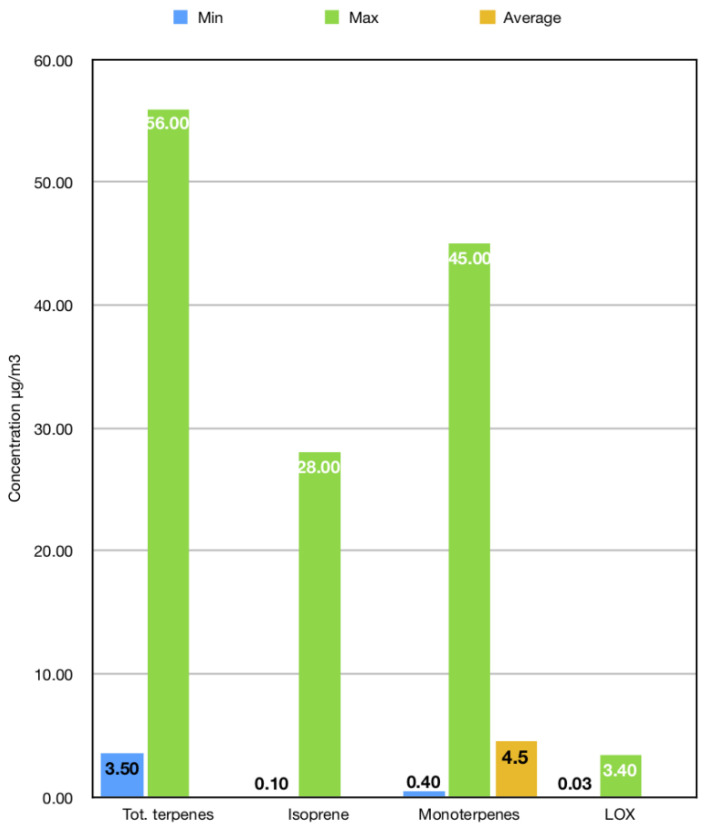
“Specifically, according to Guenther and colleagues [3], isoprene dominates the emissions, with around 50% of the Figure 2.”
BackgroundInfluentialWriting narrative literature reviews for peer-reviewed journals: secrets of the trade
Green, B. N., Johnson, C. D., & Adams, A. (2006) · Journal of Chiropractic Medicine · doi:10.1016/s0899-3467(07)60142-6 · Cited by 2,224 · cited 1×
“General recommendations to improve the quality of narrative reviews were taken into account for better structuring this research [26,27].”
BackgroundMechanisms of plant defense against insect herbivores
War, A. R., Paulraj, M. G., Ahmad, T., Buhroo, A. A., Hussain, B., Ignacimuthu, S., & Sharma, H. C. (2012) · Plant Signaling & Behavior · doi:10.4161/psb.21663 · Cited by 2,180 · cited 2×
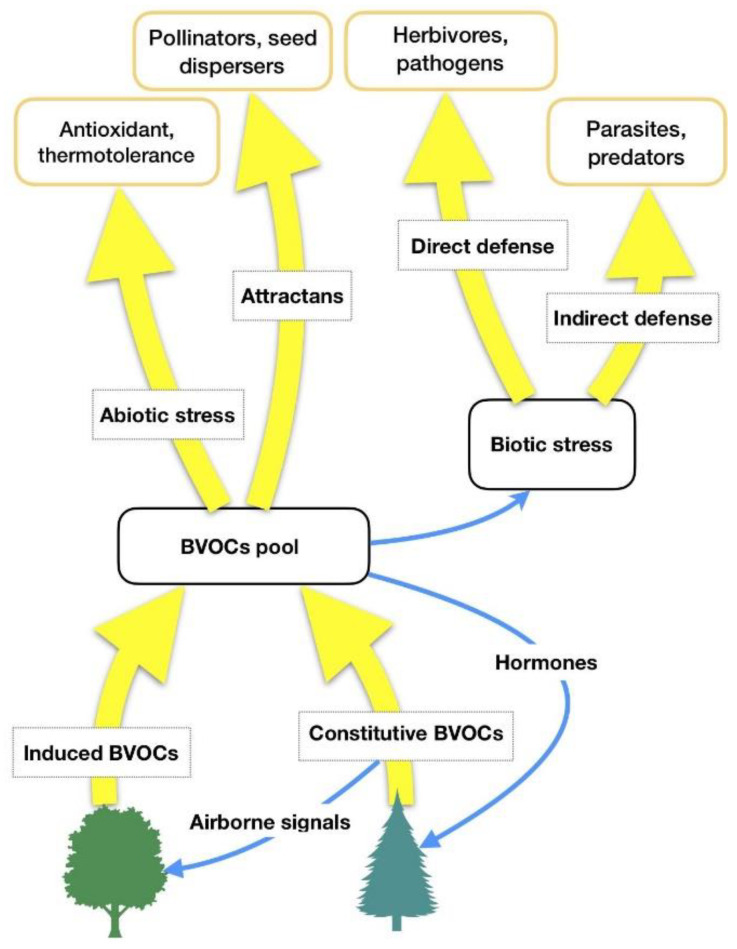
“More than 1000 different BVOCs are released from plant flowers, vegetative parts, or roots [9].”
BackgroundWriting narrative style literature reviews
Ferrari, R. (2015) · Medical Writing · doi:10.1179/2047480615z.000000000329 · Cited by 1,907 · cited 1×
“General recommendations to improve the quality of narrative reviews were taken into account for better structuring this research [26,27].”
BackgroundBiogenic Volatile Organic Compounds (VOC): An Overview on Emission, Physiology and Ecology
Kesselmeier, J., & Staudt, M. (1999) · Journal of Atmospheric Chemistry · doi:10.1023/a:1006127516791 · Cited by 1,879
The health benefits of urban green spaces: a review of the evidence
Lee, A. C. K., & Maheswaran, R. (2011) · Journal of Public Health · doi:10.1093/pubmed/fdq068 · Cited by 1,551
Morbidity is related to a green living environment
Maas, J., Verheij, R. A., de Vries, S., Spreeuwenberg, P., Schellevis, F. G., & Groenewegen, P. P. (2009) · Journal of Epidemiology and Community Health · doi:10.1136/jech.2008.079038 · Cited by 1,133
Biochemistry of Plant Volatiles
Dudareva, N., Pichersky, E., & Gershenzon, J. (2004) · Plant Physiology · doi:10.1104/pp.104.049981 · Cited by 1,128
Abiotic stresses and induced BVOCs
Loreto, F., & Schnitzler, J.-P. (2010) · Trends in Plant Science · doi:10.1016/j.tplants.2009.12.006 · Cited by 1,096 · cited 5×
“Most deciduous species do not hav such structures and release BVOCs directly fro mesophyll cells in a more light- and temperature-dependent manner (in particular, Fagaceae and Salicaceae) [12].”
BackgroundInfluential
Research works printed but not linked: 9
- Dyakov Y.T. Dzhavakhiya V.G. Korpela T. Comprehensive and Molecular Phytopathology Elsevier Amsterdam, The Netherlands 2007 9780444521323
- Memari H.R. Pazouki L. Niinemets Ü. The Biochemistry and Molecular Biology of Volatile Messengers in Trees Biology, Controls and Models of Tree Volatile Organic Compound Emissions Niinemets Ü. Monson R.K. Springer Dordrecht, The Netherlands 2013 47 93 9789400766068 · DOI · Paper page
- Rai M. Kon K. Fighting Multidrug Resistance with Herbal Extracts, Essential Oils and Their Components Academic Press Cambridge, MA, USA 2013 9780124017085
- Tisserand R. Young R. Essential Oil Safety: A Guide for Health Care Professionals Churchill Livingstone/Elsevier London, UK 2013 9780443062414
- PubChem Alpha-Pinene Available online: https://pubchem.ncbi.nlm.nih.gov/compound/6654 (accessed on 18 June 2020)
- PubChem Beta-Pinene Available online: https://pubchem.ncbi.nlm.nih.gov/compound/14896 (accessed on 18 June 2020)
- Beyer S.V. Singing to the Plants: A Guide to Mestizo Shamanism in the Upper Amazon UNM Press Albuquerque, NM, USA 2010 9780826347305
- Kotte D. Li Q. Shin W.S. International Handbook of Forest Therapy Cambridge Scholars Publishing Cambridge, UK 2019 9781527541740
- Marcus C.C. Barnes M. Healing Gardens: Therapeutic Benefits and Design Recommendations John Wiley & Sons Hoboken, NJ, USA 1999 9780471192039
Cited by
Items 201–257 of 257
Transforming entomology to adapt to global concerns: 2021 student debates
Prade, P., Sandhi, R. K., Elzay, S. D., Arnold, K., Pickens, V., Freedman, A. S., Dillard, D., Gresham, S., Morris, A. B., Pezzini, D. T., et al. (2023) · Journal of Insect Science · doi:10.1093/jisesa/iead064
Chau, H. D., Tuu, T. T., Sy, P. C., Tan, L. V., & Tran, T. K. N. (2023) · BULLETIN OF CHEMICAL REACTION ENGINEERING AND CATALYSIS · doi:10.9767/bcrec.18198
“They can cause skin, eye and respiratory irritation, and even cancer when exposed for a prolonged period [1].”
BackgroundMarsili, V., Forti, L., & Arru, L. (2023) · Global Journal Of Botanical Science · doi:10.12974/2311-858x.2023.11.6
“(2020) [17, 18].”
BackgroundPromoting Health Through Nature-Based Climate Solutions
Frumkin, H., Shane, B., & Schottland, T. (2024) · Oxford University Press eBooks · doi:10.1093/oso/9780197683293.003.0017
Bachinger, M., Mattivi, A., Hilmer, P., & Karim, A. A. (2024) · CABI eBooks · doi:10.1079/9781800621411.0014
Song, D., Cho, J. H., Lee, S.-T., Park, S., & Kim, G. (2024) · Forests · doi:10.3390/f15081368
ALBUQUERQUE, C. F. H., & Santiago, Z. M. P. (2024) · doi:10.5151/eneac2024-831786
Haahtela, T. (2024) · CABI eBooks · doi:10.1079/9781800620025.0006i
Photosynthetic Mechanisms and Their Influence on Human Neurological Health
Padmanabhan, S. (2022) · International Journal of Scientific Research in Science and Technology · doi:10.32628/ijsrst2215420
Redefining and advancing tree disease diagnosis through VOC emission measurements
Stoica, M., & Dulu, A. O. (2025) · Journal of Emerging Investigators · doi:10.59720/24-200
“All plant tissues produce VOCs (8).”
Štolcer, V., Jocham, C., Sinic, J., Malin, V., Jug, D., Možina, S. S., & Sterniša, M. (2025) · Research Square · doi:10.21203/rs.3.rs-6306656/v1
Hui, M., Yang, J., Eom, C.-D., Bajgai, J., Rahman, M. H., Pham, T. T., Zhang, H., Hwang, W., Goh, S. H., Kim, B., et al. (2025) · Toxics · doi:10.3390/toxics13080650
“As VOCs have both harmful and beneficial effects on health, their environmental and biological impacts must be comprehensively investigated [16,17].”
Human exposure to terpenes in a temperate coniferous forestPreprint
Riederer, A. M., Simpson, C. D., Levy, C., Gilbert, A. J., Paulsen, M., Silva, L. K., Bhandari, D., Newman, C. A., Blount, B. C., & Bratman, G. N. (2025) · SSRN Electronic Journal · doi:10.2139/ssrn.5934323
Frauenheim, M. P. (2024) · Carolina Digital Repository (University of North Carolina at Chapel Hill) · doi:10.17615/863h-z775
Brown, T. (. (2025) · cIRcle (University of British Columbia) · doi:10.14288/1.0448266
How Will Changing Climate Conditions Affect Volatile Organic Compounds in Temperate Forests?
King, T. (2024) · Lancaster EPrints (Lancaster University) · doi:10.17635/lancaster/thesis/2544
Return to Forests Therapeutic Potential of Woodland Environments
Piras, P. (2021) · Visions for Sustainability · doi:10.13135/2384-8677/5987
Luontoympäristön terveysvaikutukset ja niiden taloudellinen merkitys
Tyrväinen, L., Halonen, J. I., Pasanen, T., Ojala, A., Täubel, M., Kivelä, S., Leskelä, R.-L., Pennanen, P., Manninen, J., Sinkkonen, A., et al. (2024) · Jukuri (Natural Resources Institute Finland (Luke)) · Cited by 63
Keymeulen, V. V. (2022) · ORBi (University of Liège) · Cited by 1
Luontoympäristössä liikkumisen myönteiset vaikutukset kuntoutujalle : kirjallisuuskatsaus
Karanoja-Holmqvist, S. (2025) · Theseus (Ammattikorkeakoulujen)
Forest recreation and well-being - a survey of sanatorium patients' opinions
Dudek, T., & Amelia, P. (2025) · Annals of Forest Research · doi:10.15287/afr.2025.3504
“Antonelli et al. (2020) have argued that inhaling forest VOCs like limonene and pinene has a beneficial effect on respiratory pathways and reduces mental fatigue.”
Extraction of Bioactive Compounds from Citrus By-Products
Meneguzzo, F., & Zabini, F. (2026) · Methods and protocols in food science · doi:10.1007/978-1-0716-5088-2_2
Пляшечник, М. А., Aniskina, A. A., & Loskutov, S. R. (2025) · chemistry of plant raw material · doi:10.14258/jcprm.20250315032
“В глобальном масштабе эти результаты могут иметь полезные последствия для индивидуального благополучия, общественного здравоохранения и ландшафтного дизайна [7] .”
Fischer, D. J., & Kühn, S. (2026) · Journal of Environmental Psychology · doi:10.1016/j.jenvp.2026.102962
Nature prescription for patients with chronic respiratory diseases
Urrutia‐Pereira, M., Solé, D., Winders, T. A., Martinez, V. R., Bueno, R. K., Pellegrini, D. D. C. P., Bueno, J. R., Torres, F. H. D., Alberti, C. G., Marques, B. S., et al. (2026) · World Allergy Organization Journal · doi:10.1016/j.waojou.2026.101351 · Cited by 1
“111 Outdoor activity stimulates deep nasal breathing, promoting better oxygenation.”
The Relationship Between Time Spent in Forest and Psychological Resilience
Utmanas, M. (2025) · Lithuanian University of Health Sciences
Ecosocial Education : Reorienting Socialization and Empathy in a More-than-human World
Keto, S. (2025) · Tampere University Institutional Repository (Tampere University) · Cited by 1
An Analysis of Nitrate Reactivity with Volatile Organic Compounds Across Canada
O'Connell, B. (2025) · TSpace (University of Toronto)
LaFeO3-based catalysts for propene total oxidation
Pan, F. (2023) · theses.fr (ABES) · doi:10.70675/ac925608z5124z4789z8e81ze2faf2db7090
Cho, M.-Y., Eom, J.-H., Kim, J., Kim, Y.-W., Yang, S., Hwang, J., No, M.-H., & Kim, H. H. (2026) · Healthcare · doi:10.3390/healthcare14081072
“The significant reduction in salivary cortisol is consistent with existing evidence for the stress-reducing effects of forest environments [4,5].”
Kay, N. A. R. M., Hernández, M., Crisóstomo-Ayala, K. A., Aguirre-Díaz, M., Castro, D. B., Teillier, F., & Manríquez, C. P. (2026) · Trees · doi:10.1007/s00468-026-02773-8
“Several studies have demon - strated positive effects on health, including stress reduction, cardiovascular improvement, and immune system strength - ening (Franco et al. 2017; Antonelli et al. 2020; Kotera et al. 2022).”
Chronic Inflammation and Respiratory Disease: A Social and Environmental Justice Issue
Flanagan, L. (2026) · CU Scholar (University of Colorado Boulder)
Saeed, A. A. M., Faragb, H. A. M., & Rasul, N. H. (2026) · Kurdistan Journal of Applied Research · doi:10.24017/science.2026.1.10
Moneti, S. (2026) · PNEI REVIEW · doi:10.3280/pnei2025oa22560
Yan, K., Wang, L., Jiang, Y., Yang, M., Qu, L., & Yan, X. (2026) · Horticulturae · doi:10.3390/horticulturae12050632
Hu, F., Wu, C., & Liu, W. T. (2026) · Frontiers in Public Health · doi:10.3389/fpubh.2026.1760446
“Studies show that inhalation of these compounds reduces pro-inflammatory cytokines (IL-6, TNF-α ) while enhancing NK cell activity, thereby alleviating chronic inflammation (91, 92).”
Li, X. C., Bai, R., Wang, J., Bai, H., Wang, B., Yang, X., Wang, D., & Li, D. (2026) · Chemistry & Biodiversity · doi:10.1002/cbdv.202503696
“It is widely recognized that phenolic substances and chemical components containing conjugated double bond systems typically exhibit significant antioxidant activity [32–34].”
Ecological quality of school green spaces: a case study from Zhytomyr City (northern Ukraine)
Markov, F. F., Zymaroieva, A. A., Pitsil, A. O., Hroshev, Y. А., & Zymaroiev, O. O. (2026) · Taurian Scientific Herald · doi:10.32782/2226-0099.2026.148.2.39
Tuo, Y., Yang, S., Dai, X., Wu, Y., Bai, Y.-E., & Bao, W. (2026) · Journal of Ethnopharmacology · doi:10.1016/j.jep.2026.122022
Forest Bathing Associated with Increased Human Well-Being in a Rural Community of Chile
Buscaglione, B., Vargas‐Gaete, R., Gertner, N., Cantarutti, P., Zúñiga, C. A. I., & Salas, C. (2026) · Sustainability · doi:10.3390/su18126314
Ejiohuo, O., Szczepankiewicz, A., & Pawlak, J. (2026) · In Silico Research in Biomedicine · doi:10.1016/j.insi.2026.100478
Zorić, M., Kesić, L., Ilić, M., Karaklić, V., Višacki, V., Vaštag, E., & Orlović, S. (2026) · Forests · doi:10.3390/f17070785
Graphene Nanosensor for the Detection of Small Organic Compounds Using an Insect Olfactory Receptor
Ban, D. K., Contet, A., Catania, M., Kanonenberg, K., Tyler, M., Goldsmith, B., & Aran, K. (2026) · Advanced Materials · doi:10.1002/adma.74079
Kumar, R. N., Jeyadheepan, K., & Hemalatha, J. (2026) · Materials Research Bulletin · doi:10.1016/j.materresbull.2026.114353
Lei, T., Tang, H., Li, J., Chen, G., Zhuo, C., Gao, S., Li, Q., & Li, X. (2026) · Urban forestry & urban greening · doi:10.1016/j.ufug.2026.129625
Seasonal Dynamics and Composition of Biogenic Volatile Organic Compounds in Different Forests
Pang, L., Luo, Q., Lin, H., Ye, J., Lei, L., & Lv, Y. (2026) · Forests · doi:10.3390/f17080914
Tao, L. I. (2026) · Scientia Sinica Vitae · doi:10.1360/ssv-2026-0204
The Role Of Olfaction In Restorative Learning Environments
Adesina, D. O. (2026) · British Journal of Contemporary Research · doi:10.67693/bjcr-ui7wts8d
Попкова, Н. А., & Bolekhivskaya, A. Y. (2025) · СОВРЕМЕННАЯ АРХИТЕКТУРА МИРА · doi:10.25995/niitiag.2025.25.2.004
O’Brien, K., Beilby, J., Lynskey, M. T., Barnes, M., Schlag, A. K., & Nutt, D. J. (2026) · Drug Science Policy and Law · doi:10.1177/20503245261488438
Knutsson, S. E. M., Bergh, J., & Hörberg, U. (2026) · International Journal of Qualitative Studies on Health and Well-Being · doi:10.1080/17482631.2026.2732294
“Additionally, inhaling forest VOCs such as limonene and pinene also has beneficial psychological and physiological effects (Antonelli et al., 2020).”
Nature-based therapy in the UAE: leveraging ecosystems to alleviate depression and anxiety
Al-Taani, A. A. K., Al-Gharaibeh, M. M., & Al-Taani, A. A. (2026) · Social Sciences & Humanities Open · doi:10.1016/j.ssaho.2026.103451
Zhan, B., Yang, B., Yu, Z., Zhang, J., Dai, X., Ma, W., Hu, J., Wu, Q., Ye, S., Ren, Y., et al. (2026) · Building and Environment · doi:10.1016/j.buildenv.2026.115308
Étude des composés organiques volatils dans la forêt d’exception® de Darney-la Vôge
Gouneaud, A., Benquet, J., Eecken, F. V., Daguinot, T., Simon, C., & Kanny, G. (2026) · La Presse thermale et climatique · doi:10.3917/ptc.163.0075
Ding, J., Niu, W., Zhou, S., 姚, 东., Yao, L., Wang, J., & Liu, Q. (2026) · Sustainability · doi:10.3390/su182110851
Forests as Therapeutic Environments
Adams, M. S., & Demmig‐Adams, B. (2026) · Springer eBooks · doi:10.1007/978-3-032-24456-7_14
Gattucci, F., Lallukka, M. S., & Miola, M. (2026) · Materials · doi:10.3390/ma19214707
Metadata
- Authors
- Antonelli, M., Donelli, D., Barbieri, G., Valussi, M., Maggini, V., & Firenzuoli, F.
- Affiliations
- University of Parma (IT)
- Azienda Sanitaria Unità Locale di Reggio Emilia (IT)
- Binini Partners S.r.l. Engineering and Architecture, 42121 Reggio Emilia RE, Italy
- European Herbal and Traditional Medicine Practitioners Association (EHTPA), Norwich NR3 1HG, UK
- Azienda Ospedaliero-Universitaria Careggi (IT)
- Corresponding author
- Antonelli, Michele
- ORCID
- Venue
- International Journal of Environmental Research and Public Health
- Publisher
- MDPI AG
- Published
- 2020-09-07
- Volume
- 17
- Issue
- 18
- Pages
- 6506
- ISSN
- 1660-4601 (ISSN-L)
- PMC
- PMC7559006
- OpenAlex
- W3083518526
- Semantic Scholar
- 2567c3842a6032096e1c316212ca857d06270ebe
- Cited by
- 237
- References
- 173
- Citations by year
- 2026: 40 · 2025: 45 · 2024: 52 · 2023: 36 · 2022: 40 · 2021: 20 · 2020: 4
- FWCI
- 2.17
- Type
- journal article
- Language
- en
- Open access
- gold
- doi.org
- Licence
- Locations
- International Journal of Environmental Research and Public Health (publishedVersion, cc-by)
- PubMed Central (publishedVersion, cc-by)
- PubMed (publishedVersion)
- RePEc: Research Papers in Economics (submittedVersion)
- DOAJ (DOAJ: Directory of Open Access Journals) (submittedVersion)
- Topics
- Social Sciences › Urban Studies › Urban Green Space and Health
- Physical Sciences › Environmental Science › Health, Toxicology and Mutagenesis › Indoor Air Quality and Microbial Exposure
- Life Sciences › Biochemistry, Genetics and Molecular Biology › Molecular Biology › Plant biochemistry and biosynthesis
- Keywords
- terpenes, limonene, pinene, antioxidant activity, anti-inflammatory activity, cognitive performance, mood, mental fatigue, forest bathing, diurnal variation, tree species composition, multisensory stimulation, visual perception, well-being, landscape design
- MeSH terms
- Air Pollutants, Environmental Health, Environmental Monitoring, Humans, Trees, Volatile Organic Compounds, Forests
About these checks
Registry, retraction, Cites and statistics results are computed, not judged, with one exception: a printed reference that no index lists is read once by a model before it counts as a citation error. Claims are extracted by a model and kept only when their quote appears verbatim in the text; each cited source is then checked, with a model’s help, for whether it says what the claim relies on. Those verdicts can be wrong — read the claim’s quote and the cited source before relying on one.
Statistics and arithmetic are recomputed, not judged.
Confidence bands are shown only for fields calibrated on our annotated test set. None is calibrated yet, so no band is shown.
What counts as a claim ›How we measure confidence ›How we check this ›
Are you an author, or do you see a problem with this page? Request a review
Data sources
Bibliographic data: Semantic Scholar, OpenAlex, Crossref.
Contains information from the Semantic Scholar Academic Graph Datasets, made available under the ODC Attribution License (ODC-BY 1.0).
Semantic Scholar’s data is described in: Kinney, R., et al. (2023). The Semantic Scholar Open Data Platform. arXiv:2301.10140.
