

The Impact of Epidemics and Pandemics on the Mental Health of Healthcare Workers: A Systematic Review
Open accessThe DOI matches its Crossref record; 94 of the 95 references it cites were found in a registry or an index.
Abstract
Background: There is increasing evidence that healthcare workers (HCWs) experience significant psychological distress during an epidemic or pandemic. Considering the increase in emerging infectious diseases and the ongoing COVID-19 pandemic, it is timely to review and synthesize the available evidence on the psychological impact of disease outbreaks on HCWs. Thus, we conducted a systematic review to examine the impact of epidemics and pandemics on the mental health of HCWs. Method: PubMed, PsycInfo, and PsycArticles databases were systematically searched from inception to June-end 2020 for studies reporting the impact of a pandemic/epidemic on the mental health of HCWs. Results: Seventy-six studies were included in this review. Of these, 34 (45%) focused on SARS, 28 (37%) on COVID-19, seven (9%) on MERS, four (5%) on Ebola, two (3%) on H1N1, and one (1%) on H7N9. Most studies were cross-sectional (93%) and were conducted in a hospital setting (95%). Common mental health symptoms identified by this review were acute stress disorder, depression, anxiety, insomnia, burnout, and post-traumatic stress disorder. The associated risk factors were working in high-risk environments (frontline), being female, being a nurse, lack of adequate personal protective equipment, longer shifts, lack of knowledge of the virus, inadequate training, less years of experience in healthcare, lack of social support, and a history of quarantine. Conclusion: HCWs working in the frontline during epidemics and pandemics experience a wide range of mental health symptoms. It is imperative that adequate psychological support be provided to HCWs during and after these extraordinary distressful events.
Overview
The claims and statistics of this paper haven’t been checked yet.
Free: it reads the open-access text and checks the first 5 claims that cite a source we can check. Create a free account to check every claim.
Integrity signals
Registry
Cites
Statistics
Figures
Verification
Claims the paper makes
The claims and statistics of this paper haven’t been checked yet.
Free: it reads the open-access text and checks the first 5 claims that cite a source we can check. Create a free account to check every claim.
Claims other papers make about this one
Each is checked against this paper’s own text: does it say what the citing paper says it does?
In the citing paper
“In terms of the negative psychological reaction, the influence of personal affect on the level of perceived workload is well established [24]”
From Workflow interruption and nurses’ mental workload in electronic health record tasks: An observational study (2023) · cites this paper as [24]
Self-check
Percentages, sums and reported differences re-computed from the paper’s own numbers.
The self-check needs the paper’s full text.
Citations
Cites
Shamseer, L., Moher, D., Clarke, M., Ghersi, D., Liberati, A., Petticrew, M., Shekelle, P., Stewart, L. A., & the PRISMA-P Group (2015) · BMJ · doi:10.1136/bmj.g7647 · Cited by 13,120 · cited 5×
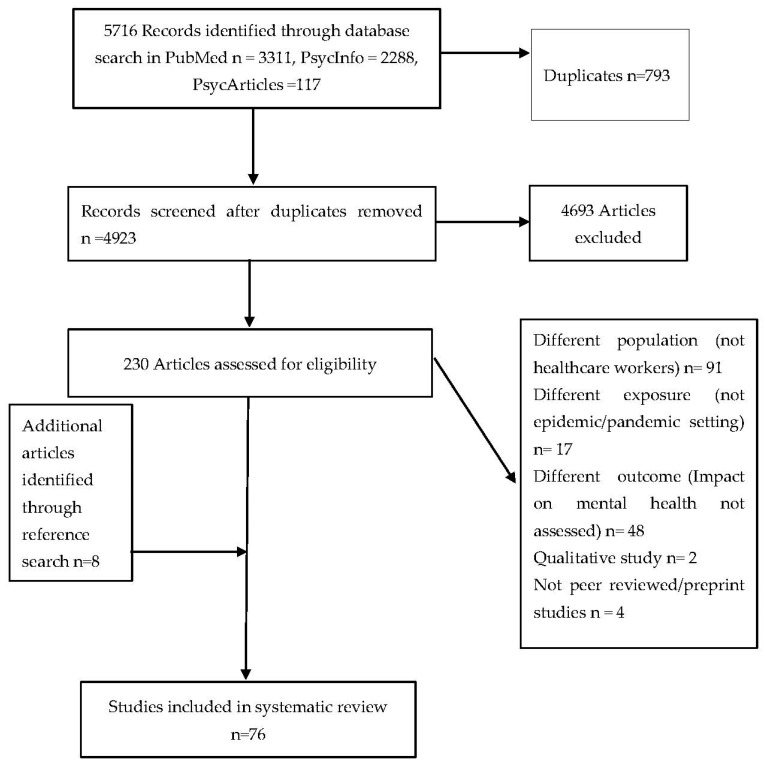
“Details are provided in the PRISMA flowchart (Figure 1).”
MethodInfluentialLai, J., Ma, S., Wang, Y., Cai, Z., Hu, J., Wei, N., Wu, J., Du, H., Chen, T., Li, R., et al. (2020) · JAMA Network Open · doi:10.1001/jamanetworkopen.2020.3976 · Cited by 8,015 · cited 10×
“(2020) [30] China COVID-19 Pandemic N = 1257 764 Nurses 493 Doctors (Hospital) Depression (PHQ-9) Anxiety (GADS-7) Insomnia (ISI-7) Distress (IES) 50.”
BackgroundResultInfluentialWright, K. B. (2006) · Journal of Computer-Mediated Communication · doi:10.1111/j.1083-6101.2005.tb00259.x · Cited by 2,550
Chew, N. W. S., Lee, G. K. H., Tan, B. Y. Q., Jing, M., Goh, Y., Ngiam, N. J. H., Yeo, L. L. L., Ahmad, A., Ahmed Khan, F., Napolean Shanmugam, G., et al. (2020) · Brain, Behavior, and Immunity · doi:10.1016/j.bbi.2020.04.049 · Cited by 1,650 · cited 3×
“Amerio et al. (2020) 8 Y Y Y Y Y Y Y Y Cai et al. (2020) 5 Y Y Y Y N N N Y Chew et al. (2020) 8 Y Y Y Y Y Y Y Y Du et al. (2020) 5 N Y Y Y N N Y Y Hacimusalar et al. (2020) 8 Y Y Y Y Y Y Y Y Hu et al. (2020) 6 Y Y Y Y N N Y Y Kang et al. (2020) 7 N Y Y Y Y Y Y Y Lai et al. (2020) 8 Y Y Y Y Y Y Y…”
BackgroundInfluentialWu, P., Fang, Y., Guan, Z., Fan, B., Kong, J., Yao, Z., Liu, X., Fuller, C. J., Susser, E., Lu, J., et al. (2009) · The Canadian Journal of Psychiatry · doi:10.1177/070674370905400504 · Cited by 1,647 · cited 5×
“(2009) [65] China SARS Epidemic N = 549 (hospital) Psychological distress (IES) Work exposure, exposure to traumatic events, Fear 10% had post-traumatic symptoms.”
BackgroundInfluentialKang, L., Ma, S., Chen, M., Yang, J., Wang, Y., Li, R., Yao, L., Bai, H., Cai, Z., Xiang Yang, B., et al. (2020) · Brain, Behavior, and Immunity · doi:10.1016/j.bbi.2020.03.028 · Cited by 1,516 · cited 3×
“…et al. (2020) 8 Y Y Y Y Y Y Y Y Du et al. (2020) 5 N Y Y Y N N Y Y Hacimusalar et al. (2020) 8 Y Y Y Y Y Y Y Y Hu et al. (2020) 6 Y Y Y Y N N Y Y Kang et al. (2020) 7 N Y Y Y Y Y Y Y Lai et al. (2020) 8 Y Y Y Y Y Y Y Y Li et al. (2020) 6 Y Y Y Y N N Y Y Liang et al. (2020) 5 N Y Y Y N N Y Y Liu…”
BackgroundInfluentialPsychological impact of the COVID-19 pandemic on health care workers in Singapore
Tan, B. Y. Q., Chew, N. W. S., Lee, G. K. H., Jing, M., Goh, Y., Yeo, L. L. L., Zhang, K., Chin, H.-K., Ahmad, A., Khan, F. A., et al. (2020) · Annals of Internal Medicine · doi:10.7326/m20-1083 · Cited by 1,279 · cited 3×
“…et al. (2020) 8 Y Y Y Y Y Y Y Y Que et al. (2020) 8 Y Y Y Y Y Y Y Y Shechter et al. (2020) 6 Y Y Y Y N N Y Y Sun et al. (2020) 8 Y Y Y Y Y Y Y Y Tan et al. (2020) 7 N Y Y Y Y Y Y Y Temsah et al. (2020) 8 Y Y Y Y Y Y Y Y Wang et al. (2020) 7 N Y Y Y Y Y Y Y Wu et al. (2020) 8 Y Y Y Y Y Y Y Y Wu…”
BackgroundInfluentialPsychological status of medical workforce during the COVID-19 pandemic: A cross-sectional study
Lu, W., Wang, H., Lin, Y., & Li, L. (2020) · Psychiatry Research · doi:10.1016/j.psychres.2020.112936 · Cited by 1,257 · cited 7×
“(2020) [34] China COVID-19 Pandemic N = 2299 HCWs (hospital) Fear (NRS) Anxiety (HAMA) Depression (HAMD) Medical staff experienced more fear, anxiety, and depression compared to administrative staff.”
BackgroundResultInfluentialLi, Z., Ge, J., Yang, M., Feng, J., Qiao, M., Jiang, R., Bi, J., Zhan, G., Xu, X., Wang, L., et al. (2020) · Brain, Behavior, and Immunity · doi:10.1016/j.bbi.2020.03.007 · Cited by 1,166 · cited 3×
“HCWS in Wuhan had more distress compared to HCWs outside Wuhan and outside Hubei province Li et al. (2020) [31] China COVID-19 Pandemic N = 526 nurses and 214 general public 234 frontline nurses 292 non frontline nurses (Hospital) Vicarious traumatization (Self-developed questionnaire) Vicarious…”
BackgroundInfluentialLee, S. M., Kang, W. S., Cho, A.-R., Kim, T., & Park, J. K. (2018) · Comprehensive Psychiatry · doi:10.1016/j.comppsych.2018.10.003 · Cited by 1,112 · cited 19×
“Lin et al. (2007) [69] Taiwan SARS Epidemic N = 92 HCWs (emergency department vs. psychiatry ward) (Hospital) Psychological status (DTS-C) (CHQ-12) 19.3% had symptoms of PTSD (DTS-C scores >40) 47.78% had minor psychiatric morbidity (CHQ-12 scores >3) Emergency department staff had higher psychiatric morbidity, and ex…”
BackgroundInfluential
Research works printed but not linked: 1
- Sim F. McKee M. Sim F. Issues in Public Health McGraw-Hill Education Maidenhead, UK 2011 978-0-335-24422-5
Cited by
Items 101–179 of 179
Bariatric surgeons' experiences of working in the first year of the pandemic
Graham, Y. N. H., Mahawar, K. K., Singhal, R., Madhok, B., Yang, W., Riera, M., Martinez‐Duartez, P., Pouwels, S., Sharma, M., & Hayes, C. (2022) · Obesity Science & Practice · doi:10.1002/osp4.655 · Cited by 2
“A further systematic review of 76 studies on the mental wellbeing of healthcare workers in pandemics found risk factors for poor mental health included working in front line healthcare situations, female, being a nurse, lack of adequate personal protective equipment, longer shifts, lack of knowledge of the virus, inad…”
BackgroundGarcía, R. M. C., Cámara, R. S., García‐Santa‐Basilia, N., Matellán‐Hernández, M. P., Onrubia‐Baticón, H., Martínez-Caballero, C. M., Thuissard, I. J., Pascual, S. N., & Membership of the IMPSYCOVID‐19 Study Group (2024) · Journal of Advanced Nursing · doi:10.1111/jan.16119 · Cited by 8
Healthcare Workers and Infectious Disease Outbreaks: A Review.
Antunes, J. (2024) · Clinical Medicine And Health Research Journal · doi:10.18535/cmhrj.v4i2.319 · Cited by 2
“Quarantining was associated with increased levels of fear and stress in HCWs due to the emotional isolation and loneliness experienced during quarantine (Chigwedere et al., 2021).”
BackgroundInfluentialMental health and well-being of healthcare workers in Central Asia
Seisembekov, T. Z., Bolatov, A., Brimkulov, N. N., Jarylkasynova, G., Taalaikanova, A., Yuldashova, R., Саломовна, К. Ш., & Smailova, D. S. (2024) · F1000Research · doi:10.12688/f1000research.153832.1 · Cited by 3
Martins, D. S., Bermúdez, M. B., Costa, M. D. A., Fleck, M. P., Salum, G. A., Dreher, C. B., & Manfro, G. G. (2024) · Scientific Reports · doi:10.1038/s41598-024-81327-9 · Cited by 4
Pomen pandemije covida-19 za duševno zdravje medicinskih sester in zdravnikov: pregled literature
Višič, U., & Sočan, M. (2022) · Slovenian Nursing Review · doi:10.14528/snr.2022.56.4.3113 · Cited by 2
COVID-19 pandemic and mental health of universities’ students in Africa: a systematic reviewPreprint
Tiwa, D. L. M., Wouna, D. L. A., & Endomba, F. T. (2021) · doi:10.22541/au.162973142.23795346/v1 · Cited by 1
Sireci, F., Bellei, E., Torre, G., Ferrari, F., Minardi, V., Ghirotto, L., & Valzania, F. (2022) · Neurological Sciences · doi:10.1007/s10072-022-06551-5 · Cited by 1
Díaz, A. P., Pinto, A. L. D. C. B., Araújo, M. I. C., Joaquim, R. M., Costa, D. D. S., Serpa, A. L. D. O., Pisani, A. R., Conwell, Y., de Miranda, D. M., Malloy‐Diniz, L. F., et al. (2024) · Brazilian Journal of Psychiatry · doi:10.47626/1516-4446-2023-3466 · Cited by 2
“38 An association between lack of social support and suicidal ideation has been reported for the general population during the COVID-19 pandemic.”
Sabah, N. U., Kawish, A. B., Javed, S., Kiyani, Y. F., Batool, S., & Khan, S. A. (2024) · Pakistan Journal of Health Sciences · doi:10.54393/pjhs.v5i07.1306 · Cited by 1
Hidayati, D., & Widayatun, W. (2025) · Sustainable development goals series · doi:10.1007/978-981-96-4182-6_1 · Cited by 2
Psychological Distress Among Nurse Practitioners After the COVID-19 Pandemic
CHENG, L.-C., Chen, C., & Liao, Y. (2025) · Journal of Nursing Research · doi:10.1097/jnr.0000000000000703 · Cited by 2
“…the availability of protective equipment and providing emergency allocations when shortages occurred; providing accommodations to alleviate concerns about bringing the virus home; offering meals, fruit, and tradi-Characteristic (Chen et al., 2006; Chigwedere et al., 2021; Jung et al., 2020).”
Experiencing awe in daily life is linked to lower loneliness
Ugurlu, Ö., Zerwas, F. K., Monroy, M., Corona, R., Amster, M., Eagle, J., & Keltner, D. J. (2026) · Scientific Reports · doi:10.1038/s41598-025-34864-w · Cited by 2
Jouini, A., Mokline, A., Sabta, H., Smadhi, I., Cheikh, M. B., & Dziri, C. (2022) · PubMed Central · Cited by 1
Halms, T., Thoma, A., Kramer, V., Miriam Kunz, A., Falkai, P., Schneider-Axmann, T., Hierundar, A., Wagner, E. M., Hasan, A., & Papazova, I. (2023) · Fortschritte der Neurologie · Psychiatrie · doi:10.1055/a-2125-8906 · Cited by 2
Burnout syndrome and anxiety among healthcare workers during global pandemics: An umbrella review
Bey, C. Y. T., Koh, J.-U., & Lai, C. W. K. (2023) · World Journal of Meta-Analysis · doi:10.13105/wjma.v11.i7.368 · Cited by 1
Sim, M., Choe, Y., & Kim, H. (2024) · Journal of Quality Assurance in Hospitality & Tourism · doi:10.1080/1528008x.2024.2385432 · Cited by 1
“Based on the findings of Chigwedere et al. (2021), it is evident that stress induced by COVID-19 has significant implications for mental health.”
Basic, D., Czepiel, D., Hoek, H. W., Martínez, A. M., McCormack, C. A., Susser, E., Mascayano, F., Moro, M. F., Carta, M. G., Martínez‐Alés, G., et al. (2025) · Cambridge Prisms Global Mental Health · doi:10.1017/gmh.2025.10067 · Cited by 1
Saeedi, M., Abedini, Z., & Taleb, S. (2023) · Heliyon · doi:10.1016/j.heliyon.2023.e17178 · Cited by 5
“Less experienced employees have more stress in epidemics, because they have less knowledge, and skills, and are less able to self-regulate and adapt [33].”
Editorial: Global mental health among marginalized communities in pandemic emergencies
Navario, P., Upadhaya, N., Hall, B. J., & Yang, L. H. (2023) · Frontiers in Public Health · doi:10.3389/fpubh.2023.1249575 · Cited by 1
Buttars, B. R., Fountain, L., Goodwin, J., McLean, J., Olsen, J., Hatton, T., Grant, W. C., Vasauskas, A. A., Hamilton, C., & Clemmons, M. (2021) · Frontiers in Health Services · doi:10.3389/frhs.2021.786062
Healthcare Workers’ Mental Health and Well-Being During the COVID-19 Pandemic
Sánchez-Rivera, A., Block, E., Lohmann, J., Eguiluz, I., Juan, N. V. S., & González-Guerra, A. (2022) · Springer eBooks · doi:10.1007/978-981-16-6486-1_7
The Impact of COVID-19 on Mental Health of Healthcare workers in Saudi Arabia: A Review
Fatima, Z., Ajabnoor, N., & Alsulimani, A. (2022) · Review of Economics and Finance · doi:10.55365/1923.x2022.20.10 · Cited by 1
Ramos, A. P. S., Roussenq, S. C., Dias, M., & Benetti, M. (2022) · Revista Brasileira de Cancerologia · doi:10.32635/2176-9745.rbc.2022v68n4.2536 · Cited by 1
Decision: The environmental impact of data-driven precision medicine initiatives — R1/PR11
Camara, C., Surkan, P. J., van der Waerden, J. E. B., et al. (2022) · Cambridge Prisms Precision Medicine · doi:10.1017/pcm.2022.1.pr11
Recommendation: The environmental impact of data-driven precision medicine initiatives — R1/PR10
Camara, C., Surkan, P. J., van der Waerden, J. E. B., et al. (2022) · Cambridge Prisms Precision Medicine · doi:10.1017/pcm.2022.1.pr10
Decision: The environmental impact of data-driven precision medicine initiatives — R1/PR12
Camara, C., Surkan, P. J., van der Waerden, J. E. B., et al. (2022) · Cambridge Prisms Precision Medicine · doi:10.1017/pcm.2022.1.pr12
Kapfhammer, H. (2022) · Springer eBooks · doi:10.1007/978-3-662-65873-4_11
Daryanto, B., Putri, F. R., Kurniawan, J., Ilmawan, M., & Fajar, J. K. (2022) · Jurnal Klinik dan Riset Kesehatan · doi:10.11594/jk-risk.02.1.2
COVID-19 AND BURNOUT IN HEALTHCARE PROFESSIONALS
Antunes, J. L. F. (2022) · Psicologia Saúde & Doenças · doi:10.15309/22psd230301
Did the COVID-19 Pandemic Period Increased Suicide Attempts in Society?
Ahmet, U. Z. U. N., & Çekmen, B. (2023) · Medical Records · doi:10.37990/medr.1237657
The effect of COVID pandemic on human resilience and recovery
Subramanian, K., Chandrasekaran, V., Jasmin, A. M., Muthuramalingam, A., & Govind, P. (2023) · Journal of Current Research in Scientific Medicine · doi:10.4103/jcrsm.jcrsm_94_22
Self-esteem, stress and anxiety among health care workers during the COVID-19 pandemic
Łaskawiec-Żuławińska, D., Wlazło, M., Grajek, M. K., Szlacheta, P., & Korzonek-Szlacheta, I. (2023) · Journal of Education Health and Sport · doi:10.12775/jehs.2023.20.01.009
Toward identifying individual stress susceptibility
Marshall, G. D., & Morris, M. C. (2023) · Elsevier eBooks · doi:10.1016/b978-0-12-817558-3.00021-4 · Cited by 1
Islam, M. Z., Hossain, M. A., Islam, S., Laila, K., & Rahman, S. A. (2023) · Open Journal of Pediatrics · doi:10.4236/ojped.2023.135070
Чорна, В. В., Сирота, Г., Syrota, M., Хлєстова, С. С., Поляруш, В., & Hudzevych, L. (2023) · European Journal of Clinical and Experimental Medicine · doi:10.15584/ejcem.2023.3.4
Kendir, Ö. T., Erkek, N., & Gürlü, R. (2023) · Turkish Journal of Pediatric Emergency and Intensive Care Medicine · doi:10.4274/cayd.galenos.2023.22599
Delgado, K., & Anzules, J. (2023) · Revista GICOS · doi:10.53766/gicos/2023.08.02.07
(2023) · International Journal of Agriculture and Biosciences · doi:10.47278/book.zoon/2023.108
Analysis of the impact of healthcare providers’ mental health on patient care
Damir, S. (2024) · Journal of Informatics Education and Research · doi:10.52783/jier.v4i1.581
Gamonal, B., Quispe-Lizano, R., Javier-Murillo, N., Lapeyre-Rivera, A., Perea-Flórez, F., Velásquez‐Rimachi, V., Alva‐Díaz, C., Velazco-Gonzales, G., Ahmed, O., & Chung, S. (2024) · Frontiers in Psychiatry · doi:10.3389/fpsyt.2024.1352896
Michaels-Strasser, S. (2024) · Medical Research Archives · doi:10.18103/mra.v12i4.4993
Experiences of nursing staff caring for COVID-19 patients: exploratory study
Espinosa-Rivera, B. P., Gutiérrez-Valverde, J. M., Ríos, M. P. B. D. L., Vargas, C. I. H., Fonseca, M. P., & Valtier, M. C. G. (2024) · Salud Ciencia y Tecnología · doi:10.56294/saludcyt20241028
Ribeiro, C. S., Rodríguez‐Blázquez, C., Ayala, A., Romay‐Barja, M., Romero, M. F., & Forjaz, M. J. (2024) · SSRN Electronic Journal · doi:10.2139/ssrn.4840337
Enhancing hospital protection measures reduces frontline medical workers’ stress during the pandemic
Xiaoxia, Z., Yan, F., Junwei, W., Bingyao, Z., & Fei, X. (2024) · BMC Psychology · doi:10.1186/s40359-024-02185-8 · Cited by 1
Ernawati, N., Pandin, M. G. R., & Yusuf, A. (2024) · medRxiv · doi:10.1101/2024.11.29.24318229
“Nurses self-reported that they would have more confidence in their capacity to relieve stress if felt supported by family and friends (Chigwedere et al., 2021; Huang et al., 2021).”
Antonio, S., Dancel, M., Estioco, M. C., Abante, M. V., & Vigonte, F. (2025) · SSRN Electronic Journal · doi:10.2139/ssrn.5140387
BİRİNCİ BASAMAK SAĞLIK ÇALIŞANLARININ COVID-19 DÖNEMİNDEKİ RUH SAĞLIĞI: KESİTSEL BİR ÇALIŞMA
Bucaktepe, P. G. E., Çelik, S. B., Çelik, F., Pervane, V. D., Aydın, M., & Altınbaş, K. (2025) · Turkish Journal of Family Medicine & Primary Care · doi:10.21763/tjfmpc.1467060
Hester, B. M., Johnson, P., & Padgett, J. H., Jr. (2025) · Open Journal of Medical Psychology · doi:10.4236/ojmp.2025.142006 · Cited by 1
Feasibility of a virtual safety officer in detecting PPE donning and doffing violations
Lee, B., Ahmed, B., Koizumi, N., Galvão, C. G., Sikka, N. K., & Ranniger, C. U. (2025) · Journal of Occupational and Environmental Hygiene · doi:10.1080/15459624.2025.2471394
“During the pandemic, quarantine, and isolation protocols led to HCW shortages and changes in the way patients accessed care (Chigwedere et al. 2021).”
Symbolic violence experienced by frontline healthcare professionals during the COVID-19 pandemic
Camacho, K. G., Gomes, S. C., Junqueira-Marinho, M. D. F., Reis, A. T., Abramov, D. M., & Moore, D. C. B. C. (2025) · Revista Brasileira de Enfermagem · doi:10.1590/0034-7167-2024-0237pt · Cited by 3
Parv, D. (2025) · Global Journal of Health Sciences and Research · doi:10.25259/gjhsr_25_2024
Pedro, M. J. C., & Madede, T. (2025) · BMJ Open · doi:10.1136/bmjopen-2024-098571 · Cited by 1
Agboh, H. N. K., Adjei, G. A., & Okai, G. A. (2025) · PLOS mental health. · doi:10.1371/journal.pmen.0000042
“…prevention and control protocols associated with infectious disease outbreaks, including social distancing, quarantine, and isolation measures, create emotional and psychological stressors, leading to anxiety, withdrawals, and depressive symptoms among HCWs during disease outbreaks [1,2,8,17–19].”
Diaz‐Castro, L., Pineda‐Antúnez, C., Castañeda, C. D. D. L., Cabello-Rangel, H., Barrón-Cantú, J. A., & Suárez-Herrera, J. C. (2025) · Psychiatry International · doi:10.3390/psychiatryint6020072 · Cited by 3
Silva, Y. Q., Terrazas, A. C. M., & Gómez‐García, A. (2025) · RESPYN Revista de Salud Pública y Nutrición · doi:10.29105/respyn24.2-844
The Resurgence of Monkeypox: A Review of its Outbreak, Structure, Symptoms, and Global Impact
Kashid, H. M. (2025) · Asian Journal of Research in Pharmaceutical Sciences · doi:10.52711/2231-5659.2025.00042
Imani‐Goghary, Z., Bagherian, B., Rafati, F., & Badrabadi, N. (2025) · Iranian Journal of Nursing and Midwifery Research · doi:10.4103/ijnmr.ijnmr_308_22
“[25,26] Research has shown that nurses experience significant stress during repeated or prolonged stressors, which can lead to burnout and fatigue.”
Sleep and Mental Health: the Impact of the COVID-19 Pandemic on Healthcare Professionals
Vitti-Ruela, B. V., Dokkedal‐Silva, V., Galduróz, J. C. F., Tufik, S., & Andersen, M. L. (2025) · Psychiatric Quarterly · doi:10.1007/s11126-025-10222-x
Goson, P. C., Osuagwu, U. L., Ekpenyong, B. N., Miner, C. A., Ojeahere, M. I., Ishaya, T., Mashige, K. P., Ovenseri-Ogbomo, G. O., Envuladu, E. A., Abu, E. K., et al. (2025) · BMC Public Health · doi:10.1186/s12889-025-24941-0
“The emotional, physical, and psychological well-being of frontline staff (such as hospital workers) [7] was brought under serious strain due to the increased demand for services from individuals with emerging or current mental health conditions [8, 9].”
Effectiveness of Peer Mentoring Programs in Enhancing Students' Mental Well-Being
Singh, U., Mishra, V., Tomar, A., Khan, T., Maan, S. K., Peters, A., & Yadav, A. (2025) · IGI Global eBooks · doi:10.4018/979-8-3373-0928-6.ch003
Mental Health Impact of COVID-19 among Spanish Healthcare Workers. A 3-year follow-up studyPreprint
Alonso, J., Vilagut, G., Amigo, F., Ruiz-Rivera, M., Ferrer, M., Peña, A. A., Aragonès, E., Campos, M., del Cura-González, I., Urreta, I., et al. (2025) · Research Square · doi:10.21203/rs.3.rs-7858075/v1
Shan, Y., Shang, J., Yan, Y., & Ye, X. (2023) · Figshare · doi:10.6084/m9.figshare.22617770
Shan, Y., Shang, J., Yan, Y., & Ye, X. (2023) · Figshare · doi:10.6084/m9.figshare.22617767
Faster than Virus: The Physics of Pandemic Prediction
Vita, S., Morlino, G., D’Abramo, A., Scorzolini, L., Maffongelli, G., Goletti, D., Vairo, F., Girardi, E., Ciccozzi, M., & Nicastri, E. (2026) · Infectious Disease Reports · doi:10.3390/idr18010007
“The rapid increase in patient populations drastically reduces the HCWs to patient ratio thus increasing workload [47].”
The Dengue Anxiety Scale (DENAS): A new tool for assessing disease-specific anxiety
Torales, J. C., Barrios, I., O’Higgins, M. G., Torres-Romero, A. D., Caycho-Rodríguez, T., Castaldelli-Maia, J. M., & Ventriglio, A. (2026) · Industrial Psychiatry Journal · doi:10.4103/ipj.ipj_240_25
Bal, F. (2026) · Current Psychology · doi:10.1007/s12144-025-09024-y
Fiorenza, N. G., Silva, B. R. D. S., Lós, D. B., de Oliveira, N., Delerino, L., de Assis, D. F., Motta, P. C., Cortez, P. C., Silva, M. F. S., Fonseca, M. H. G., et al. (2026) · Stress and Health · doi:10.1002/smi.70146 · Cited by 1
“During pandemics, health professionals frequently report stress, sadness, insomnia, emotional exhaustion, and fatigue, as well as persistent anxiety and cognitive difficulties (Amin et al. 2020; Chigwedere et al. 2021; Smith et al. 2017).”
Jomaah, J., Kassab, A., Zarzour, M., Sanjakdar, R., Kaddissi, P., Hachem, C. E., Richa, S., & Khalil, R. B. (2026) · Journal of Mental Health · doi:10.1080/09638237.2026.2645537
“These symptoms can persist even after the pandemic ended (Chigwedere et al., 2021).”
Han, J., Li, R., Xiao, X., Du, X., & Ren, Z. (2026) · Current Psychology · doi:10.1007/s12144-026-09511-w
Pandemic Preparedness and Health System Resilience: Lessons from Jordan’s COVID-19 Response
Abu-Qatouseh, L., Al-kubaisi, K., Laham, N. A., Al-Adham, I. S. I., & Collier, P. J. (2026) · Journal of Community Health · doi:10.1007/s10900-026-01580-z
“More - over, the absence of structured, simulation-based training programs hindered the effective translation of theoretical knowledge into practical, life-saving skills [34, 35].”
Harnessing Compassion to Support Nurses’ Mental Health: A Qualitative Study
Sofronas, M., Price, S. L., Ben-Ahmed, H. E., Tulk, C., Bourgeault, I. L., & McMillan, K. (2026) · Canadian Journal of Nursing Research · doi:10.1177/08445621261458099
“Public health emergencies often bring increased attention to the wellbeing of health care workers (Chigwedere et al., 2021; Galanis et al., 2021; Kim et al., 2021).”
Henderson, A., Haskins, C., Collier, A. F., MacLehose, R. F., Manson, S. M., & Buchwald, D. (2026) · Journal of Racial and Ethnic Health Disparities · doi:10.1007/s40615-026-03085-w
Zhang, W., Yan, C., Li, M., Yu, B., Ma, L., Xiao, J., & Ning, N. (2026) · BMJ Open · doi:10.1136/bmjopen-2026-120080
Xu, S., Li, X., Li, W., & Huang, R. (2026) · Frontiers in Dental Medicine · doi:10.3389/fdmed.2026.1897947
Alonso, J., Vilagut, G., Amigo, F., Ruiz-Rivera, M., Ferrer, M., Aragón-Peña, A., Aragonès, E., Campos, M. T., del Cura-González, I., Urreta, I., et al. (2026) · Revista de Psiquiatría y Salud Mental · doi:10.1016/j.sjpmh.2026.06.006
Prevalence of post-COVID-19 condition among healthcare workers: a systematic review
Mota, K. O., Paz, L. Y. S., de Almeida, M. M. C., Machado, L. P., Santana, G. S., de Lira, C. R. N., & dos Santos, T. A. (2026) · Revista Brasileira de Saúde Ocupacional · doi:10.1590/2317-6369/08726en2026v51e33
A Narrative Review on Nurse Burnout: Prevalence, Determinants, and Protective Mechanisms
Fazeli, B. (2026) · Journal of Multidisciplinary Care · doi:10.34172/jmdc.1432
Silva‐Ramos, C. R., Cristancho, S. P., Hernández, Y. E. M., Osma, J. I. P., Soler‐Tovar, D., & Ramírez‐Hernández, A. (2026) · Tropical Medicine and Infectious Disease · doi:10.3390/tropicalmed11100284
“Potential contributors include perceived infection risk, fear of transmitting pathogens to others, uncertainty associated with emerging diseases, high professional responsibility, and chronic occupational stress [88,89].”
Metadata
- Authors
- Chigwedere, O. C., Sadath, A., Kabir, Z., & Arensman, E.
- Affiliations
- University College Cork (IE)
- Griffith University (AU)
- Corresponding author
- Chigwedere, Ottilia Cassandra
- Venue
- International Journal of Environmental Research and Public Health
- Publisher
- MDPI AG
- Published
- 2021-06-22
- Volume
- 18
- Issue
- 13
- Pages
- 6695
- ISSN
- 1660-4601 (ISSN-L)
- PMC
- PMC8296866
- OpenAlex
- W3176158059
- Cited by
- 181
- References
- 95
- Citations by year
- 2026: 16 · 2025: 32 · 2024: 34 · 2023: 45 · 2022: 47 · 2021: 7
- FWCI
- 4.41
- Type
- journal article
- Language
- en
- Open access
- gold
- doi.org
- Licence
- Locations
- International Journal of Environmental Research and Public Health (publishedVersion, cc-by)
- PubMed Central (publishedVersion, cc-by)
- PubMed (publishedVersion)
- Griffith Research Online (submittedVersion, cc-by)
- RePEc: Research Papers in Economics (submittedVersion)
- DOAJ (DOAJ: Directory of Open Access Journals) (submittedVersion)
- Topics
- Social Sciences › Psychology › Clinical Psychology › COVID-19 and Mental Health
- Health Sciences › Health Professions › General Health Professions › Healthcare professionals’ stress and burnout
- Health Sciences › Medicine › Public Health, Environmental and Occupational Health › Occupational Health and Burnout
- Keywords
- healthcare workers, mental health, epidemics, pandemic, COVID-19 pandemic, SARS, MERS, Ebola, H1N1, H7N9, psychological distress, acute stress disorder, depression, anxiety, insomnia, burnout, post-traumatic stress disorder, frontline workers, personal protective equipment, social support, quarantine, psychological support
- MeSH terms
- COVID-19, SARS-CoV-2, Anxiety, Cross-Sectional Studies, Female, Health Personnel, Humans, Mental Health, Influenza A Virus, H1N1 Subtype, Pandemics, Influenza A Virus, H7N9 Subtype
About these checks
Registry, retraction, Cites and statistics results are computed, not judged, with one exception: a printed reference that no index lists is read once by a model before it counts as a citation error. Claims are extracted by a model and kept only when their quote appears verbatim in the text; each cited source is then checked, with a model’s help, for whether it says what the claim relies on. Those verdicts can be wrong — read the claim’s quote and the cited source before relying on one.
Statistics and arithmetic are recomputed, not judged.
Confidence bands are shown only for fields calibrated on our annotated test set. None is calibrated yet, so no band is shown.
What counts as a claim ›How we measure confidence ›How we check this ›
Are you an author, or do you see a problem with this page? Request a review
Data sources
Bibliographic data: Semantic Scholar, OpenAlex, Crossref.
Contains information from the Semantic Scholar Academic Graph Datasets, made available under the ODC Attribution License (ODC-BY 1.0).
Semantic Scholar’s data is described in: Kinney, R., et al. (2023). The Semantic Scholar Open Data Platform. arXiv:2301.10140.
