

The Relationship between Mindful Attention Awareness, Perceived Stress and Subjective Wellbeing
Open accessThe DOI matches its Crossref record; 84 of the 84 references it cites were found in a registry or an index.
Abstract
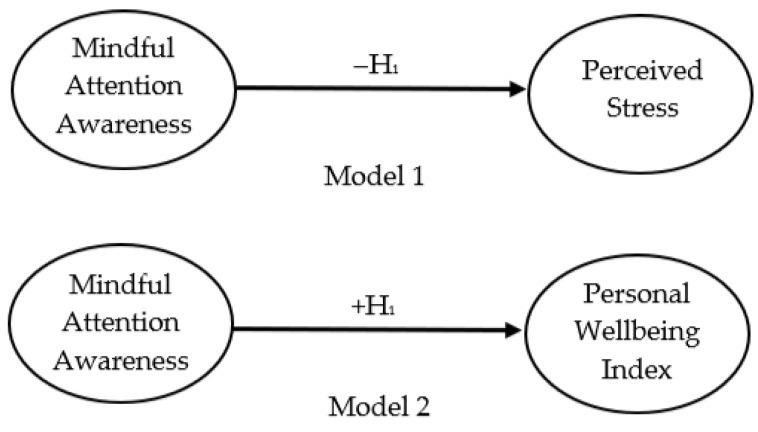
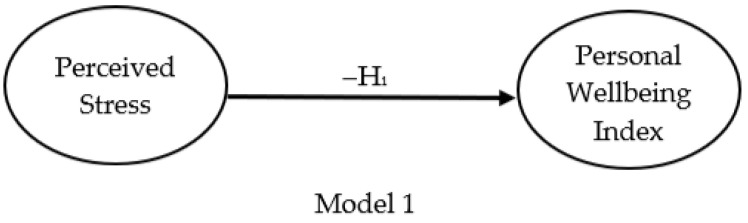
It has been suggested that mindfulness is a predictive factor in self-reported perceived stress. The present study aimed to investigate the link between mindful attention awareness, perceived stress and subjective wellbeing without the presence of a complementary intervention to promote mindfulness-based strategies. Methods: The online survey participants (N = 257) were university students enrolled in initial teacher training. Self-report measures included the Mindful Attention Awareness Scale (MAAS), Perceived Stress Scale (PSS) and Personal Wellbeing Index (PWI). Results: PWI was negatively correlated with PSS (r = −0.550, p = .001), MAAS was negatively correlated with PSS (r = −0.567, p = .001) and positively correlated with PWI (r = 0.336, p = .001). The mean score for PSS (M = 20.61, SD = 6.62) was above the reported norm (14.2). Conclusions: The findings suggest that higher levels of mindful attention awareness may be associated with lower levels of perceived stress and higher subjective wellbeing levels and lower levels of perceived stress may be associated with higher subjective wellbeing. The findings confirm that pre-service teachers are a demographic that experiences elevated levels of perceived stress regardless of the stage in initial teacher training programs.
Overview
The claims and statistics of this paper haven’t been checked yet.
Free: it reads the open-access text and checks the first 5 claims that cite a source we can check. Create a free account to check every claim.
Integrity signals
Registry
Cites
Statistics
Figures
Verification
Claims the paper makes
The claims and statistics of this paper haven’t been checked yet.
Free: it reads the open-access text and checks the first 5 claims that cite a source we can check. Create a free account to check every claim.
Self-check
Percentages, sums and reported differences re-computed from the paper’s own numbers.
The self-check needs the paper’s full text.
Citations
Cites
A Global Measure of Perceived Stress
Cohen, S., Kamarck, T., & Mermelstein, R. (1983) · Journal of Health and Social Behavior · doi:10.2307/2136404 · Cited by 32,807 · cited 2×
“When investigating the experiences of postgraduate (n = 151) and undergraduate (n = 159) PSTs, Geng and colleagues [5] reported postgraduate PSTs perceived stress (measured with the Perceived Stress Scale; [12] were significantly higher than undergraduate PSTs and that the two groups experienced different stressors.”
The satisfaction with life scale
Diener, E., Emmons, R. A., Larsen, R. J., & Griffin, S. (1985) · Journal of Personality Assessment · doi:10.1207/s15327752jpa4901_13 · Cited by 31,768 · cited 1×
“Subjective wellbeing refers to satisfaction with life and the presence of positive effect, also referred to as the hedonic approach [46].”
Cohen, L., Manion, L., & Morrison, K. (2007) · Routledge eBooks · doi:10.4324/9780203029053 · Cited by 20,105
Fredrickson, B. L. (2001) · American Psychologist · doi:10.1037//0003-066x.56.3.218 · Cited by 18,025
The benefits of being present: Mindfulness and its role in psychological well-being
Brown, K. W., & Ryan, R. M. (2003) · Journal of Personality and Social Psychology · doi:10.1037/0022-3514.84.4.822 · Cited by 13,448 · cited 6×
““Dispositional and state mindfulness predict self-regulated behavior and positive emotional states” [37] p.”
InfluentialUsing Self-Report Assessment Methods to Explore Facets of Mindfulness
Baer, R. A., Smith, G. T., Hopkins, J., Krietemeyer, J., & Toney, L. (2006) · Assessment · doi:10.1177/1073191105283504 · Cited by 7,511 · cited 1×
“Nonetheless, one of the most commonly used self-report measures is the Five Facets of Mindfulness Questionnaire (FFMQ; [34]) with five sub-scales that measure mindfulness as a stable trait.”
Mindfulness training as a clinical intervention: a conceptual and empirical review
Baer, R. A. (2003) · Clinical Psychology: Science and Practice · doi:10.1093/clipsy.bpg015 · Cited by 4,577 · cited 1×
“Mindfulness is the process of maintaining focus on present reality [23]; it is a way of paying attention [24].”
Mindfulness training as a clinical intervention: A conceptual and empirical review.
Baer, R. A. (2003) · Clinical Psychology: Science and Practice · doi:10.1093/clipsy/bpg015 · Cited by 4,576
Know thyself and become what you are: a eudaimonic approach to psychological well-being
Ryff, C. D., & Singer, B. H. (2008) · Journal of Happiness Studies · doi:10.1007/s10902-006-9019-0 · Cited by 3,149 · cited 1×
“A fundamental aspect of psychological wellbeing is forming positive social relationships [19,20].”
Appraisal, coping, health status, and psychological symptoms
Folkman, S., Lazarus, R. S., Gruen, R. J., & DeLongis, A. (1986) · Journal of Personality and Social Psychology · doi:10.1037/0022-3514.50.3.571 · Cited by 2,917 · cited 1×
“The ability to appraise or assess a potential stressor and re-appraise stressors relates to the transactional stress model [56].”
Research works printed but not linked: 5
- Kostanski M. The role of mindfulness in reducing stress for pre-service students Proceedings of the Australian Association for Research in Education Conference, Fremantle Victoria, Australia 26 November–1 December 2007 1 9
- Grant-Smith D. de Zwaan L. Chapman R. Gillett-Swan J. ‘It’s the worst, but real experience is invaluable’: Pre-service teacher perspectives of the costs and benefits of professional experience Teacher Education In and For Uncertain Times Heck D. Ambrosetti A. Springer Singapore 2018 15 33
- Buckworth J. Issues in the teaching practicum The Challenge of Teaching through the Eyes of Pre-Service Teachers 1st ed. Geng G. Smith P. Black P. Springer Singapore 2017 9 17 · DOI
- Hanh T.N. The Miracle of Mindfulness|An Introduction to the Practice of Meditation Beacon Press Boston, MA, USA 1999
- Creswell J. Educational Research: Planning, Conducting and Evaluating Quantitative and Qualitative Research 4th ed. Pearson New International Pearson Harlow, Essex, UK 2014
Cited by
A Scope Review of the Teacher Well-being Research Between 1968 and 2021
Zhang, L., Chen, J., Li, X., & Zhan, Y. (2023) · The Asia-Pacific Education Researcher · doi:10.1007/s40299-023-00717-1 · Cited by 95
“…by Jin et al., 2021), school-level factors (e.g., distance education requirement by Casacchia et al., 2021), personal factors (e.g., mindfulness by Hepburn et al., 2021), and effects on teacher personal development (e.g., teacher presenteeism by Kidger et al., 2021), teaching process (e.g.,…”
Exploring Islamic Mindfulness: Cultural Practices and Their Impact on Public Health Outcomes
Aldbyani, A. (2024) · Mindfulness · doi:10.1007/s12671-024-02485-5 · Cited by 42
“They are advised to observe their inner and outer experiences with a gentle, inquisitive, and compassionate attitude, refraining from any immediate efforts to alter these encounters (Hepburn et al., 2021).”
Atta, M. H. R., El‐Ashry, A. M., & Mousa, M. A. E.-G. A. (2024) · Journal of research in nursing · doi:10.1177/17449871241252011 · Cited by 35
“This enhancement supports the notion that mindfulness interventions contribute positively to cognitive processes fundamental to emotional well-being (Hepburn et al., 2021).”
Self-disclosure, mindfulness, and their relationships with happiness and well-being
Aldahadha, B. (2023) · Middle East Current Psychiatry · doi:10.1186/s43045-023-00278-5 · Cited by 36
“Which is the best predictor of happiness and wellness, self-disclosure or mindfulness? The purpose and importance of the study Some studies have found that mindfulness can help with emotional and wellness disorders [46].”
BackgroundFleckney, P. (2023) · Landscape and Urban Planning · doi:10.1016/j.landurbplan.2023.104753 · Cited by 28
Mindful practice for teachers: Relieving stress and enhancing positive mindsets
Carroll, A., Hepburn, S., & Bower, J. (2022) · Frontiers in Education · doi:10.3389/feduc.2022.954098 · Cited by 34
Self-citationWellbeing and Problematic Smartphone Use: Serial Mediation of Mindfulness and Self-Compassion
Uniyal, R., & Shahnawaz, M. (2022) · Psychological Reports · doi:10.1177/00332941221141311 · Cited by 16
“However, given the positive association between wellbeing and mind-fulness (Hepburn et al., 2021) it can be explained that when wellbeing is low, then people might not be able to focus on the moment-to-moment experience, they might not have control over their cognitive, emotional, and behavioural…”
BackgroundAldbyani, A., & Al‐Abyadh, M. H. A. (2023) · Islamic Guidance and Counseling Journal · doi:10.25217/igcj.v6i1.3467 · Cited by 29
“They should keep a gentle, curious, and kind eye on what is happening internally and externally without taking action to change these experiences (Hepburn et al., 2021).”
BackgroundChen, M., Lam, J., & Cheung, R. Y. M. (2024) · Journal of Education for Teaching International Research and Pedagogy · doi:10.1080/02607476.2024.2327644 · Cited by 17
“…and occupational functioning, namely greater emotional intelligence, empathy, subjective well-being, self-efficacy, and teacher–student relationship quality, and lower-perceived stress and depressive symptoms (e.g. Hepburn, Carroll, and McCuaig 2021; Pan et al. 2022, 2023; Wang et al. 2023).”
Dinsuhaimi, S. I., Razak, A. A., Liza-Sharmini, A. T., Mohammad, W. M. Z. W., Yaakub, A., Othman, A., Daud, A., Musa, K. I., Draman, N., & Besari, A. M. (2022) · Healthcare · doi:10.3390/healthcare10061083 · Cited by 11
“Some of the factors seen to be affecting the subjective wellbeing was unemployment or loss of income due to COVID19, younger age [19], higher perceived stress [20], and fear of COVID-19 infection [2,3].”
BackgroundLatt, C. M. L., Alldredge, C. T., Williams, S. E., Vinson, M. L., Moris, J. M., & Elkins, G. R. (2024) · International Journal of Clinical and Experimental Hypnosis · doi:10.1080/00207144.2024.2346609 · Cited by 10
“…theories which suggest that increased objective thinking and enhanced self-regulation, via the practice of mindfulness, may enable individuals to deal with stressors more effectively while ruminating less (Bergin & Pakenham, 2016; Donald & Atkins, 2016; Hepburn et al., 2021; Lundwall et al., 2019).”
BackgroundBhattacharyya, K. K., Liu, Y., Gothe, N. P., & Fauth, E. B. (2023) · Gerontology and Geriatric Medicine · doi:10.1177/23337214231185912 · Cited by 12
“With its relation to potential solutions to many social problems, mindfulness can provide better well-being (Hepburn et al., 2021; Rosini et al., 2017).”
BackgroundRole of self-awareness in the promotion of health and well-being of college students
Wagani, R., & Pranita, G. (2024) · Archives of Depression and Anxiety · doi:10.17352/2455-5460.000086 · Cited by 20
“Self-re fl ection, self-focused attention, and mindfulness awareness showed positive association with various health and well-being indicators in previous researchers [12,13,46-48].”
Miller, J., & Evans, S. (2024) · Nature and Science of Sleep · doi:10.2147/nss.s447469 · Cited by 5
“Higher trait mindfulness is consistently associated with lower perceived stress, 42,69,70 although fewer studies have explored the effects of individual facets.”
BackgroundAlYousef, N. H., Alhakeem, F. M., AlNasser, K. A., AlSinan, Z. H., Alessa, Z. K., AlDawood, F. M., Shafey, M. M., & Al-Johani, W. M. (2025) · Journal of Family and Community Medicine · doi:10.4103/jfcm.jfcm_223_25 · Cited by 4
“[2,3] Mindfulness, which is defined as intentionally directing one’s attention toward the present moment and consciously observing one’s thoughts, feelings, and experiences, [4,5] has been proposed as a potential method for improving attentional control.”
Exploring the relationship between urban acoustic environments and mental well-being
MONTENEGRO, A. L., Leal, G., Zumelzu, A., Herrmann‐Lunecke, M. G., Díaz, G. V., Heskia, C., Estrada, M., & Licitra, G. (2025) · Applied Acoustics · doi:10.1016/j.apacoust.2025.111092 · Cited by 7
Demir, S., & Çelikkaleli, Ö. (2023) · Uluslararası İnovatif Eğitim Araştırmacısı · doi:10.29228/iedres.65810 · Cited by 6
Hayajneh, A. A., Al-Younis, M. O., Rababa, M., & Qahah, I. (2024) · Holistic Nursing Practice · doi:10.1097/hnp.0000000000000687 · Cited by 8
Vernmark, K., Hursti, T. J., Blom, V., Asplund, R. P., Nathanson, E., Engelro, L., Radvogin, E., & Andersson, G. (2024) · Clinical Psychology in Europe · doi:10.32872/cpe.12899 · Cited by 5
“…studies examining the role of mindfulness in relation to stress and quality of life (Javaid et al., 2023), some of which are showing that higher levels of present moment awareness and mindful attention can lead to lower levels of perceived stress and increased wellbeing (Hepburn et al., 2021).”
Chen, J.-Q., Zhang, X., Shen, J., Guo, Y., Lei, G.-F., Li, T., Wang, H., & Li, D.-H. (2023) · Psychology Research and Behavior Management · doi:10.2147/prbm.s401764 · Cited by 6
“52,53 Ghawadra et al reported that mindfulness training could reduce anxiety and depression, alleviate psychological distress, and improve job satisfaction and subjective well-being among nurses.”
The Moderating Effects of Cognitive Processes on Pain-related Outcomes
Torres, N. D., Newman, A. K., Day, M. A., Chan, J. F., Friedly, J. L., & Jensen, M. P. (2024) · Journal of Pain · doi:10.1016/j.jpain.2024.01.348 · Cited by 3
Predictors of musculoskeletal disorders among special education teachers in Sabah, Malaysia
Jeffree, M. S., Rahim, A. A. A., Daud, D. M. A., Pang, N. T. P., Sazali, M. F., Sudi, S. B., Liau, S. N., Wong, E. E. L., Peter, H., Amat, S. Z. A., et al. (2024) · Heliyon · doi:10.1016/j.heliyon.2024.e30873 · Cited by 15
Mindfulness Matters: Untangling Entrapment and Mental Well-Being in Married Couples
Akyıl, Y., Erdinç, B., & Satıcı, S. A. (2025) · Psychiatric Quarterly · doi:10.1007/s11126-025-10168-0 · Cited by 6
“Furthermore, a study indicates that a higher level of mindfulness is linked to a higher level of well-being [37, 38].”
Cognitive awareness in people with multiple sclerosis before and after neuropsychological assessment
Waskowiak, P. T., de Jong, B. A., Uitdehaag, B. M. J., Myronenko, A., Hulst, H. E., & Klein, M. (2025) · Journal of Neurology · doi:10.1007/s00415-025-13486-2 · Cited by 3
On the Impact and Lessons Learned from Mindfulness Practice in a Real-World Software Company
Bernárdez, B., Parejo, J. A., Cruz, M., Muñoz, S. F., & Ruiz–Cortés, A. (2023) · Proceedings of the ... ACM-IEEE International Symposium on Empirical Software Engineering and Measurement/International Symposium on Empirical Software Engineering and Measurement · doi:10.1109/esem56168.2023.10304864 · Cited by 3
“Several works [42], [43] have revealed that higher levels of mindful attention awareness may be associated not only with lower levels of perceived stress but also with higher subjective well–being levels.”
BackgroundKorfiatis, A., Chaturvedi, A., Tennison, J. L., & Alagic, A. (2024) · Journal of Chemical Education · doi:10.1021/acs.jchemed.4c00849 · Cited by 3
Spataro, P., Messina, I., Saraulli, D., & Longobardi, E. (2025) · Acta Psychologica · doi:10.1016/j.actpsy.2025.104805 · Cited by 5
Harrison, L., Herrmann, A., Quitmann, C., Stieglbauer, G., Zeitz, C., Reininghaus, U., Schick, A., & Danquah, I. (2025) · BMC Public Health · doi:10.1186/s12889-025-22533-6 · Cited by 4
“Therefore, future studies could include more covariates, including health perception, loneliness [62], stress, mindfulness [63], and life events such as migration or bereavement [64].”
The Role of Mindfulness in Promoting Socioemotional Outcomes: A Self-determination Perspective
Ng, B., & Kong, L. C. (2023) · Springer eBooks · doi:10.1007/978-981-99-7897-7_16 · Cited by 2
McGrew, S. J., Zegel, M., Lebeaut, A., Schwartz, R. M., Gonzalez, A., & Vujanovic, A. A. (2024) · Cognitive Therapy and Research · doi:10.1007/s10608-024-10526-5 · Cited by 4
Musood, T., & Kaur, B. (2025) · MIER Journal of Educational Studies Trends & Practices · doi:10.52634/mier/2025/v15/i1/2820 · Cited by 2
“The conceptual model posits that mindful attention directly influences ped - agogical outcomes by enhancing focus and emotional regulation, which in turn positively affects academic performance (Hepburn et al., 2021 ).”
Validation of a Sinhalese version of the Mindful Attention Awareness Scale
Baminiwatta, A. (2022) · Asian Journal of Psychiatry · doi:10.1016/j.ajp.2022.103116 · Cited by 2
Examining the Association between Empathy and Compassion Fatigue in Australian School Teachers
Patrick, P., & McWhirter, S. (2026) · Teachers and Teaching · doi:10.1080/13540602.2025.2609136 · Cited by 2
“Similarly, higher levels of mindful attention or present-moment awareness in pre-service teachers have been associated with lower perceived stress and greater psychological wellbeing (Hepburn et al., 2021).”
Sánchez-Vidaña, D. I., Ahorsu, D. K., McCormack, L., Zeng, R. R., Miller, T., Viñas‐Guasch, N., Chan, N.-M. J., Lo, K. K.-H., González, P. C., Lau, B. W.-M., et al. (2026) · Journal of Behavioral Medicine · doi:10.1007/s10865-026-00673-3 · Cited by 2
“…waitlist group, the only significant correlation found at post-test was a strong negative correlation between mindfulness and stress which aligns with the findings from previous studies (Hepburn et al., 2021) and indicates that increased mindfulness may serve as a protective factor against stress.”
Kaur, B. (2024) · The New Educational Review · doi:10.15804/tner.2024.75.1.17 · Cited by 3
“Previous studies have shown that mindfulness has a strong association with extraversion and agreeableness traits of personality, and students with higher mindfulness levels are found to have lower depression levels (Hepburn et al., 2021; Demir, 2017).”
Vikhe, C. S., & Ramteke, S. U. (2024) · F1000Research · doi:10.12688/f1000research.151306.1 · Cited by 2
Stop Running Away from Stress: Practice Mindfulness Instead
Zaidi, F. Z., Ming, L. M., & Jumaat, A. (2022) · Advances in economics, business and management research/Advances in Economics, Business and Management Research · doi:10.2991/978-94-6463-080-0_26 · Cited by 1
محمد, ا. ب. ق., & الله, م. خ. م. ع. (2024) · مجلة کلية التربية · doi:10.21608/jfe.2024.263209.1840
Mindful Attention Awareness among UM Digos University College Students: A Comparative Analysis
Matutis, H. M. C., Buaga, A. M., Navaja, A., & Culajara, C. L. B. (2024) · Asian Journal of Education and Social Studies · doi:10.9734/ajess/2024/v50i61416
Using Contemplative Practice for Pre-service Teacher Healing
Evans, K., Lucey, T. A., & Lin, M. (2024) · Journal of Curriculum Studies Research · doi:10.46303/jcsr.2024.9
“Each instrument has been validated in varied populations of college students (Hall et al., 2014; Hepburn et al., 2021).”
BackgroundThe relationship between stress resistance and psychological well-being of counseling psychologists
Диденко, П. И., & Aristova, I. L. (2024) · International journal of medicine and psychology. · doi:10.58224/2658-3313-2024-7-3-279-283
. (2022) · ShodhKosh Journal of Visual and Performing Arts · doi:10.29121/shodhkosh.v3.i1.2022.4680
الجعيدي, ع. م. أ. ع., & هريدي, ر. م. ع. (2025) · مجلة الإرشاد النفسی · doi:10.21608/cpc.2025.422968
Jankowicz‐Szymańska, A., Wódka, K., Grochowska, A., Stefanowicz-Kocoł, A., Bîlc, M. I., Anheyer, D., Kozioł, U., Cramer, H., & Sagan, A. (2025) · Frontiers in Psychology · doi:10.3389/fpsyg.2025.1554594 · Cited by 1
Escala de Atenção Plena e Consciência (MAAS) em Idosos: Revisão Sistemática
Morero, J. A. P., de Oliveira, J. L., de Almeida, J. C. P., Vanzolin, M. F. D. S., Vieira, M. V., Antonio-Viegas, M. C. R., Esteves, R. B., Pereira, S. D. S., & Cardoso, L. (2025) · Saúde Coletiva (Barueri) · doi:10.36489/saudecoletiva.2025v15i97p16166-16179
Dispositional Mindfulness and University Adjustment: The Mediating Role of Coping Self-Efficacy
Kiafar, A., Petrovic, J., Mettler, J., Joly, M., Böke, B. N., & Heath, N. L. (2025) · Psychological Reports · doi:10.1177/00332941251370252
Zhang, Q., Zhou, B., Liu, X., Yi, D., Ai, M., Liu, Y., & Qi, K. (2025) · Psychology Research and Behavior Management · doi:10.2147/prbm.s549474
Further evidence for the cognitive disruption and self-talk frequency hypothesis
Brinthaupt, T. M., Connelly, M. J., & Mallia, F. (2026) · Frontiers in Psychology · doi:10.3389/fpsyg.2026.1716835 · Cited by 1
Rasgo de atención plena en la formación universitaria
Molina, O. S., Patiño, F., & Sarmiento, L. A. B. (2025) · LATAM Revista Latinoamericana de Ciencias Sociales y Humanidades · doi:10.56712/latam.v6i3.4143 · Cited by 2
PRIMARY AND SECONDARY TEACHER’S PSYCHOLOGICAL WELLBEING IN MALAYSIA
Zin, N. I. M., Sulong, R. M., Zainuddin, Z. N., & Ayub, A. F. M. (2025) · International Journal of Education Psychology and Counseling · doi:10.35631/ijepc.1061042
The Association Between Mindfulness and Perceived Stress: A Meta‐Analysis
Schutte, N. S., & Rock, A. J. (2026) · Stress and Health · doi:10.1002/smi.70209
Rosenfeld, L. F. G., Silton, R. L., & Yuen, E. K. (2026) · Behavioural Brain Research · doi:10.1016/j.bbr.2026.116399
Sweeney, A., & Burke, J. (2026) · Innovations in Education and Teaching International · doi:10.1080/14703297.2026.2708717
Stress reduction based on awareness for women affected by disasters: a randomized controlled trial
SEZGİN, L., Karakaya, A., ŞAHİN, A., Sahin, B., & Yıldız, E. A. B. (2026) · Psychology Health & Medicine · doi:10.1080/13548506.2026.2728576
Sanchez, E., & Marzan, P. B. (2026) · Psychology and Education A Multidisciplinary Journal · doi:10.70838/pemj.620109
Phasuke, N., Viravan, N., Wangthamkua, N., Malad, P., & Atsariyasing, W. (2026) · Mindfulness · doi:10.1007/s12671-026-02987-4 · Cited by 1
Manh, T. V., & Xuan, L. N. (2026) · Case Studies on Transport Policy · doi:10.1016/j.cstp.2026.102009
Metadata
- Authors
- Hepburn, S.-J., Carroll, A., & McCuaig, L.
- Affiliations
- The University of Queensland (AU)
- Corresponding author
- Hepburn, Stevie-Jae
- Venue
- International Journal of Environmental Research and Public Health
- Publisher
- MDPI AG
- Published
- 2021-11-23
- Volume
- 18
- Issue
- 23
- Pages
- 12290
- ISSN
- 1660-4601 (ISSN-L)
- PMC
- PMC8656828
- OpenAlex
- W3217658222
- Cited by
- 58
- References
- 84
- Citations by year
- 2026: 10 · 2025: 15 · 2024: 18 · 2023: 9 · 2022: 6
- FWCI
- 5.63
- Type
- journal article
- Language
- en
- Open access
- gold
- doi.org
- Licence
- Locations
- International Journal of Environmental Research and Public Health (publishedVersion, cc-by)
- PubMed Central (publishedVersion, cc-by)
- PubMed (publishedVersion)
- RePEc: Research Papers in Economics (submittedVersion)
- DOAJ (DOAJ: Directory of Open Access Journals) (submittedVersion, cc-by-sa)
- Funders
- Australian Government
- University of Queensland
- Topics
- Social Sciences › Psychology › Clinical Psychology › Mindfulness and Compassion Interventions
- Social Sciences › Psychology › Social Psychology › Psychological Well-being and Life Satisfaction
- Social Sciences › Psychology › Developmental and Educational Psychology › Student Stress and Coping
- Keywords
- mindful attention awareness, perceived stress, subjective well-being, mindfulness, pre-service teachers, initial teacher education, university students, Personal Wellbeing Index, Mindful Attention Awareness Scale
- MeSH terms
- Educational Personnel, Attention, Awareness, Humans, Surveys and Questionnaires, Stress, Psychological, Mindfulness
About these checks
Registry, retraction, Cites and statistics results are computed, not judged, with one exception: a printed reference that no index lists is read once by a model before it counts as a citation error. Claims are extracted by a model and kept only when their quote appears verbatim in the text; each cited source is then checked, with a model’s help, for whether it says what the claim relies on. Those verdicts can be wrong — read the claim’s quote and the cited source before relying on one.
Statistics and arithmetic are recomputed, not judged.
Confidence bands are shown only for fields calibrated on our annotated test set. None is calibrated yet, so no band is shown.
What counts as a claim ›How we measure confidence ›How we check this ›
Are you an author, or do you see a problem with this page? Request a review
Data sources
Bibliographic data: Semantic Scholar, OpenAlex, Crossref.
Contains information from the Semantic Scholar Academic Graph Datasets, made available under the ODC Attribution License (ODC-BY 1.0).
Semantic Scholar’s data is described in: Kinney, R., et al. (2023). The Semantic Scholar Open Data Platform. arXiv:2301.10140.
