

The DOI matches its Crossref record; 119 of the 120 references it cites were found in a registry or an index.
A Scoping Review on the Prevalence and Determinants of Post-Traumatic Stress Disorder among Military Personnel and Firefighters: Implications for Public Policy and Practice
Open accessAbstract
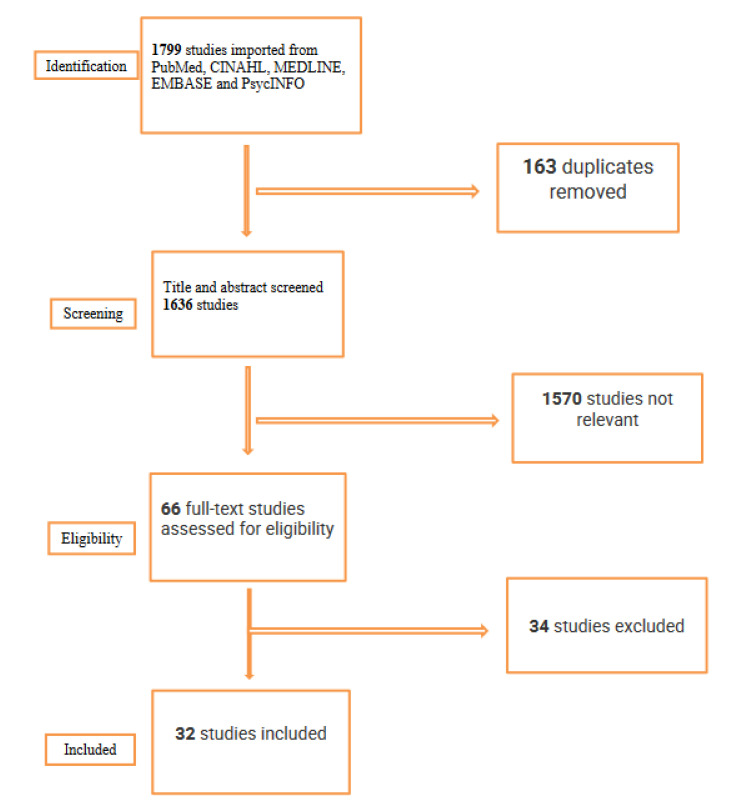
Introduction: Firefighters and military personnel are public safety personnel who protect the safety of individuals and their properties. They are usually exposed to traumatic events leaving them at risk of developing mental health conditions such as post-traumatic stress disorder (PTSD). Increasing concern is being raised regarding the mental health impacts, specifically PTSD, among military personnel and firefighters. Objective: There is an increased exposure of firefighters and military personnel to traumatic events and the attendant risk of developing post-traumatic stress disorder. It is crucial to ascertain the level of PTSD amongst this cohort and determinants to formulate policies and practices that mitigate the risk and protect public safety personnel. This scoping review sought to determine the prevalence of PTSD among this cohort globally and to explore determinants of this mental health condition. Methods: A literature search in databases including MEDLINE, CINAHL, PubMed, PsycINFO, and EMBASE was conducted electronically from May 2021 to 31 July 2021. Two reviewers independently assessed full-text articles according to the predefined inclusion criteria and screening process undertaken to identify studies for the review. Articles were screened with a third reviewer, resolving conflicts where necessary and further assessing them for eligibility. During article selection, the PRISMA checklist was adopted, and with the Covidence software, a total of 32 articles were selected for the final examination. For the eligible studies, data extraction was conducted, information was collated and summarized, and the findings were reported. Original qualitative and quantitative data on the prevalence and predictors of PTSD among veterans, military, and firefighters were reported. Results: The prevalence of PTSD was 57% for firefighters and 37.8% for military personnel. Demographic factors, job factors, social support, injuries, physical and psychological factors, and individual traits were the main predictors of PTSD in this cohort. Conclusion: This information is vital for developing and implementing prevention and intervention strategies for PTSD in military personnel and firefighters. Recognizing and addressing factors that predict PTSD will help to improve mental wellbeing and increase productivity. More peer-reviewed studies are needed on the prevalence of PTSD amongst these cohorts.
Overview
The claims and statistics of this paper haven’t been checked yet.
Run the check — free, no account needed. It reads the open-access text and checks the sources it cites.
Integrity signals
Registry
Cites
Statistics
Figures
Verification
Claims the paper makes
The claims and statistics of this paper haven’t been checked yet.
Run the check — free, no account needed. It reads the open-access text and checks the sources it cites.
Claims other papers make about this one
Each is checked against this paper’s own text: does it say what the citing paper says it does?
The cited source says what the claim attributes to it.
In the citing paper
“a recent review reported the PTSD prevalence in firefighters to be as high as 57% [66].”
From The Cyclical Battle of Insomnia and Mental Health Impairment in Firefighters: A Narrative Review (2024) · cites this paper as [66]
The check wasn’t confident either way, so it gives no verdict — never disputed.
In the citing paper
“Psychological measurement has played a central role in the fields of human-computer interaction and computersupported cooperative work [33,61,98,131,133].”
From Measuring the Mental Health of Content Reviewers, a Systematic Review (2025) · cites this paper as [133]
Experimental — accuracy not yet measured
Self-check
Percentages, sums and reported differences re-computed from the paper’s own numbers.
The self-check needs the paper’s full text.
Citations
Cites
Diagnostic and Statistical Manual of Mental Disorders
American Psychiatric Association (2013) · doi:10.1176/appi.books.9780890425596 · Cited by 116,369
PRISMA Extension for Scoping Reviews (PRISMA-ScR): Checklist and Explanation
Tricco, A. C., Lillie, E., Zarin, W., O'Brien, K. K., Colquhoun, H., Levac, D., Moher, D., Peters, M. D. J., Horsley, T., Weeks, L., et al. (2018) · Annals of Internal Medicine · doi:10.7326/m18-0850 · Cited by 43,565
Scoping studies: towards a methodological framework
Arksey, H., & O'Malley, L. (2005) · International Journal of Social Research Methodology · doi:10.1080/1364557032000119616 · Cited by 36,742
Posttraumatic Stress Disorder in the National Comorbidity Survey
Kessler, R. C. (1995) · Archives of General Psychiatry · doi:10.1001/archpsyc.1995.03950240066012 · Cited by 10,379 · cited 2×
“(1995) revealed that about one-third of individuals who experience an episode of PTSD never recover, even after many years [102].”
BackgroundMeta-analysis of risk factors for posttraumatic stress disorder in trauma-exposed adults
Brewin, C. R., Andrews, B., & Valentine, J. D. (2000) · Journal of Consulting and Clinical Psychology · doi:10.1037/0022-006x.68.5.748 · Cited by 5,243
Predictors of posttraumatic stress disorder and symptoms in adults: a meta-analysis
Ozer, E. J., Best, S. R., Lipsey, T. L., & Weiss, D. S. (2003) · Psychological Bulletin · doi:10.1037/0033-2909.129.1.52 · Cited by 3,322 · cited 2×
“(2003) revealed that psychological processes during the traumatic event are the most significant predictors of PTSD [91].”
BackgroundHoge, C. W., Auchterlonie, J. L., & Milliken, C. S. (2006) · JAMA · doi:10.1001/jama.295.9.1023 · Cited by 2,027
A meta-analysis of risk factors for post-traumatic stress disorder in children and adolescents
Trickey, D., Siddaway, A. P., Meiser-Stedman, R., Serpell, L., & Field, A. P. (2012) · Clinical Psychology Review · doi:10.1016/j.cpr.2011.12.001 · Cited by 828
Diagnosis and Treatment of Depression in Late Life
Lebowitz, B. D. (1997) · JAMA · doi:10.1001/jama.278.14.1186 · Cited by 812
CREAMER, M., Burgess, P. M., & McFARLANE, A. C. (2001) · Psychological Medicine · doi:10.1017/s0033291701004287 · Cited by 794
Research works printed but not linked: 2
- Shih, 2010, Prevalence of PTSD and major depression following trauma-center hospitalization, J. Trauma, 69, 1560
- Liu, 2016, Risk factors associated with post-traumatic stress disorder among Uyghur and Han veterans in Xinjiang region of China, Int. J. Clin. Exp. Med., 9, 22232
Cited by
Sorted by citations
Stress, Burnout, Anxiety and Depression among Teachers: A Scoping Review
Agyapong, B., Obuobi-Donkor, G., Burback, L., & Wei, Y. (2022) · International Journal of Environmental Research and Public Health · doi:10.3390/ijerph191710706 · Cited by 707
Self-citationTreatment of Posttraumatic Stress Disorder: A State-of-the-art Review
Burback, L., Brémault‐Phillips, S., Nijdam, M. J., McFARLANE, A. C., & Vermetten, E. H. G. J. M. (2023) · Current Neuropharmacology · doi:10.2174/1570159x21666230428091433 · Cited by 251
Oliveira, J. M., Dias, J. A., Duarte, I. C., Caldeira, S., Marques, A. R., Rodrigues, V., Redondo, J., & Castelo-Branco, M. S. (2023) · Frontiers in Psychology · doi:10.3389/fpsyg.2023.1259388 · Cited by 33
Climate Change and Mental Health
Clayton, S., & Crandon, T. (2024) · Annual Review of Clinical Psychology · doi:10.1146/annurev-clinpsy-081423-025932 · Cited by 52
Posttraumatic stress disorder (PTSD) and mental health comorbidity in firefighters
Jitnarin, N., Jahnke, S. A., Poston, W. S. C., Haddock, C. K., & Kaipust, C. M. (2022) · Journal of Workplace Behavioral Health · doi:10.1080/15555240.2022.2081172 · Cited by 27
Sommovigo, V., Bernuzzi, C., & Setti, I. (2022) · International Journal of Workplace Health Management · doi:10.1108/ijwhm-09-2021-0183 · Cited by 17
Obuobi-Donkor, G., Shalaby, R., Eboreime, E., Agyapong, B., Phung, N., Eyben, S., Wells, K., Hilario, C. T., Dias, R. D. L., Jones, C., et al. (2023) · International Journal of Environmental Research and Public Health · doi:10.3390/ijerph20054215 · Cited by 17
Self-citationJahnke, S. A., Watson, P., Leto, F., Jitnarin, N., Kaipust, C. M., Hollerbach, B. S., Haddock, C. K., Poston, W. S. C., & Gist, R. (2023) · International Journal of Environmental Research and Public Health · doi:10.3390/ijerph20227067 · Cited by 14
Efremov, A. (2025) · Journal of Rational-Emotive & Cognitive-Behavior Therapy · doi:10.1007/s10942-025-00637-7 · Cited by 11
Blekić, W., Taieb, S. B., Arachchige, K. K., Rossignol, M., & Schultebraucks, K. (2023) · Journal of Psychiatric Research · doi:10.1016/j.jpsychires.2023.07.019 · Cited by 11
Wang, L., Chen, F., Zhang, Y., & Ye, M. (2023) · Safety and Health at Work · doi:10.1016/j.shaw.2023.10.002 · Cited by 9
Bakirci, A. E., Şar, V., & Cetin, A. (2024) · The Journal of Behavioral Health Services & Research · doi:10.1007/s11414-024-09896-1 · Cited by 11
Virtual-reality exposure treatment for first responder PTSD: a pilot investigation
Beidel, D. C., Bowers, C. A., Newins, A. R., Seaver, C., Rozek, D. C., McDaniel, C., & Horning, D. R. (2024) · Frontiers in Virtual Reality · doi:10.3389/frvir.2024.1336523 · Cited by 9
Wesemann, U., Renner, K., Rowlands, K., Köhler, K., Hüttermann, N., & Himmerich, H. (2024) · Frontiers in Public Health · doi:10.3389/fpubh.2024.1357836 · Cited by 9
Wójcik, M., Bordoni, B., Siatkowski, I., & Żekanowska, E. (2023) · Behavioral Sciences · doi:10.3390/bs13110914 · Cited by 9
The Cyclical Battle of Insomnia and Mental Health Impairment in Firefighters: A Narrative Review
Holland-Winkler, A. M., Greene, D. R., & Oberther, T. J. (2024) · Journal of Clinical Medicine · doi:10.3390/jcm13082169 · Cited by 9
Obuobi-Donkor, G., Eboreime, E., Shalaby, R., Agyapong, B., Phung, N., Eyben, S., Wells, K., Dias, R. D. L., Hilario, C. T., Jones, C., et al. (2023) · JMIR Formative Research · doi:10.2196/46431 · Cited by 8
Self-citationRavan, J. R., Panda, U. K., Pattnaik, J. I., Banerjee, S., Chaudhuri, T., Patil, S., & Das, R. C. (2024) · Indian Journal of Psychiatry · doi:10.4103/indianjpsychiatry.indianjpsychiatry_231_24 · Cited by 10
Woller, S. J., Hall, K. E., McGrew, S. J., Anderson-Fletcher, E. A., Norman, S. B., & Vujanovic, A. A. (2025) · European Journal of Psychotraumatology · doi:10.1080/20008066.2025.2510019 · Cited by 11
Hershey, M. S., Bouziani, E., Chen, X. Y., Lidoriki, I., Hadkhale, K., Huang, Y., Filippou, T., López‐Gil, J. F., Gribble, A. K., Lan, F., et al. (2023) · Frontiers in Endocrinology · doi:10.3389/fendo.2023.1250041 · Cited by 6
Edmondson, S., Wright, K. E., Jackson, B., Simpson, A., & Furzer, B. J. (2025) · Stress and Health · doi:10.1002/smi.70084 · Cited by 6
PSTD Treatment of Joint Forces Operation Combatants
Semenenkо, O., Dobrovolskyi, U., Yarmolchyk, M., Stolinets, S., & Tarasov, O. (2024) · The Journal of Nervous and Mental Disease · doi:10.1097/nmd.0000000000001801 · Cited by 5
Coeur, E., Giaufer, C., Robert, P. H., & Corveleyn, X. (2025) · Journal of Affective Disorders · doi:10.1016/j.jad.2025.120484 · Cited by 5
Autonomous Motivation for Exercise Is Key to an Active Lifestyle in Firefighters
Vancampfort, D., Soir, E. D., Ramos-Sánchez, C. P., van Winkel, R., Louw, Q. A., McKeon, G., Rosenbaum, S., & Seedat, S. (2023) · Workplace Health & Safety · doi:10.1177/21650799221147174 · Cited by 5
Rice, V. J. B., Schroeder, P. J., & Allison, S. C. (2024) · Work · doi:10.3233/wor-230645 · Cited by 5
The Influence of Social and Individual Determinants on the Ukrainian Military During Wartime
Diachenko, I., Баєва, Л., Serebriakov, O., Samborska, N., & Kharytonova, N. (2024) · Interpersona An International Journal on Personal Relationships · doi:10.5964/ijpr.11791 · Cited by 4
Abas, N. A. H., Lin, M., Idris, I. B., Otto, K., Ramayah, T., Tharima, A. F., Alie, A., & Lukman, N. H. M. (2025) · International Journal of Emergency Services · doi:10.1108/ijes-05-2024-0035 · Cited by 4
Dell, L., Madden, K., Baur, J., Sbisa, A. M., McFARLANE, A. C., VanHooff, M., Bryant, R. A., & Lawrence‐Wood, E. (2024) · Australian & New Zealand Journal of Psychiatry · doi:10.1177/00048674241286818 · Cited by 4
The association of multi-system conditions on mental health trajectories during naval deployment
Karin, E., Gucciardi, D. F., Rigotti, T., Kunzelmann, A., Kalisch, R., & Crane, M. F. (2024) · Military Psychology · doi:10.1080/08995605.2024.2413249 · Cited by 6
McClanahan, K., Sánchez, P. G., Gant, K., Joyce, J. M., & Braun, A. C. (2024) · Journal of Nutrition Education and Behavior · doi:10.1016/j.jneb.2024.01.008 · Cited by 3
Jarkas, D., Robillard, R., Malenfant, C.-R., Richards, C., Lanthier, M., Beaurepaire, C., Nicholson, A. A., Jaworska, N., Cassidy, C., Shlik, J., et al. (2025) · Psychoneuroendocrinology · doi:10.1016/j.psyneuen.2025.107406 · Cited by 4
Childhood Traumas and Dissociation in Firefighters: The Mediating Role of Suicidal Desire
Sağlam, Ö., Öztürk, E., & Derin, G. (2025) · The Journal of Behavioral Health Services & Research · doi:10.1007/s11414-025-09936-4 · Cited by 3
Zrineh, A., Karmi, H. B., Zeidan, S., Salameh, A. D., & Ikhmayyes, I. (2025) · International Journal of Social Psychiatry · doi:10.1177/00207640251341594 · Cited by 4
Price, M. M., Zanesco, A. P., Denkova, E., & Jha, A. P. (2024) · Scientific Reports · doi:10.1038/s41598-024-65826-3 · Cited by 3
Social and Psychological Rehabilitation of Servicemen with Post-Traumatic Stress Disorder
Druz, O., Bursa, A. I., Dolynskyi, R. G., Shpak, S., & Rudakevich, O. (2024) · The Open Psychology Journal · doi:10.2174/0118743501314928240923052326 · Cited by 3
Brewer‐Smyth, K. (2022) · Springer eBooks · doi:10.1007/978-3-031-08801-8_11 · Cited by 4
Silva, L. D. D., Roubille, L., & Coq, J.-M. (2025) · European Journal of Trauma & Dissociation · doi:10.1016/j.ejtd.2025.100538 · Cited by 2
Lommen, M. J. J., Näther, M., & Keller, A. C. (2025) · European Journal of Psychotraumatology · doi:10.1080/20008066.2025.2535898 · Cited by 2
Combat Trauma and Distress Symptoms Among Women Veterans
Shelef, L., Harel‐Shalev, A., Bechor, U., & Daphna‐Tekoah, S. (2025) · Military Medicine · doi:10.1093/milmed/usaf540 · Cited by 2
Al‐Hajj, S., Thomas, L. S., Garis, L., El‐Asmar, K., El-Hajj, F., & Pike, I. (2025) · Injury Epidemiology · doi:10.1186/s40621-025-00639-0 · Cited by 2
Protective, Compensatory, and Benevolent Experiences for Building Resilience
Brewer‐Smyth, K. (2022) · Springer eBooks · doi:10.1007/978-3-031-08801-8_8 · Cited by 2
Physiological and Biological Testing and Assessment of Post-Traumatic Stress Disorder
Bulut, S., Salmanova, K., Crescenzo, P., & Bulut, N. (2023) · Avances en Psicología Latinoamericana · doi:10.12804/revistas.urosario.edu.co/apl/a.8258 · Cited by 2
Mental Health Issues in the Fire Service
Buser, S. J. (2023) · Springer eBooks · doi:10.1007/978-3-031-38149-2_2 · Cited by 2
Karnick, A. T., Caulfield, N. M., Buerke, M. L., Stanley, I. H., Capron, D. W., & Vujanovic, A. A. (2023) · Cognitive Behaviour Therapy · doi:10.1080/16506073.2023.2282374 · Cited by 2
Coimbra, M. A. R., Ikegami, É. M., Souza, L. A., Haas, V. J., Barbosa, M. H., & Ferreira, L. A. (2024) · Revista Latino-Americana de Enfermagem · doi:10.1590/1518-8345.6807.4178 · Cited by 2
Efficacy of a program in increasing coping strategies in firefighters: randomized clinical trial
Coimbra, M. A. R., Ikegami, É. M., Souza, L. A., Haas, V. J., Barbosa, M. H., & Ferreira, L. A. (2024) · Revista Latino-Americana de Enfermagem · doi:10.1590/1518-8345.6807.4179 · Cited by 2
The Effect of Character on Stress Coping Responses Through Motivation to Lead
Seijts, G., Mohan, G., Sosik, J. J., Pardo, A. C. R., & Barath, I. (2024) · Journal of Character and Leadership Development · doi:10.58315/jcld.v11.302 · Cited by 2
Interpersonal relations in a firefighter corporation: political and institutional implications
Coimbra, M. A. R., Ferreira, L. A., & Vedana, K. G. G. (2024) · Revista de Administração Pública · doi:10.1590/0034-761220240164x · Cited by 2
Padmanabhanunni, A., & Pretorius, T. B. (2025) · Chronic Stress · doi:10.1177/24705470251373021 · Cited by 2
Kwak, M., & Im, M. (2022) · Journal of Korean Academy of Psychiatric and Mental Health Nursing · doi:10.12934/jkpmhn.2022.31.2.139 · Cited by 2
Zenko, M. Y., Baranova, K. A., Kukina, M. V., & Rybnikova, E. A. (2023) · Журнал высшей нервной деятельности им И П Павлова · doi:10.31857/s004446772306014x · Cited by 2
Measuring the Mental Health of Content Reviewers, a Systematic Review
Gonzalez, A., & Matias, J. N. (2025) · arXiv · doi:10.48550/arxiv.2502.00244 · Cited by 1
First responder workforce resiliency using the creative arts
Matto, H. C., & Sullivan, K. (2024) · Journal of Workplace Behavioral Health · doi:10.1080/15555240.2024.2416156 · Cited by 1
Masik, N. P., Kylymchuk, V. V., Masik, O. I., Matviichuk, M. V., Mazur, O., Terekhovska, O. I., & Barabash, I. L. (2025) · INTERNATIONAL NEUROLOGICAL JOURNAL · doi:10.22141/2224-0713.21.1.2025.1144 · Cited by 6
Mitchell, B. J., Baugher, B. J., & Coifman, K. G. (2025) · Cognitive Therapy and Research · doi:10.1007/s10608-025-10614-0 · Cited by 1
Compton, S., Fentem, A., Kaur, G., Slavish, D. C., & Contractor, A. A. (2025) · Anxiety, Stress, & Coping · doi:10.1080/10615806.2025.2512921 · Cited by 1
Slater, A., Ferris, S., Dixon, J. A., Renshaw, C., Moore, T. E., Frady, G., & Harrison, S. J. (2025) · Human Factors The Journal of the Human Factors and Ergonomics Society · doi:10.1177/00187208251348020 · Cited by 1
The utility of trauma history and current psychopathology in predicting preventive health behaviors
Raja, S., Rabinowitz, E. P., Gonzalez, S., Lee, M. L., Padmani, S., & Hasnain, M. (2025) · Scientific Reports · doi:10.1038/s41598-025-11514-9 · Cited by 2
Topçu, G., Baştuğ, G., Ergül‐Topçu, A., & Ozel-Kizil, E. T. (2025) · Psychology Health & Medicine · doi:10.1080/13548506.2025.2538251 · Cited by 2
Liu, Z., Huang, L., Dong, W., Yuan, L., Luo, Y., Zhao, Y., Xiao, L., Wang, J., Liu, R., Cai, Y., et al. (2025) · Neuropharmacology · doi:10.1016/j.neuropharm.2025.110631 · Cited by 1
Coping Strategies Related to Posttraumatic Stress Disorder in First Responders
Díaz-Tamayo, A. M., Murillo-Alvarado, J., & García‐Perdomo, H. A. (2025) · Prehospital and Disaster Medicine · doi:10.1017/s1049023x25101453 · Cited by 1
Dardzińska, A., Kasperczuk, A., & Gardocki, G. (2025) · Production Engineering Archives · doi:10.30657/pea.2025.31.39 · Cited by 1
Validation of embedded PCL-5 symptom validity indices in active-duty military population
Troili-Fletes, A. N., Chicota-Carroll, C., Aden, J. K., & Armistead‐Jehle, P. (2026) · Journal of Clinical and Experimental Neuropsychology · doi:10.1080/13803395.2026.2627996 · Cited by 1
Огоренко, В., Kokashynskyi, V., & Зельцер, Ю. Д. (2026) · Zaporozhye Medical Journal · doi:10.14739/2310-1210.2026.2.347730 · Cited by 2
The Relationship Between Effort-Reward Imbalance and Depressive Symptoms Among Chinese Firefighters
Yu, Y., Fu, M., Yang, F., & Guo, J. (2022) · Journal of Occupational and Environmental Medicine · doi:10.1097/jom.0000000000002739 · Cited by 1
Strategies for Reducing Greenhouse Gas Emissions and Promoting Renewable Energy
Mudaliyar, M., Sharma, A., & Panja, A. (2022) · Journal of Universal Community Empowerment Provision · doi:10.55885/jucep.v2i2.207 · Cited by 3
Clausen, A. N., Meyers, K. R., Stamey, H. M., & Spilman, S. K. (2024) · Journal of Trauma Nursing · doi:10.1097/jtn.0000000000000777 · Cited by 1
Zenko, M. Y., Baranova, K. A., Kukina, M. V., & Rybnikova, E. A. (2024) · Neuroscience and Behavioral Physiology · doi:10.1007/s11055-024-01615-9 · Cited by 1
Maguire, E. R., de Andrade, T. M., & Melchor, B. (2024) · Journal of Occupational and Environmental Medicine · doi:10.1097/jom.0000000000003131 · Cited by 1
The Effectiveness of Psychotherapy on Posttraumatic Stress Disorder in Soldier: A Systematic Review
Lan, W., Wang, B., Li, G., & Liu, J. (2024) · International Journal of Mental Health Promotion · doi:10.32604/ijmhp.2024.052309 · Cited by 5
Sensory driven neurophysiological mechanisms of concussion: a parsimonious and falsifiable theory
Krieger, D., Shepard, P., Kontos, A. P., Collins, M. W., Puccio, A. M., Eagle, S. R., Schneider, W., & Okonkwo, D. O. (2025) · Frontiers in Neurology · doi:10.3389/fneur.2025.1547786 · Cited by 1
Clinical Considerations When Working with Veterans Who are First Responders
Nicholson, T. P., & Ginley, M. K. (2025) · Journal of Health Service Psychology · doi:10.1007/s42843-025-00134-6 · Cited by 2
An Exploratory Examination of Trauma-Related Characteristics among United States Student Veterans
Drake-Brooks, M. M., Hinkson, K. D., Lara, A. A., Peterson-Covarrubias, E. R., Gilliam, S., & Bryan, C. J. (2025) · International Journal of Humanities and Social Science · doi:10.30845/ijhss.v15p45 · Cited by 1
Fragilidade em idosos brasileiros : Estudo Fibra Campinas e Ermelino Matarazzo 2016-2018
(2023) · Universidade Estadual de Campinas. Faculdade de CIências Médicas eBooks · doi:10.20396/isbn9786587100241 · Cited by 1
Potential Lifelong Neurobiological, Bio-behavioral, and Other Outcomes of Trauma
Brewer‐Smyth, K. (2022) · Springer eBooks · doi:10.1007/978-3-031-08801-8_3
Балаж, М. С. (2023) · Health & Education · doi:10.32782/health-2023.2.8
Saha, P., Metry, V., Streeter, F., Jin, N. X., Gowen, C., Corey, J., Jones, D. J., Carroll, C. P., Weston, C. L., & McCann, U. D. (2023) · Research Square · doi:10.21203/rs.3.rs-3182536/v1
The Effects of Heat and Emergencies on Firefighters in Oklahoma Throughout Their Careers
Bradley, D. J. L. (2023) · Advances in human resources management and organizational development book series · doi:10.4018/978-1-6684-8691-7.ch003
ПТСР У ВІЙСЬКОВОСЛУЖБОВЦІВ: ОСОБЛИВОСТІ КЛІНІЧНОЇ КАРТИНИ ТА ПІДХОДИ ДО ЛІКУВАННЯ
Гальцова, С., Ляска, О., & Карачинський, О. А. (2024) · Перспективи та інновації науки · doi:10.52058/2786-4952-2024-2(36)-624-638
Individual differences in fear extinction learning and the endocannabinoid system
Leen, N. A. (2024) · Utrecht University Repository (Utrecht University) · doi:10.33540/2135
Negotiating Safety: Facilitation of Return to Work for Individuals Employed in High-Risk Occupations
Neiterman, E., MacEachen, E., McKnight, E., Crouch, M., Kaminska, K., Malachowski, C., & Hopwood, P. (2024) · Journal of Occupational Rehabilitation · doi:10.1007/s10926-024-10189-9 · Cited by 1
Coimbra, M. A. R., Ikegami, É. M., Souza, L. A., Haas, V. J., Barbosa, M. H., & Ferreira, L. A. (2024) · Revista Latino-Americana de Enfermagem · doi:10.1590/1518-8345.6807.4180
Zaitsev, D. V., Lashko, O. M., Varyvonchyk, D. V., & Kurmyshov, O. V. (2024) · Ukrainian Journal of Occupational Health · doi:10.33573/ujoh2024.02.098
Fonseca, F. V., Silva, V. E. F., Faria, K. R., Silva, G. D. O., Fuzinaga, J. M. P., Pereira, C. R. S., Silva, D. R., Vasconcelos, A. N., Dias, A. C. C., Castro, L. S., et al. (2024) · International Journal of Advanced Community Medicine · doi:10.33545/comed.2024.v7.i3b.329
Weathers-Meyer, A., Lowe, A. C., McGrew, S. J., Sutherland, N. E., Yann, C. M. G., Beyl, R. A., & Vujanovic, A. A. (2024) · Mindfulness · doi:10.1007/s12671-024-02419-1
Interpersonal relations in a firefighter corporation: political and institutional implications
Coimbra, M. A. R., Ferreira, L. A., & Vedana, K. G. G. (2024) · Revista de Administração Pública · doi:10.1590/0034-761220240164 · Cited by 2
Warnecke, J. D. (2025) · University of Colorado Honors Journal · doi:10.33011/cuhj20253411
Knowledge, mechanisms, and intervention of the polytrauma clinical triad in military pain medicine
Liu, Q., Qiu, P., Ma, T., Zhao, Y., Fu, S., Gao, M., Feng, Z., & Feng, L. (2025) · The Korean journal of pain · doi:10.3344/kjp.24425 · Cited by 2
Bigirwa, D. M., Rukundo, G. Z., Kirabira, J., Maling, S., Favina, A., Muwanguzi, M., Ainamani, H., & Ashaba, S. (2025) · SSM - Mental Health · doi:10.1016/j.ssmmh.2025.100515
Christy, H., Tuckey, B., Miljacic, N., Polissar, N. L., & Vythilingam, M. (2025) · Military Medicine · doi:10.1093/milmed/usaf408
Post-traumatic Growth of First Responders Scale for Firefighters: Scale Development and Validation
Ko, Y., & Ha, Y. (2025) · Asian Nursing Research · doi:10.1016/j.anr.2025.08.002
Mortality Salience Enhances Safety Attitudes Without Reducing Risk-Taking in Junior FirefightersPreprint
Martínez, R. M., Goh, K. K., Fan, Y., Chen, Y., Pan, T.-H., Chang, C.-M., Yang, C.-T., Chang, T.-T., & Chen, C. (2025) · Research Square · doi:10.21203/rs.3.rs-7296428/v1
Hutflies, T., Behnke, A., Zimmermann, P. L., & Spohrs, J. (2025) · Militär und Sozialwissenschaften · doi:10.1007/978-3-658-49207-6_16
Evaluation of a residential group therapy program for Canadian first responders
Shields, D. M., Klimas, J., Niyonsenga, T., Lutz, K., Wong, A. J., & Kuhl, D. R. (2025) · Comprehensive Psychiatry · doi:10.1016/j.comppsych.2025.152650
Wheldon, K. (2025) · Springer eBooks · doi:10.1007/978-3-032-02126-7_2
Unseen burden: A gender-based study of trauma reactions in university students in Pakistan
Rani, S., & Saleem, S. (2026) · European Journal of Trauma & Dissociation · doi:10.1016/j.ejtd.2026.100637
Ahmadi, A., Ponder, W. N., Carbajal, J., Schuman, D. L., Collins, C., Yockey, R. A., & Galusha, J. M. (2026) · Journal of Occupational and Environmental Medicine · doi:10.1097/jom.0000000000003666
Zhu, L., Zhu, H., Yang, W., Zhang, W., Xie, B., Wang, F., & Bian, C. (2026) · European Journal of Psychotraumatology · doi:10.1080/20008066.2025.2604993
Joseph, A., & Jose, T. P. (2026) · Discover Public Health · doi:10.1186/s12982-026-01742-3
Brown, M. R. G., Sevigny, P. R., Bright, K. S., Chau, H., Chai, P., Greenshaw, A. J., Burback, L., Winkler, O., Jones, C. A., & Brémault‐Phillips, S. (2026) · Brain and Behavior · doi:10.1002/brb3.71479
Metadata
- Authors
- Obuobi-Donkor, G., Oluwasina, F., Nkire, N., & Agyapong, V. I. O.
- Affiliations
- University of Alberta (CA)
- Dalhousie University (CA)
- Corresponding author
- Obuobi-Donkor, Gloria
- Venue
- International Journal of Environmental Research and Public Health
- Publisher
- MDPI AG
- Published
- 2022-01-29
- Volume
- 19
- Issue
- 3
- Pages
- 1565
- ISSN
- 1660-4601 (ISSN-L)
- PMC
- PMC8834704
- OpenAlex
- W4210461510
- Cited by
- 111
- References
- 120
- Citations by year
- 2026: 19 · 2025: 34 · 2024: 31 · 2023: 18 · 2022: 9
- FWCI
- 3.84
- Type
- journal article
- Language
- en
- Open access
- gold
- doi.org
- Licence
- Locations
- International Journal of Environmental Research and Public Health (publishedVersion, cc-by)
- PubMed Central (publishedVersion, cc-by)
- PubMed (publishedVersion)
- RePEc: Research Papers in Economics (acceptedVersion)
- DOAJ (DOAJ: Directory of Open Access Journals) (acceptedVersion)
- Funders
- Government of Alberta (N/A)
- Topics
- Social Sciences › Psychology › Clinical Psychology › Posttraumatic Stress Disorder Research
- Health Sciences › Medicine › Public Health, Environmental and Occupational Health › Occupational Health and Performance
- Social Sciences › Psychology › Clinical Psychology › Migration, Health and Trauma
- Keywords
- post-traumatic stress disorder, firefighters, military personnel, prevalence, risk factors, occupational trauma exposure, public safety personnel, veterans, social support, PTSD prevention, mental health policy
- MeSH terms
- Humans, Military Personnel, Public Policy, Stress Disorders, Post-Traumatic, Prevalence, Firefighters
About these checks
Registry, retraction, Cites and statistics results are computed, not judged, with one exception: a printed reference that no index lists is read once by a model before it counts as a citation error. Claims are extracted by a model and kept only when their quote appears verbatim in the text; each cited source is then checked, with a model’s help, for whether it says what the claim relies on. Those verdicts can be wrong — read the claim’s quote and the cited source before relying on one.
Statistics and arithmetic are recomputed, not judged.
Confidence bands are shown only for fields calibrated on our annotated test set. None is calibrated yet, so no band is shown.
What counts as a claim ›How we measure confidence ›How we check this ›
Are you an author, or do you see a problem with this page? Request a review
