

Virtual Reality Assisted Non-Pharmacological Treatments in Chronic Pain Management: A Systematic Review and Quantitative Meta-Analysis
Open accessThe DOI matches its Crossref record; 64 of the 65 references it cites were found in a registry or an index, and 1 are not checked yet.
Abstract
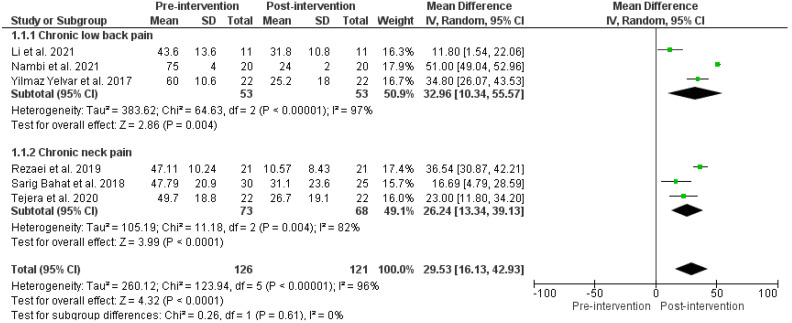
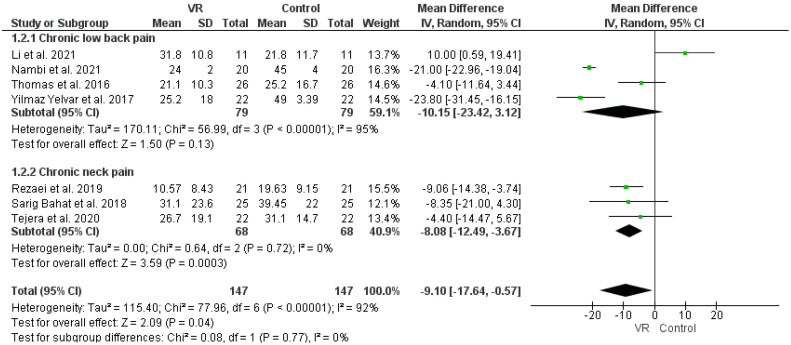
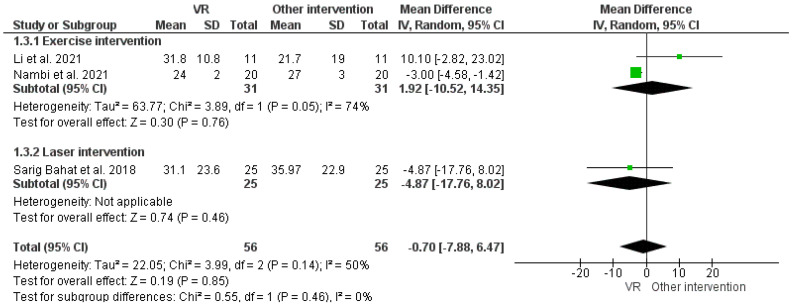
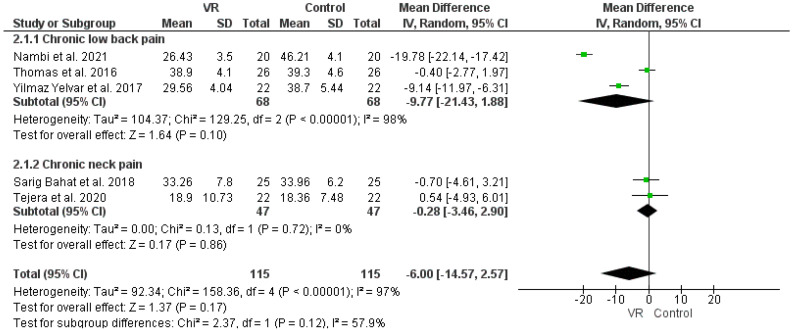
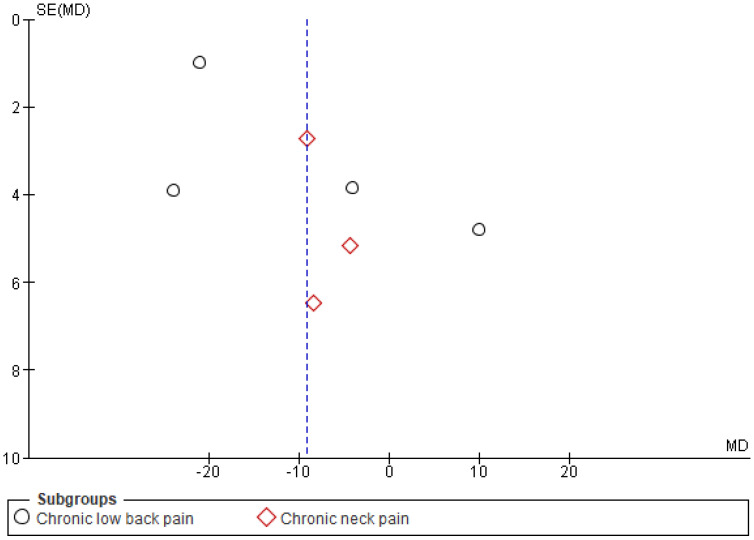
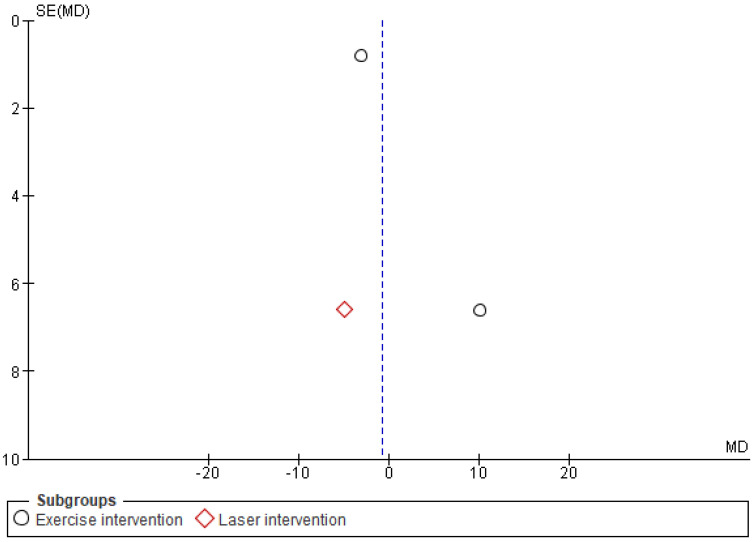
Virtual reality (VR) is a developing technology that has recently attracted the attention of healthcare practitioners. Recently, VR systems have been used to treat pain symptoms. The present study aims to evaluate the VR effectiveness on chronic pain management. A systematic literature search was performed following the Preferred Reporting Items for Systematic Reviews and Meta-Analyses (PRISMA) guidelines. Keywords were used to discover the potentially eligible studies. The primary focus of the present investigation was to evaluate the possible effect of VR-assisted treatments on chronic pain, especially in the commonly occurring low back and neck pain. Nine studies reporting randomized controlled trials were included in the present study. VR-mediated interventions demonstrated significant improvement for pain symptoms in patients experiencing chronic pain. In addition, VR-mediated therapy decreased pain intensity and disability in the case of chronic neck pain compared to control conditions. However, the VR interventions showed a statistically non-significant improvement in chronic low back pain when experimental groups were compared with controls. VR therapy positive effect on chronic pain did not differ from the one reported for other types of interventions for pain management, as physical exercise and laser therapy. Taken together, these findings showed that currently available lines of evidence on the effect of VR-mediated therapy in chronic pain management, despite pointing towards possible therapeutical benefits of the VR-based intervention, are overall inconclusive and that more research on VR-assisted therapy for chronic pain is needed.
Overview
The claims and statistics of this paper haven’t been checked yet.
Free: it reads the open-access text and checks the first 5 claims that cite a source we can check. Create a free account to check every claim.
Integrity signals
Registry
Cites
Statistics
Figures



Verification
Claims the paper makes
The claims and statistics of this paper haven’t been checked yet.
Free: it reads the open-access text and checks the first 5 claims that cite a source we can check. Create a free account to check every claim.
Claims other papers make about this one
Each is checked against this paper’s own text: does it say what the citing paper says it does?
The source backs part of the claim, not all of it — or backs it for a different population, condition or comparison.
In the citing paper
“while other systematic reviews indicated that the effectiveness of virtual reality–based training was inconclusive [32,33].”
From Virtual Reality–Based Training in Chronic Low Back Pain: Systematic Review and Meta-Analysis of Randomized Controlled Trials (2024) · cites this paper as [32]
Experimental — accuracy not yet measuredThe cited source says what the claim attributes to it.
In the citing paper
“The evidence on the potential effectiveness of virtual reality–based training for chronic low back pain is still controversial and deficient.”
From Virtual Reality–Based Training in Chronic Low Back Pain: Systematic Review and Meta-Analysis of Randomized Controlled Trials (2024) · cites this paper as [32]
Self-check
Percentages, sums and reported differences re-computed from the paper’s own numbers.
The self-check needs the paper’s full text.
Citations
Cites
Shamseer, L., Moher, D., Clarke, M., Ghersi, D., Liberati, A., Petticrew, M., Shekelle, P., Stewart, L. A., & the PRISMA-P Group (2015) · BMJ · doi:10.1136/bmj.g7647 · Cited by 13,120 · cited 3×
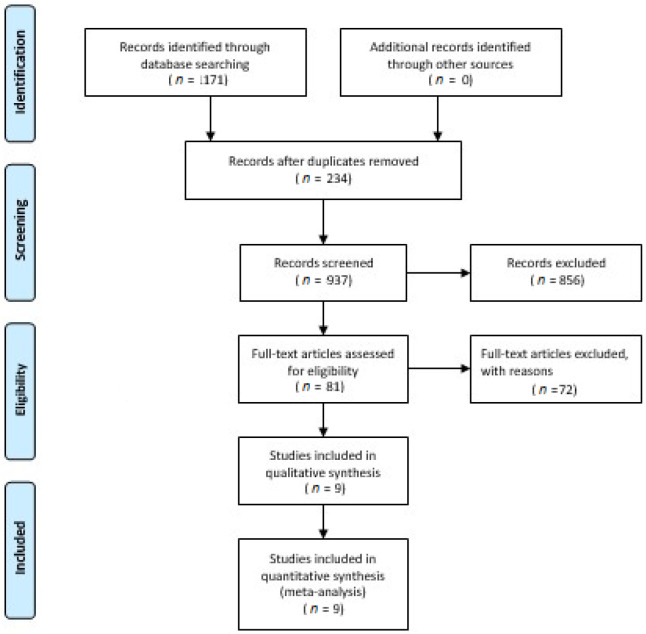
“Figure 1 describes the flowchart of the inclusion method, following the PRISMA guidelines.”
MethodInfluentialRaja, S. N., Carr, D. B., Cohen, M., Finnerup, N. B., Flor, H., Gibson, S., Keefe, F. J., Mogil, J. S., Ringkamp, M., Sluka, K. A., et al. (2020) · Pain · doi:10.1097/j.pain.0000000000001939 · Cited by 5,223 · cited 1×
“The scientific literature has defined pain as an “unpleasant sensory and emotional experience associated with actual or potential tissue damage or described in terms of such damage” [1] (also see recent development of the definition as discussed in [2]).”
BackgroundWhat low back pain is and why we need to pay attention
Hartvigsen, J., Hancock, M. J., Kongsted, A., Louw, Q., Ferreira, M. L., Genevay, S., Hoy, D., Karppinen, J., Pransky, G., Sieper, J., et al. (2018) · The Lancet · doi:10.1016/s0140-6736(18)30480-x · Cited by 4,652 · cited 1×
“One of the most reported types of pain is the chronic low back pain (CLBP), and people experiencing CLBP usually seeks medical attention for pain management prescription [5,6].”
BackgroundOswestry Low Back Pain Disability Questionnaire
(2007) · Encyclopedia of Pain · doi:10.1007/978-3-540-29805-2_3023 · Cited by 3,954
A systematic review of the global prevalence of low back pain
Hoy, D., Bain, C., Williams, G., March, L., Brooks, P., Blyth, F., Woolf, A., Vos, T., & Buchbinder, R. (2012) · Arthritis & Rheumatism · doi:10.1002/art.34347 · Cited by 3,005 · cited 1×
“One of the most reported types of pain is the chronic low back pain (CLBP), and people experiencing CLBP usually seeks medical attention for pain management prescription [5,6].”
BackgroundChou, R., Qaseem, A., Snow, V., Casey, D., Cross, J. T., Shekelle, P., Owens, D. K., & for the Clinical Efficacy Assessment Subcommittee of the American College of Physicians and the American College of Physicians/American Pain Society Low Back Pain Guidelines Panel* (2007) · Annals of Internal Medicine · doi:10.7326/0003-4819-147-7-200710020-00006 · Cited by 2,718 · cited 1×
“A non-pharmacological approach, such as physiotherapy and physical exercise, have demonstrated to provide pain relief and functional improvement [11].”
BackgroundOswestry Low Back Pain Disability Questionnaire
Fairbank, J. C. T., Couper, J., Davies, J. B., & O'Brien, J. P. (2020) · PsycTESTS Dataset · doi:10.1037/t04205-000 · Cited by 2,033
Cipresso, P., Giglioli, I. A. C., Raya, M. A., & Riva, G. (2018) · Frontiers in Psychology · doi:10.3389/fpsyg.2018.02086 · Cited by 1,131 · cited 2×
“Small private clinics, hospitals, and other healthcare centers can easily be equipped with the technology to provide VR therapy to treat chronic pain patients [63].”
BackgroundBoonstra, A. M., Schiphorst Preuper, H. R., Reneman, M. F., Posthumus, J. B., & Stewart, R. E. (2008) · International Journal of Rehabilitation Research · doi:10.1097/mrr.0b013e3282fc0f93 · Cited by 1,051 · cited 3×
“Pain intens ty was measured u ing either the VAS scale or PPI [43].”
BackgroundMethodInfluentialLong-term opioid management for chronic noncancer pain
Noble, M., Treadwell, J. R., Tregear, S. J., Coates, V. H., Wiffen, P. J., Akafomo, C., Schoelles, K. M., & Chou, R. (2010) · Cochrane Database of Systematic Reviews · doi:10.1002/14651858.cd006605.pub2 · Cited by 735 · cited 1×
“Pain has a negative impact on individual social and psychological functioning that reduces the quality of life [3,4].”
Background
Research works printed but not linked: 4
- Slater M. Lotto R. Arnold M. Sanchez-Vives M. How we experience immersive virtual environments: The concept of presence and its measurement Anu. Psicol. 2009 40 193 210
- Wells G.A. Shea B. O’Connell D. Peterson J. Welch V. Losos M. Tugwell P. The Newcastle-Ottawa Scale (NOS) for Assessing the Quality of Nonrandomised Studies in Meta-Analyses Oxford 2000
- Review Manager (RevMan) version 5.4.1 The Cochrane Collaboration Copenhagen, Denmark 2020
- Sterne J. Higgins J. Reeves B. A Cochrane risk of bias assessment tool: For non-randomized studies of interventions (ACROBAT-NRSI) Version 2014 1 24
Cited by
Virtual reality for pain management: an umbrella review
Viderman, D., Tapinova, K., Dossov, M., Seitenov, S., & Abdildin, Y. G. (2023) · Frontiers in Medicine · doi:10.3389/fmed.2023.1203670 · Cited by 142
Leveraging 6G, extended reality, and IoT big data analytics for healthcare: A review
Ahmad, H. F., Rafique, W., Rasool, R. U., Alhumam, A., Anwar, Z., & Qadir, J. (2023) · Computer Science Review · doi:10.1016/j.cosrev.2023.100558 · Cited by 111
Moulaei, K., Sharifi, H. P., Bahaadinbeigy, K., & Dinari, F. (2024) · BMC Psychiatry · doi:10.1186/s12888-024-05563-z · Cited by 102
“One of the non-pharmacological treatments is the use of virtual reality (VR) technology, which is currently employed in the control and treatment of various diseases [12].”
BackgroundImpact of Virtual Reality Cognitive and Motor Exercises on Brain Health
Sokołowska, B. (2023) · International Journal of Environmental Research and Public Health · doi:10.3390/ijerph20054150 · Cited by 78
Li, R., Li, Y., Kong, Y., Li, H., Hu, D., Fu, C., & Wei, Q. (2024) · Journal of Medical Internet Research · doi:10.2196/45406 · Cited by 48
“…systematic reviews suggested that virtual reality–based training had a positive effect on improving pain intensity [30] and fear avoidance [31] in people with low back pain, while other systematic reviews indicated that the effectiveness of virtual reality–based training was inconclusive [32,33].”
Metadata
- Authors
- Grassini, S.
- Affiliations
- Norwegian University of Science and Technology (NO)
- Corresponding author
- Grassini, Simone
- ORCID
- Grassini, Simone
- Venue
- International Journal of Environmental Research and Public Health
- Publisher
- MDPI AG
- Published
- 2022-03-29
- Volume
- 19
- Issue
- 7
- Pages
- 4071
- ISSN
- 1660-4601 (ISSN-L)
- PMC
- PMC8998682
- OpenAlex
- W4221088958
- Cited by
- 87
- References
- 65
- Citations by year
- 2026: 14 · 2025: 23 · 2024: 27 · 2023: 21 · 2022: 2
- FWCI
- 2.62
- Type
- journal article
- Language
- en
- Open access
- gold
- doi.org
- Licence
- Locations
- International Journal of Environmental Research and Public Health (publishedVersion, cc-by)
- PubMed Central (publishedVersion, cc-by)
- PubMed (publishedVersion)
- RePEc: Research Papers in Economics (submittedVersion)
- NORA - Norwegian Open Research Archives (submittedVersion, cc-by)
- Topics
- Health Sciences › Health Professions › Physical Therapy, Sports Therapy and Rehabilitation › Musculoskeletal pain and rehabilitation
- Health Sciences › Medicine › Anesthesiology and Pain Medicine › Pain Management and Treatment
- Physical Sciences › Computer Science › Human-Computer Interaction › Virtual Reality Applications and Impacts
- Keywords
- virtual reality, chronic pain management, non-pharmacological treatment, chronic neck pain, chronic low back pain, pain intensity, disability, physical activity, laser therapy
- MeSH terms
- Virtual Reality, Humans, Neck Pain, Chronic Pain, Pain Management, Virtual Reality Exposure Therapy
About these checks
Registry, retraction, Cites and statistics results are computed, not judged, with one exception: a printed reference that no index lists is read once by a model before it counts as a citation error. Claims are extracted by a model and kept only when their quote appears verbatim in the text; each cited source is then checked, with a model’s help, for whether it says what the claim relies on. Those verdicts can be wrong — read the claim’s quote and the cited source before relying on one.
Statistics and arithmetic are recomputed, not judged.
Confidence bands are shown only for fields calibrated on our annotated test set. None is calibrated yet, so no band is shown.
What counts as a claim ›How we measure confidence ›How we check this ›
Are you an author, or do you see a problem with this page? Request a review
How to cite
Cite CoChat for the checks on this page, and the paper for its own findings.
- This page
- CoChat. (2026). Citation check: Virtual Reality Assisted Non-Pharmacological Treatments in Chronic Pain Management: A Systematic Review and Quantitative Meta-Analysis. https://app.cochat.ai/papers/10.3390/ijerph19074071
- The paper
- Grassini, S. (2022). Virtual Reality Assisted Non-Pharmacological Treatments in Chronic Pain Management: A Systematic Review and Quantitative Meta-Analysis. International Journal of Environmental Research and Public Health. https://doi.org/10.3390/ijerph19074071
Data sources
Bibliographic data: Semantic Scholar, OpenAlex, Crossref.
Contains information from the Semantic Scholar Academic Graph Datasets, made available under the ODC Attribution License (ODC-BY 1.0).
Semantic Scholar’s data is described in: Kinney, R., et al. (2023). The Semantic Scholar Open Data Platform. arXiv:2301.10140.
