

Virtual Reality Assisted Non-Pharmacological Treatments in Chronic Pain Management: A Systematic Review and Quantitative Meta-Analysis
Open accessThe DOI matches its Crossref record; 64 of the 65 references it cites were found in a registry or an index, and 1 are not checked yet.
Abstract
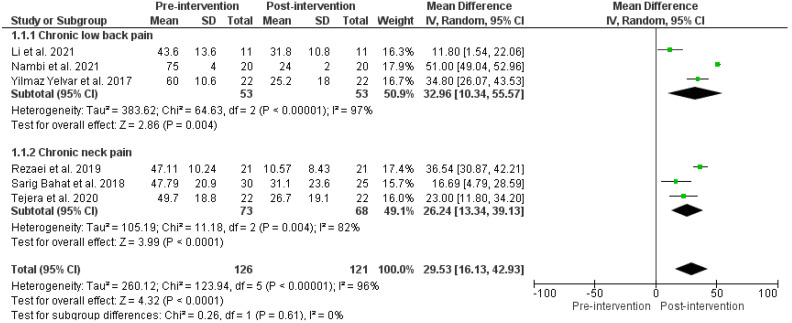
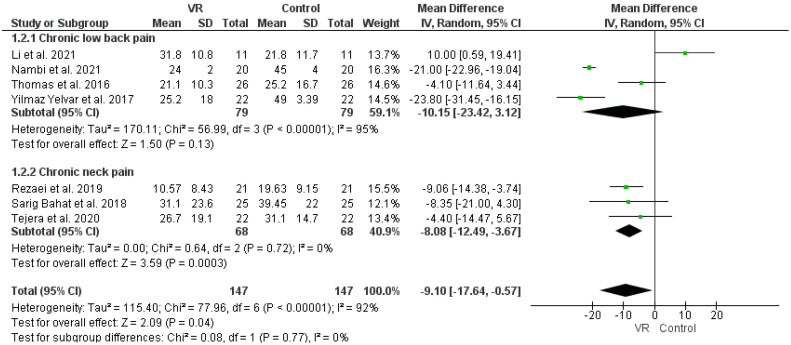
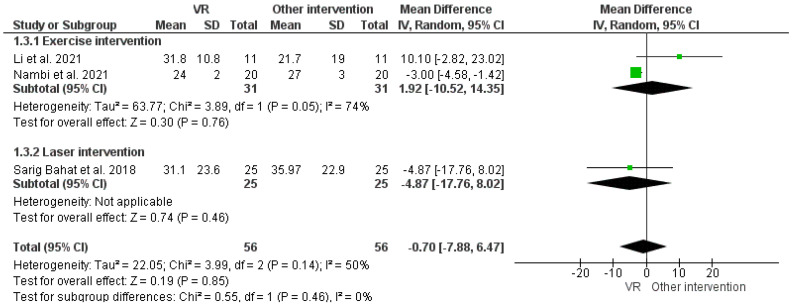
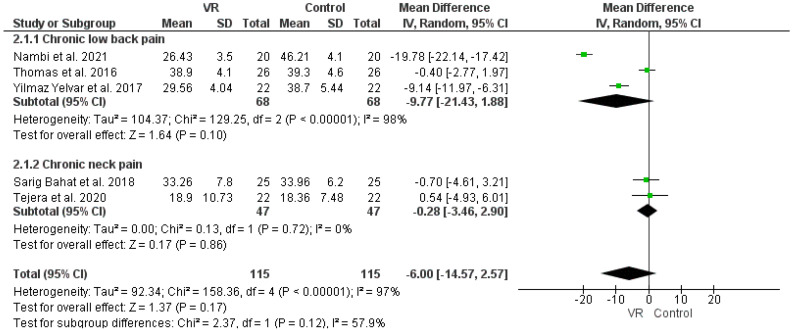
Virtual reality (VR) is a developing technology that has recently attracted the attention of healthcare practitioners. Recently, VR systems have been used to treat pain symptoms. The present study aims to evaluate the VR effectiveness on chronic pain management. A systematic literature search was performed following the Preferred Reporting Items for Systematic Reviews and Meta-Analyses (PRISMA) guidelines. Keywords were used to discover the potentially eligible studies. The primary focus of the present investigation was to evaluate the possible effect of VR-assisted treatments on chronic pain, especially in the commonly occurring low back and neck pain. Nine studies reporting randomized controlled trials were included in the present study. VR-mediated interventions demonstrated significant improvement for pain symptoms in patients experiencing chronic pain. In addition, VR-mediated therapy decreased pain intensity and disability in the case of chronic neck pain compared to control conditions. However, the VR interventions showed a statistically non-significant improvement in chronic low back pain when experimental groups were compared with controls. VR therapy positive effect on chronic pain did not differ from the one reported for other types of interventions for pain management, as physical exercise and laser therapy. Taken together, these findings showed that currently available lines of evidence on the effect of VR-mediated therapy in chronic pain management, despite pointing towards possible therapeutical benefits of the VR-based intervention, are overall inconclusive and that more research on VR-assisted therapy for chronic pain is needed.
Overview
The claims and statistics of this paper haven’t been checked yet.
Free: it reads the open-access text and checks the first 5 claims that cite a source we can check. Create a free account to check every claim.
Integrity signals
Registry
Cites
Statistics
Figures



Verification
Claims the paper makes
The claims and statistics of this paper haven’t been checked yet.
Free: it reads the open-access text and checks the first 5 claims that cite a source we can check. Create a free account to check every claim.
Claims other papers make about this one
Each is checked against this paper’s own text: does it say what the citing paper says it does?
The source backs part of the claim, not all of it — or backs it for a different population, condition or comparison.
In the citing paper
“while other systematic reviews indicated that the effectiveness of virtual reality–based training was inconclusive [32,33].”
From Virtual Reality–Based Training in Chronic Low Back Pain: Systematic Review and Meta-Analysis of Randomized Controlled Trials (2024) · cites this paper as [32]
Experimental — accuracy not yet measuredThe cited source says what the claim attributes to it.
In the citing paper
“The evidence on the potential effectiveness of virtual reality–based training for chronic low back pain is still controversial and deficient.”
From Virtual Reality–Based Training in Chronic Low Back Pain: Systematic Review and Meta-Analysis of Randomized Controlled Trials (2024) · cites this paper as [32]
Self-check
Percentages, sums and reported differences re-computed from the paper’s own numbers.
The self-check needs the paper’s full text.
Citations
Cites
Shamseer, L., Moher, D., Clarke, M., Ghersi, D., Liberati, A., Petticrew, M., Shekelle, P., Stewart, L. A., & the PRISMA-P Group (2015) · BMJ · doi:10.1136/bmj.g7647 · Cited by 13,120 · cited 3×
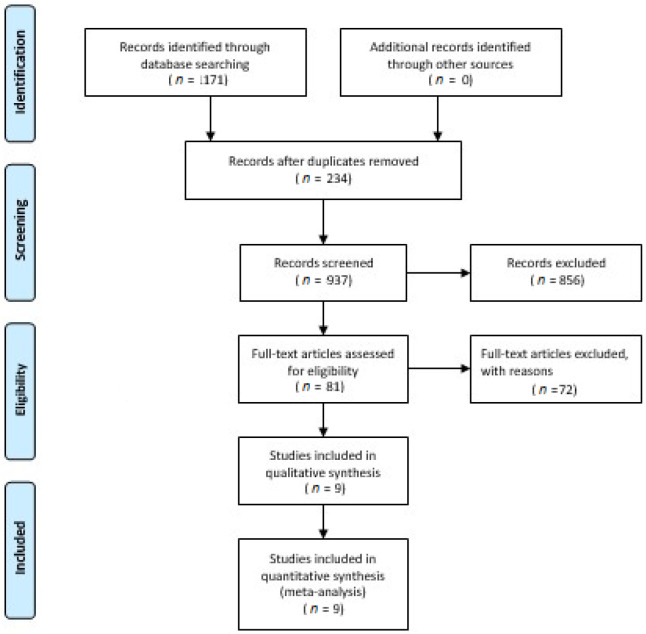
“Figure 1 describes the flowchart of the inclusion method, following the PRISMA guidelines.”
MethodInfluentialRaja, S. N., Carr, D. B., Cohen, M., Finnerup, N. B., Flor, H., Gibson, S., Keefe, F. J., Mogil, J. S., Ringkamp, M., Sluka, K. A., et al. (2020) · Pain · doi:10.1097/j.pain.0000000000001939 · Cited by 5,223 · cited 1×
“The scientific literature has defined pain as an “unpleasant sensory and emotional experience associated with actual or potential tissue damage or described in terms of such damage” [1] (also see recent development of the definition as discussed in [2]).”
BackgroundWhat low back pain is and why we need to pay attention
Hartvigsen, J., Hancock, M. J., Kongsted, A., Louw, Q., Ferreira, M. L., Genevay, S., Hoy, D., Karppinen, J., Pransky, G., Sieper, J., et al. (2018) · The Lancet · doi:10.1016/s0140-6736(18)30480-x · Cited by 4,652 · cited 1×
“One of the most reported types of pain is the chronic low back pain (CLBP), and people experiencing CLBP usually seeks medical attention for pain management prescription [5,6].”
BackgroundOswestry Low Back Pain Disability Questionnaire
(2007) · Encyclopedia of Pain · doi:10.1007/978-3-540-29805-2_3023 · Cited by 3,954
A systematic review of the global prevalence of low back pain
Hoy, D., Bain, C., Williams, G., March, L., Brooks, P., Blyth, F., Woolf, A., Vos, T., & Buchbinder, R. (2012) · Arthritis & Rheumatism · doi:10.1002/art.34347 · Cited by 3,005 · cited 1×
“One of the most reported types of pain is the chronic low back pain (CLBP), and people experiencing CLBP usually seeks medical attention for pain management prescription [5,6].”
BackgroundChou, R., Qaseem, A., Snow, V., Casey, D., Cross, J. T., Shekelle, P., Owens, D. K., & for the Clinical Efficacy Assessment Subcommittee of the American College of Physicians and the American College of Physicians/American Pain Society Low Back Pain Guidelines Panel* (2007) · Annals of Internal Medicine · doi:10.7326/0003-4819-147-7-200710020-00006 · Cited by 2,718 · cited 1×
“A non-pharmacological approach, such as physiotherapy and physical exercise, have demonstrated to provide pain relief and functional improvement [11].”
BackgroundOswestry Low Back Pain Disability Questionnaire
Fairbank, J. C. T., Couper, J., Davies, J. B., & O'Brien, J. P. (2020) · PsycTESTS Dataset · doi:10.1037/t04205-000 · Cited by 2,033
Cipresso, P., Giglioli, I. A. C., Raya, M. A., & Riva, G. (2018) · Frontiers in Psychology · doi:10.3389/fpsyg.2018.02086 · Cited by 1,131 · cited 2×
“Small private clinics, hospitals, and other healthcare centers can easily be equipped with the technology to provide VR therapy to treat chronic pain patients [63].”
BackgroundBoonstra, A. M., Schiphorst Preuper, H. R., Reneman, M. F., Posthumus, J. B., & Stewart, R. E. (2008) · International Journal of Rehabilitation Research · doi:10.1097/mrr.0b013e3282fc0f93 · Cited by 1,051 · cited 3×
“Pain intens ty was measured u ing either the VAS scale or PPI [43].”
BackgroundMethodInfluentialLong-term opioid management for chronic noncancer pain
Noble, M., Treadwell, J. R., Tregear, S. J., Coates, V. H., Wiffen, P. J., Akafomo, C., Schoelles, K. M., & Chou, R. (2010) · Cochrane Database of Systematic Reviews · doi:10.1002/14651858.cd006605.pub2 · Cited by 735 · cited 1×
“Pain has a negative impact on individual social and psychological functioning that reduces the quality of life [3,4].”
BackgroundEvaluating Common Outcomes for Measuring Treatment Success for Chronic Low Back Pain
Chapman, J. R., Norvell, D. C., Hermsmeyer, J. T., Bransford, R. J., DeVine, J., McGirt, M. J., & Lee, M. J. (2011) · Spine · doi:10.1097/brs.0b013e31822ef74d · Cited by 551 · cited 1×
“An high TSK score reflecting an high kinesiophobia [44].”
BackgroundVirtual Reality and Pain Management: Current Trends and Future Directions
Li, A., Montaño, Z., Chen, V. J., & Gold, J. I. (2011) · Pain Management · doi:10.2217/pmt.10.15 · Cited by 536 · cited 1×
“Thus, physicians have considered VR systems as a novel therapeutic option, able to provide analgesic effects [29].”
BackgroundAddiction to opioids in chronic pain patients: A literature review
Højsted, J., & Sjøgren, P. (2007) · European Journal of Pain · doi:10.1016/j.ejpain.2006.08.004 · Cited by 424 · cited 1×
“Opioids cause tolerance, dependency, and hyperalgesia [9].”
Editorial The need of a taxonomy
&NA;, &. (1979) · Pain · doi:10.1016/0304-3959(79)90046-0 · Cited by 413 · cited 1×
“The scientific literature has defined pain as an “unpleasant sensory and emotional experience associated with actual or potential tissue damage or described in terms of such damage” [1] (also see recent development of the definition as discussed in [2]).”
BackgroundMallari, B., Spaeth, E. K., Goh, H., & Boyd, B. S. (2019) · Journal of Pain Research · doi:10.2147/jpr.s200498 · Cited by 374 · cited 1×
“[36], however, that study, quantitatively analyzed only a small number of nowadays outdated scientific studies and did not focus specifically on chronic pain).”
ResultVirtual Reality as a Clinical Tool for Pain Management
Pourmand, A., Davis, S., Marchak, A., Whiteside, T., & Sikka, N. (2018) · Current Pain and Headache Reports · doi:10.1007/s11916-018-0708-2 · Cited by 326
Virtual Reality interventions for acute and chronic pain management
Ahmadpour, N., Randall, H., Choksi, H., Gao, A., Vaughan, C., & Poronnik, P. (2019) · The International Journal of Biochemistry & Cell Biology · doi:10.1016/j.biocel.2019.105568 · Cited by 287
Como experimentamos los entornos virtuales inmersivos: el concepto de presencia y su medición
Slater, M., Lotto, B., Arnold, M., & Sanchez-Vives, M. V. (2009) · Anuario de Psicología/The UB Journal of Psychology · Cited by 279
Postthoracotomy Pain Management Problems
Gerner, P. (2008) · Anesthesiology Clinics · doi:10.1016/j.anclin.2008.01.007 · Cited by 264 · cited 1×
“In addition, some analgesics require invasive therapy, such as intrathecal administration of drugs that have their own set of clinical risks and complications [10].”
BackgroundBaus, O., & Bouchard, S. (2014) · Frontiers in Human Neuroscience · doi:10.3389/fnhum.2014.00112 · Cited by 260 · cited 1×
“VR can be immersive, semi-immersive or non-immersive, based on desired stimulated physiological senses, artificial stimuli reliability, degree of interaction with VR environment, and isolation of the users from the external environment [27,28].”
BackgroundThe Role of Exergaming in Improving Physical Activity: A Review
Sween, J., Wallington, S. F., Sheppard, V., Taylor, T., Llanos, A. A., & Adams-Campbell, L. L. (2014) · Journal of Physical Activity and Health · doi:10.1123/jpah.2011-0425 · Cited by 260
Pharmacologic Therapy for Acute Pain.
Amaechi, O., Huffman, M., & Featherstone, K. (2021) · PubMed · Cited by 230
Standardized mean differences cause funnel plot distortion in publication bias assessments
Zwetsloot, P.-P., Van Der Naald, M., Sena, E. S., Howells, D. W., IntHout, J., De Groot, J. A., Chamuleau, S. A., MacLeod, M. R., & Wever, K. E. (2017) · eLife · doi:10.7554/elife.24260 · Cited by 212 · cited 1×
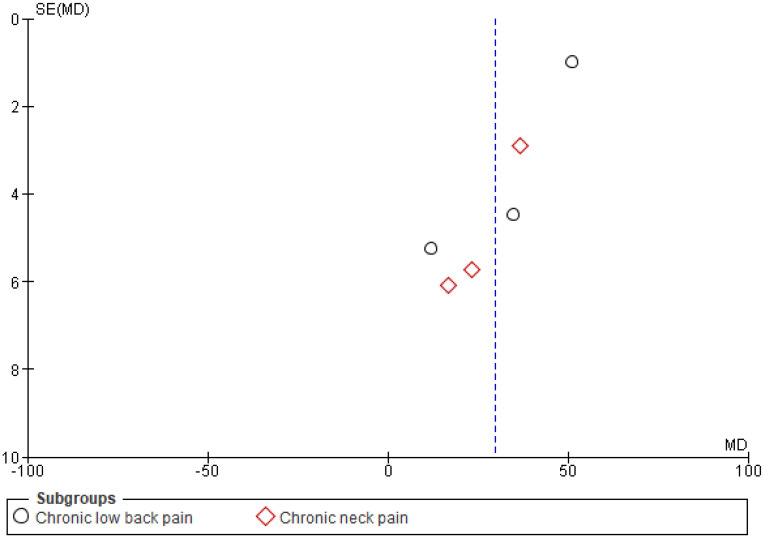
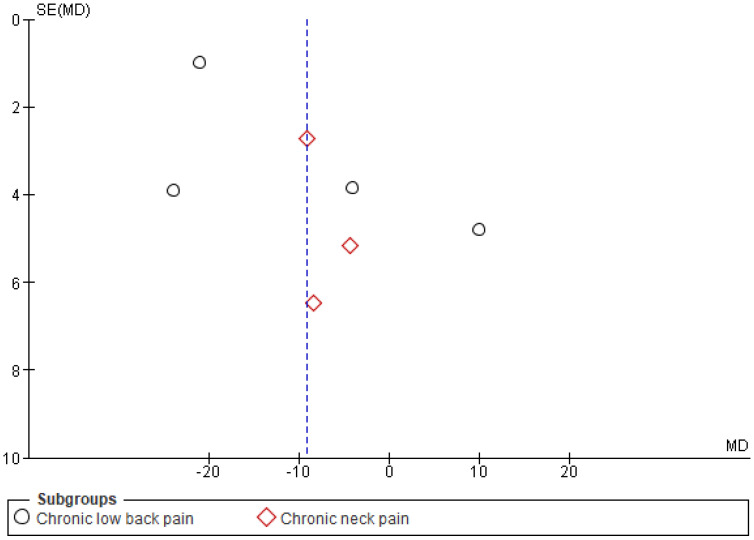
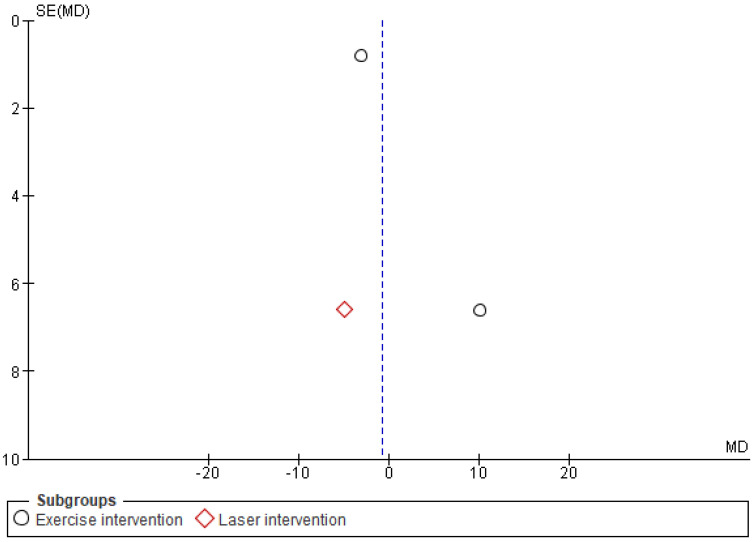
“However, as the sample of the included articles was rather small, it is not possible to clearly assess the possibility of publication bias from the plots [42].”
BackgroundQuestionnaire Measures and Physiological Correlates of Presence: A Systematic Review
Grassini, S., & Laumann, K. (2020) · Frontiers in Psychology · doi:10.3389/fpsyg.2020.00349 · Cited by 209
Self-citationChan, E., Foster, S., Sambell, R., & Leong, P. (2018) · PLOS ONE · doi:10.1371/journal.pone.0200987 · Cited by 203 · cited 1×
“Recently published systematic review articles have also focused on understanding the efficacy of VR-based interventions in the context of pain management (for example, see [35]).”
BackgroundGarrett, B., Taverner, T., Masinde, W., Gromala, D., Shaw, C., & Negraeff, M. (2014) · The Clinical Journal of Pain · doi:10.1097/ajp.0000000000000064 · Cited by 188 · cited 1×
“However, a few studies hypothesized distraction as a possible mechanism for VR effects on pain alleviation [30].”
BackgroundTriberti, S., Repetto, C., & Riva, G. (2014) · Cyberpsychology, Behavior, and Social Networking · doi:10.1089/cyber.2014.0054 · Cited by 186 · cited 1×
“Patients experience less pain and increased pain tolerance and mood due to the attention shift [31].”
BackgroundBahat, H. S., Takasaki, H., Chen, X., Bet-Or, Y., & Treleaven, J. M. (2014) · Manual Therapy · doi:10.1016/j.math.2014.06.008 · Cited by 179
Virtual reality approaches to pain: toward a state of the science
Trost, Z., France, C., Anam, M., & Shum, C. (2021) · Pain · doi:10.1097/j.pain.0000000000002060 · Cited by 173
Application of AR and VR in hand rehabilitation: A systematic review
Pereira, M. F., Prahm, C., Kolbenschlag, J., Oliveira, E., & Rodrigues, N. F. (2020) · Journal of Biomedical Informatics · doi:10.1016/j.jbi.2020.103584 · Cited by 157 · cited 1×
“VR entertainment and interactive aspects and feedback can boost adherence to activities [16], and immersive VR systems have been shown to provide pain distraction methods that provide highly engaging external stimuli with the aim to reduce pain by directing user attention to a virtualized environment [17,18].”
BackgroundPharmacologic therapy for acute pain.
Blondell, R. D., Azadfard, M., & Wisniewski, A. M. (2013) · PubMed · Cited by 154
Darnall, B. D., Krishnamurthy, P., Tsuei, J., & Minor, J. D. (2020) · JMIR Formative Research · doi:10.2196/17293 · Cited by 150 · cited 1×
“[53] RCT 74 (35/39) 18–74 chronic low back pain VR multimedia with audio IG: VR CG: audio effect PPI both groups demonstrated reduced pain effects 7”
BackgroundRemote kinematic training for patients with chronic neck pain: a randomised controlled trial
Bahat, H. S., Croft, K., Carter, C., Hoddinott, A., Sprecher, E., & Treleaven, J. M. (2017) · European Spine Journal · doi:10.1007/s00586-017-5323-0 · Cited by 145
Opioids and Chronic Pain: An Analytic Review of the Clinical Evidence
Nadeau, S. E., Wu, J. K., & Lawhern, R. A. (2021) · Frontiers in Pain Research · doi:10.3389/fpain.2021.721357 · Cited by 136
Tejera, D., Beltran-Alacreu, H., Cano-de-la-Cuerda, R., Leon Hernández, J. V., Martín-Pintado-Zugasti, A., Calvo-Lobo, C., Gil-Martínez, A., & Fernández-Carnero, J. (2020) · International Journal of Environmental Research and Public Health · doi:10.3390/ijerph17165950 · Cited by 121 · cited 1×
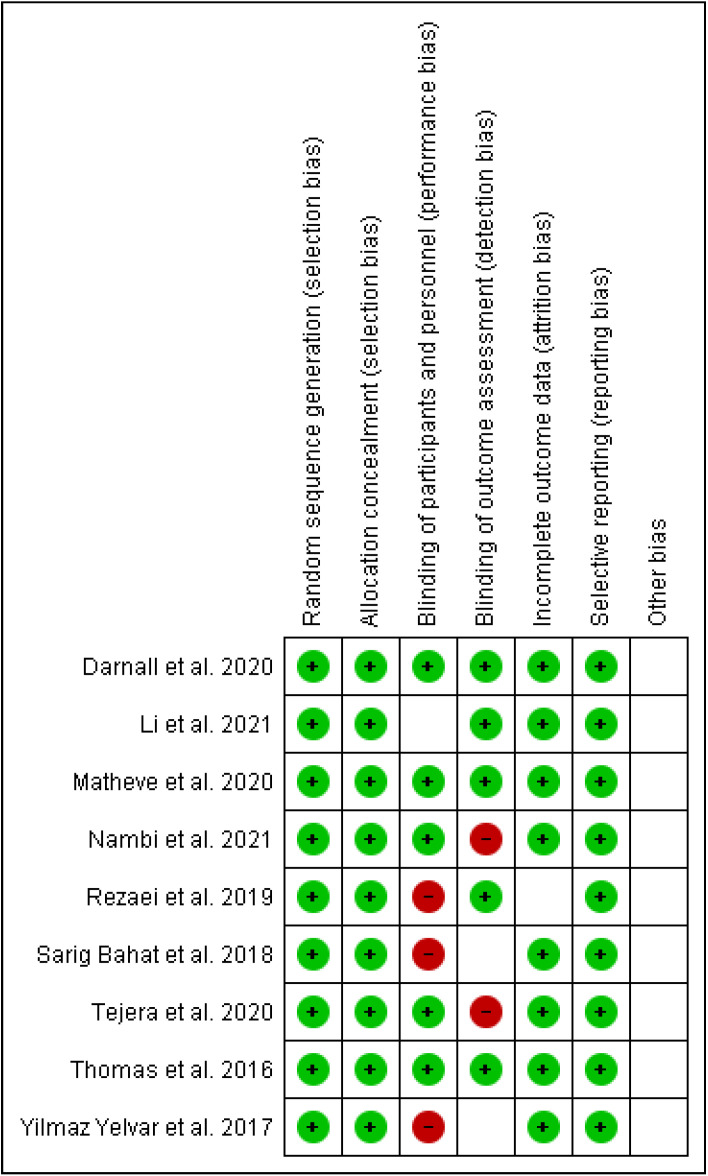
“Furthermore, two studies had a detection bias [56,58].”
BackgroundMatheve, T., Bogaerts, K., & Timmermans, A. (2020) · Journal of NeuroEngineering and Rehabilitation · doi:10.1186/s12984-020-00688-0 · Cited by 118
Using auditory event-related EEG potentials to assess presence in virtual reality
Kober, S. E., & Neuper, C. (2012) · International Journal of Human-Computer Studies · doi:10.1016/j.ijhcs.2012.03.004 · Cited by 116 · cited 1×
“However, such a theory may find support from the ability that immersive VR has in subtracting attention from stimuli from the external world, which has been proven in neurophysiological experiments [64,65].”
BackgroundThomas, J. S., France, C. R., Applegate, M. E., Leitkam, S. T., & Walkowski, S. (2016) · The Journal of Pain · doi:10.1016/j.jpain.2016.08.011 · Cited by 107 · cited 8×
“VAS and TSK have good validity and reliability in CLBP patients.”
BackgroundInfluentialYilmaz Yelvar, G. D., Çırak, Y., Dalkılınç, M., Parlak Demir, Y., Guner, Z., & Boydak, A. (2017) · European Spine Journal · doi:10.1007/s00586-016-4892-7 · Cited by 107
Zadro, J. R., Shirley, D., Simic, M., Mousavi, S. J., Ceprnja, D., Maka, K., Sung, J., & Ferreira, P. (2019) · Physical Therapy · doi:10.1093/ptj/pzy112 · Cited by 94 · cited 1×
“However, the most significant barriers in most non-pharmacological therapy, such as physical exercise, is the lack motivation and the ability of a patient to adhere to the therapeutic prescriptions [14].”
BackgroundChou, L., Ranger, T. A., Peiris, W. L., Cicuttini, F., Urquhart, D. M., Sullivan, K., Seneviwickrama, M., Briggs, A. M., & Wluka, A. E. (2018) · PLoS ONE · doi:10.1371/journal.pone.0204885 · Cited by 92 · cited 1×
“, [38,39]), and have high clinical and economical [40].”
BackgroundWardhan, R., & Chelly, J. E. (2017) · F1000Research · doi:10.12688/f1000research.12286.1 · Cited by 91 · cited 1×
“Pain has a negative impact on individual social and psychological functioning that reduces the quality of life [3,4].”
BackgroundThe Use of Virtual Reality in Back Pain Rehabilitation: A Systematic Review and Meta-Analysis
Bordeleau, M., Stamenkovic, A., Tardif, P.-A., & Thomas, J. (2022) · The Journal of Pain · doi:10.1016/j.jpain.2021.08.001 · Cited by 86 · cited 2×
“A recent meta-analysis [62] showed the possible effect of VR-therapy for rehabilitation purposes.”
BackgroundVirtual Reality and Interactive Simulation for Pain Distraction: Table 1
Wiederhold, M. D., & Wiederhold, B. K. (2007) · Pain Medicine · doi:10.1111/j.1526-4637.2007.00381.x · Cited by 83
Grassini, S., Laumann, K., & Luzi, A. K. (2021) · Multimodal Technologies and Interaction · doi:10.3390/mti5030007 · Cited by 73
Self-citationNoori, S., Rasheed, A., Aiyer, R., Jung, B., Bansal, N., Chang, K. C., Ottestad, E., & Gulati, A. (2018) · Pain Medicine · doi:10.1093/pm/pny287 · Cited by 72 · cited 1×
“, [38,39]), and have high clinical and economical [40].”
BackgroundSevcenko, K., & Lindgren, I. (2022) · European Review of Aging and Physical Activity · doi:10.1186/s11556-022-00283-3 · Cited by 69 · cited 1×
“The most frequent application of VR systems in clinical practice has been, among others, in pediatric movement disorder rehabilitation [20], elderly neurodegenerative movement disorder rehabilitation [21], post-stroke rehabilitation [22], and for psychiatric disorders [23].”
BackgroundFuture Directions: Advances and Implications of Virtual Environments Designed for Pain Management
Wiederhold, B. K., Soomro, A., Riva, G., & Wiederhold, M. D. (2014) · Cyberpsychology, Behavior, and Social Networking · doi:10.1089/cyber.2014.0197 · Cited by 57 · cited 1×
“where pain is experienced, as well as electric nerve stimulation, have also been questioned for their efficacy in pain management [12,13].”
BackgroundMcMahon, S. B., Dargan, P. I., Lanas, Á., & Wiffen, P. J. (2020) · Current Medical Research and Opinion · doi:10.1080/03007995.2020.1847718 · Cited by 57 · cited 1×
“Within the pharmacological approach, non-steroid anti-inflammatory drugs (NSAIDs) and opioids are usually prescribed [7,8].”
BackgroundWu, J., Zhang, H., Chen, Z., Fu, R., Yang, H., Zeng, H., & Ren, Z. (2021) · JMIR Serious Games · doi:10.2196/30882 · Cited by 55 · cited 1×
“The most frequent application of VR systems in clinical practice has been, among others, in pediatric movement disorder rehabilitation [20], elderly neurodegenerative movement disorder rehabilitation [21], post-stroke rehabilitation [22], and for psychiatric disorders [23].”
BackgroundNambi, G., Abdelbasset, W. K., Alrawaili, S. M., Alsubaie, S. F., Abodonya, A. M., & Saleh, A. K. (2021) · Technology and Health Care · doi:10.3233/thc-202301 · Cited by 51
Grassini, S., Laumann, K., Topranin, V. D. M., & Thorp, S. O. (2021) · Ergonomics · doi:10.1080/00140139.2021.1941279 · Cited by 49
Self-citationEffects of virtual reality programs on balance in functional ankle instability
Kim, K.-J., & Heo, M. L. (2015) · Journal of Physical Therapy Science · doi:10.1589/jpts.27.3097 · Cited by 46 · cited 2×
“The published scientific literature mentions the use of VR in the context of alleviation in neck pain [59], chronic lower‐back pain (LBP) [50], sprained ankles, frozen shoulder, phantom limb syndrome, akinesia, phobias, ligament injuries, and treatment of physical dysfunction and anxiety [60,61].”
BackgroundVirtual Solutions to Phantom Problems: Using Immersive Virtual Reality to Treat Phantom Limb Pain
Murray, C. D., Pettifer, S. R., Howard, T. L. J., Patchick, E. L., Caillette, F., & Murray, J. (2009) · Springer eBooks · doi:10.1007/978-0-387-87462-3_12 · Cited by 45
Cognitive and Mind-Body Therapies for Chronic Low Back Pain and Neck Pain
Cherkin, D. C., & Herman, P. M. (2018) · JAMA Internal Medicine · doi:10.1001/jamainternmed.2018.0113 · Cited by 42
Grassini, S., Laumann, K., Thorp, S. O., & Topranin, V. D. M. (2021) · Brain and Behavior · doi:10.1002/brb3.2269 · Cited by 33 · cited 1×
“However, such a theory may find support from the ability that immersive VR has in subtracting attention from stimuli from the external world, which has been proven in neurophysiological experiments [64,65].”
BackgroundSelf-citationRezaei, I., Razeghi, M., Ebrahimi, S., Kayedi, S., & Rezaeian Zadeh, A. (2018) · Journal of Biomedical Physics and Engineering · doi:10.31661/jbpe.v0i0.556 · Cited by 32 · cited 2×
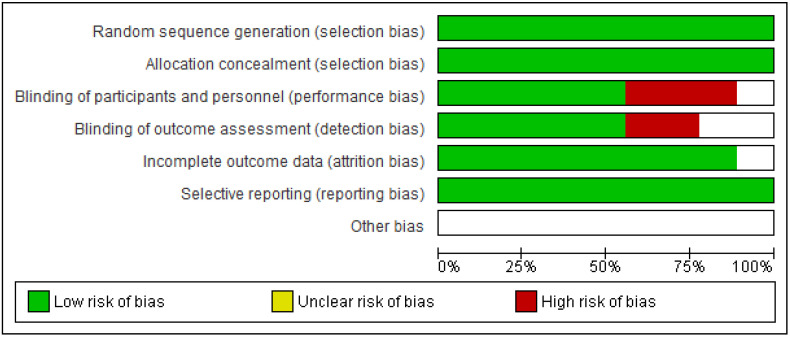
“Three studies presented a high risk of bias [52,54,55].”
BackgroundImmersive visual technologies and human health
Grassini, S., & Laumann, K. (2021) · European Conference on Cognitive Ergonomics · doi:10.1145/3452853.3452856 · Cited by 32 · cited 1×
“Virtual reality (VR) is a solution that is gaining attention as non-pharmaceutical therapy for pain management [15].”
BackgroundSelf-citationGoyal, C., Vardhan, V. D., & Naqvi, W. M. (2022) · Cureus · doi:10.7759/cureus.21693 · Cited by 30 · cited 1×
“The most frequent application of VR systems in clinical practice has been, among others, in pediatric movement disorder rehabilitation [20], elderly neurodegenerative movement disorder rehabilitation [21], post-stroke rehabilitation [22], and for psychiatric disorders [23].”
BackgroundLi, Z., Yu, Q., Luo, H., Liang, W., Li, X., Ge, L., Zhang, S., Li, L., & Wang, C. (2021) · Neural Plasticity · doi:10.1155/2021/9975862 · Cited by 26 · cited 4×
“[51] RCT 34 (I: 11; EG: 12; C:11) I: 21:91 ± 2:43 EG: 23:75 ± 4:09 CG: 25:36 ± 3:72 chroni c low back pain Kinect Xbox 360 system: Fruit Ninja game IG: VR gam‐ ing + MT EG: Four‐ point kneel‐ ing exercise +MT CG:MT VAS, ODI VAS scores were reduced in each group after interven‐ tion.”
BackgroundResultInfluentialDennison, B. S., & Leal, M. H. (2011) · Elsevier eBooks · doi:10.1016/b978-0-7020-3528-9.00007-8 · Cited by 26 · cited 1×
“A low score represents a low neck disability while an a high score represents a high neck disability [46].”
BackgroundChou, P., Tseng, P., Wu, Y., Chang, J. P., Tu, Y., Stubbs, B., Carvalho, A. F., Lin, P.-Y., Chen, Y.-W., & Su, K. (2020) · Journal of Affective Disorders · doi:10.1016/j.jad.2020.12.172 · Cited by 21 · cited 1×
“The most frequent application of VR systems in clinical practice has been, among others, in pediatric movement disorder rehabilitation [20], elderly neurodegenerative movement disorder rehabilitation [21], post-stroke rehabilitation [22], and for psychiatric disorders [23].”
BackgroundRezaei, I., Razeghi, M., Ebrahimi, S., Kayedi, S., & Zadeh, A. R. (2019) · Journal of Biomedical Physics and Engineering · doi:10.31661/jbpe.v9i3jun.556 · Cited by 18
Piskorz, J., & Czub, M. (2014) · Polish Psychological Bulletin · doi:10.2478/ppb-2014-0058 · Cited by 16
Can immersive virtual reality reduce phantom limb pain?
Murray, C. D., Patchick, E. L., Caillette, F., Howard, T. L. J., & Pettifer, S. R. (2005) · Lancaster EPrints (Lancaster University) · Cited by 16
Research works printed but not linked: 4
- Slater M. Lotto R. Arnold M. Sanchez-Vives M. How we experience immersive virtual environments: The concept of presence and its measurement Anu. Psicol. 2009 40 193 210
- Wells G.A. Shea B. O’Connell D. Peterson J. Welch V. Losos M. Tugwell P. The Newcastle-Ottawa Scale (NOS) for Assessing the Quality of Nonrandomised Studies in Meta-Analyses Oxford 2000
- Review Manager (RevMan) version 5.4.1 The Cochrane Collaboration Copenhagen, Denmark 2020
- Sterne J. Higgins J. Reeves B. A Cochrane risk of bias assessment tool: For non-randomized studies of interventions (ACROBAT-NRSI) Version 2014 1 24
Cited by
Virtual reality for pain management: an umbrella review
Viderman, D., Tapinova, K., Dossov, M., Seitenov, S., & Abdildin, Y. G. (2023) · Frontiers in Medicine · doi:10.3389/fmed.2023.1203670 · Cited by 142
Leveraging 6G, extended reality, and IoT big data analytics for healthcare: A review
Ahmad, H. F., Rafique, W., Rasool, R. U., Alhumam, A., Anwar, Z., & Qadir, J. (2023) · Computer Science Review · doi:10.1016/j.cosrev.2023.100558 · Cited by 111
Moulaei, K., Sharifi, H. P., Bahaadinbeigy, K., & Dinari, F. (2024) · BMC Psychiatry · doi:10.1186/s12888-024-05563-z · Cited by 102
“One of the non-pharmacological treatments is the use of virtual reality (VR) technology, which is currently employed in the control and treatment of various diseases [12].”
BackgroundImpact of Virtual Reality Cognitive and Motor Exercises on Brain Health
Sokołowska, B. (2023) · International Journal of Environmental Research and Public Health · doi:10.3390/ijerph20054150 · Cited by 78
Li, R., Li, Y., Kong, Y., Li, H., Hu, D., Fu, C., & Wei, Q. (2024) · Journal of Medical Internet Research · doi:10.2196/45406 · Cited by 48
“…systematic reviews suggested that virtual reality–based training had a positive effect on improving pain intensity [30] and fear avoidance [31] in people with low back pain, while other systematic reviews indicated that the effectiveness of virtual reality–based training was inconclusive [32,33].”
Metadata
- Authors
- Grassini, S.
- Affiliations
- Norwegian University of Science and Technology (NO)
- Corresponding author
- Grassini, Simone
- ORCID
- Grassini, Simone
- Venue
- International Journal of Environmental Research and Public Health
- Publisher
- MDPI AG
- Published
- 2022-03-29
- Volume
- 19
- Issue
- 7
- Pages
- 4071
- ISSN
- 1660-4601 (ISSN-L)
- PMC
- PMC8998682
- OpenAlex
- W4221088958
- Cited by
- 87
- References
- 65
- Citations by year
- 2026: 14 · 2025: 23 · 2024: 27 · 2023: 21 · 2022: 2
- FWCI
- 2.62
- Type
- journal article
- Language
- en
- Open access
- gold
- doi.org
- Licence
- Locations
- International Journal of Environmental Research and Public Health (publishedVersion, cc-by)
- PubMed Central (publishedVersion, cc-by)
- PubMed (publishedVersion)
- RePEc: Research Papers in Economics (submittedVersion)
- NORA - Norwegian Open Research Archives (submittedVersion, cc-by)
- Topics
- Health Sciences › Health Professions › Physical Therapy, Sports Therapy and Rehabilitation › Musculoskeletal pain and rehabilitation
- Health Sciences › Medicine › Anesthesiology and Pain Medicine › Pain Management and Treatment
- Physical Sciences › Computer Science › Human-Computer Interaction › Virtual Reality Applications and Impacts
- Keywords
- virtual reality, chronic pain management, non-pharmacological treatment, chronic neck pain, chronic low back pain, pain intensity, disability, physical activity, laser therapy
- MeSH terms
- Virtual Reality, Humans, Neck Pain, Chronic Pain, Pain Management, Virtual Reality Exposure Therapy
About these checks
Registry, retraction, Cites and statistics results are computed, not judged, with one exception: a printed reference that no index lists is read once by a model before it counts as a citation error. Claims are extracted by a model and kept only when their quote appears verbatim in the text; each cited source is then checked, with a model’s help, for whether it says what the claim relies on. Those verdicts can be wrong — read the claim’s quote and the cited source before relying on one.
Statistics and arithmetic are recomputed, not judged.
Confidence bands are shown only for fields calibrated on our annotated test set. None is calibrated yet, so no band is shown.
What counts as a claim ›How we measure confidence ›How we check this ›
Are you an author, or do you see a problem with this page? Request a review
Data sources
Bibliographic data: Semantic Scholar, OpenAlex, Crossref.
Contains information from the Semantic Scholar Academic Graph Datasets, made available under the ODC Attribution License (ODC-BY 1.0).
Semantic Scholar’s data is described in: Kinney, R., et al. (2023). The Semantic Scholar Open Data Platform. arXiv:2301.10140.
