

The DOI matches its Crossref record; 70 of the 72 references it cites were found in a registry or an index.
Teaching, Learning and Assessing Anatomy with Artificial Intelligence: The Road to a Better Future
Open accessAbstract
Anatomy is taught in the early years of an undergraduate medical curriculum. The subject is volatile and of voluminous content, given the complex nature of the human body. Students frequently face learning constraints in these fledgling years of medical education, often resulting in a spiraling dwindling academic performance. Hence, there have been continued efforts directed at developing new curricula and incorporating new methods of teaching, learning and assessment that are aimed at logical learning and long-term retention of anatomical knowledge, which is a mainstay of all medical practice. In recent years, artificial intelligence (AI) has gained in popularity. AI uses machine learning models to store, compute, analyze and even augment huge amounts of data to be retrieved when needed, while simultaneously the machine itself can be programmed for deep learning, improving its own efficiency through complex neural networks. There are numerous specific benefits to incorporating AI in education, which include in-depth learning, storage of large electronic data, teaching from remote locations, engagement of fewer personnel in teaching, quick feedback from responders, innovative assessment methods and user-friendly alternatives. AI has long been a part of medical diagnostics and treatment planning. Extensive literature is available on uses of AI in clinical settings, e.g., in Radiology, but to the best of our knowledge there is a paucity of published data on AI used for teaching, learning and assessment in anatomy. In the present review, we highlight recent novel and advanced AI techniques such as Artificial Neural Networks (ANN), or more complex Convoluted Neural Networks (CNN) and Bayesian U-Net, which are used for teaching anatomy. We also address the main advantages and limitations of the use of AI in medical education and lessons learnt from AI application during the COVID-19 pandemic. In the future, studies with AI in anatomy education could be advantageous for both students to develop professional expertise and for instructors to develop improved teaching methods for this vast and complex subject, especially with the increasing paucity of cadavers in many medical schools. We also suggest some novel examples of how AI could be incorporated to deliver augmented reality experiences, especially with reference to complex regions in the human body, such as neural pathways in the brain, complex developmental processes in the embryo or in complicated miniature regions such as the middle and inner ear. AI can change the face of assessment techniques and broaden their dimensions to suit individual learners.
Overview
The claims and statistics of this paper haven’t been checked yet.
Run the check — free, no account needed. It reads the open-access text and checks the sources it cites.
Integrity signals
Registry
Cites
Statistics
Figures
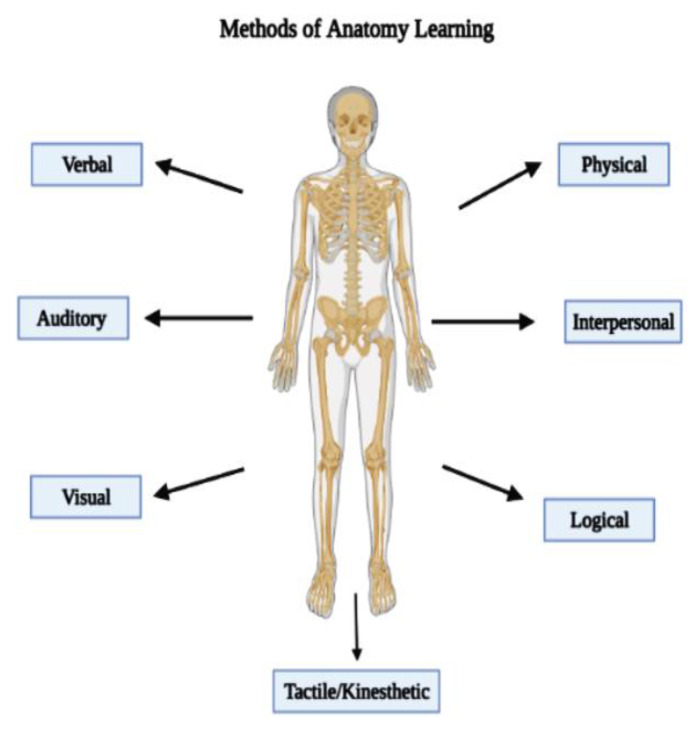
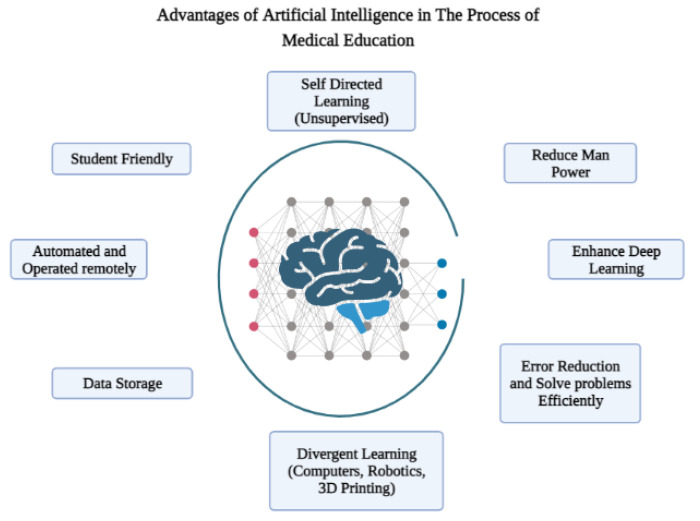
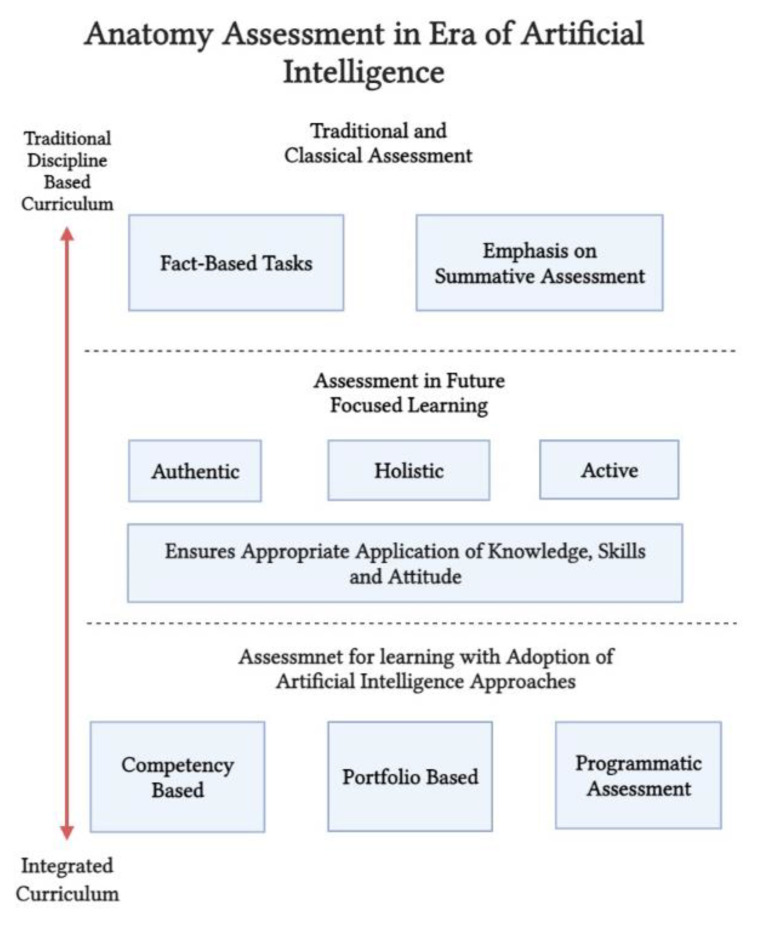
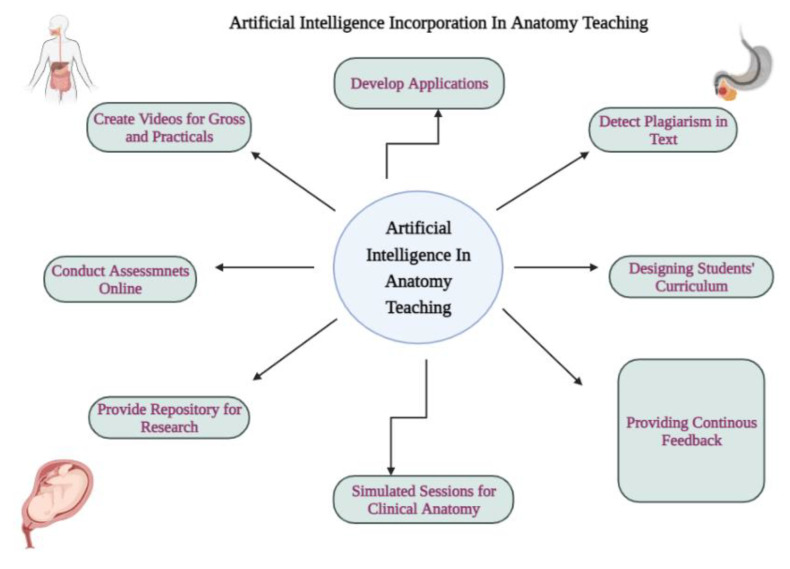
Verification
Claims the paper makes
The claims and statistics of this paper haven’t been checked yet.
Run the check — free, no account needed. It reads the open-access text and checks the sources it cites.
Claims other papers make about this one
Each is checked against this paper’s own text: does it say what the citing paper says it does?
The source backs part of the claim, not all of it — or backs it for a different population, condition or comparison.
In the citing paper
“The higher retention rate observed in the AI-Enhanced Group suggests that AI-supported learning environments may facilitate deeper cognitive processing and more durable memory formation [27].”
From Effectiveness of a generative AI-powered digital tutor integrated with a knowledge graph in anatomy education for nursing students: a randomized controlled trial (2026) · cites this paper as [27]
Experimental — accuracy not yet measuredThe cited source says what the claim attributes to it.
In the citing paper
“Finally, several studies pointed to the infrastructure, financial resources, and investments necessary to implement AI-driven education methods [9, 50, 181], as the costs of servers, faculty training, tool development, and technical personnel could be substantial [182–184].”
From Artificial intelligence in undergraduate medical education: an updated scoping review (2025) · cites this paper as [182]
Self-check
Percentages, sums and reported differences re-computed from the paper’s own numbers.
The self-check needs the paper’s full text.
Citations
Cites
Artificial intelligence in healthcare
Yu, K.-H., Beam, A. L., & Kohane, I. S. (2018) · Nature Biomedical Engineering · doi:10.1038/s41551-018-0305-z · Cited by 2,817
Artificial intelligence in medicine
Ramesh, A., Kambhampati, C., Monson, J. Q., & Drew, P. J. (2004) · Annals of The Royal College of Surgeons of England · doi:10.1308/147870804290 · Cited by 1,095
(2019) · Open Research Online (The Open University) · Cited by 1,004
Best teaching practices in anatomy education: A critical review
Estai, M., & Bunt, S. M. (2016) · Annals of Anatomy - Anatomischer Anzeiger · doi:10.1016/j.aanat.2016.02.010 · Cited by 1,001
The anatomy of anatomy: A review for its modernization
Sugand, K., Abrahams, P., & Khurana, A. (2010) · Anatomical Sciences Education · doi:10.1002/ase.139 · Cited by 999
Irby, D. M., Cooke, M., & OʼBrien, B. C. (2010) · Academic Medicine · doi:10.1097/acm.0b013e3181c88449 · Cited by 924
Chan, K. S., & Zary, N. (2019) · JMIR Medical Education · doi:10.2196/13930 · Cited by 877 · cited 2×
“The term itself (AI) has been well described by a few authors [31,32] and defined as a machine with intelligent behaviour and the ability to perform tasks usually performed by humans [32,33].”
BackgroundMedical education in the anatomical sciences: The winds of change continue to blow
Drake, R. L., McBride, J. M., Lachman, N., & Pawlina, W. (2009) · Anatomical Sciences Education · doi:10.1002/ase.117 · Cited by 818
Anatomy in a Modern Medical Curriculum
Turney, B. (2007) · Annals of The Royal College of Surgeons of England · doi:10.1308/003588407x168244 · Cited by 792
The production of anatomical teaching resources using three‐dimensional (3D) printing technology
McMenamin, P. G., Quayle, M. R., McHenry, C. R., & Adams, J. W. (2014) · Anatomical Sciences Education · doi:10.1002/ase.1475 · Cited by 700
Cadaveric dissection as an educational tool for anatomical sciences in the 21st century
Ghosh, S. K. (2016) · Anatomical Sciences Education · doi:10.1002/ase.1649 · Cited by 560
Longhurst, G. J., Stone, D. M., Dulohery, K., Scully, D. M., Campbell, T. J., & Smith, C. F. (2020) · Anatomical Sciences Education · doi:10.1002/ase.1967 · Cited by 538
Pather, N., Blyth, P., Chapman, J. A., Dayal, M., Flack, N. A. M. S., Fogg, Q. A., Green, R. A., Hulme, A. K., Johnson, I., Meyer, A. J., et al. (2020) · Anatomical Sciences Education · doi:10.1002/ase.1968 · Cited by 501
Han, E.-R., Yeo, S., Kim, M.-J., Lee, Y.-H., Park, K.-H., & Roh, H. (2019) · BMC Medical Education · doi:10.1186/s12909-019-1891-5 · Cited by 393
The Inevitable Reimagining of Medical Education
Emanuel, E. (2020) · JAMA · doi:10.1001/jama.2020.1227 · Cited by 324
National survey on anatomical sciences in medical education
McBride, J. M., & Drake, R. L. (2017) · Anatomical Sciences Education · doi:10.1002/ase.1760 · Cited by 321
Going Virtual to Support Anatomy Education: A STOPGAP in the Midst of the Covid‐19 Pandemic
Evans, D. J. R., Bay, B., Wilson, T. D., Smith, C. F., Lachman, N., & Pawlina, W. (2020) · Anatomical Sciences Education · doi:10.1002/ase.1963 · Cited by 320
Assessment for Learning revisited: an Asia-Pacific perspective
Klenowski, V. (2009) · Assessment in Education Principles Policy and Practice · doi:10.1080/09695940903319646 · Cited by 298
Cottam, W. W. (1999) · Clinical Anatomy · doi:10.1002/(sici)1098-2353(1999)12:1 · Cited by 297
Review of anatomy education in Australian and New Zealand medical schools
Craig, S. J., Tait, N. N., Boers, D., & McAndrew, D. J. (2010) · ANZ Journal of Surgery · doi:10.1111/j.1445-2197.2010.05241.x · Cited by 296
Anatomy 1999–2000: the curriculum, who teaches it and how?
Heylings, D. J. (2002) · Medical Education · doi:10.1046/j.1365-2923.2002.01272.x · Cited by 259
Using Kahoot! as a formative assessment tool in medical education: a phenomenological study
Ismail, M. A.-A., Ahmad, A., Mohammad, J. A.-M., Fakri, N. M. R. M., Nor, M. Z. M., & Pa, M. N. M. (2019) · BMC Medical Education · doi:10.1186/s12909-019-1658-z · Cited by 242
Teacherbot: interventions in automated teaching
Bayne, S. (2015) · Teaching in Higher Education · doi:10.1080/13562517.2015.1020783 · Cited by 233
Perception of medical students towards the clinical relevance of anatomy
Moxham, B. J., & Plaisant, O. (2006) · Clinical Anatomy · doi:10.1002/ca.20453 · Cited by 198
A meta‐analysis of anatomy laboratory pedagogies
Wilson, A. B., Miller, C. H., Klein, B. A., Taylor, M., Goodwin, M., Boyle, E. K., Brown, K., Hoppe, C. C., & Lazarus, M. D. (2017) · Clinical Anatomy · doi:10.1002/ca.22934 · Cited by 188
Emerging trends in IoT and big data analytics for biomedical and health care technologies
Banerjee, A., Chakraborty, C., Kumar, A., & Biswas, D. (2020) · Elsevier eBooks · doi:10.1016/b978-0-12-818318-2.00005-2 · Cited by 170
A qualitative study of student responses to body painting
Finn, G. M., & McLachlan, J. C. (2009) · Anatomical Sciences Education · doi:10.1002/ase.119 · Cited by 155
Hift, R. (2014) · BMC Medical Education · doi:10.1186/s12909-014-0249-2 · Cited by 136
The role of augmented reality in Anatomical education: An overview
Chytas, D., Johnson, E. O., Piagkou, M., Mazarakis, A., Babis, G. C., Chronopoulos, E., Nikolaou, V. S., Lazaridis, N., & Natsis, K. S. (2020) · Annals of Anatomy - Anatomischer Anzeiger · doi:10.1016/j.aanat.2020.151463 · Cited by 134
Restructuring a basic science course for core competencies: An example from anatomy teaching
Gregory, J. K., Lachman, N., Camp, C. L., Chen, L. P., & Pawlina, W. (2009) · Medical Teacher · doi:10.1080/01421590903183795 · Cited by 132
Bölek, K. A., van Walsum, A.-M. V. C., de Jong, G. A., & Henssen, D. J. H. A. (2021) · Scientific Reports · doi:10.1038/s41598-021-94721-4 · Cited by 132
Is the decline of human anatomy hazardous to medical education/profession?—A review
Singh, R., Tubbs, R. S., Gupta, K., Singh, M., Jones, D. G., & Kumar, R. (2015) · Surgical and Radiologic Anatomy · doi:10.1007/s00276-015-1507-7 · Cited by 130
Provision of anatomical teaching in a new British medical school: Getting the right mix
Evans, D. J. R., & Watt, D. J. (2005) · The Anatomical Record Part B The New Anatomist · doi:10.1002/ar.b.20065 · Cited by 130
How COVID ‐19 has pushed us into a medical education revolution
Torda, A. J. (2020) · Internal Medicine Journal · doi:10.1111/imj.14882 · Cited by 120
Artificial intelligence and clinical anatomical education: Promises and perils
Lazarus, M. D., Truong, M., Douglas, P., & Selwyn, N. (2024) · Anatomical Sciences Education · doi:10.1002/ase.2221 · Cited by 116
Design, implementation, and evaluation of an innovative anatomy course
Rizzolo, L. J., Rando, W. C., O’Brien, M. K., Haims, A. H., Abrahams, J. J., & Stewart, W. B., Jr. (2010) · Anatomical Sciences Education · doi:10.1002/ase.152 · Cited by 114
Noninterpretive Uses of Artificial Intelligence in Radiology
Richardson, M. L., Garwood, E. R., Lee, Y. Z., Li, M., Lo, H. S., Nagaraju, A., Nguyen, X. V., Probyn, L. J., Rajiah, P. S., Sin, J. M., et al. (2020) · Academic Radiology · doi:10.1016/j.acra.2020.01.012 · Cited by 105
AI-RADS: an artificial intelligence curriculum for residents
Lindqwister, A. L., Hassanpour, S., Lewis, P. J., & Sin, J. M. (2021) · Academic Radiology · doi:10.1016/j.acra.2020.09.017 · Cited by 103
Rethinking Anatomy: How to Overcome Challenges of Medical Education’s Evolution
Guimarães, B., Dourado, L. G. P., Tsisar, S., Diniz, J. M., Madeira, M. D., & Ferreira, M. A. (2017) · Acta Médica Portuguesa · doi:10.20344/amp.8404 · Cited by 92
Giving color to a new curriculum: Bodypaint as a tool in medical education
den Akker, J. W. O., Bohnen, A. M., Oudegeest, W., & Hillen, B. (2002) · Clinical Anatomy · doi:10.1002/ca.10049 · Cited by 91
Pabst, R., & Rothkötter, H. (1997) · The Anatomical Record · doi:10.1002/(sici)1097-0185(199712)249:4 · Cited by 78
Baratz, G., Wilson‐Delfosse, A. L., Singelyn, B. M., Allan, K. C., Rieth, G. E., Ratnaparkhi, R., Jenks, B. P., Carlton, C. E., Freeman, B. K., & Wish‐Baratz, S. (2019) · Medical Science Educator · doi:10.1007/s40670-019-00719-z · Cited by 78
Shaikh, A. A., Kumar, A., Jani, K., Mitra, S., García-Tadeo, D. A., & Devarajan, A. (2021) · Materials Today Proceedings · doi:10.1016/j.matpr.2021.09.368 · Cited by 78
Rockarts, J., Brewer‐Deluce, D., Shali, A., Mohialdin, V., & Wainman, B. C. (2020) · Anatomical Sciences Education · doi:10.1002/ase.1960 · Cited by 77
The evolution of AI-driven educational systems during the COVID-19 pandemic
Pantelimon, F.-V., Bologa, R., Toma, A., & Posedaru, B.-S. (2021) · Sustainability · doi:10.3390/su132313501 · Cited by 76
Beyond assessment of learning toward assessment for learning: Educating tomorrow's physicians
Dannefer, E. F. (2013) · Medical Teacher · doi:10.3109/0142159x.2013.787141 · Cited by 72
Botrel, L., Holz, E. M., & Kübler, A. (2015) · Brain-Computer Interfaces · doi:10.1080/2326263x.2015.1100038 · Cited by 68
A Journey Like No Other: Anatomy 2020!
Smith, C. F., & Pawlina, W. (2020) · Anatomical Sciences Education · doi:10.1002/ase.2039 · Cited by 63
Finn, G. M., White, P. M., & Abdelbagi, I. (2011) · Anatomical Sciences Education · doi:10.1002/ase.253 · Cited by 61
Using a Machine Learning Architecture to Create an AI-Powered Chatbot for Anatomy Education
Li, Y. S., Lam, C. S. N., & See, C. (2021) · Medical Science Educator · doi:10.1007/s40670-021-01405-9 · Cited by 59
The Potential of AI in Health Higher Education to Increase the Students’ Learning Outcomes
Sousa, M. J., Mas, F. D., Pesqueira, A. M., Lemos, C. M., Verde, J. M., & Cobianchi, L. (2021) · TEM Journal · doi:10.18421/tem102-02 · Cited by 57
Evaluation of an Augmented Reality Application for Learning Neuroanatomy in Psychology
Méndez-López, M., Juan, M. ‐., Mollá, R., & Fidalgo, C. (2021) · Anatomical Sciences Education · doi:10.1002/ase.2089 · Cited by 54
Karbasi, Z., & Kalhori, S. R. N. (2020) · Medical Journal of the Islamic Republic of Iran · doi:10.47176/mjiri.34.163 · Cited by 50
Twelve tips for running a successful body painting teaching session
Finn, G. M. (2010) · Medical Teacher · doi:10.3109/0142159x.2010.507708 · Cited by 45
Assessment of anatomical knowledge: Approaches taken by higher education institutions
Choudhury, B., & Freemont, A. J. (2017) · Clinical Anatomy · doi:10.1002/ca.22835 · Cited by 43
Kalthur, S. G., Pandey, A. K., & Prabhath, S. (2021) · Translational Research in Anatomy · doi:10.1016/j.tria.2021.100159 · Cited by 43
Learning surface anatomy: Which learning approach is effective in an integrated PBL curriculum?
Azer, S. A. (2010) · Medical Teacher · doi:10.3109/0142159x.2011.530704 · Cited by 41
Development of a Multi-Material 3D Printer for Functional Anatomic Models
Jaksa, L., Pahr, D. H., Kronreif, G., & Lorenz, A. (2021) · International Journal of Bioprinting · doi:10.18063/ijb.v7i4.420 · Cited by 38
Computer-Assisted Learning: cyberPatientTM- A Step in the Future of Surgical Education
Qayumi, T. (1999) · Journal of Investigative Surgery · doi:10.1080/089419399272296 · Cited by 35
Martín, J. G. (2018) · Biomedical Journal of Scientific & Technical Research · doi:10.26717/bjstr.2018.04.0001094 · Cited by 29
Assessing Anatomy Education: A Perspective from Design
Roxburgh, M., & Evans, D. J. R. (2021) · Anatomical Sciences Education · doi:10.1002/ase.2060 · Cited by 28
Artificial Intelligence in Medical Education
Savage, T. (2021) · Academic Medicine · doi:10.1097/acm.0000000000004183 · Cited by 22
Use of the one‐minute preceptor as a teaching tool in the gross anatomy laboratory
Chan, L. K., & Wiseman, J. (2011) · Anatomical Sciences Education · doi:10.1002/ase.234 · Cited by 19
The teaching of anatomy throughout the centuries: From Herophilus to plastination and beyond
Papa, V., Varotto, E., Vaccarezza, M., Ballestriero, R., Tafuri, D., & Galassi, F. M. (2019) · Medicina Historica · Cited by 19
3D Printed Models for Teaching Orbital Anatomy, Anomalies and Fractures
Vatankhah, R., Emadzadeh, A., Nekooei, S., Yousefi, B. T., Khadem‐Rezaiyan, M., Moonaghi, H. K., & Razavi, M. E. (2021) · Journal of Ophthalmic and Vision Research · doi:10.18502/jovr.v16i4.9751 · Cited by 19
(2020) · Springer eBooks · doi:10.1007/978-3-030-43283-6 · Cited by 16
The vision of transformation in medical education after the COVID-19 pandemic
Goh, P. S. (2021) · Korean journal of medical education · doi:10.3946/kjme.2021.197 · Cited by 14
Zampieri, F., Zanatta, A., ElMaghawry, M., Bonati, M. R., & Thiene, G. (2013) · Global Cardiology Science and Practice · doi:10.5339/gcsp.2013.21 · Cited by 13
Scope of Anatomy Teaching in Problem-based Learning (PBL) Sessions of Integrated Medical Curriculum
Potu, B. K., Shwe, W. H., Jagadeesan, S., Aung, T., & Cheng, P. S. (2013) · International Journal of Morphology · doi:10.4067/s0717-95022013000300019 · Cited by 12
A simple and convenient 3D printed temporal bone model for drilling simulating surgery
Yuan, Z.-M., Zhang, X.-D., Wu, S.-W., Nian, Z.-Z., Liao, J., Lin, W., & Zhuang, L.-M. (2021) · Acta Oto-Laryngologica · doi:10.1080/00016489.2021.2015079 · Cited by 8
Research works printed but not linked: 1
- McCarthy, J., Minsky, M.L., Rochester, N., and Shannon, C.E. (2022, August 25). A Proposal for the Dartmouth Summer Research Project on Artificial Intelligence, August 31, 1955. AI Magazine, Available online: https://ojs.aaai.org//index.php/aimagazine/article/view/1904.
Cited by
Sorted by citations
A scoping review of artificial intelligence in medical education: BEME Guide No. 84
Gordon, M., Daniel, M., Ajiboye, A., Uraiby, H., Xu, N. Y., Bartlett, R., Hanson, J., Haas, M., Spadafore, M., Grafton-Clarke, C., et al. (2024) · Medical Teacher · doi:10.1080/0142159x.2024.2314198 · Cited by 679
Mapping the use of artificial intelligence in medical education: a scoping review
Rincón, E. H. H., Jimenez, D., Aguilar, L. A. C., Flórez, J. M. P., Tapia, Á. E. R., & Peñuela, C. L. J. (2025) · BMC Medical Education · doi:10.1186/s12909-025-07089-8 · Cited by 145
Do we still need teachers? Navigating the paradigm shift of the teacher's role in the AI era
Gentile, M., Città, G., Perna, S., & Allegra, M. (2023) · Frontiers in Education · doi:10.3389/feduc.2023.1161777 · Cited by 189
Challenge, integration, and change: ChatGPT and future anatomical education
Leng, L. (2024) · Medical Education Online · doi:10.1080/10872981.2024.2304973 · Cited by 82
Woodruff, K. A., Hutson, J., & Arnone, K. (2023) · IntechOpen eBooks · doi:10.5772/intechopen.1002741 · Cited by 105
Metadata
- Authors
- Abdellatif, H., Al Mushaiqri, M., Albalushi, H., Al-Zaabi, A. A., Roychoudhury, S., & Das, S.
- Affiliations
- Sultan Qaboos University (OM)
- Department of Human & Clinical Anatomy, College of Medicine & Health Sciences, Sultan Qaboos University, Al Khoud, Muscat 123, Oman
- Corresponding author
- Das, Srijit
- Venue
- International Journal of Environmental Research and Public Health
- Publisher
- MDPI AG
- Published
- 2022-10-31
- Volume
- 19
- Issue
- 21
- Pages
- 14209
- ISSN
- 1660-4601 (ISSN-L)
- PMC
- PMC9656803
- OpenAlex
- W4308118441
- Cited by
- 120
- References
- 72
- Citations by year
- 2026: 38 · 2025: 38 · 2024: 25 · 2023: 18 · 2022: 1
- FWCI
- 1.83
- Type
- journal article
- Language
- en
- Open access
- gold
- doi.org
- Licence
- Locations
- International Journal of Environmental Research and Public Health (publishedVersion, cc-by)
- PubMed Central (publishedVersion, cc-by)
- PubMed (publishedVersion)
- RePEc: Research Papers in Economics (submittedVersion)
- DOAJ (DOAJ: Directory of Open Access Journals) (submittedVersion)
- Topics
- Physical Sciences › Engineering › Biomedical Engineering › Anatomy and Medical Technology
- Health Sciences › Medicine › Health Informatics › Artificial Intelligence in Healthcare and Education
- Social Sciences › Education › Artificial Intelligence in Education
- Keywords
- artificial intelligence in medical education, anatomy education, artificial neural networks, convolutional neural networks, anatomy assessment, augmented reality, COVID-19 pandemic, cadaver shortage, neural pathways, embryonic development, inner ear, deep learning
- MeSH terms
- COVID-19, Artificial Intelligence, Bayes Theorem, Curriculum, Humans, Teaching, Pandemics
About these checks
Registry, retraction, Cites and statistics results are computed, not judged, with one exception: a printed reference that no index lists is read once by a model before it counts as a citation error. Claims are extracted by a model and kept only when their quote appears verbatim in the text; each cited source is then checked, with a model’s help, for whether it says what the claim relies on. Those verdicts can be wrong — read the claim’s quote and the cited source before relying on one.
Statistics and arithmetic are recomputed, not judged.
Confidence bands are shown only for fields calibrated on our annotated test set. None is calibrated yet, so no band is shown.
What counts as a claim ›How we measure confidence ›How we check this ›
Are you an author, or do you see a problem with this page? Request a review
