

The DOI matches its Crossref record; 147 of the 147 references it cites were found in a registry or an index.
Molecular Mechanisms Underlying β-Adrenergic Receptor-Mediated Cross-Talk between Sympathetic Neurons and Immune Cells
Open accessAbstract
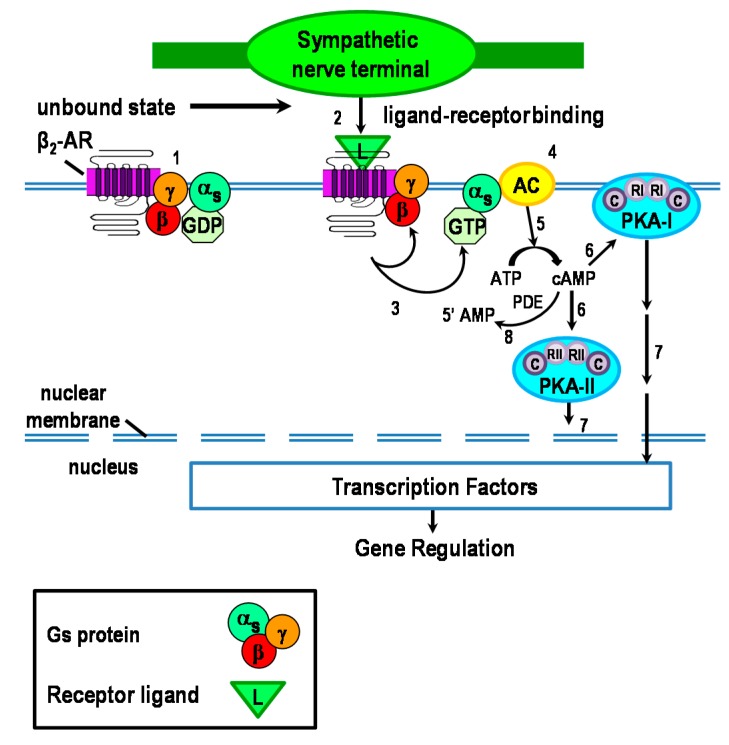
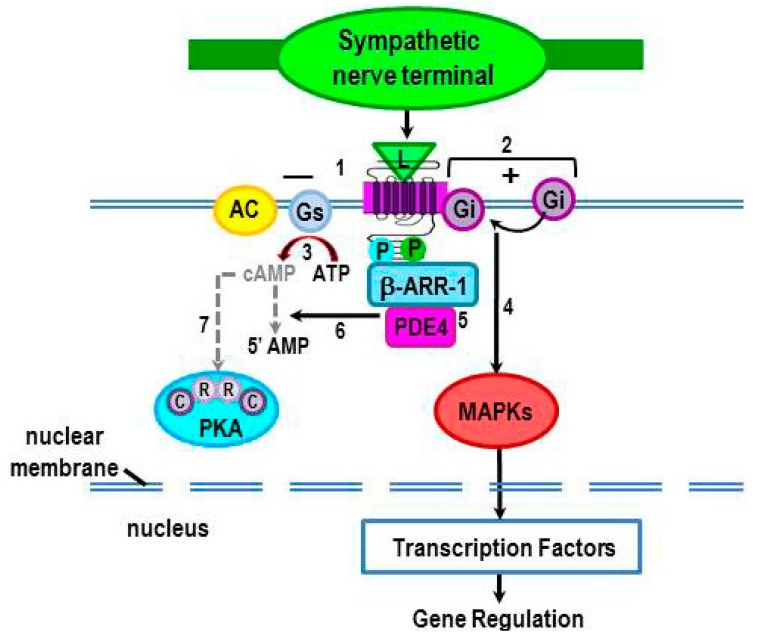
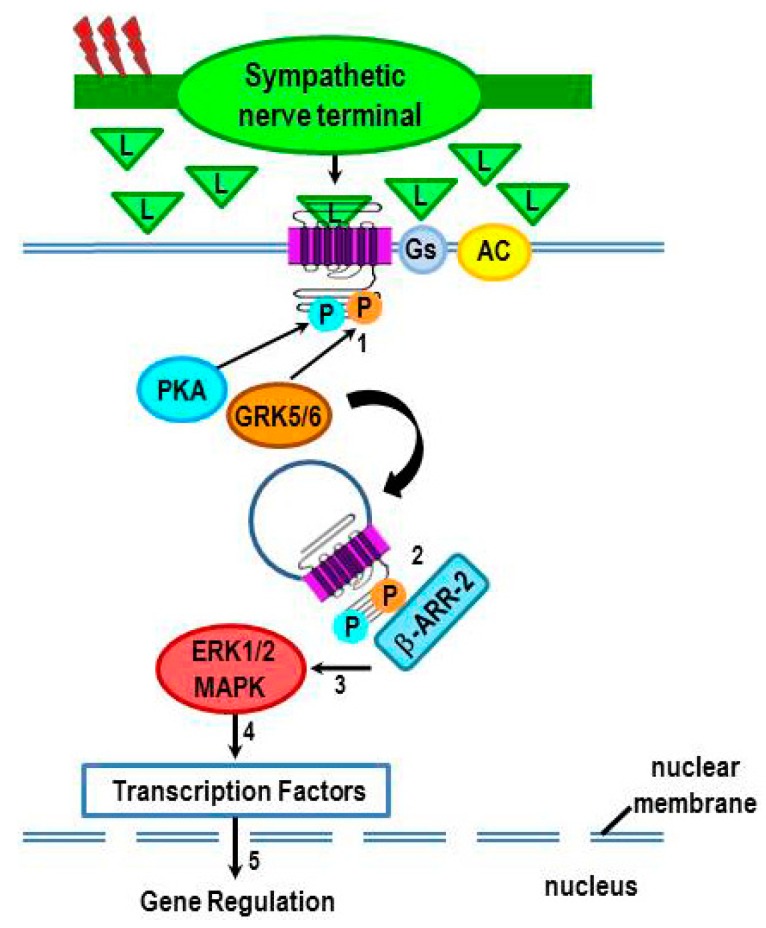
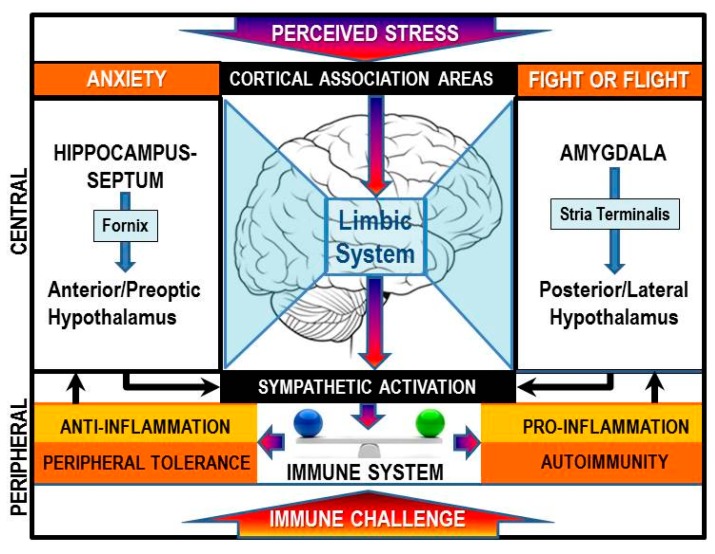
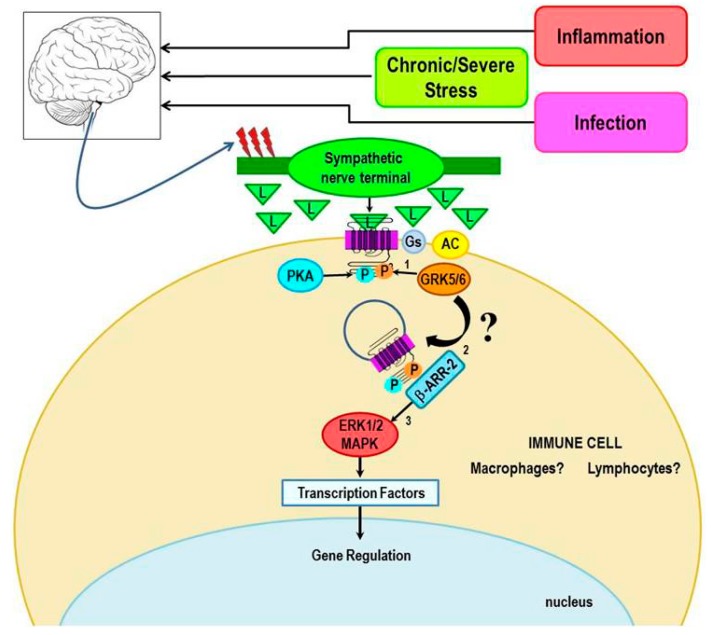
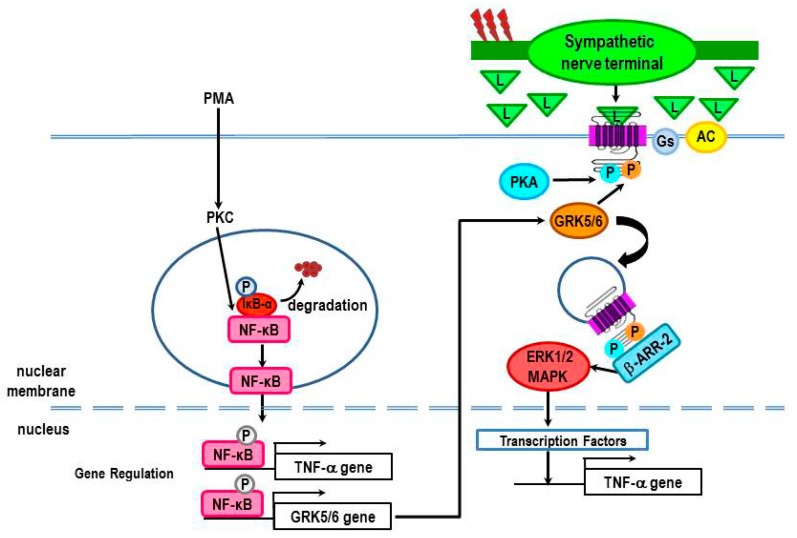
Cross-talk between the sympathetic nervous system (SNS) and immune system is vital for health and well-being. Infection, tissue injury and inflammation raise firing rates of sympathetic nerves, increasing their release of norepinephrine (NE) in lymphoid organs and tissues. NE stimulation of β2-adrenergic receptors (ARs) in immune cells activates the cAMP-protein kinase A (PKA) intracellular signaling pathway, a pathway that interfaces with other signaling pathways that regulate proliferation, differentiation, maturation and effector functions in immune cells. Immune–SNS cross-talk is required to maintain homeostasis under normal conditions, to develop an immune response of appropriate magnitude after injury or immune challenge, and subsequently restore homeostasis. Typically, β2-AR-induced cAMP is immunosuppressive. However, many studies report actions of β2-AR stimulation in immune cells that are inconsistent with typical cAMP–PKA signal transduction. Research during the last decade in non-immune organs, has unveiled novel alternative signaling mechanisms induced by β2-AR activation, such as a signaling switch from cAMP–PKA to mitogen-activated protein kinase (MAPK) pathways. If alternative signaling occurs in immune cells, it may explain inconsistent findings of sympathetic regulation of immune function. Here, we review β2-AR signaling, assess the available evidence for alternative signaling in immune cells, and provide insight into the circumstances necessary for “signal switching” in immune cells.
Overview
The claims and statistics of this paper haven’t been checked yet.
Run the check — free, no account needed. It reads the open-access text and checks the sources it cites.
Integrity signals
Registry
Cites
Statistics
Figures
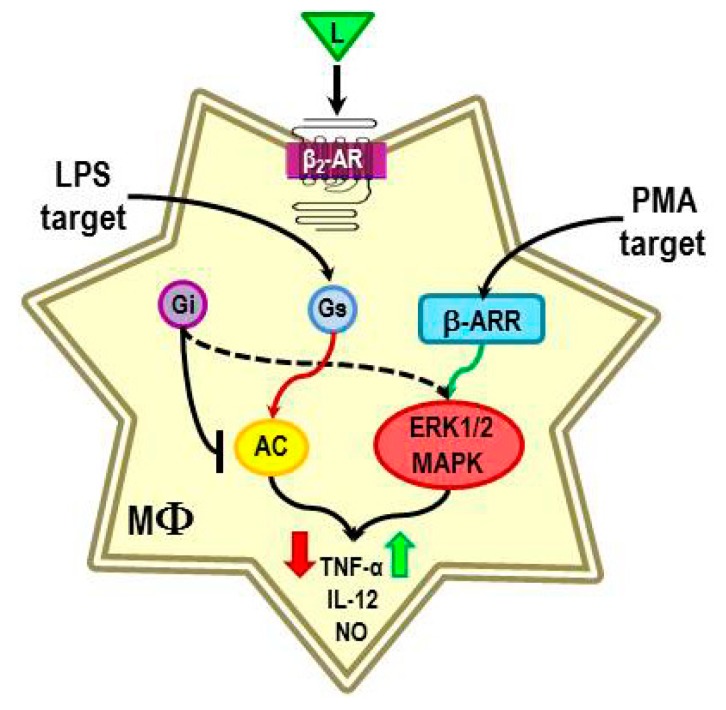
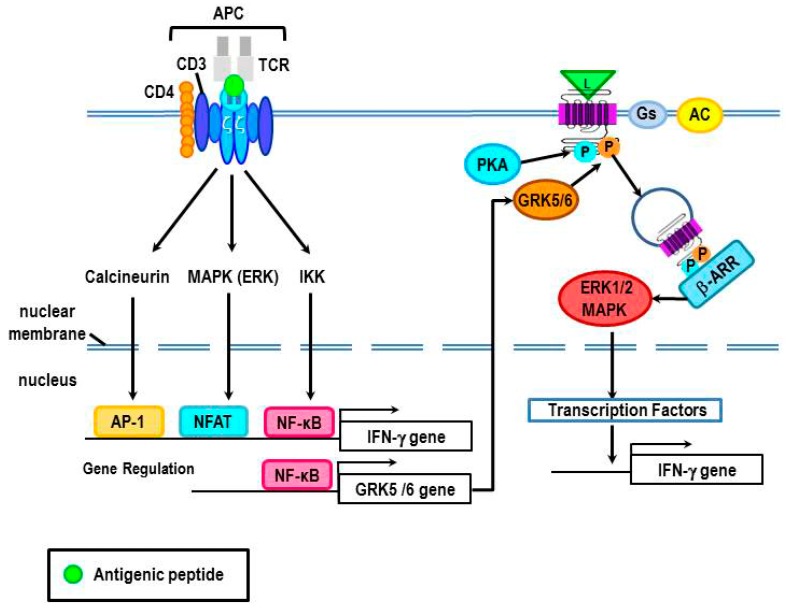
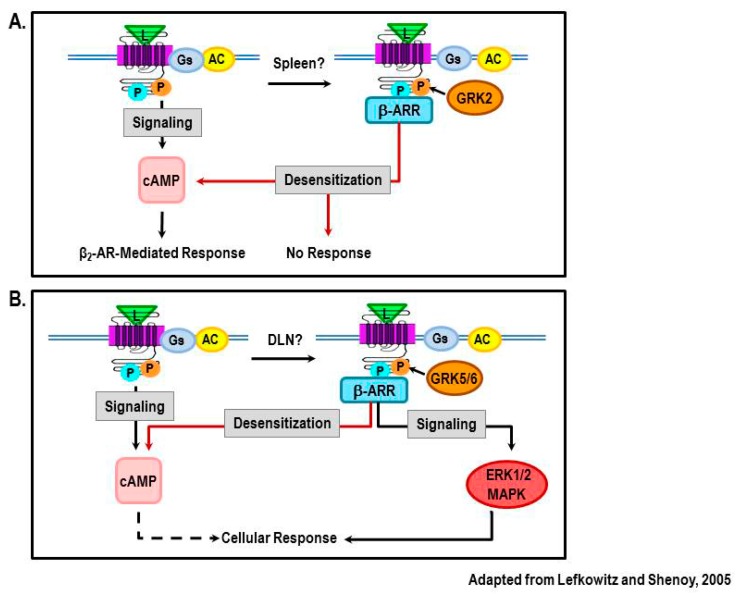
Verification
Claims the paper makes
The claims and statistics of this paper haven’t been checked yet.
Run the check — free, no account needed. It reads the open-access text and checks the sources it cites.
Claims other papers make about this one
Each is checked against this paper’s own text: does it say what the citing paper says it does?
In the citing paper
“Both anti-inflammatory and pro-inflammatory effects of adrenergic signalling have been demonstrated, depending upon the subtype of adrenergic receptors expressed167, the level of activation of specific cell types and the stage of disease progression168.”
From The gut microbiota and the brain–gut–kidney axis in hypertension and chronic kidney disease (2018) · cites this paper as [168]
In the citing paper
“However, persistent activation of the SNS results in changes in signalling within immune organs and cells towards pro-inflammatory pathways168, as observed in hypertension and CKD169,170.”
From The gut microbiota and the brain–gut–kidney axis in hypertension and chronic kidney disease (2018) · cites this paper as [168]
Self-check
Percentages, sums and reported differences re-computed from the paper’s own numbers.
The self-check needs the paper’s full text.
Citations
Cites
1 retracted
Baillie, G. S., Sood, A., McPhee, I., Gall, I., Perry, S. J., Lefkowitz, R. J., & Houslay, M. D. (2003) · Proceedings of the National Academy of Sciences · doi:10.1073/pnas.262787199 · Cited by 358
RetractedFunctional rafts in cell membranes
Simons, K., & Ikonen, E. (1997) · Nature · doi:10.1038/42408 · Cited by 9,757 · cited 2×
“For instance, Ca2+-insensitive AC7 is excluded from lipid rafts [16], but not Ca2+-sensitive AC3 and AC6 [7–9].”
BackgroundMammalian MAP kinase signalling cascades
Chang, L., & Karin, M. (2001) · Nature · doi:10.1038/35065000 · Cited by 5,118
Mitogen-Activated Protein (MAP) Kinase Pathways: Regulation and Physiological Functions*
Pearson, G. W., Robinson, F. L., Gibson, T. B., Xu, B.-E., Karandikar, M. S., Berman, K. S., & Cobb, M. H. (2001) · Endocrine Reviews · doi:10.1210/edrv.22.2.0428 · Cited by 4,111
NF-κB regulation in the immune system
Li, Q., & Verma, I. M. (2002) · Nature Reviews Immunology · doi:10.1038/nri910 · Cited by 4,007
Srimaroeng, C., Cecile, J. P., Walden, R., & Pritchard, J. B. (2013) · Cellular Physiology and Biochemistry · doi:10.1159/000350077 · Cited by 2,989
LPS induction of gene expression in human monocytes
Guha, M., & Mackman, N. (2001) · Cellular Signalling · doi:10.1016/s0898-6568(00)00149-2 · Cited by 2,333
Mitogen-activated protein kinases in innate immunity
Arthur, J. S. C., & Ley, S. C. (2013) · Nature reviews. Immunology · doi:10.1038/nri3495 · Cited by 1,898
Transduction of Receptor Signals by ß-Arrestins
Lefkowitz, R. J., & Shenoy, S. K. (2005) · Science · doi:10.1126/science.1109237 · Cited by 1,729
Signal transduction by the c-Jun N-terminal kinase (JNK) — from inflammation to development
Ip, Y. T., & Davis, R. J. (1998) · Current Opinion in Cell Biology · doi:10.1016/s0955-0674(98)80143-9 · Cited by 1,538
Cited by
Sorted by citations
The gut microbiota and the brain–gut–kidney axis in hypertension and chronic kidney disease
Yang, T., Richards, E. M., Pepine, C. J., & Raizada, M. K. (2018) · Nature Reviews Nephrology · doi:10.1038/s41581-018-0018-2 · Cited by 753
β2 Adrenergic-Neurotrophin Feedforward Loop Promotes Pancreatic Cancer
Renz, B. W., Takahashi, R., Tanaka, T., Macchini, M., Hayakawa, Y., Dantes, Z., Maurer, H. C., Chen, X., Jiang, Z., Westphalen, C. B., et al. (2018) · Cancer Cell · doi:10.1016/j.ccell.2017.11.007 · Cited by 543
Mohammadpour, H., MacDonald, C. R., Qiao, G., Chen, M., Dong, B., Hylander, B. L., McCarthy, P. L., Abrams, S. I., & Repasky, E. A. (2019) · Journal of Clinical Investigation · doi:10.1172/jci129502 · Cited by 328
Cholinergic modulation of the immune system presents new approaches for treating inflammation
Hoover, D. B. (2017) · Pharmacology & Therapeutics · doi:10.1016/j.pharmthera.2017.05.002 · Cited by 306
Autonomic dysreflexia after spinal cord injury: Systemic pathophysiology and methods of management
Eldahan, K. C., & Rabchevsky, A. G. (2017) · Autonomic Neuroscience · doi:10.1016/j.autneu.2017.05.002 · Cited by 286
Metadata
- Authors
- Lorton, D., & Bellinger, D.
- Affiliations
- Kent State University (US)
- Loma Linda University (US)
- Corresponding author
- Lorton, Dianne
- ORCID
- Lorton, Dianne
- Venue
- International Journal of Molecular Sciences
- Publisher
- MDPI AG
- Published
- 2015-03-11
- Volume
- 16
- Issue
- 3
- Pages
- 5635-5665
- ISSN
- 1422-0067 (ISSN-L)
- PMC
- PMC4394497
- OpenAlex
- W1993341098
- Cited by
- 221
- References
- 147
- Citations by year
- 2026: 23 · 2025: 31 · 2024: 26 · 2023: 26 · 2022: 17 · 2021: 17 · 2020: 15 · 2019: 22 · 2018: 14 · 2017: 17 · 2016: 10 · 2015: 3
- FWCI
- 1.42
- Type
- journal article
- Language
- en
- Open access
- gold
- dx.doi.org
- Licence
- Locations
- International Journal of Molecular Sciences (publishedVersion, cc-by)
- Europe PMC (PubMed Central) (publishedVersion, cc-by)
- PubMed Central (publishedVersion, cc-by)
- PubMed (publishedVersion)
- DOAJ (DOAJ: Directory of Open Access Journals) (submittedVersion, cc-by-sa)
- Topics
- Life Sciences › Biochemistry, Genetics and Molecular Biology › Molecular Biology › Receptor Mechanisms and Signaling
- Life Sciences › Neuroscience › Neurology › Vagus Nerve Stimulation Research
- Life Sciences › Biochemistry, Genetics and Molecular Biology › Cancer Research › Cancer, Stress, Anesthesia, and Immune Response
- Keywords
- beta2-adrenergic receptor, sympathetic nervous system, norepinephrine, cAMP/PKA signaling, MAPK signaling, signal switching, sympathetic neurons, immune cells, immunosuppression, lymphoid organs
- MeSH terms
- Cell Communication, Humans, Immunity, Innate, Lymphocytes, Receptors, Adrenergic, beta, Sympathetic Nervous System, Signal Transduction, Cyclic AMP-Dependent Protein Kinases, Mitogen-Activated Protein Kinases, Receptors, G-Protein-Coupled, Adaptive Immunity
About these checks
Registry, retraction, Cites and statistics results are computed, not judged, with one exception: a printed reference that no index lists is read once by a model before it counts as a citation error. Claims are extracted by a model and kept only when their quote appears verbatim in the text; each cited source is then checked, with a model’s help, for whether it says what the claim relies on. Those verdicts can be wrong — read the claim’s quote and the cited source before relying on one.
Statistics and arithmetic are recomputed, not judged.
Confidence bands are shown only for fields calibrated on our annotated test set. None is calibrated yet, so no band is shown.
What counts as a claim ›How we measure confidence ›How we check this ›
Are you an author, or do you see a problem with this page? Request a review
