

Posterior Wnts Have Distinct Roles in Specification and Patterning of the Planarian Posterior Region
Open accessThe DOI matches its Crossref record; 34 of the 34 references it cites were found in a registry or an index.
Abstract
The wnt signaling pathway is an intercellular communication mechanism essential in cell-fate specification, tissue patterning and regional-identity specification. A βcatenin-dependent signal specifies the AP (Anteroposterior) axis of planarians, both during regeneration of new tissues and during normal homeostasis. Accordingly, four wnts (posterior wnts) are expressed in a nested manner in central and posterior regions of planarians. We have analyzed the specific role of each posterior wnt and the possible cooperation between them in specifying and patterning planarian central and posterior regions. We show that each posterior wnt exerts a distinct role during re-specification and maintenance of the central and posterior planarian regions, and that the integration of the different wnt signals (βcatenin dependent and independent) underlies the patterning of the AP axis from the central region to the tip of the tail. Based on these findings and data from the literature, we propose a model for patterning the planarian AP axis.
Overview
The claims and statistics of this paper haven’t been checked yet.
Free: it reads the open-access text and checks the first 5 claims that cite a source we can check. Create a free account to check every claim.
Integrity signals
Registry
Cites
Statistics
Figures
Verification
Claims the paper makes
The claims and statistics of this paper haven’t been checked yet.
Free: it reads the open-access text and checks the first 5 claims that cite a source we can check. Create a free account to check every claim.
Self-check
Percentages, sums and reported differences re-computed from the paper’s own numbers.
The self-check needs the paper’s full text.
Citations
Cites
Wnt signal transduction pathways
Komiya, Y., & Habas, R. (2008) · Organogenesis · doi:10.4161/org.4.2.5851 · Cited by 1,528
Towards an integrated view of Wnt signaling in development
van Amerongen, R., & Nusse, R. (2009) · Development · doi:10.1242/dev.033910 · Cited by 1,175
Clonogenic Neoblasts Are Pluripotent Adult Stem Cells That Underlie Planarian Regeneration
Wagner, D. E., Wang, I. E., & Reddien, P. W. (2011) · Science · doi:10.1126/science.1203983 · Cited by 660
Wallingford, J. B., Fraser, S. E., & Harland, R. M. (2002) · Developmental Cell · doi:10.1016/s1534-5807(02)00197-1 · Cited by 613 · cited 2×
“For that reason, we hypothesize that Smed-wnt11-1 would not function in a βcatenin-dependent manner but it would be involved in the non-canonical/βcatenin-independent Wnt signaling, a well known mechanism to regulate migration and cell movement, which are the main morphogenetic processes required for tissue extension…”
BackgroundT-Cell Signaling Regulated by the Tec Family Kinase, Itk
Andreotti, A. H., Schwartzberg, P. L., Joseph, R. E., & Berg, L. J. (2010) · Cold Spring Harbor Perspectives in Biology · doi:10.1101/cshperspect.a002287 · Cited by 593
Wnt Signaling and the Polarity of the Primary Body Axis
Petersen, C. P., & Reddien, P. W. (2009) · Cell · doi:10.1016/j.cell.2009.11.035 · Cited by 550 · cited 1×
“One of the most conserved roles of βcatenin-dependent Wnt signaling is the specification of the AP (Anteroposterior) axis, where βcatenin is required to confer posterior features in most developmental models studied [4].”
BackgroundDouble-stranded RNA specifically disrupts gene expression during planarian regeneration
Sánchez Alvarado, A., & Newmark, P. A. (1999) · Proceedings of the National Academy of Sciences · doi:10.1073/pnas.96.9.5049 · Cited by 535 · cited 2×
“Double-stranded RNAs (dsRNAs) used in these experiments were synthesized by in vitro transcription (Roche) as previously described [29].”
Methodβ-Catenin Defines Head Versus Tail Identity During Planarian Regeneration and Homeostasis
Gurley, K. A., Rink, J. C., & Alvarado, A. S. (2008) · Science · doi:10.1126/science.1150029 · Cited by 469 · cited 7×
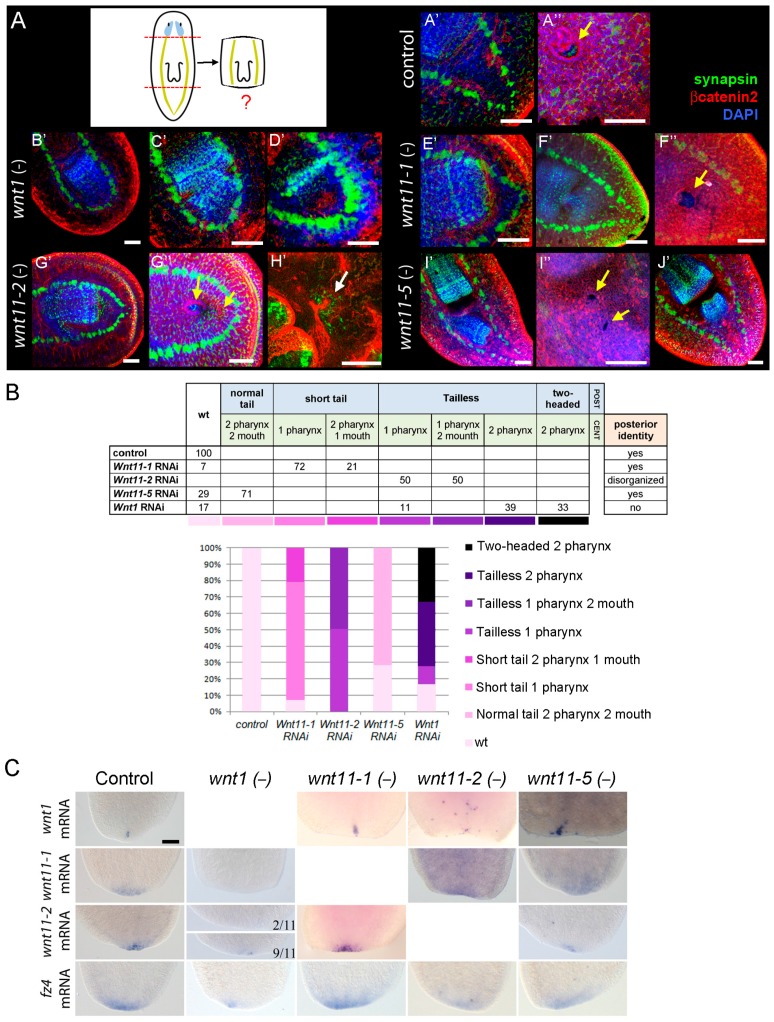
“The analysis of anterior and posterior identity markers corroborates the “tailless” phenotype, since RNAi planarians completely lost the expression of the posterior marker fz4, and the anterior markers sFRP [18] and notum [16] never appear in the posterior region (Figure 3C).”
BackgroundMethodInfluentialSmed- β catenin-1 Is Required for Anteroposterior Blastema Polarity in Planarian Regeneration
Petersen, C. P., & Reddien, P. W. (2008) · Science · doi:10.1126/science.1149943 · Cited by 364 · cited 4×
“βcatenin-depend nt Wnt signaling i lso equ red for the maintenance of posterior identity and pattern during planarian hom ostasis, sinc Smed-βcateni 1 inhibition in intact planarians produces the appearance of ectopic eyes and brain in the posterior tip [12,17,18].”
BackgroundInfluentialWnts as ligands: processing, secretion and reception
Mikels, A. J., & Nusse, R. (2006) · Oncogene · doi:10.1038/sj.onc.1210053 · Cited by 356
Cited by
The Cellular and Molecular Basis for Planarian Regeneration
Reddien, P. W. (2018) · Cell · doi:10.1016/j.cell.2018.09.021 · Cited by 393
Model systems for regeneration: planarians
Ivanković, M., Hanečková, R., Thommen, A., Grohme, M. A., Vila‐Farré, M., Werner, S., & Rink, J. C. (2019) · Development · doi:10.1242/dev.167684 · Cited by 163
“In addition, many canonical Wnt signalling pathway components are expressed in tail-to-head gradients (Gurley et al., 2010; Petersen and Reddien, 2009; Reuter et al., 2015; Stückemann et al., 2017; Sureda-Gómez et al., 2015), which result in a corresponding gradient of canonical Wnt signalling activity in the tissue (…”
BackgroundStückemann, T., Cleland, J. P., Werner, S., Thi-Kim Vu, H., Bayersdorf, R., Liu, S.-Y., Friedrich, B., Jülicher, F., & Rink, J. C. (2017) · Developmental Cell · doi:10.1016/j.devcel.2016.12.024 · Cited by 133
“, in the brain) and individual Wnts may have specific cellular targets, consistent with recent reports of tail Wnt-specific RNAi phenotypes (Lander and Petersen, 2016; Scimone et al., 2016; Sureda-Gómez et al., 2015).”
BackgroundTwo FGFRL-Wnt circuits organize the planarian anteroposterior axis
Scimone, M. L., Cote, L. E., Rogers, T., & Reddien, P. W. (2016) · eLife · doi:10.7554/elife.12845 · Cited by 122
Levin, M., Pietak, A. M., & Bischof, J. (2019) · Seminars in Cell & Developmental Biology · doi:10.1016/j.semcdb.2018.04.003 · Cited by 82
“Most distinctly, canonical Wnt/ β -Catenin signaling has been strongly implicated in posterior development [151, 152], via the inhibition of signaling pathways such as extracellular receptor kinase (ERK) that are associated with head development [153–155].”
BackgroundLander, R., & Petersen, C. P. (2016) · eLife · doi:10.7554/elife.12850 · Cited by 82
“Note added in proof: while this manuscript was under review, Sureda-Gómez et al. reported that wnt11-5 RNAi causes a pharynx duplication phenotype (Sureda-Gómez et al., 2015).”
ResultRebuilding a planarian: from early signaling to final shape
Cebrià, F., Adell, T., & Saló, E. (2018) · The International Journal of Developmental Biology · doi:10.1387/ijdb.180042es · Cited by 71
“…and wnt1, begins as early as 6 hours post-amputation as a dotted pattern in muscle cells of any wound, and is not restricted to their ultimate location at the A and P poles, respectively, until 24 to 48 hours later (Petersen and Reddien, 2009; Petersen and Reddien, 2011; Sureda-Gómez et al., 2015).”
BackgroundSelf-citationSureda-Gómez, M., Martín-Durán, J. M., & Adell, T. (2016) · Development · doi:10.1242/dev.135152 · Cited by 58
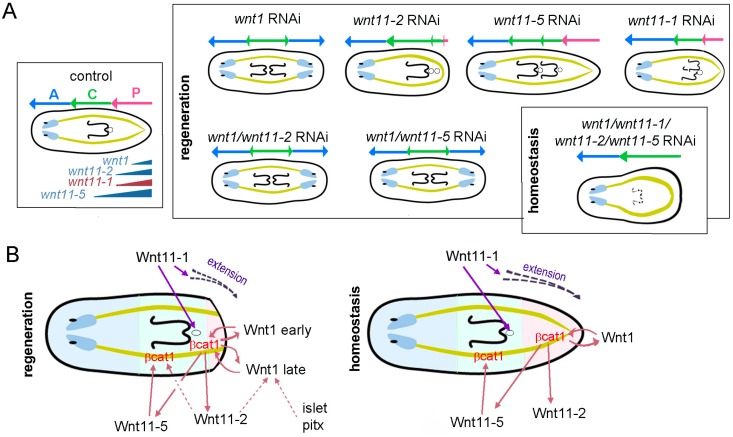
“Later on, the nested expression of the other posterior Wnt ligands would control the re-establishment and maintenance of the gradient (Hayashi et al., 2011; Lander and Petersen, 2016; März et al., 2013; Scimone et al., 2016; Sureda-Gómez et al., 2015) (Fig.”
BackgroundSelf-citationStem Cells, Patterning and Regeneration in Planarians: Self-Organization at the Organismal Scale
Rink, J. C. (2018) · Methods in molecular biology · doi:10.1007/978-1-4939-7802-1_2 · Cited by 52
Tewari, A. G., Owen, J. H., Petersen, C. P., Wagner, D. E., & Reddien, P. W. (2019) · PLoS Genetics · doi:10.1371/journal.pgen.1008401 · Cited by 50
Pascual-Carreras, E., Marin-Barba, M., Castillo-Lara, S., Coronel-Córdoba, P., Magri, M. S., Wheeler, G. N., Gómez-Skármeta, J. L., Abril, J. F., Saló, E., & Adell, T. (2023) · Nature Communications · doi:10.1038/s41467-023-35937-y · Cited by 50
Self-citationPositional Information and Stem Cells Combine to Result in Planarian Regeneration
Reddien, P. W. (2021) · Cold Spring Harbor Perspectives in Biology · doi:10.1101/cshperspect.a040717 · Cited by 45
Hill, E. M., & Petersen, C. P. (2018) · eLife · doi:10.7554/elife.33680 · Cited by 44
Neural control of body-plan axis in regenerating planaria
Pietak, A. M., Bischof, J., LaPalme, J., Morokuma, J., & Levin, M. G. (2019) · PLoS Computational Biology · doi:10.1371/journal.pcbi.1006904 · Cited by 40
A Comparative Perspective on Wnt/β-Catenin Signalling in Cell Fate Determination
Garcin, C. L., & Habib, S. J. (2017) · Results and problems in cell differentiation · doi:10.1007/978-3-319-53150-2_15 · Cited by 43
STRIPAK limits stem cell differentiation of a WNT signaling center to control planarian axis scaling
Schad, E. G., & Petersen, C. P. (2020) · Current Biology · doi:10.1016/j.cub.2019.11.068 · Cited by 30
“Posterior Wnts have been reported to undergo cross-regulation for a variety of outputs in the posterior [10, 13, 29], but these results indicate that mob4 regulation of wnt1 expression is of particular importance to tail size.”
BackgroundLong-range morphogen gradient formation by cell-to-cell signal propagation
Dickmann, J. E. M., Rink, J. C., & Jülicher, F. (2022) · Physical Biology · doi:10.1088/1478-3975/ac86b4 · Cited by 26
“forming Wnt ligands [27–29, 31, 46] are themselves expressed in a Wnt-signaling dependent manner [28, 29, 31] within the sheet-like body wall musculature [59–61].”
BackgroundPlanarians and the History of Animal Regeneration: Paradigm Shifts and Key Concepts in Biology
Elliott, S. A., & Alvarado, A. S. (2018) · Methods in molecular biology · doi:10.1007/978-1-4939-7802-1_4 · Cited by 21
Su, H., Sureda-Gómez, M., Rabaneda‐Lombarte, N., Gelabert, M., Xie, J., Wu, W., & Adell, T. (2017) · PLoS Genetics · doi:10.1371/journal.pgen.1007030 · Cited by 18
Self-citationSureda-Gómez, M., & Adell, T. (2018) · Seminars in Cell and Developmental Biology · doi:10.1016/j.semcdb.2018.05.021 · Cited by 22
Self-citationPascual-Carreras, E., Sureda-Gómez, M., Barrull-Mascaró, R., Jordà, N., Gelabert, M., Coronel-Córdoba, P., Saló, E., & Adell, T. (2021) · Genes · doi:10.3390/genes12010101 · Cited by 19
“Not only does the tailless phenotype observed after cWNT inhibition [25,26] show patterning defects, but blastemas also appear smaller, which could result from a decrease in the proliferative response.”
BackgroundMethodSelf-citationGittin, D. I., & Petersen, C. P. (2022) · Current Biology · doi:10.1016/j.cub.2022.10.071 · Cited by 16
“Administration of wnt11-2 dsRNAs for 18 days prior to amputation led to tail regeneration failure and a posterior bulged morphology reminiscent of dvl-1;dvl-2(RNAi) phenotypes, and wnt11-1 caused tail narrowing, as shown previously.(17,44) wnt11-1;wnt11-2 RNAi for 18 days caused tail retraction and bulged posterior ph…”
Src acts with WNT/FGFRL signaling to pattern the planarian anteroposterior axis
Bonar, N. A., Gittin, D. I., & Petersen, C. P. (2022) · Development · doi:10.1242/dev.200125 · Cited by 18
BMP suppresses WNT to integrate patterning of orthogonal body axes in adult planarians
Clark, E. G., & Petersen, C. P. (2023) · PLoS Genetics · doi:10.1371/journal.pgen.1010608 · Cited by 13
Wnt signaling in whole-body regeneration
Petersen, C. P. (2023) · Current topics in developmental biology/Current Topics in Developmental Biology · doi:10.1016/bs.ctdb.2023.01.007 · Cited by 10
Wnt/β-catenin signalling underpins juvenile Fasciola hepatica growth and development
Armstrong, R., Marks, N. J., Geary, T. G., Harrington, J. L., Selzer, P. M., & Maule, A. G. (2025) · PLoS Pathogens · doi:10.1371/journal.ppat.1012562 · Cited by 9
“There exist multiple reports of Wnt pathway in situ hybridisation in planarians, the majority of which detail a posterior bias in Wnt protein ligand expression [15,17,51], while antagonists localise to the anterior pole [13,15,51].”
Sarkar, S. R., Dubey, V. K., Jahagirdar, A. P., Lakshmanan, V., Haroon, M. M., Sowndarya, S., Sowdhamini, R., & Palakodeti, D. (2022) · Developmental Biology · doi:10.1016/j.ydbio.2022.04.011 · Cited by 8
Nanista, E. M., Poythress, L. E., Skipper, I. R., Haskins, T., Cora, M. F., & Rozario, T. (2025) · Development · doi:10.1242/dev.204781 · Cited by 6
“Smed-sfrp1 is generally accepted as a Wnt inhibitor (Doddihal et al., 2024; Hill and Petersen, 2018; Reuter et al., 2015; Scimone et al., 2016; Stückemann et al., 2017; Sureda-Gómez et al., 2015).”
egal-1 and microtubules promote regeneration polarity in planarians
Miliard, Y., Moreno, S., Cote, L. E., & Reddien, P. W. (2025) · Development · doi:10.1242/dev.204668 · Cited by 1
Rink, J. C. (2020) · Faculty Opinions – Post-Publication Peer Review of the Biomedical Literature · doi:10.3410/f.737213354.793579288
Usp7 contributes to the tail regeneration of planarians via Islet/Wnt1 axis
Liang, A., Liu, J., Zhang, Z., Xiao, J., Liu, D., Dong, Z., & Chen, G. (2025) · Journal of Translational Medicine · doi:10.1186/s12967-025-06134-w
Saló, E., Adell, T., & González‐Estévez, C. (2025) · De Gruyter eBooks · doi:10.1515/9783111304847-008
Self-citation
Metadata
- Authors
- Sureda-Gómez, M., Pascual-Carreras, E., & Adell, T.
- Affiliations
- Institut de Biomedicina de la Universitat de Barcelona (ES)
- Corresponding author
- Adell, Teresa
- Venue
- International Journal of Molecular Sciences
- Publisher
- MDPI AG
- Published
- 2015-11-05
- Volume
- 16
- Issue
- 11
- Pages
- 26543-26554
- ISSN
- 1422-0067 (ISSN-L)
- PMC
- PMC4661829
- OpenAlex
- W2098373130
- Cited by
- 32
- References
- 34
- Citations by year
- 2025: 5 · 2023: 3 · 2022: 4 · 2021: 2 · 2020: 2 · 2019: 3 · 2018: 7 · 2017: 3 · 2016: 3
- FWCI
- 1.53
- Type
- journal article
- Language
- en
- Open access
- gold
- dx.doi.org
- Licence
- Locations
- International Journal of Molecular Sciences (publishedVersion, cc-by)
- Europe PMC (PubMed Central) (publishedVersion, cc-by)
- PubMed Central (publishedVersion, cc-by)
- PubMed (publishedVersion)
- Dipòsit Digital de la Universitat de Barcelona (Universitat de Barcelona) (publishedVersion, cc-by)
- DOAJ (DOAJ: Directory of Open Access Journals) (submittedVersion, cc-by-sa)
- RECERCAT (Consorci de Serveis Universitaris de Catalunya) (submittedVersion, cc-by)
- Funders
- Ministerio de Educación y Ciencia (BFU2008-01544)
- Generalitat de Catalunya (2009SGR1018 (AGAUR))
- Topics
- Life Sciences › Biochemistry, Genetics and Molecular Biology › Molecular Biology › Planarian Biology and Electrostimulation
- Life Sciences › Biochemistry, Genetics and Molecular Biology › Molecular Biology › Developmental Biology and Gene Regulation
- Life Sciences › Biochemistry, Genetics and Molecular Biology › Molecular Biology › Wnt/β-catenin signaling in development and cancer
- Keywords
- Wnt signaling, β-catenin-independent signaling, cell fate specification, tissue regeneration, regional identity
- MeSH terms
- Animals, Homeostasis, Planarians, Regeneration, Body Patterning, Gene Silencing, Wnt Proteins, Wnt Signaling Pathway
About these checks
Registry, retraction, Cites and statistics results are computed, not judged, with one exception: a printed reference that no index lists is read once by a model before it counts as a citation error. Claims are extracted by a model and kept only when their quote appears verbatim in the text; each cited source is then checked, with a model’s help, for whether it says what the claim relies on. Those verdicts can be wrong — read the claim’s quote and the cited source before relying on one.
Statistics and arithmetic are recomputed, not judged.
Confidence bands are shown only for fields calibrated on our annotated test set. None is calibrated yet, so no band is shown.
What counts as a claim ›How we measure confidence ›How we check this ›
Are you an author, or do you see a problem with this page? Request a review
Data sources
Bibliographic data: Semantic Scholar, OpenAlex, Crossref.
Contains information from the Semantic Scholar Academic Graph Datasets, made available under the ODC Attribution License (ODC-BY 1.0).
Semantic Scholar’s data is described in: Kinney, R., et al. (2023). The Semantic Scholar Open Data Platform. arXiv:2301.10140.
